
The Circulatory System SBI 3 U Interesting Facts
The Circulatory System SBI 3 U
Interesting Facts • Your system of blood vessels – arteries, veins and capillaries – is over 60, 000 miles long. That's long enough to go around the world more than twice! • The adult heart pumps about 5 quarts of blood each minute – approximately 2, 000 gallons of blood each day – throughout the body.
Interesting Facts • When attempting to locate their heart, most people place their hand on their left chest. Actually, your heart is located in the center of your chest between your lungs. The bottom of the heart is tipped to the left, so you feel more of your heart on your left side of your chest. • The heart beats about 100, 000 times each day.
Interesting Facts • In a 70 -year lifetime, the average human heart beats more than 2. 5 billion times • An adult woman’s heart weighs about 8 ounces, a man’s about 10 ounces • A child’s heart is about the size of a clenched fist; an adult’s heart is about the size of two fists. • Blood is about 78 percent water. • Blood takes about 20 seconds to circulate throughout the entire vascular system.
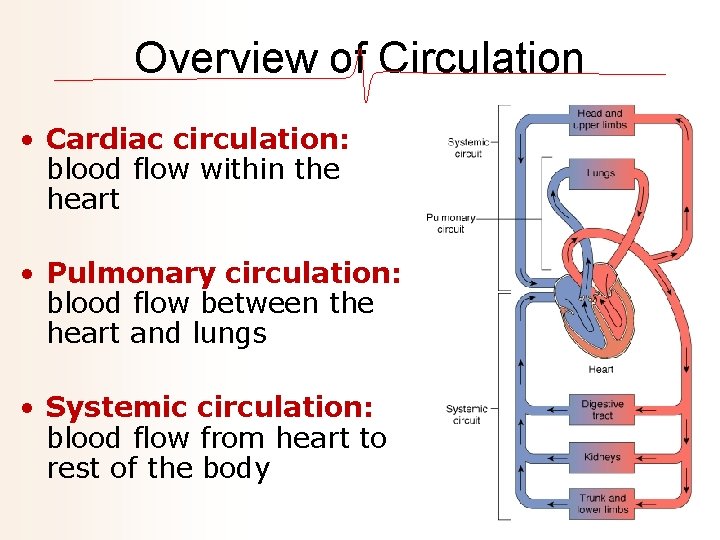
Overview of Circulation • Cardiac circulation: blood flow within the heart • Pulmonary circulation: blood flow between the heart and lungs • Systemic circulation: blood flow from heart to rest of the body
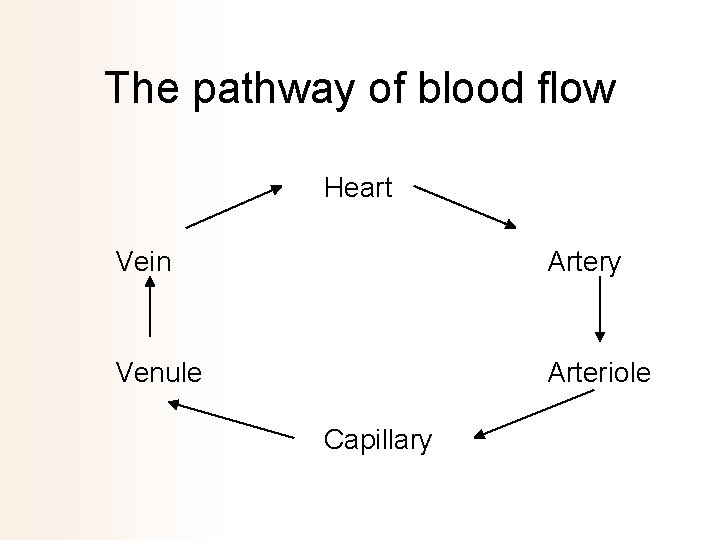
The pathway of blood flow Heart Vein Artery Venule Arteriole Capillary
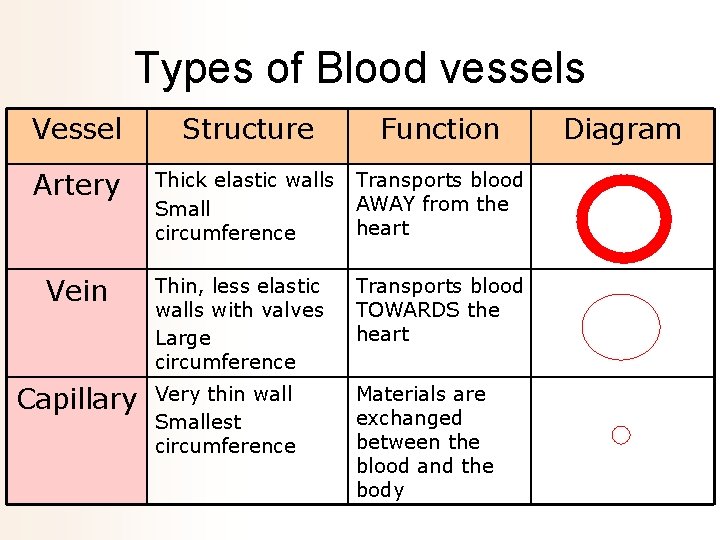
Types of Blood vessels Vessel Structure Function Artery Thick elastic walls Small circumference Transports blood AWAY from the heart Vein Thin, less elastic walls with valves Large circumference Transports blood TOWARDS the heart Very thin wall Smallest circumference Materials are exchanged between the blood and the body Capillary Diagram
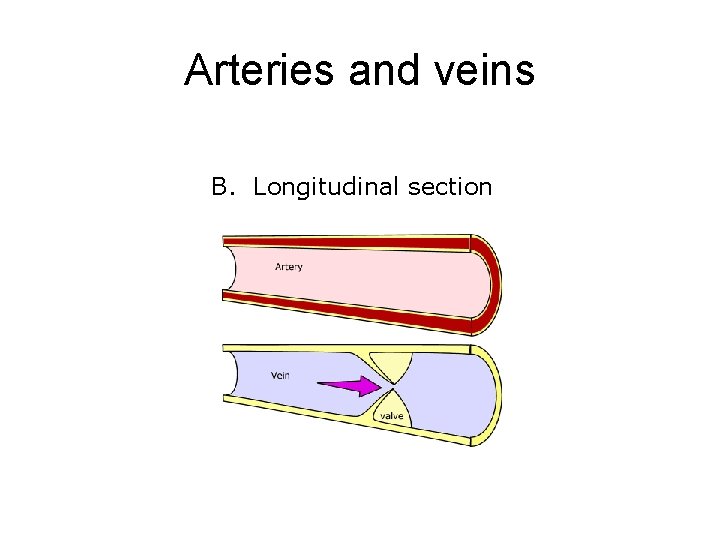
Arteries and veins B. Longitudinal section

Why blood flows In arteries: – Elastic walls expand contract. – As they contract, this helps to pump the blood around the body.
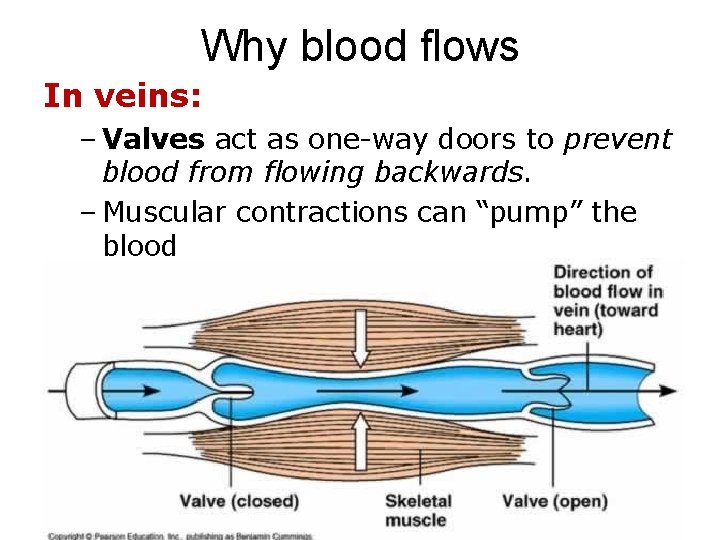
Why blood flows In veins: – Valves act as one-way doors to prevent blood from flowing backwards. – Muscular contractions can “pump” the blood
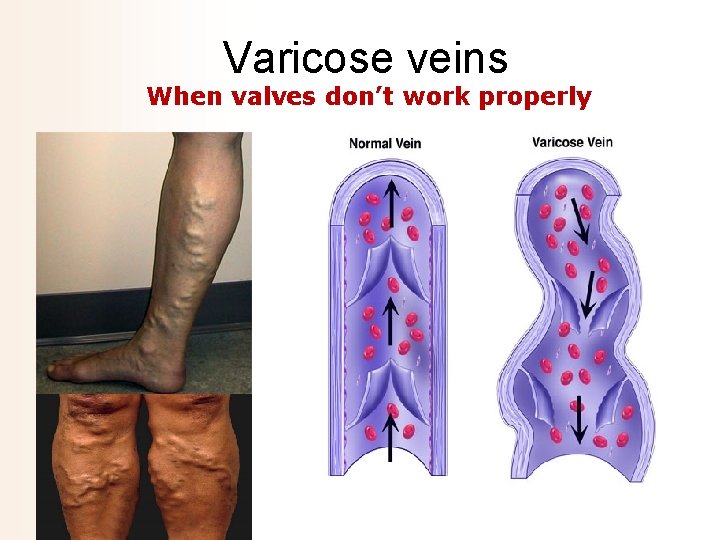
Varicose veins When valves don’t work properly

The human heart
Direction of blood flow • Oxygenated blood: Lungs Heart Aorta Rest of Body • Deoxygenated blood: Body Vena cava Heart Lungs
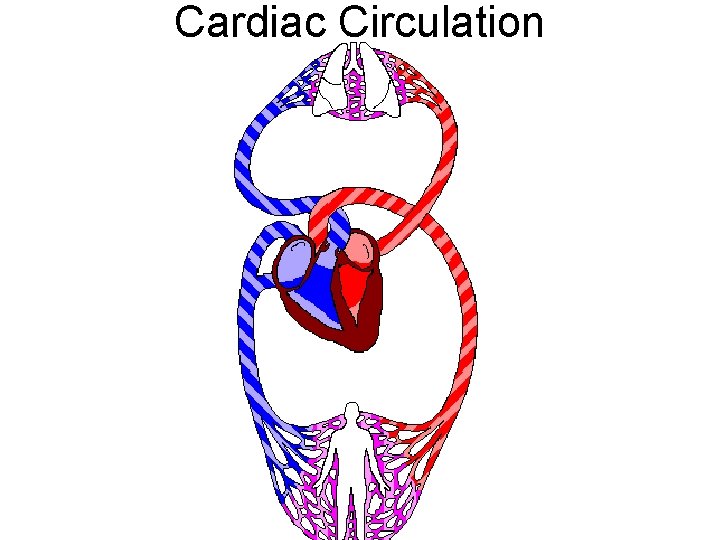
Cardiac Circulation
The heartbeat • The heartbeat is controlled by the sinoatrial node (also known as the pacemaker). • The SA node sends electrical signals that cause the heart muscle to contract.
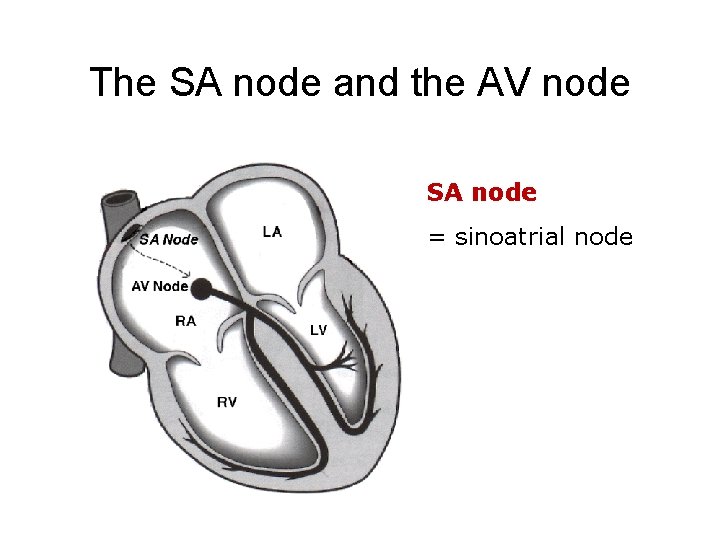
The SA node and the AV node SA node = sinoatrial node
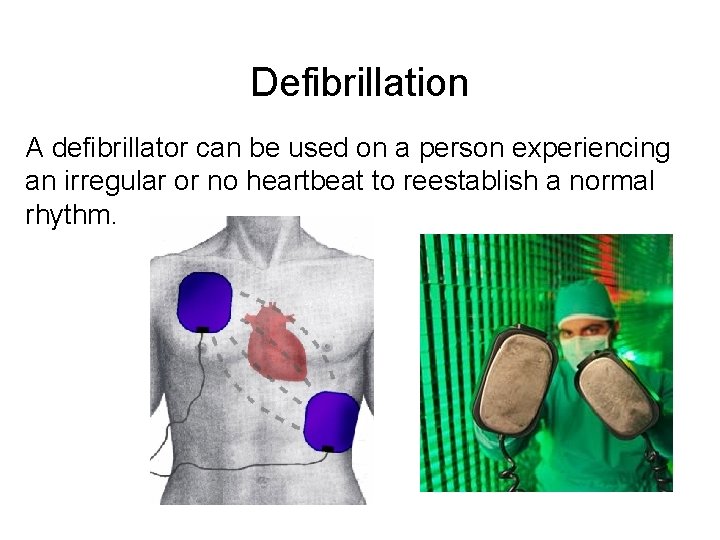
Defibrillation A defibrillator can be used on a person experiencing an irregular or no heartbeat to reestablish a normal rhythm.
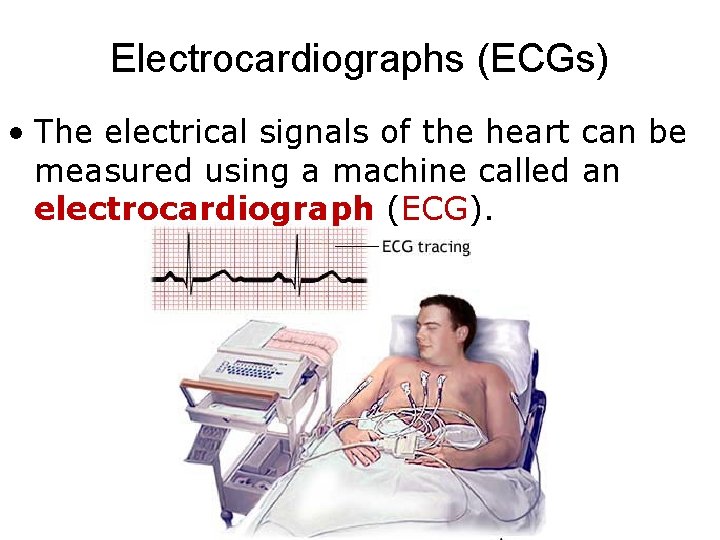
Electrocardiographs (ECGs) • The electrical signals of the heart can be measured using a machine called an electrocardiograph (ECG).
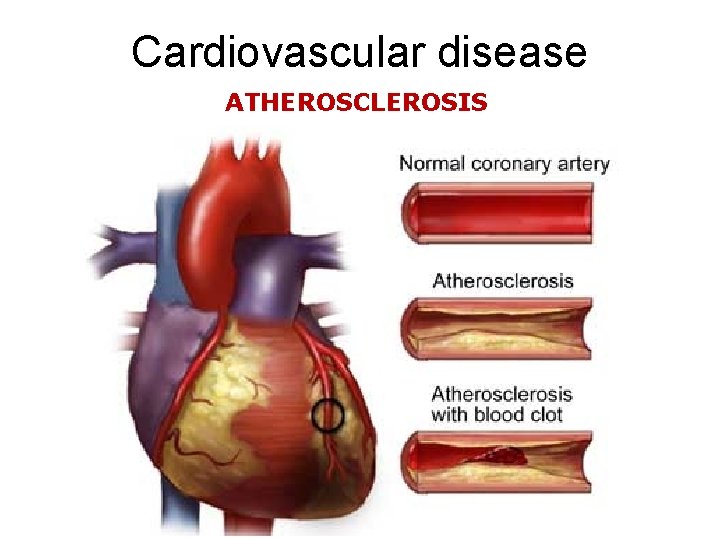
Cardiovascular disease ATHEROSCLEROSIS
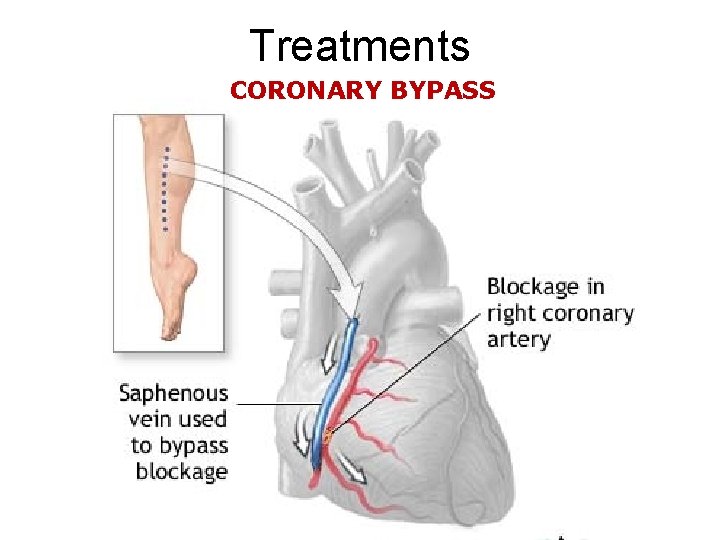
Treatments CORONARY BYPASS
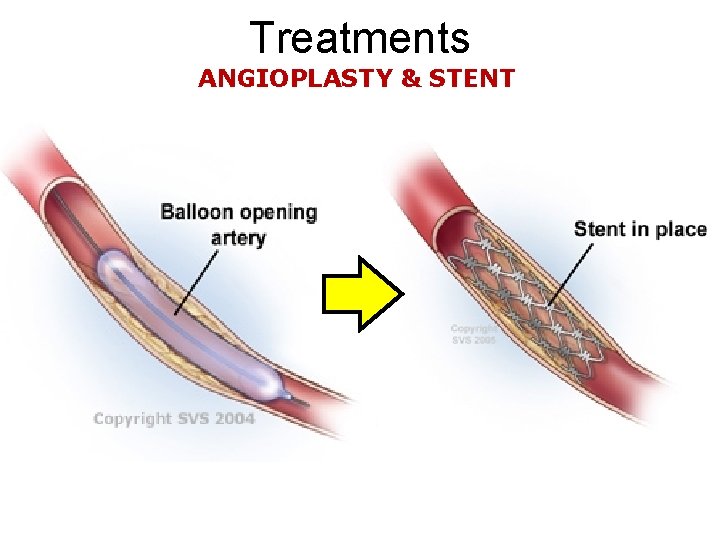
Treatments ANGIOPLASTY & STENT
- Slides: 21