
The Circulatory System MS LUACES HONORS BIOLOGY Functions
The Circulatory System MS. LUACES HONORS BIOLOGY
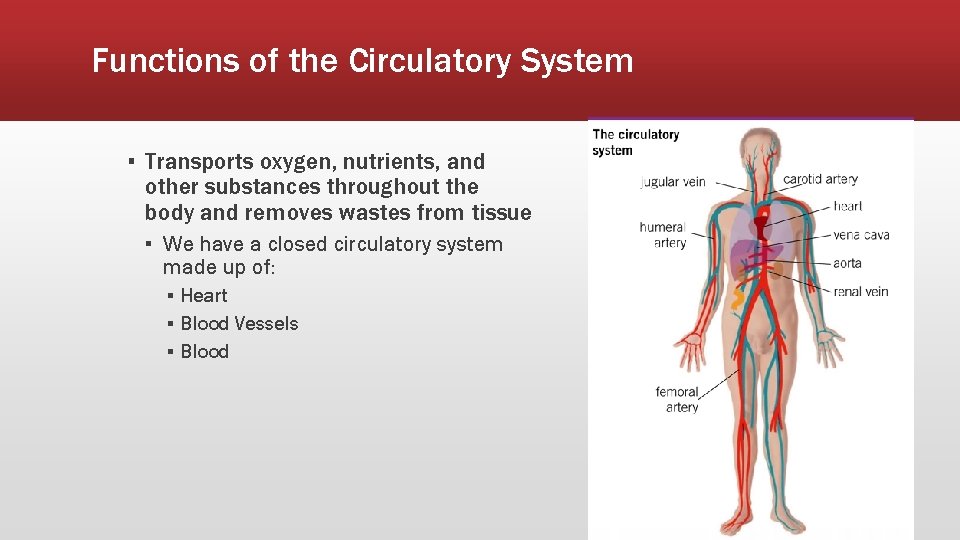
Functions of the Circulatory System ▪ Transports oxygen, nutrients, and other substances throughout the body and removes wastes from tissue ▪ We have a closed circulatory system made up of: ▪ Heart ▪ Blood Vessels ▪ Blood
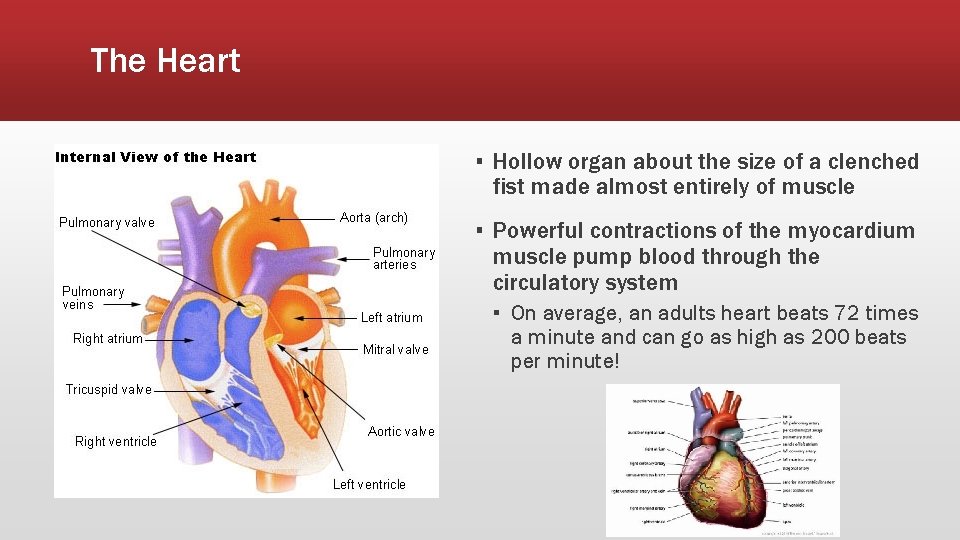
The Heart ▪ Hollow organ about the size of a clenched fist made almost entirely of muscle ▪ Powerful contractions of the myocardium muscle pump blood through the circulatory system ▪ On average, an adults heart beats 72 times a minute and can go as high as 200 beats per minute!
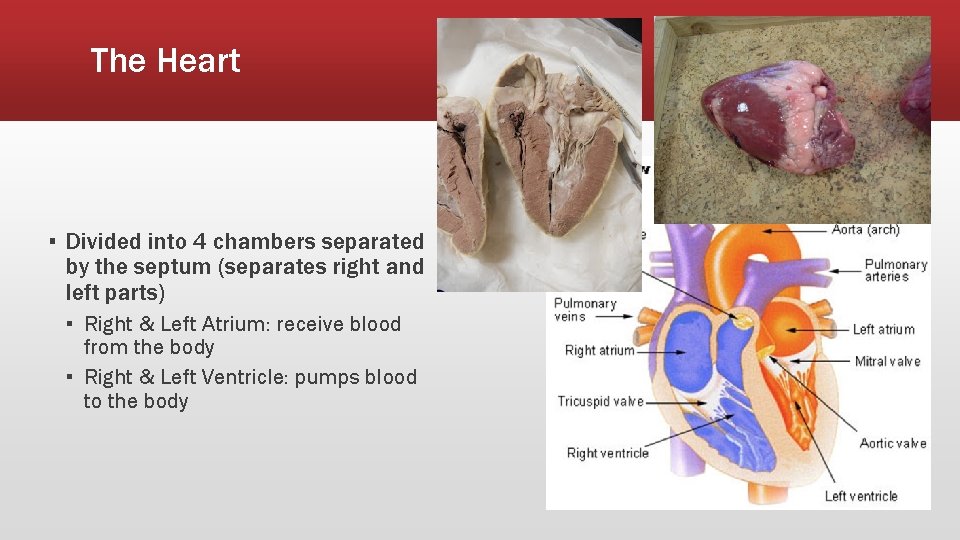
The Heart ▪ Divided into 4 chambers separated by the septum (separates right and left parts) ▪ Right & Left Atrium: receive blood from the body ▪ Right & Left Ventricle: pumps blood to the body
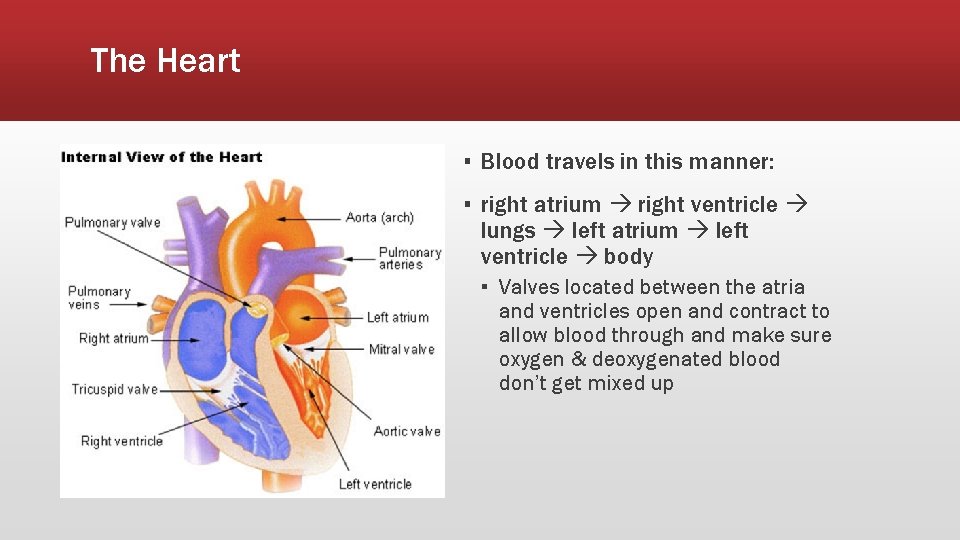
The Heart ▪ Blood travels in this manner: ▪ right atrium right ventricle lungs left atrium left ventricle body ▪ Valves located between the atria and ventricles open and contract to allow blood through and make sure oxygen & deoxygenated blood don’t get mixed up
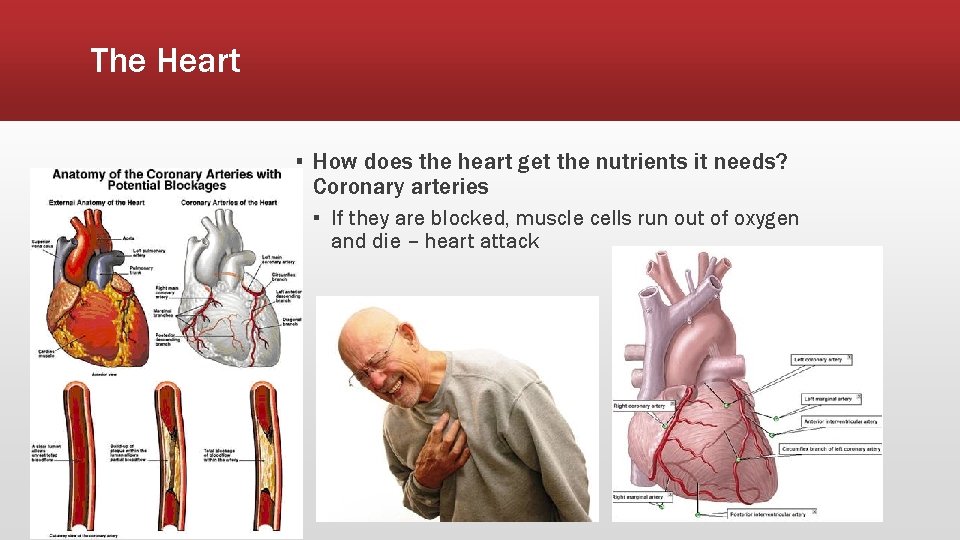
The Heart ▪ How does the heart get the nutrients it needs? Coronary arteries ▪ If they are blocked, muscle cells run out of oxygen and die – heart attack
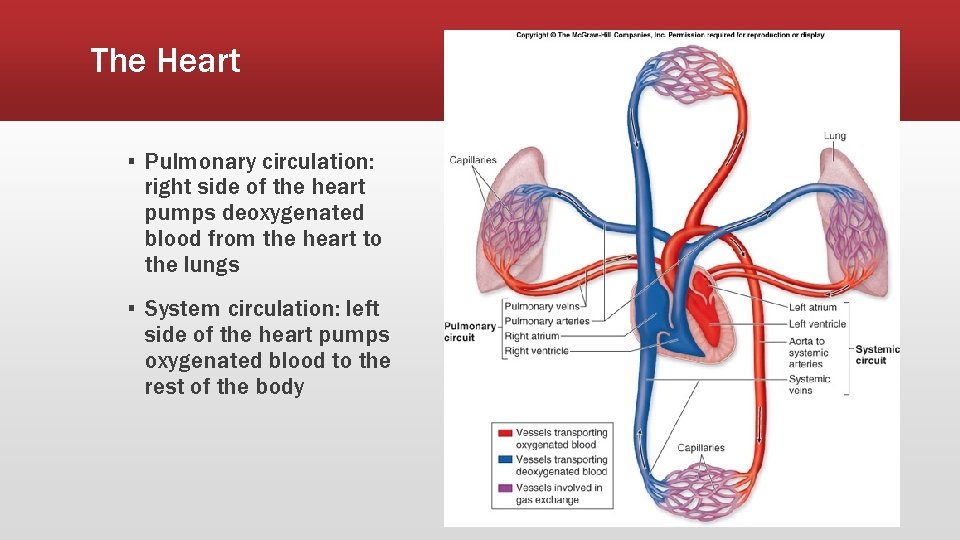
The Heart ▪ Pulmonary circulation: right side of the heart pumps deoxygenated blood from the heart to the lungs ▪ System circulation: left side of the heart pumps oxygenated blood to the rest of the body
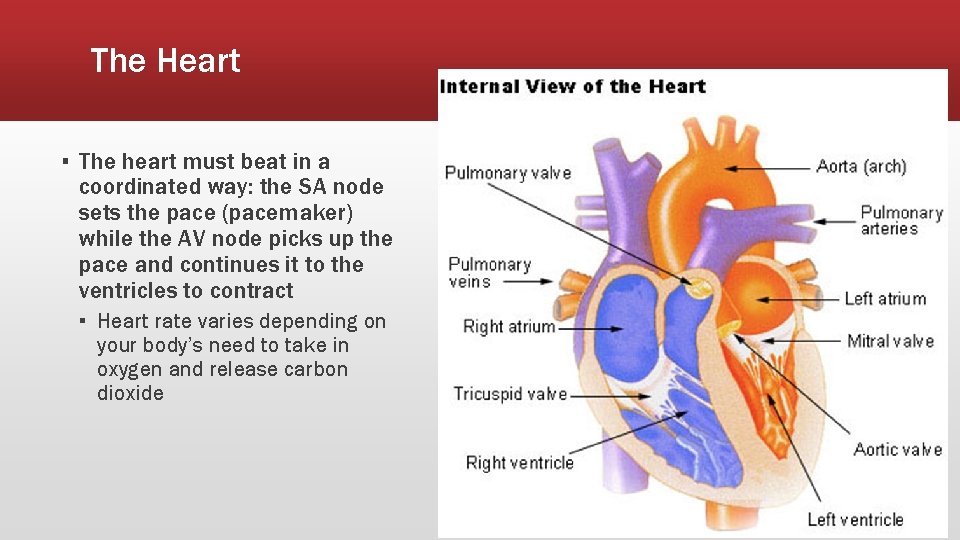
The Heart ▪ The heart must beat in a coordinated way: the SA node sets the pace (pacemaker) while the AV node picks up the pace and continues it to the ventricles to contract ▪ Heart rate varies depending on your body’s need to take in oxygen and release carbon dioxide

Blood Vessels ▪ As blood flowers through the circulatory system, it moves 3 types of blood vessels: ▪ Arteries: large vessels that carry blood from the heart to the tissues ▪ Except for the pulmonary artery, all arteries carry oxygenated blood ▪ Capillaries: smallest vessels that drop off oxygen & nutrients and pick up waste ▪ Veins: small vessels the return deoxygenated blood to the heart to reoxygenate
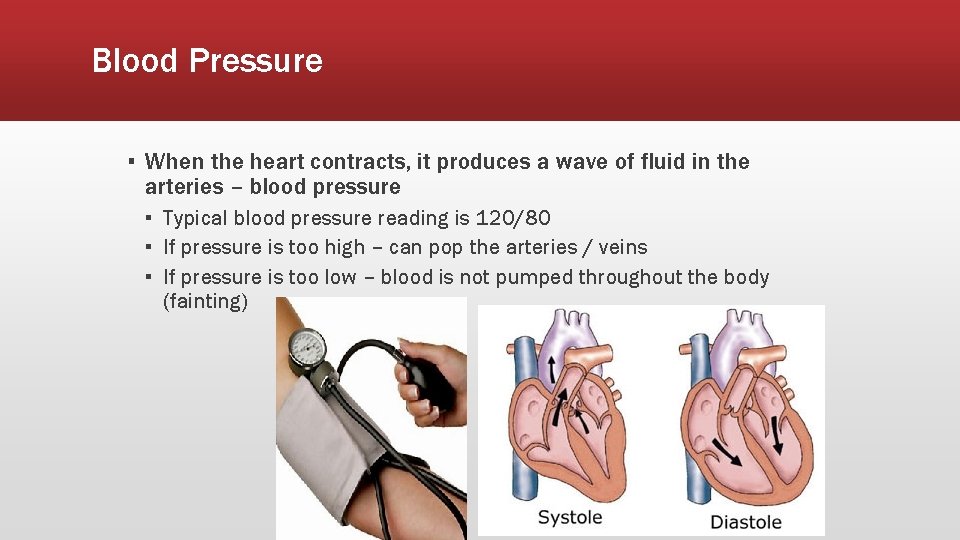
Blood Pressure ▪ When the heart contracts, it produces a wave of fluid in the arteries – blood pressure ▪ Typical blood pressure reading is 120/80 ▪ If pressure is too high – can pop the arteries / veins ▪ If pressure is too low – blood is not pumped throughout the body (fainting)
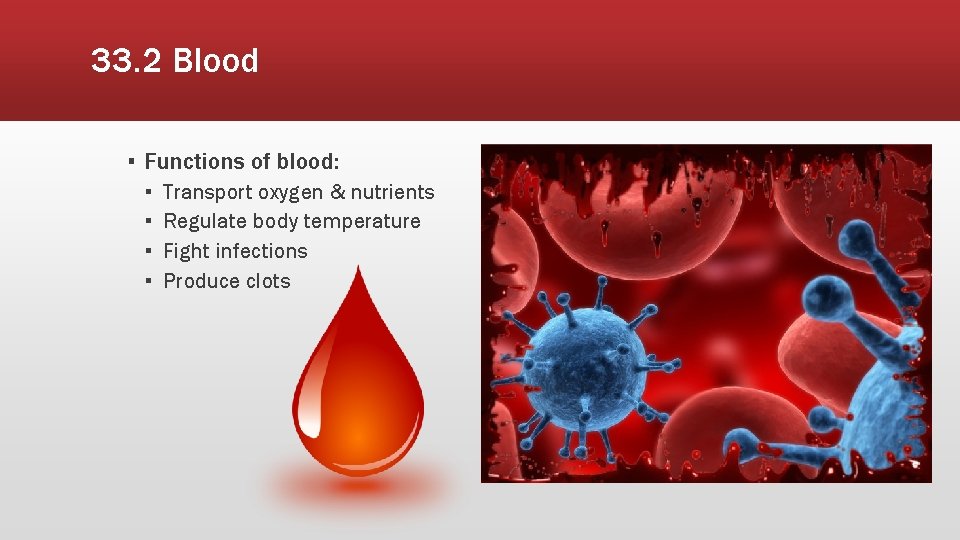
33. 2 Blood ▪ Functions of blood: ▪ ▪ Transport oxygen & nutrients Regulate body temperature Fight infections Produce clots
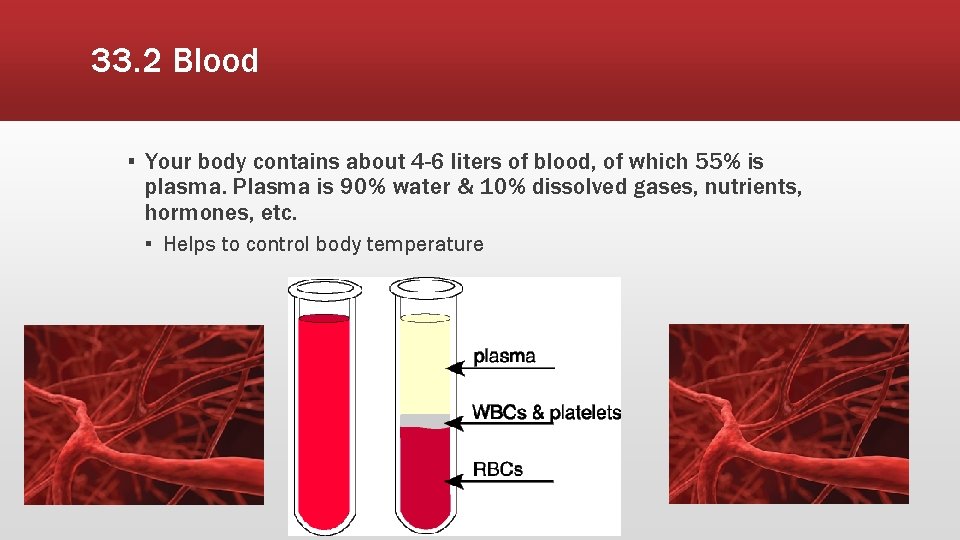
33. 2 Blood ▪ Your body contains about 4 -6 liters of blood, of which 55% is plasma. Plasma is 90% water & 10% dissolved gases, nutrients, hormones, etc. ▪ Helps to control body temperature
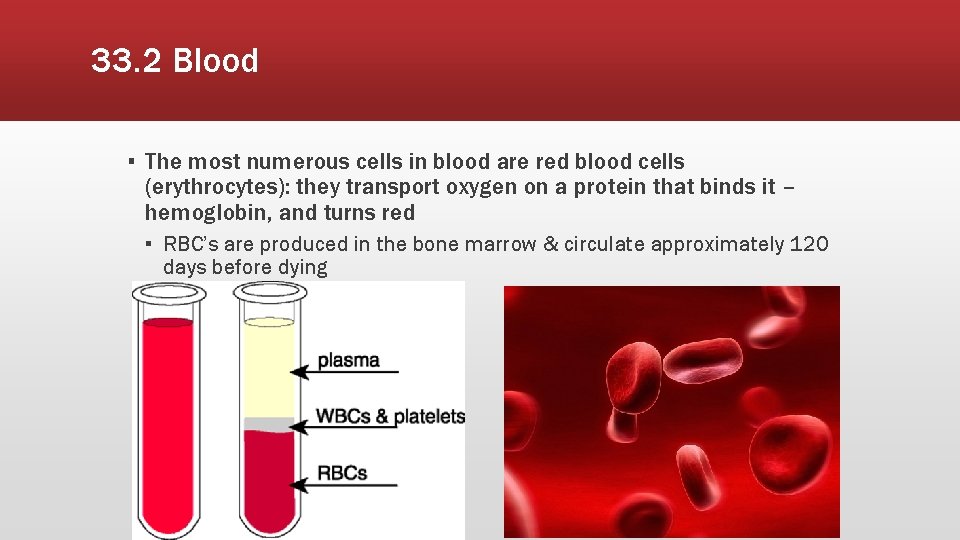
33. 2 Blood ▪ The most numerous cells in blood are red blood cells (erythrocytes): they transport oxygen on a protein that binds it – hemoglobin, and turns red ▪ RBC’s are produced in the bone marrow & circulate approximately 120 days before dying
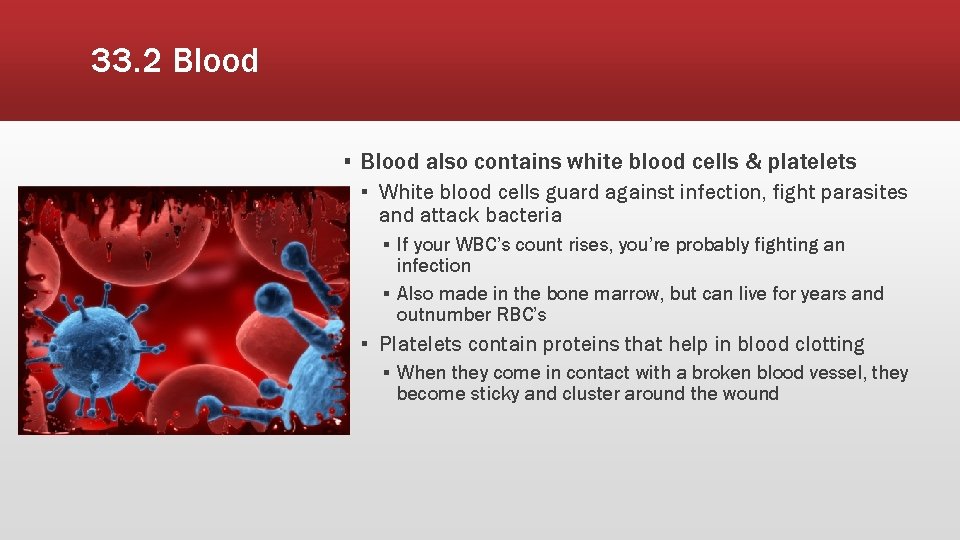
33. 2 Blood ▪ Blood also contains white blood cells & platelets ▪ White blood cells guard against infection, fight parasites and attack bacteria ▪ If your WBC’s count rises, you’re probably fighting an infection ▪ Also made in the bone marrow, but can live for years and outnumber RBC’s ▪ Platelets contain proteins that help in blood clotting ▪ When they come in contact with a broken blood vessel, they become sticky and cluster around the wound
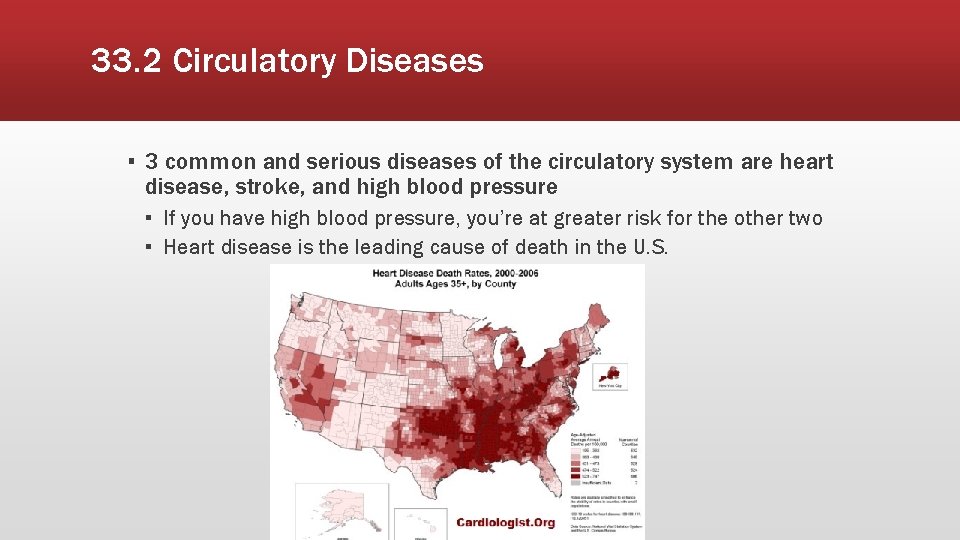
33. 2 Circulatory Diseases ▪ 3 common and serious diseases of the circulatory system are heart disease, stroke, and high blood pressure ▪ If you have high blood pressure, you’re at greater risk for the other two ▪ Heart disease is the leading cause of death in the U. S.
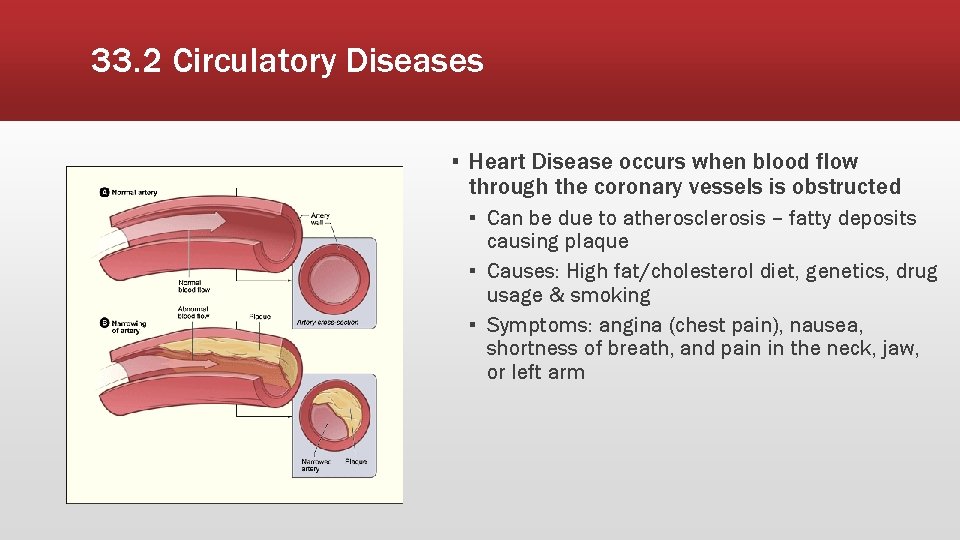
33. 2 Circulatory Diseases ▪ Heart Disease occurs when blood flow through the coronary vessels is obstructed ▪ Can be due to atherosclerosis – fatty deposits causing plaque ▪ Causes: High fat/cholesterol diet, genetics, drug usage & smoking ▪ Symptoms: angina (chest pain), nausea, shortness of breath, and pain in the neck, jaw, or left arm
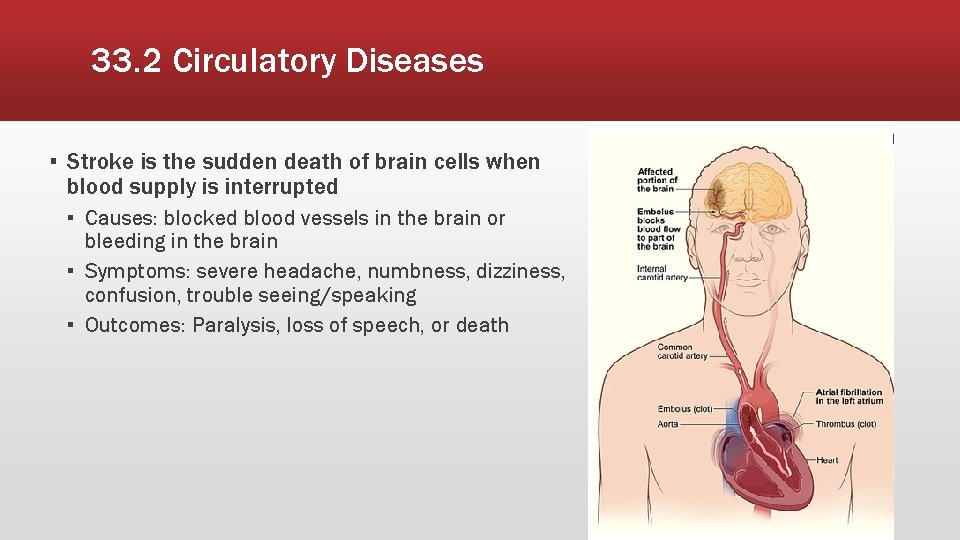
33. 2 Circulatory Diseases ▪ Stroke is the sudden death of brain cells when blood supply is interrupted ▪ Causes: blocked blood vessels in the brain or bleeding in the brain ▪ Symptoms: severe headache, numbness, dizziness, confusion, trouble seeing/speaking ▪ Outcomes: Paralysis, loss of speech, or death
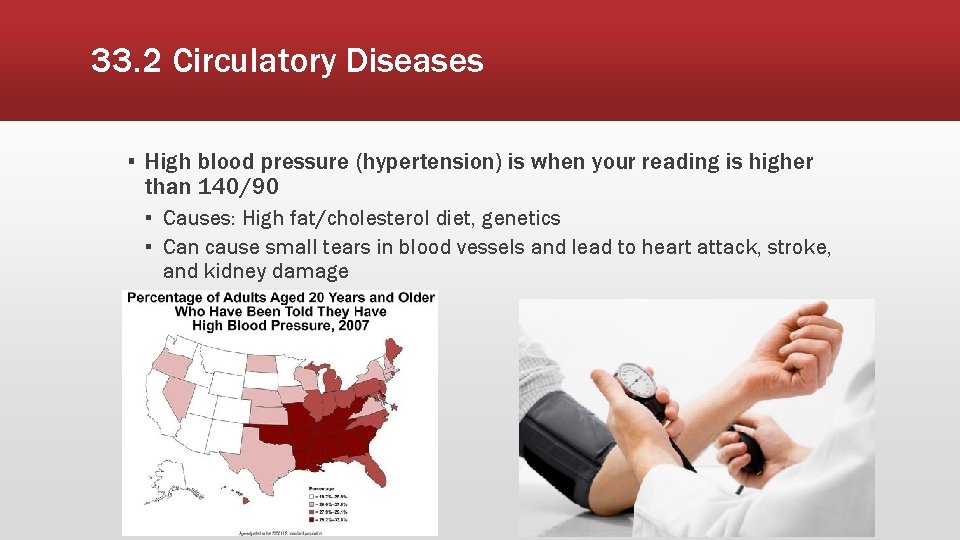
33. 2 Circulatory Diseases ▪ High blood pressure (hypertension) is when your reading is higher than 140/90 ▪ Causes: High fat/cholesterol diet, genetics ▪ Can cause small tears in blood vessels and lead to heart attack, stroke, and kidney damage
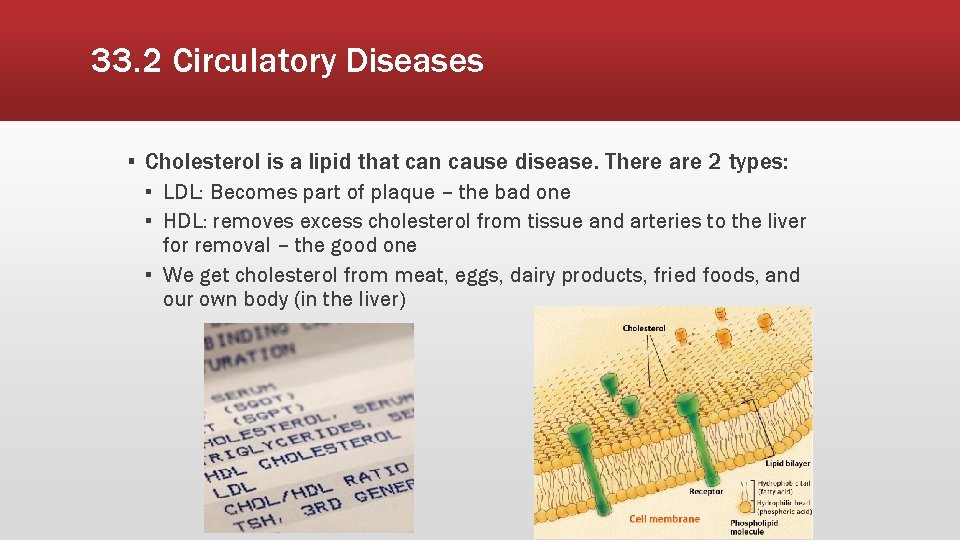
33. 2 Circulatory Diseases ▪ Cholesterol is a lipid that can cause disease. There are 2 types: ▪ LDL: Becomes part of plaque – the bad one ▪ HDL: removes excess cholesterol from tissue and arteries to the liver for removal – the good one ▪ We get cholesterol from meat, eggs, dairy products, fried foods, and our own body (in the liver)
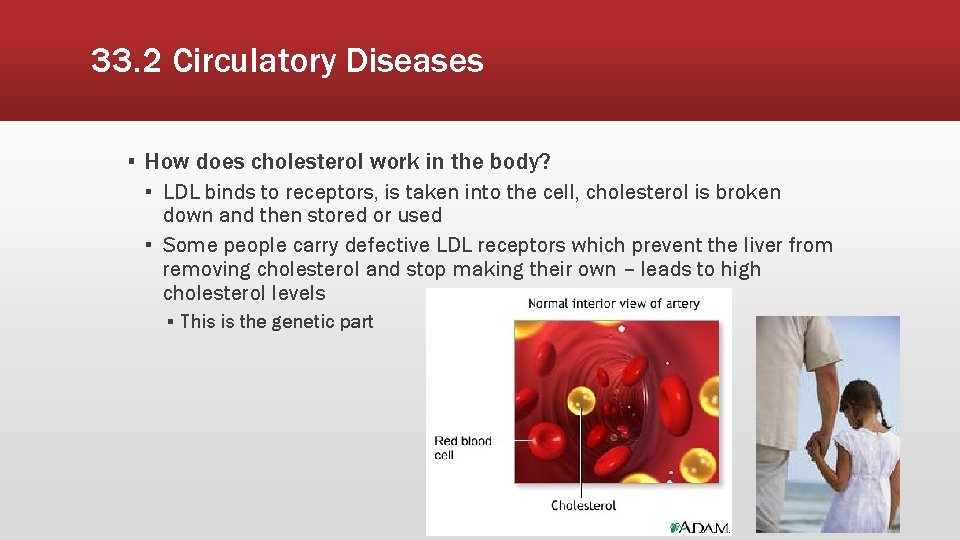
33. 2 Circulatory Diseases ▪ How does cholesterol work in the body? ▪ LDL binds to receptors, is taken into the cell, cholesterol is broken down and then stored or used ▪ Some people carry defective LDL receptors which prevent the liver from removing cholesterol and stop making their own – leads to high cholesterol levels ▪ This is the genetic part
33. 2 Circulatory Diseases ▪ It is much easier to PREVENT heart disease than cure it, so… ▪ Eat right ▪ Get 30 minutes of exercise every day ▪ Get checked at the doctor every year – blood work!
Let’s Practice! ▪ Study Workbook A – Pg. 437 – 439 ▪ Work with a buddy – 1 sheet of paper, Q&A
- Slides: 22