
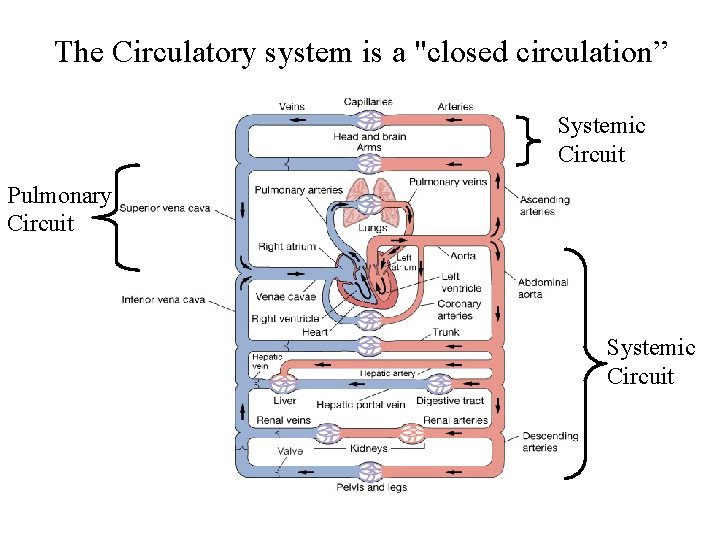
The Circulatory system is a closed circulation Systemic



- Slides: 26
The Circulatory system is a "closed circulation” Systemic Circuit Pulmonary Circuit Systemic Circuit
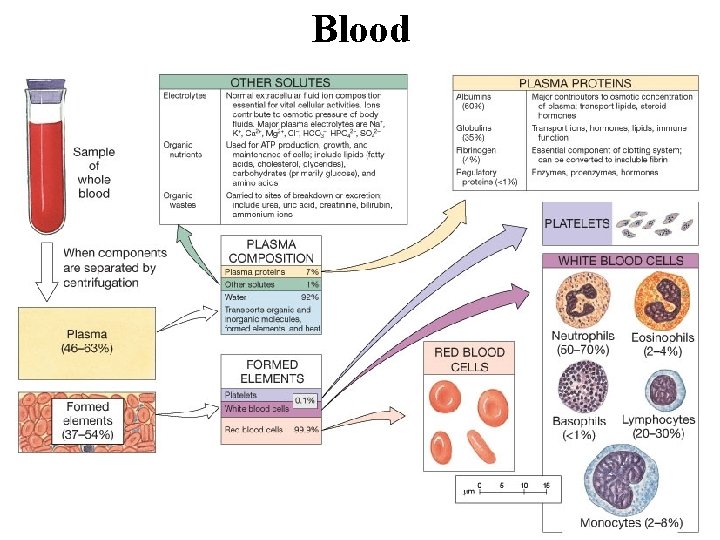
Blood
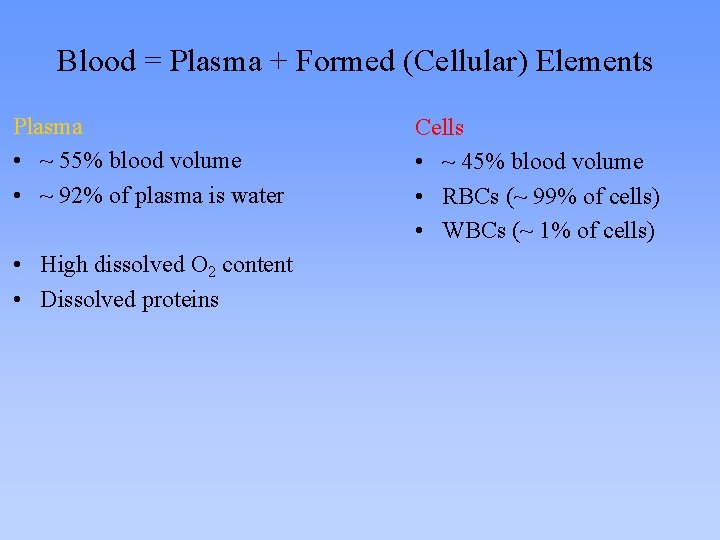
Blood = Plasma + Formed (Cellular) Elements Plasma • ~ 55% blood volume • ~ 92% of plasma is water • High dissolved O 2 content • Dissolved proteins Cells • ~ 45% blood volume • RBCs (~ 99% of cells) • WBCs (~ 1% of cells)
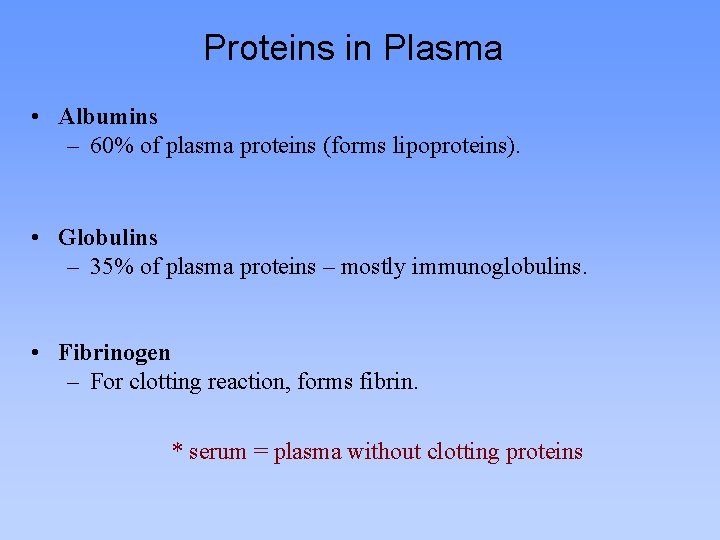
Proteins in Plasma • Albumins – 60% of plasma proteins (forms lipoproteins). • Globulins – 35% of plasma proteins – mostly immunoglobulins. • Fibrinogen – For clotting reaction, forms fibrin. * serum = plasma without clotting proteins
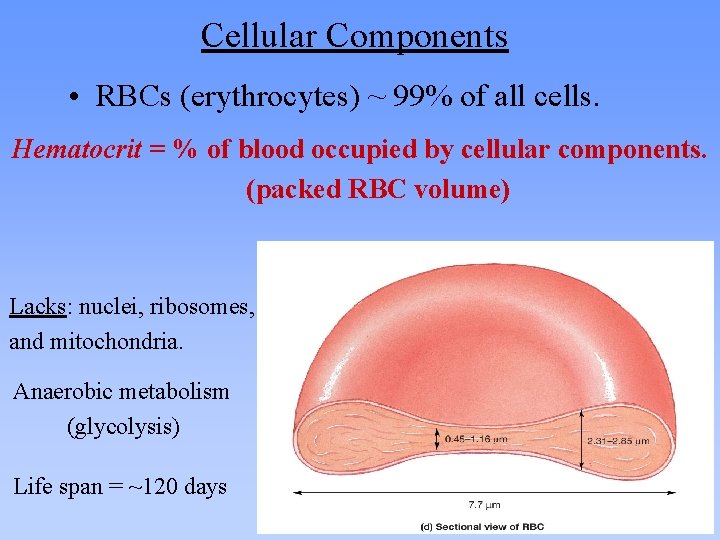
Cellular Components • RBCs (erythrocytes) ~ 99% of all cells. Hematocrit = % of blood occupied by cellular components. (packed RBC volume) Lacks: nuclei, ribosomes, and mitochondria. Anaerobic metabolism (glycolysis) Life span = ~120 days
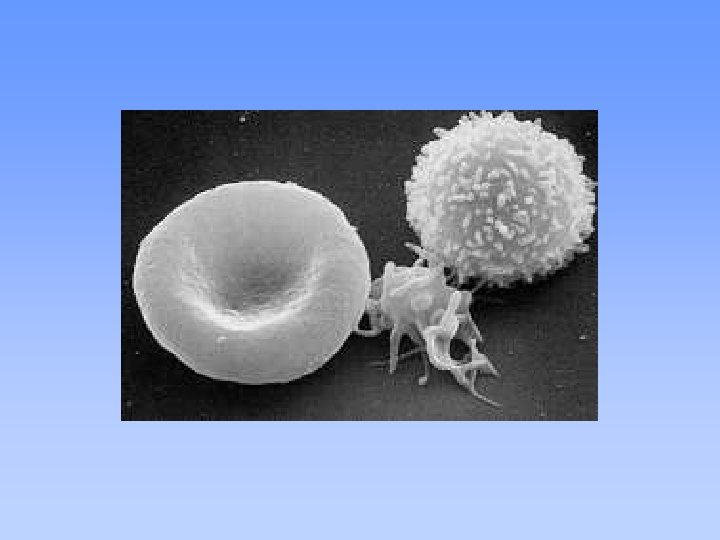
Scanning Electron Micrograph (SEM) of Erythrocytes or Red Blood Cells (RBCs) on the tip of a hypodermic needle.
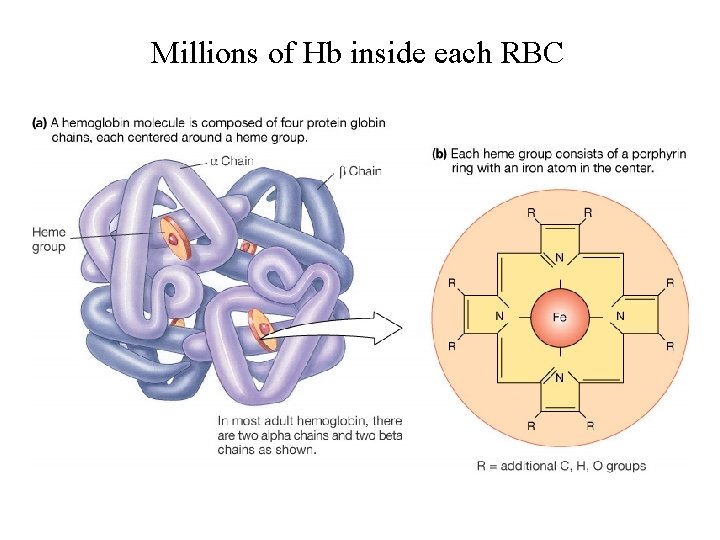
Millions of Hb inside each RBC
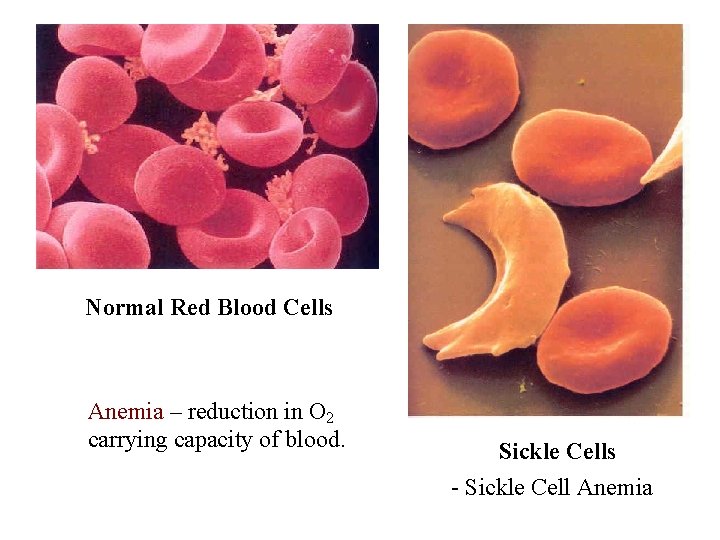
Normal Red Blood Cells Anemia – reduction in O 2 carrying capacity of blood. Sickle Cells - Sickle Cell Anemia
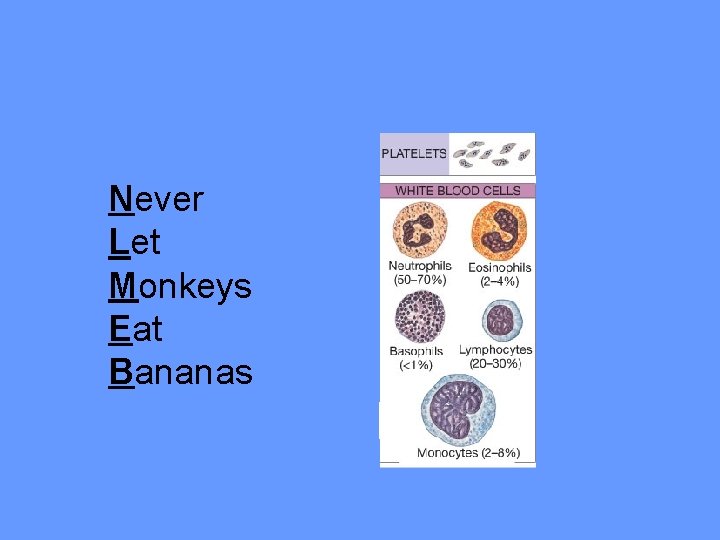
White Blood Cells • Neutrophils 70% of circulating leukocytes – Highly mobile phagocytes. • Eosinophils much less common – Attracted to foreign compounds reacted with antibodies. • Basophils relatively rare – Migrate to damaged tissue, releases histamine.
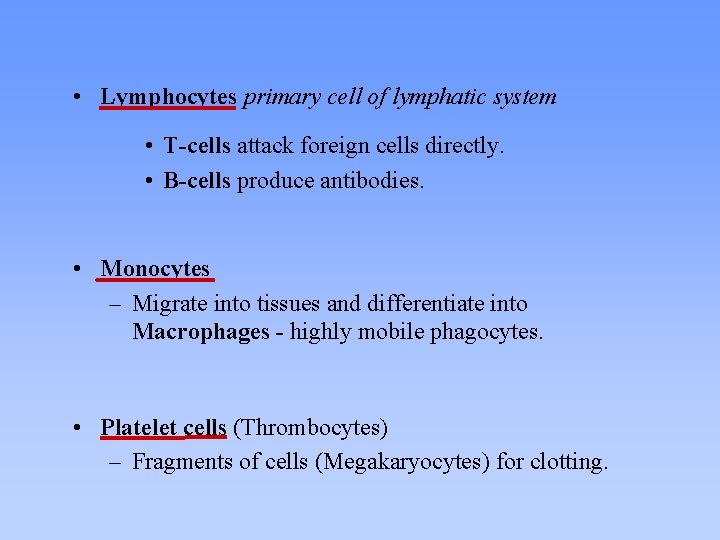
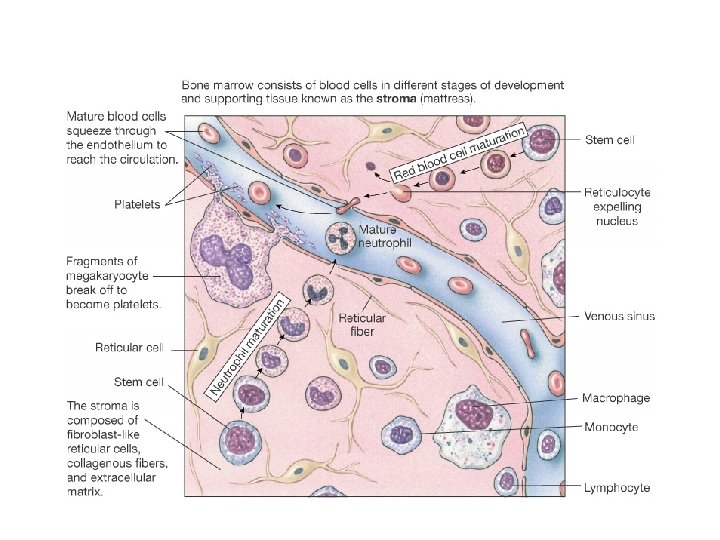
• Lymphocytes primary cell of lymphatic system • T-cells attack foreign cells directly. • B-cells produce antibodies. • Monocytes – Migrate into tissues and differentiate into Macrophages - highly mobile phagocytes. • Platelet cells (Thrombocytes) – Fragments of cells (Megakaryocytes) for clotting.
Never Let Monkeys Eat Bananas
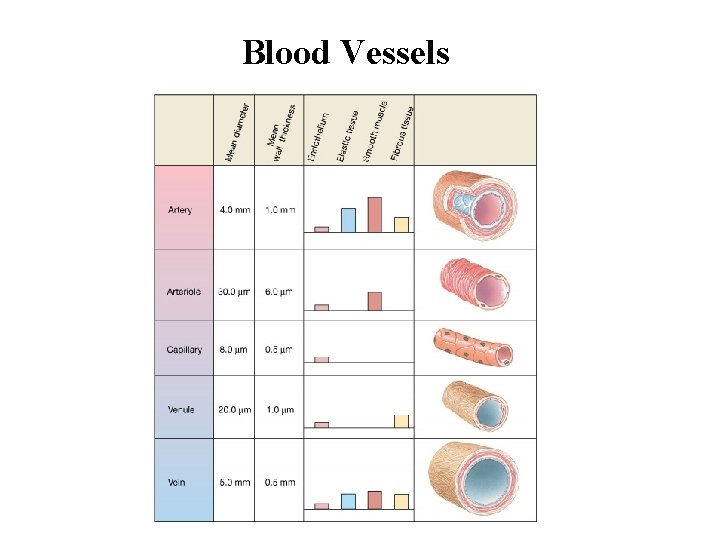
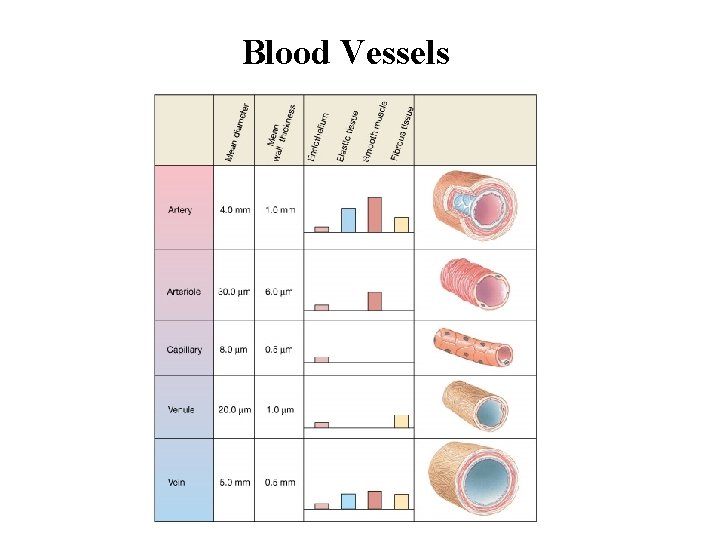
Blood Vessels
Blood Vessels
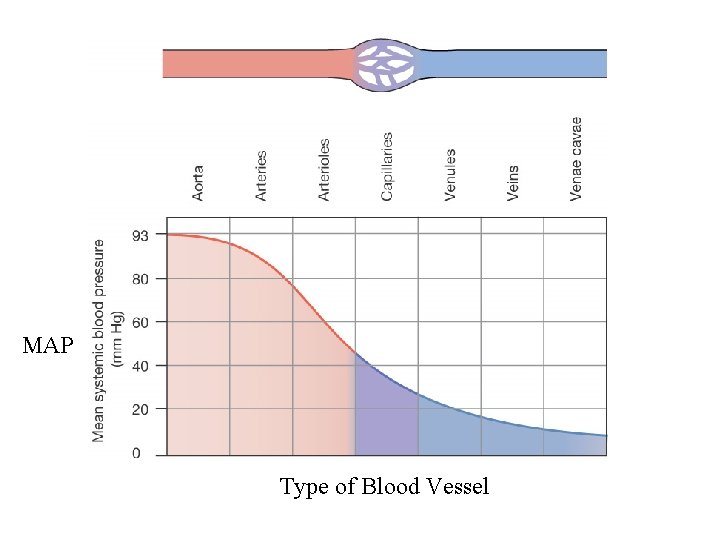
MAP Type of Blood Vessel
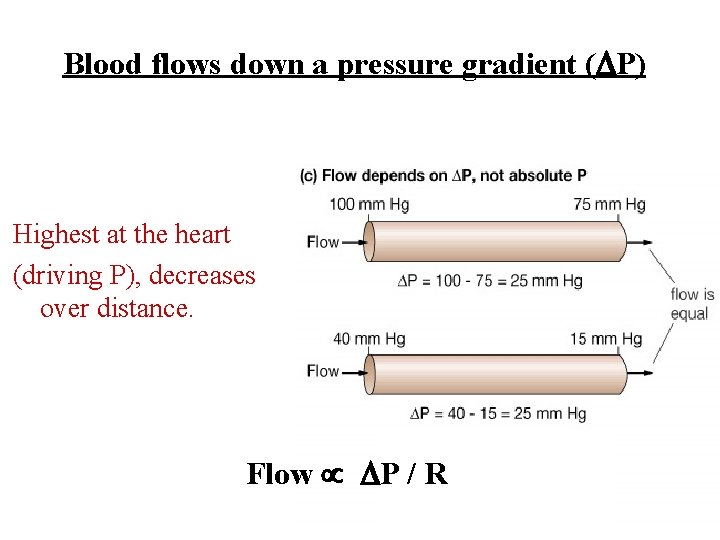
Blood flows down a pressure gradient ( P) Highest at the heart (driving P), decreases over distance. Flow P / R
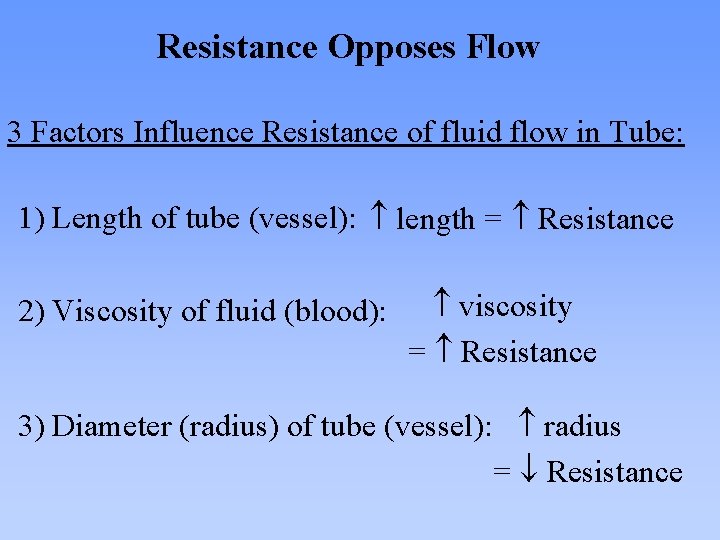
Resistance Opposes Flow 3 Factors Influence Resistance of fluid flow in Tube: 1) Length of tube (vessel): length = Resistance 2) Viscosity of fluid (blood): viscosity = Resistance 3) Diameter (radius) of tube (vessel): radius = Resistance
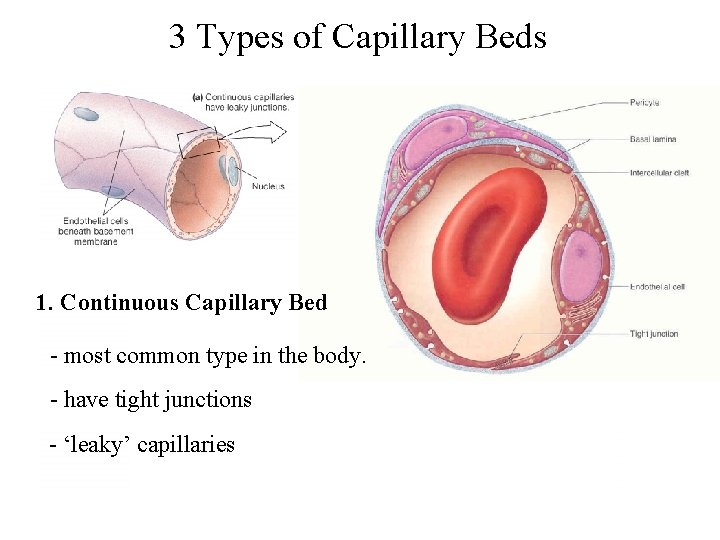
3 Types of Capillary Beds 1. Continuous Capillary Bed - most common type in the body. - have tight junctions - ‘leaky’ capillaries
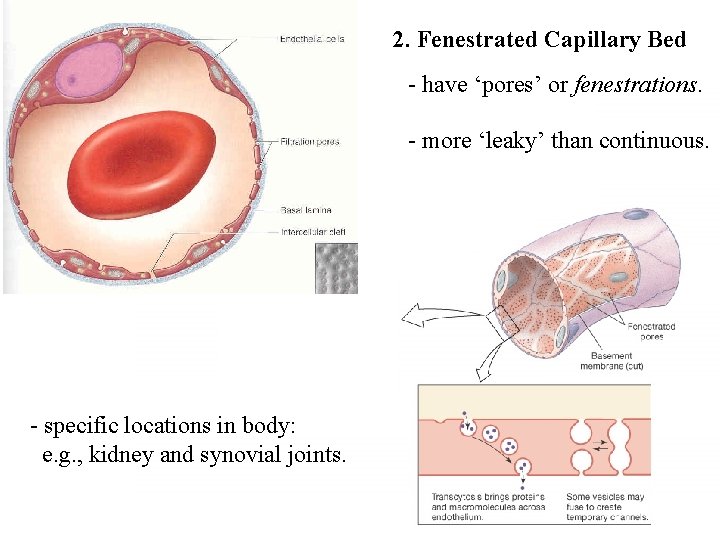
2. Fenestrated Capillary Bed - have ‘pores’ or fenestrations. - more ‘leaky’ than continuous. - specific locations in body: e. g. , kidney and synovial joints.
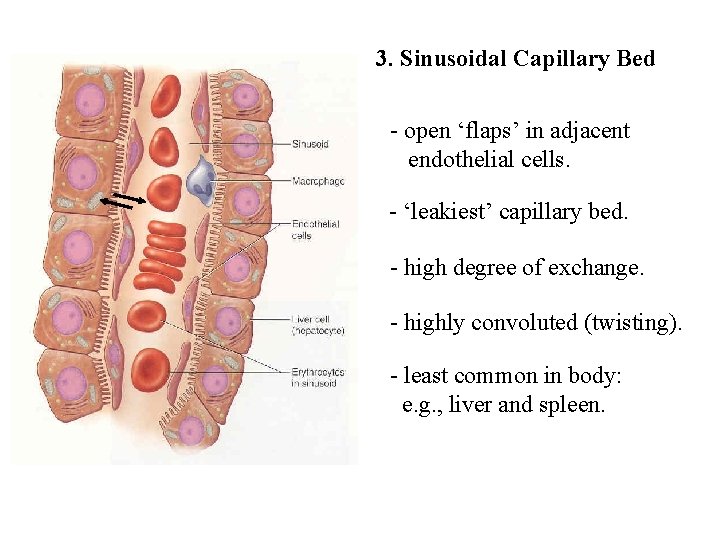
3. Sinusoidal Capillary Bed - open ‘flaps’ in adjacent endothelial cells. - ‘leakiest’ capillary bed. - high degree of exchange. - highly convoluted (twisting). - least common in body: e. g. , liver and spleen.
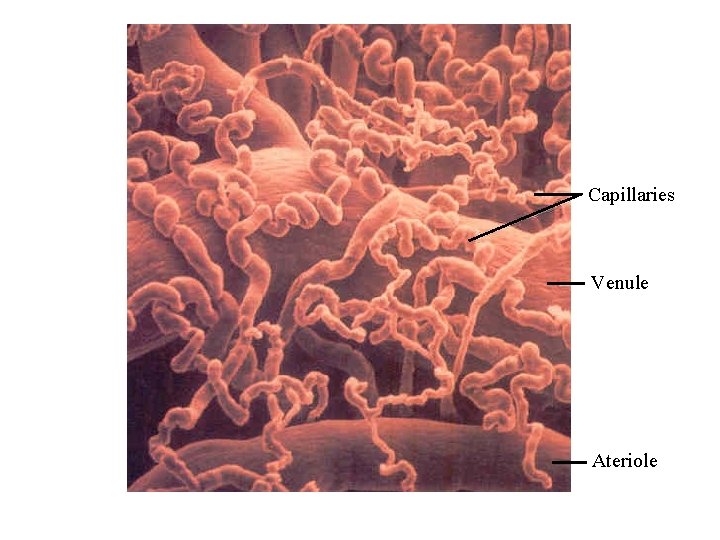
Capillaries Venule Ateriole
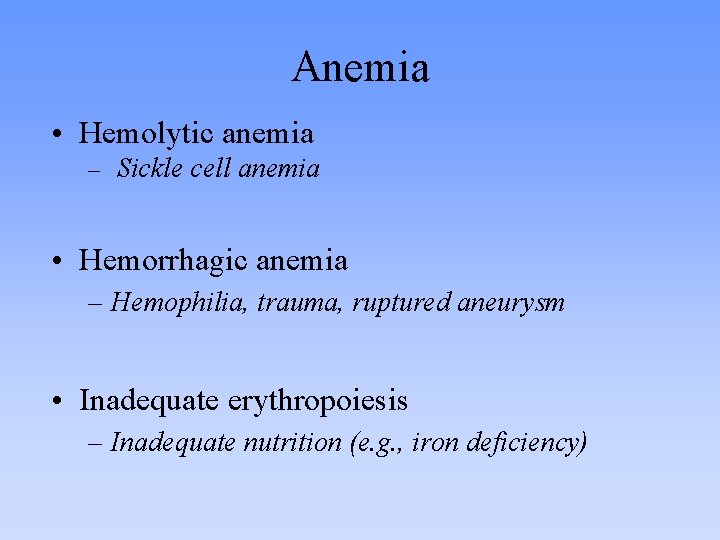
Anemia • Hemolytic anemia – Sickle cell anemia • Hemorrhagic anemia – Hemophilia, trauma, ruptured aneurysm • Inadequate erythropoiesis – Inadequate nutrition (e. g. , iron deficiency)