
The Circulatory System Function Transports nutrients wastes Contains
- Slides: 40
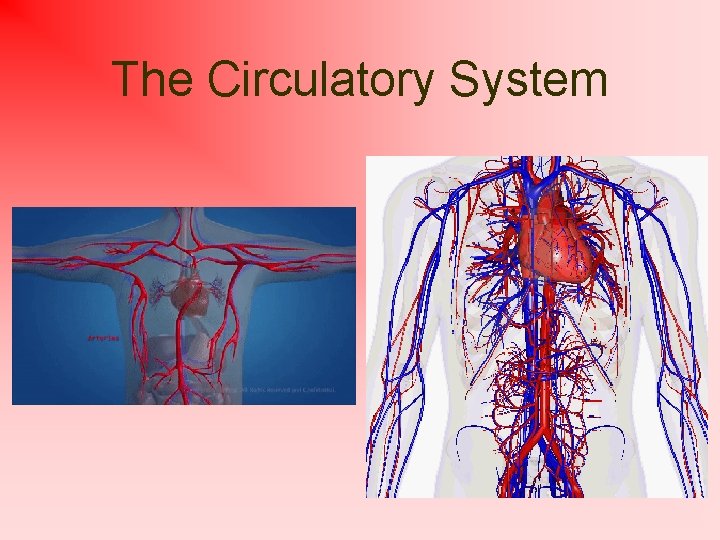
The Circulatory System
Function: • Transports nutrients & wastes • Contains cells that fight infections • Helps maintain body temperature by transporting heat
The Circulatory System All organisms must be able to transport nutrients and wastes. Smaller organisms rely on diffusion _____ for this movement; humans require an organized circulatory system for the movement of substances closed through the body. We have a _______ circulatory system, which means our blood is contained in vessels The human circulatory ___________. system includes the heart, the blood vessels, and the blood.
I. THE HEART (pp. 943 -946) ADD TO NOTES The heart itself is mostly composed of cardiac muscle which forms a thick ____ myocardium layer of tissue known as the ______. 4 chambered heart, Humans have a __ septum into right and left divided by a _____ Mixing of blood sides to prevent _______
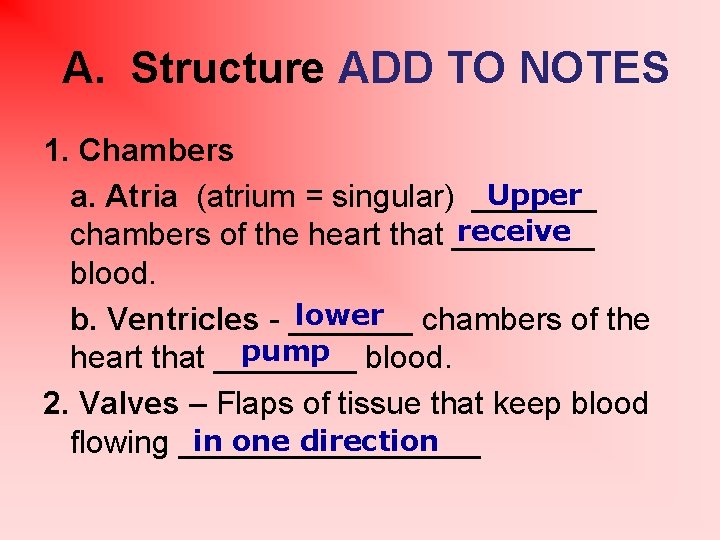
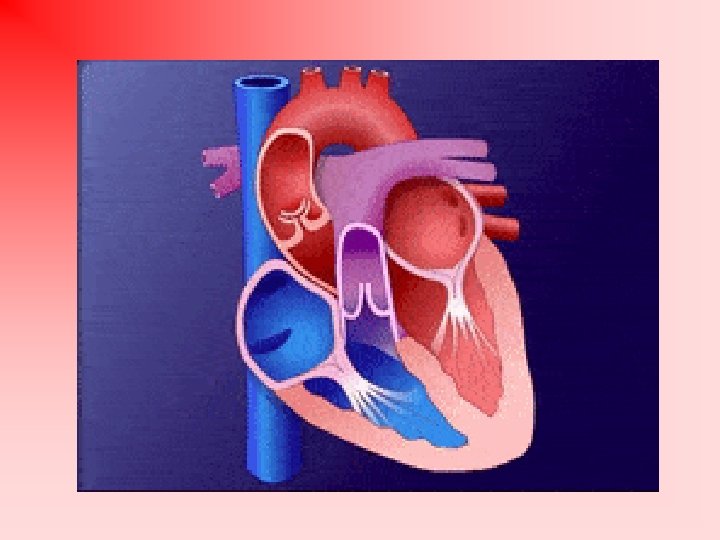
A. Structure ADD TO NOTES 1. Chambers Upper a. Atria (atrium = singular) _______ receive chambers of the heart that ____ blood. lower chambers of the b. Ventricles - _______ pump blood. heart that ____ 2. Valves – Flaps of tissue that keep blood in one direction flowing _________
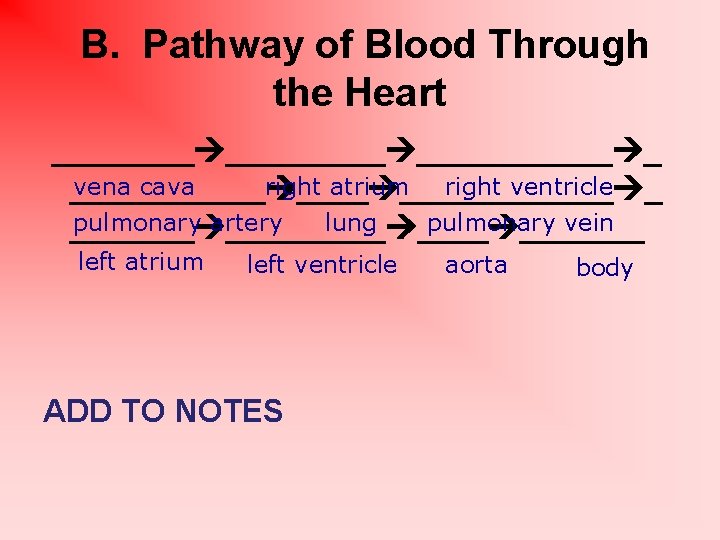
B. Pathway of Blood Through the Heart _________ _ vena cava right atrium right ventricle ________ _ pulmonary artery lung pulmonary vein _________ left atrium left ventricle ADD TO NOTES aorta body
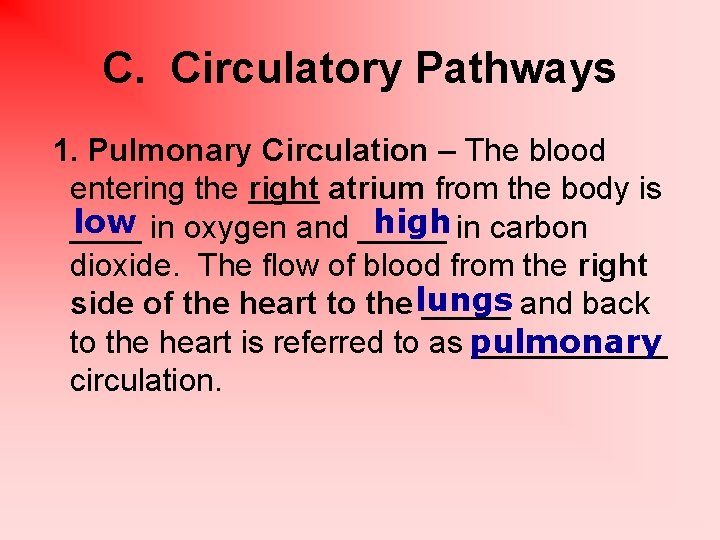
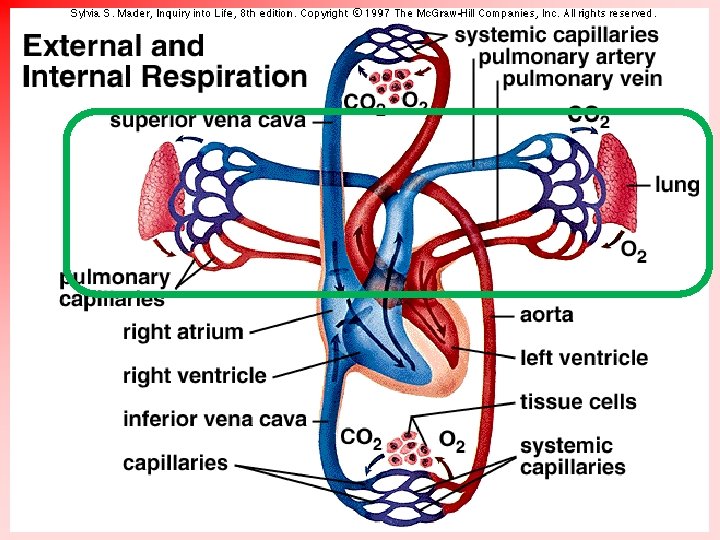
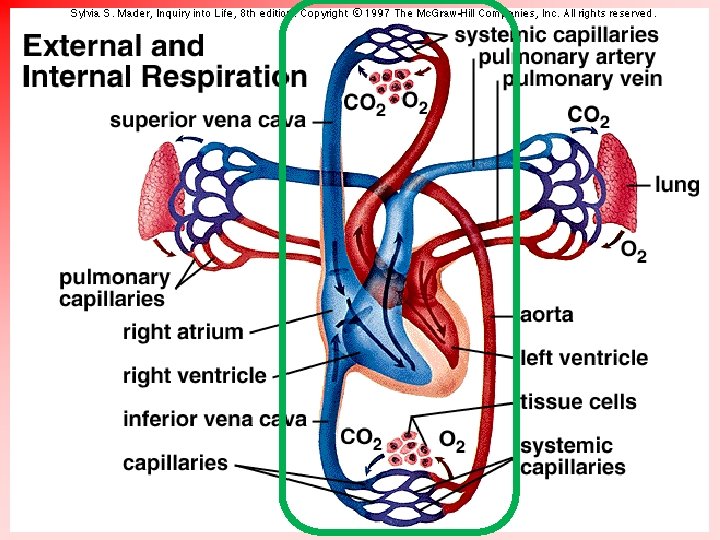
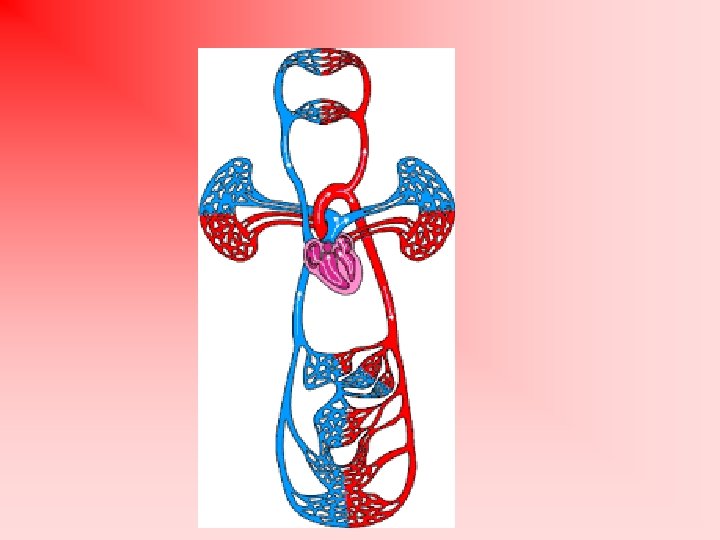
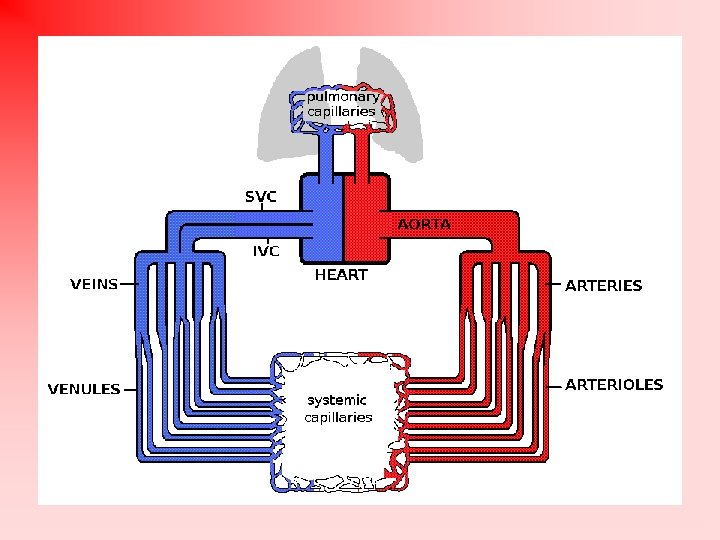
C. Circulatory Pathways 1. Pulmonary Circulation – The blood entering the right atrium from the body is low in oxygen and _____ high in carbon ____ dioxide. The flow of blood from the right side of the heart to the lungs _____ and back to the heart is referred to as pulmonary ______ circulation.
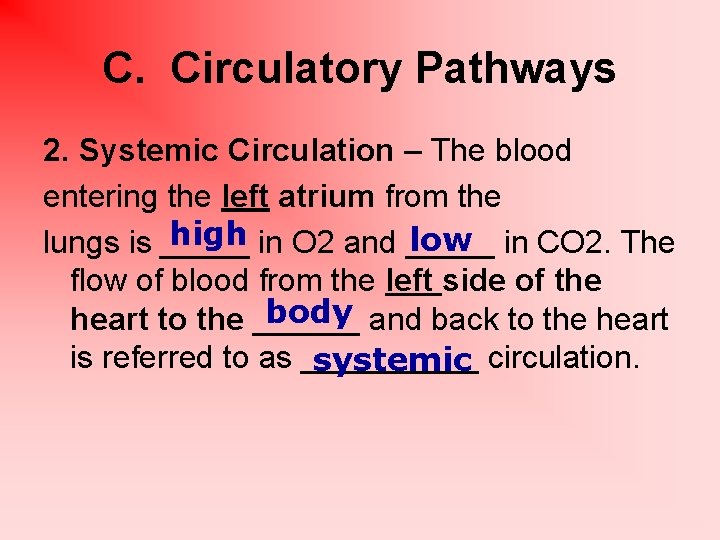
C. Circulatory Pathways 2. Systemic Circulation – The blood entering the left atrium from the high in O 2 and _____ low in CO 2. The lungs is _____ flow of blood from the left side of the body and back to the heart to the ______ is referred to as _____ systemic circulation.
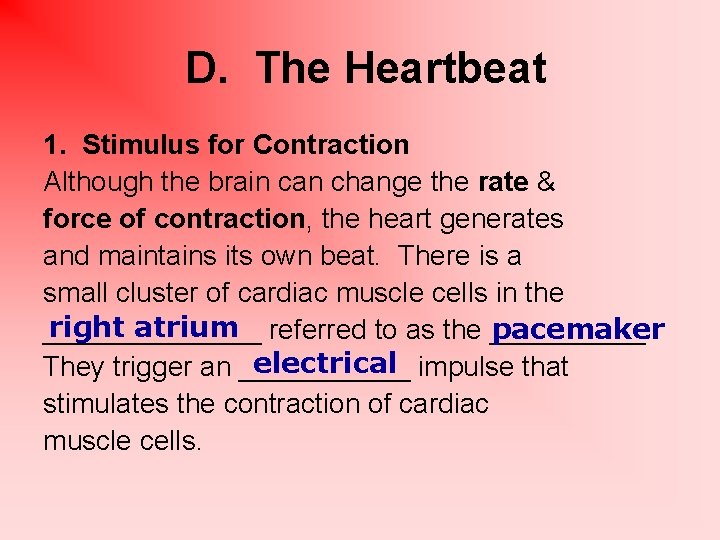
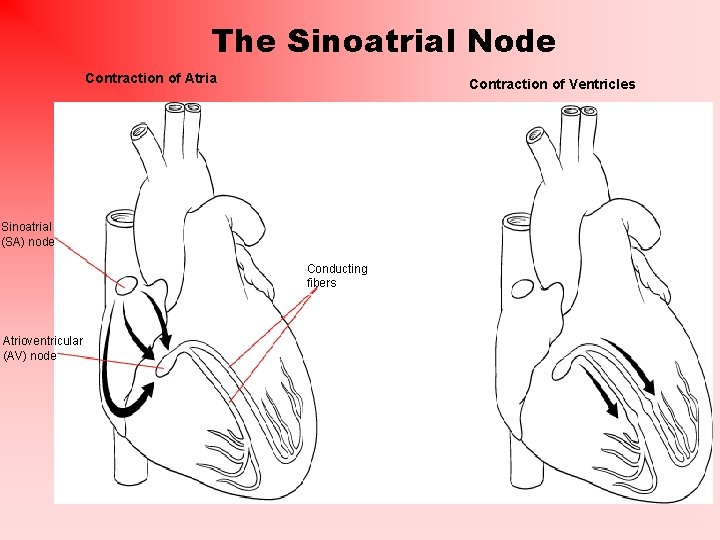
D. The Heartbeat 1. Stimulus for Contraction Although the brain can change the rate & force of contraction, the heart generates and maintains its own beat. There is a small cluster of cardiac muscle cells in the right atrium referred to as the _______ pacemaker electrical impulse that They trigger an ______ stimulates the contraction of cardiac muscle cells.
The Sinoatrial Node Contraction of Atria Contraction of Ventricles Sinoatrial (SA) node Conducting fibers Atrioventricular (AV) node
D. The Heartbeat 2. The Pulse left ventricle The powerful contraction of the _____ causes a surge of blood to leave through the aorta _____. This surging action of the blood continues into the arteries ______ that branch off from the aorta. Each contraction of the left ventricle results in another surge of blood in the arteries leading away from the heart. This surge pulse can be felt and is known as the _____.
Blood Vessels & Blood
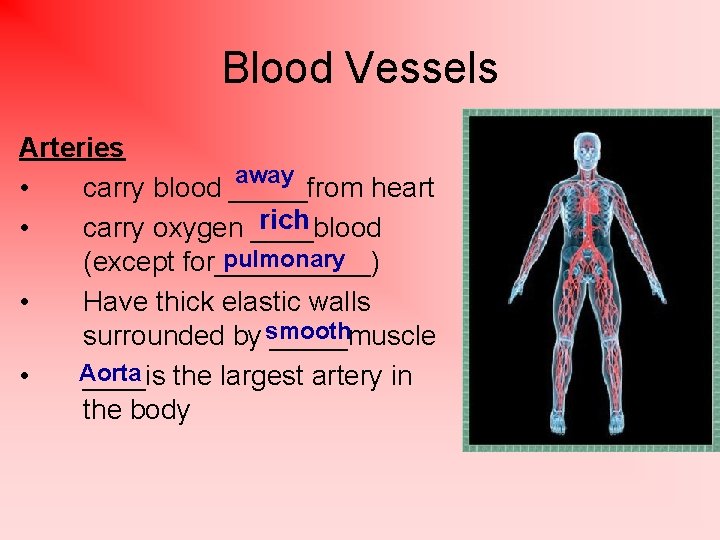
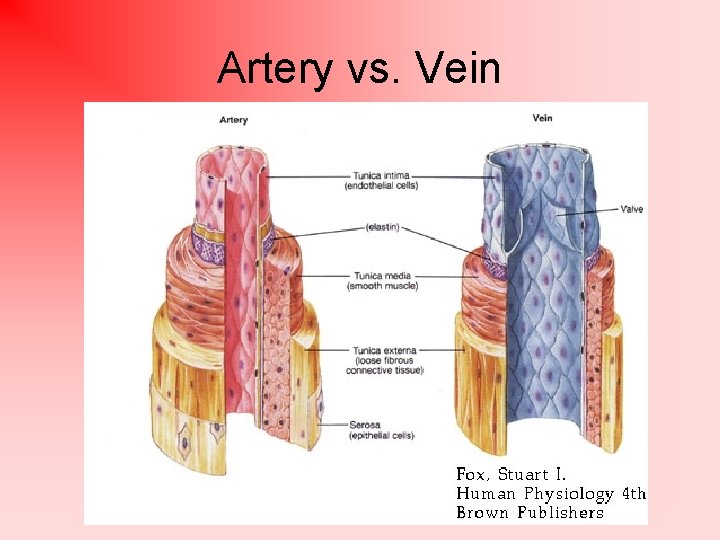
Blood Vessels Arteries away • carry blood _____from heart rich • carry oxygen ____blood pulmonary (except for_____) • Have thick elastic walls surrounded by smooth _____muscle Aorta • ____is the largest artery in the body
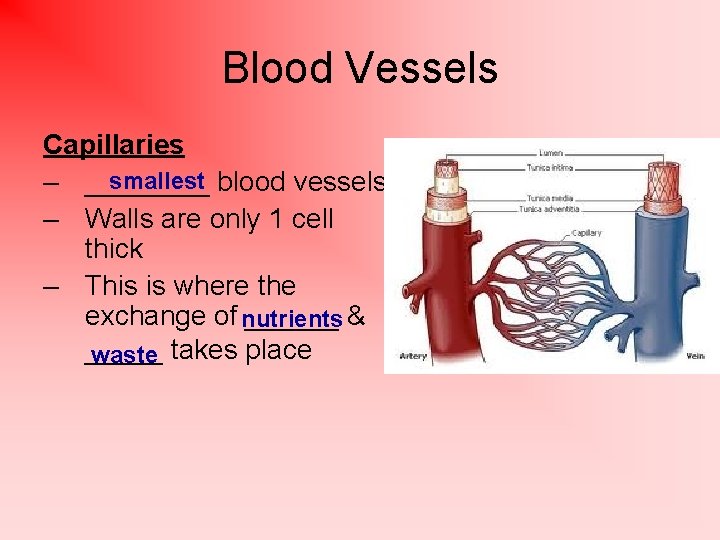
Blood Vessels Capillaries smallest blood vessels – ____ – Walls are only 1 cell thick – This is where the exchange of nutrients ______ & _____ waste takes place
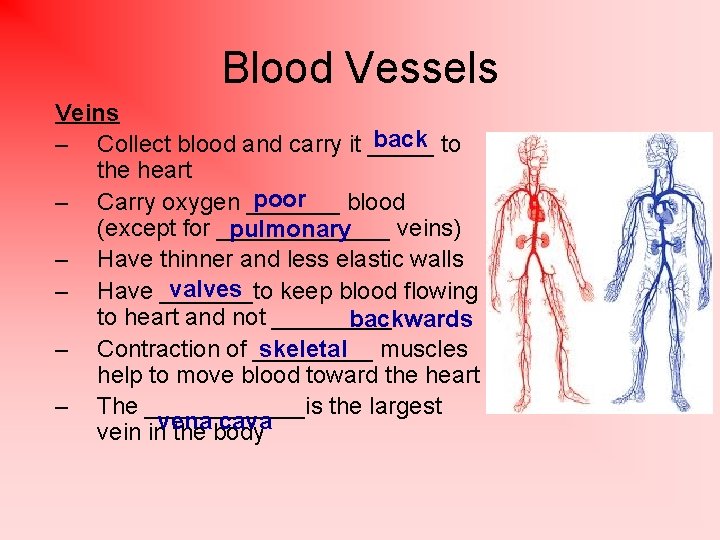
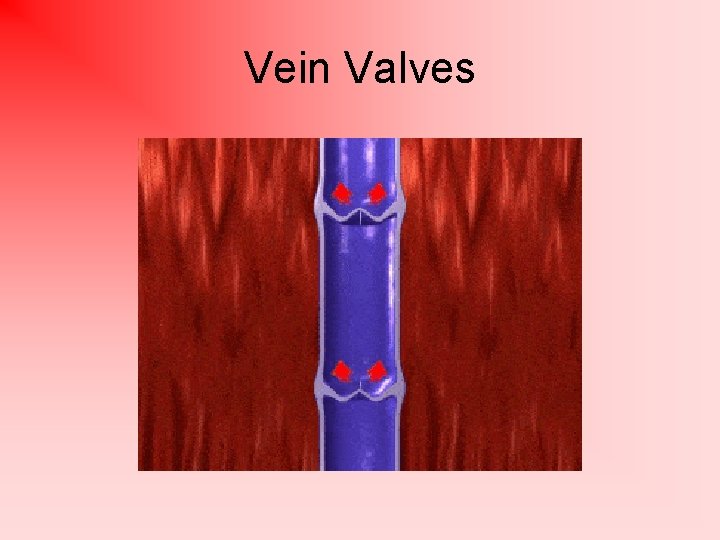
Blood Vessels Veins back to – Collect blood and carry it _____ the heart poor – Carry oxygen _______ blood (except for _______ veins) pulmonary – Have thinner and less elastic walls valves – Have _______to keep blood flowing to heart and not _____ backwards – Contraction of _____ skeletal muscles help to move blood toward the heart – The ______is the largest cava vein invena the body
Artery vs. Vein
Vein Valves
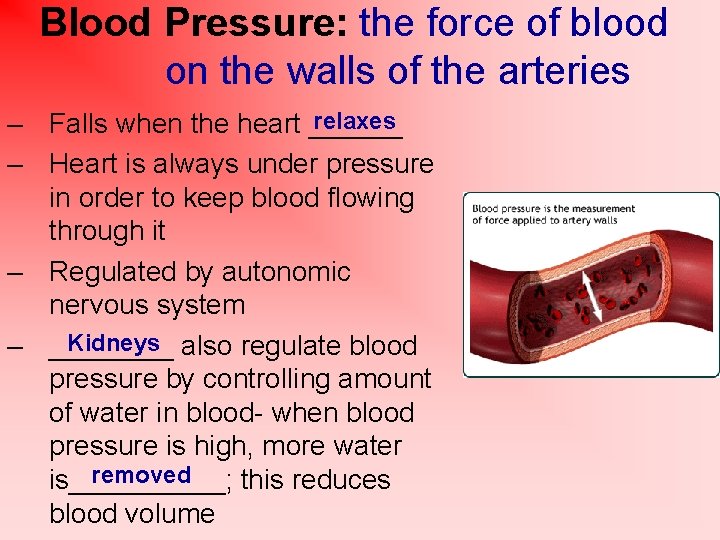
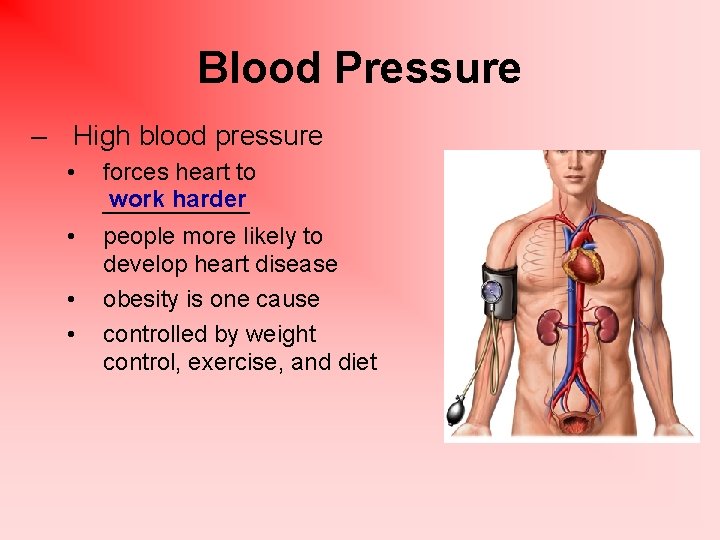
Blood Pressure: the force of blood on the walls of the arteries relaxes – Falls when the heart ______ – Heart is always under pressure in order to keep blood flowing through it – Regulated by autonomic nervous system Kidneys also regulate blood – ____ pressure by controlling amount of water in blood- when blood pressure is high, more water removed is_____; this reduces blood volume
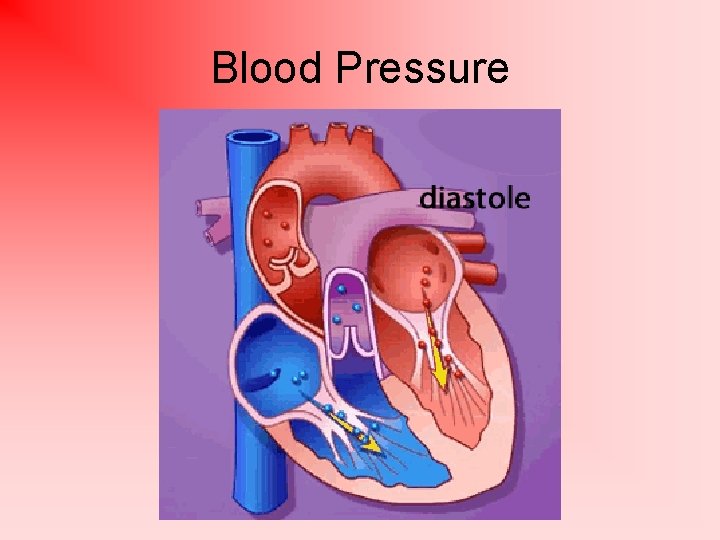
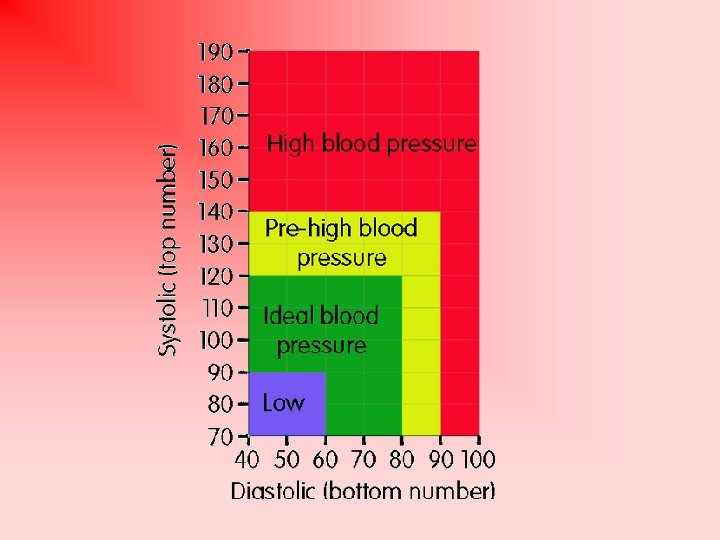
Blood Pressure • Blood against the blood vessel’s walls – The systolic pressure refers to • the pressure recorded while the ventricles pump the blood. – The diastolic pressure refers to • the pressure recorded as the ventricles fill with blood. • A normal blood pressure is 120/80
Blood Pressure
Blood Pressure – High blood pressure • • forces heart to work harder ______ people more likely to develop heart disease obesity is one cause controlled by weight control, exercise, and diet
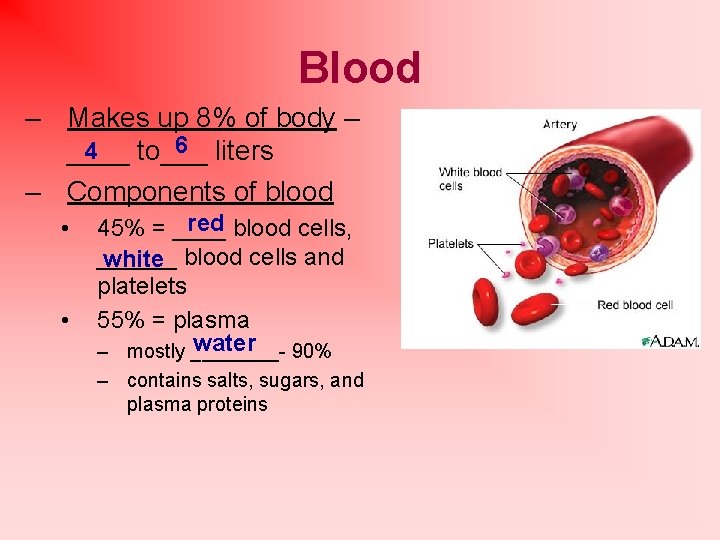
Blood – Makes up 8% of body – 6 liters 4 ____ to___ – Components of blood • • red blood cells, 45% = ______ white blood cells and platelets 55% = plasma water 90% – mostly ____– contains salts, sugars, and plasma proteins
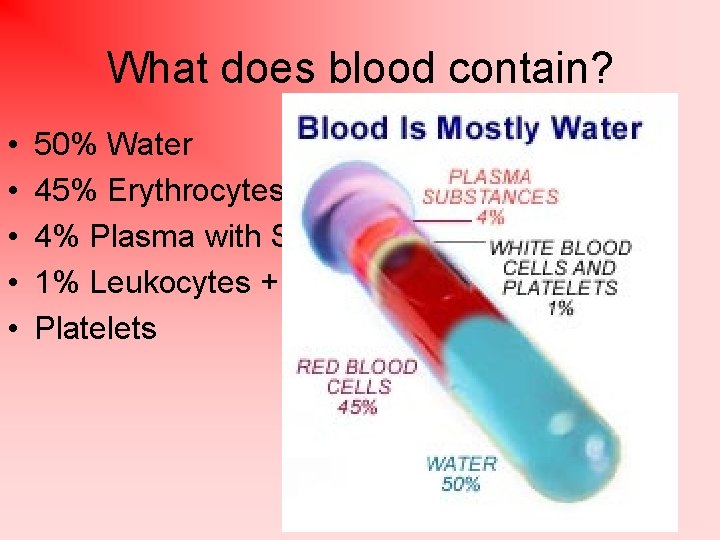
What does blood contain? • • • 50% Water 45% Erythrocytes 4% Plasma with Substances 1% Leukocytes + Platelets
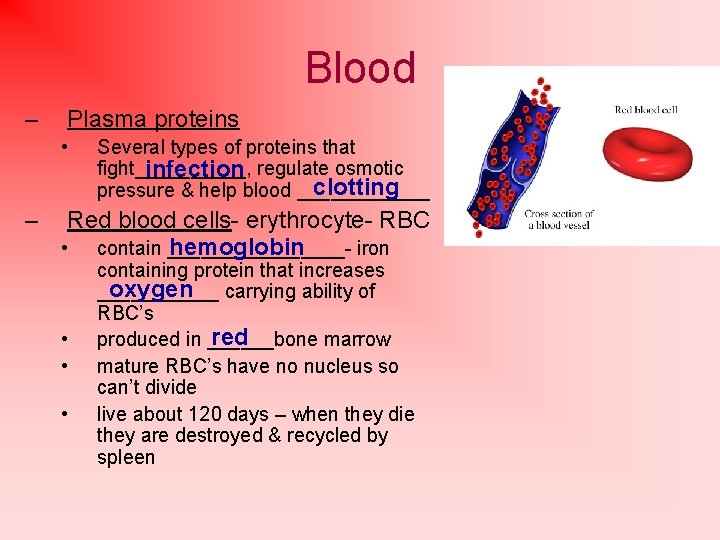
Blood – Plasma proteins • – Several types of proteins that fight_____, infection regulate osmotic clotting pressure & help blood ______ Red blood cells- erythrocyte- RBC hemoglobin • contain ________iron • • • containing protein that increases oxygen carrying ability of ______ RBC’s red produced in ______bone marrow mature RBC’s have no nucleus so can’t divide live about 120 days – when they die they are destroyed & recycled by spleen
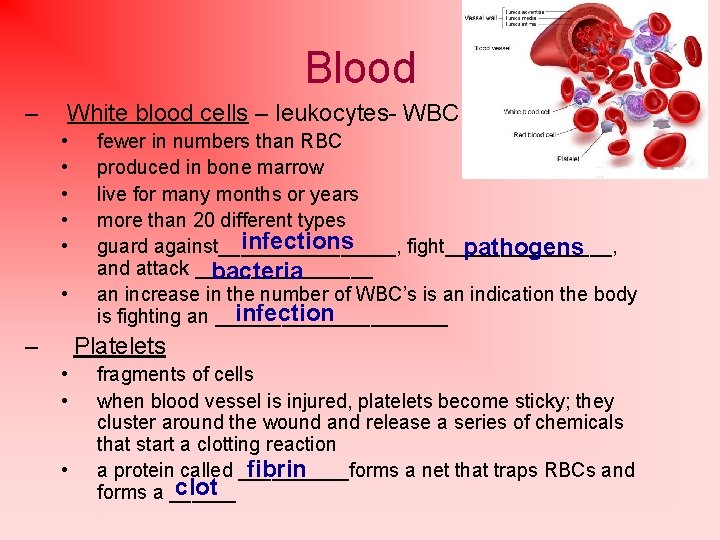
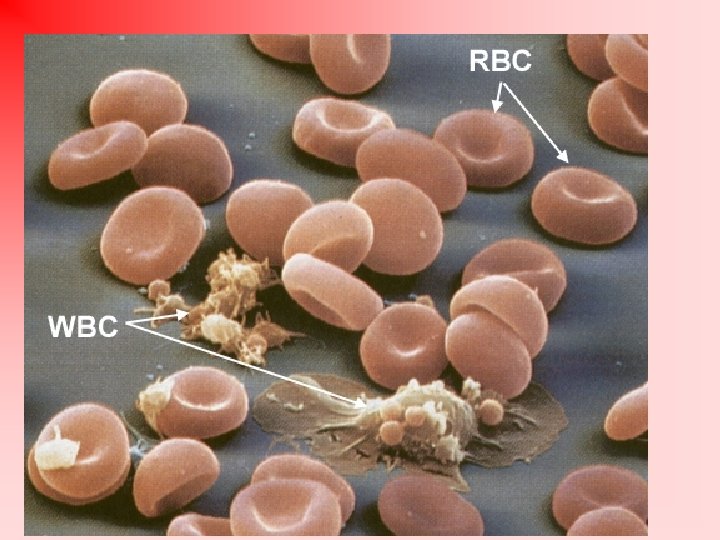
Blood – White blood cells – leukocytes- WBC • • • – fewer in numbers than RBC produced in bone marrow live for many months or years more than 20 different types infections guard against________, fight________, pathogens and attack ________ bacteria an increase in the number of WBC’s is an indication the body infection is fighting an ___________ Platelets • • • fragments of cells when blood vessel is injured, platelets become sticky; they cluster around the wound and release a series of chemicals that start a clotting reaction fibrin a protein called _____forms a net that traps RBCs and clot forms a ______
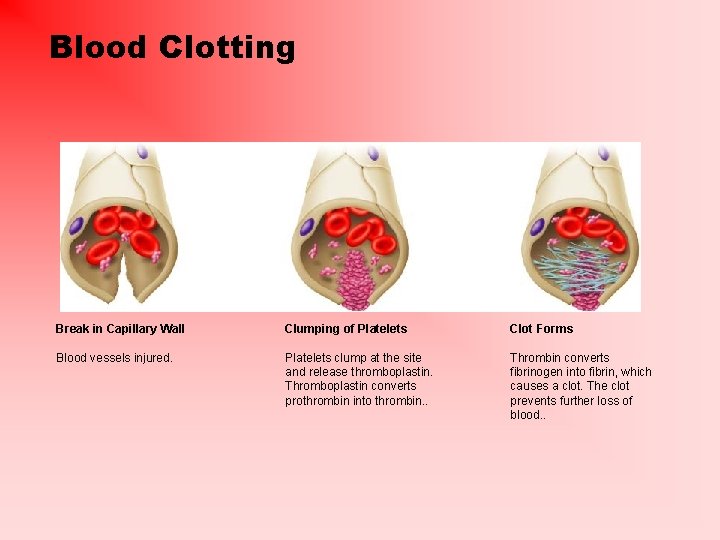
Blood Clotting Break in Capillary Wall Clumping of Platelets Clot Forms Blood vessels injured. Platelets clump at the site and release thromboplastin. Thromboplastin converts prothrombin into thrombin. . Thrombin converts fibrinogen into fibrin, which causes a clot. The clot prevents further loss of blood. .
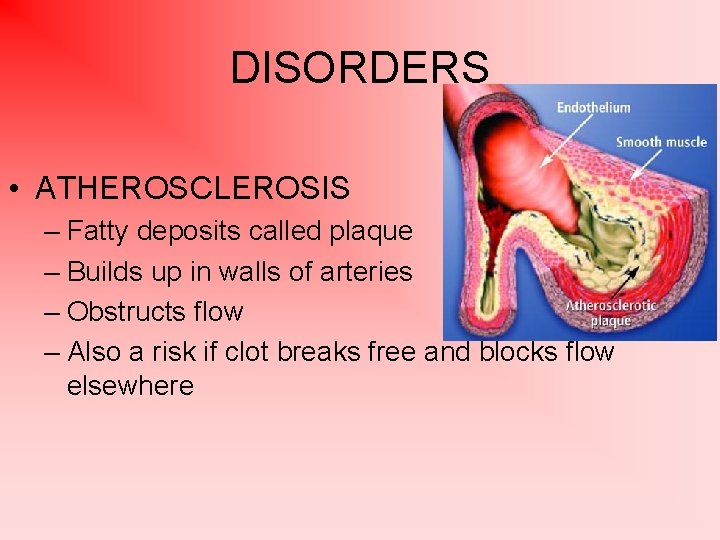
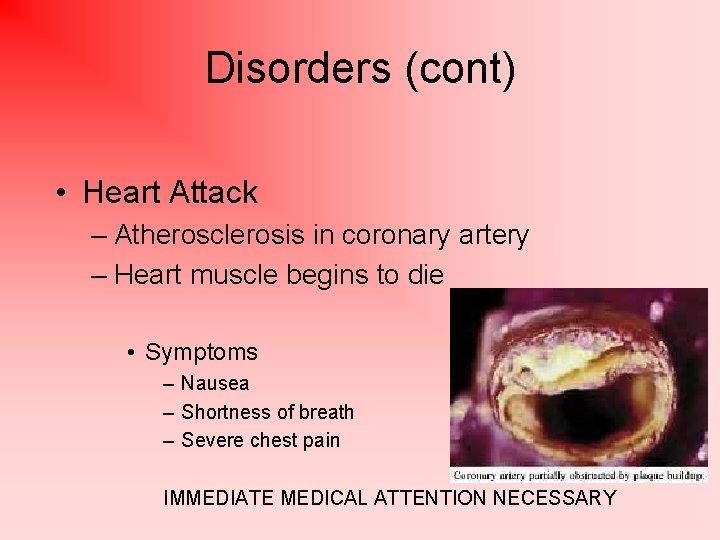
DISORDERS • ATHEROSCLEROSIS – Fatty deposits called plaque – Builds up in walls of arteries – Obstructs flow – Also a risk if clot breaks free and blocks flow elsewhere
Disorders (cont) • Heart Attack – Atherosclerosis in coronary artery – Heart muscle begins to die • Symptoms – Nausea – Shortness of breath – Severe chest pain IMMEDIATE MEDICAL ATTENTION NECESSARY
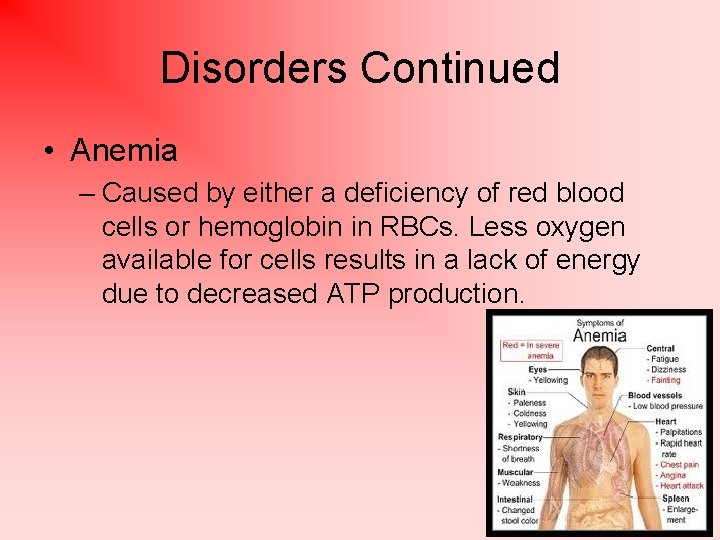
Disorders Continued • Anemia – Caused by either a deficiency of red blood cells or hemoglobin in RBCs. Less oxygen available for cells results in a lack of energy due to decreased ATP production.
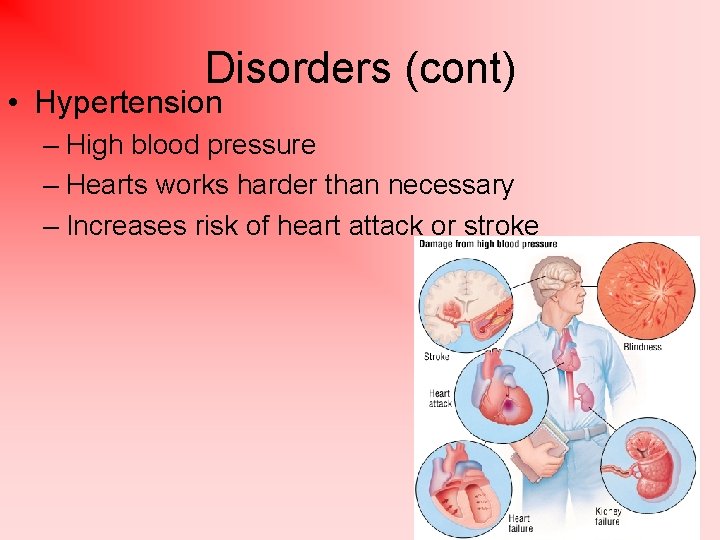
Disorders (cont) • Hypertension – High blood pressure – Hearts works harder than necessary – Increases risk of heart attack or stroke
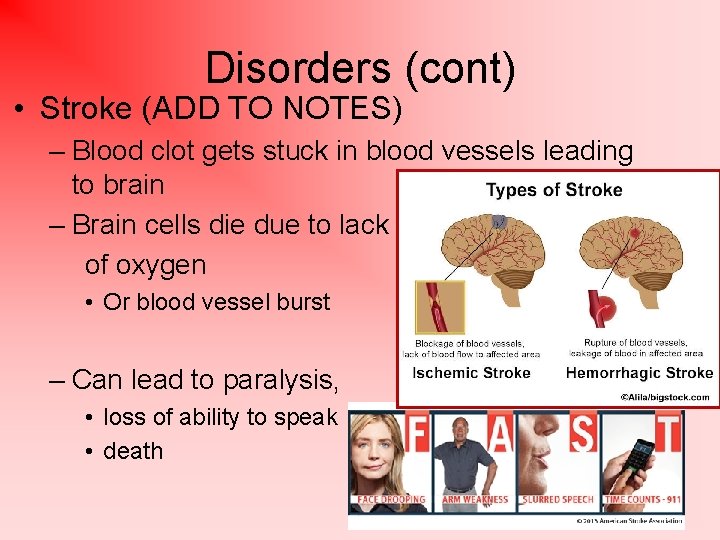
Disorders (cont) • Stroke (ADD TO NOTES) – Blood clot gets stuck in blood vessels leading to brain – Brain cells die due to lack of oxygen • Or blood vessel burst – Can lead to paralysis, • loss of ability to speak • death