
The Circulatory System By Scientist Cindy Functions of
The Circulatory System By Scientist Cindy
Functions of the Circulatory System – Transportation and Regulation • Transportation of… • Respiratory gases • Nutrients • Wastes • Regulation of… • Hormonal • Temperature • Protection • Clotting • Immune
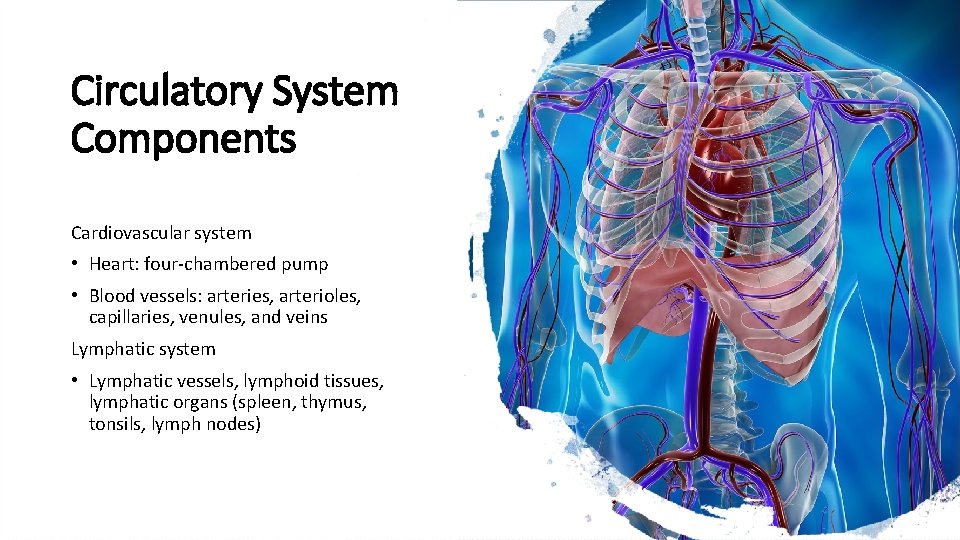
Circulatory System Components Cardiovascular system • Heart: four-chambered pump • Blood vessels: arteries, arterioles, capillaries, venules, and veins Lymphatic system • Lymphatic vessels, lymphoid tissues, lymphatic organs (spleen, thymus, tonsils, lymph nodes)
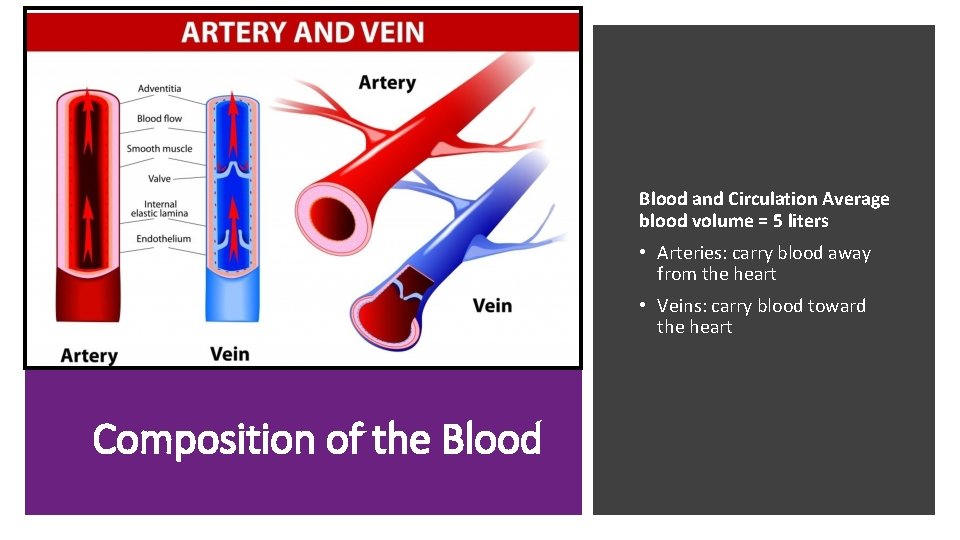
Blood and Circulation Average blood volume = 5 liters • Arteries: carry blood away from the heart • Veins: carry blood toward the heart Composition of the Blood
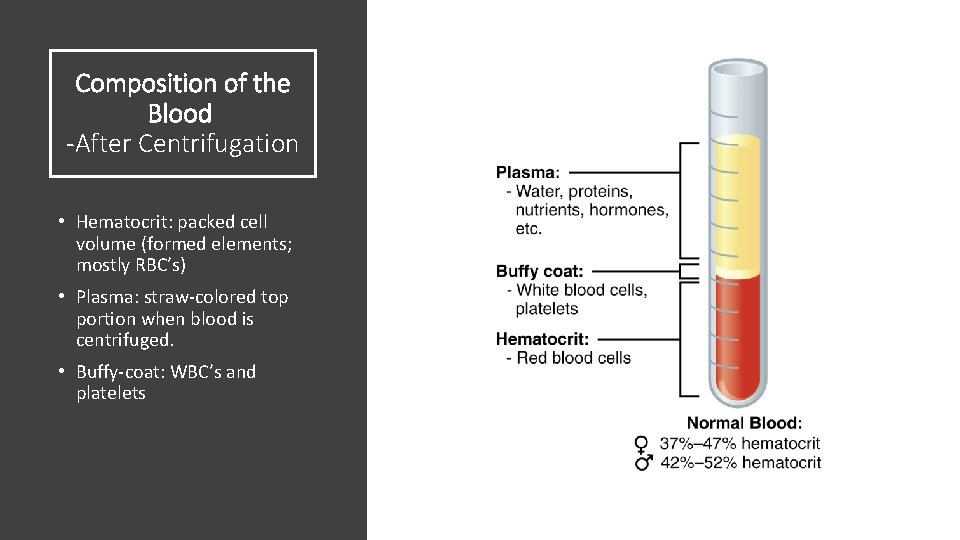
Composition of the Blood -After Centrifugation • Hematocrit: packed cell volume (formed elements; mostly RBC’s) • Plasma: straw-colored top portion when blood is centrifuged. • Buffy-coat: WBC’s and platelets
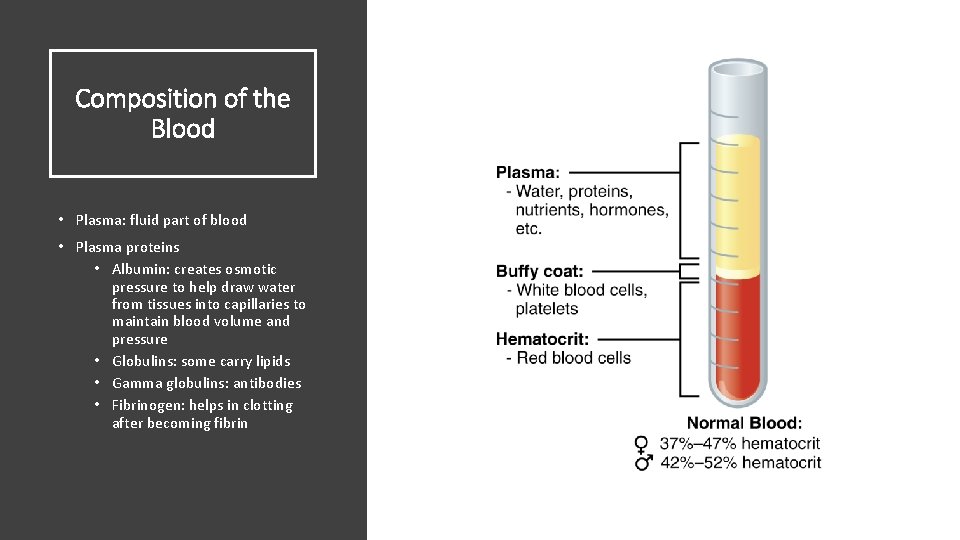
Composition of the Blood • Plasma: fluid part of blood • Plasma proteins • Albumin: creates osmotic pressure to help draw water from tissues into capillaries to maintain blood volume and pressure • Globulins: some carry lipids • Gamma globulins: antibodies • Fibrinogen: helps in clotting after becoming fibrin
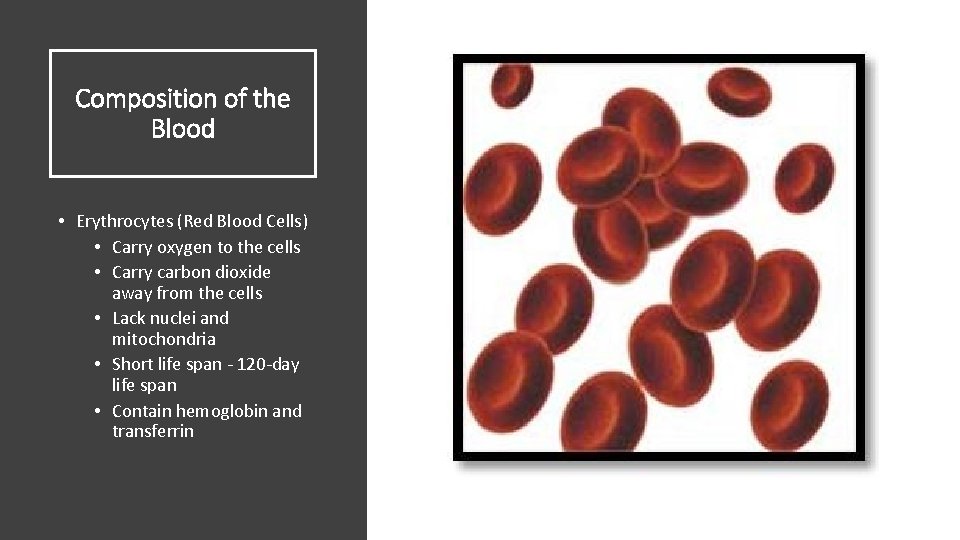
Composition of the Blood • Erythrocytes (Red Blood Cells) • Carry oxygen to the cells • Carry carbon dioxide away from the cells • Lack nuclei and mitochondria • Short life span - 120 -day life span • Contain hemoglobin and transferrin
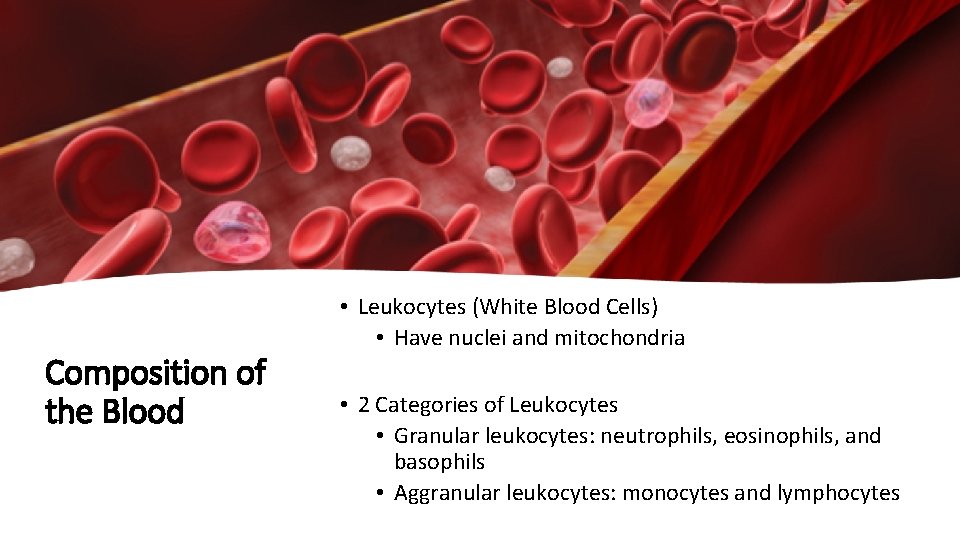
Composition of the Blood • Leukocytes (White Blood Cells) • Have nuclei and mitochondria • 2 Categories of Leukocytes • Granular leukocytes: neutrophils, eosinophils, and basophils • Aggranular leukocytes: monocytes and lymphocytes
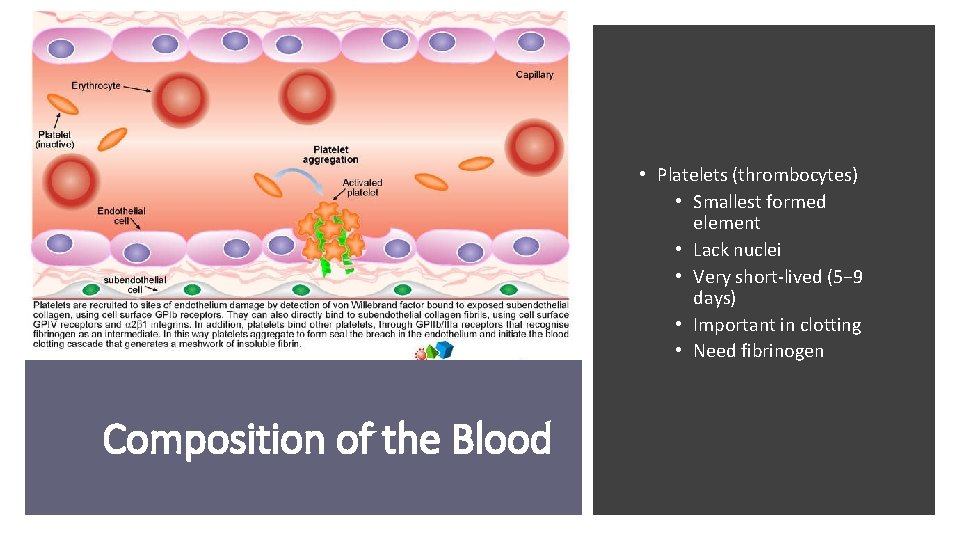
• Platelets (thrombocytes) • Smallest formed element • Lack nuclei • Very short-lived (5− 9 days) • Important in clotting • Need fibrinogen Composition of the Blood
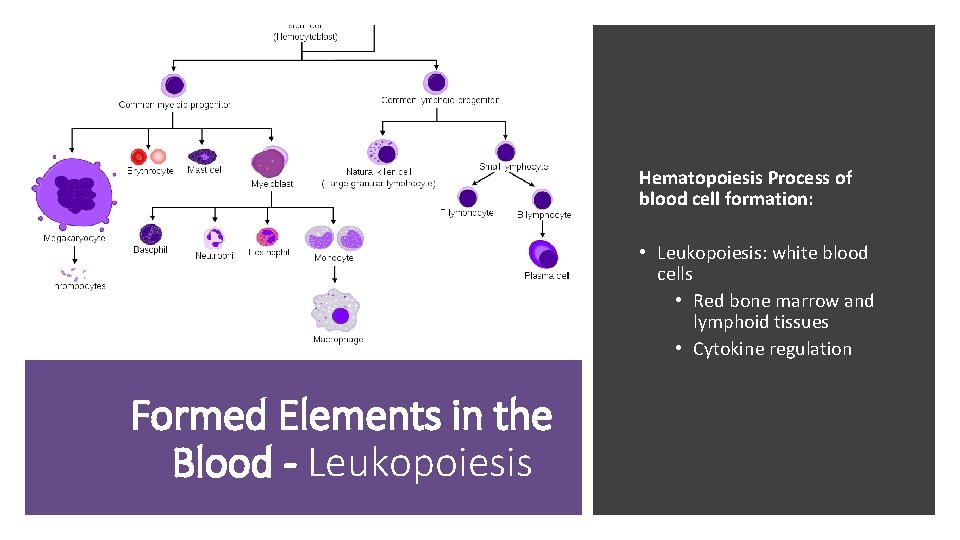
Hematopoiesis Process of blood cell formation: • Leukopoiesis: white blood cells • Red bone marrow and lymphoid tissues • Cytokine regulation Formed Elements in the Blood - Leukopoiesis
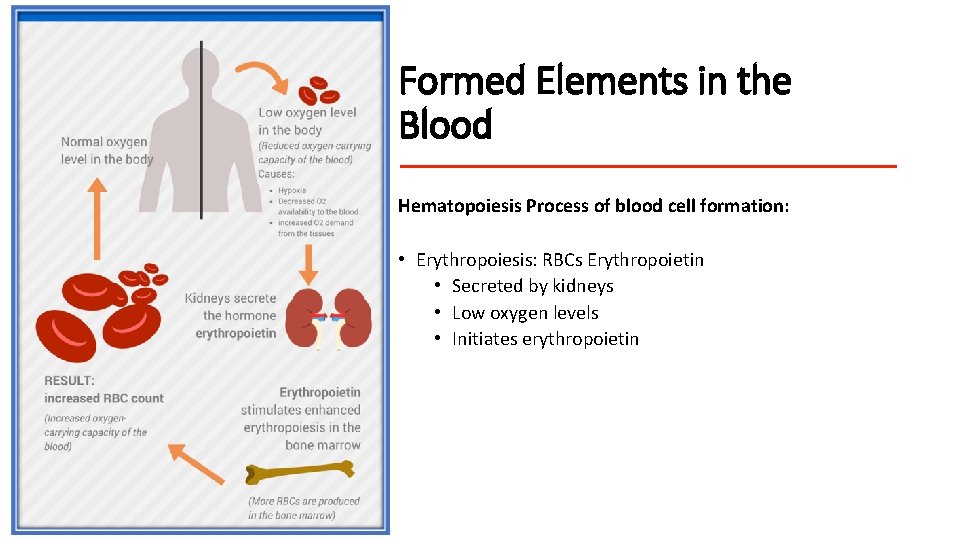
Formed Elements in the Blood Hematopoiesis Process of blood cell formation: • Erythropoiesis: RBCs Erythropoietin • Secreted by kidneys • Low oxygen levels • Initiates erythropoietin
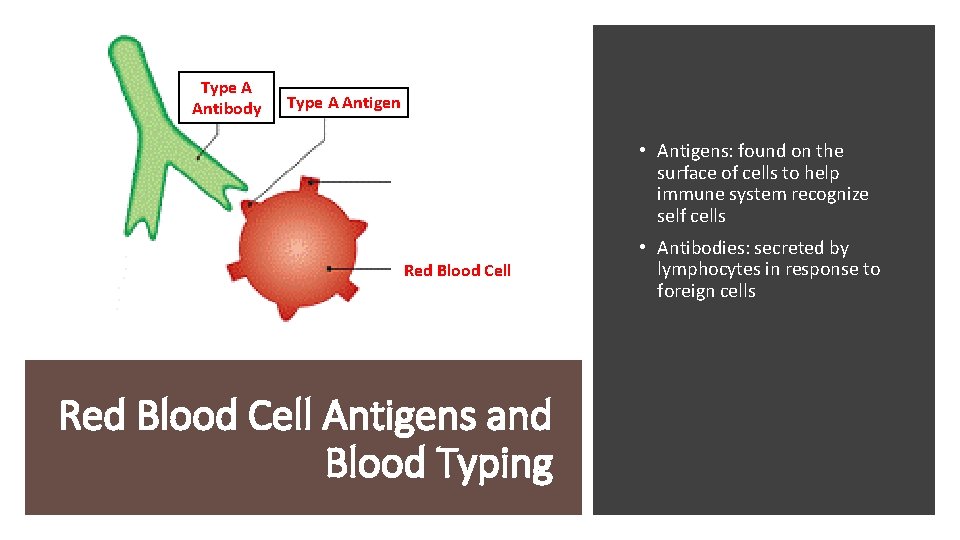
Type A Antibody Type A Antigen • Antigens: found on the surface of cells to help immune system recognize self cells Red Blood Cell Antigens and Blood Typing • Antibodies: secreted by lymphocytes in response to foreign cells
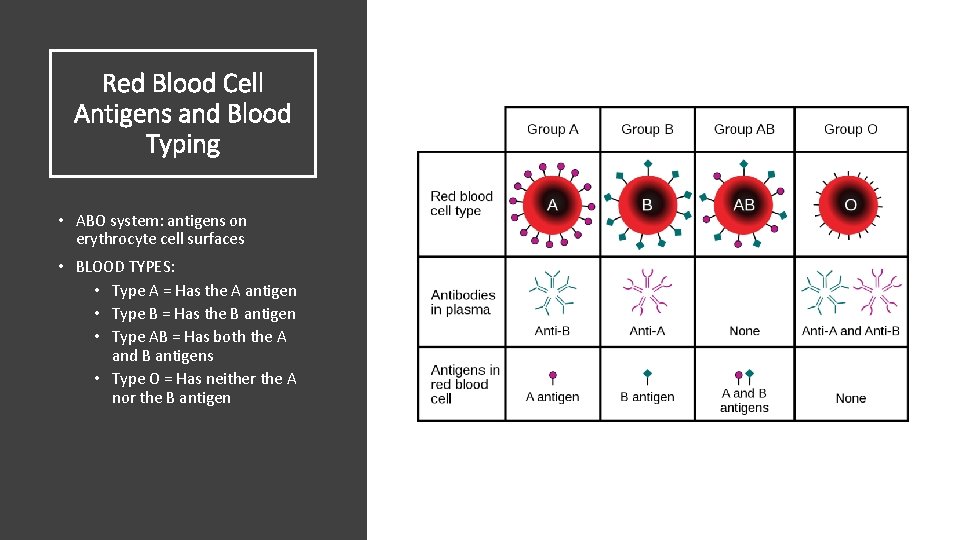
Red Blood Cell Antigens and Blood Typing • ABO system: antigens on erythrocyte cell surfaces • BLOOD TYPES: • Type A = Has the A antigen • Type B = Has the B antigen • Type AB = Has both the A and B antigens • Type O = Has neither the A nor the B antigen
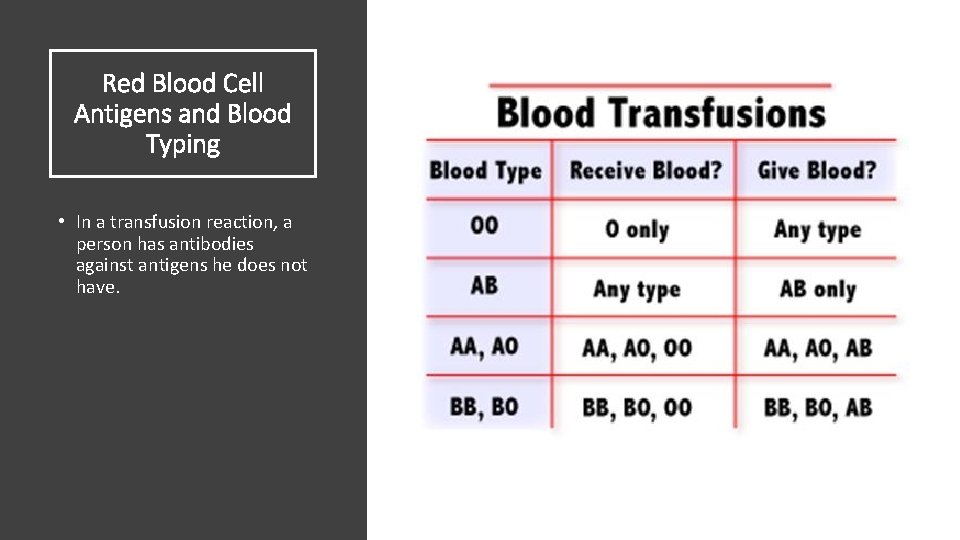
Red Blood Cell Antigens and Blood Typing • In a transfusion reaction, a person has antibodies against antigens he does not have.
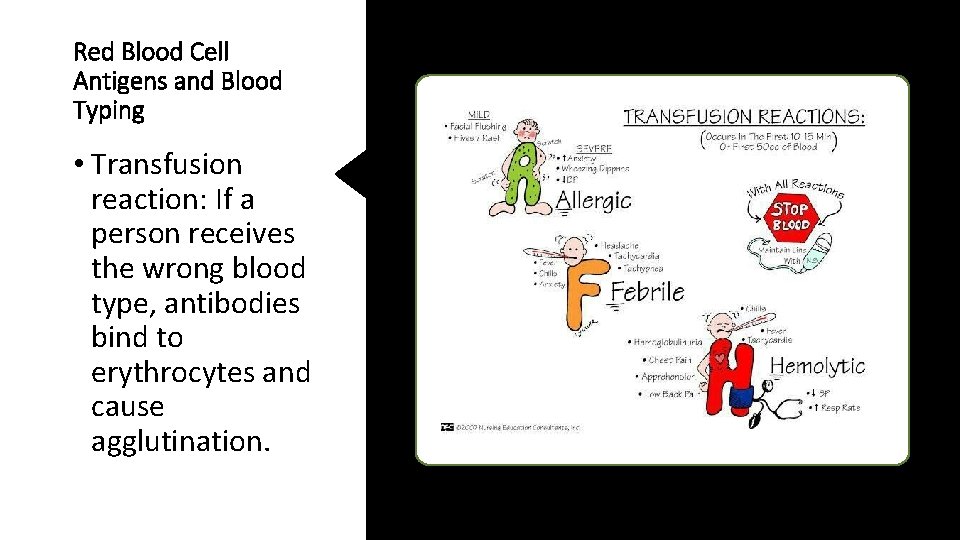
Red Blood Cell Antigens and Blood Typing • Transfusion reaction: If a person receives the wrong blood type, antibodies bind to erythrocytes and cause agglutination.
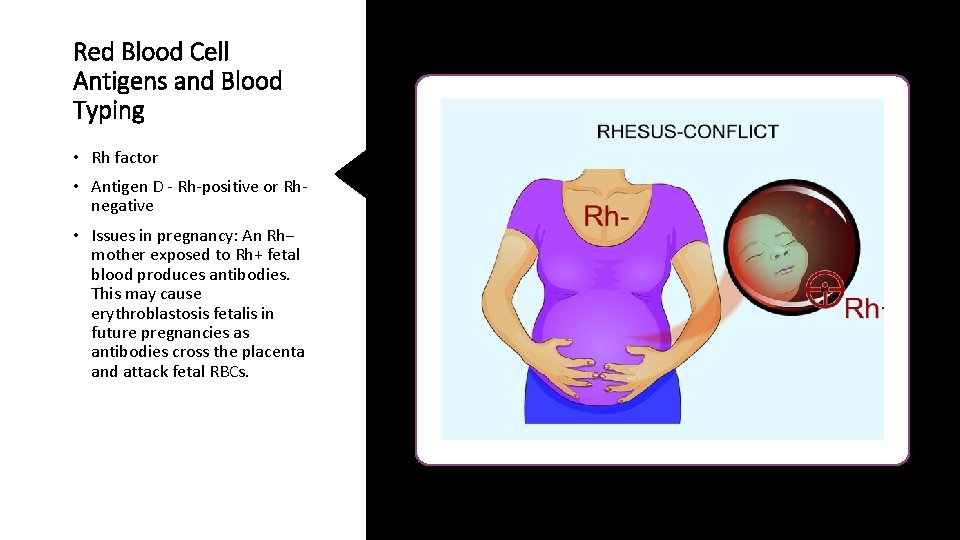
Red Blood Cell Antigens and Blood Typing • Rh factor • Antigen D - Rh-positive or Rhnegative • Issues in pregnancy: An Rh− mother exposed to Rh+ fetal blood produces antibodies. This may cause erythroblastosis fetalis in future pregnancies as antibodies cross the placenta and attack fetal RBCs.
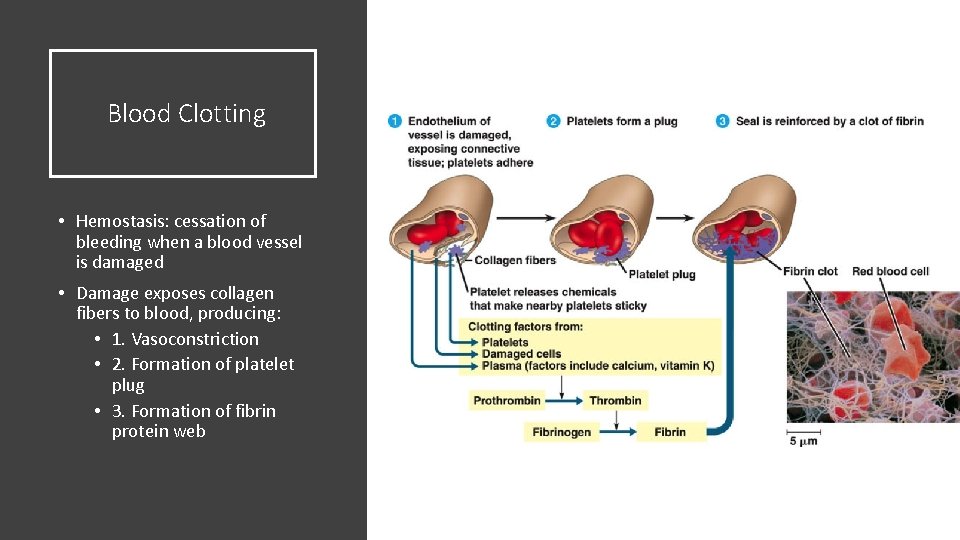
Blood Clotting • Hemostasis: cessation of bleeding when a blood vessel is damaged • Damage exposes collagen fibers to blood, producing: • 1. Vasoconstriction • 2. Formation of platelet plug • 3. Formation of fibrin protein web
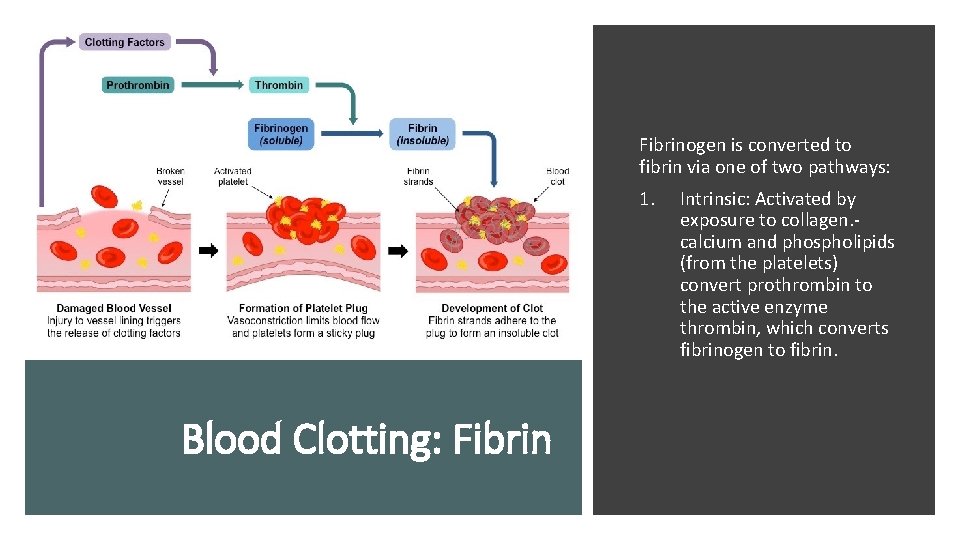
Fibrinogen is converted to fibrin via one of two pathways: 1. Blood Clotting: Fibrin Intrinsic: Activated by exposure to collagen. calcium and phospholipids (from the platelets) convert prothrombin to the active enzyme thrombin, which converts fibrinogen to fibrin.
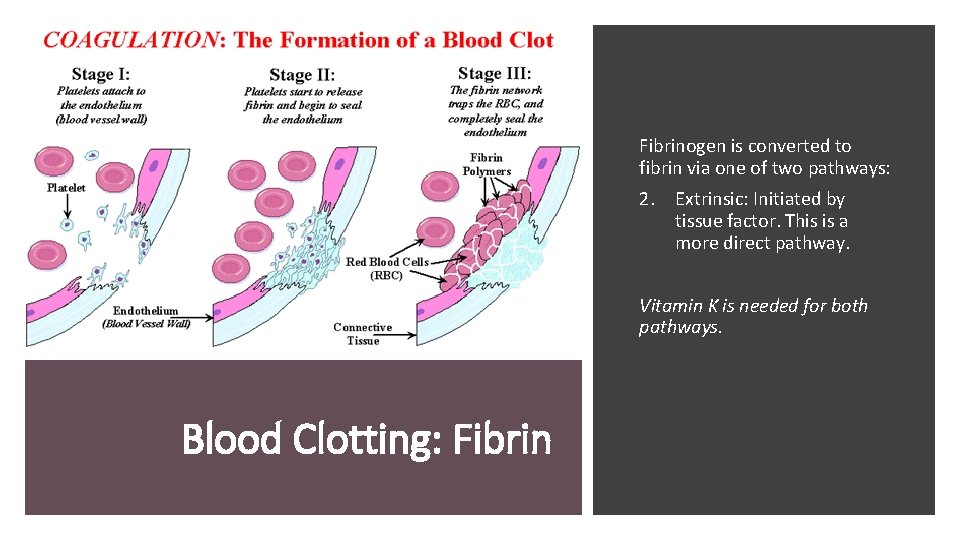
Fibrinogen is converted to fibrin via one of two pathways: 2. Extrinsic: Initiated by tissue factor. This is a more direct pathway. Vitamin K is needed for both pathways. Blood Clotting: Fibrin
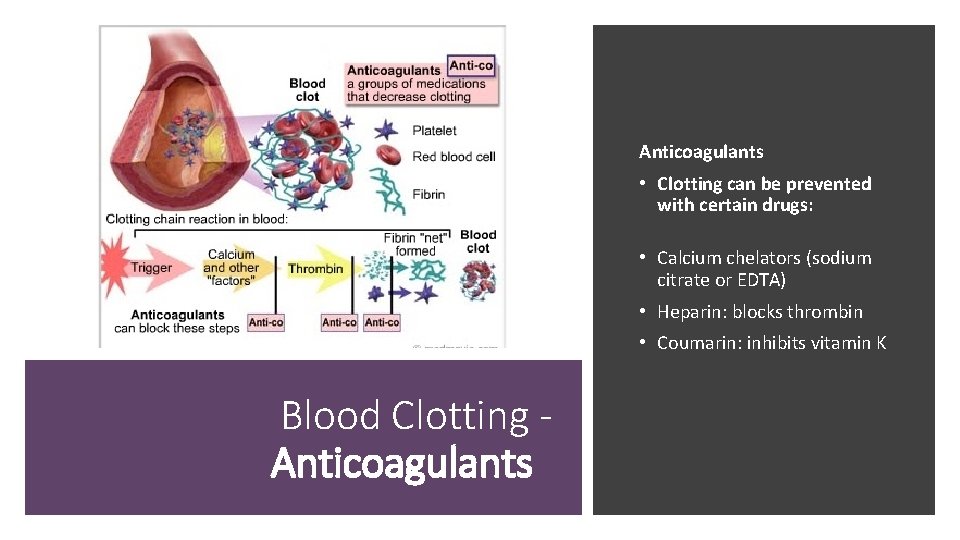
Anticoagulants • Clotting can be prevented with certain drugs: • Calcium chelators (sodium citrate or EDTA) • Heparin: blocks thrombin • Coumarin: inhibits vitamin K Blood Clotting Anticoagulants
Checkpoint • How does the circulatory system provide protection for the body? . • A. prevents blood loss through clotting • B. leukocytes fight infection • C. provides the body's immunity • D. All of the choices are correct
Checkpoint 2. Blood is composed of formed elements and plasma. (T/F) 3. The "buffy coat" is made up of thrombocytes and leukocytes. (T/F) 4. How much blood does the average-sized adult have? 5. Having no nucleus, a biconcave shape, and the function of gas transport would describe a(n) ______.
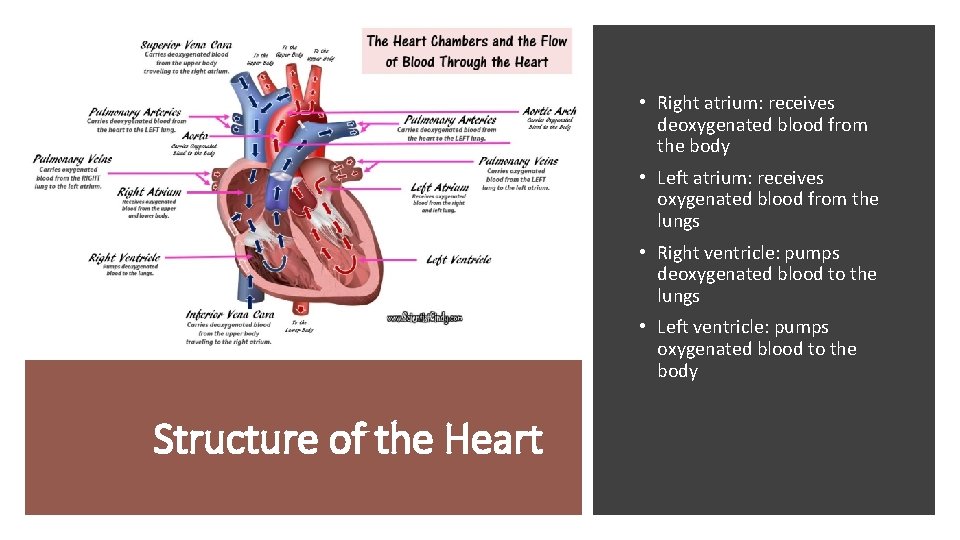
• Right atrium: receives deoxygenated blood from the body • Left atrium: receives oxygenated blood from the lungs • Right ventricle: pumps deoxygenated blood to the lungs • Left ventricle: pumps oxygenated blood to the body Structure of the Heart
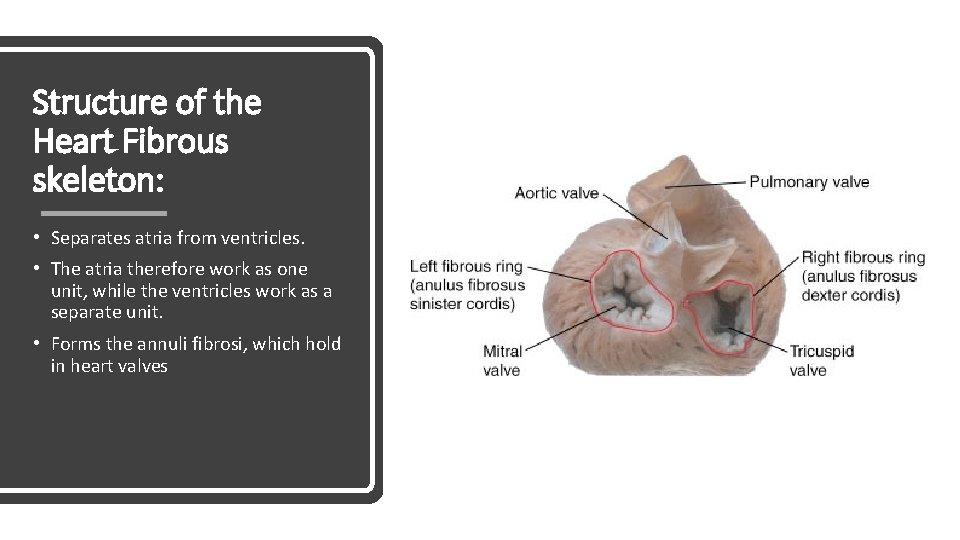
Structure of the Heart Fibrous skeleton: • Separates atria from ventricles. • The atria therefore work as one unit, while the ventricles work as a separate unit. • Forms the annuli fibrosi, which hold in heart valves
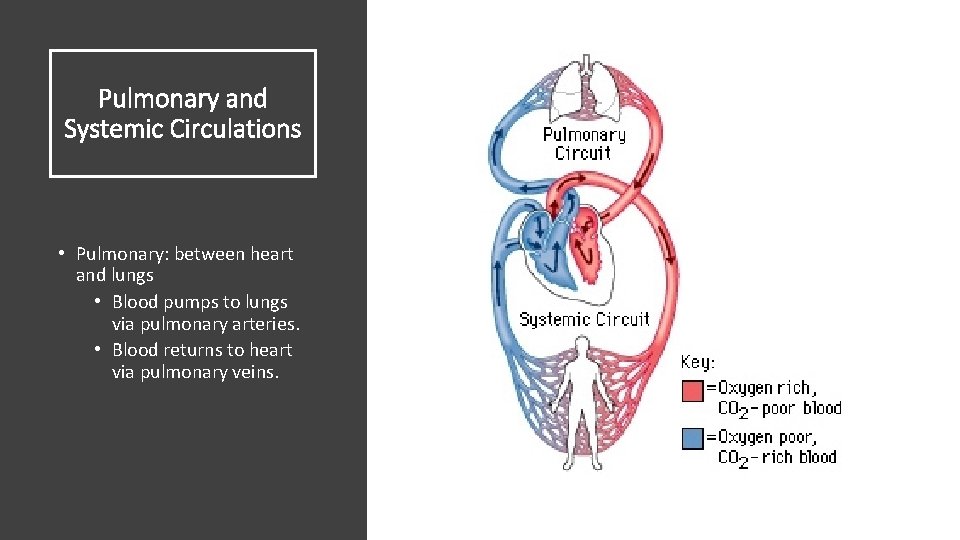
Pulmonary and Systemic Circulations • Pulmonary: between heart and lungs • Blood pumps to lungs via pulmonary arteries. • Blood returns to heart via pulmonary veins.
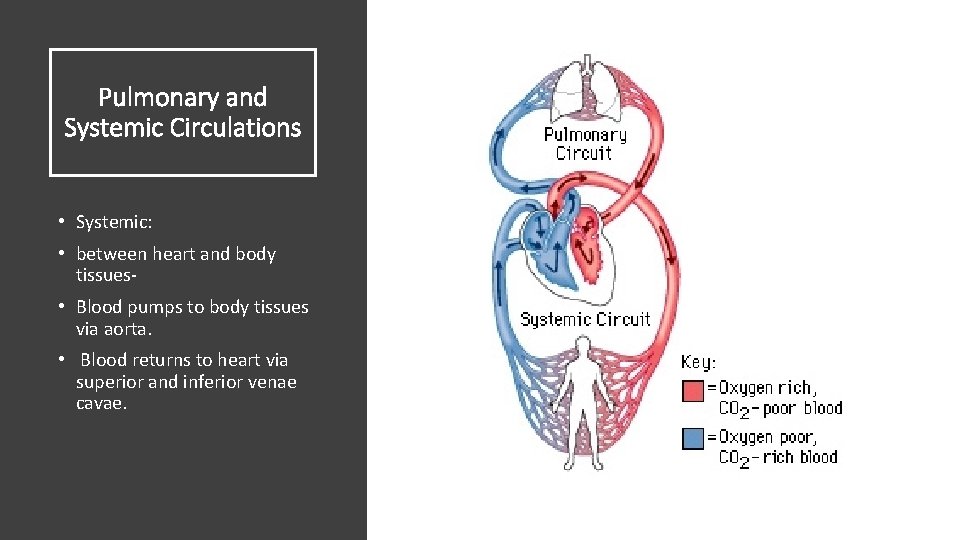
Pulmonary and Systemic Circulations • Systemic: • between heart and body tissues • Blood pumps to body tissues via aorta. • Blood returns to heart via superior and inferior venae cavae.
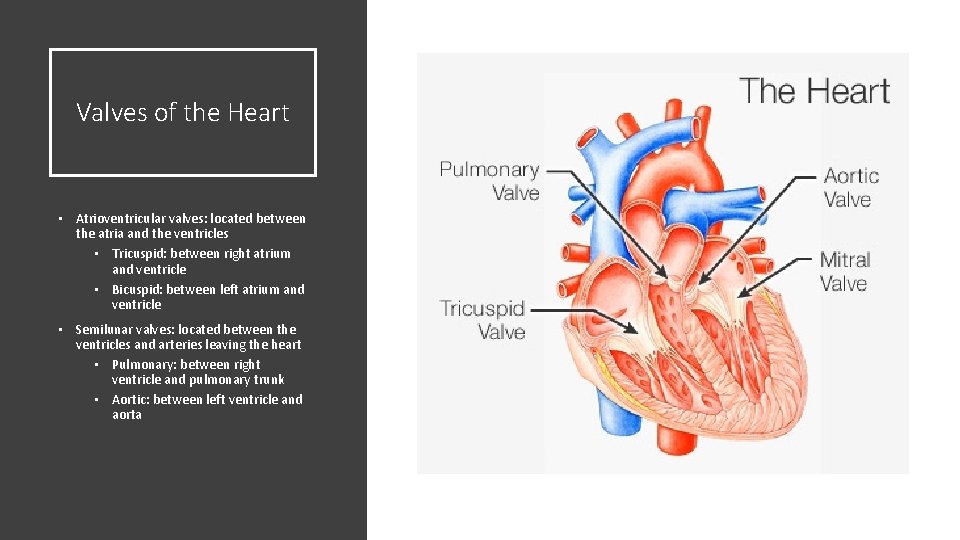
Valves of the Heart • Atrioventricular valves: located between the atria and the ventricles • Tricuspid: between right atrium and ventricle • Bicuspid: between left atrium and ventricle • Semilunar valves: located between the ventricles and arteries leaving the heart • Pulmonary: between right ventricle and pulmonary trunk • Aortic: between left ventricle and aorta
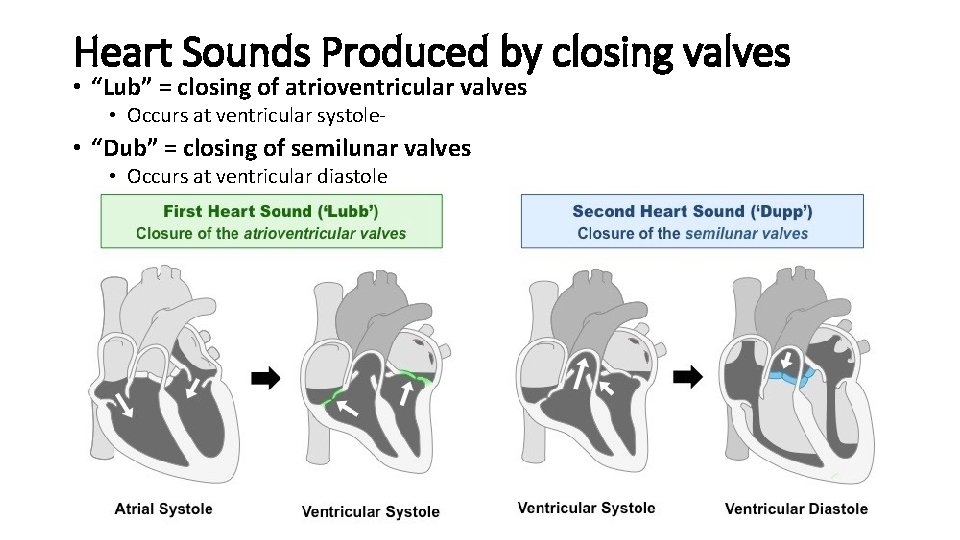
Heart Sounds Produced by closing valves • “Lub” = closing of atrioventricular valves • Occurs at ventricular systole- • “Dub” = closing of semilunar valves • Occurs at ventricular diastole
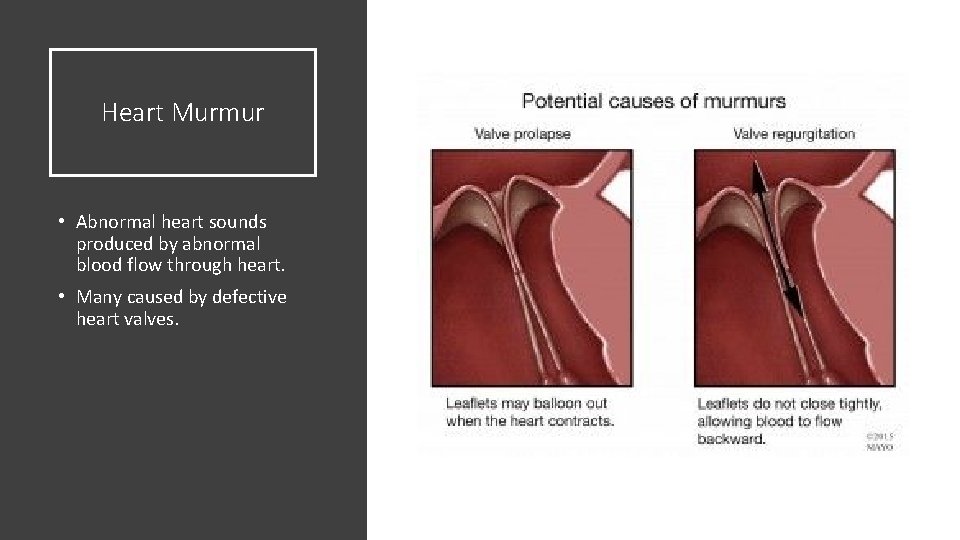
Heart Murmur • Abnormal heart sounds produced by abnormal blood flow through heart. • Many caused by defective heart valves.
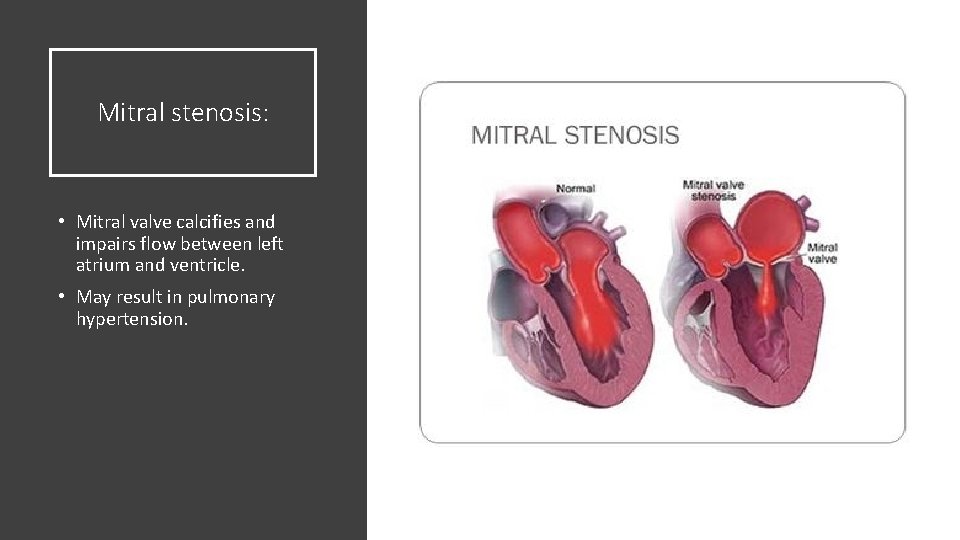
Mitral stenosis: • Mitral valve calcifies and impairs flow between left atrium and ventricle. • May result in pulmonary hypertension.
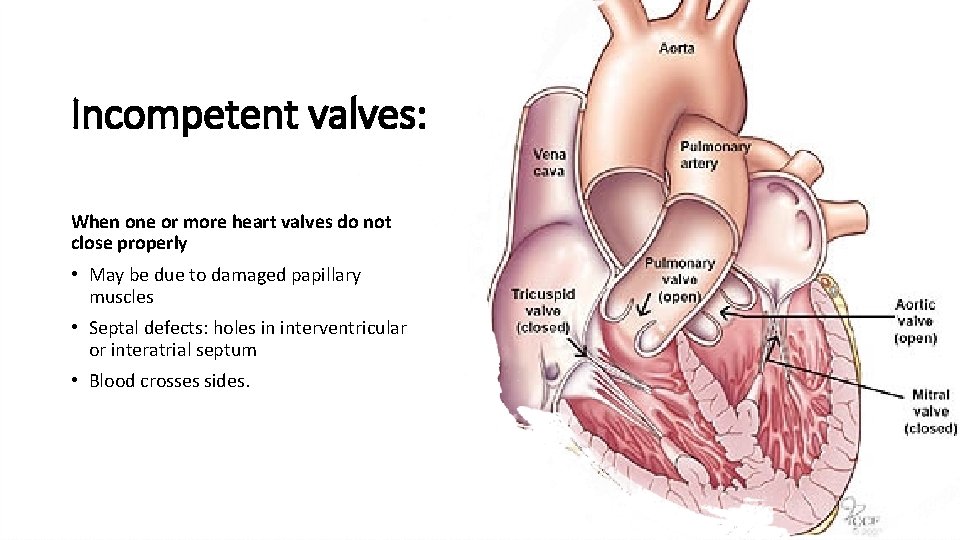
Incompetent valves: When one or more heart valves do not close properly • May be due to damaged papillary muscles • Septal defects: holes in interventricular or interatrial septum • Blood crosses sides.
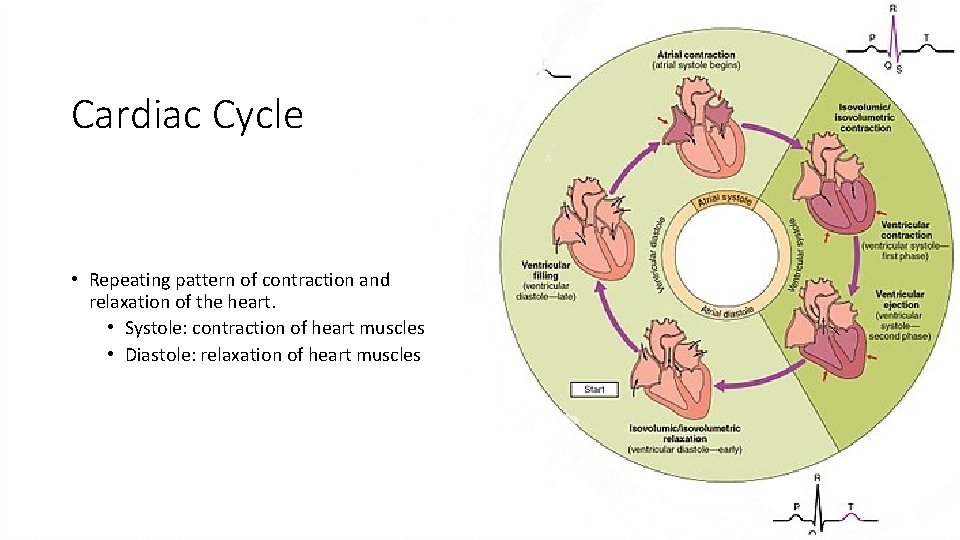
Cardiac Cycle • Repeating pattern of contraction and relaxation of the heart. • Systole: contraction of heart muscles • Diastole: relaxation of heart muscles
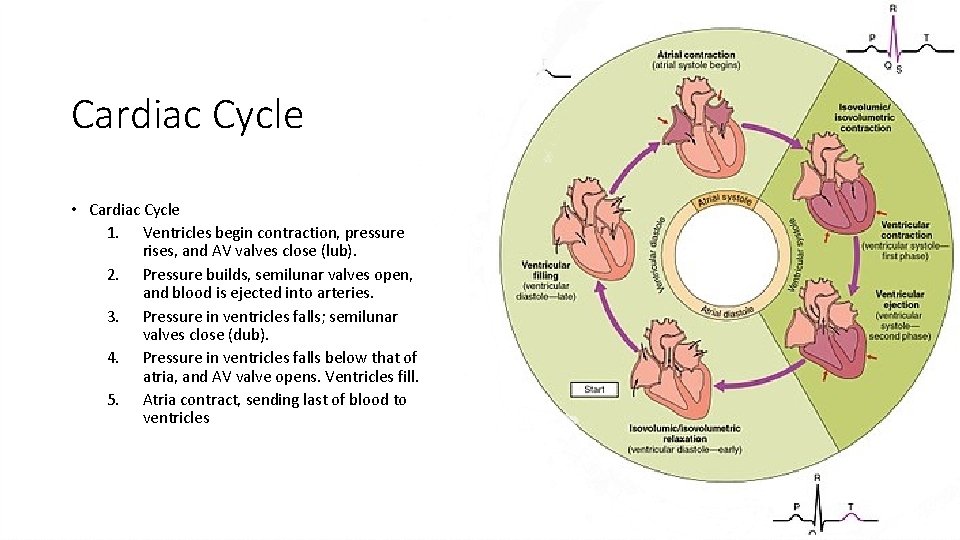
Cardiac Cycle • Cardiac Cycle 1. Ventricles begin contraction, pressure rises, and AV valves close (lub). 2. Pressure builds, semilunar valves open, and blood is ejected into arteries. 3. Pressure in ventricles falls; semilunar valves close (dub). 4. Pressure in ventricles falls below that of atria, and AV valve opens. Ventricles fill. 5. Atria contract, sending last of blood to ventricles
- Slides: 33