
The Circulatory System Blood Human Anatomy Physiology II
The Circulatory System: Blood Human Anatomy & Physiology II Dr. Rivera
Circulatory System • Circulatory system consists of the heart, blood vessels and blood • Cardiovascular system refers only to the heart and blood vessels • Hematology – the study of blood • Functions of circulatory system – transport • O 2, CO 2, nutrients, wastes, hormones, and stem cells – protection • inflammation, limit spread of infection, destroy microorganisms and cancer cells, neutralize toxins, and initiates clotting – regulation • fluid balance, stabilizes p. H of ECF, and temperature control
Physical Characteristics of Blood • Blood is denser and more viscous than water and feels slightly sticky. • The temperature of blood is 38°C (100. 4°F), about 1°C higher than oral or rectal body temperature and it has a slightly alkaline p. H ranging from 7. 35 to 7. 45! • Blood constitutes about 20% of extracellular fluid, amounting for 8% of total body mass.
Physical Characteristics of Blood • The blood volume is 5 to 6 liters (1. 5 gal) in an average-sized adult male and 4 to 5 liters (1. 2 gal) in an average-sized adult female. • Several hormonal negative feedback systems ensure that blood volume and osmotic pressure remain relatively constant.

Components and General Properties of Blood • Adults have 4 -6 L of blood • A liquid connective tissue consisting of cells and extracellular matrix – plasma – matrix of blood • a clear, light yellow fluid – formed elements - blood cells and cell fragments • red blood cells, white blood cells, and platelets

Components and General Properties of Blood • Seven kinds of formed elements – erythrocytes - red blood cells (RBCs) – platelets • cell fragments from special cell in bone marrow – leukocytes - white blood cells (WBCs) • five leukocyte types divided into two categories: • granulocytes (with granules) – neutrophils – eosinophils – basophils • agranulocytes (without granules) – lymphocytes – monocytes

Formed Elements of Blood Monocyte Small lymphocyte Platelets Neutrophil Eosinophil Small lymphocyte Erythrocyte Young (band) neutrophil Neutrophil Monocyte Large lymphocyte Neutrophil Basophil Figure 18. 1 Copyright © The Mc. Graw-Hill Companies, Inc. Permission required for reproduction or display.

Separating Plasma From Formed Elements of Blood Copyright © The Mc. Graw-Hill Companies, Inc. Permission required for reproduction or display. Withdraw blood • Hematocrit - centrifuge blood to separate components – erythrocytes are heaviest and settle first Centrifuge – white blood cells and platelets Plasma (55% of whole blood) • 1% total volume • buffy coat – plasma Buffy coat: leukocytes and platelets (<1% of whole blood) Erythrocytes (45% of whole blood) Figure 18. 2 • 37% to 52% total volume Formed elements • the remainder of volume • 47% - 63% • complex mixture of water, proteins, nutrients, electrolytes, nitrogenous wastes, hormones, and gases
Plasma and Plasma Proteins • Plasma – liquid portion of blood – serum – remaining fluid when blood clots and the solids are removed • identical to plasma except for the absence of fibrinogen • 3 major categories of plasma proteins – albumins – smallest and most abundant • contributes to viscosity and osmolarity, influences blood pressure, flow and fluid balance – globulins (antibodies) • provide immune system functions • alpha, beta and gamma globulins – fibrinogen • precursor of fibrin threads that help form blood clots • Plasma proteins formed by liver – except globulins (produced by plasma cells)

Non-protein Components of Plasma • Nitrogenous compounds – free amino acids • from dietary protein or tissue breakdown – nitrogenous wastes (urea) • toxic end products of catabolism • normally removed by the kidneys • Nutrients – glucose, vitamins, fats, cholesterol, phospholipids, and minerals • Dissolved O 2, CO 2, and nitrogen • Electrolytes – Na+ makes up 90% of plasma cations
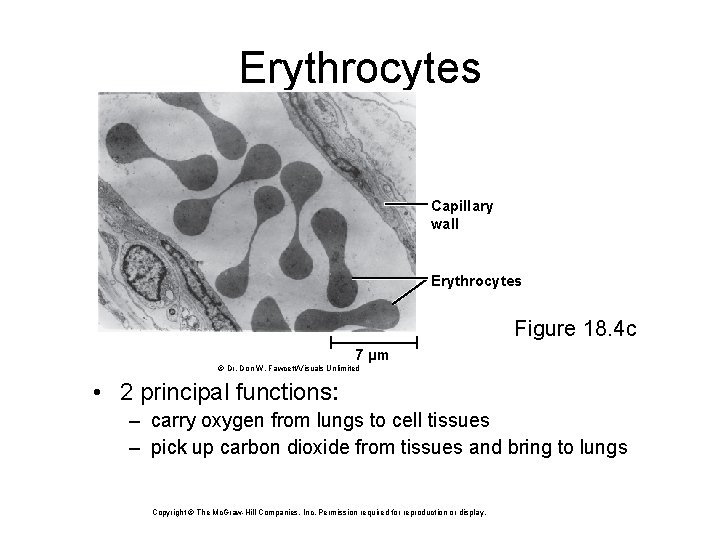
Erythrocytes Capillary wall Erythrocytes Figure 18. 4 c 7 µm © Dr. Don W. Fawcett/Visuals Unlimited • 2 principal functions: – carry oxygen from lungs to cell tissues – pick up carbon dioxide from tissues and bring to lungs Copyright © The Mc. Graw-Hill Companies, Inc. Permission required for reproduction or display.

Erythrocytes (RBCs) • Disc-shaped cell with thick rim Copyright © The Mc. Graw-Hill Companies, Inc. Permission required for reproduction or display. – 7. 5 M diameter and 2. 0 m thick at rim – lose nearly all organelles during development Surfaceview • lack mitochondria 7. 5 µm – anaerobic fermentation to produce ATP • lack of nucleus and DNA – no protein synthesis or mitosis – blood type determined by surface glycoprotein and glycolipids – cytoskeletal proteins (i. e. actin) give membrane durability and resilience(a) • stretch and bend as squeeze through small capillaries 2. 0 µm Sectional view Figure 18. 4 a
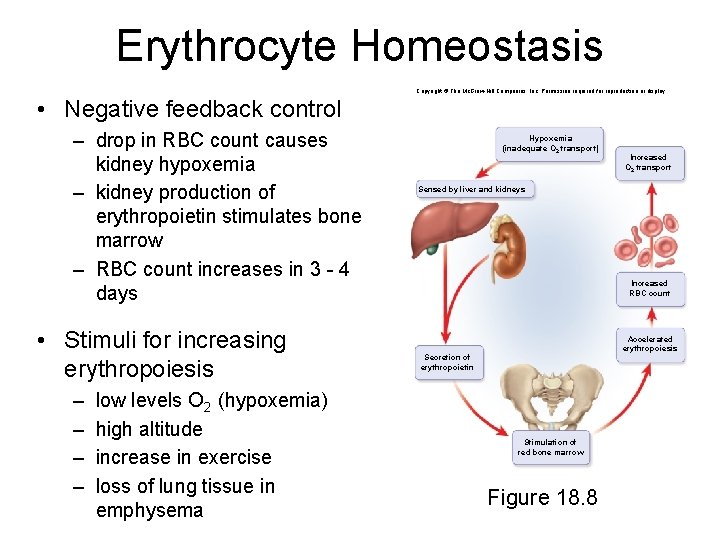
Erythrocyte Homeostasis Copyright © The Mc. Graw-Hill Companies, Inc. Permission required for reproduction or display. • Negative feedback control – drop in RBC count causes kidney hypoxemia – kidney production of erythropoietin stimulates bone marrow – RBC count increases in 3 - 4 days • Stimuli for increasing erythropoiesis – – low levels O 2 (hypoxemia) high altitude increase in exercise loss of lung tissue in emphysema Hypoxemia (inadequate O 2 transport) Increased O 2 transport Sensed by liver and kidneys leaves Increased RBC count Accelerated erythropoiesis Secretion of erythropoietin Stimulation of red bone marrow Figure 18. 8
Erythrocytes Death and Disposal • RBCs lyse in narrow channels in spleen • Macrophages in spleen – digest membrane bits – separate heme from globin • globins hydrolyzed into amino acids • iron removed from heme – – heme pigment converted to biliverdin (green) biliverdin converted to bilirubin (yellow) released into blood plasma (kidneys - yellow urine) liver removes bilirubin and secretes into bile - concentrated in gall bladder: released into small intestine; bacteria create urobilinogen (brown feces)
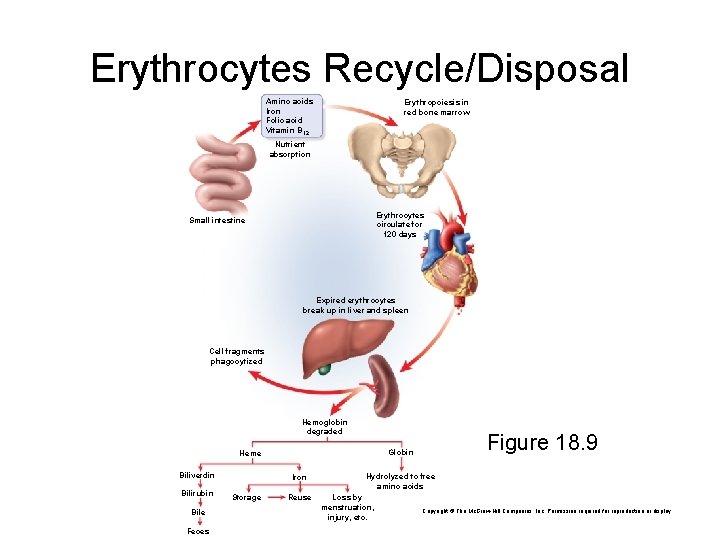
Erythrocytes Recycle/Disposal Amino acids Iron Folic acid Vitamin B 12 Erythropoiesis in red bone marrow Nutrient absorption Erythrocytes circulate for 120 days Small intestine Expired erythrocytes break up in liver and spleen Cell fragments phagocytized Hemoglobin degraded Biliverdin Bilirubin Bile Feces Iron Storage Figure 18. 9 Globin Heme Reuse Hydrolyzed to free amino acids Loss by menstruation, injury, etc. Copyright © The Mc. Graw-Hill Companies, Inc. Permission required for reproduction or display.
Blood Types • Blood types and transfusion compatibility are a matter of interactions between plasma proteins and erythrocytes • Karl Landsteiner discovered blood types A, B and O in 1900 – won Nobel Prize • Blood types are based on interactions between antigens and antibodies
Blood Antigens and Antibodies • Antigens – complex molecules on surface of cell membrane that are unique to the individual • used to distinguish self from foreign • foreign antigens generate an immune response • agglutinogens – antigens on the surface of the RBC that is the basis for blood typing • Antibodies – proteins (gamma globulins) secreted by plasma cells • • part of immune response to foreign matter bind to antigens and mark them for destruction forms antigen-antibody complexes agglutinins – antibodies in the plasma that bring about transfusion mismatch • Agglutination – antibody molecule binding to antigens – causes clumping of red blood cells
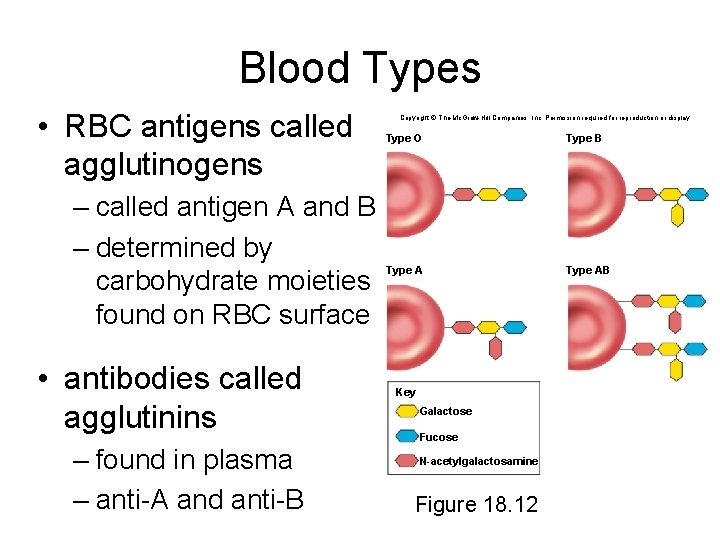
Blood Types • RBC antigens called agglutinogens – called antigen A and B – determined by carbohydrate moieties found on RBC surface • antibodies called agglutinins – found in plasma – anti-A and anti-B Copyright © The Mc. Graw-Hill Companies, Inc. Permission required for reproduction or display. Type O Type B leaves Type A Key Galactose Fucose N-acetylgalactosamine Figure 18. 12 Type AB
ABO Group • Your ABO blood type is determined by presence or absence of antigens (agglutinogens) on RBCs – blood type A person has A antigens – blood type B person has B antigens – blood type AB has both A and B antigens – blood type O person has neither antigen • most common - type O • rarest - type AB
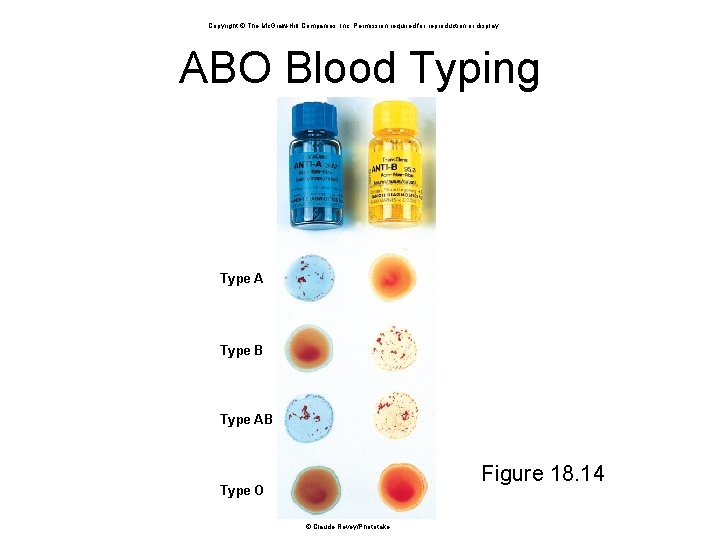
Copyright © The Mc. Graw-Hill Companies, Inc. Permission required for reproduction or display. ABO Blood Typing Type A Type B Type AB Figure 18. 14 Type O © Claude Revey/Phototake
Plasma Antibodies • Antibodies (agglutinins); anti-A and anti-B • Appear 2 -8 months after birth; at maximum concentration at 10 yr. – antibody-A and/or antibody-B (both or none) are found in plasma • you do not form antibodies against your antigens • Agglutination – each antibody can attach to several foreign antigens on several different RBCs at the same time • Responsible for mismatched transfusion reaction – agglutinated RBCs block small blood vessels, hemolyze, and release their hemoglobin over the next few hours or days – Hb blocks kidney tubules and causes acute renal failure
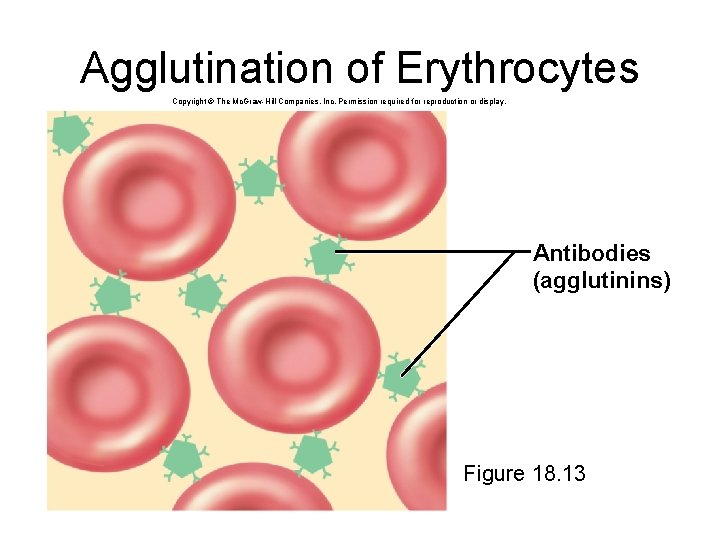
Agglutination of Erythrocytes Copyright © The Mc. Graw-Hill Companies, Inc. Permission required for reproduction or display. Antibodies (agglutinins) Figure 18. 13
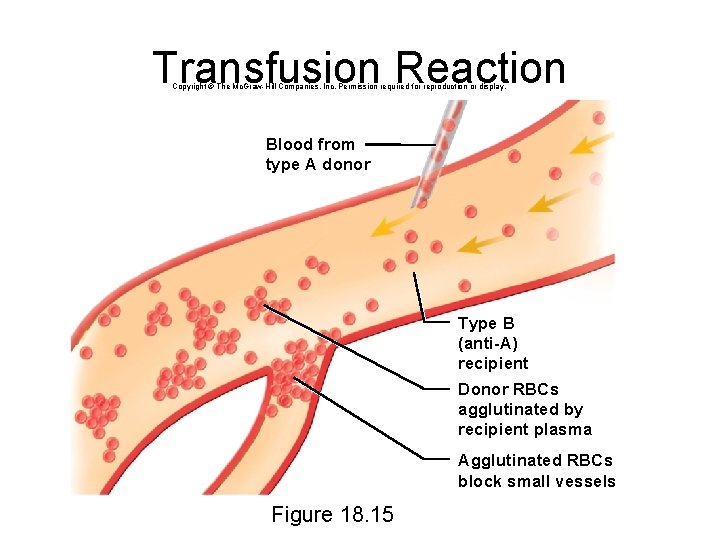
Transfusion Reaction Copyright © The Mc. Graw-Hill Companies, Inc. Permission required for reproduction or display. Blood from type A donor leaves Type B (anti-A) recipient Donor RBCs agglutinated by recipient plasma Agglutinated RBCs block small vessels Figure 18. 15
Universal Donors and Recipients • Universal donor – Type O – most common blood type – lacks RBC antigens – donor’s plasma may have both antibodies against recipient’s RBCs (anti-A and anti-B) • may give packed cells (minimal plasma) • Universal recipient – Type AB – rarest blood type – lacks plasma antibodies; no anti- A or B
Rh Group • Rh (C, D, E) agglutinogens discovered in rhesus monkey in 1940 – Rh D is the most reactive and a patient is considered blood type Rh+ if they have D antigen (agglutinogens) on RBCs – Rh frequencies vary among ethnic groups • Anti-D agglutinins not normally present – form in Rh- individuals exposed to Rh+ blood • Rh- woman with an Rh+ fetus or transfusion of Rh+ blood • no problems with first transfusion or pregnancy
Hemolytic Disease of Newborn • Occurs if Rh- mother has formed antibodies and is pregnant with second Rh+ child – Anti-D antibodies can cross placenta • Prevention – Rho. GAM given to pregnant Rh- women • binds fetal agglutinogens in her blood so she will not form Anti-D antibodies
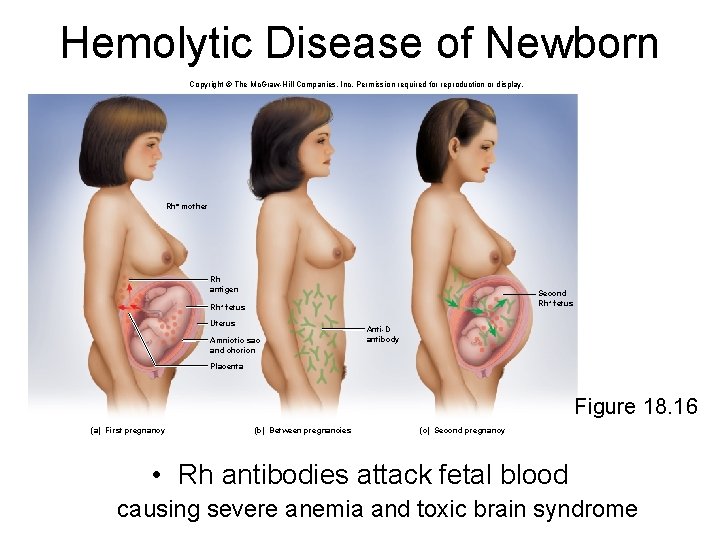
Hemolytic Disease of Newborn Copyright © The Mc. Graw-Hill Companies, Inc. Permission required for reproduction or display. leaves Rh- mother Rh antigen Second Rh+ fetus Uterus Amniotic sac and chorion Anti-D antibody Placenta Figure 18. 16 (a) First pregnancy (b) Between pregnancies (c) Second pregnancy • Rh antibodies attack fetal blood causing severe anemia and toxic brain syndrome
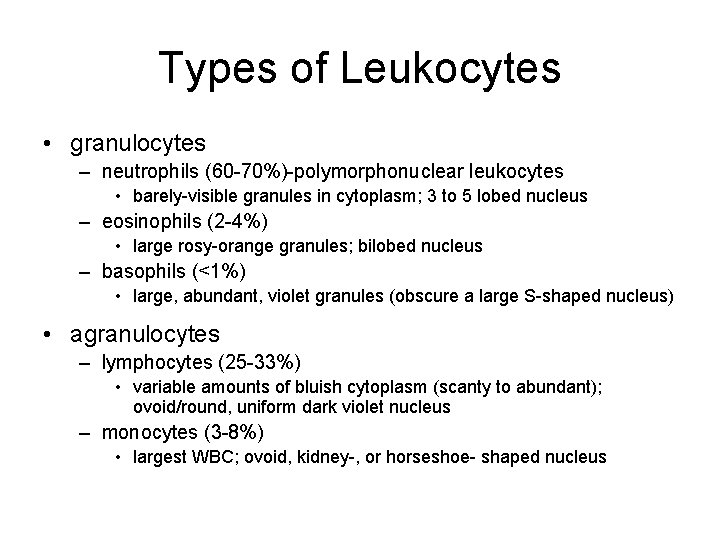
Types of Leukocytes • granulocytes – neutrophils (60 -70%)-polymorphonuclear leukocytes • barely-visible granules in cytoplasm; 3 to 5 lobed nucleus – eosinophils (2 -4%) • large rosy-orange granules; bilobed nucleus – basophils (<1%) • large, abundant, violet granules (obscure a large S-shaped nucleus) • agranulocytes – lymphocytes (25 -33%) • variable amounts of bluish cytoplasm (scanty to abundant); ovoid/round, uniform dark violet nucleus – monocytes (3 -8%) • largest WBC; ovoid, kidney-, or horseshoe- shaped nucleus
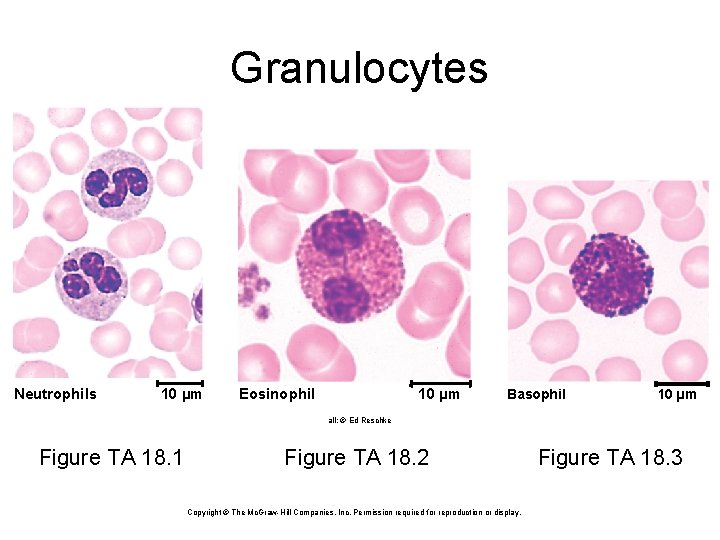
Granulocytes Neutrophils 10 µm Eosinophil 10 µm Basophil 10 µm all: © Ed Reschke Figure TA 18. 1 Figure TA 18. 2 Copyright © The Mc. Graw-Hill Companies, Inc. Permission required for reproduction or display. Figure TA 18. 3
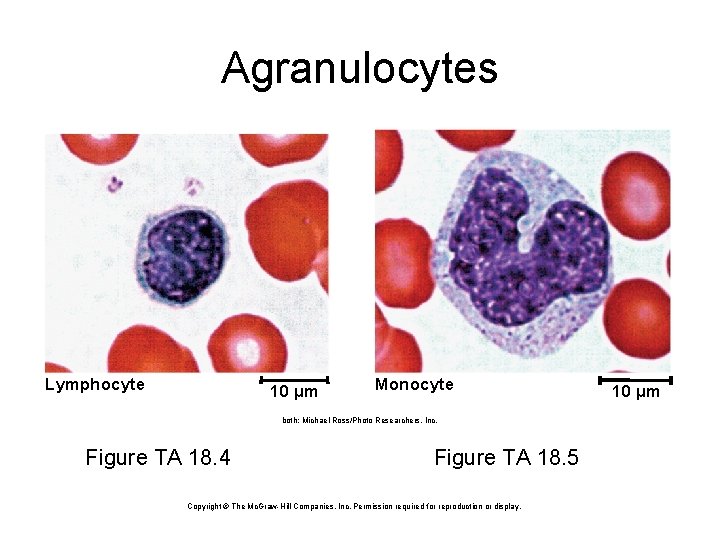
Agranulocytes Lymphocyte 10 µm Monocyte both: Michael Ross/Photo Researchers, Inc. Figure TA 18. 4 Figure TA 18. 5 Copyright © The Mc. Graw-Hill Companies, Inc. Permission required for reproduction or display. 10 µm
Granulocyte Functions • Neutrophils - increased numbers in bacterial infections – phagocytosis of bacteria – release antimicrobial chemicals • Eosinophils - increased numbers in parasitic infections, collagen diseases, allergies, diseases of spleen and CNS – phagocytosis of antigen-antibody complexes, allergens, and inflammatory chemicals – release enzymes to destroy large parasites • Basophils - increased numbers in chicken pox, sinusitis, diabetes) – secrete histamine (vasodilator) – speeds flow of blood to an injured area – secrete heparin (anticoagulant) – promotes the mobility of other WBCs in the area
Agranulocyte Functions • Lymphocytes - increased numbers in diverse infections and immune responses – – destroy cells (cancer, foreign, and virally infected cells) “present” antigens to activate other immune cells coordinate actions of other immune cells secrete antibodies and provide immune memory • Monocytes - increased numbers in viral infections and inflammation – leave bloodstream and transform into macrophages • phagocytize pathogens and debris • “present” antigens to activate other immune cells - antigen presenting cells (APCs)
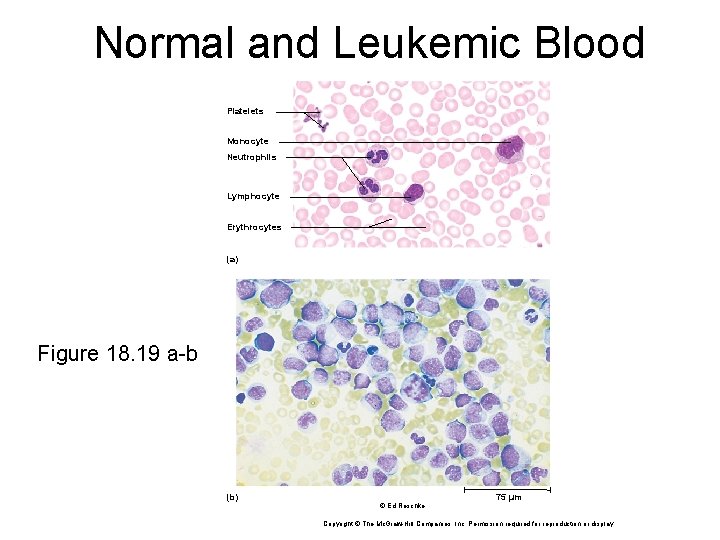
Normal and Leukemic Blood Platelets Monocyte Neutrophils Lymphocyte Erythrocytes (a) Figure 18. 19 a-b (b) 75 µm © Ed Reschke Copyright © The Mc. Graw-Hill Companies, Inc. Permission required for reproduction or display.
Platelets • Platelets - small fragments of megakaryocyte cells – 2 -4 m diameter; contain “granules” – complex internal structure and open canalicular system – amoeboid movement and phagocytosis • Normal platelet count - 130, 000 to 400, 000 platelets/ L • Functions – – – – secrete vasoconstrictors that help reduce blood loss stick together to form platelet plugs to seal small breaks secrete procoagulants or clotting factors promote clotting initiate formation of clot-dissolving enzyme chemically attract neutrophils and monocytes to sites of inflammation phagocytize and destroy bacteria secrete growth factors that stimulate mitosis to repair blood vessels
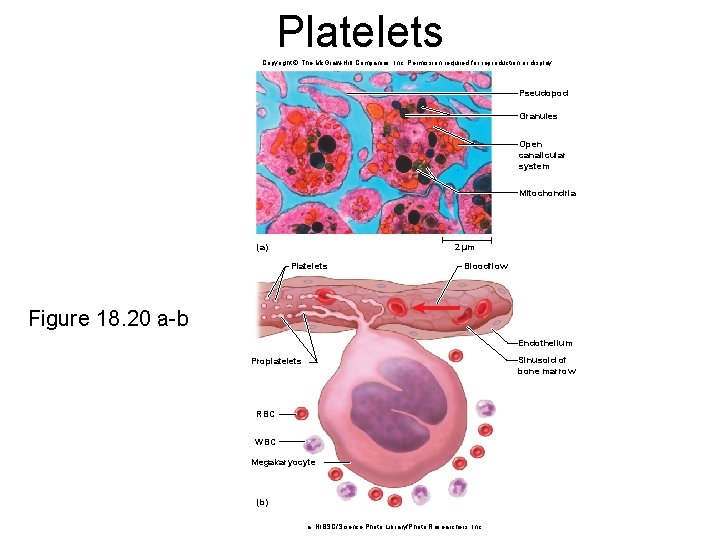
Platelets Copyright © The Mc. Graw-Hill Companies, Inc. Permission required for reproduction or display. Pseudopod Granules Open canalicular system Mitochondria (a) 2 µm Platelets Bloodflow Figure 18. 20 a-b Endothelium Sinusoid of bone marrow Proplatelets RBC WBC Megakaryocyte (b) a: NIBSC/Science Photo Library/Photo Researchers, Inc.
- Slides: 35