
The Church in Fourth Century from Constantine to
- Slides: 26
The Church in Fourth Century: from Constantine to Augustine Class #8: The Rise of Christian Monasticism, Part 2
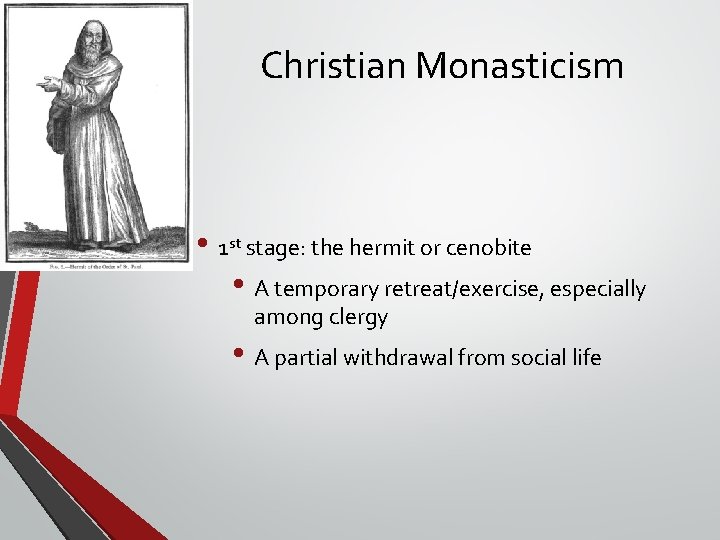
Christian Monasticism • 1 st stage: the hermit or cenobite • A temporary retreat/exercise, especially among clergy • A partial withdrawal from social life
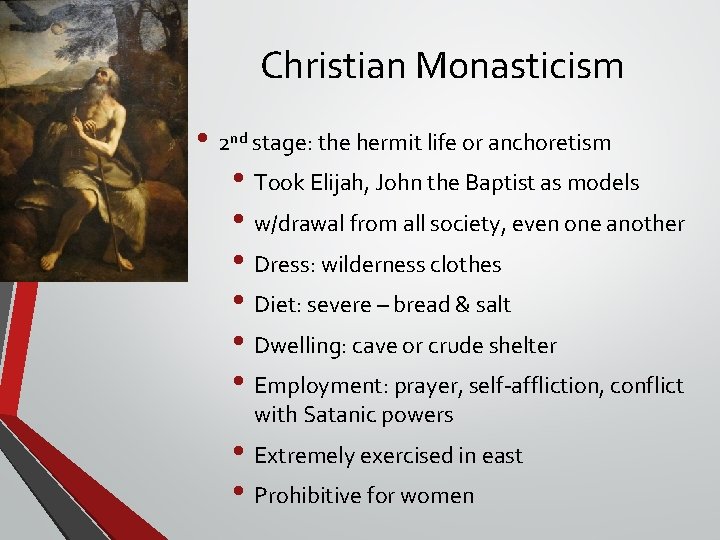
Christian Monasticism • 2 nd stage: the hermit life or anchoretism • Took Elijah, John the Baptist as models • w/drawal from all society, even one another • Dress: wilderness clothes • Diet: severe – bread & salt • Dwelling: cave or crude shelter • Employment: prayer, self-affliction, conflict with Satanic powers • Extremely exercised in east • Prohibitive for women
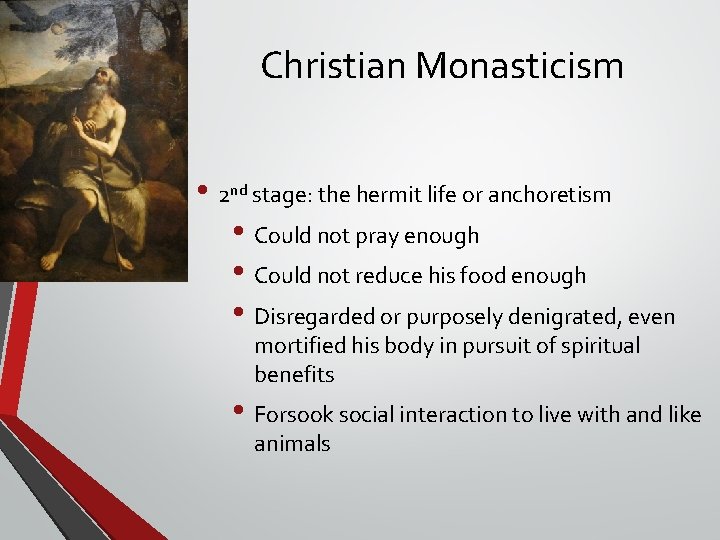
Christian Monasticism • 2 nd stage: the hermit life or anchoretism • Could not pray enough • Could not reduce his food enough • Disregarded or purposely denigrated, even mortified his body in pursuit of spiritual benefits • Forsook social interaction to live with and like animals
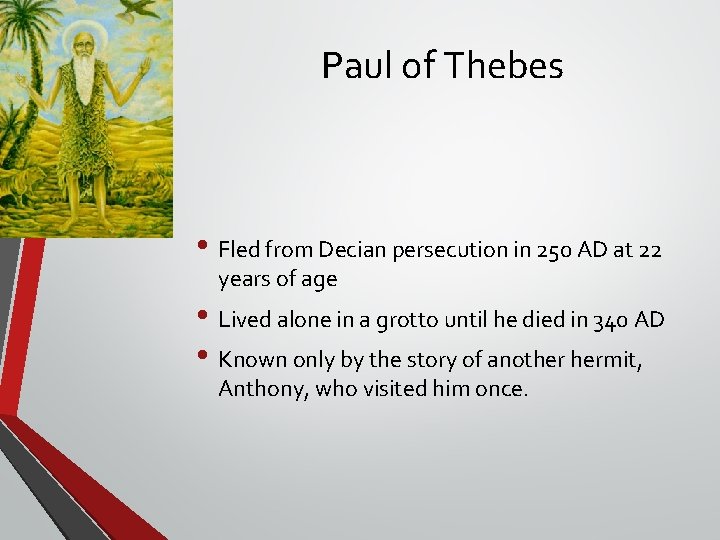
Paul of Thebes • Fled from Decian persecution in 250 AD at 22 years of age • Lived alone in a grotto until he died in 340 AD • Known only by the story of another hermit, Anthony, who visited him once.
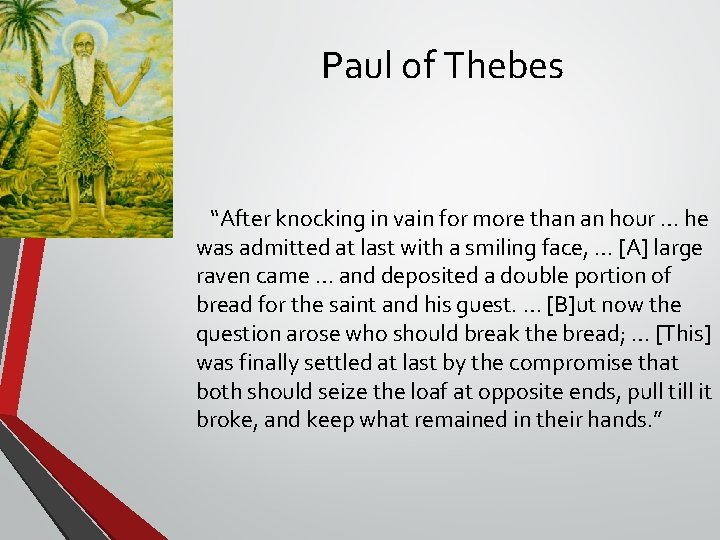
Paul of Thebes “After knocking in vain for more than an hour … he was admitted at last with a smiling face, … [A] large raven came … and deposited a double portion of bread for the saint and his guest. … [B]ut now the question arose who should break the bread; … [This] was finally settled at last by the compromise that both should seize the loaf at opposite ends, pull till it broke, and keep what remained in their hands. ”
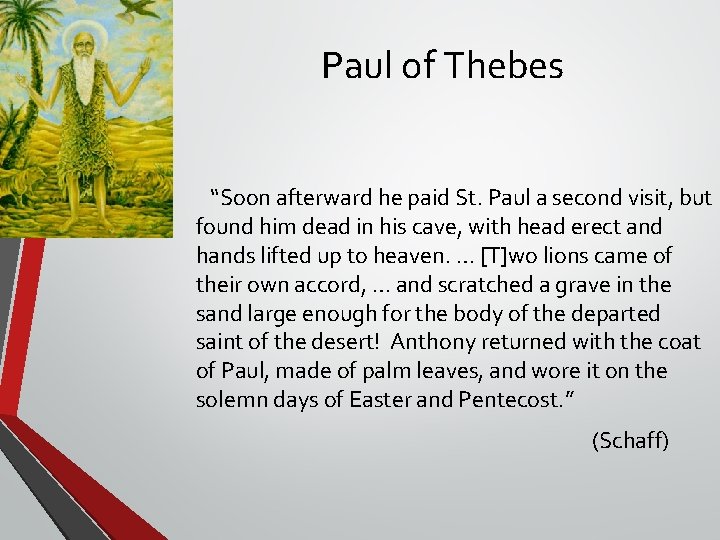
Paul of Thebes “Soon afterward he paid St. Paul a second visit, but found him dead in his cave, with head erect and hands lifted up to heaven. … [T]wo lions came of their own accord, … and scratched a grave in the sand large enough for the body of the departed saint of the desert! Anthony returned with the coat of Paul, made of palm leaves, and wore it on the solemn days of Easter and Pentecost. ” (Schaff)
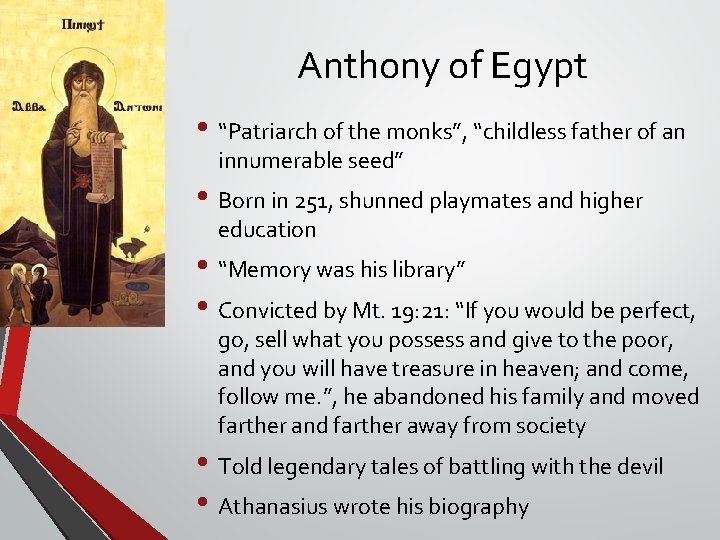
Anthony of Egypt • “Patriarch of the monks”, “childless father of an innumerable seed” • Born in 251, shunned playmates and higher education • “Memory was his library” • Convicted by Mt. 19: 21: “If you would be perfect, go, sell what you possess and give to the poor, and you will have treasure in heaven; and come, follow me. ”, he abandoned his family and moved farther and farther away from society • Told legendary tales of battling with the devil • Athanasius wrote his biography
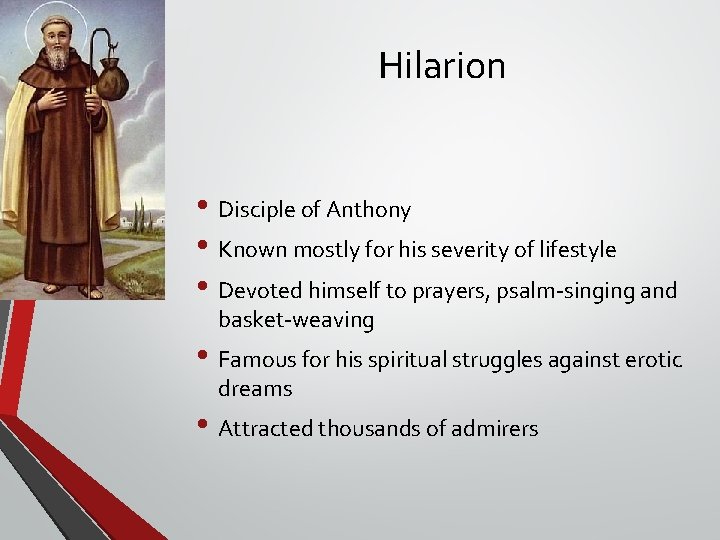
Hilarion • Disciple of Anthony • Known mostly for his severity of lifestyle • Devoted himself to prayers, psalm-singing and basket-weaving • Famous for his spiritual struggles against erotic dreams • Attracted thousands of admirers
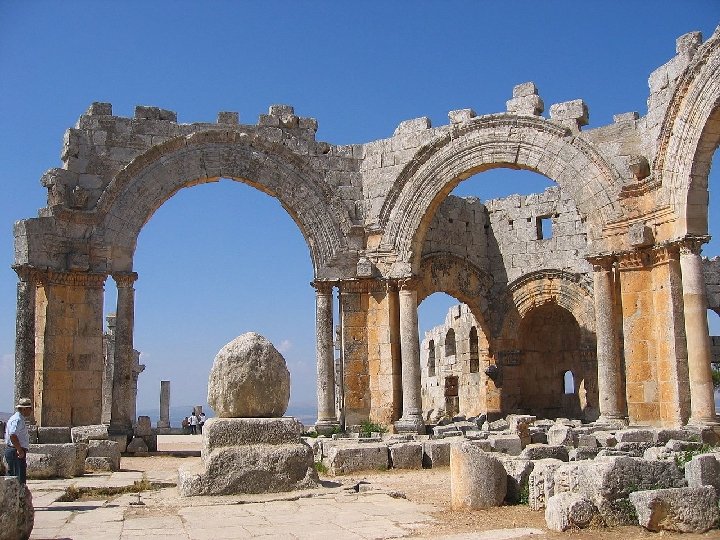
Symeon – father of the Stylites • Affected by hearing the beatitudes, he joined a cloister • • Severely restricted his diet, repeatedly took 40 day fasts Was dismissed from cloister for his extreme self-torture • Took to residing on top of a pillar for 36 years • • • 6, 12, 22, 36 cubits high by 3’ in diameter Not able to lie or sit, but only stand, lean or bend over He preached repentance, acted as a moral judge He healed the sick, wrought miracles Credited with the conversion of many to Christianity
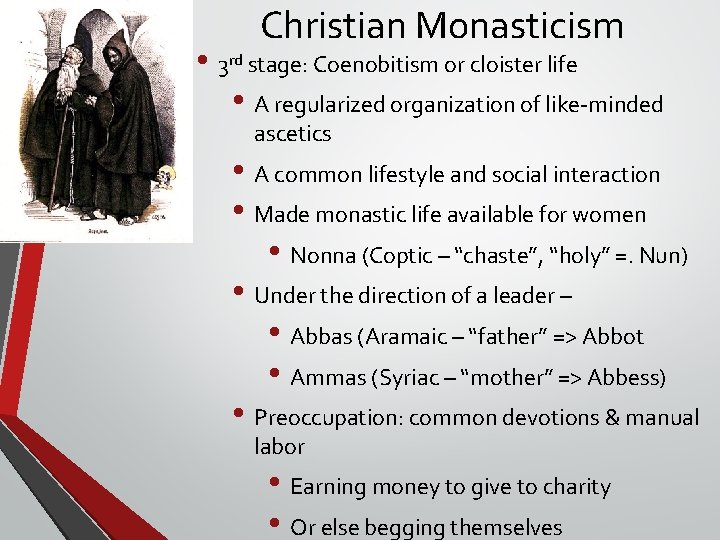
Christian Monasticism • 3 rd stage: Coenobitism or cloister life • A regularized organization of like-minded ascetics • A common lifestyle and social interaction • Made monastic life available for women • Nonna (Coptic – “chaste”, “holy” =. Nun) • Under the direction of a leader – • Abbas (Aramaic – “father” => Abbot • Ammas (Syriac – “mother” => Abbess) • Preoccupation: common devotions & manual labor • Earning money to give to charity • Or else begging themselves
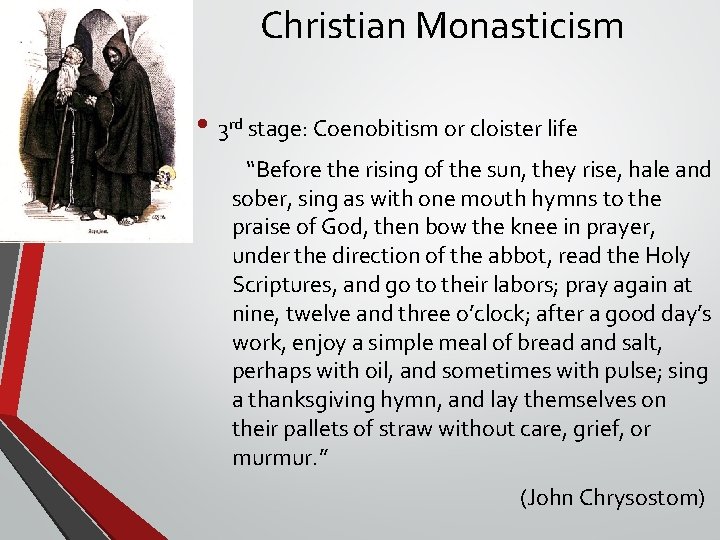
Christian Monasticism • 3 rd stage: Coenobitism or cloister life “Before the rising of the sun, they rise, hale and sober, sing as with one mouth hymns to the praise of God, then bow the knee in prayer, under the direction of the abbot, read the Holy Scriptures, and go to their labors; pray again at nine, twelve and three o’clock; after a good day’s work, enjoy a simple meal of bread and salt, perhaps with oil, and sometimes with pulse; sing a thanksgiving hymn, and lay themselves on their pallets of straw without care, grief, or murmur. ” (John Chrysostom)
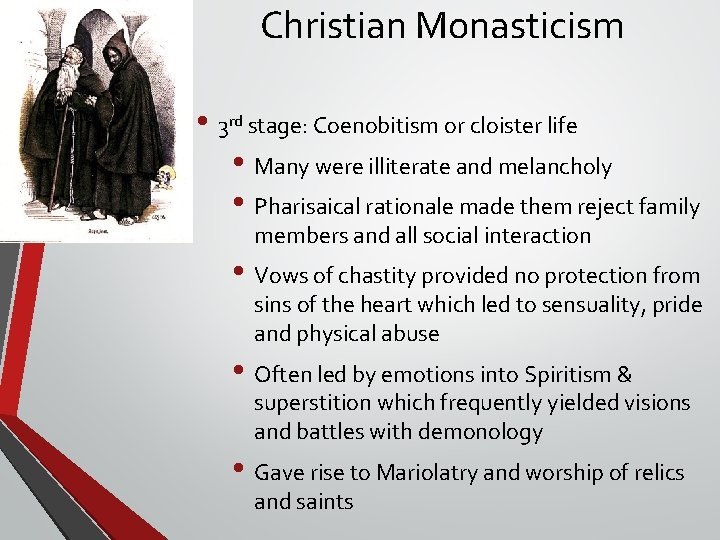
Christian Monasticism • 3 rd stage: Coenobitism or cloister life • Many were illiterate and melancholy • Pharisaical rationale made them reject family members and all social interaction • Vows of chastity provided no protection from sins of the heart which led to sensuality, pride and physical abuse • Often led by emotions into Spiritism & superstition which frequently yielded visions and battles with demonology • Gave rise to Mariolatry and worship of relics and saints
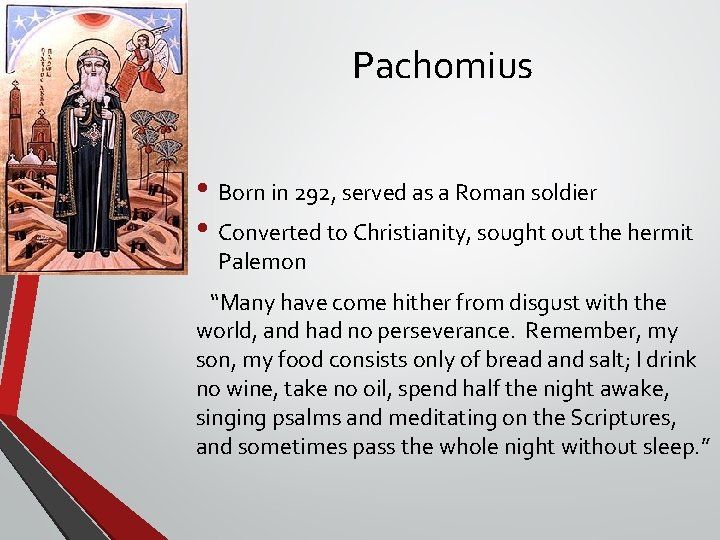
Pachomius • Born in 292, served as a Roman soldier • Converted to Christianity, sought out the hermit Palemon “Many have come hither from disgust with the world, and had no perseverance. Remember, my son, my food consists only of bread and salt; I drink no wine, take no oil, spend half the night awake, singing psalms and meditating on the Scriptures, and sometimes pass the whole night without sleep. ”
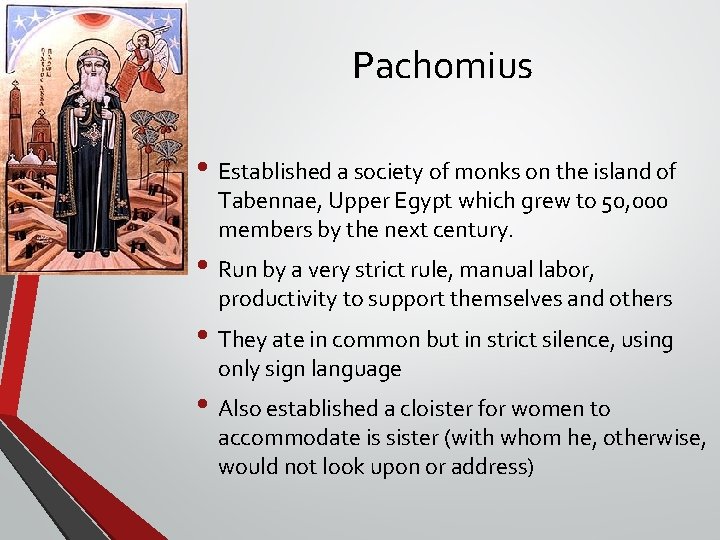
Pachomius • Established a society of monks on the island of Tabennae, Upper Egypt which grew to 50, 000 members by the next century. • Run by a very strict rule, manual labor, productivity to support themselves and others • They ate in common but in strict silence, using only sign language • Also established a cloister for women to accommodate is sister (with whom he, otherwise, would not look upon or address)
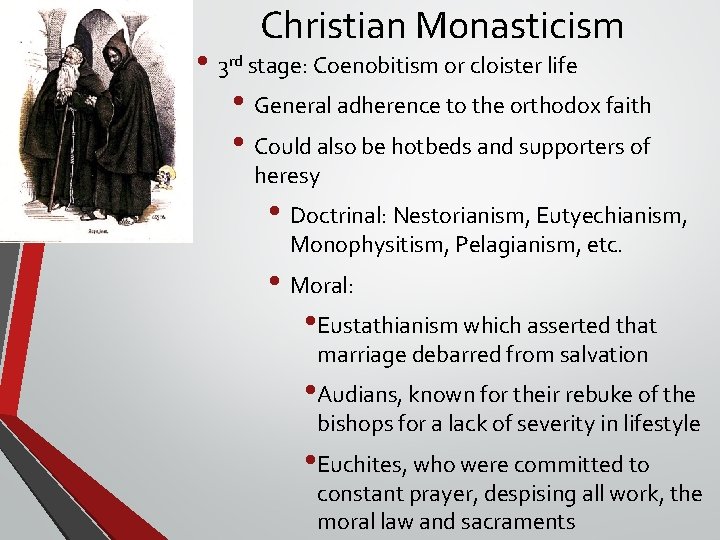
Christian Monasticism • 3 rd stage: Coenobitism or cloister life • General adherence to the orthodox faith • Could also be hotbeds and supporters of heresy • Doctrinal: Nestorianism, Eutyechianism, Monophysitism, Pelagianism, etc. • Moral: • Eustathianism which asserted that marriage debarred from salvation • Audians, known for their rebuke of the bishops for a lack of severity in lifestyle • Euchites, who were committed to constant prayer, despising all work, the moral law and sacraments
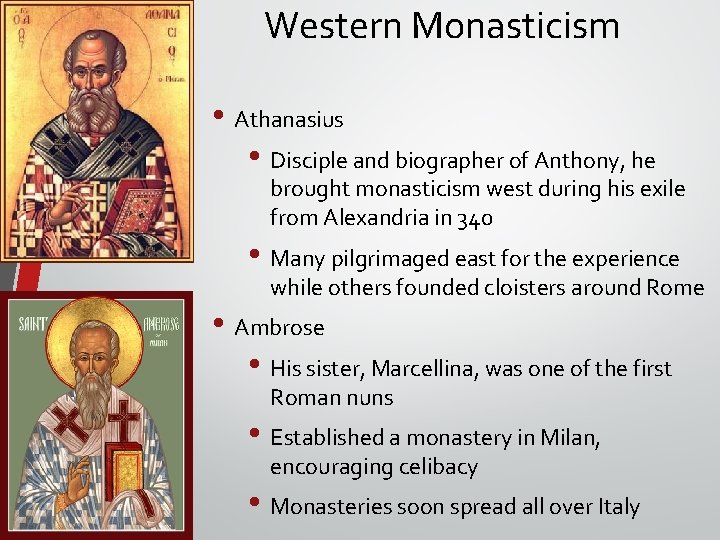
Western Monasticism • Athanasius • Disciple and biographer of Anthony, he brought monasticism west during his exile from Alexandria in 340 • Many pilgrimaged east for the experience while others founded cloisters around Rome • Ambrose • His sister, Marcellina, was one of the first Roman nuns • Established a monastery in Milan, encouraging celibacy • Monasteries soon spread all over Italy
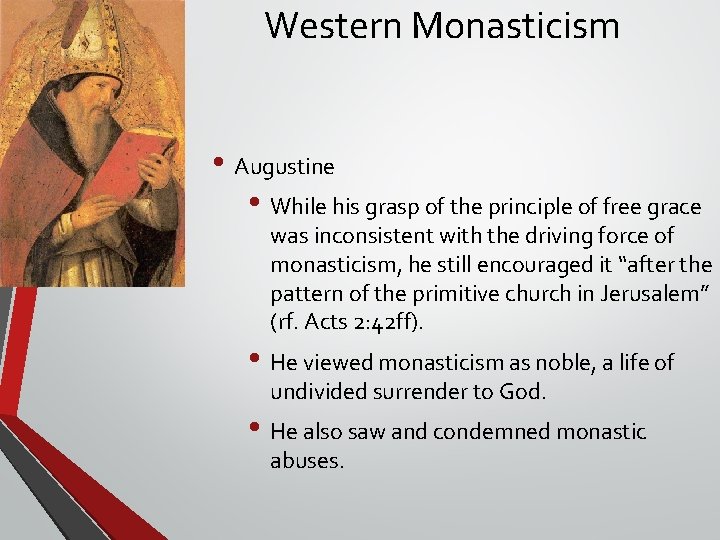
Western Monasticism • Augustine • While his grasp of the principle of free grace was inconsistent with the driving force of monasticism, he still encouraged it “after the pattern of the primitive church in Jerusalem” (rf. Acts 2: 42 ff). • He viewed monasticism as noble, a life of undivided surrender to God. • He also saw and condemned monastic abuses.
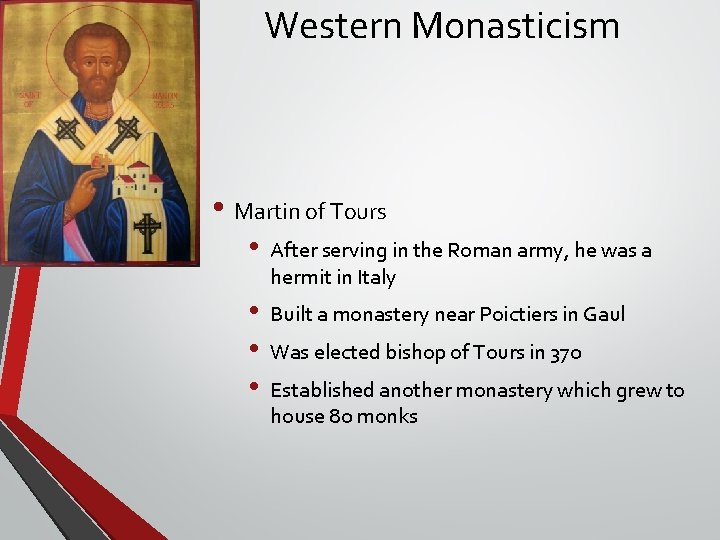
Western Monasticism • Martin of Tours • After serving in the Roman army, he was a hermit in Italy • • • Built a monastery near Poictiers in Gaul Was elected bishop of Tours in 370 Established another monastery which grew to house 80 monks
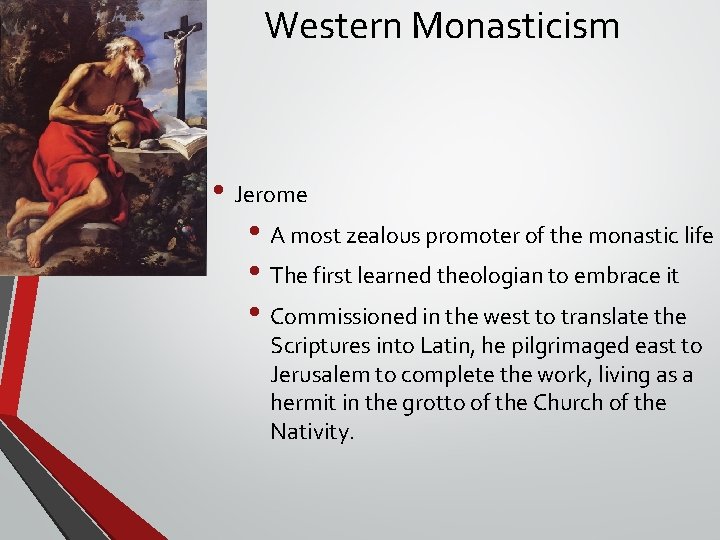
Western Monasticism • Jerome • A most zealous promoter of the monastic life • The first learned theologian to embrace it • Commissioned in the west to translate the Scriptures into Latin, he pilgrimaged east to Jerusalem to complete the work, living as a hermit in the grotto of the Church of the Nativity.
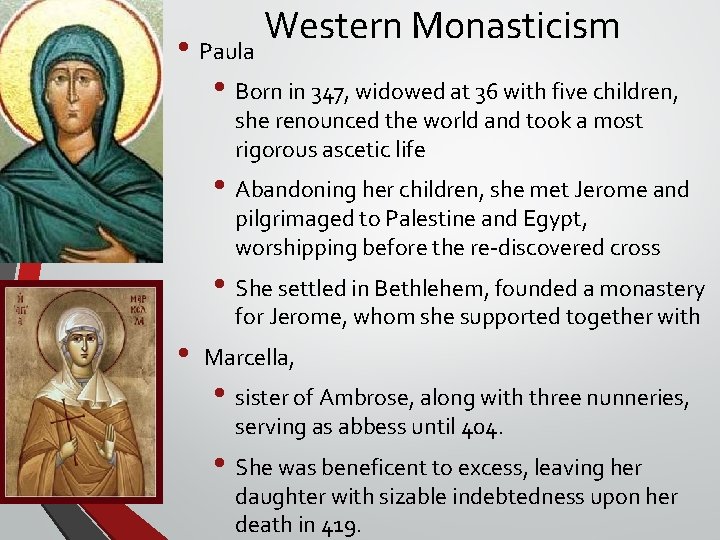
Western Monasticism • Paula • Born in 347, widowed at 36 with five children, she renounced the world and took a most rigorous ascetic life • Abandoning her children, she met Jerome and pilgrimaged to Palestine and Egypt, worshipping before the re-discovered cross • She settled in Bethlehem, founded a monastery for Jerome, whom she supported together with • Marcella, • sister of Ambrose, along with three nunneries, serving as abbess until 404. • She was beneficent to excess, leaving her daughter with sizable indebtedness upon her death in 419.
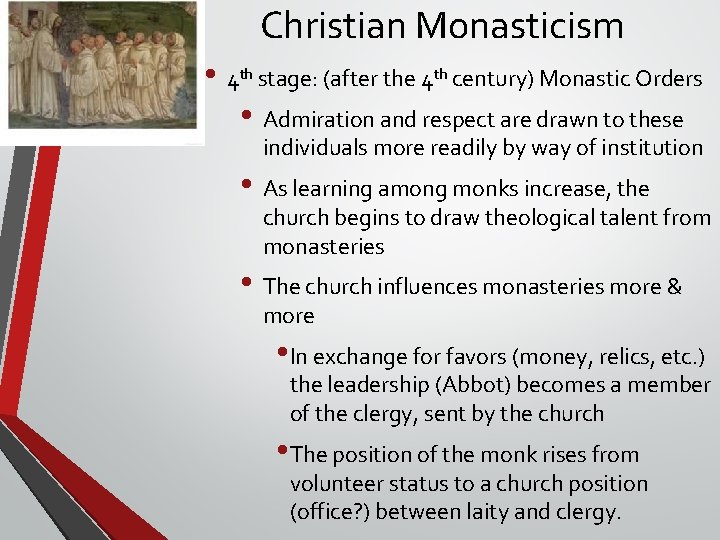
Christian Monasticism • 4 th stage: (after the 4 th century) Monastic Orders • Admiration and respect are drawn to these individuals more readily by way of institution • As learning among monks increase, the church begins to draw theological talent from monasteries • The church influences monasteries more & more • In exchange for favors (money, relics, etc. ) the leadership (Abbot) becomes a member of the clergy, sent by the church • The position of the monk rises from volunteer status to a church position (office? ) between laity and clergy.
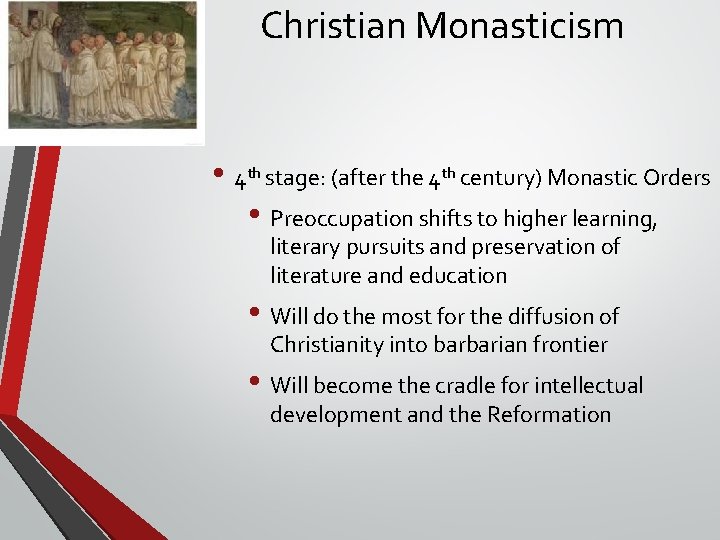
Christian Monasticism • 4 th stage: (after the 4 th century) Monastic Orders • Preoccupation shifts to higher learning, literary pursuits and preservation of literature and education • Will do the most for the diffusion of Christianity into barbarian frontier • Will become the cradle for intellectual development and the Reformation
Christian Monasticism “It is not monasticism, as such, which has proved as blessing … it is Christianity in monasticism which has done all the good …” (Schaff) • 4 th stage: (after the 4 th century) Monastic Orders • Positively: • A healthy and peaceful counterpart to and transition from the collapsing Roman culture and society • A beacon and voice for morality • Promoted hospitality and acted against slavery • It sent forth missionaries and future bishops and popes • It allowed for theological and liturgical development and contributed to the music of worship • It contributed to the life and enrichment of society
Christian Monasticism “I find among the monks and nuns the best and the worst of mankind. ” (Augustine) • 4 th stage: (after the 4 th century) Monastic Orders • Negatively: • Withdrew useful resources from society, govt. and military • Nourished religious fanaticism & fed theological controversy • It compounded a sense of works-righteousness upon the gospel message while, at the same time, tolerated a hidden culture of immorality and pious fraud • It raised the worship of Mary, relics and saints to institutional acceptance and practice
New Covenant Presbyterian Church Preaching God’s Sovereign Grace to a World of Need 128 St. Mary’s Church Rd. Abingdon, MD 21009 410 -569 -0289 www. ncpres. org www. ephesians 515. com