
The Chordate phylum 6 vertebrate Phylum and 2
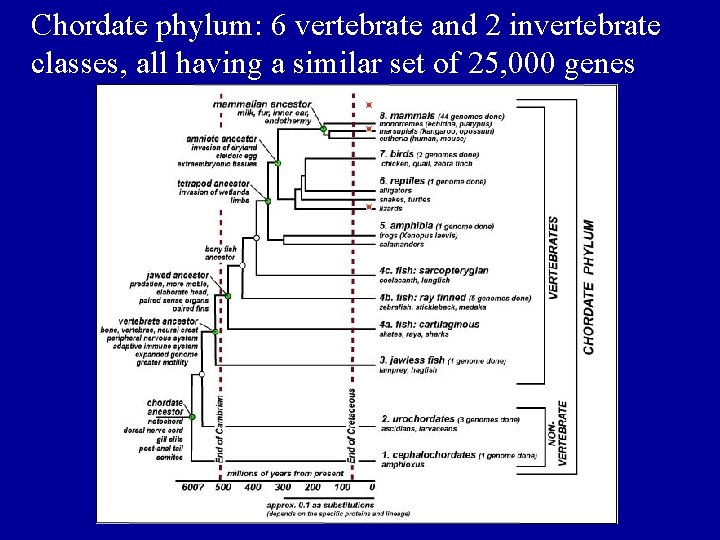
The Chordate phylum: 6 vertebrate. Phylum and 2 invertebrate classes, all having a similar set of 25, 000 genes
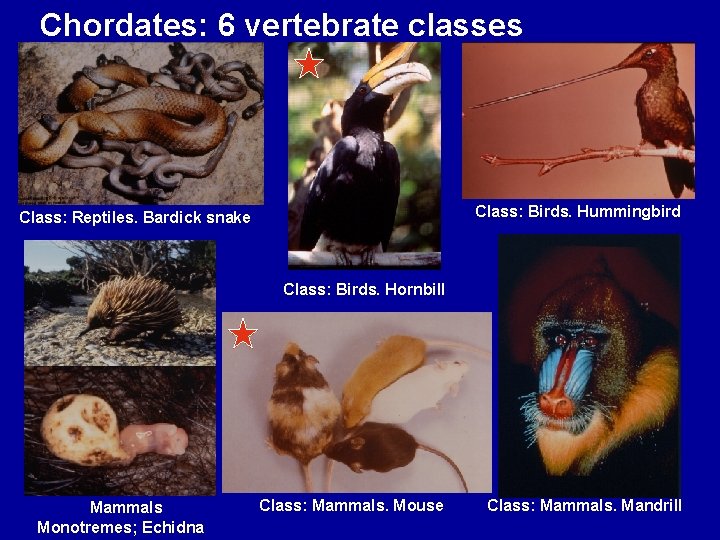
Chordates: 6 vertebrate classes Class: Birds. Hummingbird Class: Reptiles. Bardick snake Class: Birds. Hornbill Class: Mammals. Monotremes; Echidna Class: Mammals. Mouse Class: Mammals. Mandrill
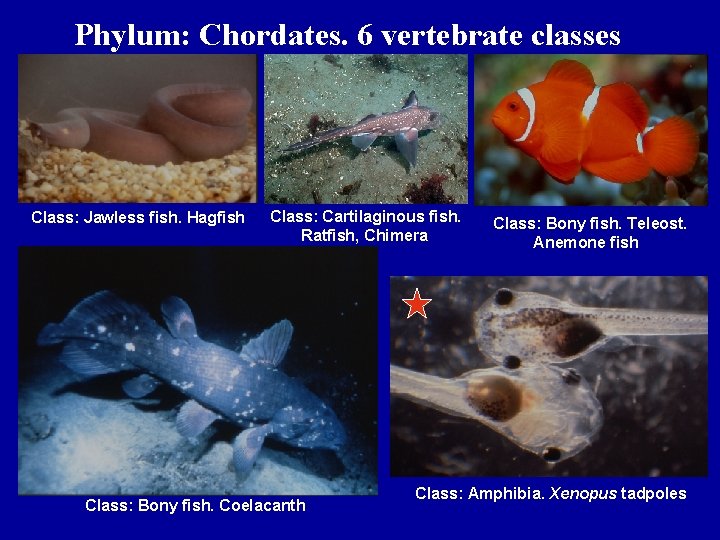
Phylum: Chordates. 6 vertebrate classes Class: Jawless fish. Hagfish Class: Cartilaginous fish. Ratfish, Chimera Class: Bony fish. Coelacanth Class: Bony fish. Teleost. Anemone fish Class: Amphibia. Xenopus tadpoles
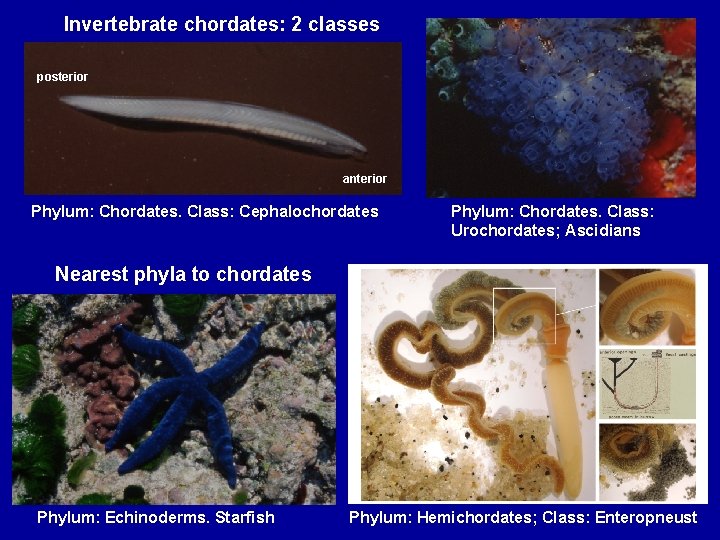
Invertebrate chordates: 2 classes posterior anterior Phylum: Chordates. Class: Cephalochordates Phylum: Chordates. Class: Urochordates; Ascidians Nearest phyla to chordates Phylum: Echinoderms. Starfish Phylum: Hemichordates; Class: Enteropneust
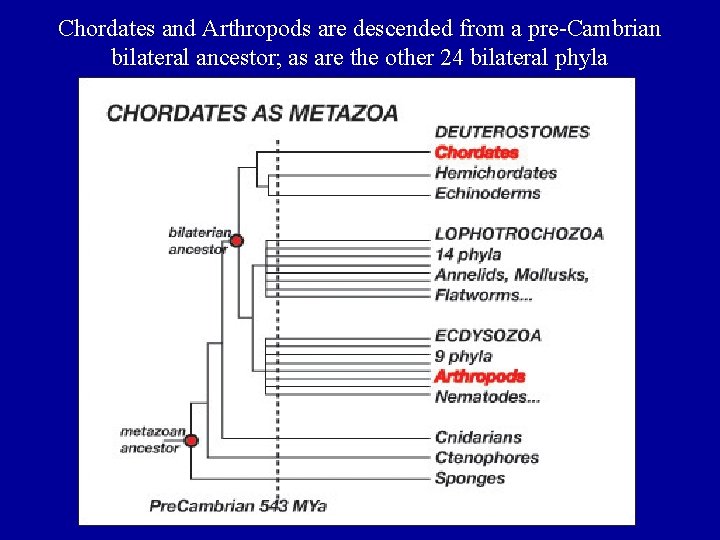
Chordates and Arthropods are descended from a pre-Cambrian bilateral ancestor; as are the other 24 bilateral phyla
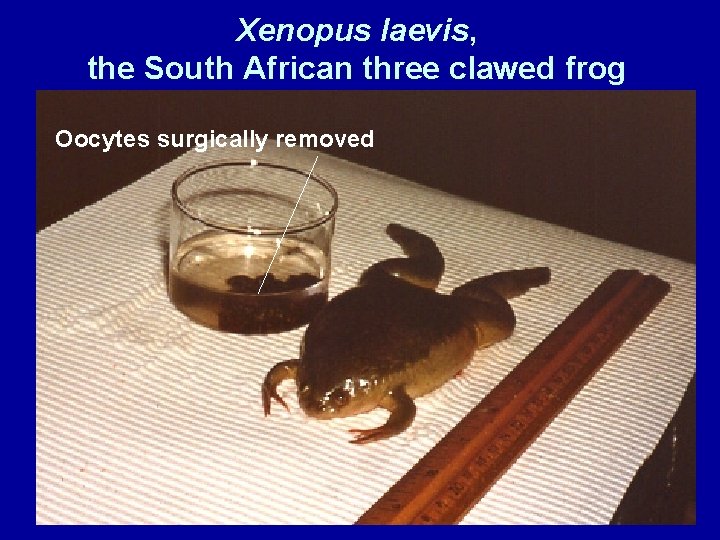
Xenopus laevis, the South African three clawed frog Oocytes surgically removed
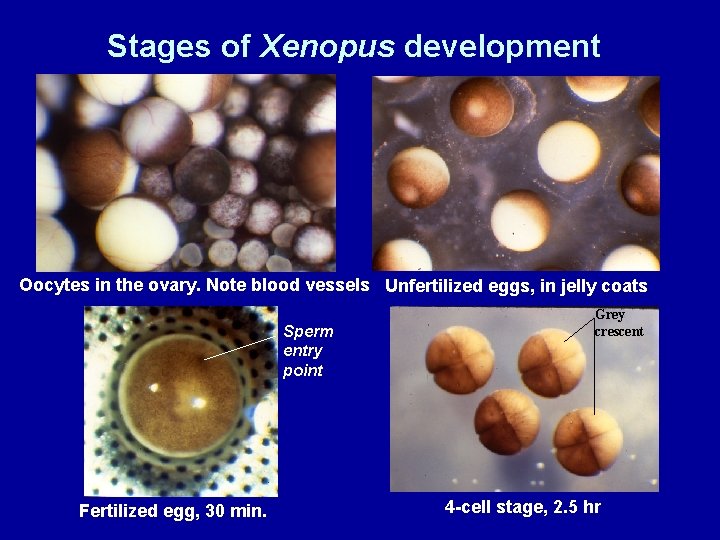
Stages of Xenopus development Oocytes in the ovary. Note blood vessels Unfertilized eggs, in jelly coats Sperm entry point Fertilized egg, 30 min. Grey crescent 4 -cell stage, 2. 5 hr
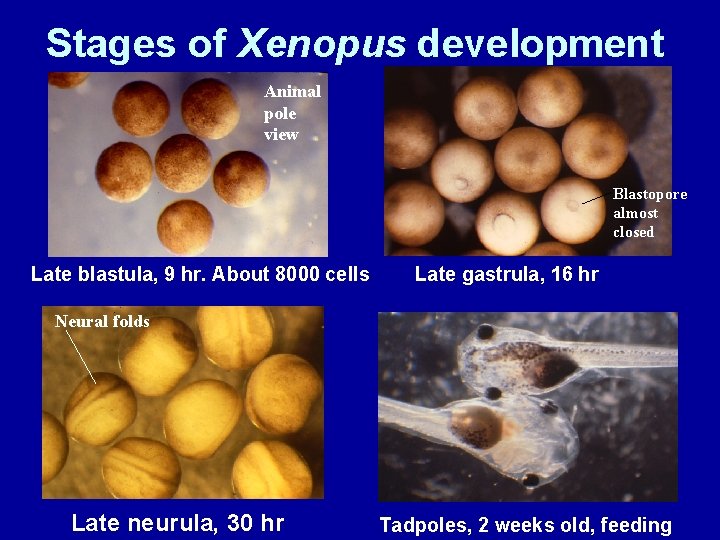
Stages of Xenopus development Animal pole view Blastopore almost closed Late blastula, 9 hr. About 8000 cells Late gastrula, 16 hr Neural folds Late neurula, 30 hr Tadpoles, 2 weeks old, feeding

Phylotypic stage(pharylgula/tailbud stage): first embryonic stage to possess the main chordate traits, and an “adult”map of >200 gene expression domains covering the 3 germ layers (all preceding organs and cell types)
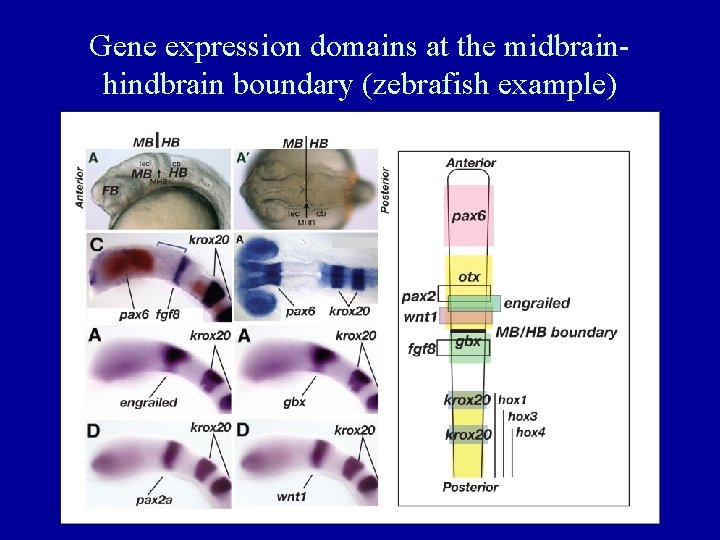
Gene expression domains at the midbrainhindbrain boundary (zebrafish example)
- Slides: 10