
The Chinese political structure the challenges of civil








- Slides: 18
The Chinese political structure, the challenges of civil society development under the new laws Huang Haoming China Association for NGO Cooperation August 18 th, Changsha, Hunan
Table of contents PART. 01 Introduction on political structure in China PART. 02 Review on Charity Law of the People’s Republic of China PART. 03 Review on China’s Law on the Management of the Activities of Overseas NGOs Within Mainland China PART. 04 Challenges of civil society development under new law
PART. 01 Introduction on political structure in China
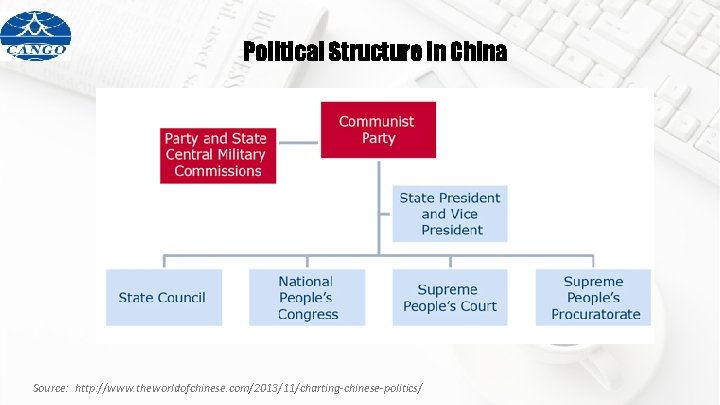
Political Structure in China Source: http: //www. theworldofchinese. com/2013/11/charting-chinese-politics/
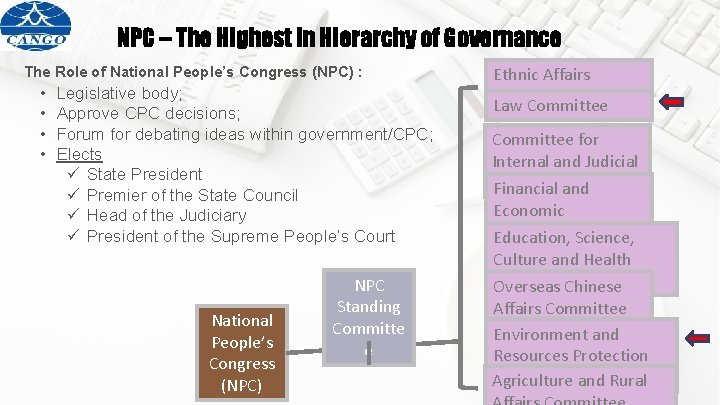
NPC – The Highest in Hierarchy of Governance The Role of National People’s Congress (NPC) : • • Legislative body; Approve CPC decisions; Forum for debating ideas within government/CPC; Elects ü State President ü Premier of the State Council ü Head of the Judiciary ü President of the Supreme People’s Court National People’s Congress (NPC) NPC Standing Committe e Ethnic Affairs Committee Law Committee for Internal and Judicial Affairs Financial and Economic Committee Education, Science, Culture and Health Committee Overseas Chinese Affairs Committee Environment and Resources Protection Committee Agriculture and Rural
Chinese Legislative Hierarchy Source: conventuslaw. com NPC State Council
PART. 02 Review on Charity law
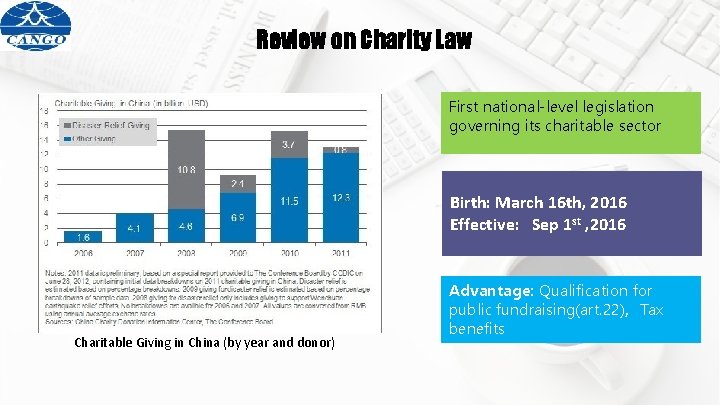
Review on Charity Law First national-level legislation governing its charitable sector Birth: March 16 th, 2016 Effective: Sep 1 st , 2016 Charitable Giving in China (by year and donor) Advantage: Qualification for public fundraising(art. 22), Tax benefits
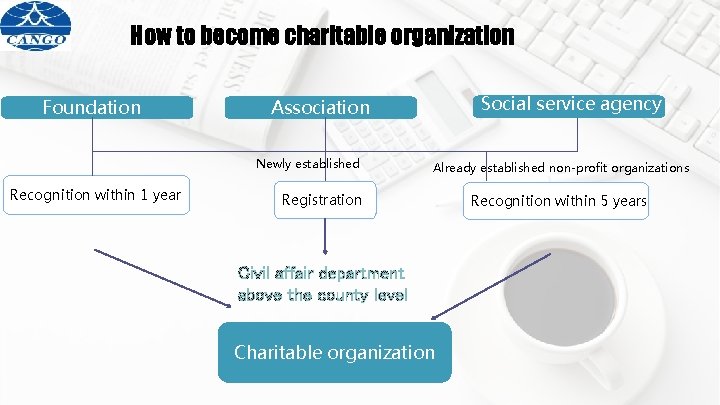
How to become charitable organization Foundation Newly established Recognition within 1 year Social service agency Association Already established non-profit organizations Registration Civil affair department above the county level Charitable organization Recognition within 5 years
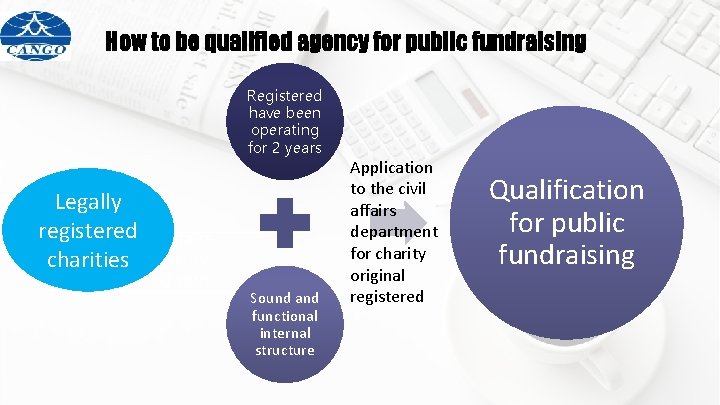
How to be qualified agency for public fundraising Registered have been operating for 2 years Legally registered Apply to the civil affairs department the charity charities original registered with Sound and functional internal structure Application to the civil affairs department for charity original registered Qualification for public fundraising
PART. 03 Review on China’s Law on the Management of the Activities of Overseas NGOs Within Mainland China
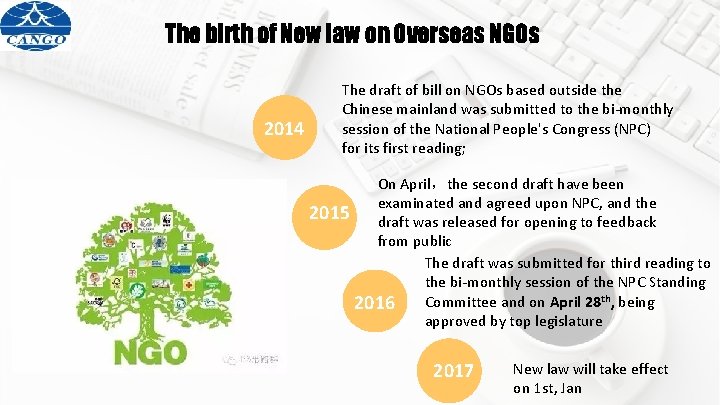
The birth of New law on Overseas NGOs 2014 The draft of bill on NGOs based outside the Chinese mainland was submitted to the bi-monthly session of the National People's Congress (NPC) for its first reading; On April,the second draft have been examinated and agreed upon NPC, and the 2015 draft was released for opening to feedback from public The draft was submitted for third reading to the bi-monthly session of the NPC Standing 2016 Committee and on April 28 th, being approved by top legislature 2017 New law will take effect on 1 st, Jan
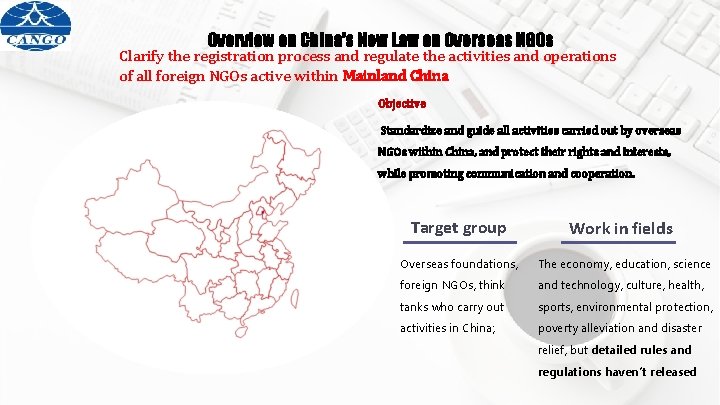
Overview on China’s New Law on Overseas NGOs Clarify the registration process and regulate the activities and operations of all foreign NGOs active within Mainland China Objective Standardize and guide all activities carried out by overseas NGOs within China, and protect their rights and interests, while promoting communication and cooperation. Target group Work in fields Overseas foundations, The economy, education, science foreign NGOs, think and technology, culture, health, tanks who carry out sports, environmental protection, activities in China; poverty alleviation and disaster relief, but detailed rules and regulations haven’t released
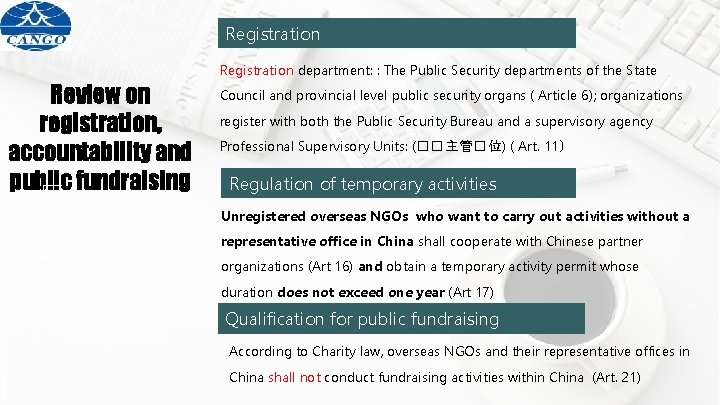
Registration department: : The Public Security departments of the State Review on registration, accountability and public fundraising Council and provincial level public security organs ( Article 6); organizations register with both the Public Security Bureau and a supervisory agency Professional Supervisory Units: (��主管�位) ( Art. 11) Regulation of temporary activities Unregistered overseas NGOs who want to carry out activities without a representative office in China shall cooperate with Chinese partner organizations (Art 16) and obtain a temporary activity permit whose duration does not exceed one year (Art 17) Qualification for public fundraising According to Charity law, overseas NGOs and their representative offices in China shall not conduct fundraising activities within China (Art. 21)
PART. 04 Challenges of civil society PART. 03 development under new law
What are the Advantage of new laws Specialization Capacity building Transparency Legal Accountability
What are the challenge under new laws Capacity building Specialization. More labour cost Governance Talent building -
Thanks for your attention!