
The Chemistry of Light Bioluminescence is a direct
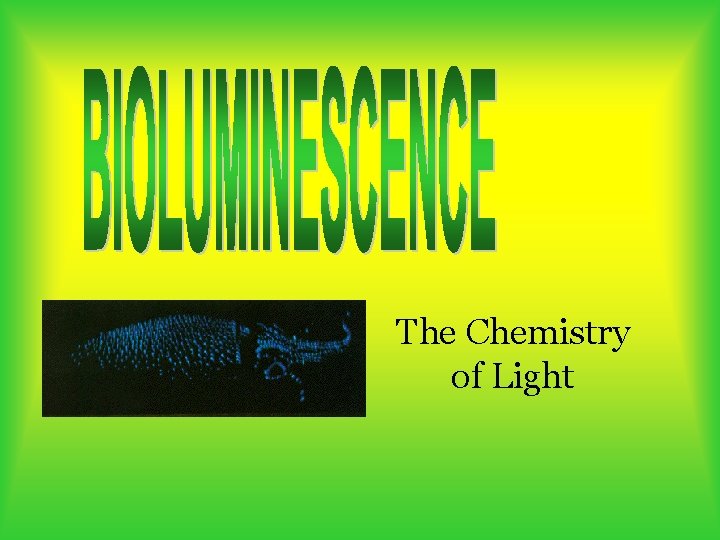
The Chemistry of Light
Bioluminescence is a direct and efficient conversion of energy derived from a chemical reaction in the organism into light energy, giving off no heat in the process (sometimes referred to as “cold light”)
The Chemistry of Bioluminescence CHEMILUMINESCENCE • At least two chemicals are required: üLuciferin üLuciferase
Luciferin ~ Basic substrate of any bioluminescent reaction ~ Chemical that produces the light ~ Must be brought into the system, either through diet or by internal synthesis
Major Examples of Marine Luciferins • Bacterial luciferin • Dinoflagellate luciferin • Vargulin • Coelenterazine • Firefly luciferin
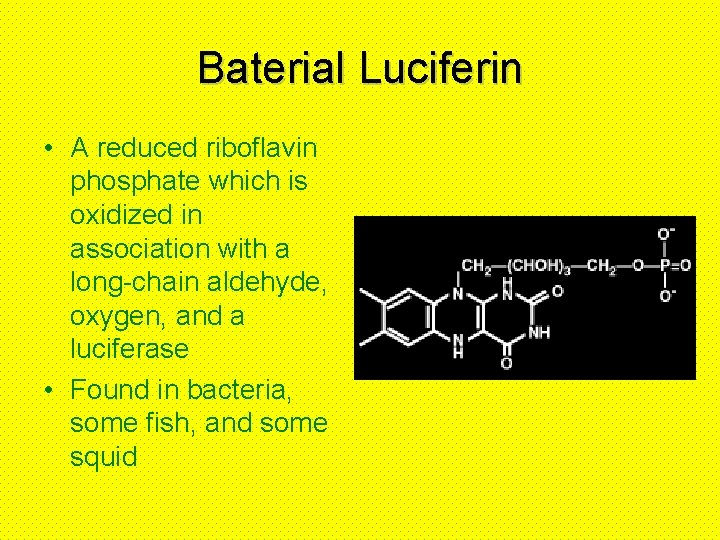
Baterial Luciferin • A reduced riboflavin phosphate which is oxidized in association with a long-chain aldehyde, oxygen, and a luciferase • Found in bacteria, some fish, and some squid
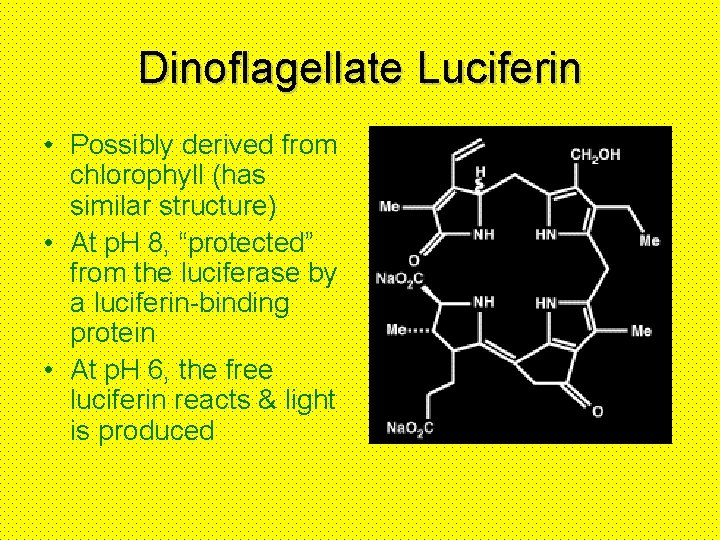
Dinoflagellate Luciferin • Possibly derived from chlorophyll (has similar structure) • At p. H 8, “protected” from the luciferase by a luciferin-binding protein • At p. H 6, the free luciferin reacts & light is produced
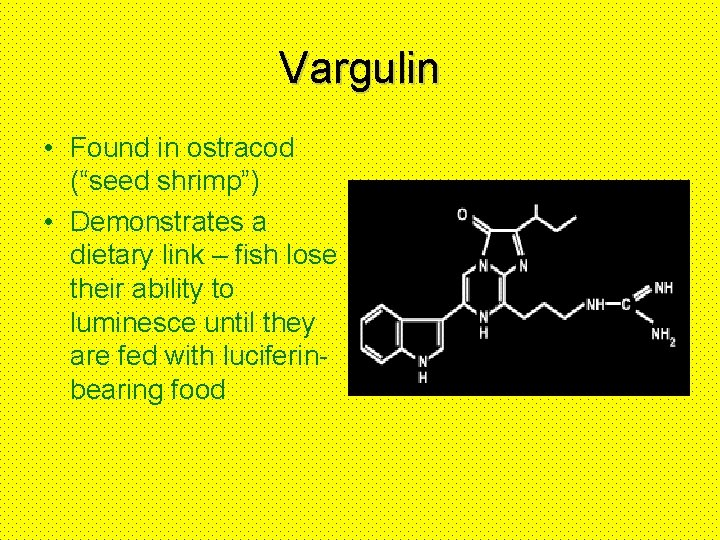
Vargulin • Found in ostracod (“seed shrimp”) • Demonstrates a dietary link – fish lose their ability to luminesce until they are fed with luciferinbearing food
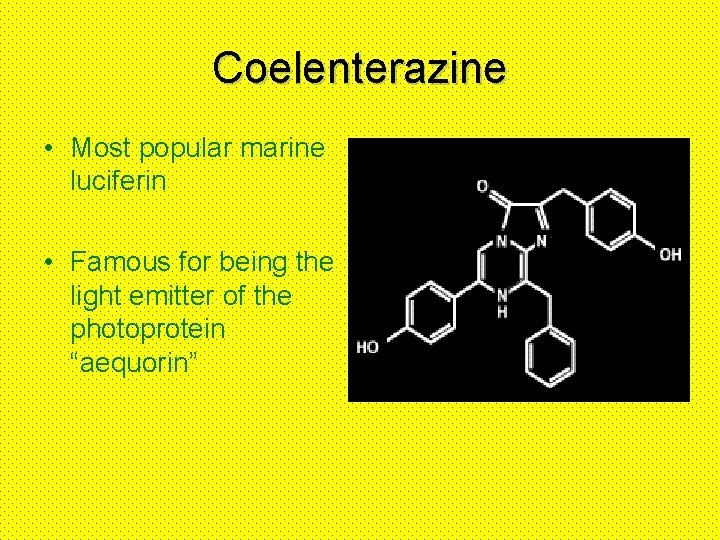
Coelenterazine • Most popular marine luciferin • Famous for being the light emitter of the photoprotein “aequorin”
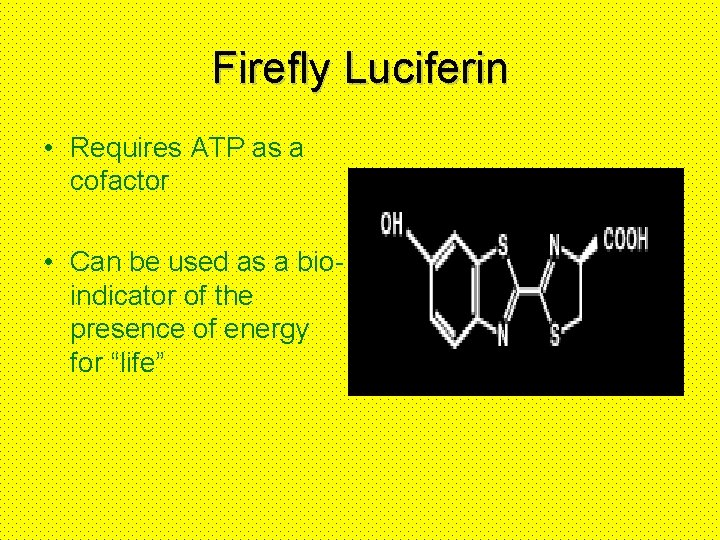
Firefly Luciferin • Requires ATP as a cofactor • Can be used as a bioindicator of the presence of energy for “life”
Luciferase ~ Drives or catalyzes the reaction ~ Catalyzes the oxidation of luciferin ~ Must be brought into the system, either through diet or by internal synthesis
Basic Reaction • Luciferase catalyzes the oxidation of luciferin • Adenisine triphosphate (ATP) provides energy to produce luciferin • Resulting in light and an inactive “oxyluciferin” • An animation of the reaction can be observed at the following website http: //www. lifesci. ucsb. edu/~biolum/chem/index. html
Basic Reaction (con’t. ) • Sometimes, the luciferin and catalyzing protein (luciferase), and a co-factor such as oxygen, are bound together • The single unit is known as a “photoprotein” • The molecule is triggered to produce light when a particular type of ion is added to the system (ex. calcium)

Sources • http: //www. bbc. co. uk/nature/blueplanet/inf obursts/bioluminescence_bg. shtml • http: //www. lifesci. ucsb. edu/~biolum/chem/ • http: //www. bookrags. com/research/biolumi nescence-woc/ • http: //www. bio. davidson. edu/Courses/anp hys/1999/Cody/howworks. html
- Slides: 14