
The Chemistry of Life What are living creatures
- Slides: 28
The Chemistry of Life What are living creatures made of?
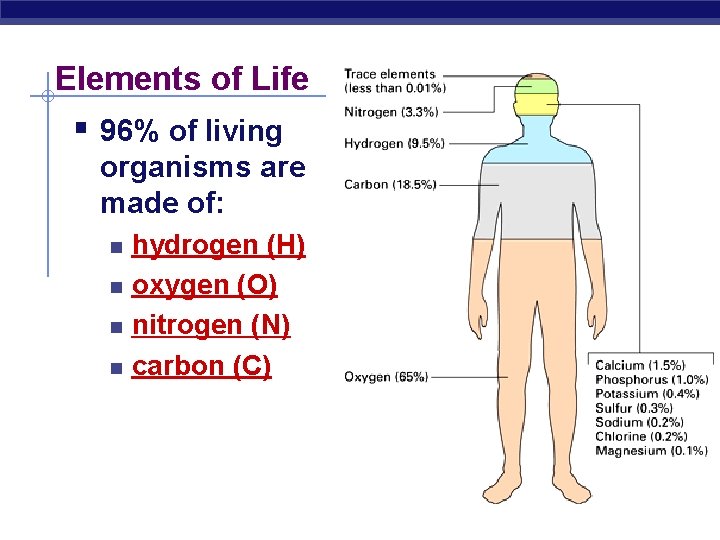
Elements of Life § 96% of living organisms are made of: n n hydrogen (H) oxygen (O) nitrogen (N) carbon (C)
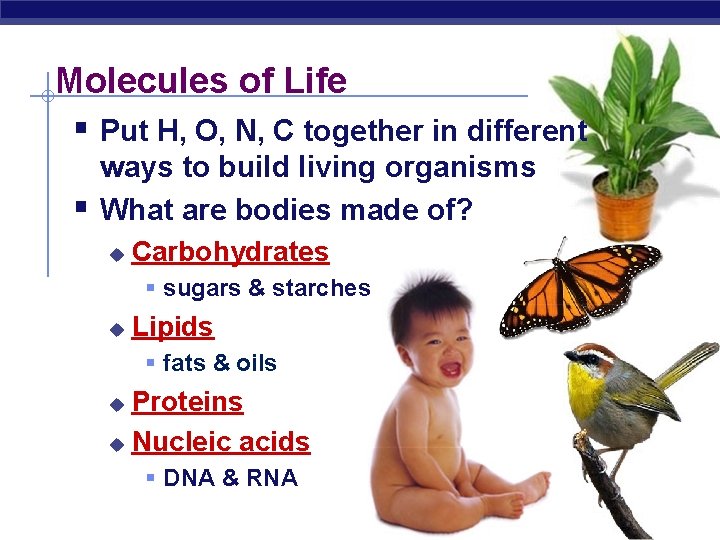
Molecules of Life § Put H, O, N, C together in different § ways to build living organisms What are bodies made of? u Carbohydrates § sugars & starches u Lipids § fats & oils Proteins u Nucleic acids u § DNA & RNA
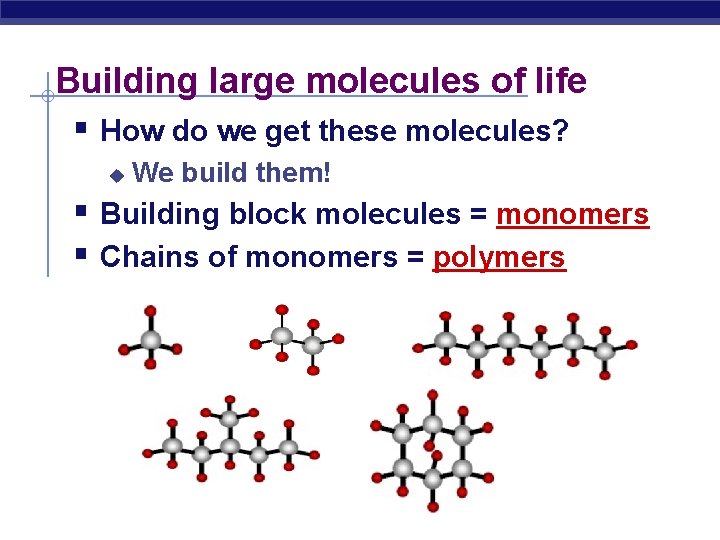
Building large molecules of life § How do we get these molecules? u We build them! § Building block molecules = monomers § Chains of monomers = polymers
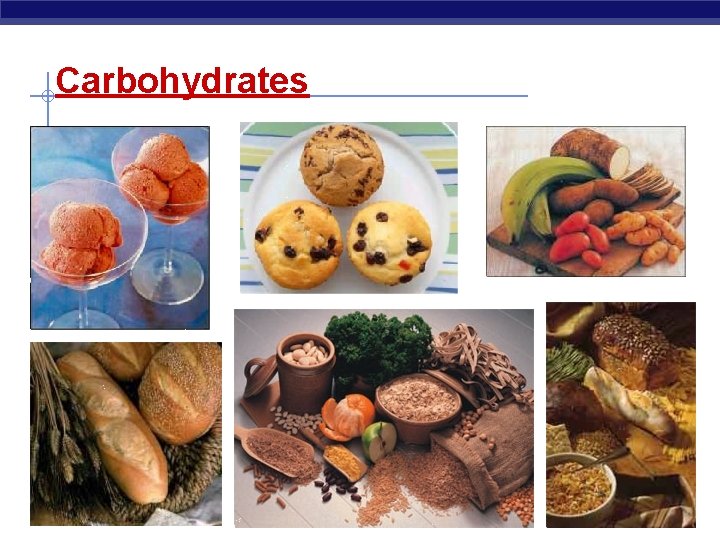
Carbohydrates
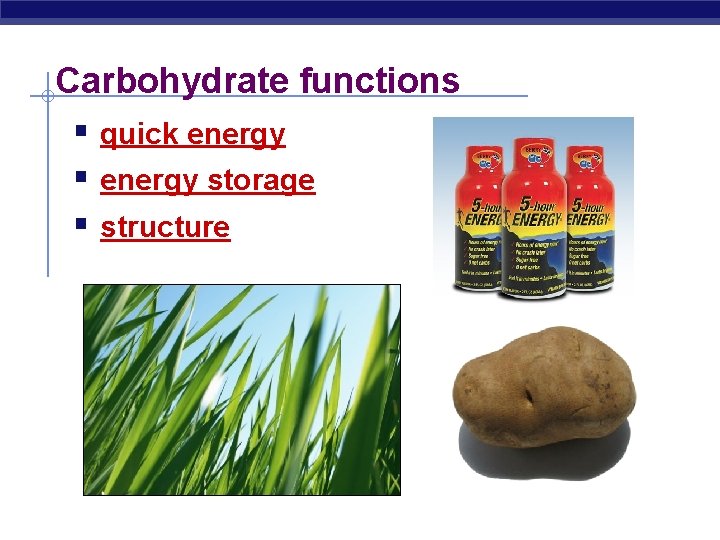
Carbohydrate functions § quick energy § energy storage § structure
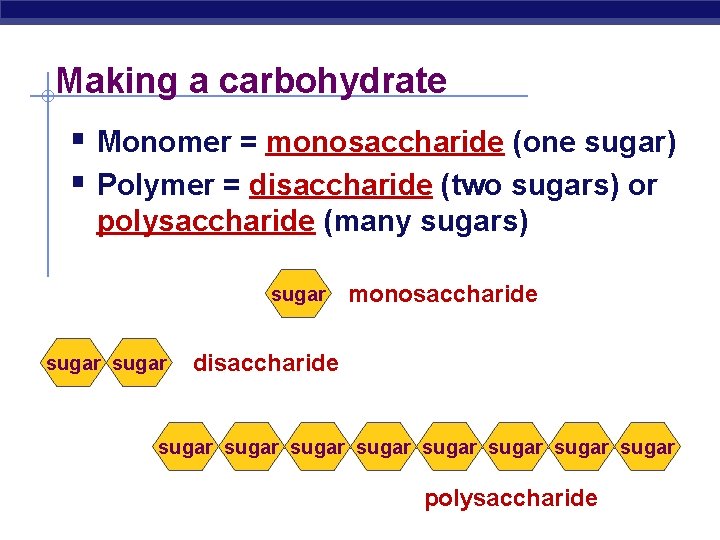
Making a carbohydrate § Monomer = monosaccharide (one sugar) § Polymer = disaccharide (two sugars) or polysaccharide (many sugars) sugar monosaccharide disaccharide sugar sugar polysaccharide
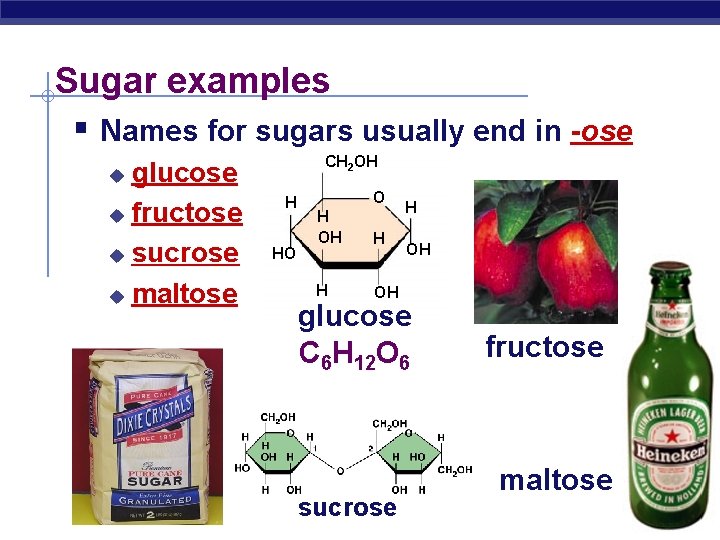
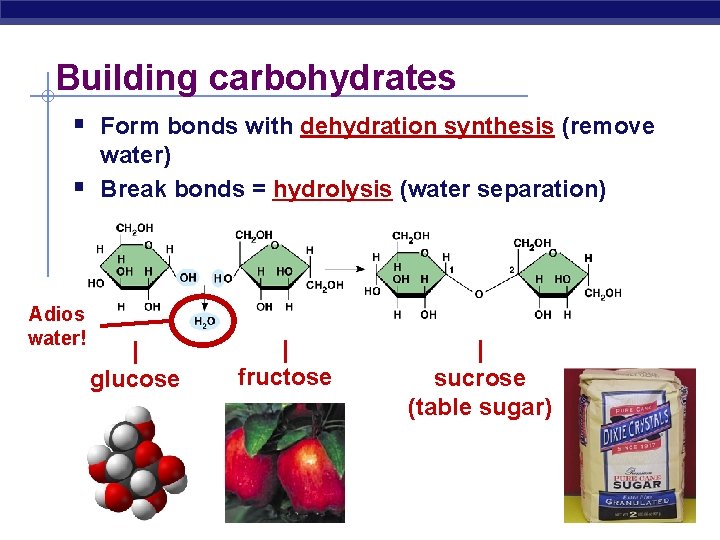
Sugar examples § Names for sugars usually end in -ose glucose u fructose u sucrose u maltose CH 2 OH u H HO O H OH glucose C 6 H 12 O 6 sucrose fructose maltose
Building carbohydrates § Form bonds with dehydration synthesis (remove § Adios water! water) Break bonds = hydrolysis (water separation) | glucose | fructose | sucrose (table sugar)
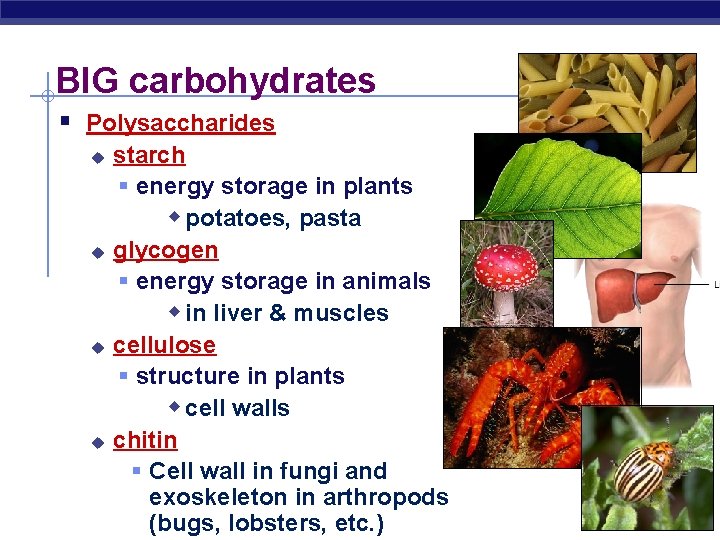
BIG carbohydrates § Polysaccharides u u starch § energy storage in plants w potatoes, pasta glycogen § energy storage in animals w in liver & muscles cellulose § structure in plants w cell walls chitin § Cell wall in fungi and exoskeleton in arthropods (bugs, lobsters, etc. )
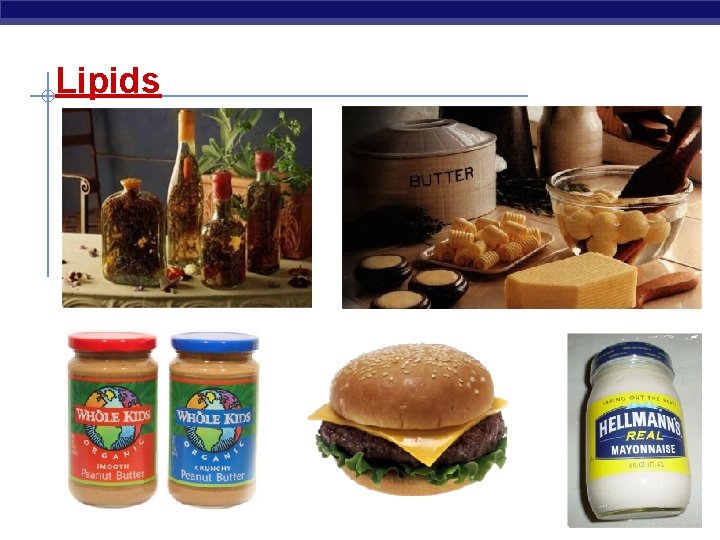
Lipids
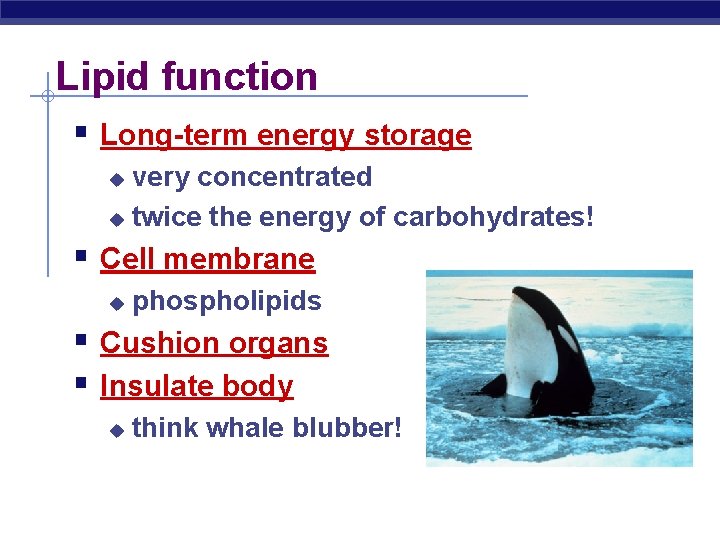
Lipid function § Long-term energy storage very concentrated u twice the energy of carbohydrates! u § Cell membrane u phospholipids § Cushion organs § Insulate body u think whale blubber!
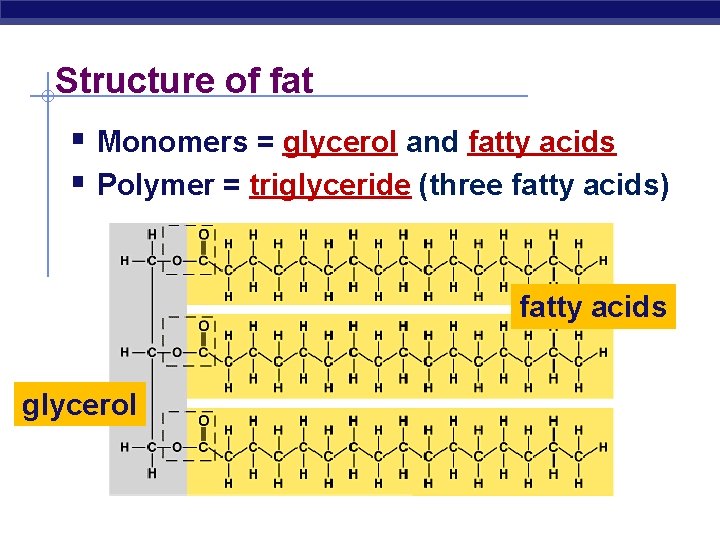
Structure of fat § Monomers = glycerol and fatty acids § Polymer = triglyceride (three fatty acids) fatty acids glycerol
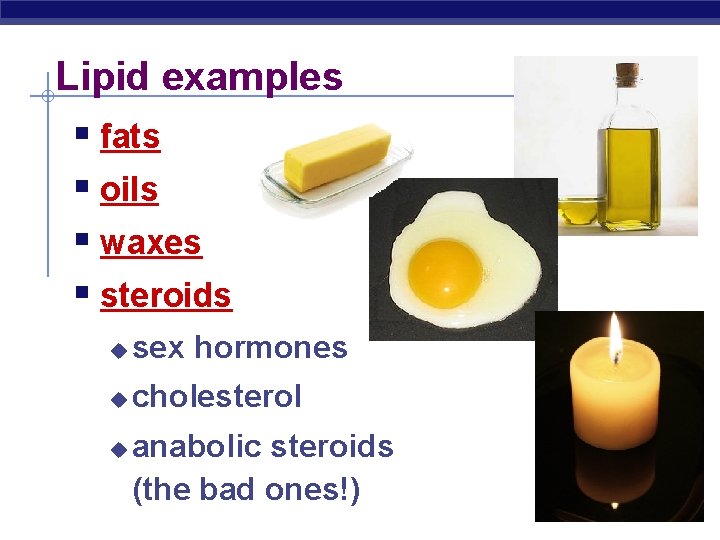
Lipid examples § fats § oils § waxes § steroids u sex hormones u cholesterol u anabolic steroids (the bad ones!)
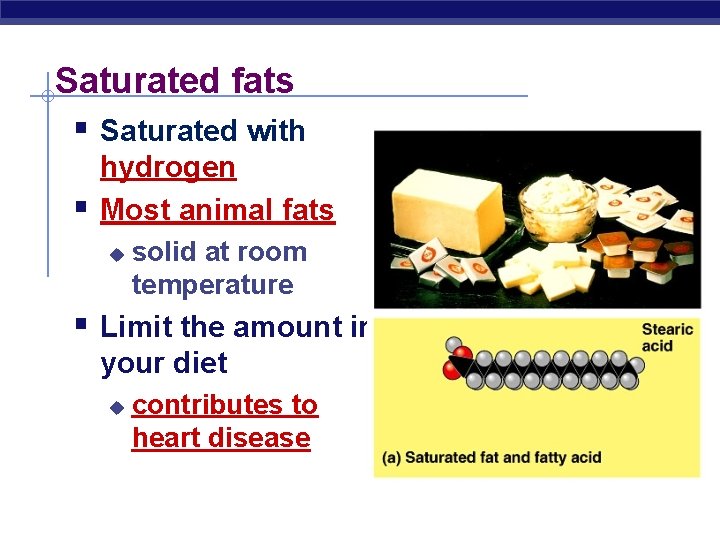
Saturated fats § Saturated with § hydrogen Most animal fats u solid at room temperature § Limit the amount in your diet u contributes to heart disease
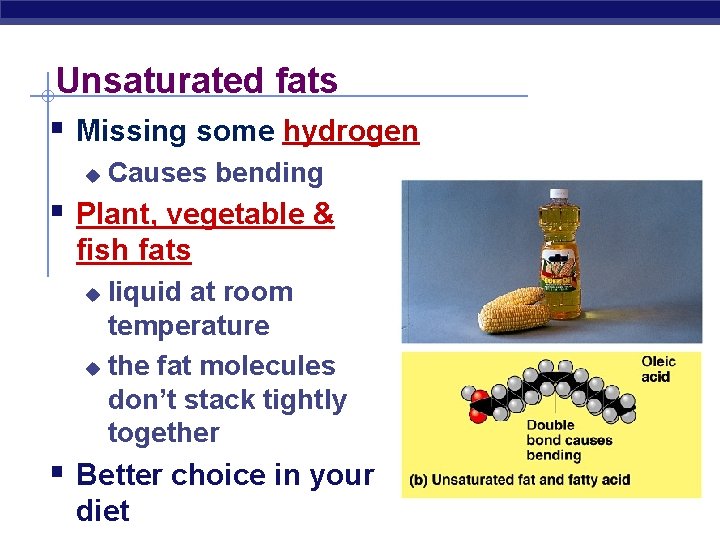
Unsaturated fats § Missing some hydrogen u Causes bending § Plant, vegetable & fish fats liquid at room temperature u the fat molecules don’t stack tightly together u § Better choice in your diet
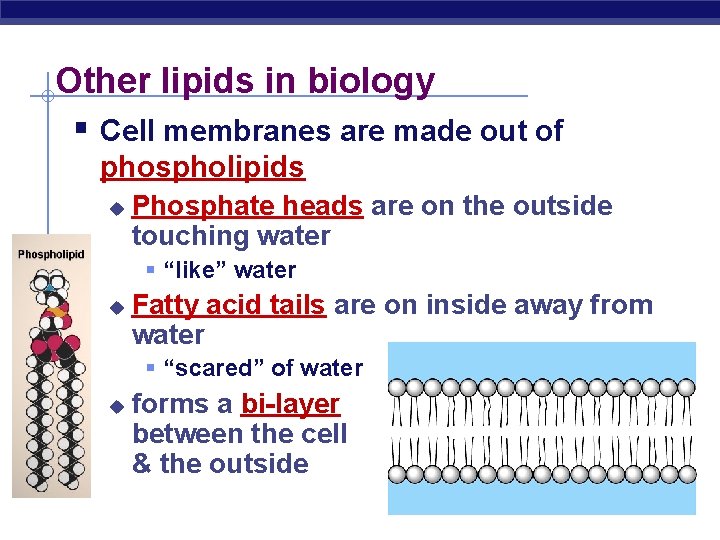
Other lipids in biology § Cell membranes are made out of phospholipids u Phosphate heads are on the outside touching water § “like” water u Fatty acid tails are on inside away from water § “scared” of water u forms a bi-layer between the cell & the outside
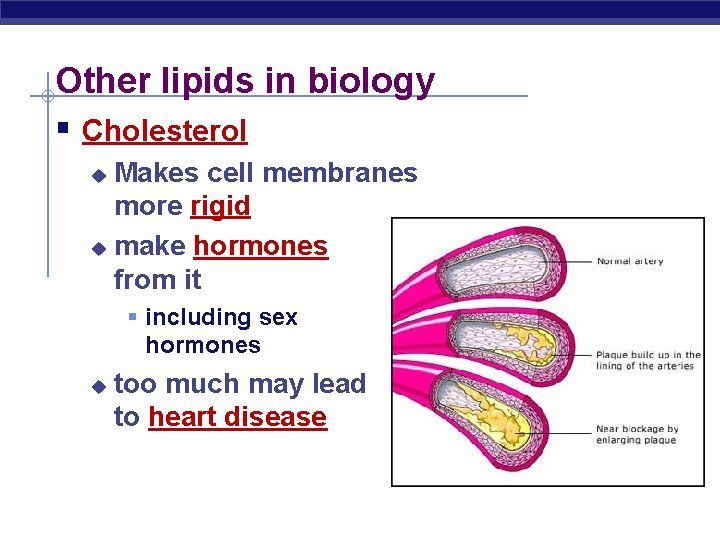
Other lipids in biology § Cholesterol Makes cell membranes more rigid u make hormones from it u § including sex hormones u too much may lead to heart disease
Proteins
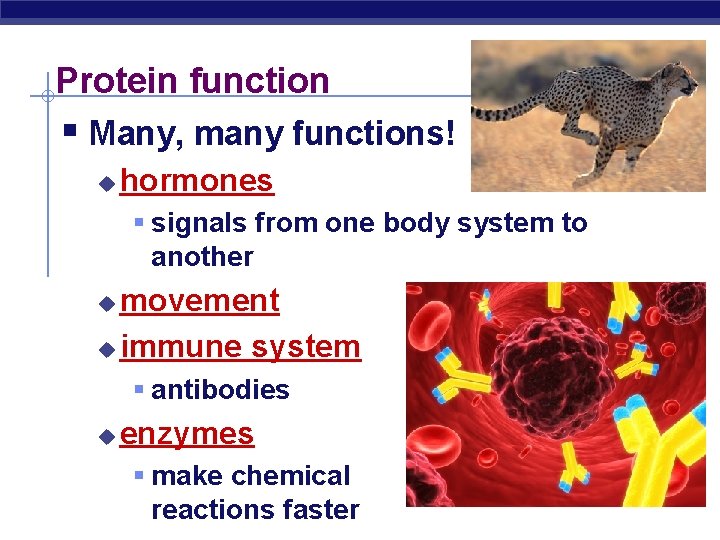
Protein function § Many, many functions! u hormones § signals from one body system to another movement u immune system u § antibodies u enzymes § make chemical reactions faster
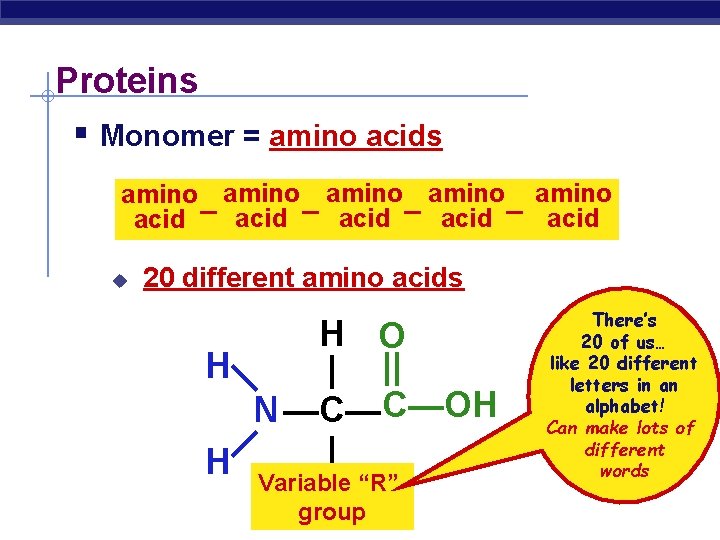
Proteins § Monomer = amino acids amino amino acid – acid u 20 different amino acids H O H | || —N— —C—C—OH | H Variable “R” group There’s 20 of us… like 20 different letters in an alphabet! Can make lots of different words
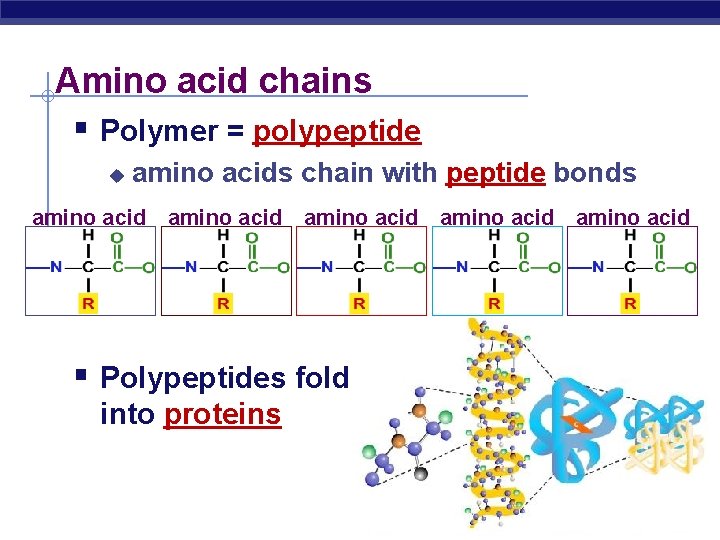
Amino acid chains § Polymer = polypeptide u amino acids chain with peptide bonds amino acid amino acid § Polypeptides fold into proteins
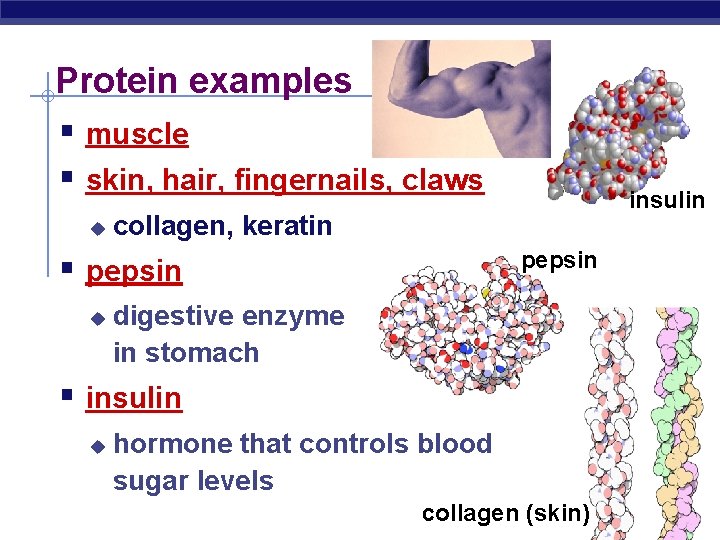
Protein examples § muscle § skin, hair, fingernails, claws u collagen, keratin pepsin § pepsin u insulin digestive enzyme in stomach § insulin u hormone that controls blood sugar levels collagen (skin)
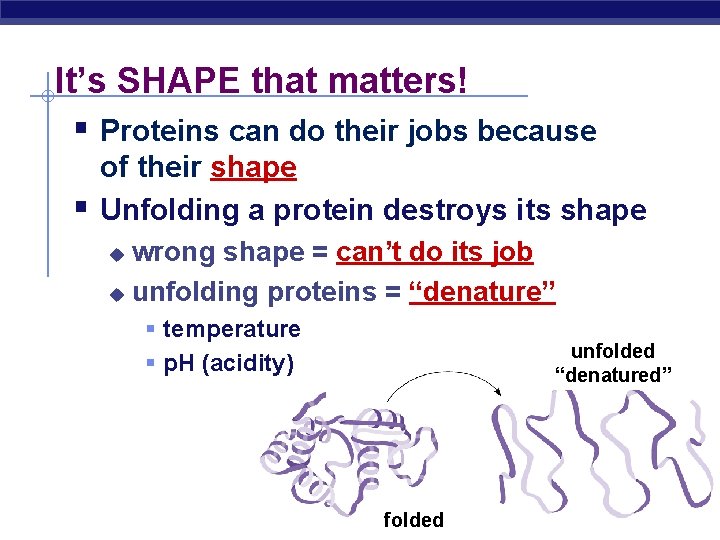
It’s SHAPE that matters! § Proteins can do their jobs because § of their shape Unfolding a protein destroys its shape wrong shape = can’t do its job u unfolding proteins = “denature” u § temperature § p. H (acidity) unfolded “denatured” folded
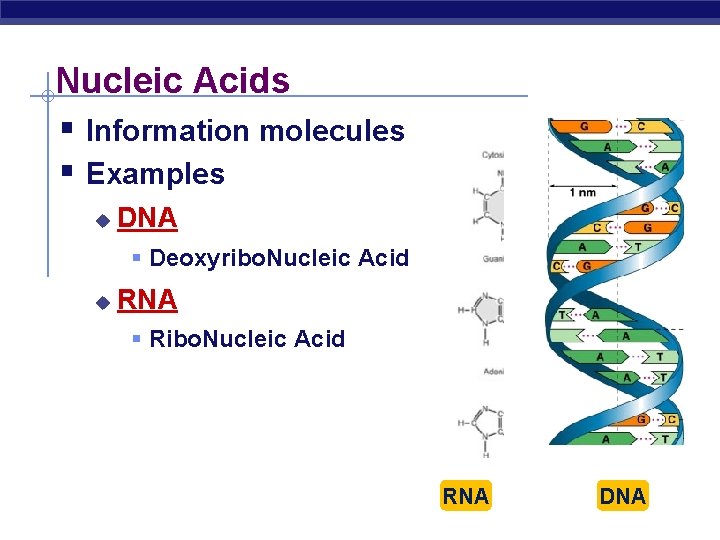
Nucleic Acids § Information molecules § Examples u DNA § Deoxyribo. Nucleic Acid u RNA § Ribo. Nucleic Acid RNA DNA
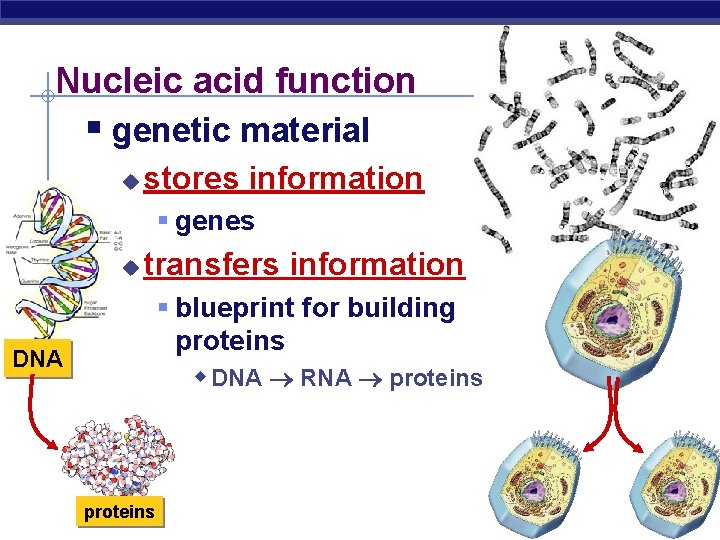
Nucleic acid function § genetic material u stores information § genes u transfers information § blueprint for building proteins w DNA RNA proteins DNA proteins
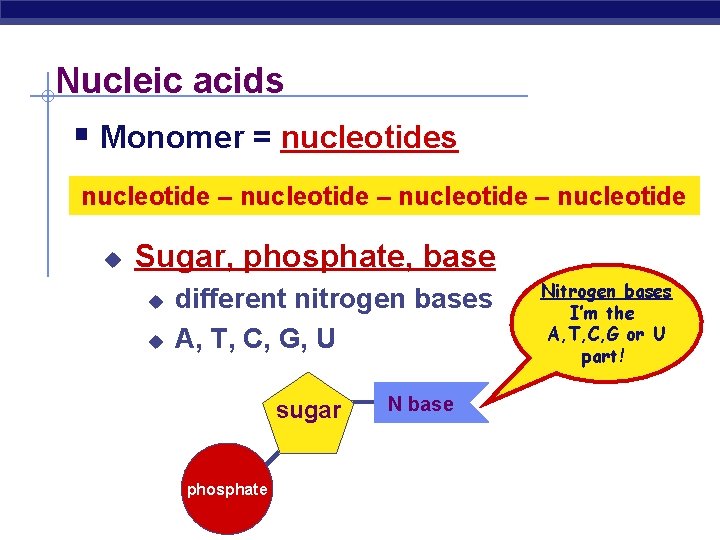
Nucleic acids § Monomer = nucleotides nucleotide – nucleotide u Sugar, phosphate, base u u different nitrogen bases A, T, C, G, U sugar phosphate N base Nitrogen bases I’m the A, T, C, G or U part!
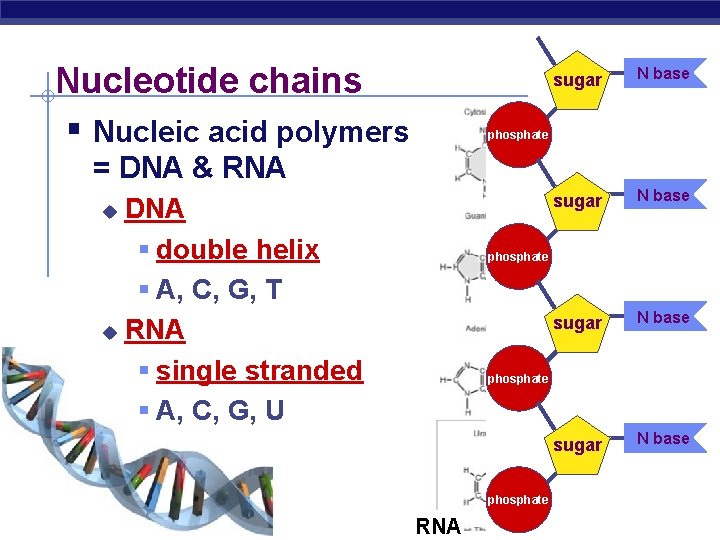
Nucleotide chains § Nucleic acid polymers sugar N base phosphate = DNA & RNA DNA § double helix § A, C, G, T u RNA § single stranded § A, C, G, U u phosphate RNA