
The Chemical Building Blocks of Life Carbon Framework
The Chemical Building Blocks of Life
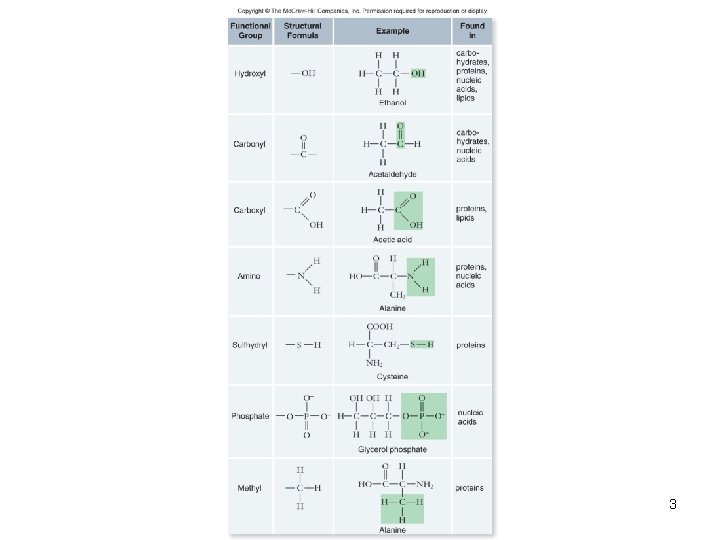
Carbon • Framework of biological molecules consists primarily of carbon bonded to – Carbon – O, N, S, P or H • Can form up to 4 covalent bonds • Hydrocarbons – molecule consisting only of carbon and hydrogen – Nonpolar – Functional groups add chemical properties 2
3
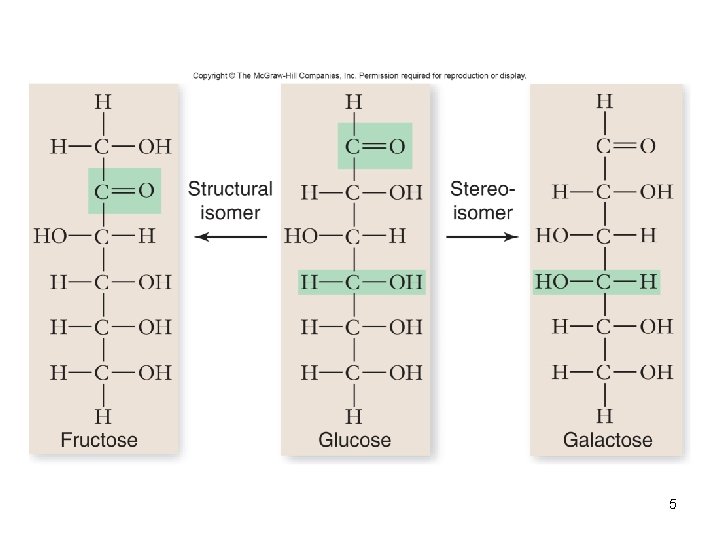
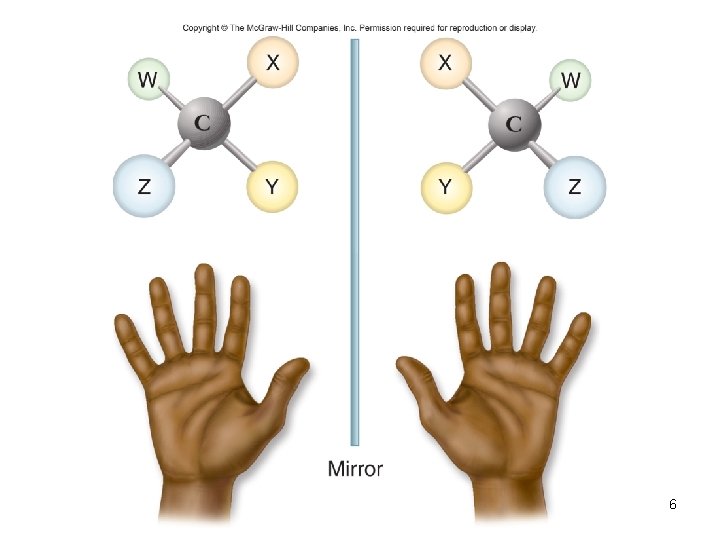
Isomers • Molecules with the same molecular or empirical formula – Structural isomers – Stereoisomers – differ in how groups attached • Enantiomers – mirror image molecules – chiral – D-sugars and L-amino acids 4
5
6
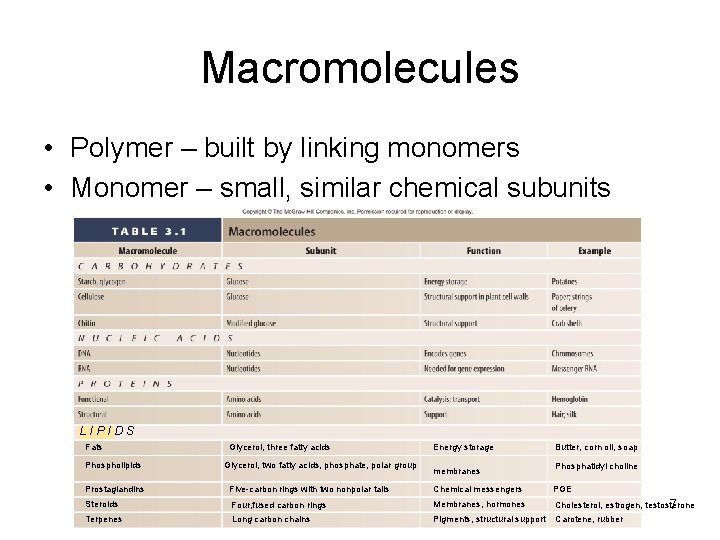
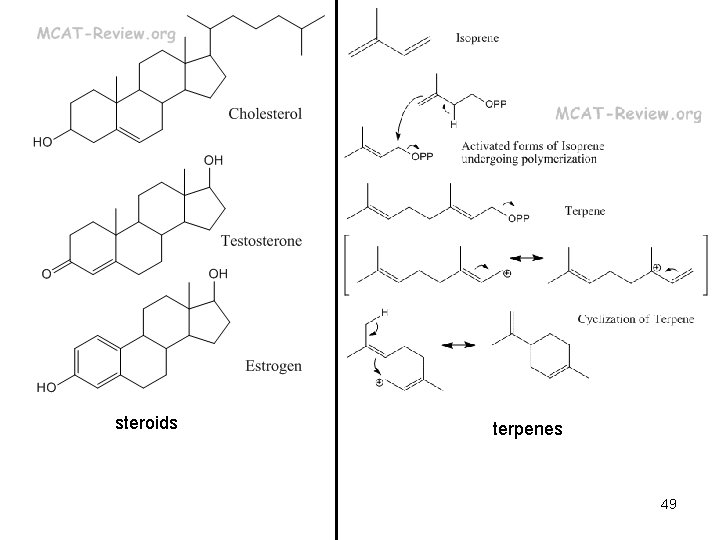
Macromolecules • Polymer – built by linking monomers • Monomer – small, similar chemical subunits LIPIDS Fats Phospholipids Glycerol, three fatty acids Glycerol, two fatty acids, phosphate, polar group Energy storage membranes Butter, corn oil, soap Phosphatidyl choline Prostaglandins Five-carbon rings with two nonpolar tails Chemical messengers PGE Steroids Four, fused carbon rings Membranes, hormones Cholesterol, estrogen, testosterone 7 Terpenes Long carbon chains Pigments, structural support Carotene, rubber
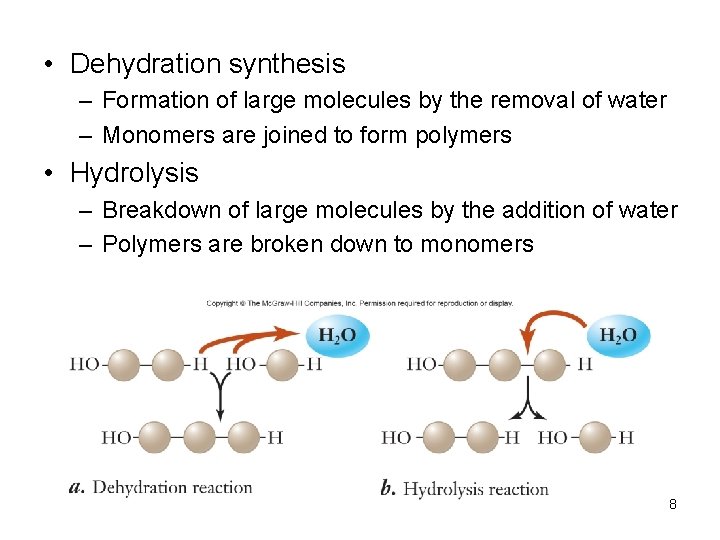
• Dehydration synthesis – Formation of large molecules by the removal of water – Monomers are joined to form polymers • Hydrolysis – Breakdown of large molecules by the addition of water – Polymers are broken down to monomers 8

9
Carbohydrates • Molecules with a 1: 2: 1 ratio of carbon, hydrogen, oxygen • Empirical formula (CH 2 O)n • C—H covalent bonds hold much energy – Carbohydrates are good energy storage molecules – Examples: sugars, starch, glucose 10
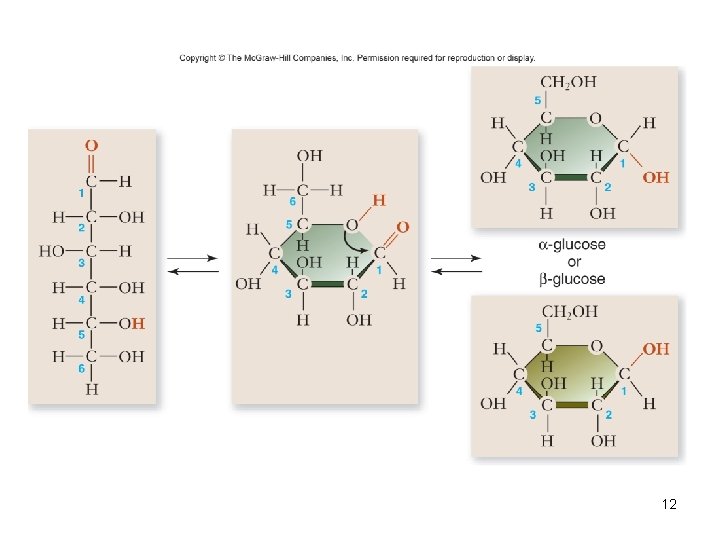
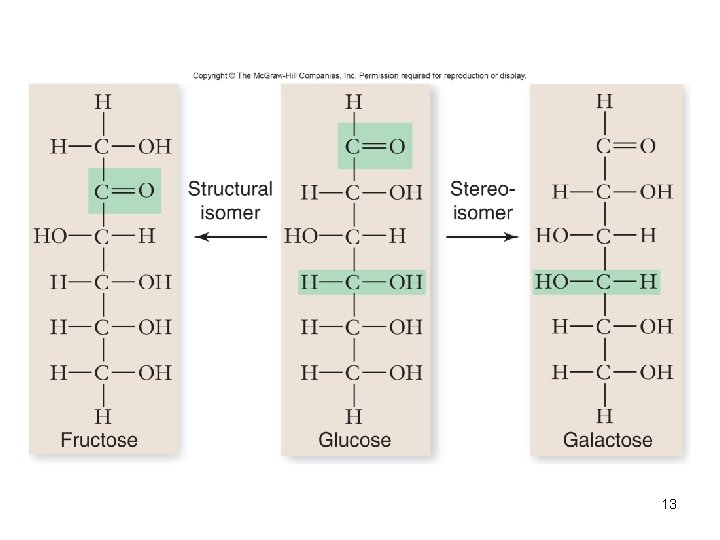
Monosaccharides • • • Simplest carbohydrate 6 carbon sugars play important roles Glucose C 6 H 12 O 6 Fructose is a structural isomer of glucose Galactose is a stereoisomer of glucose Enzymes that act on different sugars can distinguish structural and stereoisomers of this basic six-carbon skeleton 11
12
13
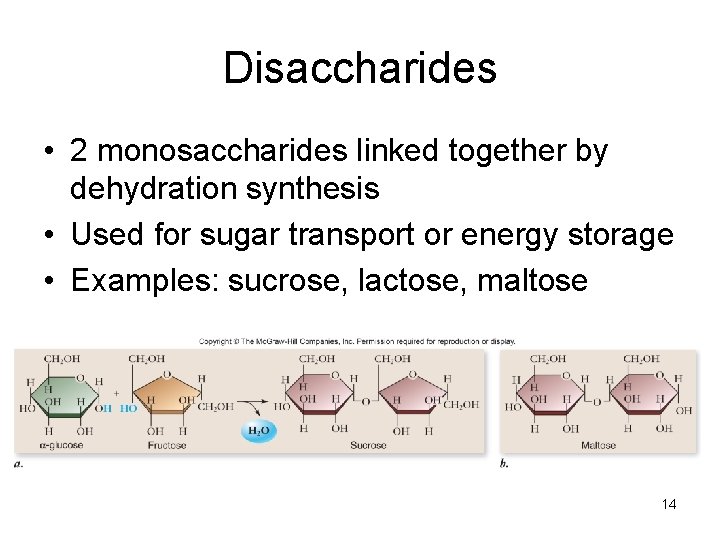
Disaccharides • 2 monosaccharides linked together by dehydration synthesis • Used for sugar transport or energy storage • Examples: sucrose, lactose, maltose 14
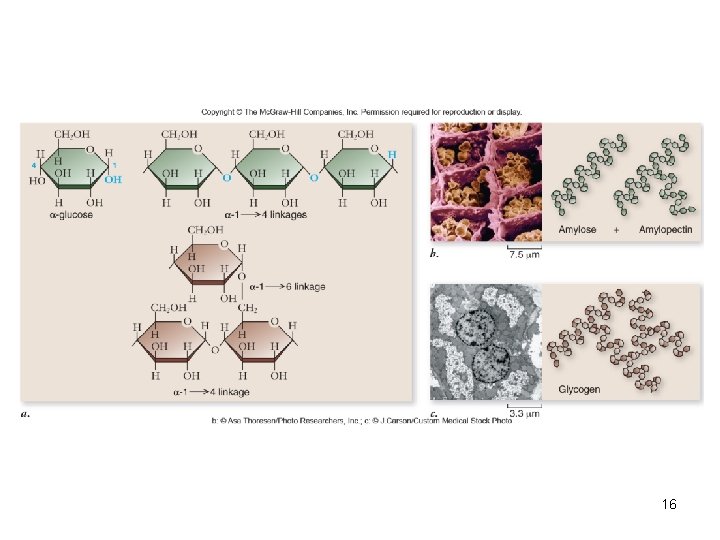
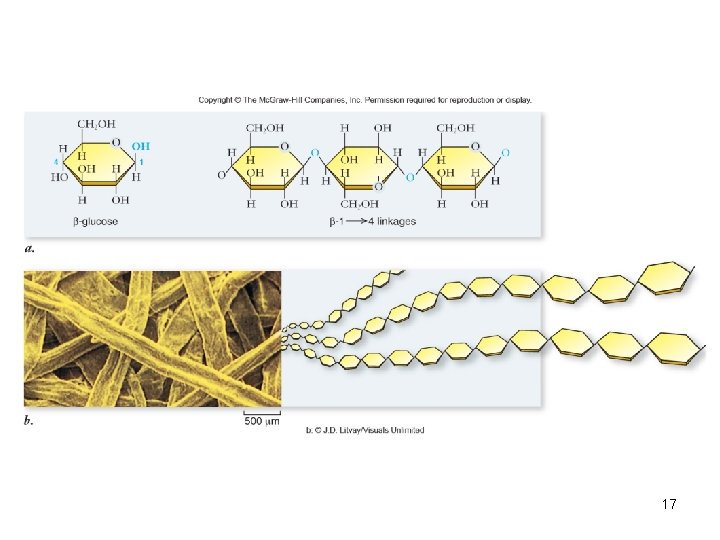
Polysaccharides • Long chains of monosaccharides – Linked through dehydration synthesis • Energy storage – Plants use starch – Animals use glycogen • Structural support – Plants use cellulose – Arthropods and fungi use chitin 15
16
17

18
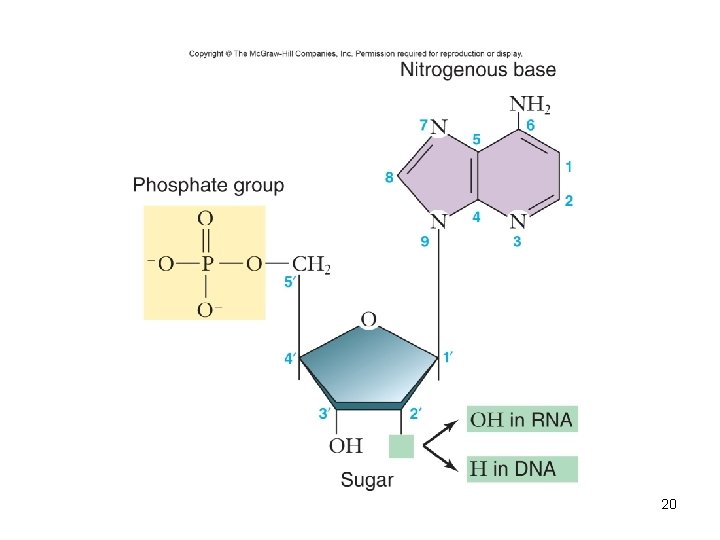
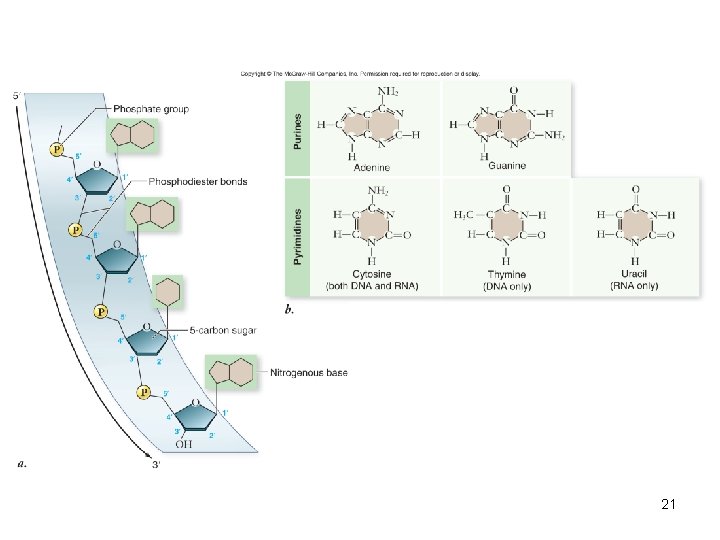
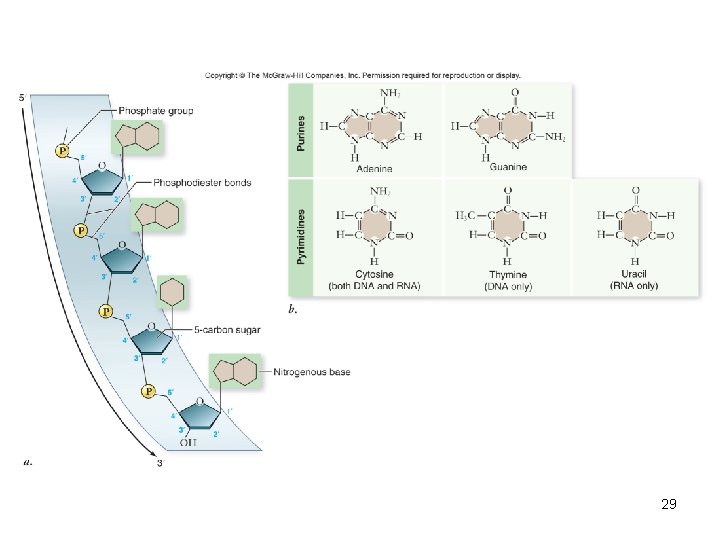
Nucleic acids • Polymer – nucleic acids • Monomers – nucleotides – sugar + phosphate + nitrogenous base – sugar is deoxyribose in DNA or ribose in RNA – Nitrogenous bases include • Purines: adenine and guanine • Pyrimidines: thymine, cytosine, uracil – Nucleotides connected by phosphodiester bonds 19
20
21
Deoxyribonucleic acid (DNA) • Encodes information for amino acid sequence of proteins – Sequence of bases • Double helix – 2 polynucleotide strands connected by hydrogen bonds – Base-pairing rules • A with T (or U in RNA) • C with G 22
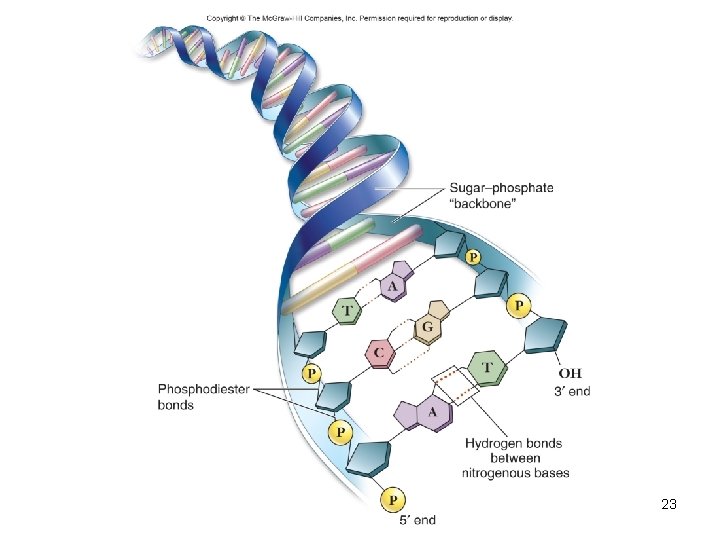
23
Ribonucleic acid (RNA) • RNA similar to DNA except – Contains ribose instead of deoxyribose – Contains uracil instead of thymine • Single polynucleotide strand • RNA uses information in DNA to specify sequence of amino acids in proteins 24
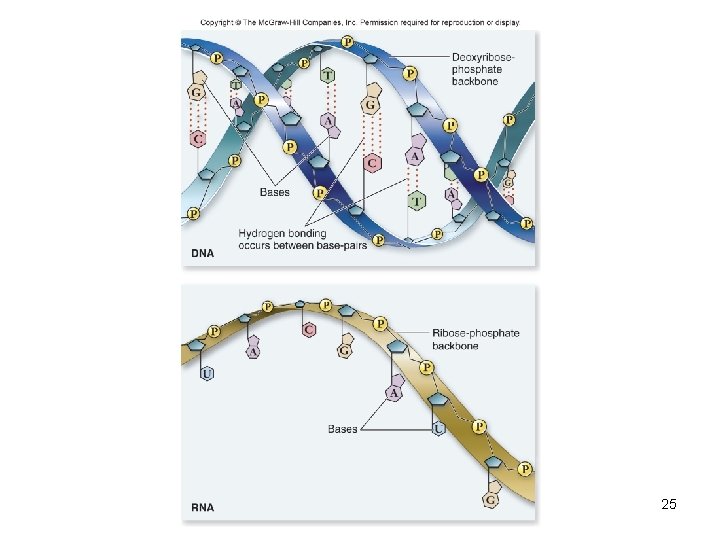
25
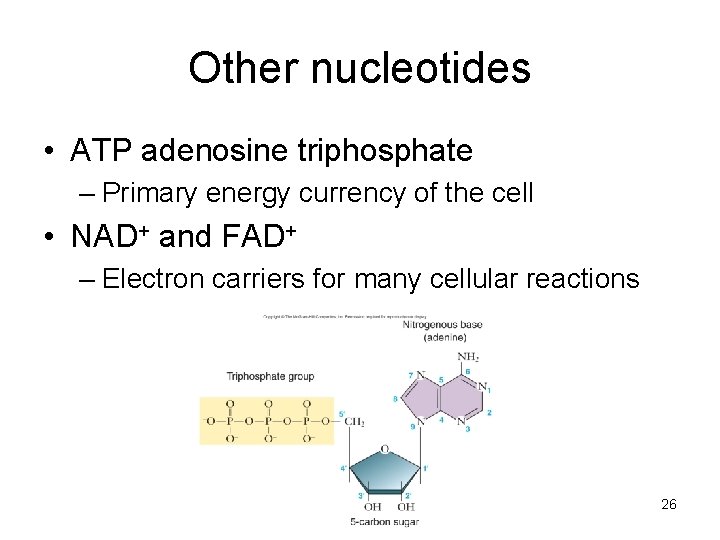
Other nucleotides • ATP adenosine triphosphate – Primary energy currency of the cell • NAD+ and FAD+ – Electron carriers for many cellular reactions 26
Proteins Protein functions include: 1. Enzyme catalysis 2. Defense 3. Transport 4. Support 5. Motion 6. Regulation 7. Storage 27
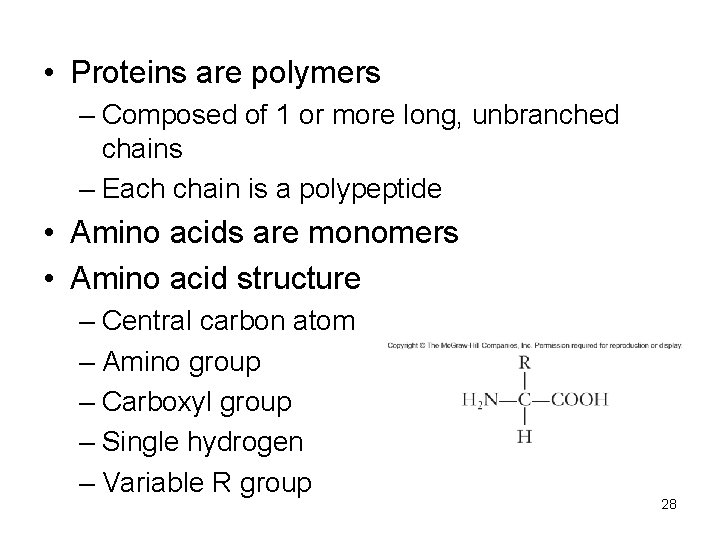
• Proteins are polymers – Composed of 1 or more long, unbranched chains – Each chain is a polypeptide • Amino acids are monomers • Amino acid structure – Central carbon atom – Amino group – Carboxyl group – Single hydrogen – Variable R group 28
29

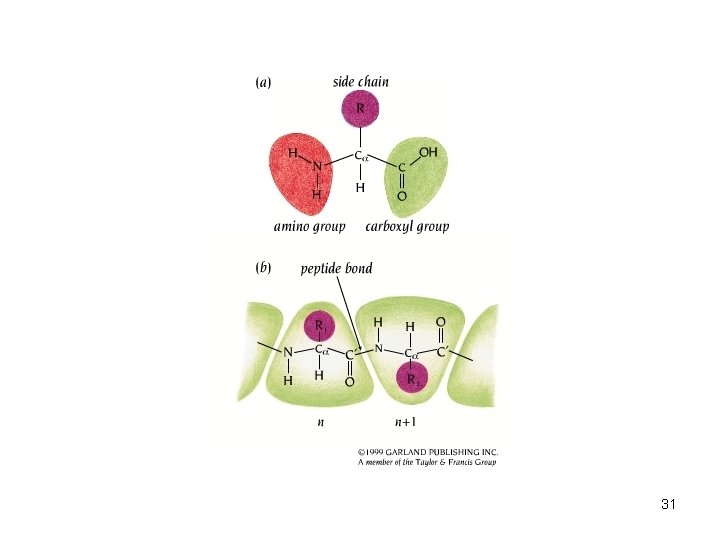
• Amino acids joined by dehydration synthesis – Peptide bond 30
31
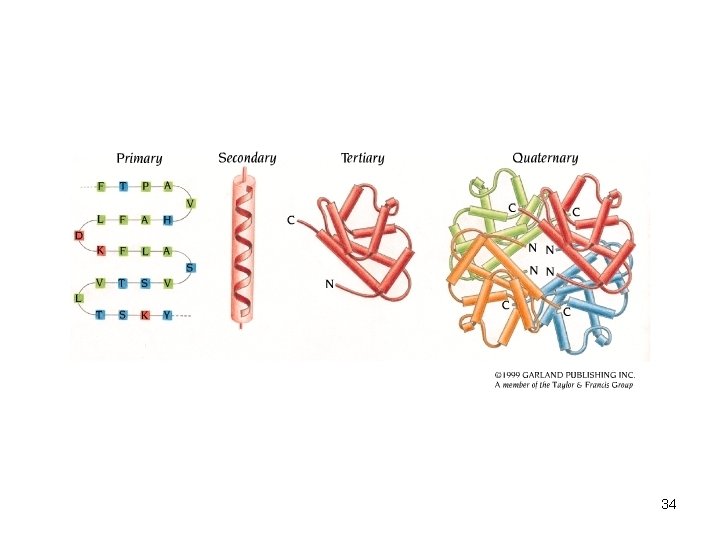
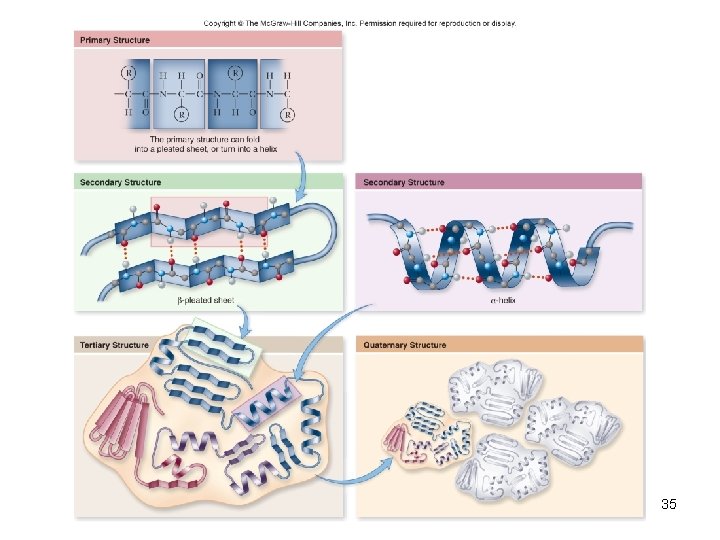
4 Levels of structure • The shape of a protein determines its function 1. Primary structure – sequence of amino acids 2. Secondary structure – interaction of groups in the peptide backbone – a helix – b sheet 32
4 Levels of structure 3. Tertiary structure – final folded shape of a globular protein – Stabilized by a number of forces – Final level of structure for proteins consisting of only a single polypeptide chain 4. Quaternary structure – arrangement of individual chains (subunits) in a protein with 2 or more polypeptide chains 33
34
35
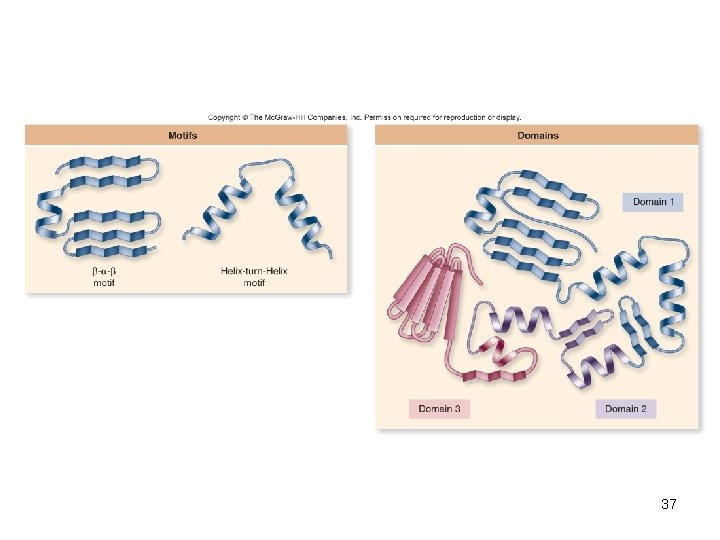
Additional structural characteristics • Motifs – Common elements of secondary structure seen in many polypeptides – Useful in determining the function of unknown proteins • Domains – Functional units within a larger structure – Most proteins made of multiple domains that perform different parts of the protein’s function 36
37
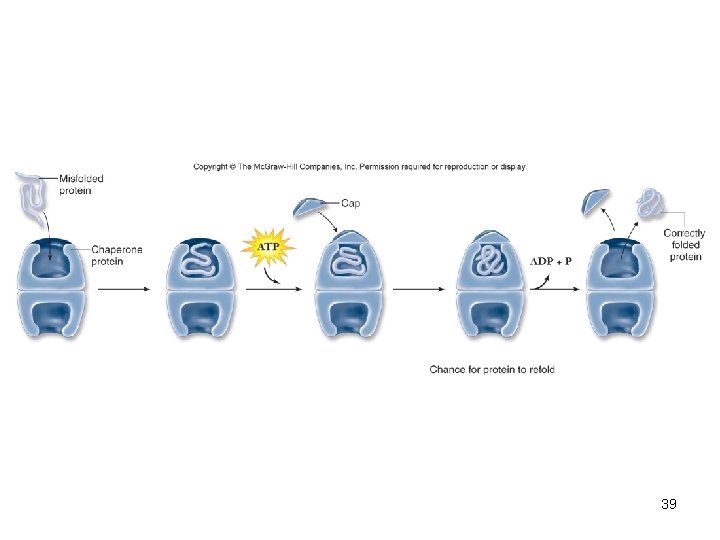
Chaperones • Once thought newly made proteins folded spontaneously • Chaperone proteins help protein fold correctly • Deficiencies in chaperone proteins implicated in certain diseases – Cystic fibrosis is a hereditary disorder • In some individuals, protein appears to have correct amino acid sequence but fails to fold 38
39
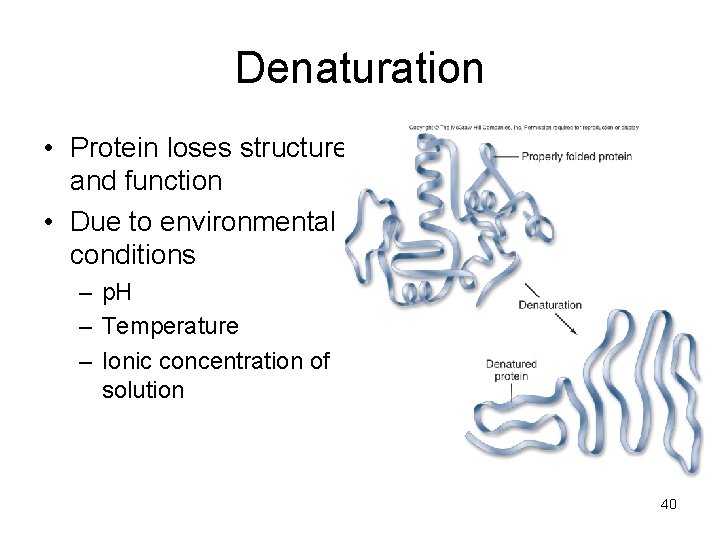
Denaturation • Protein loses structure and function • Due to environmental conditions – p. H – Temperature – Ionic concentration of solution 40
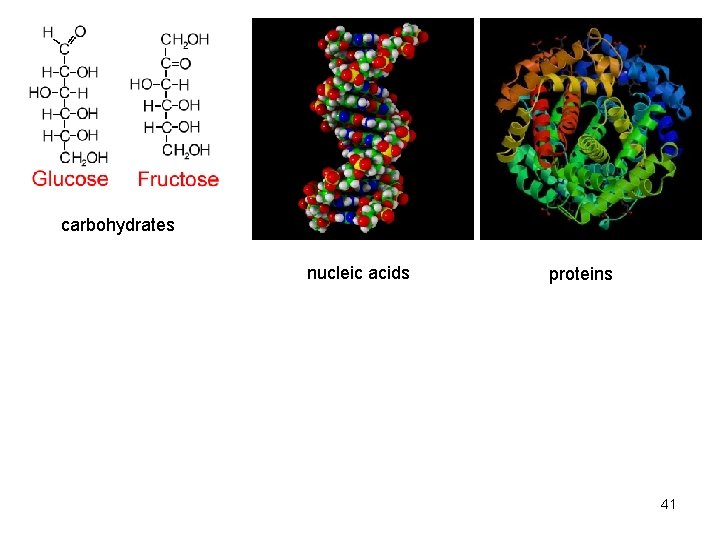
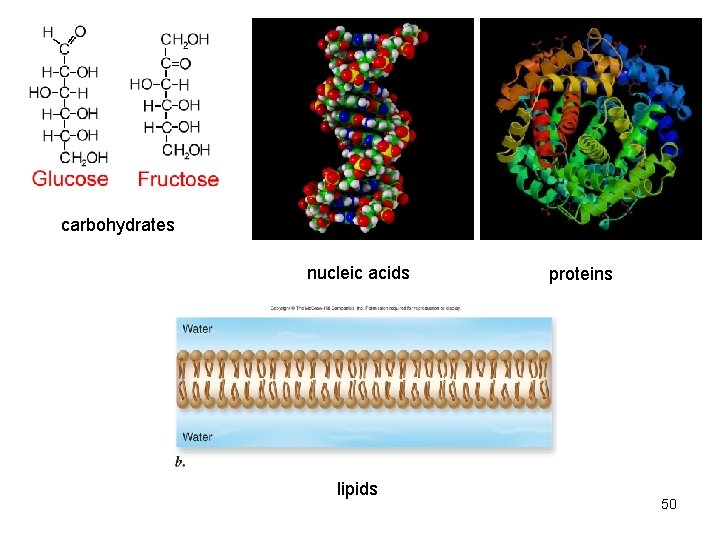
carbohydrates nucleic acids proteins 41
Lipids • Loosely defined group of molecules with one main chemical characteristic – They are insoluble in water • High proportion of nonpolar C—H bonds causes the molecule to be hydrophobic • Fats, oils, waxes, and even some vitamins 42
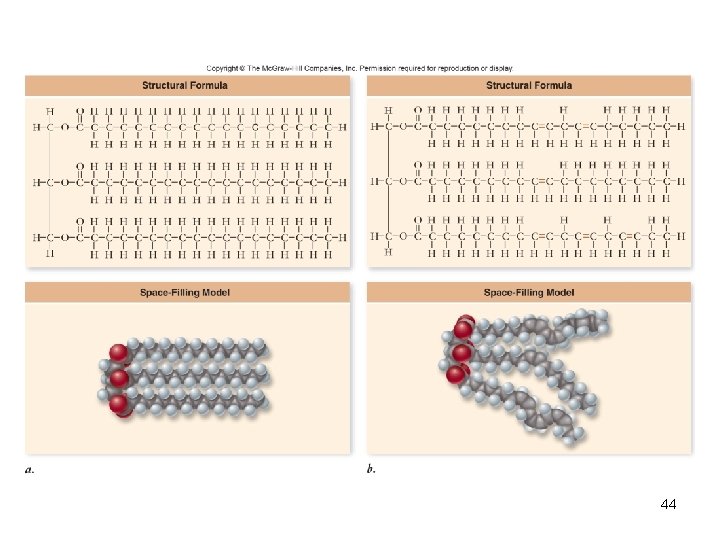
Fats • Triglycerides – Composed of 1 glycerol and 3 fatty acids • Fatty acids – Need not be identical – Chain length varies – Saturated – no double bonds between carbon atoms • Higher melting point, animal origin – Unsaturated – 1 or more double bonds • Low melting point, plant origin – Trans fats produced industrially 43
44
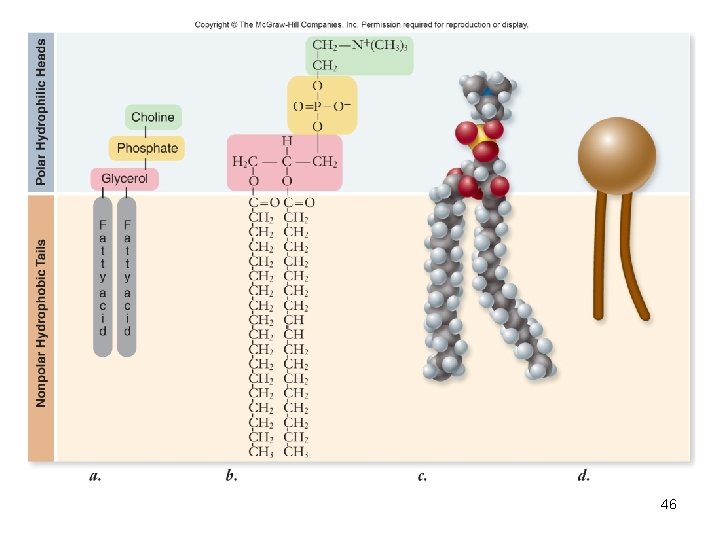
Phospholipids • Composed of – Glycerol – 2 fatty acids – nonpolar “tails” – A phosphate group – polar “head” • Form all biological membranes 45
46
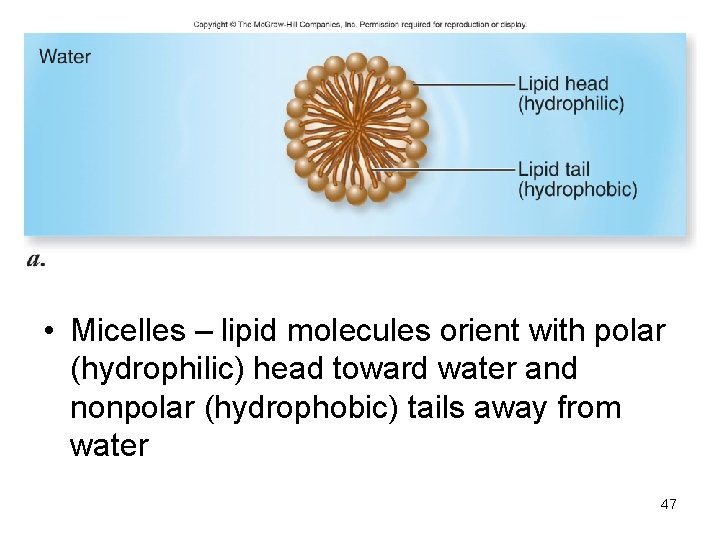
• Micelles – lipid molecules orient with polar (hydrophilic) head toward water and nonpolar (hydrophobic) tails away from water 47
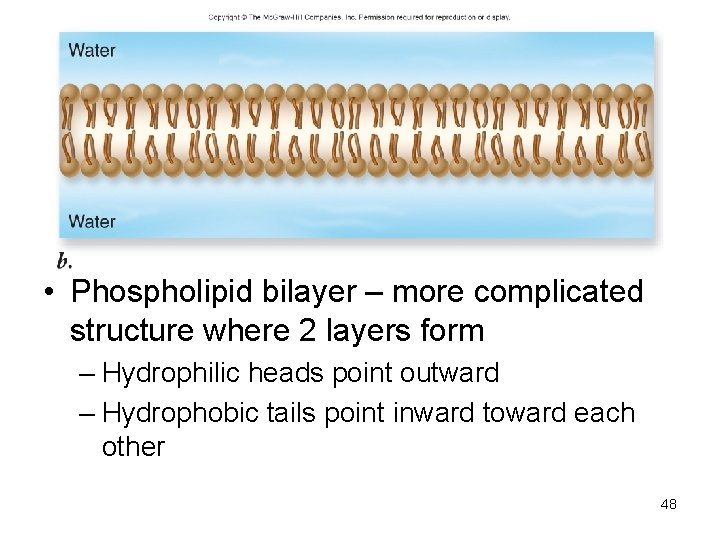
• Phospholipid bilayer – more complicated structure where 2 layers form – Hydrophilic heads point outward – Hydrophobic tails point inward toward each other 48
steroids terpenes 49
carbohydrates nucleic acids lipids proteins 50
51
- Slides: 51