
The Charters of the Virginia Company of London
- Slides: 30
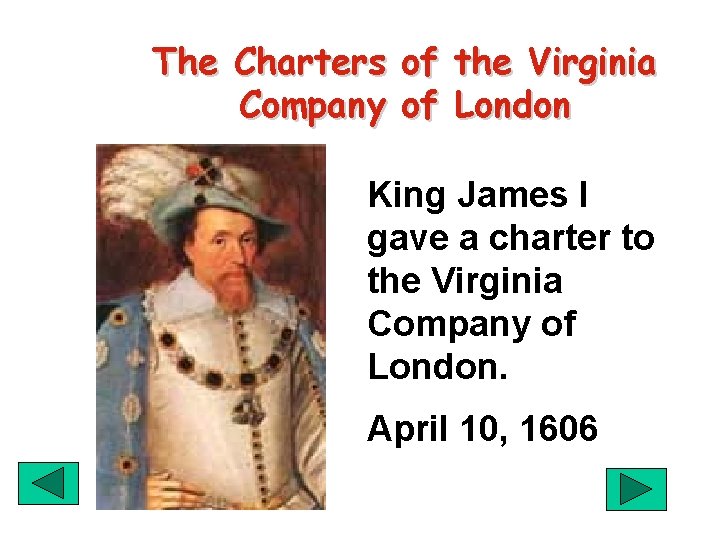
The Charters of the Virginia Company of London King James I gave a charter to the Virginia Company of London. April 10, 1606
Purpose of the Charters • They authorized the Virginia Company to start a colony. • They allowed for a representative government. • They gave the colonists the same rights as Englishmen.
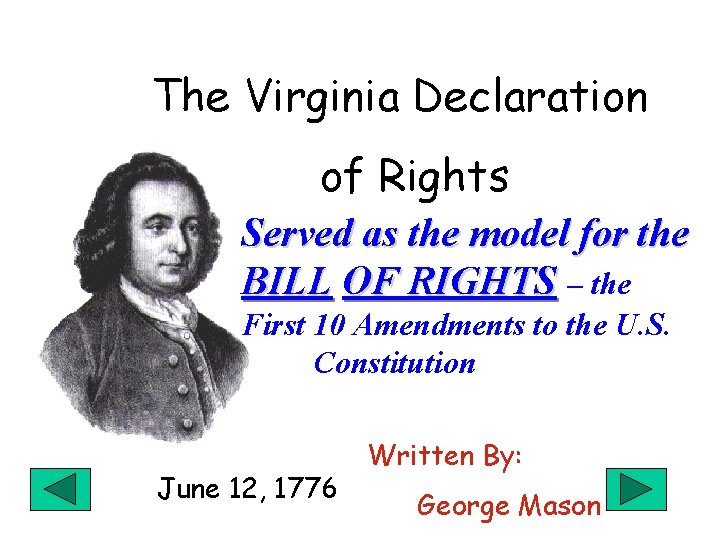
The Virginia Declaration of Rights Served as the model for the BILL OF RIGHTS – the First 10 Amendments to the U. S. Constitution June 12, 1776 Written By: George Mason
The Declaration of Rights • This was an introduction to the Virginia Constitution • George Mason believed all Virginians should have certain rights.
Virginia Declaration of Rights: • Freedom of Religion • Right to a fair trial • Freedom of the press
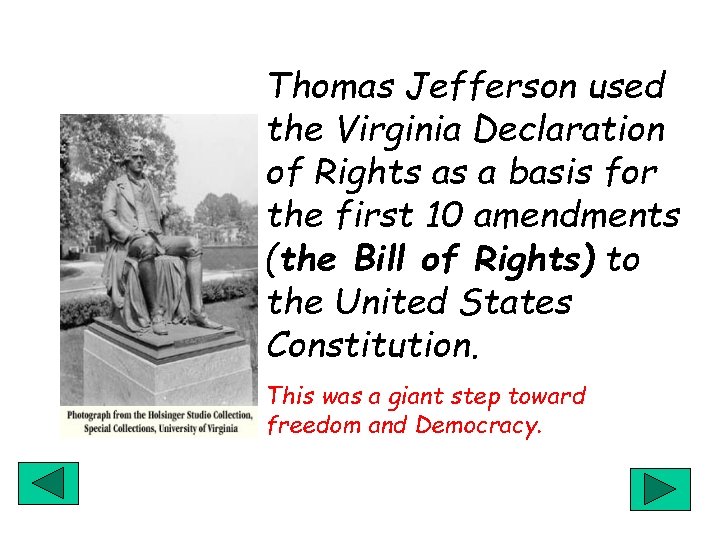
Thomas Jefferson used the Virginia Declaration of Rights as a basis for the first 10 amendments (the Bill of Rights) to the United States Constitution. This was a giant step toward freedom and Democracy.
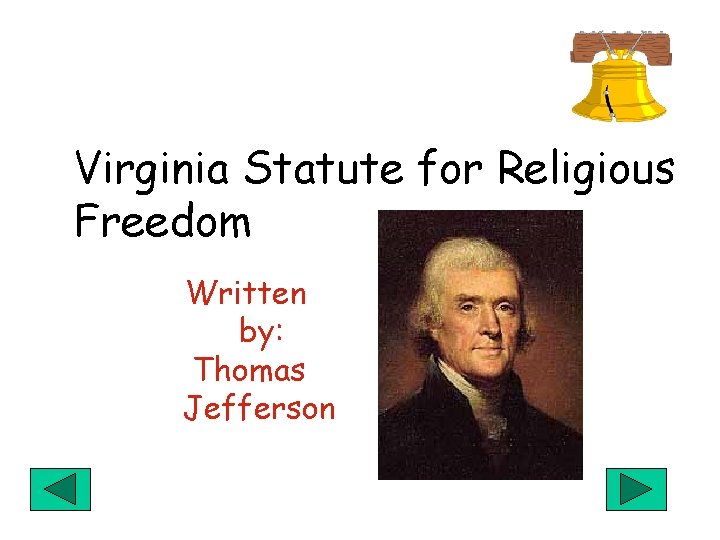
Virginia Statute for Religious Freedom Written by: Thomas Jefferson
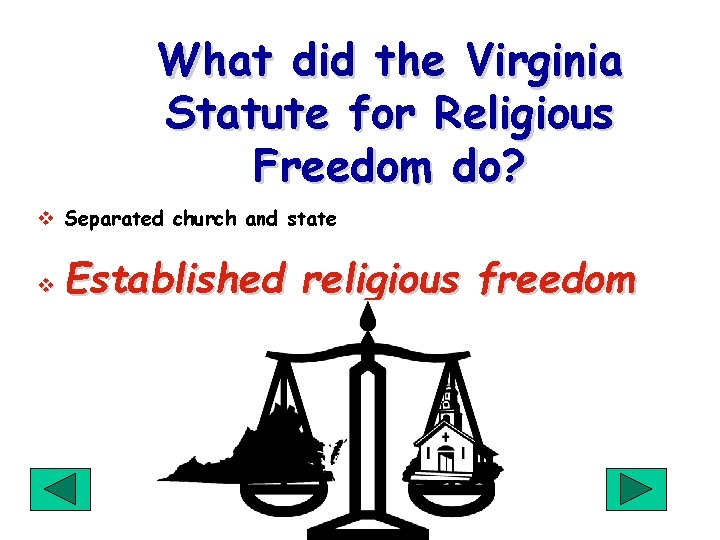
What did the Virginia Statute for Religious Freedom do? v Separated church and state v Established religious freedom
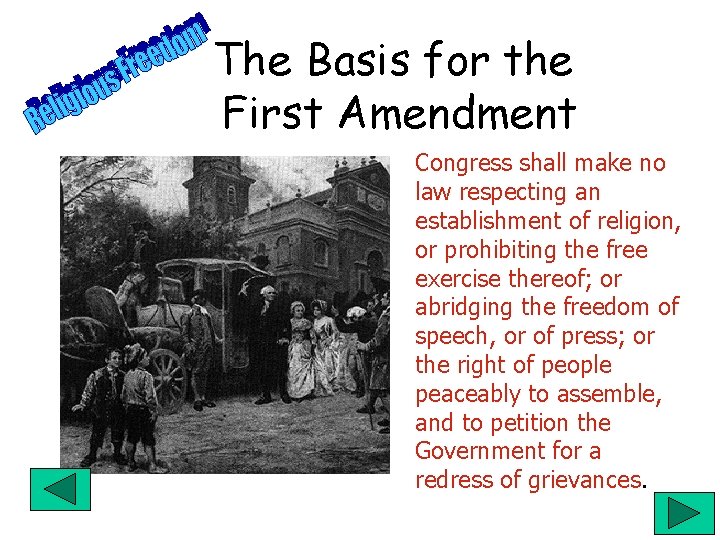
The Basis for the First Amendment Congress shall make no law respecting an establishment of religion, or prohibiting the free exercise thereof; or abridging the freedom of speech, or of press; or the right of people peaceably to assemble, and to petition the Government for a redress of grievances.
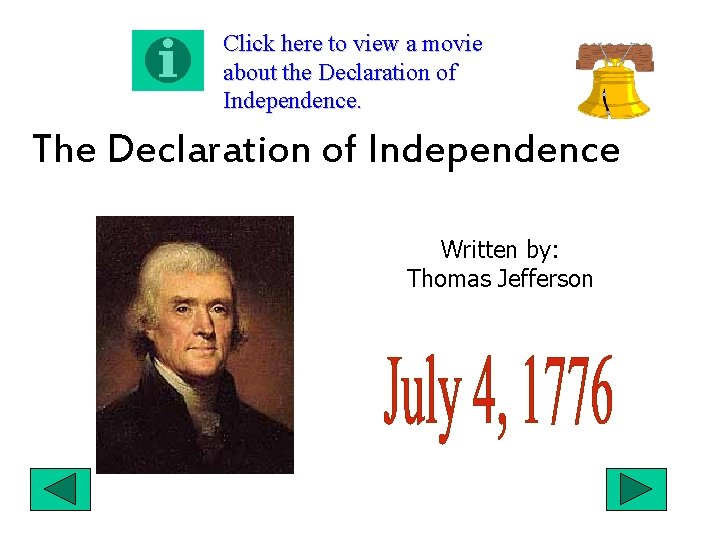
Click here to view a movie about the Declaration of Independence. The Declaration of Independence Written by: Thomas Jefferson
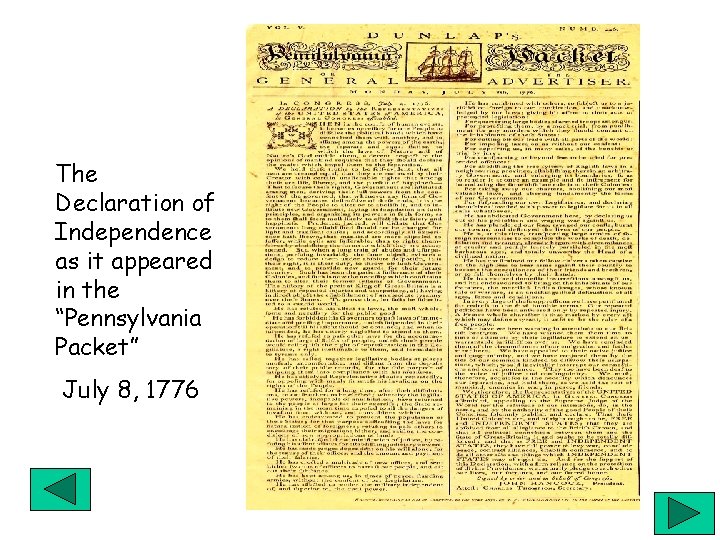
The Declaration of Independence as it appeared in the “Pennsylvania Packet” July 8, 1776
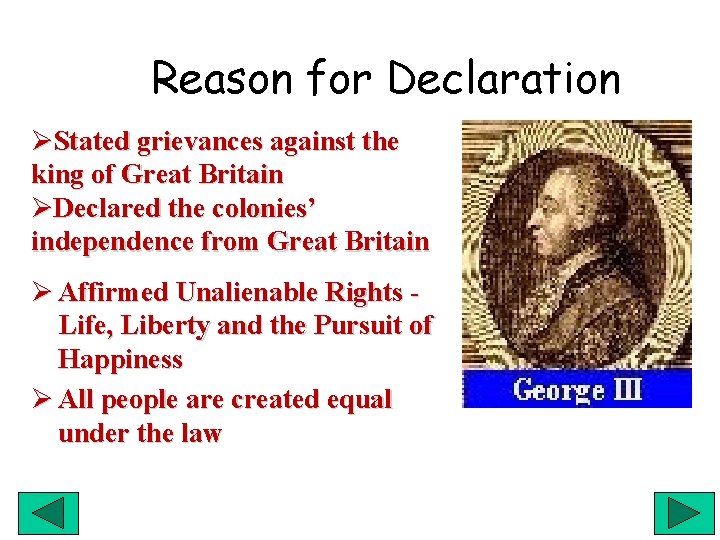
Reason for Declaration ØStated grievances against the king of Great Britain ØDeclared the colonies’ independence from Great Britain Ø Affirmed Unalienable Rights Life, Liberty and the Pursuit of Happiness Ø All people are created equal under the law
Ø Unalienable Rights - Life, Liberty and the Pursuit of Happiness Ø All people are created equal under the law
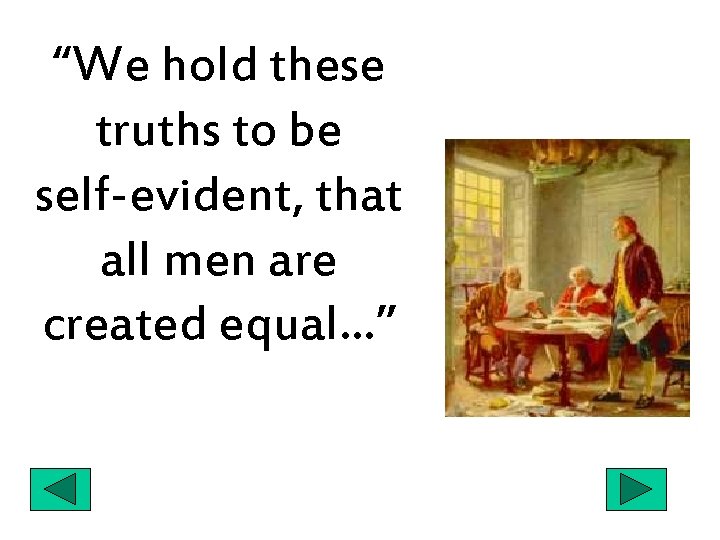
“We hold these truths to be self-evident, that all men are created equal…”
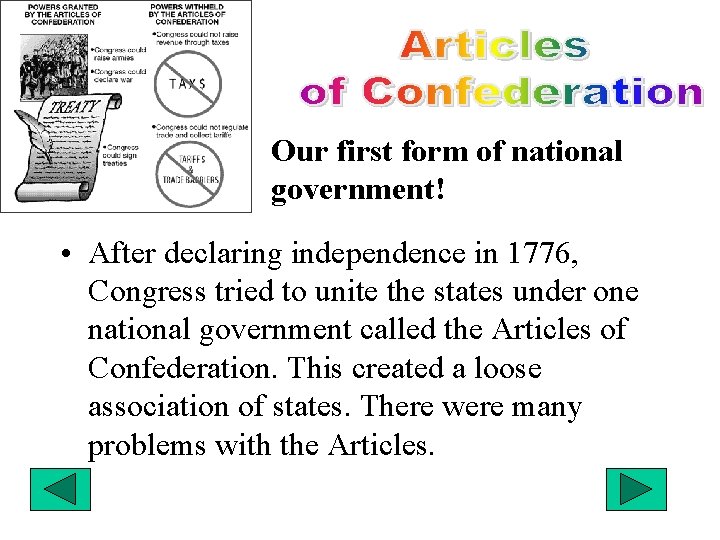
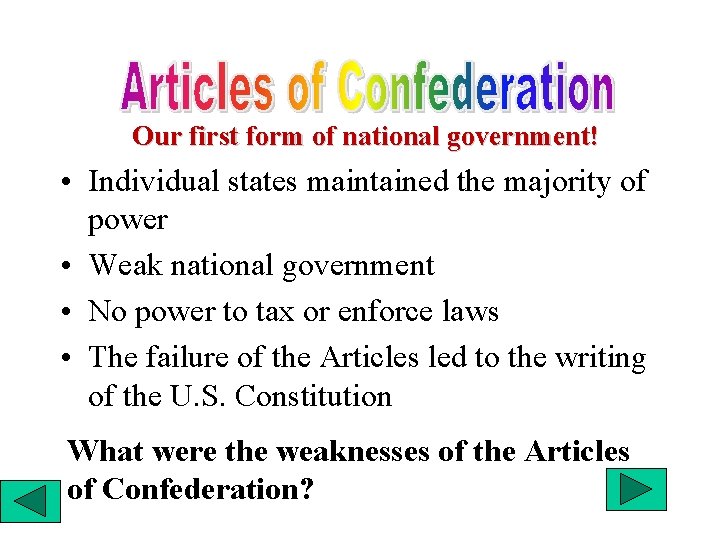
Our first form of national government! • After declaring independence in 1776, Congress tried to unite the states under one national government called the Articles of Confederation. This created a loose association of states. There were many problems with the Articles.
Our first form of national government! • Individual states maintained the majority of power • Weak national government • No power to tax or enforce laws • The failure of the Articles led to the writing of the U. S. Constitution What were the weaknesses of the Articles of Confederation?
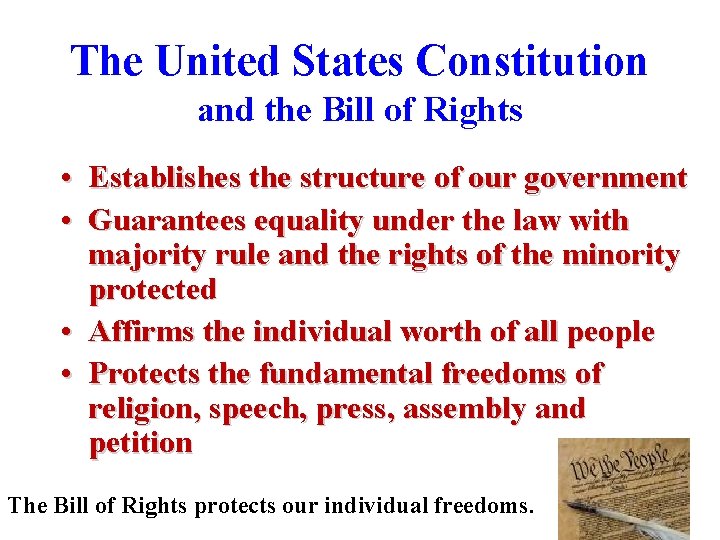
The United States Constitution and the Bill of Rights • Establishes the structure of our government • Guarantees equality under the law with majority rule and the rights of the minority protected • Affirms the individual worth of all people • Protects the fundamental freedoms of religion, speech, press, assembly and petition The Bill of Rights protects our individual freedoms.
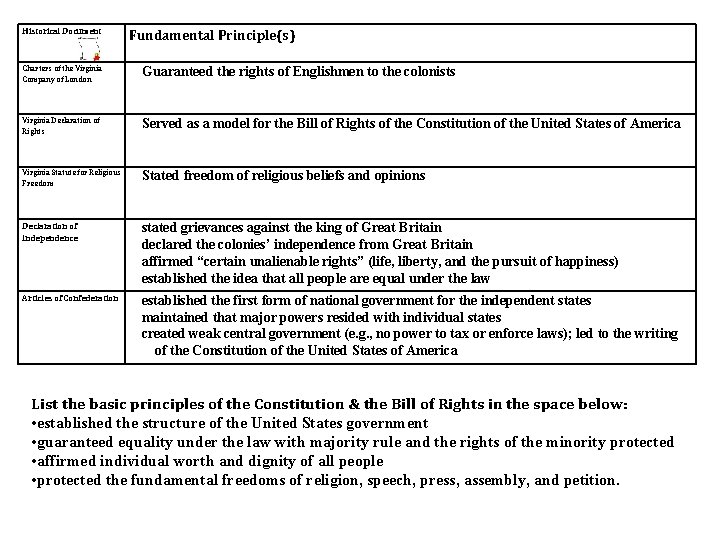
Historical Document Fundamental Principle(s) Charters of the Virginia Company of London Guaranteed the rights of Englishmen to the colonists Virginia Declaration of Rights Served as a model for the Bill of Rights of the Constitution of the United States of America Virginia Statute for Religious Freedom Stated freedom of religious beliefs and opinions Declaration of Independence stated grievances against the king of Great Britain declared the colonies’ independence from Great Britain affirmed “certain unalienable rights” (life, liberty, and the pursuit of happiness) established the idea that all people are equal under the law Articles of Confederation established the first form of national government for the independent states maintained that major powers resided with individual states created weak central government (e. g. , no power to tax or enforce laws); led to the writing of the Constitution of the United States of America List the basic principles of the Constitution & the Bill of Rights in the space below: • established the structure of the United States government • guaranteed equality under the law with majority rule and the rights of the minority protected • affirmed individual worth and dignity of all people • protected the fundamental freedoms of religion, speech, press, assembly, and petition.
QUIZ – Historical Documents • Select the best answer for each question.
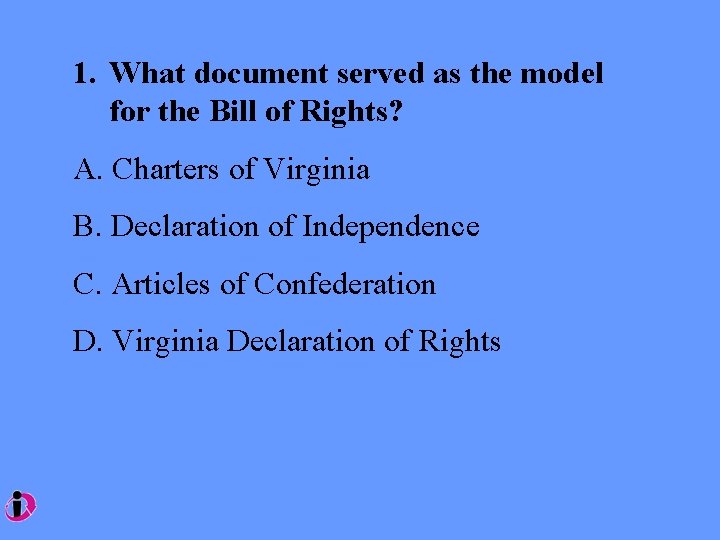
1. What document served as the model for the Bill of Rights? A. Charters of Virginia B. Declaration of Independence C. Articles of Confederation D. Virginia Declaration of Rights
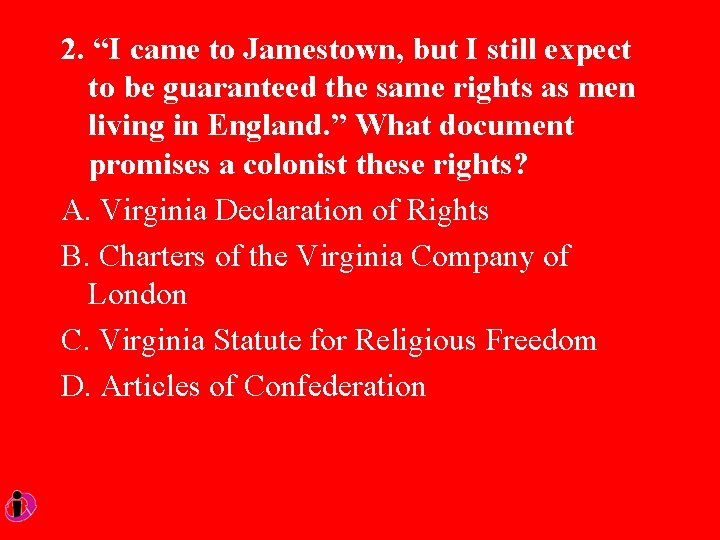
2. “I came to Jamestown, but I still expect to be guaranteed the same rights as men living in England. ” What document promises a colonist these rights? A. Virginia Declaration of Rights B. Charters of the Virginia Company of London C. Virginia Statute for Religious Freedom D. Articles of Confederation
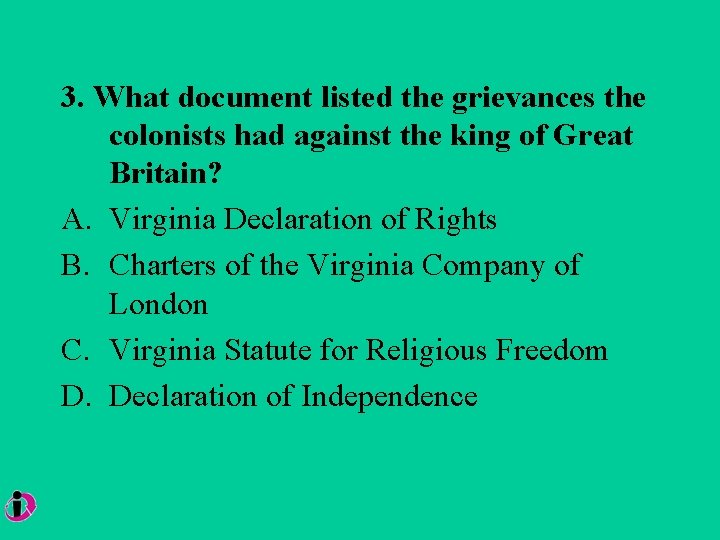
3. What document listed the grievances the colonists had against the king of Great Britain? A. Virginia Declaration of Rights B. Charters of the Virginia Company of London C. Virginia Statute for Religious Freedom D. Declaration of Independence
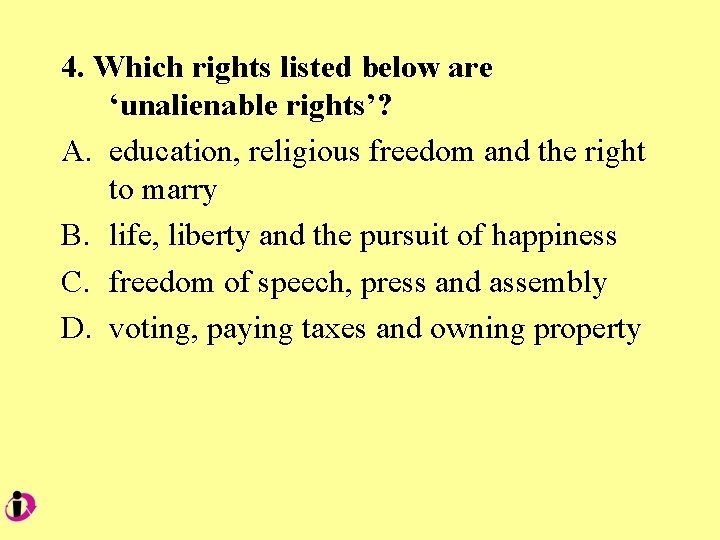
4. Which rights listed below are ‘unalienable rights’? A. education, religious freedom and the right to marry B. life, liberty and the pursuit of happiness C. freedom of speech, press and assembly D. voting, paying taxes and owning property
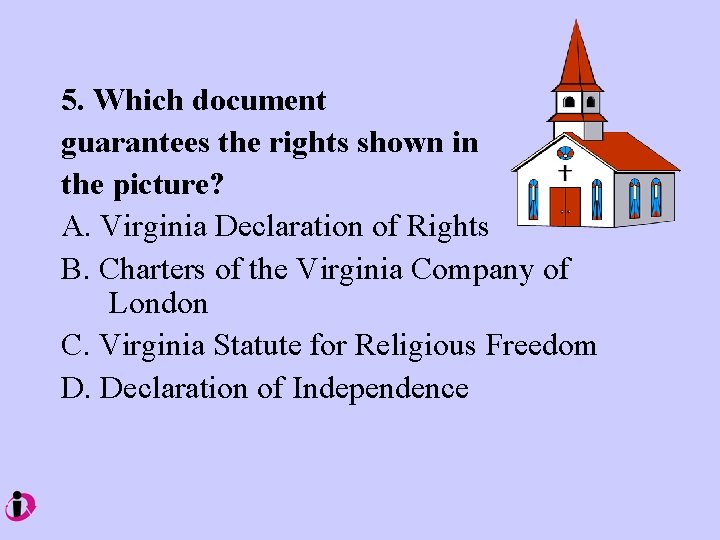
5. Which document guarantees the rights shown in the picture? A. Virginia Declaration of Rights B. Charters of the Virginia Company of London C. Virginia Statute for Religious Freedom D. Declaration of Independence
“We hold these truths to be self-evident, that all men are created equal, that they are endowed by their Creator with certain unalienable Rights…” 6. This quote is from the: A. Virginia Declaration of Rights B. Charters of the Virginia Company of London C. Virginia Statute for Religious Freedom D. Declaration of Independence
7. Which historical document established freedom of religious beliefs and opinions? A. Virginia Declaration of Rights B. Charters of the Virginia Company of London C. Virginia Statute for Religious Freedom D. Declaration of Independence
8. Name the document that stated the colonies were free from Great Britain. A. Declaration of Independence B. Charters of the Virginia Company of London C. Virginia Statute for Religious Freedom D. Virginia Declaration of Rights
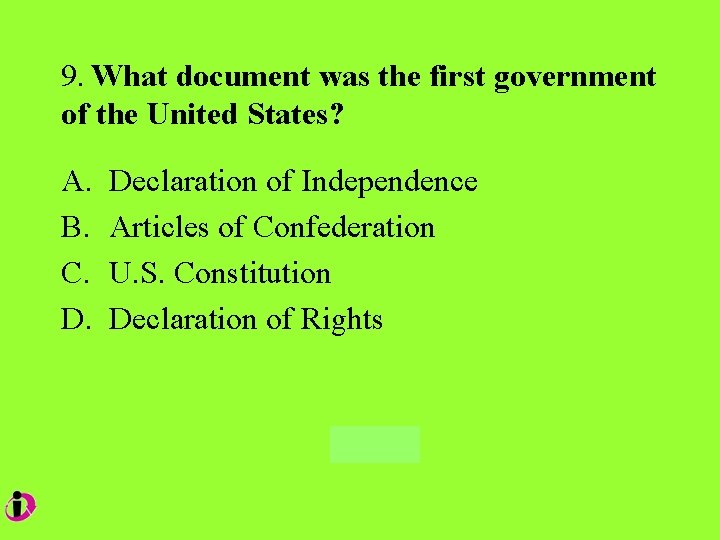
9. What document was the first government of the United States? A. B. C. D. Declaration of Independence Articles of Confederation U. S. Constitution Declaration of Rights
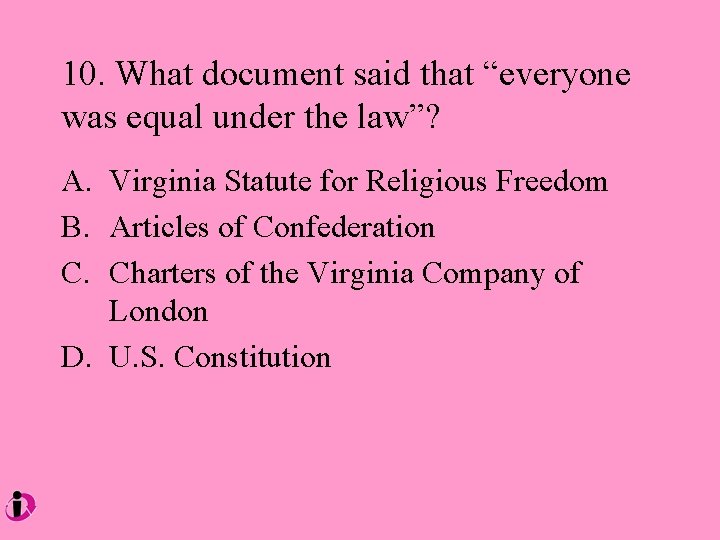
10. What document said that “everyone was equal under the law”? A. Virginia Statute for Religious Freedom B. Articles of Confederation C. Charters of the Virginia Company of London D. U. S. Constitution