
The Character of Desdemona in William Shakespeares Othello
- Slides: 8
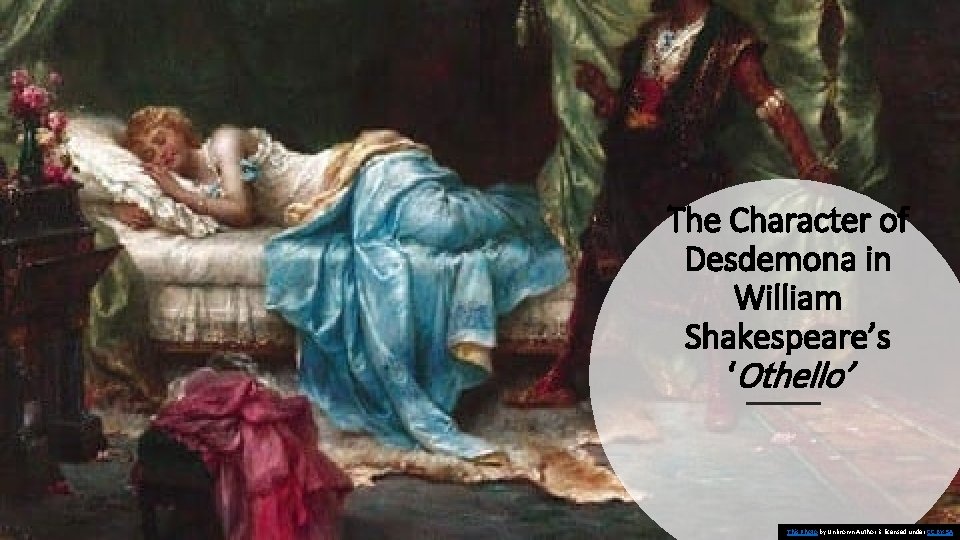
The Character of Desdemona in William Shakespeare’s ‘Othello’ This Photo by Unknown Author is licensed under CC BY-SA
Key Adjectives • good • honorable • virtuous • devoted • innocent • loyal • pure • spirited • dignified • courageous
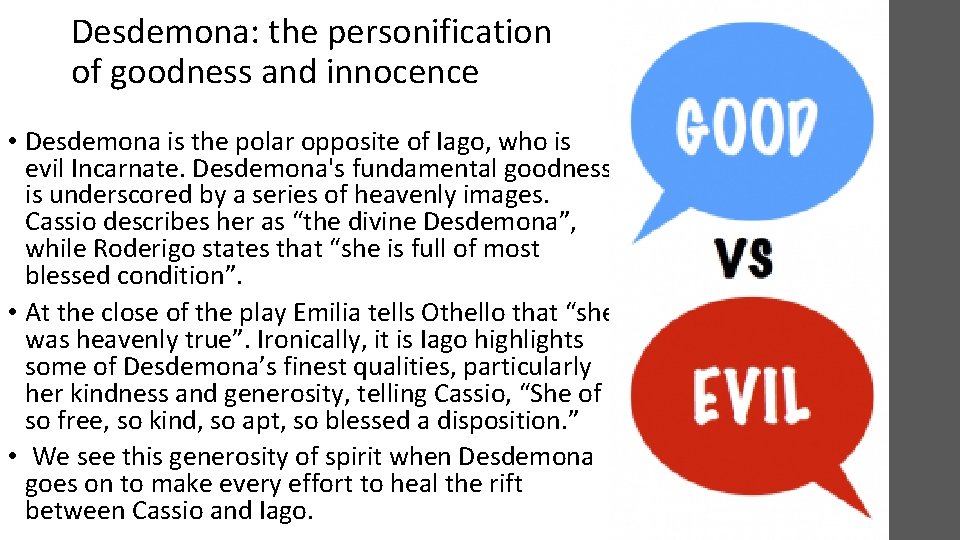
Desdemona: the personification of goodness and innocence • Desdemona is the polar opposite of Iago, who is evil Incarnate. Desdemona's fundamental goodness is underscored by a series of heavenly images. Cassio describes her as “the divine Desdemona”, while Roderigo states that “she is full of most blessed condition”. • At the close of the play Emilia tells Othello that “she was heavenly true”. Ironically, it is Iago highlights some of Desdemona’s finest qualities, particularly her kindness and generosity, telling Cassio, “She of so free, so kind, so apt, so blessed a disposition. ” • We see this generosity of spirit when Desdemona goes on to make every effort to heal the rift between Cassio and Iago.
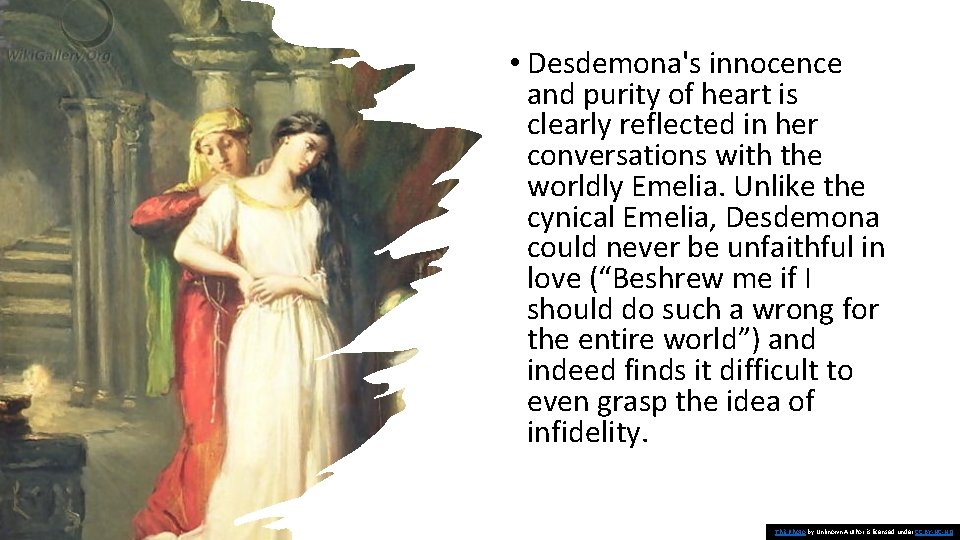
• Desdemona's innocence and purity of heart is clearly reflected in her conversations with the worldly Emelia. Unlike the cynical Emelia, Desdemona could never be unfaithful in love (“Beshrew me if I should do such a wrong for the entire world”) and indeed finds it difficult to even grasp the idea of infidelity. This Photo by Unknown Author is licensed under CC BY-NC-ND
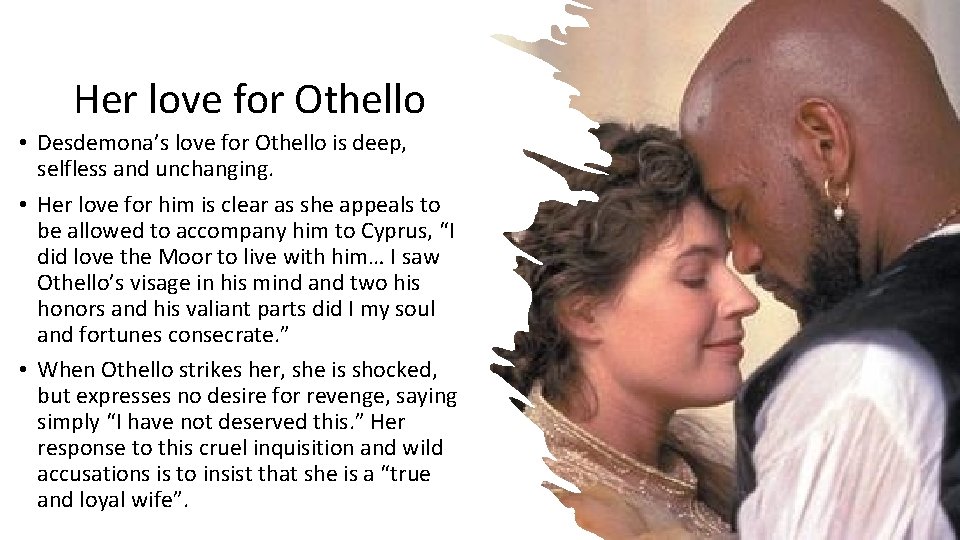
Her love for Othello • Desdemona’s love for Othello is deep, selfless and unchanging. • Her love for him is clear as she appeals to be allowed to accompany him to Cyprus, “I did love the Moor to live with him… I saw Othello’s visage in his mind and two his honors and his valiant parts did I my soul and fortunes consecrate. ” • When Othello strikes her, she is shocked, but expresses no desire for revenge, saying simply “I have not deserved this. ” Her response to this cruel inquisition and wild accusations is to insist that she is a “true and loyal wife”.
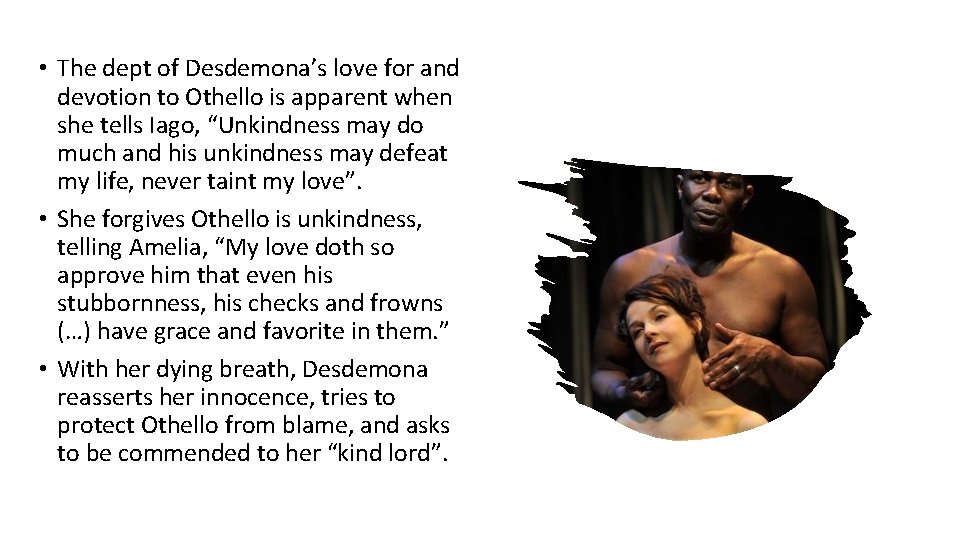
• The dept of Desdemona’s love for and devotion to Othello is apparent when she tells Iago, “Unkindness may do much and his unkindness may defeat my life, never taint my love”. • She forgives Othello is unkindness, telling Amelia, “My love doth so approve him that even his stubbornness, his checks and frowns (…) have grace and favorite in them. ” • With her dying breath, Desdemona reasserts her innocence, tries to protect Othello from blame, and asks to be commended to her “kind lord”.
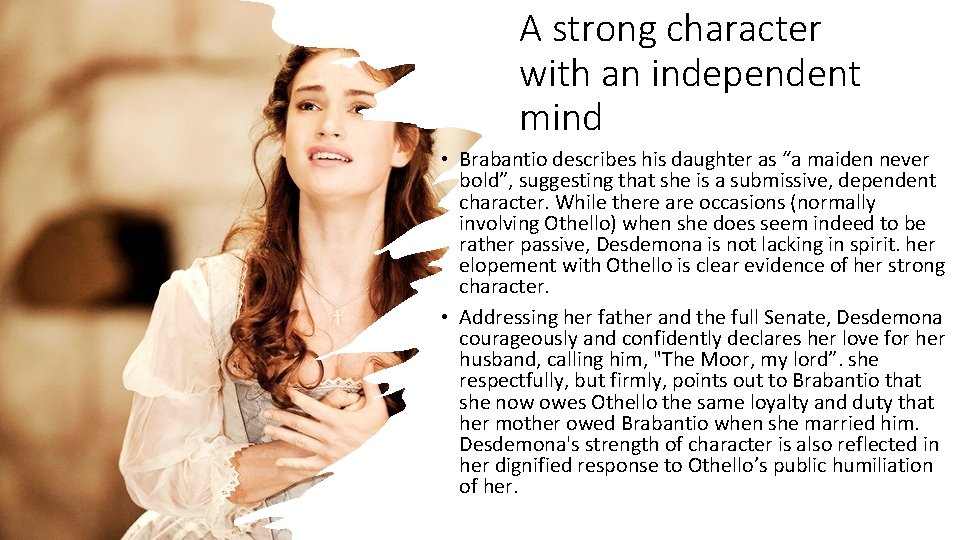
A strong character with an independent mind • Brabantio describes his daughter as “a maiden never bold”, suggesting that she is a submissive, dependent character. While there are occasions (normally involving Othello) when she does seem indeed to be rather passive, Desdemona is not lacking in spirit. her elopement with Othello is clear evidence of her strong character. • Addressing her father and the full Senate, Desdemona courageously and confidently declares her love for her husband, calling him, "The Moor, my lord”. she respectfully, but firmly, points out to Brabantio that she now owes Othello the same loyalty and duty that her mother owed Brabantio when she married him. Desdemona's strength of character is also reflected in her dignified response to Othello’s public humiliation of her.
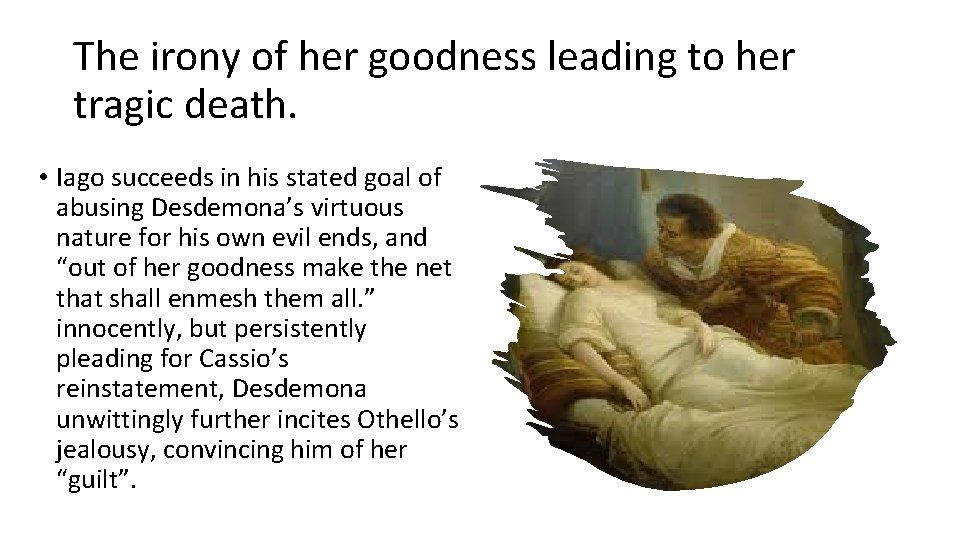
The irony of her goodness leading to her tragic death. • Iago succeeds in his stated goal of abusing Desdemona’s virtuous nature for his own evil ends, and “out of her goodness make the net that shall enmesh them all. ” innocently, but persistently pleading for Cassio’s reinstatement, Desdemona unwittingly further incites Othello’s jealousy, convincing him of her “guilt”.