
The Challenges for Biofuels 1 Food vs Fuel
The Challenges for Biofuels 1 - Food vs. Fuel dilemma 2 - Can we produce the amounts needed? 3 - Environmental impact 4 - EROI Maybe by using algae, waste or marginal land ? Maybe; likely a high %, for a while Lower than just fossil fuel; more sustainable Try to be honest Jonathan Gressel Avi Levy & Biofuel consortium Dept. of Plant Sciences Cahen, Erice 7 -2014 (J. Gressel)
Outline • Zero Generation Biofuels • First Generation Biofuels The problems – food vs. fuel • Second Generation Biofuels - Lignocellulosics for ethanol - Oils for biodiesel • Future Cahen, Erice 7 -2014 (J. Gressel)
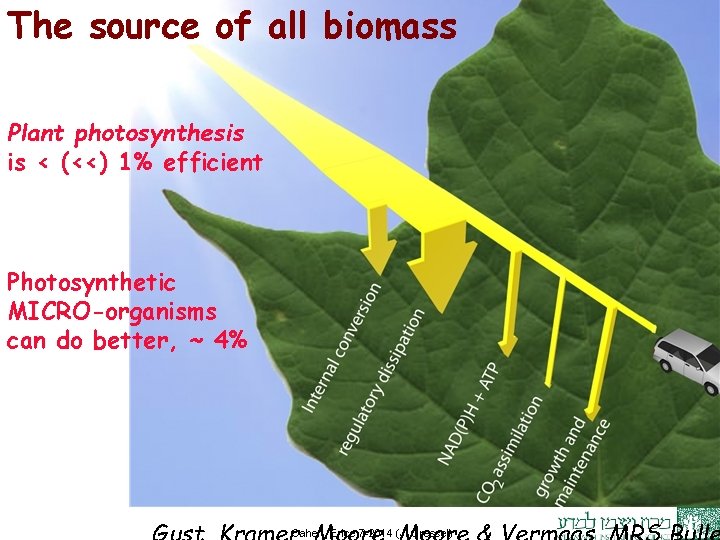
The source of all biomass Plant photosynthesis is < (<<) 1% efficient Photosynthetic MICRO-organisms can do better, ~ 4% Cahen, Erice 7 -2014 (J. Gressel)
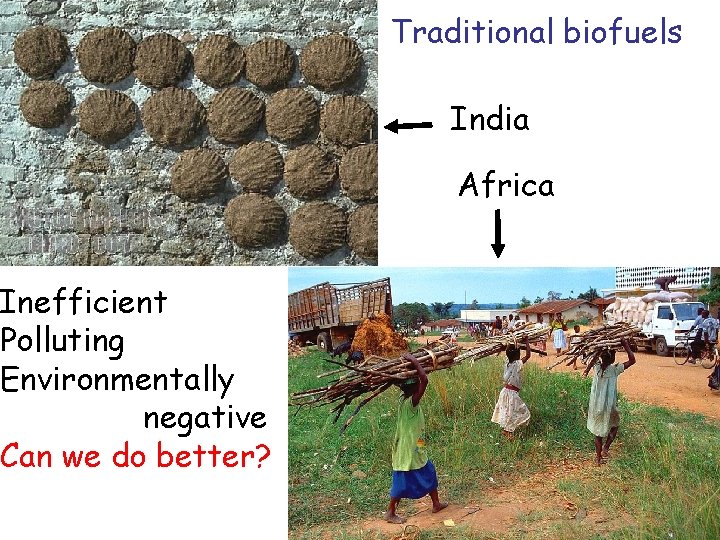
Traditional biofuels India Africa Inefficient Polluting Environmentally negative Can we do better? Cahen, Erice 7 -2014 (J. Gressel)
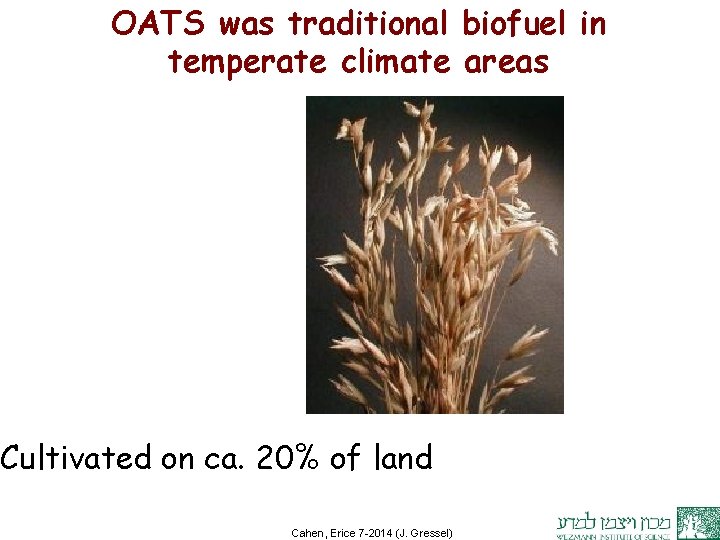
OATS was traditional biofuel in temperate climate areas Cultivated on ca. 20% of land Cahen, Erice 7 -2014 (J. Gressel)
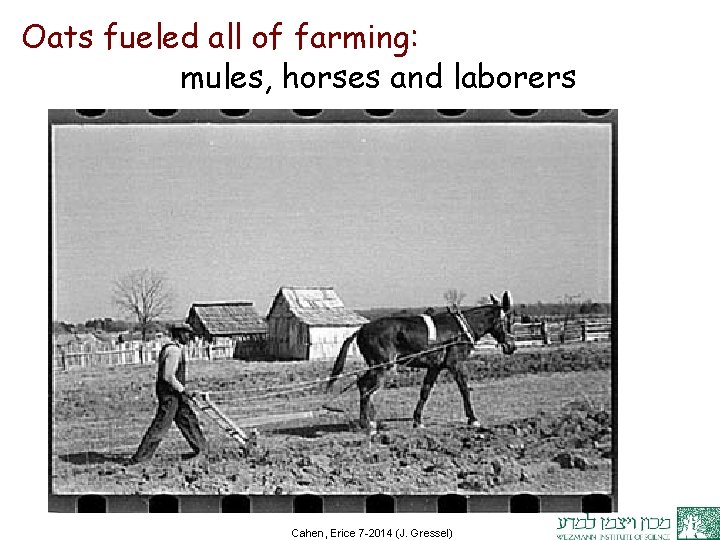
Oats fueled all of farming: mules, horses and laborers Cahen, Erice 7 -2014 (J. Gressel)
Outline • Zero Generation Biofuels • First Generation Biofuels and the problem – food vs. fuel • Second Generation Biofuels - Lignocellulosics for ethanol - Oils for biodiesel • Future Cahen, Erice 7 -2014 (J. Gressel)
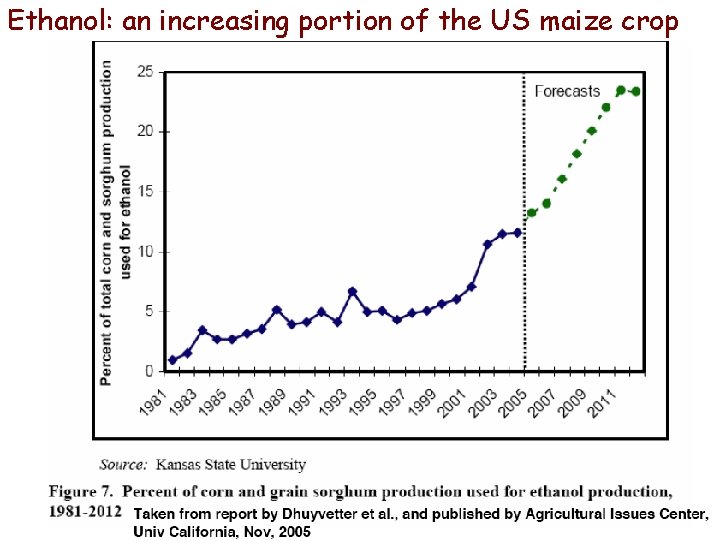
Ethanol: an increasing portion of the US maize crop Cahen, Erice 7 -2014 (J. Gressel)

Monthly production and net imports of fuel ethanol in the U. S. 1993 -2012. Data from EIA Cahen, Erice 7 -2014 (J. Gressel)
What are world implications? Biofuels: Good News/Bad News to developing world Bad news: no more cheap/free grain for food security in time of famine Good news: No more “dumping” subsidized grain, sold below production costs Developing world farmers can now compete and easily triple yields Cahen, Erice 7 -2014 (J. Gressel)
Biofuels: Good News/Bad News to developed world farmers Good news to grain farmers - prices stable Bad news to dairy/beef/chicken/hog farmers - grain prices high… Bad news to consumers – do not lower fuel prices, higher food costs Cahen, Erice 7 -2014 (J. Gressel)
Ethical question Europe (Japan) must ask: Is it right to support eliminating rainforests and jungles elsewhere, for Europe (Japan) to import soy/palm oil for biodiesel so that Europe (Japan) can preserve “Landscapes”? Ethical question all must ask: Is it ethical to drive a big car on biofuel, considering effect on agriculture ? Cahen, Erice 7 -2014 (J. Gressel)
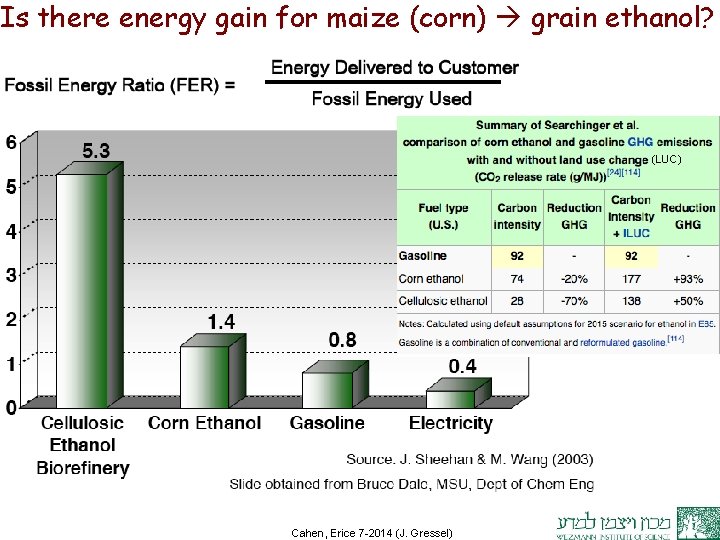
Is there energy gain for maize (corn) grain ethanol? (LUC) Cahen, Erice 7 -2014 (J. Gressel)
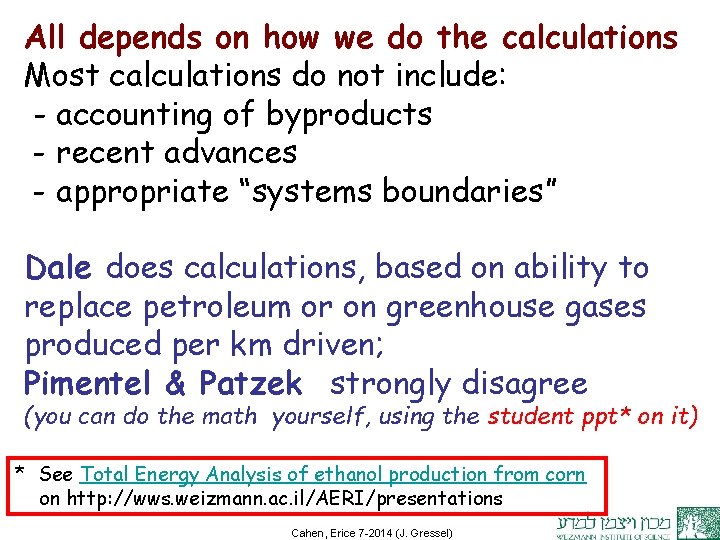
All depends on how we do the calculations Most calculations do not include: - accounting of byproducts - recent advances - appropriate “systems boundaries” Dale does calculations, based on ability to replace petroleum or on greenhouse gases produced per km driven; Pimentel & Patzek strongly disagree (you can do the math yourself, using the student ppt* on it) * See Total Energy Analysis of ethanol production from corn on http: //wws. weizmann. ac. il/AERI/presentations Cahen, Erice 7 -2014 (J. Gressel)

Domestication of corn Teosintethe progenitor Corn ca. 1492 Cahen, Erice 7 -2014 (J. Gressel) Hybrid corn
![Comparing Potential Biofuel Crops Power Density [W / m 2 ] David Mc. Kay](http://slidetodoc.com/presentation_image_h/c8ea7e72306af742efe3299699da4c52/image-16.jpg "Comparing Potential Biofuel Crops Power Density [W / m 2 ] David Mc. Kay")
Comparing Potential Biofuel Crops Power Density [W / m 2 ] David Mc. Kay SEWTHA (cf. to Si solar panel in Kalahari desert ~ 25 Wc / m 2 ) Cahen, Erice 7 -2014 (J. Gressel)
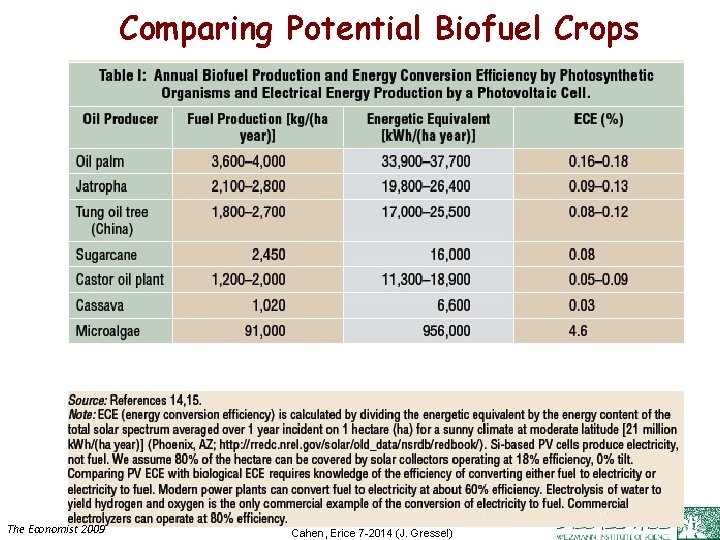
Comparing Potential Biofuel Crops The Economist 2009 Cahen, Erice 7 -2014 (J. Gressel)
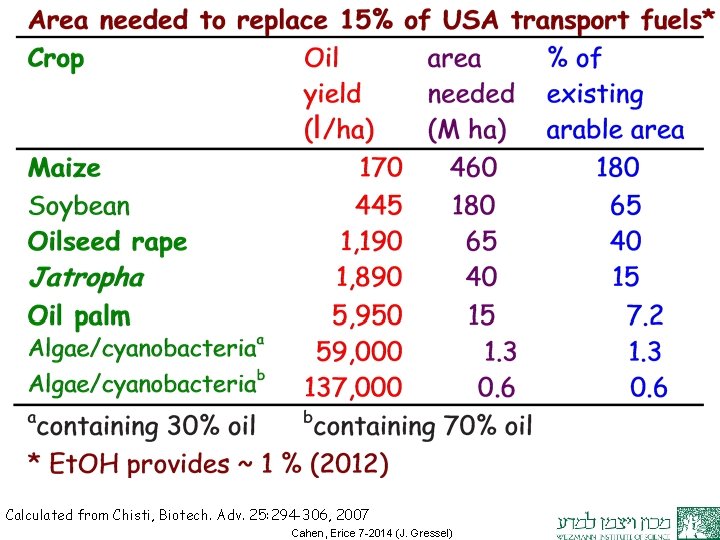
Calculated from Chisti, Biotech. Adv. 25: 294 -306, 2007 Cahen, Erice 7 -2014 (J. Gressel)
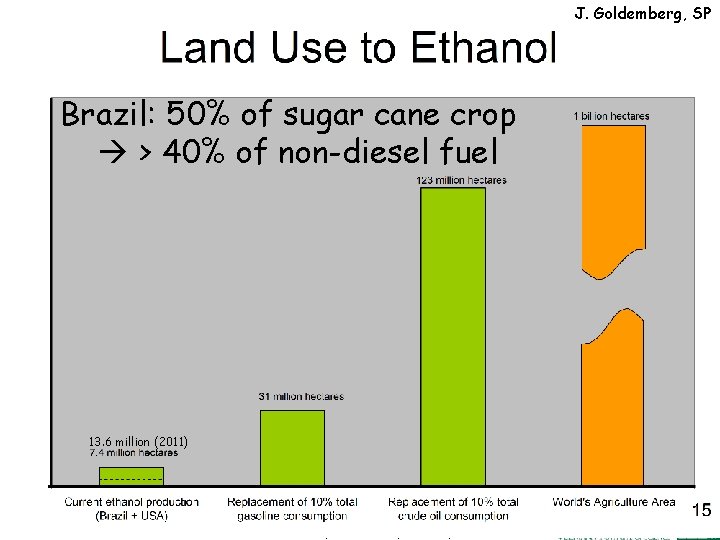
J. Goldemberg, SP Brazil: 50% of sugar cane crop > 40% of non-diesel fuel 13. 6 million (2011) Cahen, Erice 7 -2014 (J. Gressel)

Cahen, Erice 7 -2014 (J. Gressel) J. Goldemberg, SP
First generation not sustainable in medium term Cahen, Erice 7 -2014 (J. Gressel)
Outline • Zero Generation Biofuels • First Generation Biofuels The problems – food vs. fuel • Second Generation Biofuels use agricultural wastes lignocellulosics Lignocellulosics for ethanol Oils for biodiesel Grasses but… such crops were not domesticated for biofuels! • Future (3 d generation) Cahen, Erice 7 -2014 (J. Gressel)
How are plants built ? HOW ARE PLANTS BUILT? Cahen, Erice 7 -2014 (J. Gressel)
HOW ARE PLANTS BUILT? Fig 25_05 Cahen, Erice 7 -2014 (J. Gressel) © Materials Research Society 2012
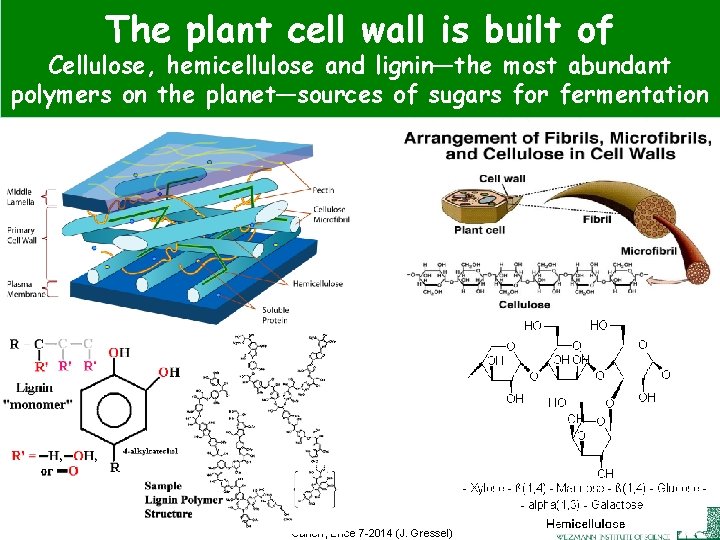
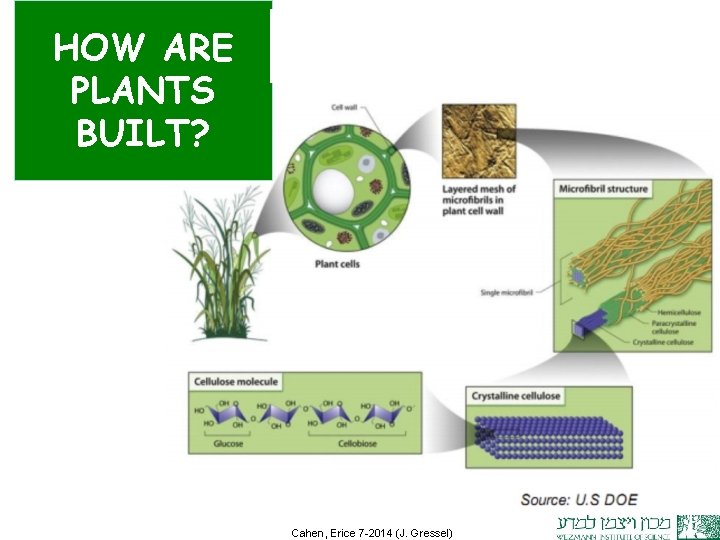
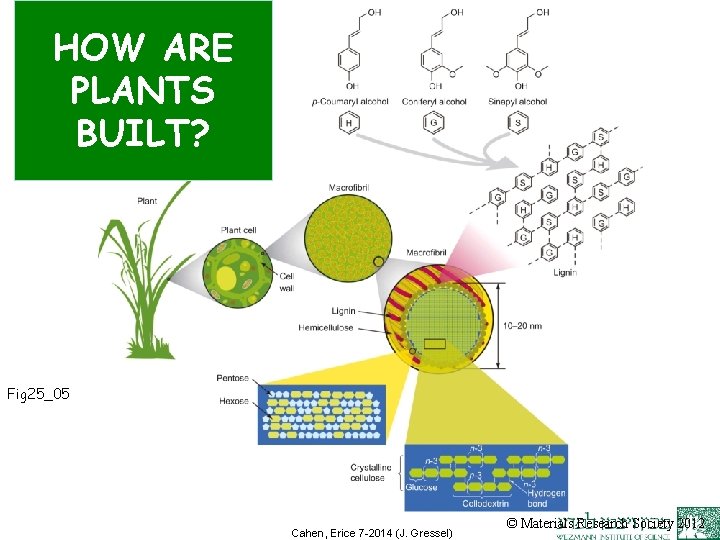
The plant cell wall is built of Cellulose, hemicellulose and lignin—the most abundant polymers on the planet—sources of sugars for fermentation Cahen, Erice 7 -2014 (J. Gressel)

Can grasses++ be turned into fuel? Cahen, Erice 7 -2014 (J. Gressel)
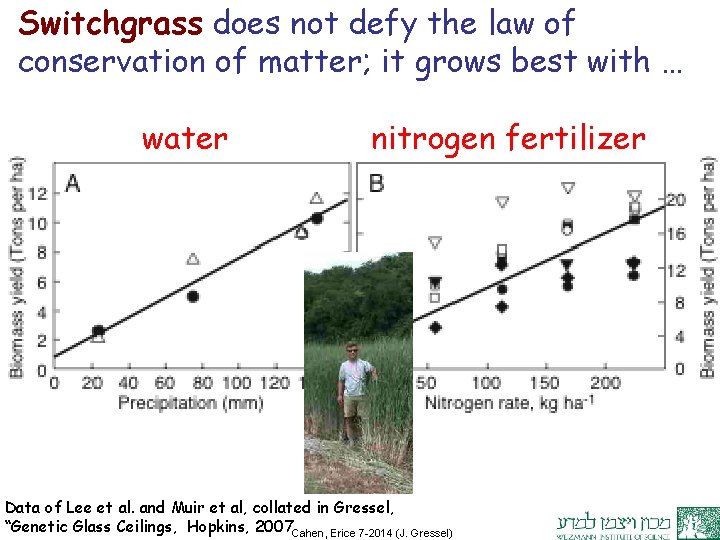
Switchgrass does not defy the law of conservation of matter; it grows best with … water nitrogen fertilizer Data of Lee et al. and Muir et al, collated in Gressel, “Genetic Glass Ceilings, Hopkins, 2007 Cahen, Erice 7 -2014 (J. Gressel)
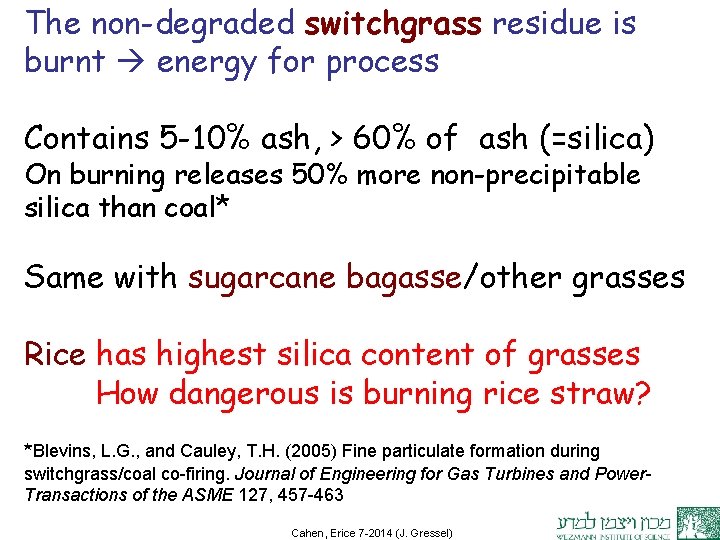
The non-degraded switchgrass residue is burnt energy for process Contains 5 -10% ash, > 60% of ash (=silica) On burning releases 50% more non-precipitable silica than coal* Same with sugarcane bagasse/other grasses Rice has highest silica content of grasses How dangerous is burning rice straw? *Blevins, L. G. , and Cauley, T. H. (2005) Fine particulate formation during switchgrass/coal co-firing. Journal of Engineering for Gas Turbines and Power. Transactions of the ASME 127, 457 -463 Cahen, Erice 7 -2014 (J. Gressel)
Silicon not a required element for plants small amounts may be useful but not the high amounts in many grasses, including sugarcane Silicon transporters being discovered in plants use antisense RNA or RNA-interference to lower their levels? Cahen, Erice 7 -2014 (J. Gressel)
Process: Heat + acid pre-treatment (delignification) Enzymatically digest cellulose to sugars Ferment sugars to ethanol But half of cellulose is unavailable 208 kg ethanol/tonne straw Claim: with present technology - Canadian wheat straw could provide ethanol for almost all Canadian automobiles; maybe, but … Cahen, Erice 7 -2014 (J. Gressel)
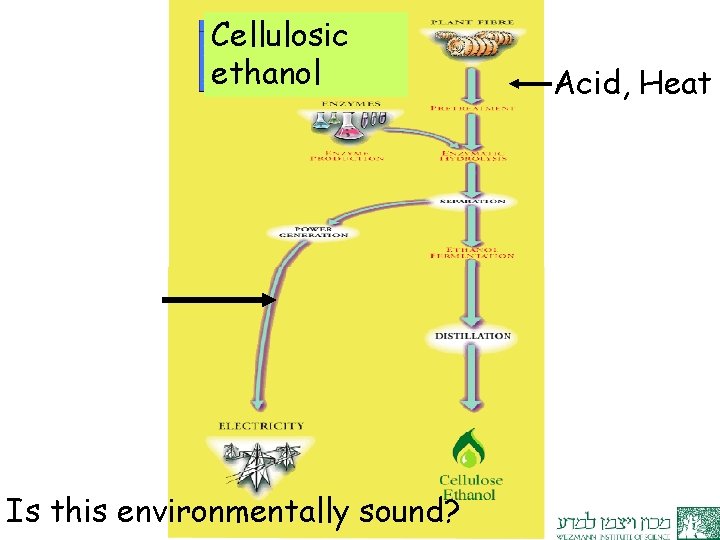
Cellulosic ethanol Is this environmentally sound? Cahen, Erice 7 -2014 (J. Gressel) Acid, Heat
Can less heat/less acid be used if grass is modified? Cahen, Erice 7 -2014 (J. Gressel)
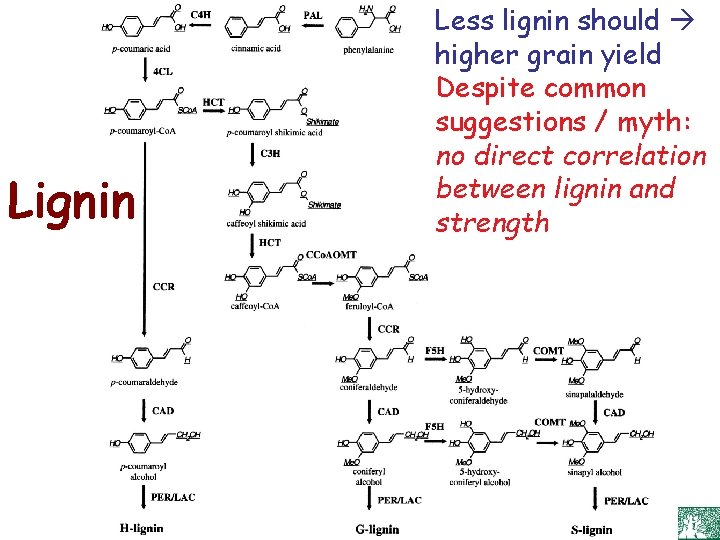
Lignin Less lignin should higher grain yield Despite common suggestions / myth: no direct correlation between lignin and strength Cahen, Erice 7 -2014 (J. Gressel)
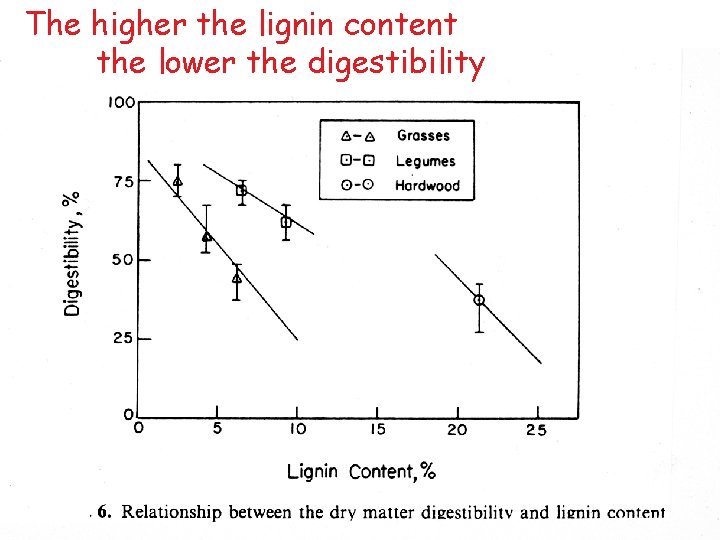
The higher the lignin content the lower the digestibility Cahen, Erice 7 -2014 (J. Gressel)
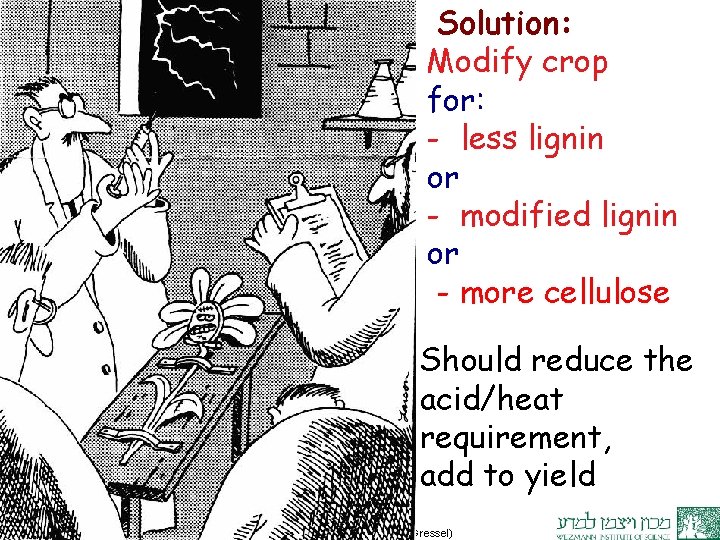
Solution: Modify crop for: - less lignin or - modified lignin or - more cellulose Should reduce the acid/heat requirement, add to yield Cahen, Erice 7 -2014 (J. Gressel)
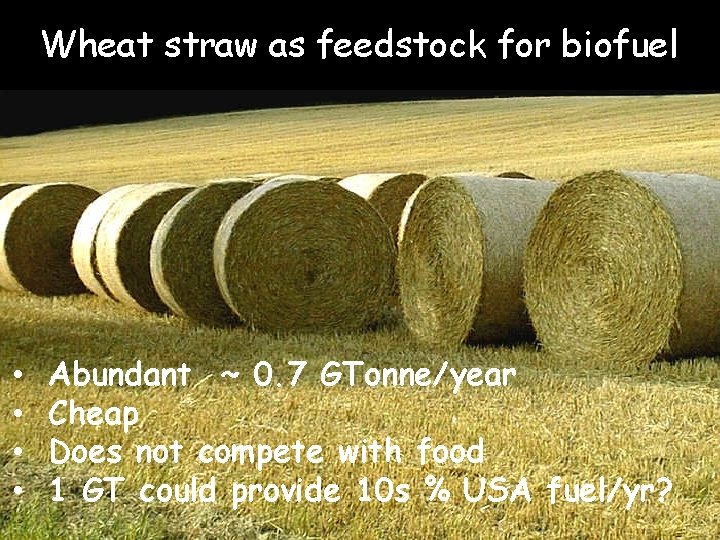
Wheat straw as feedstock for biofuel • • Abundant ~ 0. 7 GTonne/year Cheap Does not compete with food 1 GT could provide 10 s % USA fuel/yr? Cahen, Erice 7 -2014 (J. Gressel)
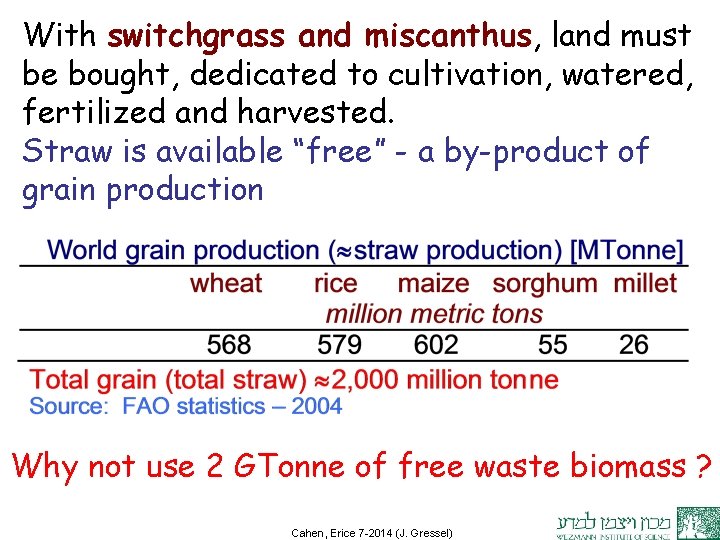
With switchgrass and miscanthus, land must be bought, dedicated to cultivation, watered, fertilized and harvested. Straw is available “free” - a by-product of grain production Why not use 2 GTonne of free waste biomass ? Cahen, Erice 7 -2014 (J. Gressel)
Straw has –ve economic/environmental value - harbors pathogens if not burnt - requires fungicides on next crop - releases CO 2 when burnt - binds nutrients while biodegrading requires more fertilizer - pollution - Despite being ~ 70% carbohydrate, straw has relatively low value - as animal feed (less than half digested) or - as bioethanol source. Cahen, Erice 7 -2014 (J. Gressel)
Is using straw waste sustainable? Soil scientists used to say “no!” because need organic matter in soil (but straw used to be burnt in Europe) Most now agree – OK, if 20% left in field Cahen, Erice 7 -2014 (J. Gressel)
Outline • • • Zero Generation Biofuels First Generation Biofuels The problems – food vs. fuel Second Generation Biofuels use agricultural wastes lignocellulosics Lignocellulosics for ethanol Oils for biodiesel Grasses • Future (3 d generation) Cultivate & use biofuel-dedicated crops perennial lignocellulosics perennial oilseeds ALGAE but …. . first learn from what we are doing now Cahen, Erice 7 -2014 (J. Gressel)
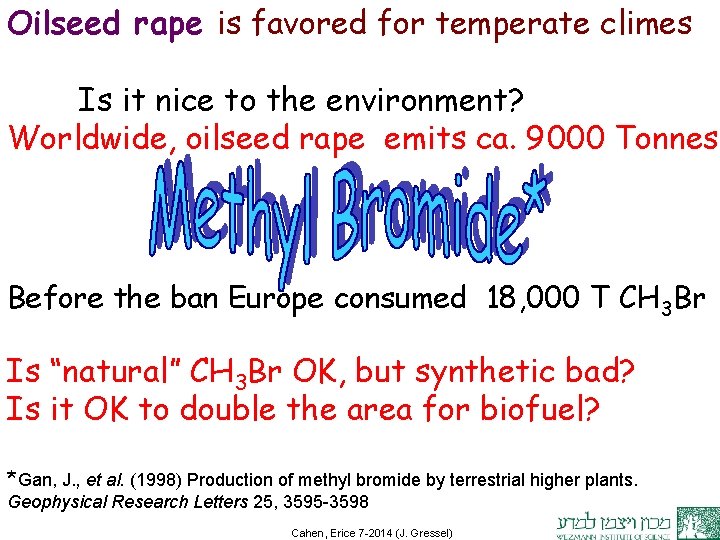
Oilseed rape is favored for temperate climes Is it nice to the environment? Worldwide, oilseed rape emits ca. 9000 Tonnes Before the ban Europe consumed 18, 000 T CH 3 Br Is “natural” CH 3 Br OK, but synthetic bad? Is it OK to double the area for biofuel? *Gan, J. , et al. (1998) Production of methyl bromide by terrestrial higher plants. Geophysical Research Letters 25, 3595 -3598 Cahen, Erice 7 -2014 (J. Gressel)
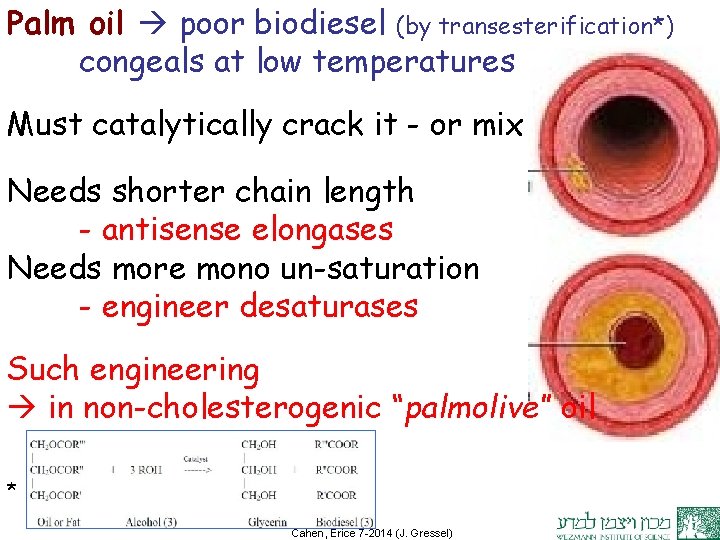
Palm oil poor biodiesel (by transesterification*) congeals at low temperatures Must catalytically crack it - or mix Needs shorter chain length - antisense elongases Needs more mono un-saturation - engineer desaturases Such engineering in non-cholesterogenic “palmolive” oil * Cahen, Erice 7 -2014 (J. Gressel)
Only by bringing genes from elsewhere can we breach the glass ceilings Cahen, Erice 7 -2014 (J. Gressel)
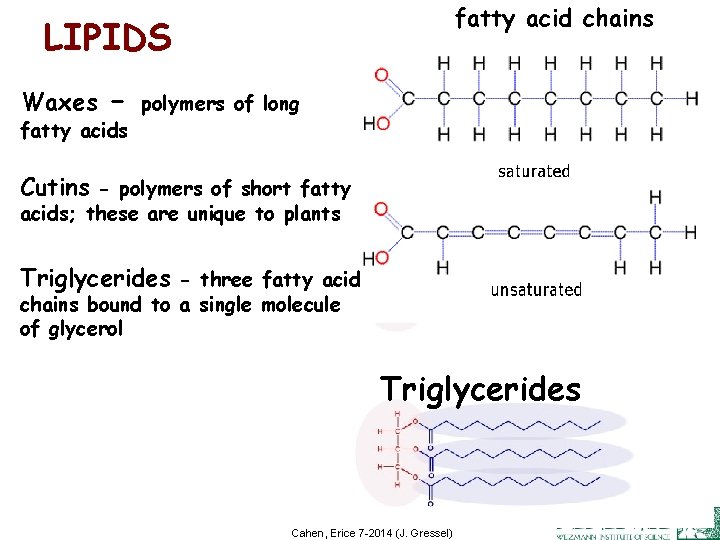
fatty acid chains LIPIDS Waxes - fatty acids polymers of long Cutins - polymers of short fatty acids; these are unique to plants Triglycerides - three fatty acid chains bound to a single molecule of glycerol Triglycerides Cahen, Erice 7 -2014 (J. Gressel)
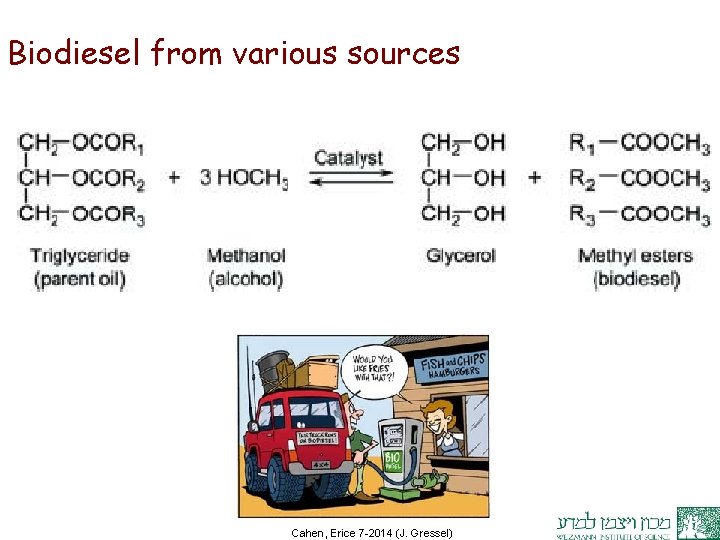
Biodiesel from various sources Cahen, Erice 7 -2014 (J. Gressel)
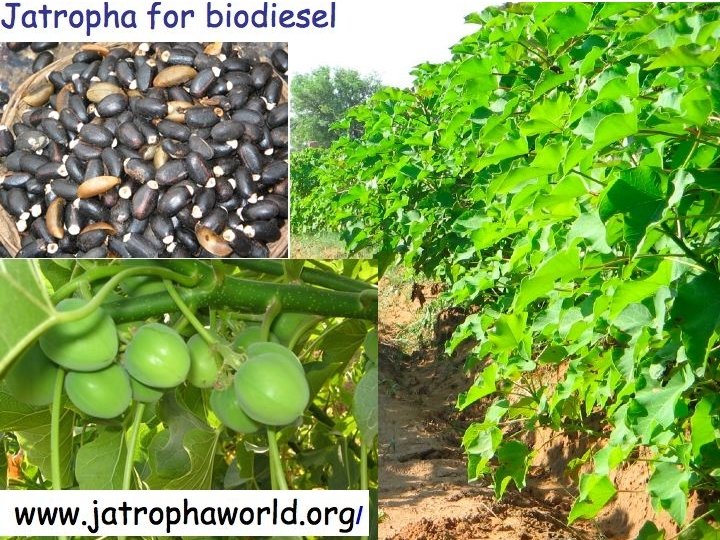
Cahen, Erice 7 -2014 (J. Gressel)
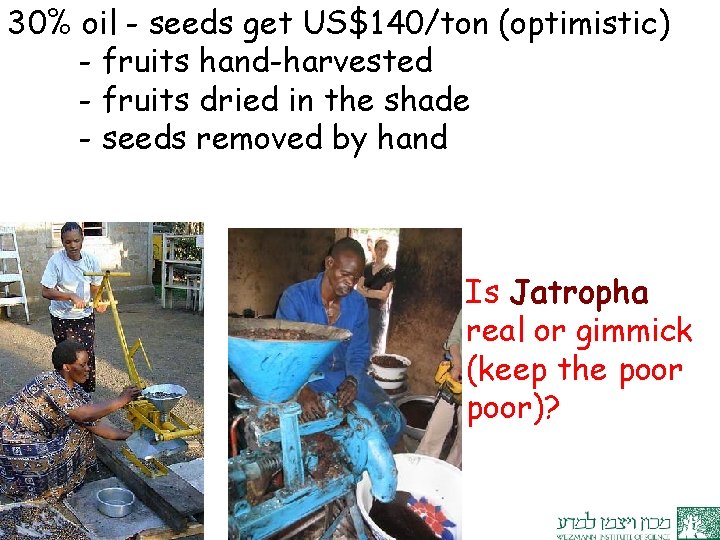
30% oil - seeds get US$140/ton (optimistic) - fruits hand-harvested - fruits dried in the shade - seeds removed by hand Is Jatropha real or gimmick (keep the poor)? Cahen, Erice 7 -2014 (J. Gressel)
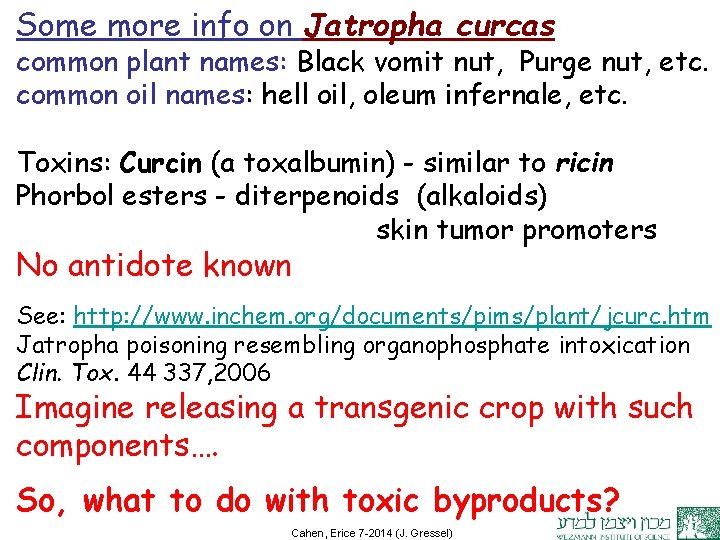
Some more info on Jatropha curcas common plant names: Black vomit nut, Purge nut, etc. common oil names: hell oil, oleum infernale, etc. Toxins: Curcin (a toxalbumin) - similar to ricin Phorbol esters - diterpenoids (alkaloids) skin tumor promoters No antidote known See: http: //www. inchem. org/documents/pims/plant/jcurc. htm Jatropha poisoning resembling organophosphate intoxication Clin. Tox. 44 337, 2006 Imagine releasing a transgenic crop with such components…. So, what to do with toxic byproducts? Cahen, Erice 7 -2014 (J. Gressel)
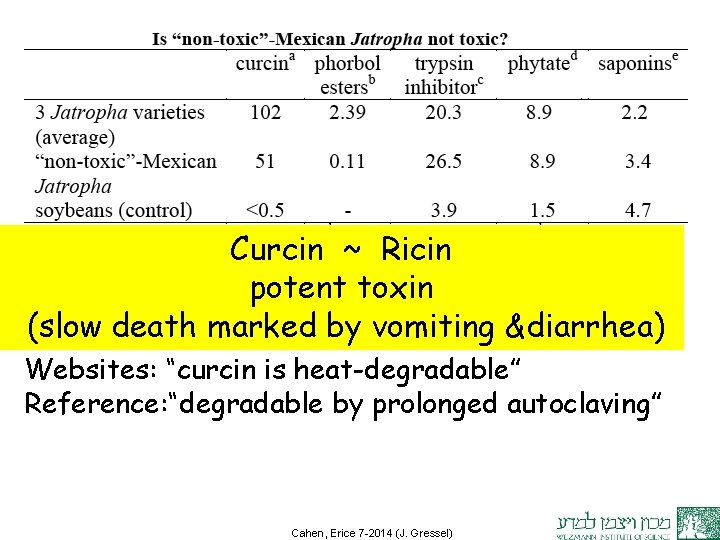
Curcin ~ Ricin potent toxin (slow death marked by vomiting &diarrhea) Websites: “curcin is heat-degradable” Reference: “degradable by prolonged autoclaving” Cahen, Erice 7 -2014 (J. Gressel)
Castor has similar problems as Jatropha Seeds contain 0. 2 to 3% ricin 1 mg/kg toxic fill car with 50 liters (13 gallons diesel) enough ricin by-product to kill 3 people at lowest content, 45 at highest Ricin protein “easy” to eliminate transgenically! Cahen, Erice 7 -2014 (J. Gressel)
Oklahoma bill against castor production & transportation proposed. Why? Castor beans contain 50% or more oil for producing biofuels. They also contain high levels of ricin. Edible crop producers became concerned about ricin residues in fields, equipment, storage bins, and transportion. Jatropha banned in Western Australia as “toxic to man and livestock” Approach should be to ban the toxins – and stimulate DOMESTICATION Cahen, Erice 7 -2014 (J. Gressel)
- Short term – biofuels from food crops - Medium term – biofuels from cellulosic wastes & algae - Long term - … algae ? ? and, very likely, successful biofuel feedstocks will be transgenic Cahen, Erice 7 -2014 (J. Gressel)
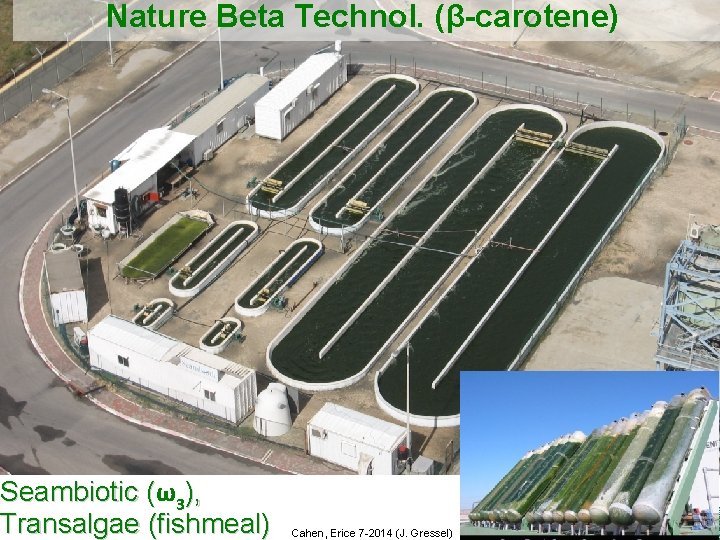
Nature Beta Technol. (β-carotene) Seambiotic (ω ( 3), Transalgae (fishmeal) Cahen, Erice 7 -2014 (J. Gressel)
- Slides: 53