
The challenge of publishing your most important work
The challenge of publishing your most important work Randy Schekman Dept of Molecular and Cell Biology Howard Hughes Medical Institute University of California, Berkeley

Journal categories • Subscription, open access or hybrid • Print format with online access or online only • Private commercial, public profit-generating or not-for-profit • Professional editors, academic editors or both
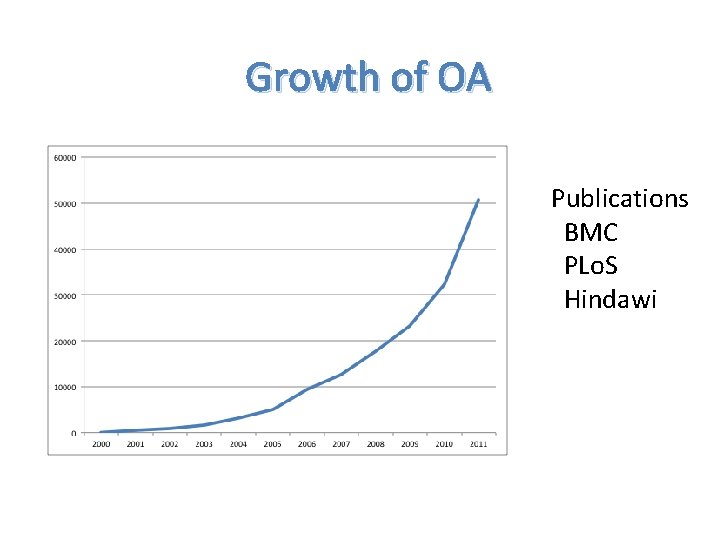
Growth of OA Publications BMC PLo. S Hindawi
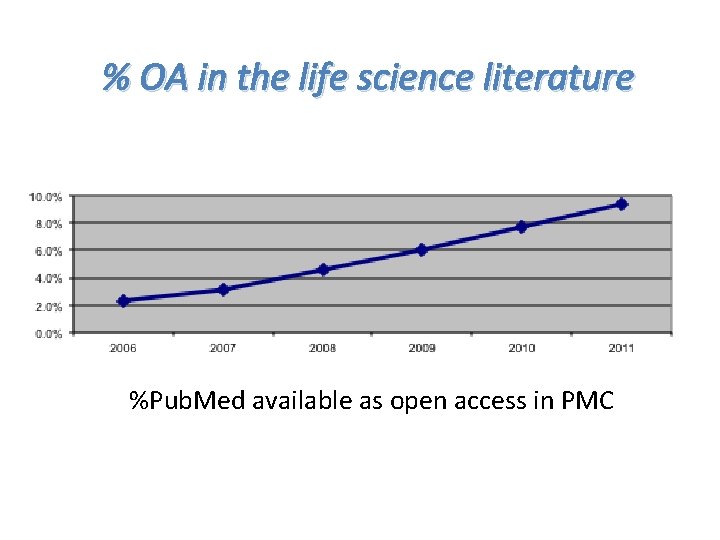
% OA in the life science literature %Pub. Med available as open access in PMC
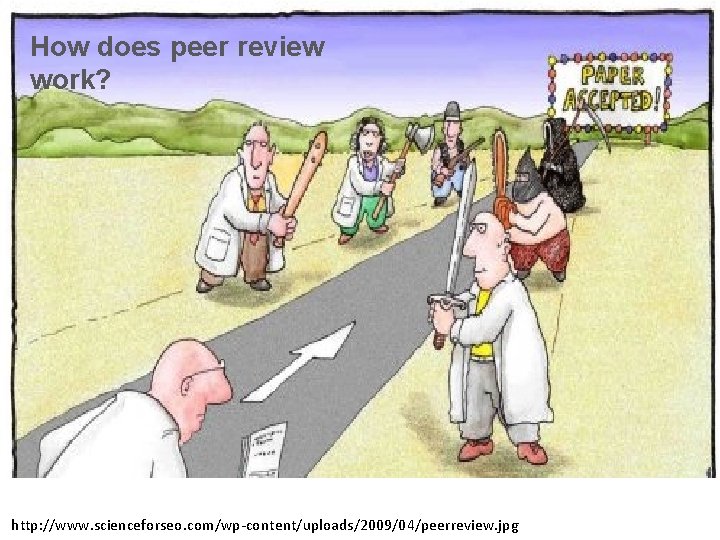
How does peer review work? Open access is just one part of a broader transition The goals of peer review • Assess technical merits of work • Assess likely significance of work http: //www. scienceforseo. com/wp-content/uploads/2009/04/peerreview. jpg

Is peer review broken? Open access is just one part of a broader transition http: //the-political-ear. com/? p=595 The goals of peer review
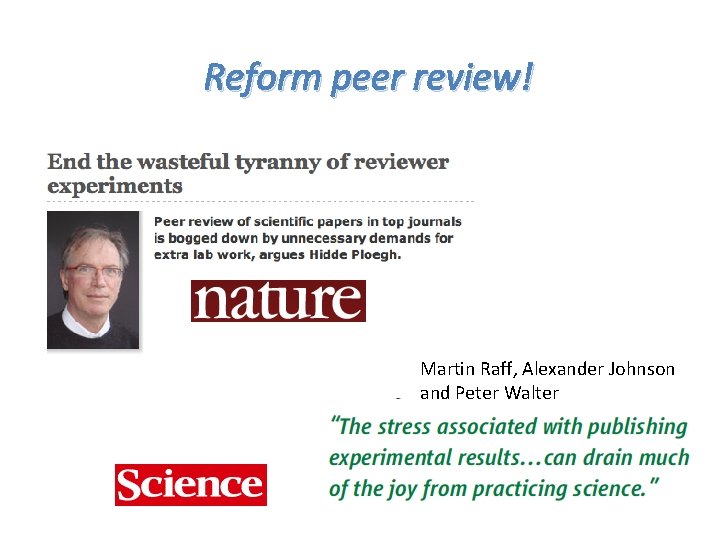
Reform peer review! Martin Raff, Alexander Johnson and Peter Walter
The evil referee #3 http: //youtu. be/-VRBWLp. YCPY
Limitations of the print model • Presentation of new research often limited by the print edition • Time to put digital first http: //www. fybridphotos. com/object s_stock_photo_1130183. html
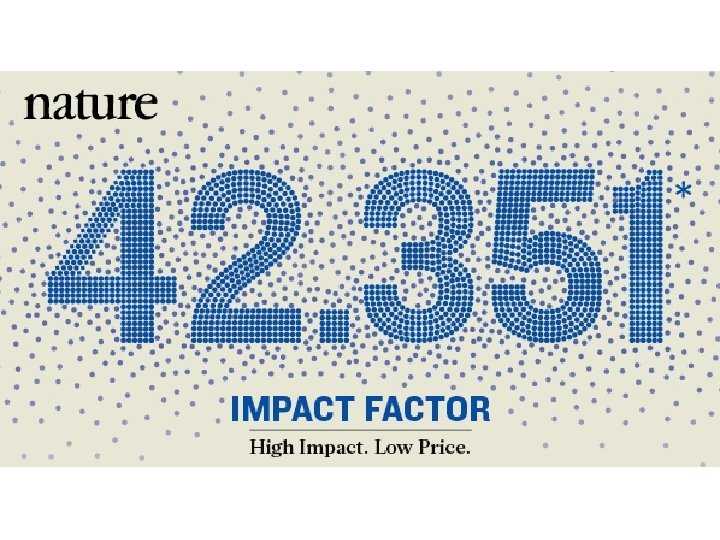
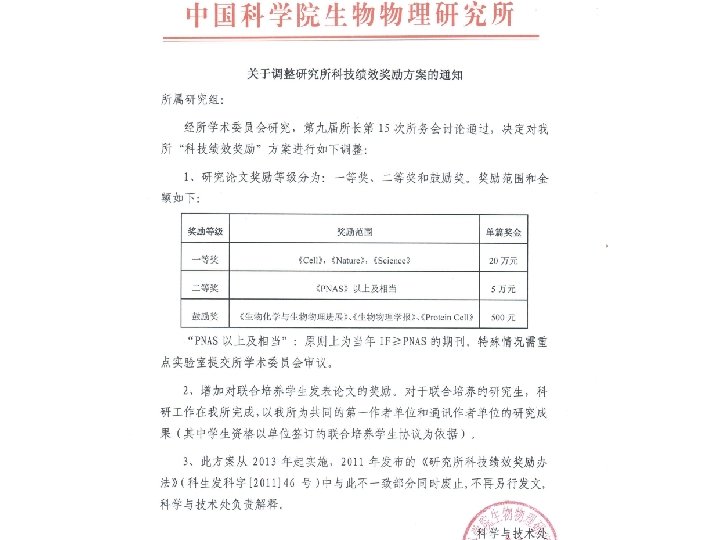
• General recommendations – Move away from impact factors – Assess outputs on their own merits – Exploit new tools and approaches • And specific recommendations for publishers, funders, institutions, metrics suppliers, and researchers • >6000 signatories

Step 1 – sign the declaration! http: //am. ascb. org/dora/ Google San Francisco DORA
The best in science and science communication Ground-breaking science, selected by experts, published without delay, open to the world elifesciences. org Supported by
World-class backing • Supported by three of the world’s leading private research funders • Effective research communication is a critical part of research • Editorially, e. Life is entirely independent of the funders v 6
What is e. Life? • A collaboration between funders and the research community to improve research communication • A researcher-led digital publication for outstanding work across the life sciences • A platform to maximize the reach and influence of new research and to showcase new approaches for the presentation and assessment of research v 6
Edited by researchers Editor-in-Chief - Randy Schekman, Berkeley, USA Deputy Editor – Fiona Watt, London, UK Deputy Editor – Detlef Weigel , Tübingen, Germany Senior Editors Stylianos Antonarakis – Geneva, Switzerland Ian Baldwin –Max Planck Institute, Jena Catherine Dulac - Harvard, USA Tony Hunter – Salk, USA Prabhat Jha – Toronto, Canada John Kuriyan - Berkeley, USA Richard Losick - Harvard, USA Vivek Malhotra, CRG, Barcelona James Manley - Columbia, USA Eve Marder - Brandeis, USA Michael Marletta - Scripps, USA Sean Morrison, UT Southwestern Aviv Regev, Broad Institute, MIT Janet Rossant – Toronto, Canada Charles Sawyers – New York, USA Tadatsugu Taniguchi - Tokyo, Japan Diethard Tautz, Max Planck Institut, K Vijay Raghavan - Bangalore, India Huda Zoghbi - Baylor College of Medicine, USA A ca. 180 -member Board of Reviewing Editors v 6
Born free • Results will be available for free immediately on publication • Users will have the right to use results freely, providing full author attribution (Creative Commons-Attribution license) • All content will also be deposited in Pub. Med Central Initially - also free of publication fees v 6
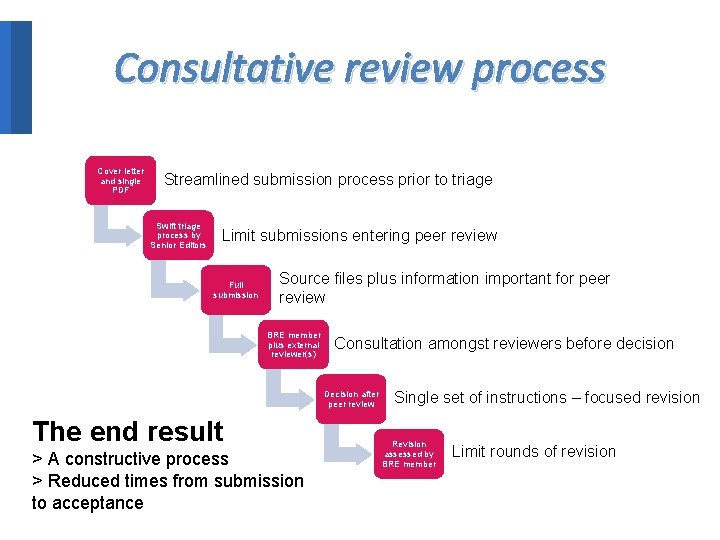
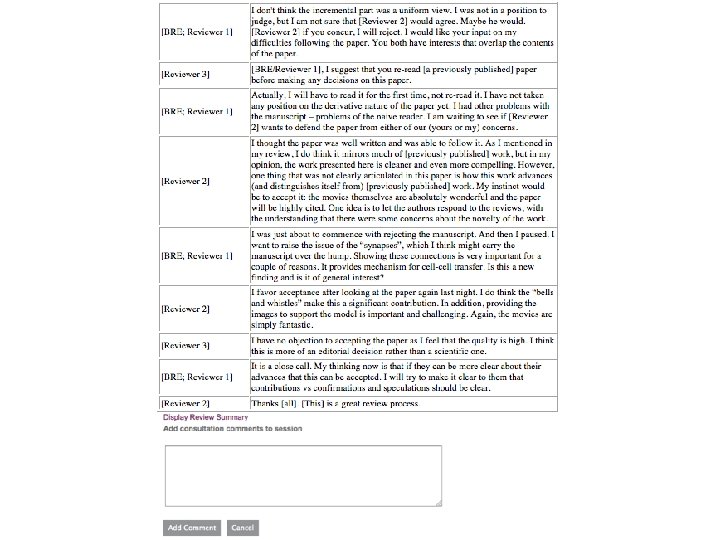
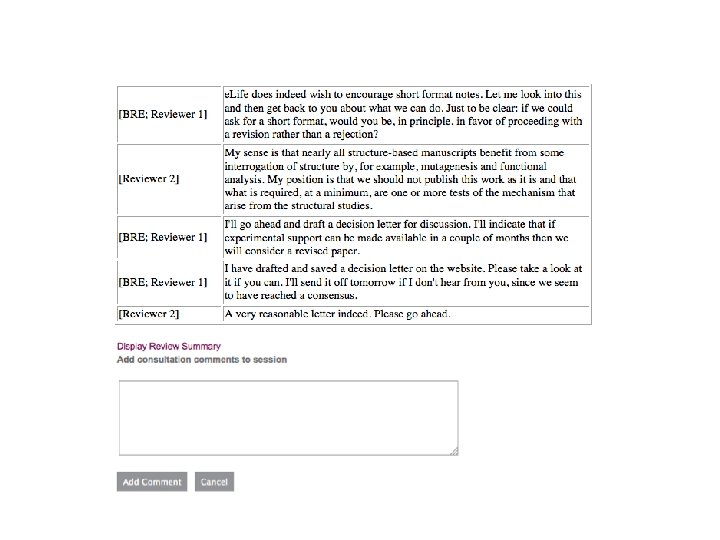
Consultative review process Cover letter and single PDF Streamlined submission process prior to triage Swift triage process by Senior Editors Limit submissions entering peer review Full submission Source files plus information important for peer review BRE member plus external reviewer(s) Consultation amongst reviewers before decision Decision after peer review The end result > A constructive process > Reduced times from submission to acceptance Single set of instructions – focused revision Revision assessed by BRE member Limit rounds of revision
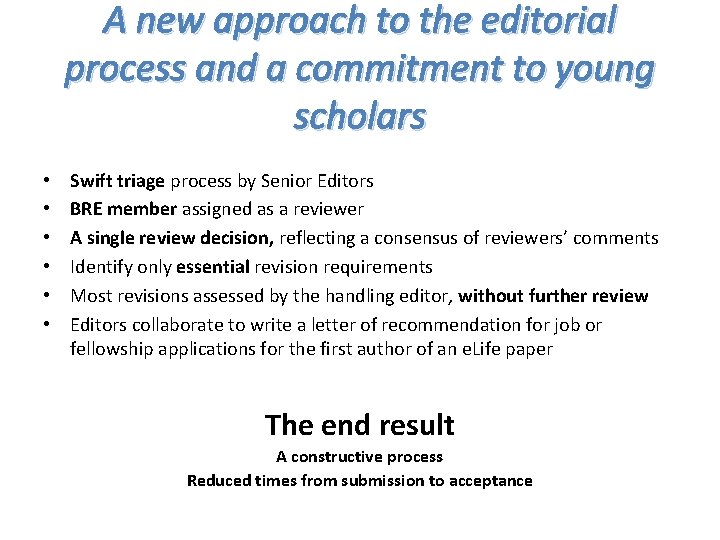
A new approach to the editorial process and a commitment to young scholars • • • Swift triage process by Senior Editors BRE member assigned as a reviewer A single review decision, reflecting a consensus of reviewers’ comments Identify only essential revision requirements Most revisions assessed by the handling editor, without further review Editors collaborate to write a letter of recommendation for job or fellowship applications for the first author of an e. Life paper The end result A constructive process Reduced times from submission to acceptance
I hate the editors of these journals more than I hate Republicans. —James Watson, of double-helix fame, speaking about recent rejections from several journals
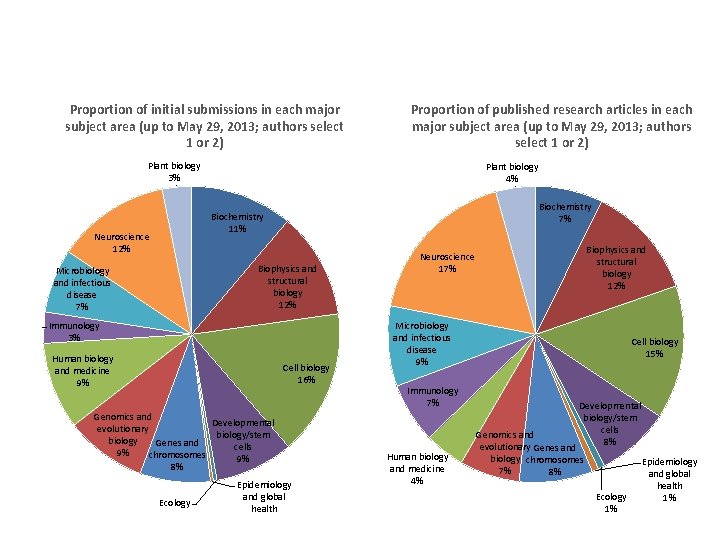
Proportion of initial submissions in each major subject area (up to May 29, 2013; authors select 1 or 2) Proportion of published research articles in each major subject area (up to May 29, 2013; authors select 1 or 2) Plant biology 3% Plant biology 4% Biochemistry 7% Biochemistry 11% Neuroscience 12% Biophysics and structural biology 12% Microbiology and infectious disease 7% Immunology 3% Human biology and medicine 9% Cell biology 16% Genomics and Developmental evolutionary biology/stem biology Genes and cells 9% chromosomes 9% 8% Ecology Epidemiology and global health Biophysics and structural biology 12% Neuroscience 17% Microbiology and infectious disease 9% Immunology 7% Human biology and medicine 4% Cell biology 15% Developmental biology/stem cells 8% Genomics and evolutionary Genes and biology chromosomes 7% 8% Ecology 1% Epidemiology and global health 1%
Open Access in Europe and US • Support in Europe – European Commission makes OA a “general principle” of Horizon 2020 - € 80 billion programme in research and innovation. – “We need Open Access to scientific information” (Neelie Kroes, Vice-President of the European Commission responsible for the Digital Agenda” • Support in the US – Research Works Act - withdrawn – Petition calling for OA received over 29 k signatures – Federal Research Public Access Act reintroduced
- Slides: 26