
The Chain of Infection Infectious Agents The three

- Slides: 11
The Chain of Infection
Infectious Agents �The three main groups of micro organisms are: � Virus � Bacteria � Fungi
The reservoir �The reservoirs is where the micro organisms, eg: bacteria, virus and fungi can live and can multiply �This can be a resident, patient, visitor and/or staff �The surrounding environment and equipment can also act as a reservoir
Portal of exit �The means by which the micro organisms are transferred from the reservoir. E. G. from a commode via the hands, thus the hands are the portal of exit. �Human portals can include : Airbourne spread Bodily fluids Skin ‘flakes’ �Non human : equipment that has not been cleaned properly re usable equipment mattresses
Mode of transmission How the micro organisms are spread indirectly e. g. hands airborne surfaces
Methods of transmission • Direct and indirect contact • Faecal – oral • Airbourne • Blood bodily fluids • Vertical transmission
Entry portal �This is how the micro organisms gain entry �Which can be via: Open wounds By being breathed in Swallowed Catheters Treatments that include opening up intact skin eg surgery Feeding tubes Injections
Susceptible host Healthy individuals usually have their own defences to help fight infections. More susceptible individuals such as the �Elderly �Young �Those with underlying health conditions �Malnourished individuals
Infectious agent �Simply the micro organism that causes the problem. �Most micro organisms play a role in keeping us healthy. �The problem occurs when they leave their ‘normal’ place and gain entry to the body. E. g. E Coli MRSA C. Diff
Breaking the chain By simply breaking one link in the chain we can halt the spread of infection
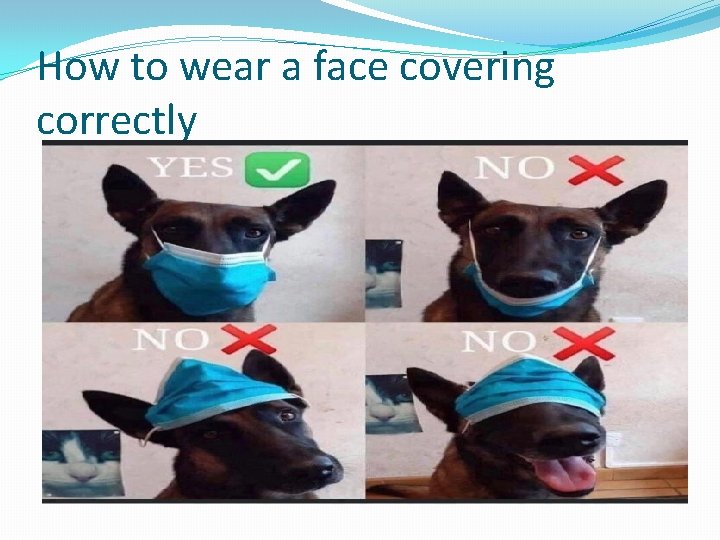
How to wear a face covering correctly