
The Cerebral Cortex Thin outer layer of interconnected
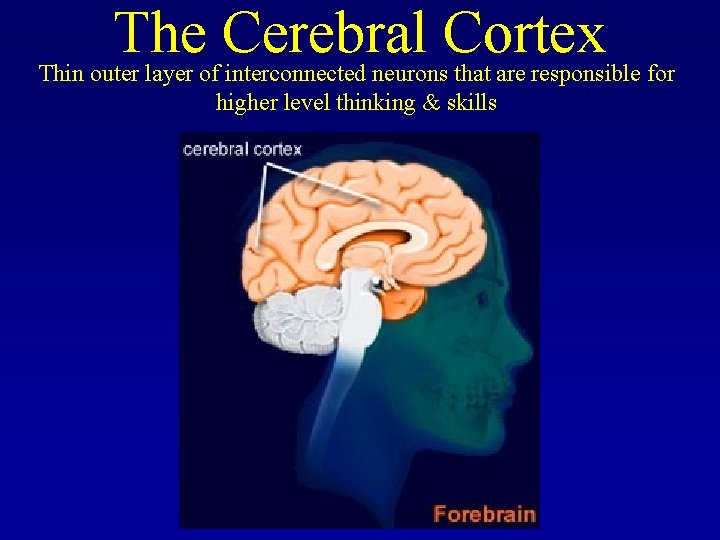
The Cerebral Cortex Thin outer layer of interconnected neurons that are responsible for higher level thinking & skills
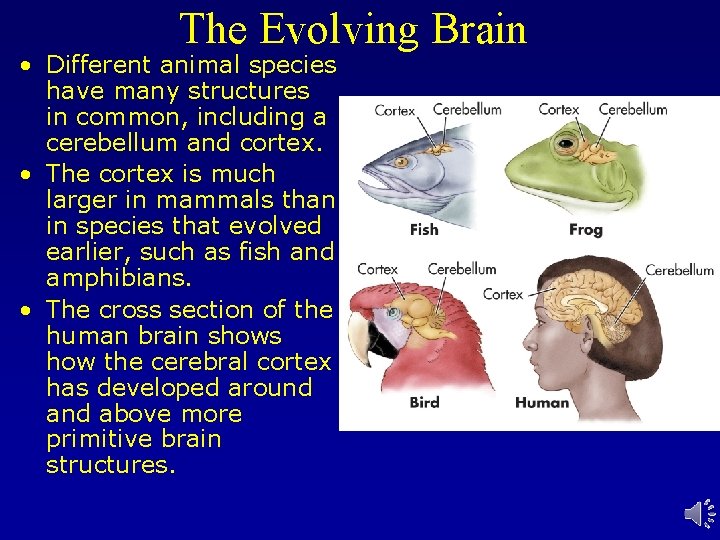
The Evolving Brain • Different animal species have many structures in common, including a cerebellum and cortex. • The cortex is much larger in mammals than in species that evolved earlier, such as fish and amphibians. • The cross section of the human brain shows how the cerebral cortex has developed around above more primitive brain structures.
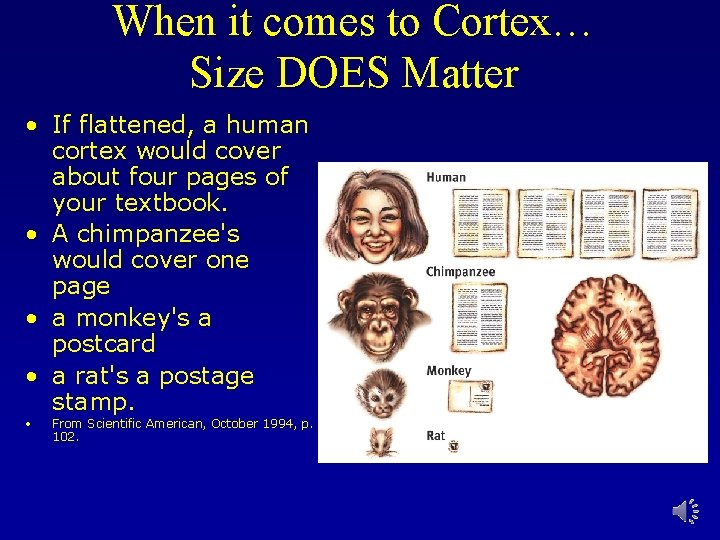
When it comes to Cortex… Size DOES Matter • If flattened, a human cortex would cover about four pages of your textbook. • A chimpanzee's would cover one page • a monkey's a postcard • a rat's a postage stamp. • From Scientific American, October 1994, p. 102.
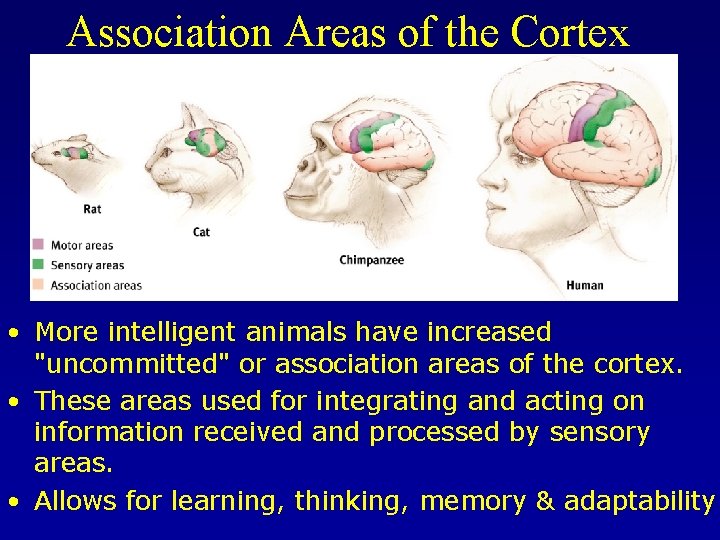
Association Areas of the Cortex • More intelligent animals have increased "uncommitted" or association areas of the cortex. • These areas used for integrating and acting on information received and processed by sensory areas. • Allows for learning, thinking, memory & adaptability
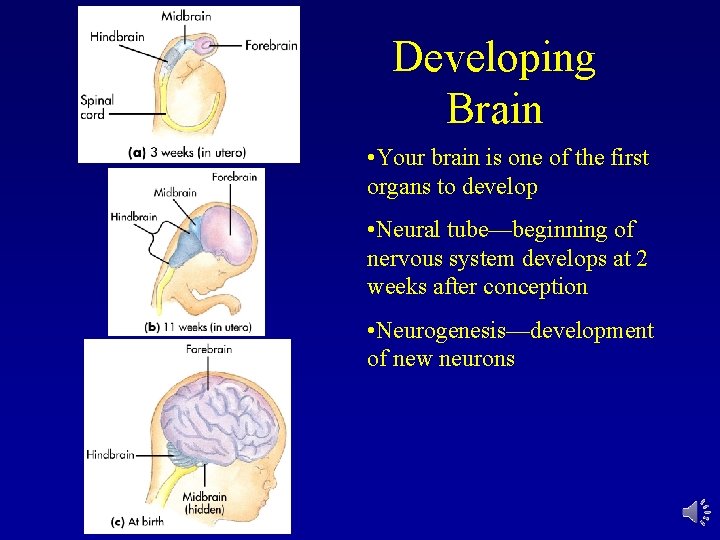
Developing Brain • Your brain is one of the first organs to develop • Neural tube—beginning of nervous system develops at 2 weeks after conception • Neurogenesis—development of new neurons
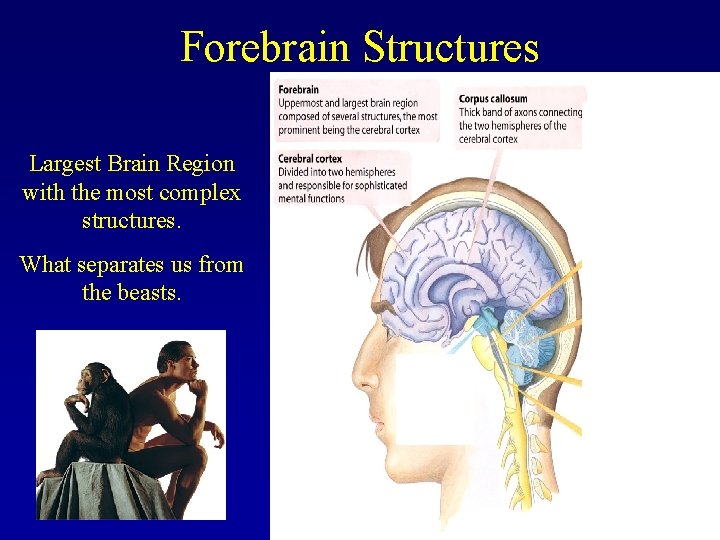
Forebrain Structures Largest Brain Region with the most complex structures. What separates us from the beasts.
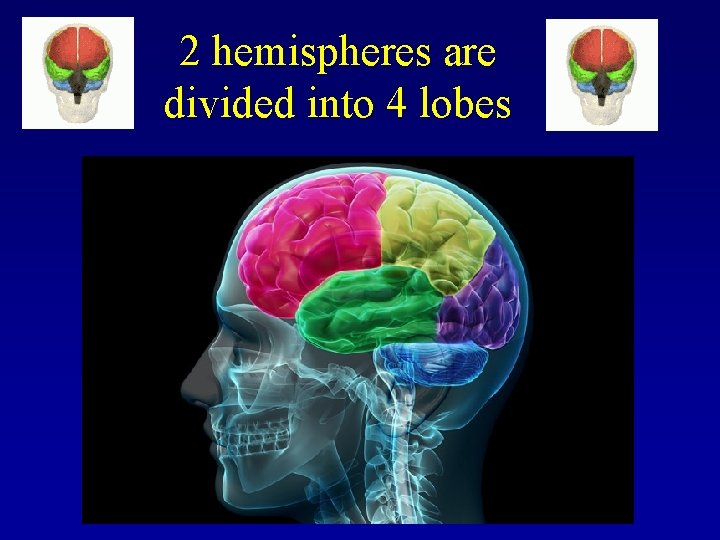
2 hemispheres are divided into 4 lobes
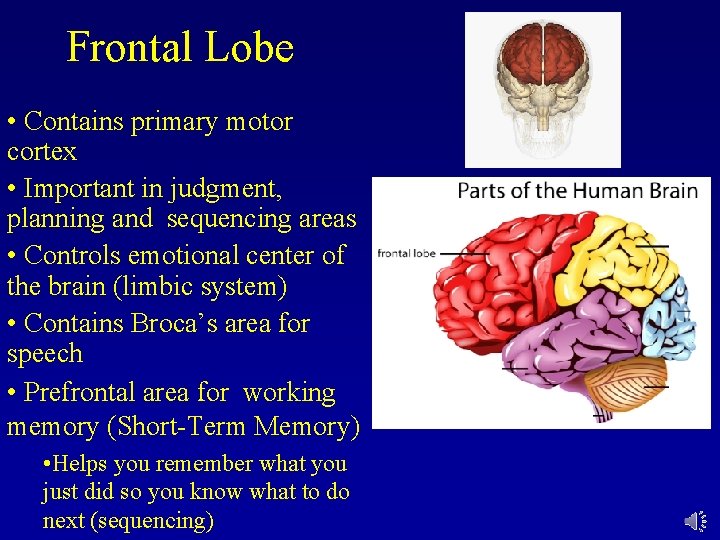
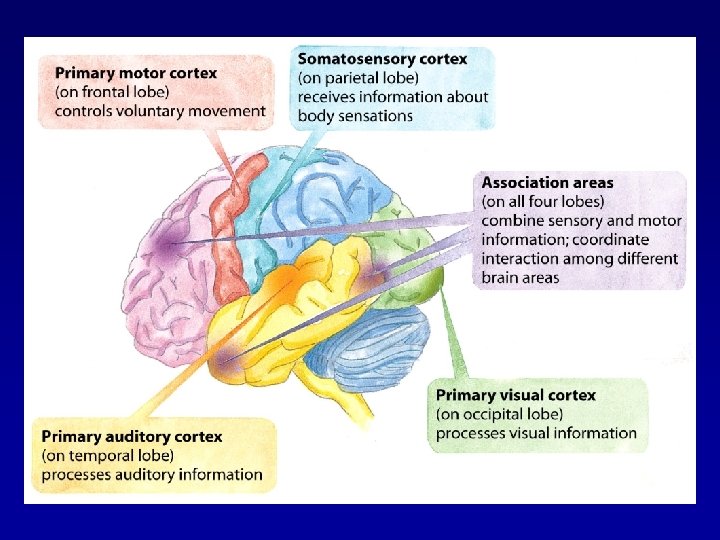
Frontal Lobe • Contains primary motor cortex • Important in judgment, planning and sequencing areas • Controls emotional center of the brain (limbic system) • Contains Broca’s area for speech • Prefrontal area for working memory (Short-Term Memory) • Helps you remember what you just did so you know what to do next (sequencing)
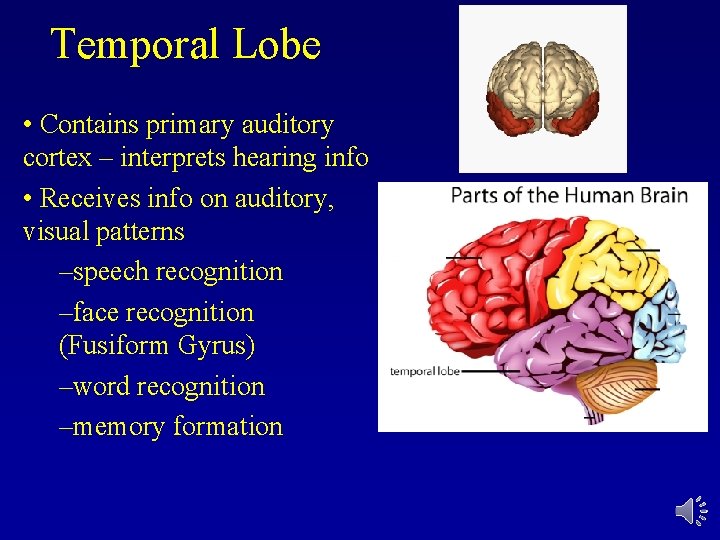
Temporal Lobe • Contains primary auditory cortex – interprets hearing info • Receives info on auditory, visual patterns –speech recognition –face recognition (Fusiform Gyrus) –word recognition –memory formation
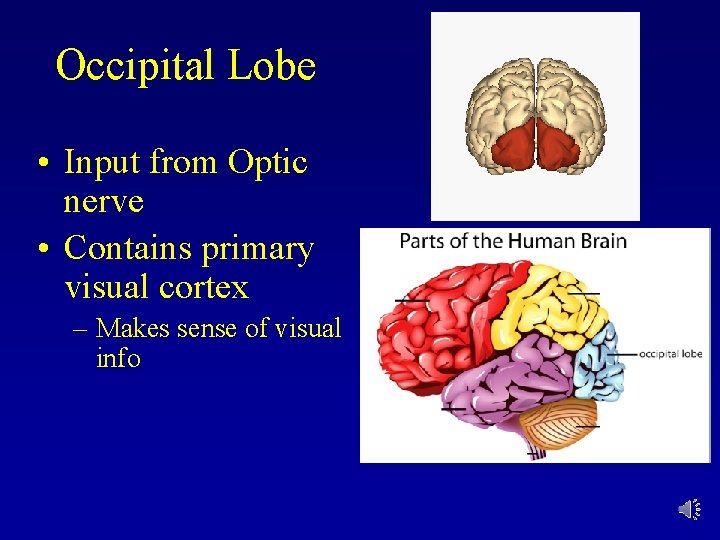
Occipital Lobe • Input from Optic nerve • Contains primary visual cortex – Makes sense of visual info
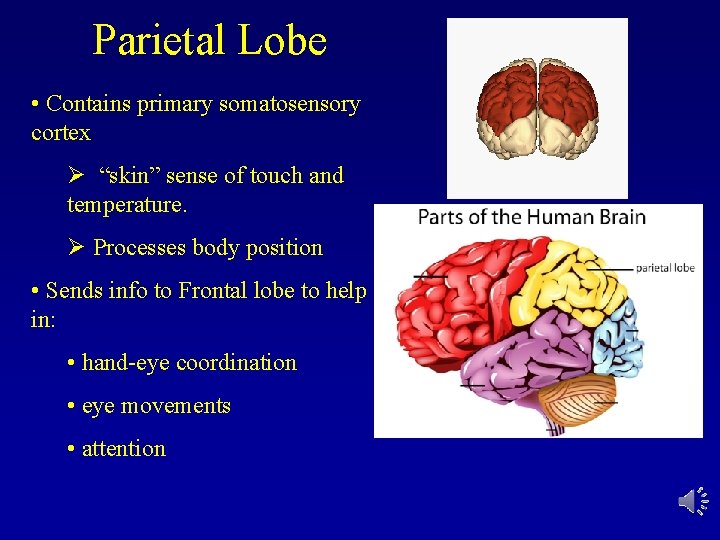
Parietal Lobe • Contains primary somatosensory cortex Ø “skin” sense of touch and temperature. Ø Processes body position • Sends info to Frontal lobe to help in: • hand-eye coordination • eye movements • attention
Lobes of the Cortex • Frontal lobe—largest lobe, voluntary muscle movements, involved in thinking, planning, emotional control • Temporal lobe—auditory information, recognition • Occipital lobe—visual information • Parietal lobe—sensory information from your body
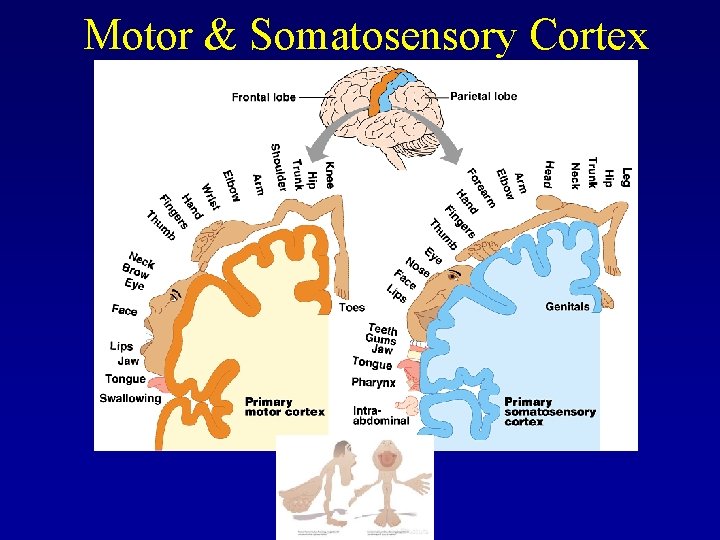
Motor & Somatosensory Cortex
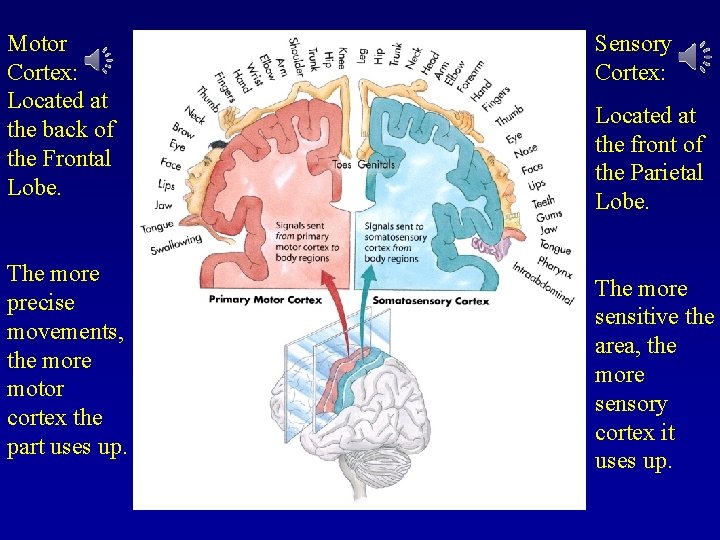
Motor Cortex: Located at the back of the Frontal Lobe. The more precise movements, the more motor cortex the part uses up. Sensory Cortex: Located at the front of the Parietal Lobe. The more sensitive the area, the more sensory cortex it uses up.
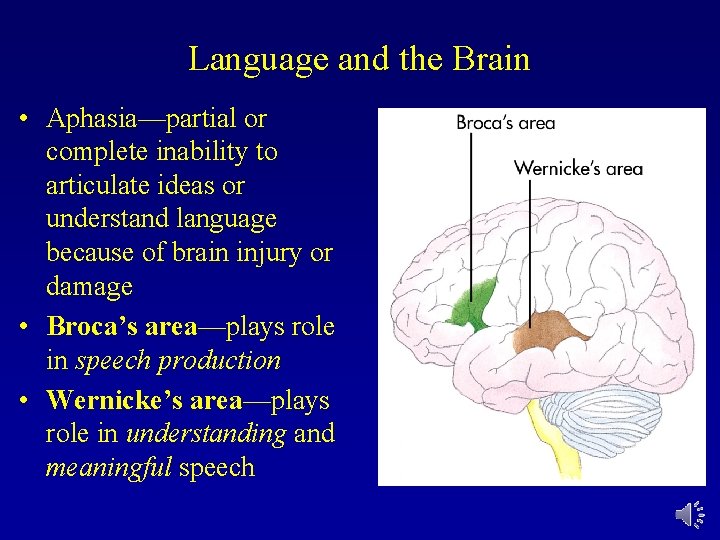
Language and the Brain • Aphasia—partial or complete inability to articulate ideas or understand language because of brain injury or damage • Broca’s area—plays role in speech production • Wernicke’s area—plays role in understanding and meaningful speech
Broca’s Aphasia • Damage to Broca’s Area causes a person to struggle formulating words while still being able to comprehend speech. • frequently speak in short, meaningful phrases that are produced with great effort – Example: Broca first discovered this area when he had a patient with damage to this area who could only say “tan” – Example: Affected people often omit small words such as “is, ” “and, ” and “the. ” For example, a person with Broca’s aphasia may say, “Walk dog” meaning, “I will take the dog for a walk. ” The same sentence could also mean “You take the dog for a walk, ” or “The dog walked out of the yard, ” depending on the circumstances. – Click HERE for a video example of Broca’s Aphasia
Wernicke’s Aphasia • – Damage to Wernicke’s Area would cause a person only to be able to speak in meaningless words. – Example: Asked to describe a picture of two boys stealing cookies from behind a woman’s back, a patient responded: • “Mother is away her working her work to get her better, but when she’s looking the two boys looking the other part. She’s working another time. ” – Example: Someone with Wernicke’s aphasia may say, “You know that smoodle pinkered and that I want to get him round and take care of him like you want before, ” meaning “The dog needs to go out so I will take him for a walk. ” • Individuals with Wernicke’s aphasia usually have great difficulty understanding speech and are therefore often unaware of their mistakes. – Click HERE for a video example • Mnemonic to remember: You can't read Wernicke's words and Broca's makes you breaks up your speech.
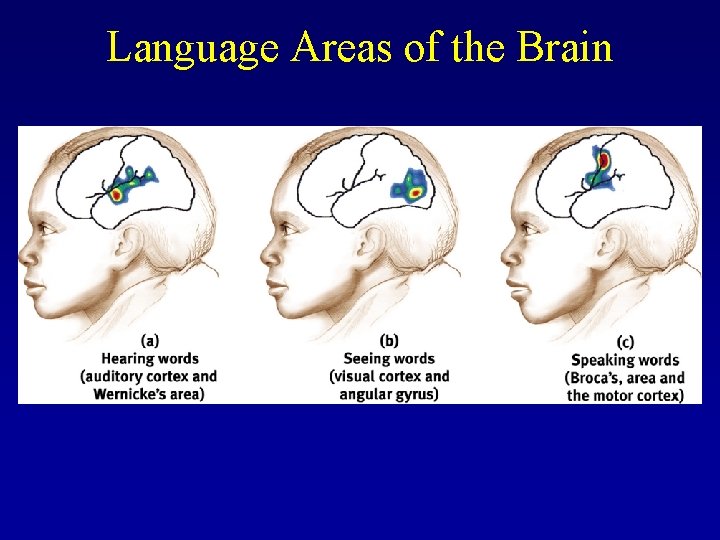
Language Areas of the Brain
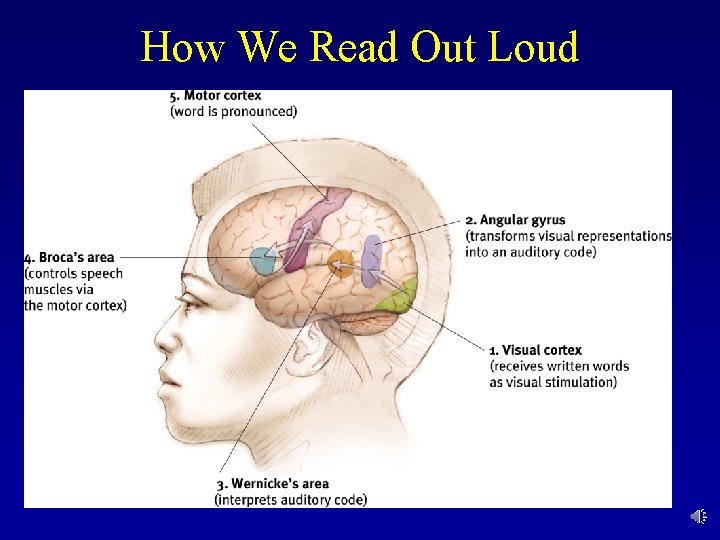
How We Read Out Loud
- Slides: 20