
The Cerebral Cortex and Higher Intellectual Functions Allocortex
The Cerebral Cortex and Higher Intellectual Functions
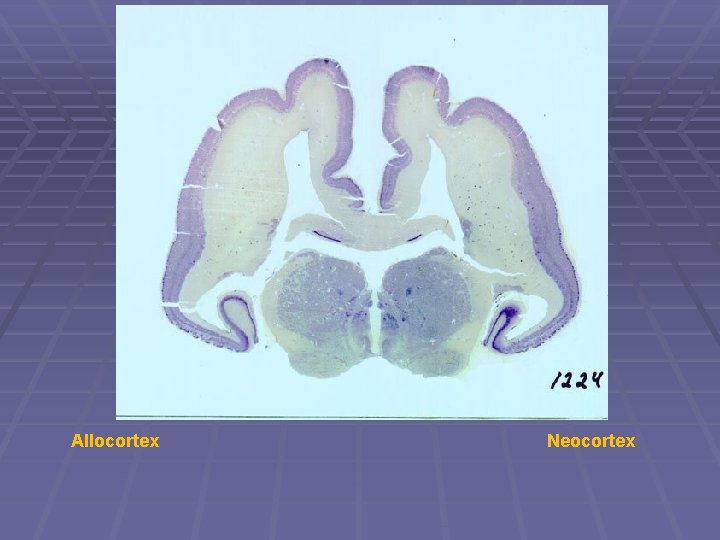
Allocortex Neocortex
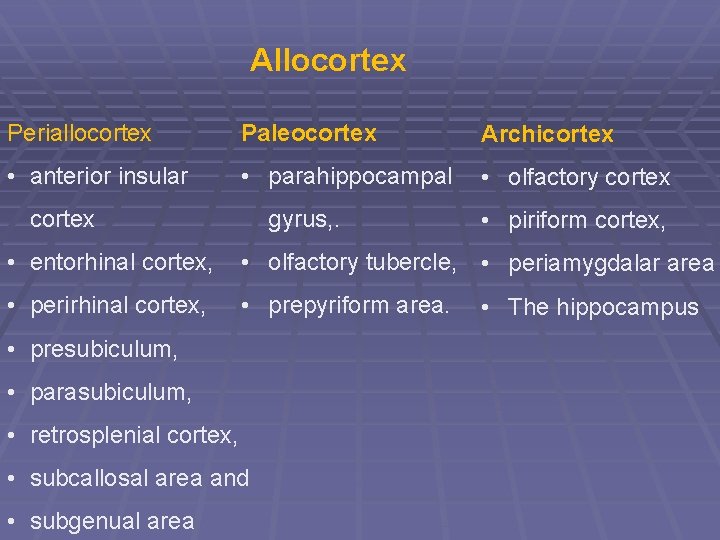
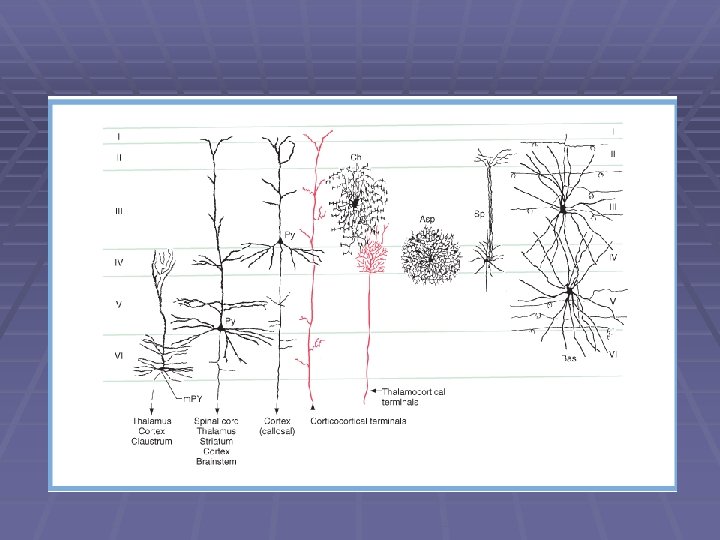
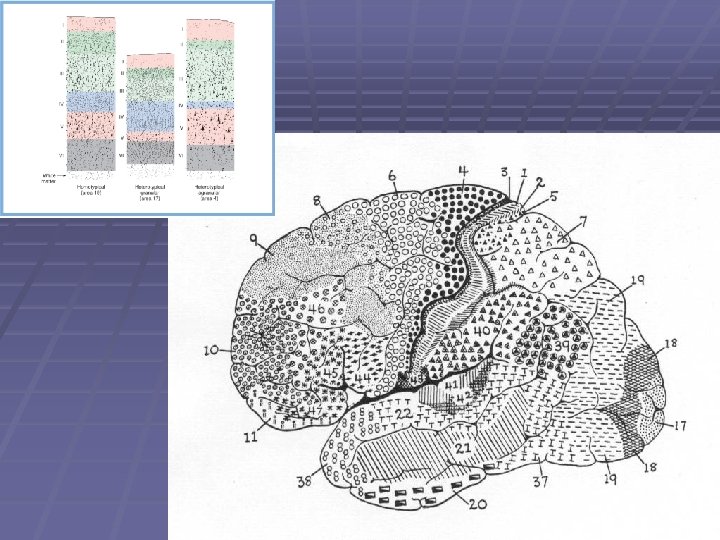
Allocortex Periallocortex Paleocortex Archicortex • anterior insular • parahippocampal • olfactory cortex gyrus, . • piriform cortex, • entorhinal cortex, • olfactory tubercle, • periamygdalar area • perirhinal cortex, • prepyriform area. • presubiculum, • parasubiculum, • retrosplenial cortex, • subcallosal area and • subgenual area • The hippocampus
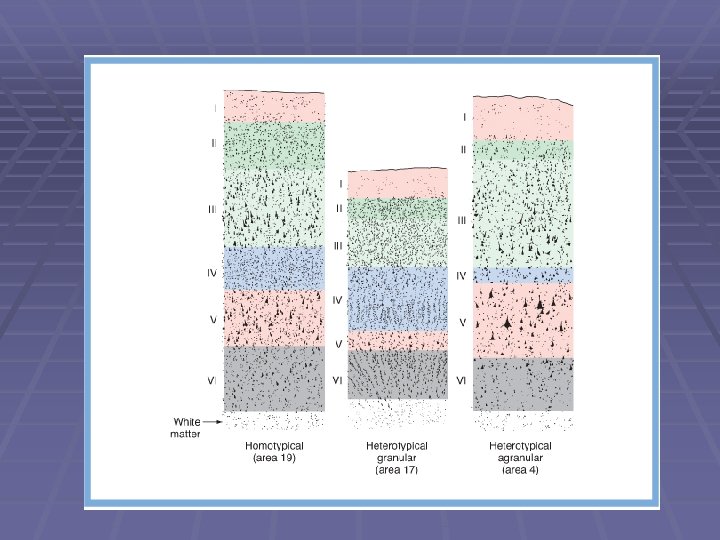
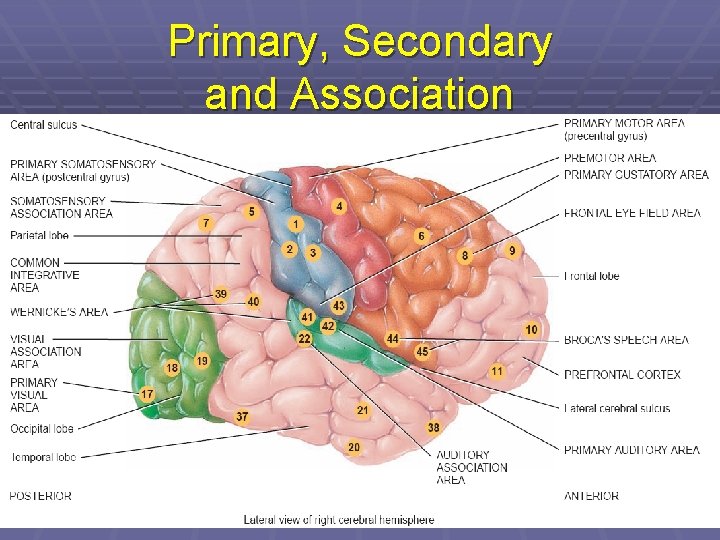
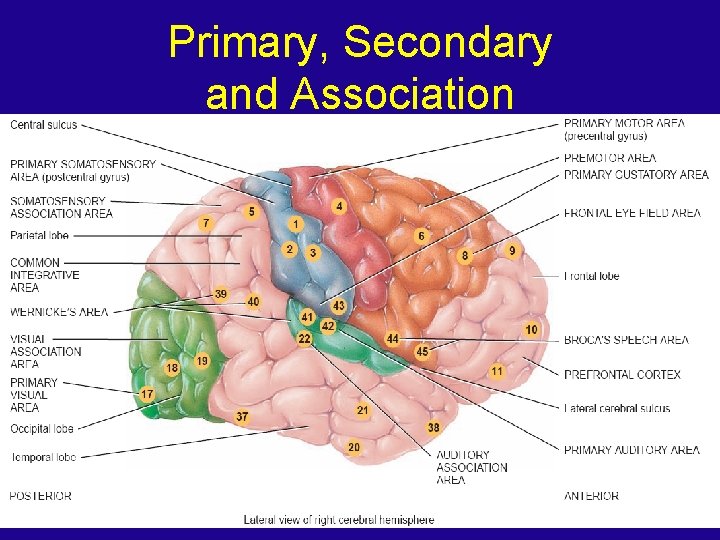
Primary, Secondary and Association
Agnosia and Apraxia
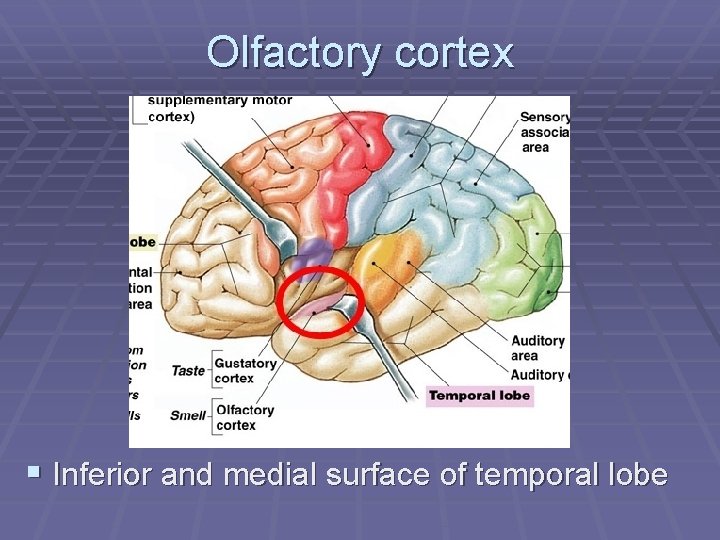
Olfactory cortex § Inferior and medial surface of temporal lobe
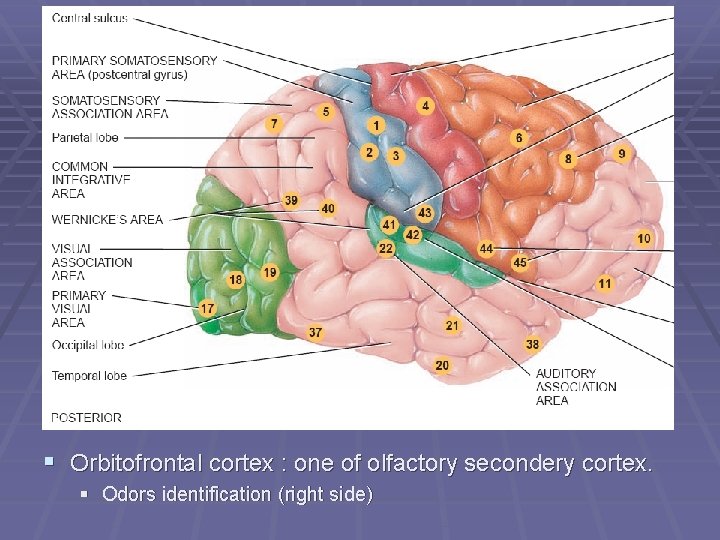
§ Orbitofrontal cortex : one of olfactory secondery cortex. § Odors identification (right side)
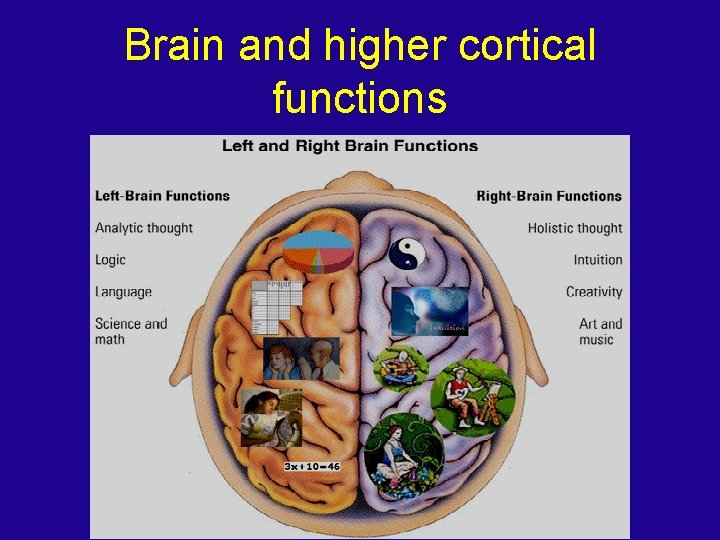
Brain and higher cortical functions
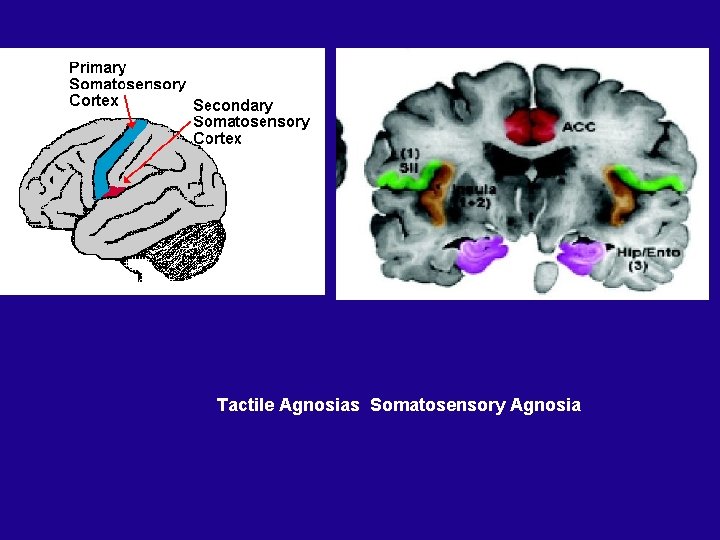
Tactile Agnosias Somatosensory Agnosia
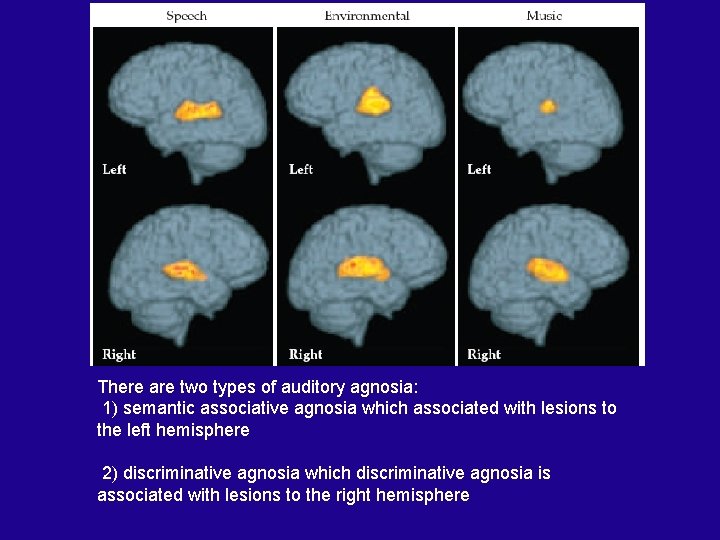
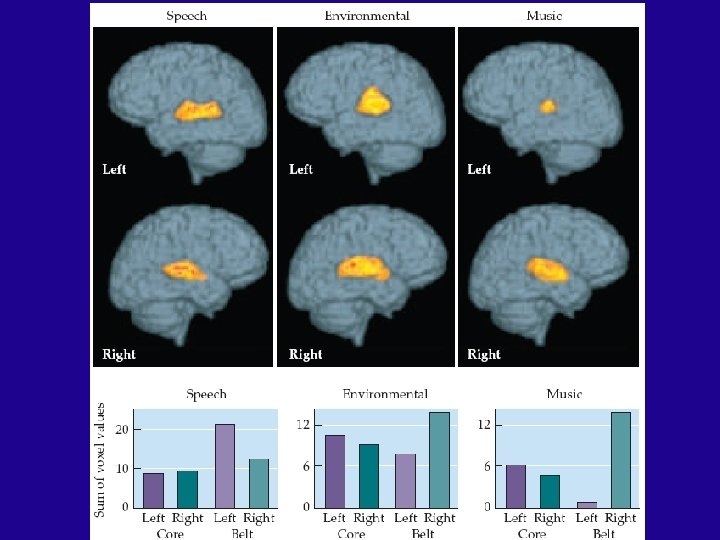
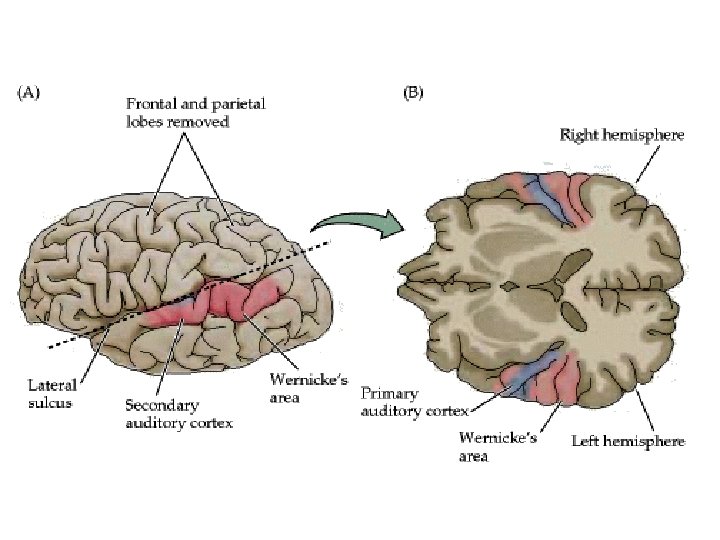
There are two types of auditory agnosia: 1) semantic associative agnosia which associated with lesions to the left hemisphere 2) discriminative agnosia which discriminative agnosia is associated with lesions to the right hemisphere
Cortical processing • Parallel • Continues
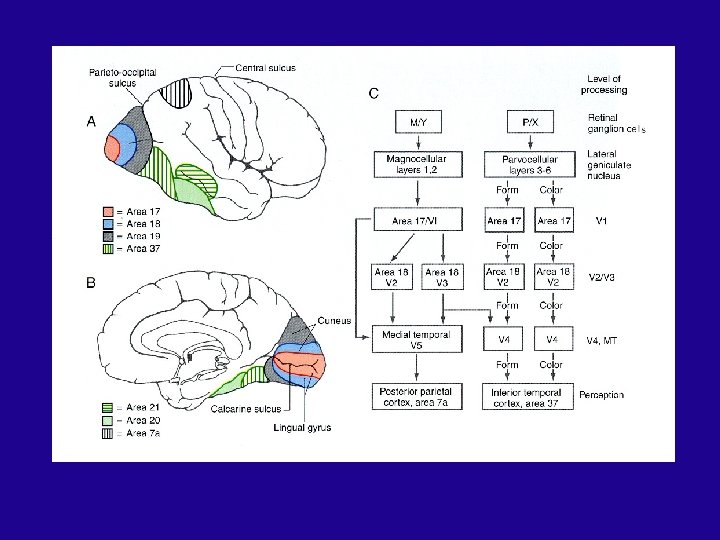
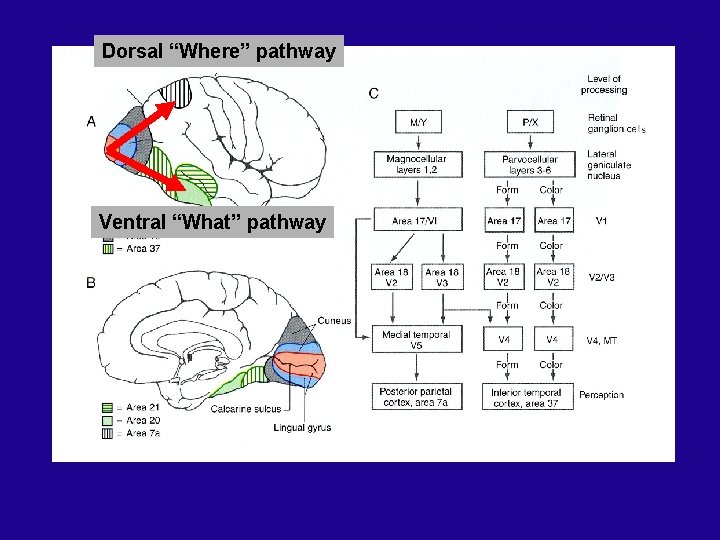
Dorsal “Where” pathway Ventral “What” pathway
Cortical processing Visual processing as example
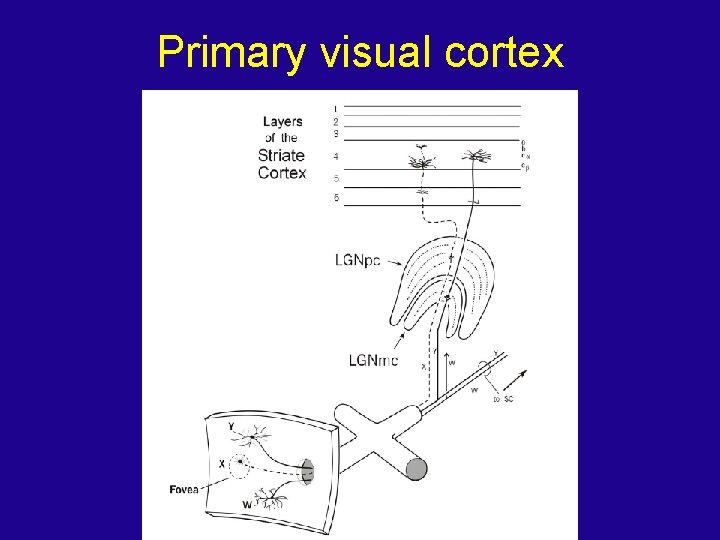
Primary visual cortex
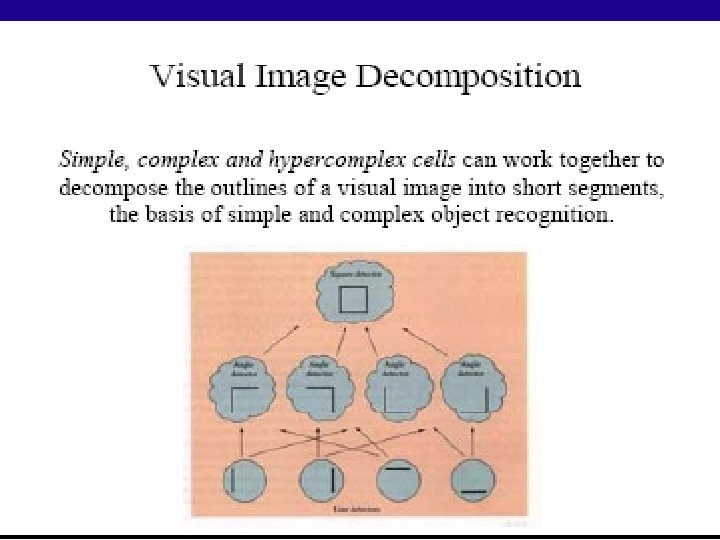
Visual processing of information
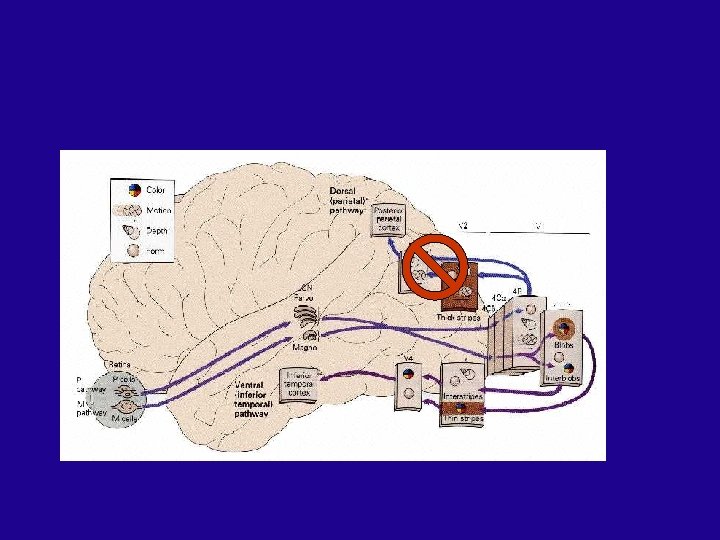
Damage to V 1 • Blindsight • Visual hallucination
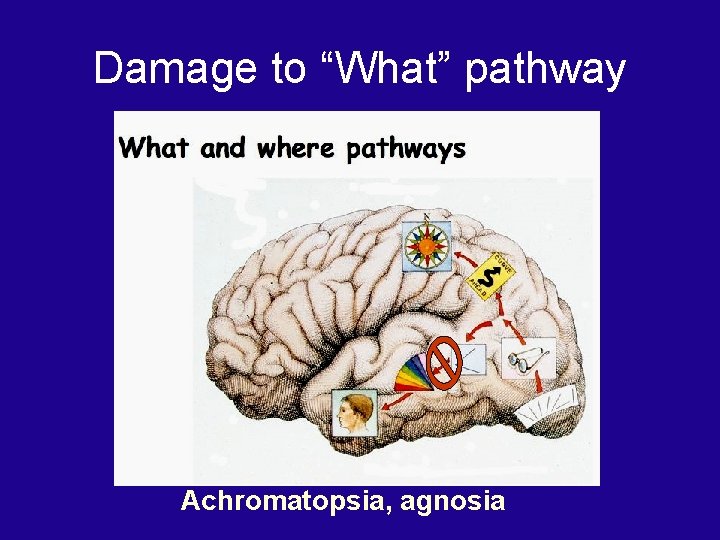
Damage to “What” pathway Achromatopsia, agnosia
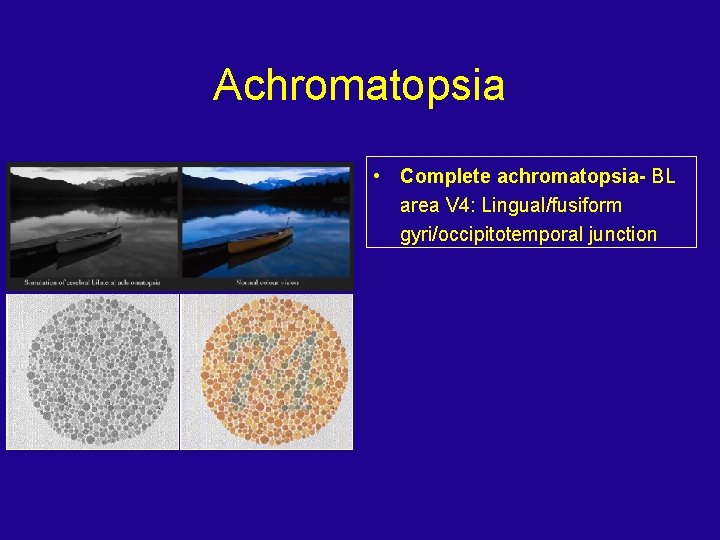
Achromatopsia • Complete achromatopsia- BL area V 4: Lingual/fusiform gyri/occipitotemporal junction
Color agnosia/ anomia • Color agnosia: loss the ability to retrieve color knowledge • cannot name colors for objects but can sort • Cant /Remembering the color of object “even by none verbal way” , like painting pumpkin orange or apple red • Cant /Color composition • Inability to name colors or to point to colors given their names, which is not due to aphasia or due to defective color perception Left or bilateral occipitotemporal region Inferior temporal , fusiform
The Neural Basis of Visual Perception • Visual agnosia is the inability to recognize objects despite satisfactory vision. – Caused by damage to the pattern pathway usually in the temporal cortex. – For words : Alexia
Agnosia • Topographagnosia – Inability to navigate routes using familiar landmarks deficit in familiar scene perception – Right lingual gyrus • Alexia – Left (dominant lobe) fusiform/lingual areas (distal part of them)
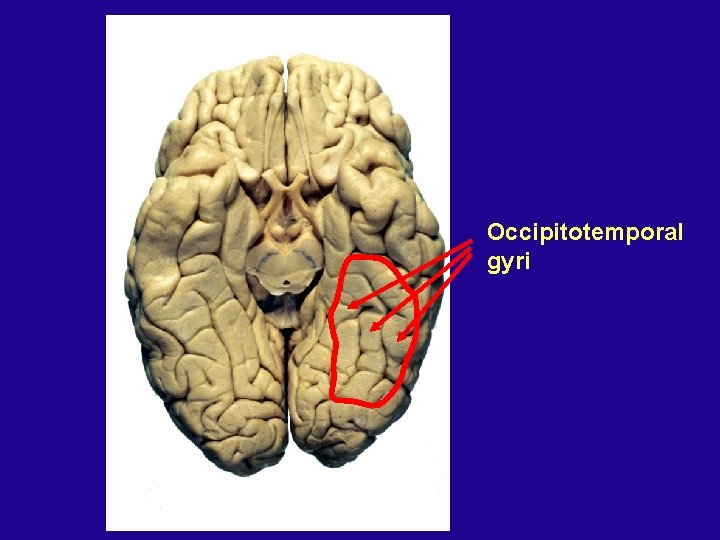
Occipitotemporal gyri
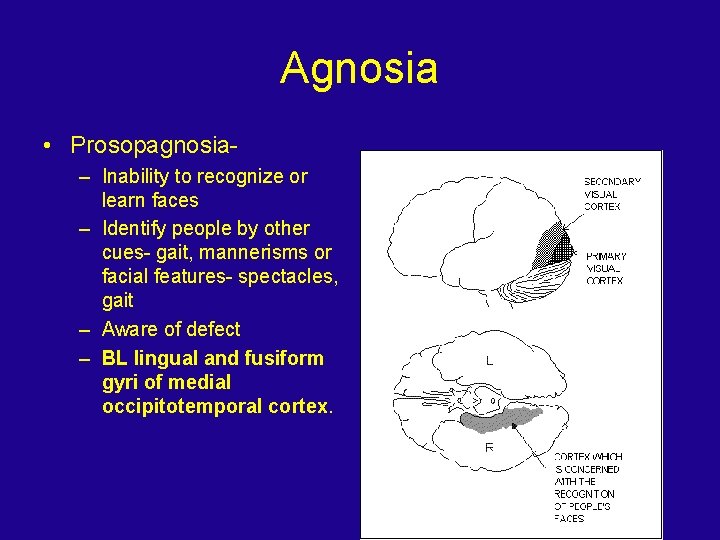
Agnosia • Prosopagnosia– Inability to recognize or learn faces – Identify people by other cues- gait, mannerisms or facial features- spectacles, gait – Aware of defect – BL lingual and fusiform gyri of medial occipitotemporal cortex.
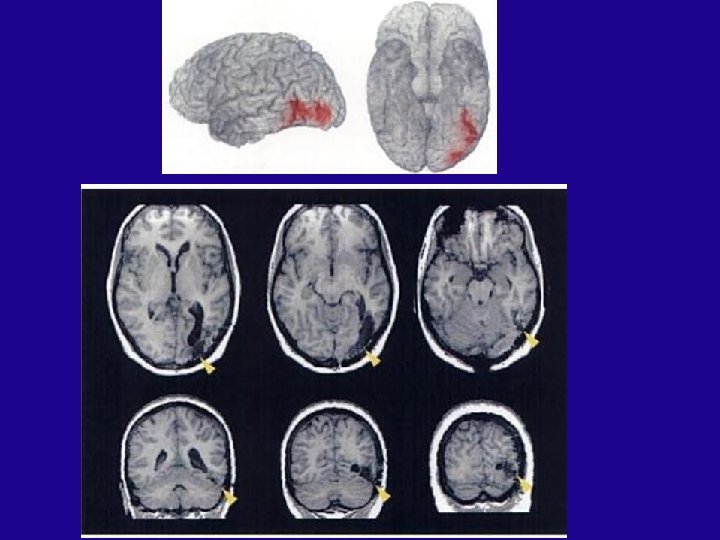
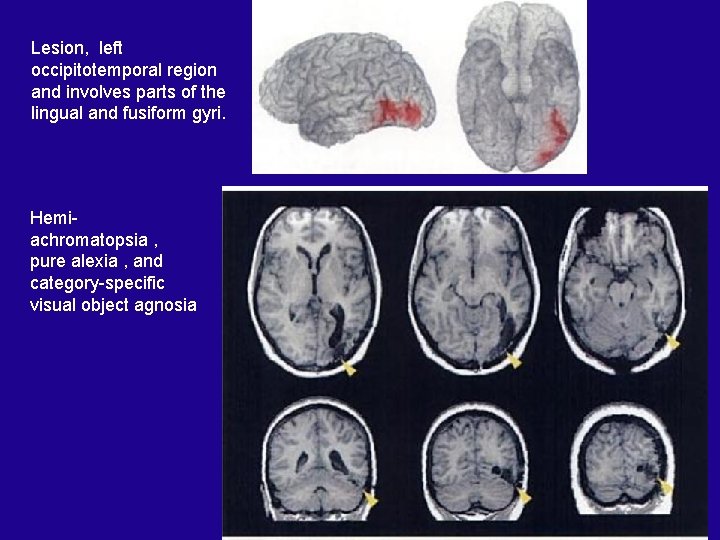
Lesion, left occipitotemporal region and involves parts of the lingual and fusiform gyri. Hemiachromatopsia , pure alexia , and category-specific visual object agnosia
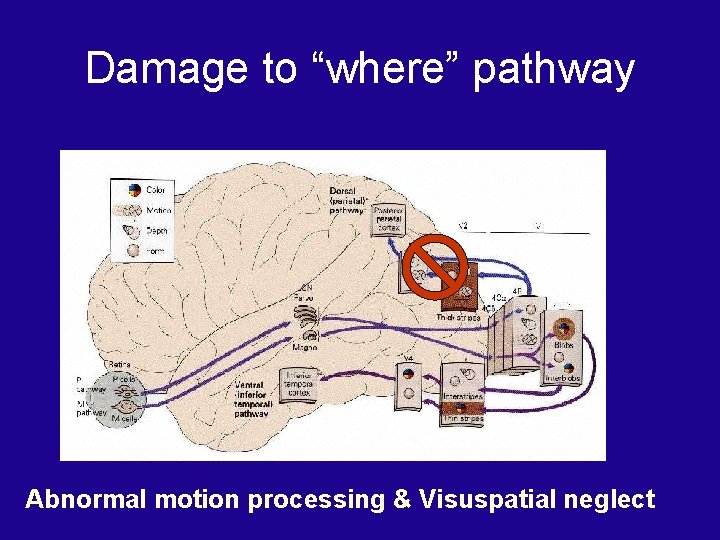
Damage to “where” pathway Abnormal motion processing & Visuspatial neglect
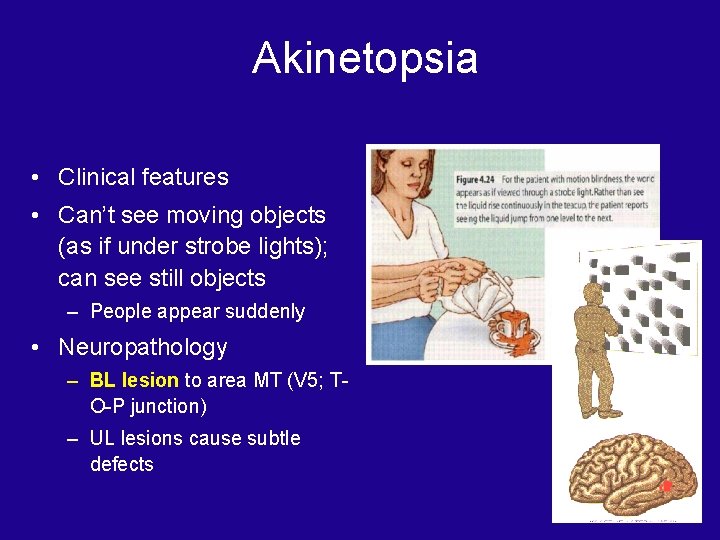
Akinetopsia • Clinical features • Can’t see moving objects (as if under strobe lights); can see still objects – People appear suddenly • Neuropathology – BL lesion to area MT (V 5; TO-P junction) – UL lesions cause subtle defects
Topographagnosia – Inability to navigate routes using familiar landmarks deficit in familiar scene perception – right ventral temporo-occipital lesions like Right lingual gyrus
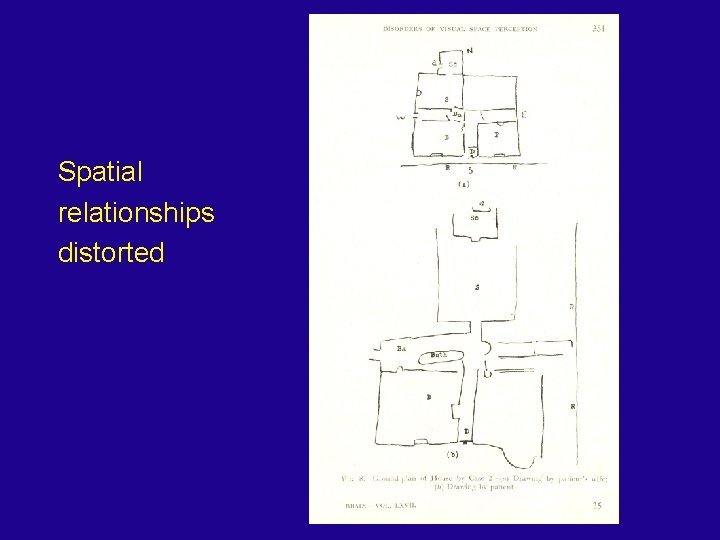
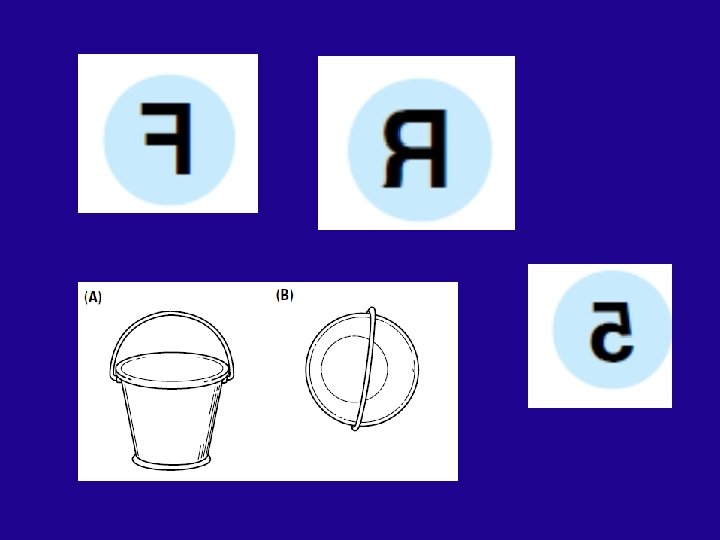
Spatial relationships distorted
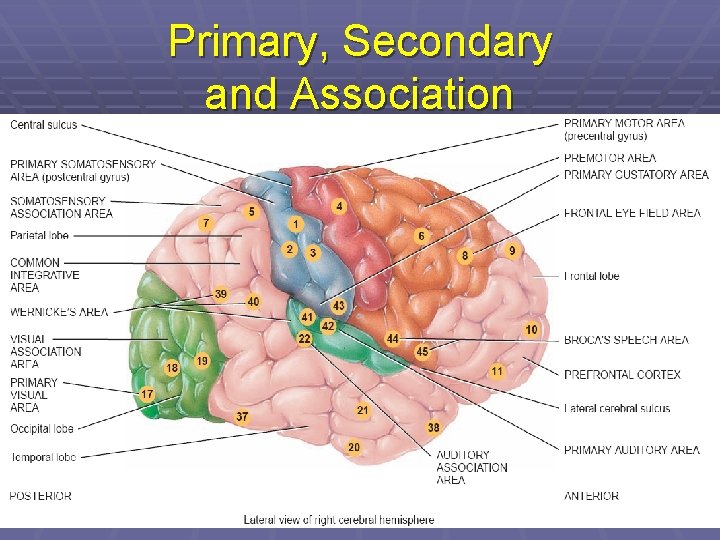
Primary, Secondary and Association
Capgras syndrome
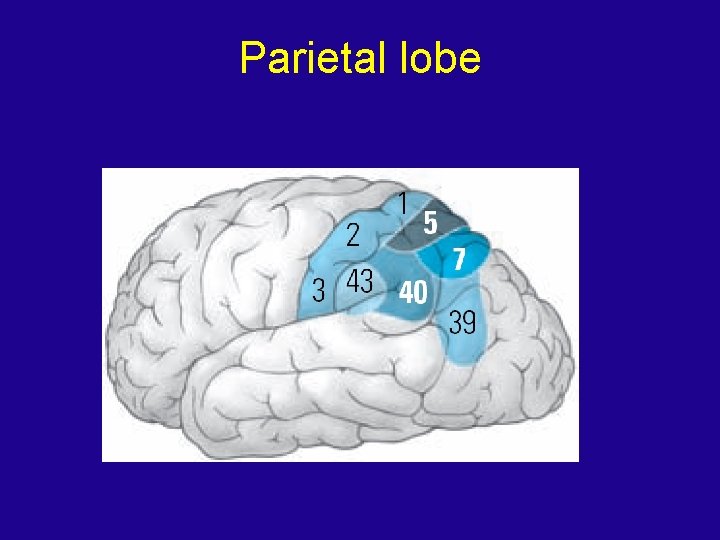
Parietal lobe
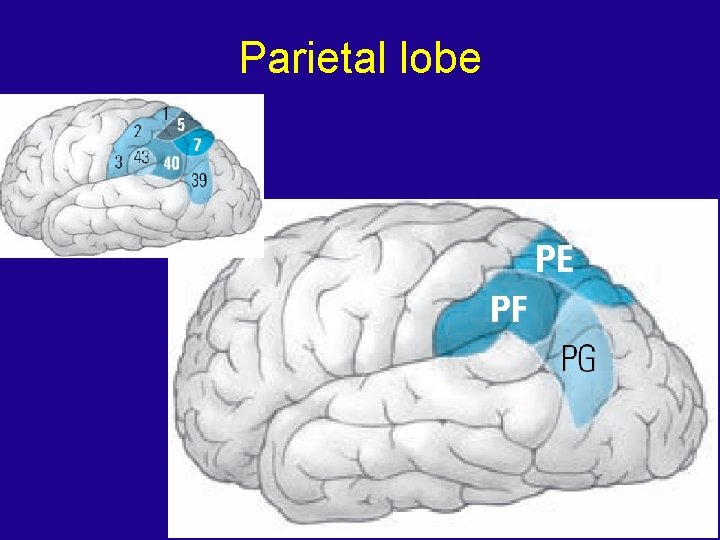
Parietal lobe
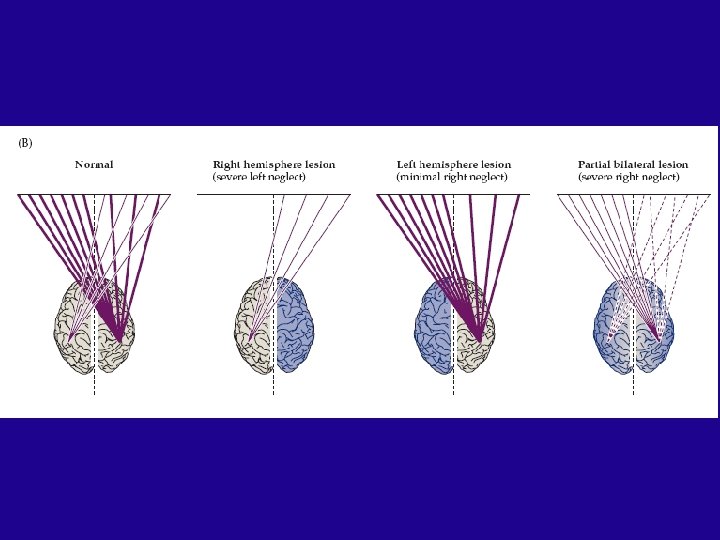
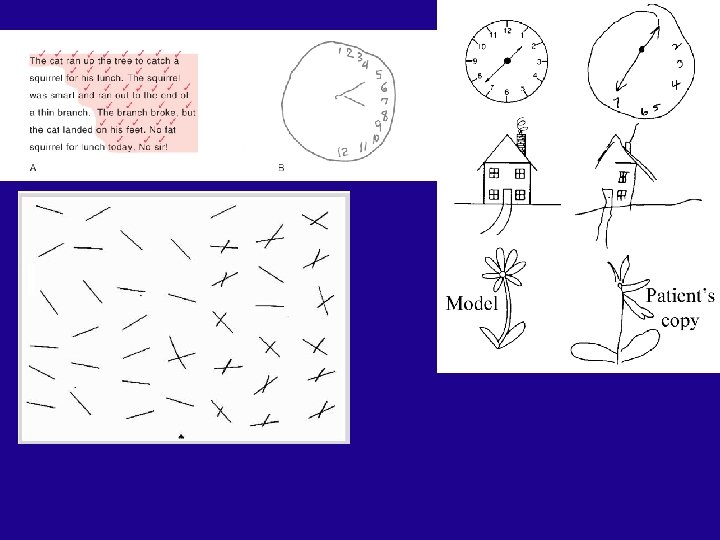
Neglect syndrome (right parietal association cortex)
Primary, Secondary and Association
Agnosia and Apraxia
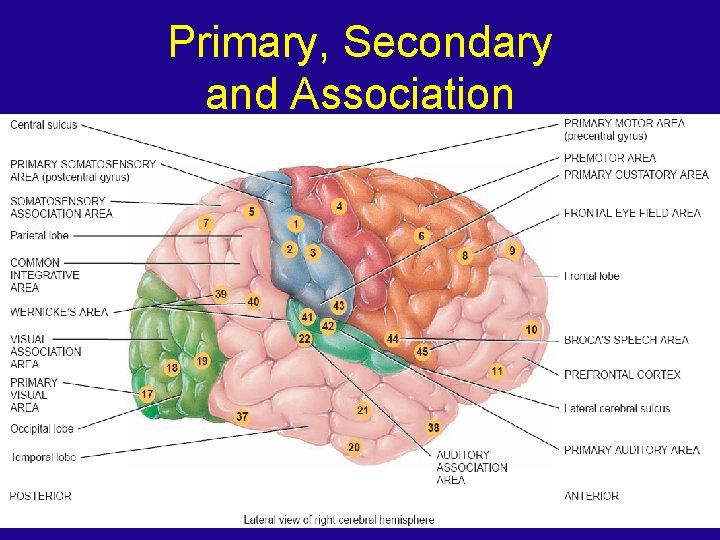
Primary, Secondary and Association
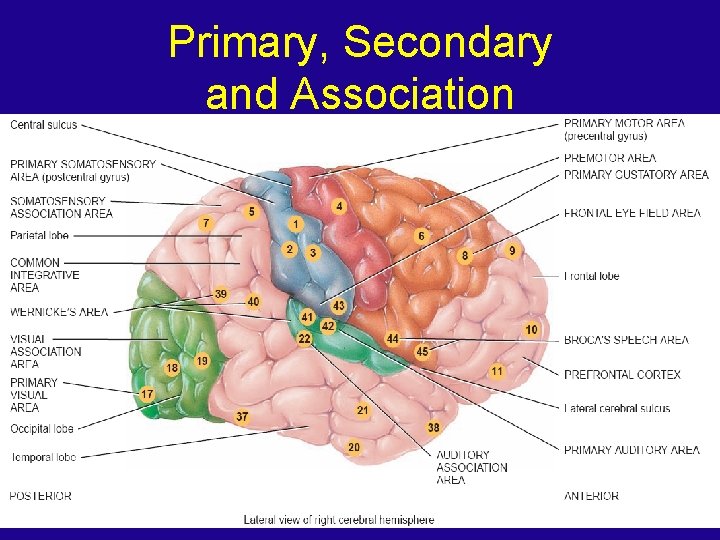
Primary, Secondary and Association
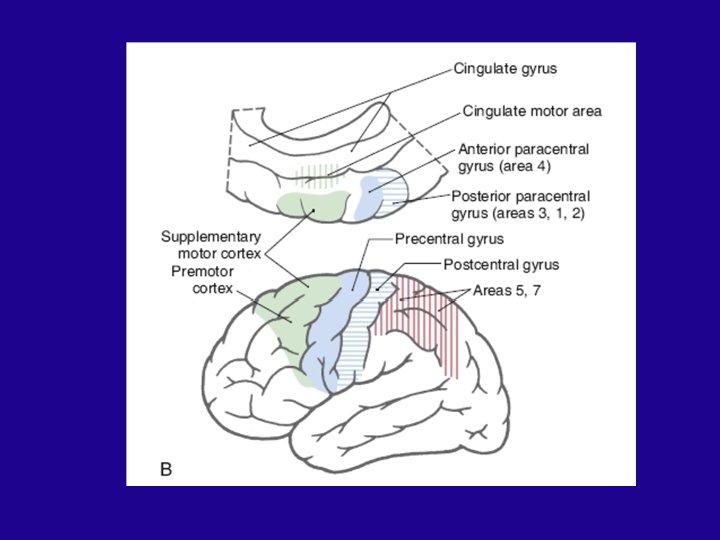
Motor areas in the cerebral cortex
Apraxia
Left parietal
• • Acalculia Language Agraphia Apraxia
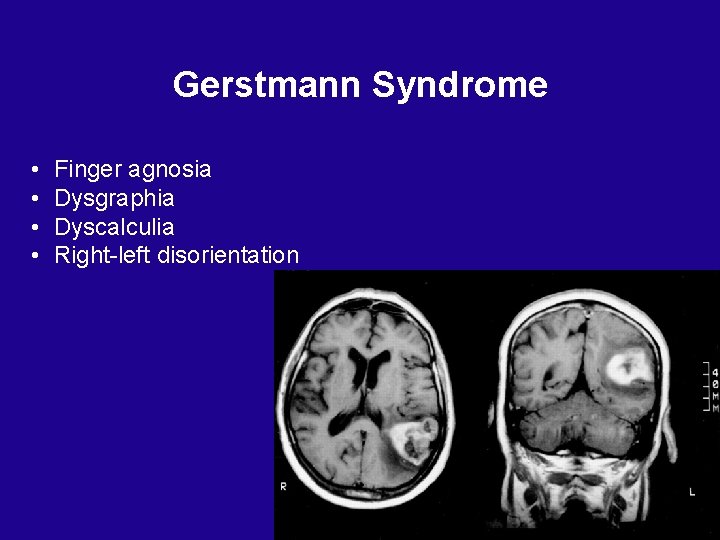
Gerstmann Syndrome • • Finger agnosia Dysgraphia Dyscalculia Right-left disorientation
language
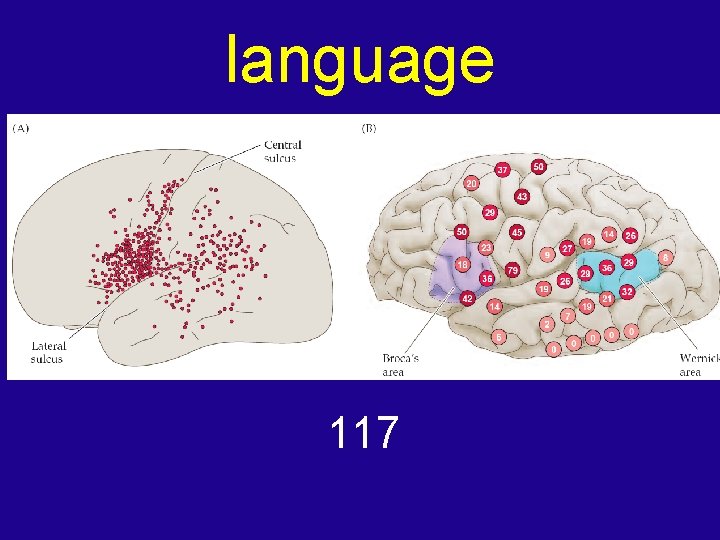
language 117
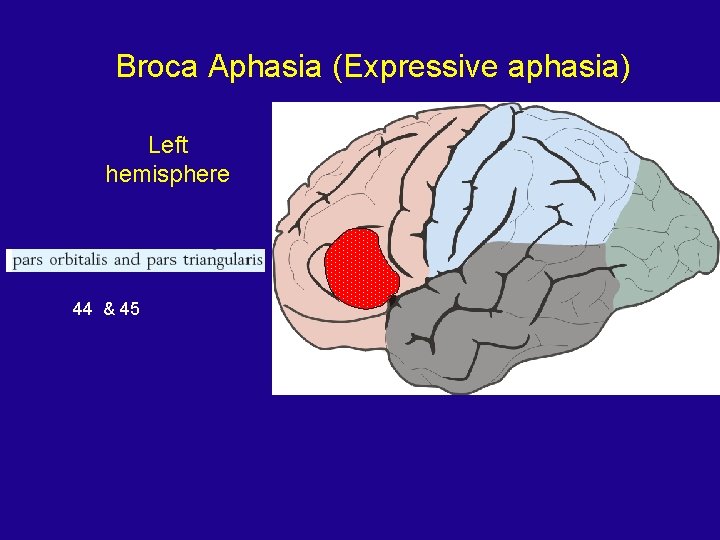
Broca Aphasia (Expressive aphasia) Left hemisphere 44 & 45
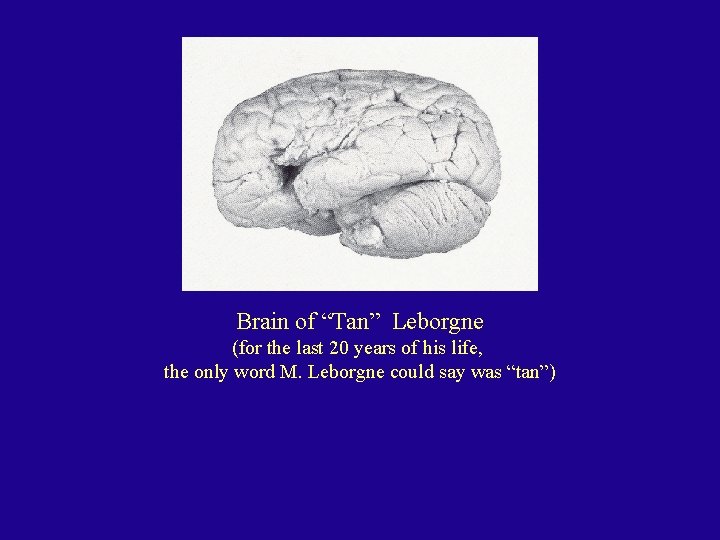
Brain of “Tan” Leborgne (for the last 20 years of his life, the only word M. Leborgne could say was “tan”)
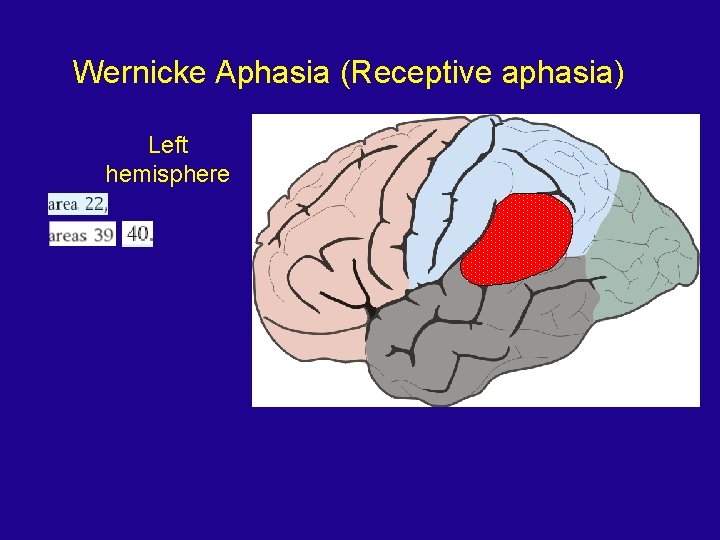
Wernicke Aphasia (Receptive aphasia) Left hemisphere
Prosody of speech (right hemisphere) Aprosodia
Plans for Action (prefrontal cortex)
Functions of the prefrontal cortex: 1) Planning This is the area where volition, thinking ahead, problem solving are located. Before you can have these, and do them flexibly, fluently, adaptively, have to inhibit more primitive, automatic, instinctive behavior patterns; hence 2) Inhibition 3) Selectivity ‘I will do this, I will not do that’
Prefrontal Cortex Damage: • Lack of foresight • Frequent stubbornness • Inattentive and moody • Lack of ambitions, sense of responsibility, sense of propriety (rude) • Less creative and unable to plan forthe future
- Slides: 68