
The Cerebellum SHANDONG UNIVERSITY Liu Zhiyu Position of
The Cerebellum SHANDONG UNIVERSITY Liu Zhiyu
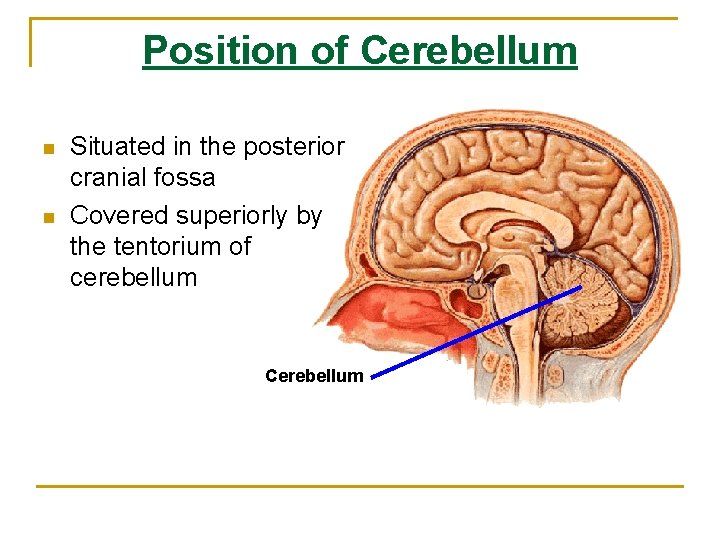
Position of Cerebellum n n Situated in the posterior cranial fossa Covered superiorly by the tentorium of cerebellum Cerebellum
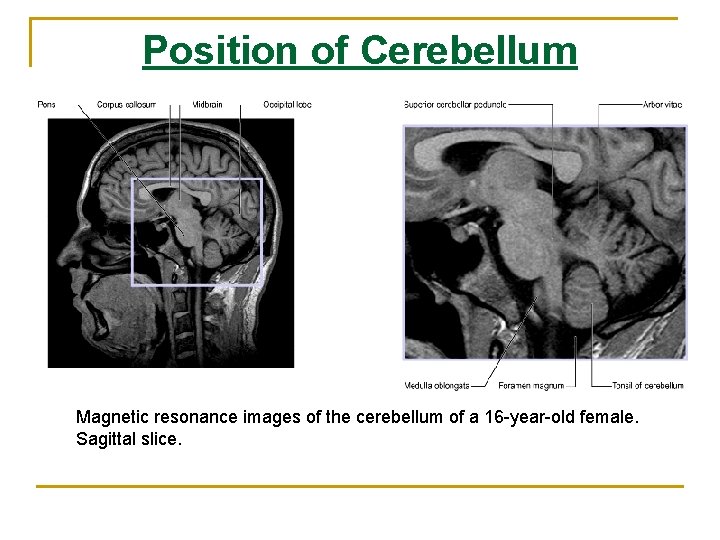
Position of Cerebellum Magnetic resonance images of the cerebellum of a 16 -year-old female. Sagittal slice.
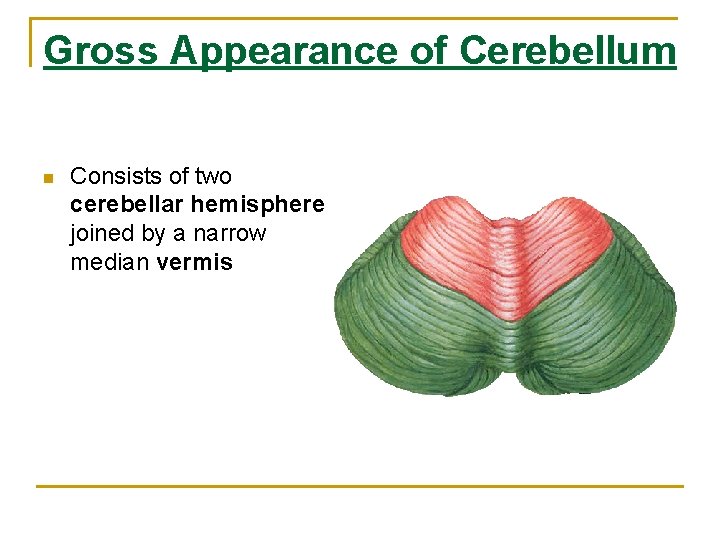
Gross Appearance of Cerebellum n Consists of two cerebellar hemisphere joined by a narrow median vermis

n Superior view q q n Anterior and posterior cerebellar notches Primary fissure Inferior view q q Tonsil of cerebellum: two elevated masses on inferior surface of hemispheral portion just nearby foramen magnum Posterolateral fissure
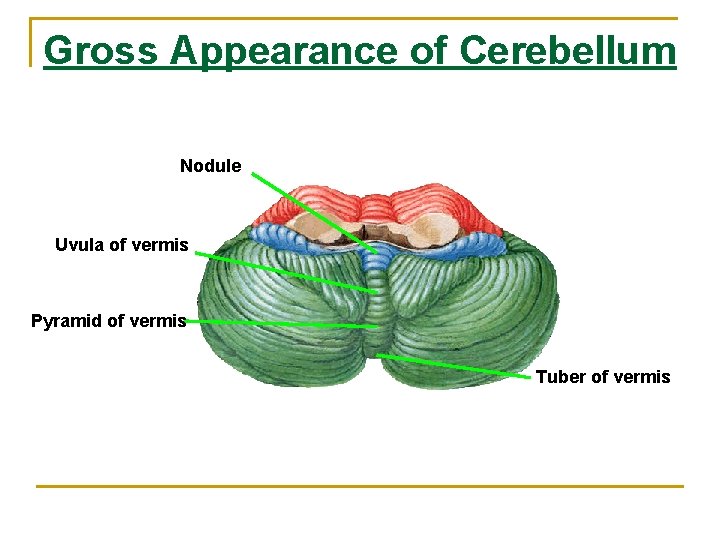
Gross Appearance of Cerebellum Nodule Uvula of vermis Pyramid of vermis Tuber of vermis
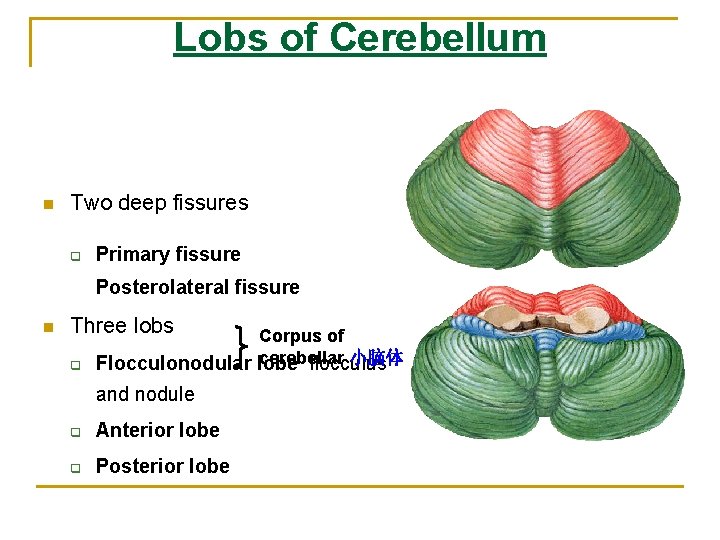
Lobs of Cerebellum n Two deep fissures q Primary fissure Posterolateral fissure n Three lobs q Corpus of cerebellar 小脑体 Flocculonodular lobe flocculus and nodule q Anterior lobe q Posterior lobe
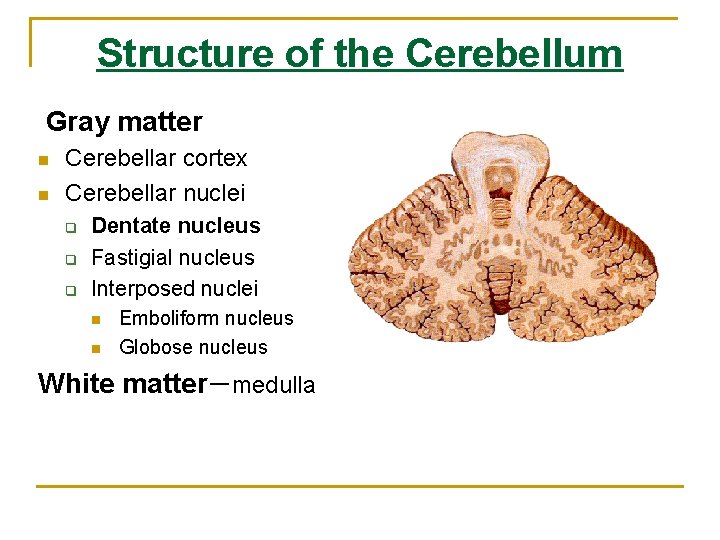
Structure of the Cerebellum Gray matter n n Cerebellar cortex Cerebellar nuclei q q q Dentate nucleus Fastigial nucleus Interposed nuclei n n Emboliform nucleus Globose nucleus White matter-medulla
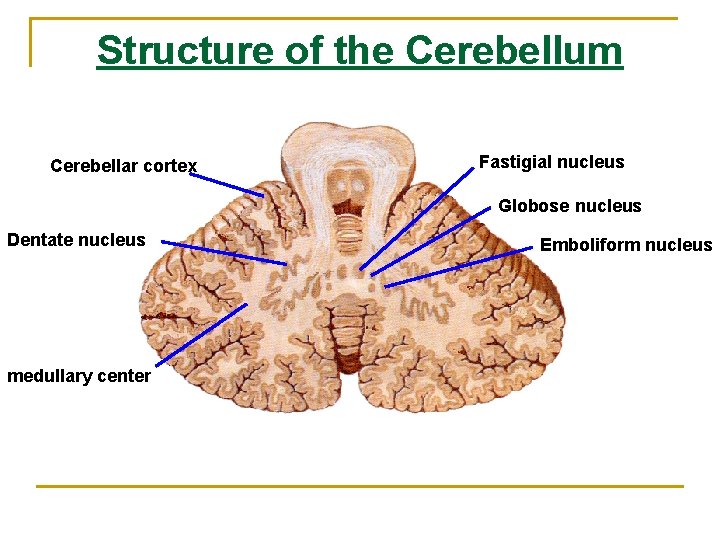
Structure of the Cerebellum Cerebellar cortex Fastigial nucleus Globose nucleus Dentate nucleus medullary center Emboliform nucleus
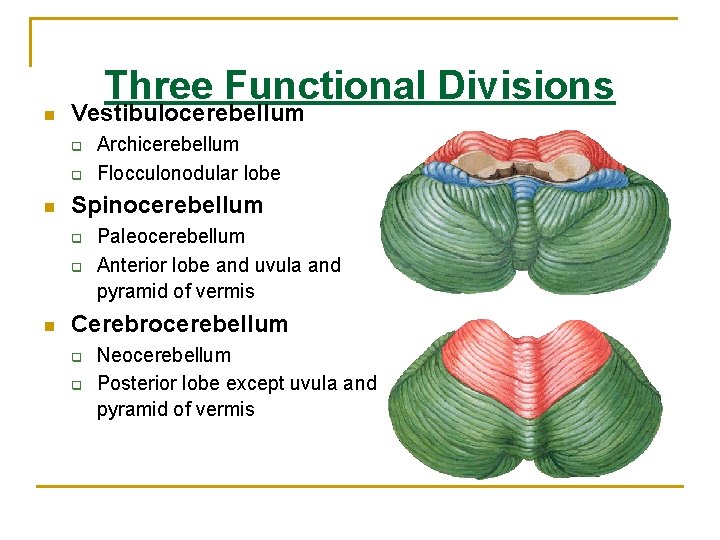
n Three Functional Divisions Vestibulocerebellum q q n Spinocerebellum q q n Archicerebellum Flocculonodular lobe Paleocerebellum Anterior lobe and uvula and pyramid of vermis Cerebrocerebellum q q Neocerebellum Posterior lobe except uvula and pyramid of vermis
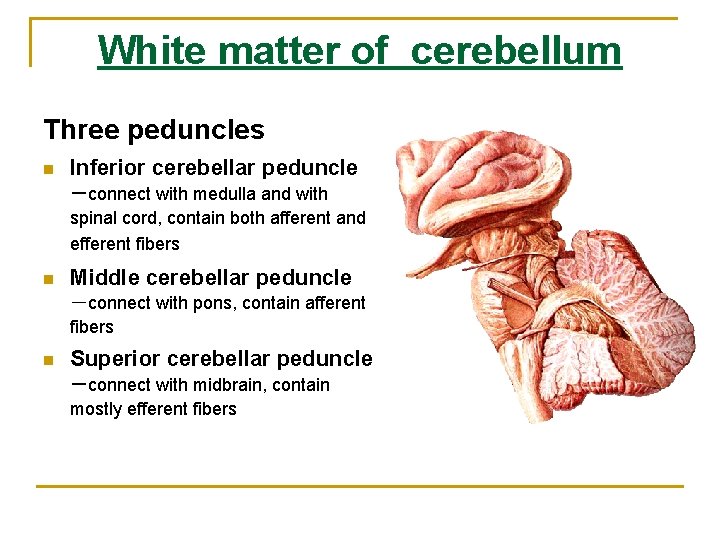
White matter of cerebellum Three peduncles n Inferior cerebellar peduncle -connect with medulla and with spinal cord, contain both afferent and efferent fibers n Middle cerebellar peduncle -connect with pons, contain afferent fibers n Superior cerebellar peduncle -connect with midbrain, contain mostly efferent fibers
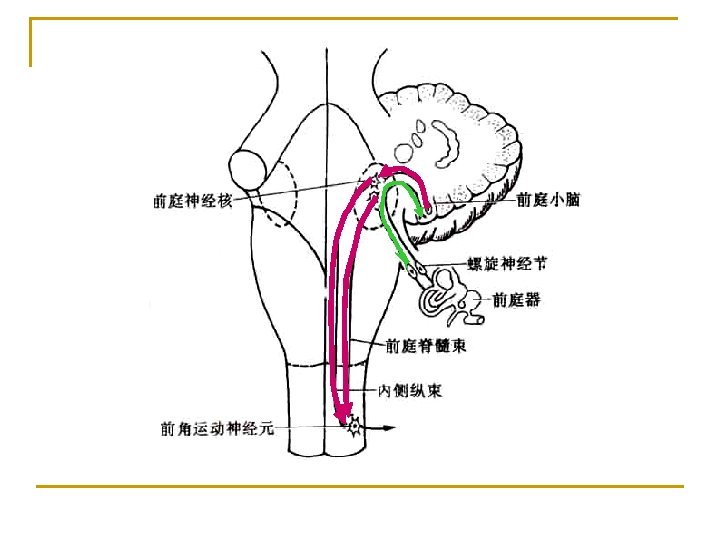
Connections and Function of Cerebellum Archicerebellum (Vestibulocerebellum) n Connections q q n Afferents: receive input from vestibular nuclei and primary vestibular Efferents: projects to the vestibular nucleus → vestibulospinal tract and medial longitudinal fasciculus → motor neurons of anterior horn Function: involved in eye movements and maintain balance
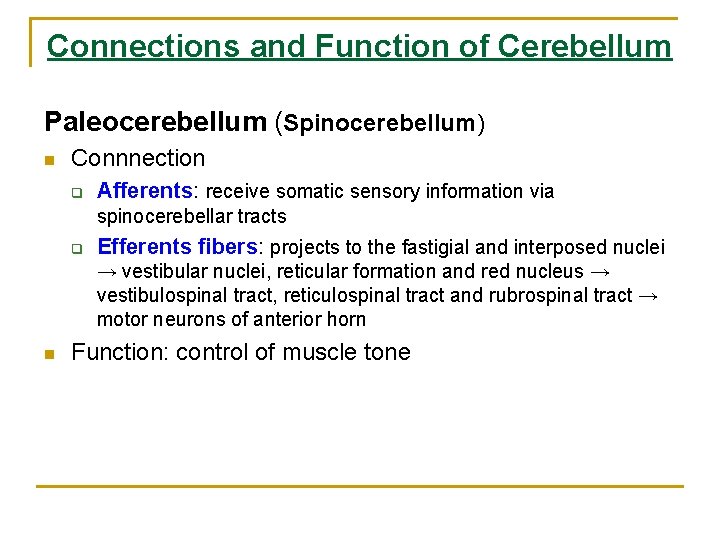
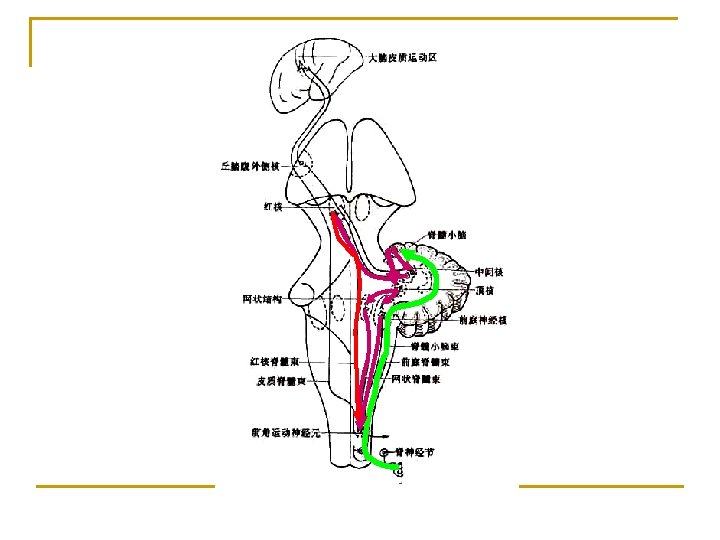
Connections and Function of Cerebellum Paleocerebellum (Spinocerebellum) n Connnection q Afferents: receive somatic sensory information via spinocerebellar tracts q Efferents fibers: projects to the fastigial and interposed nuclei → vestibular nuclei, reticular formation and red nucleus → vestibulospinal tract, reticulospinal tract and rubrospinal tract → motor neurons of anterior horn n Function: control of muscle tone
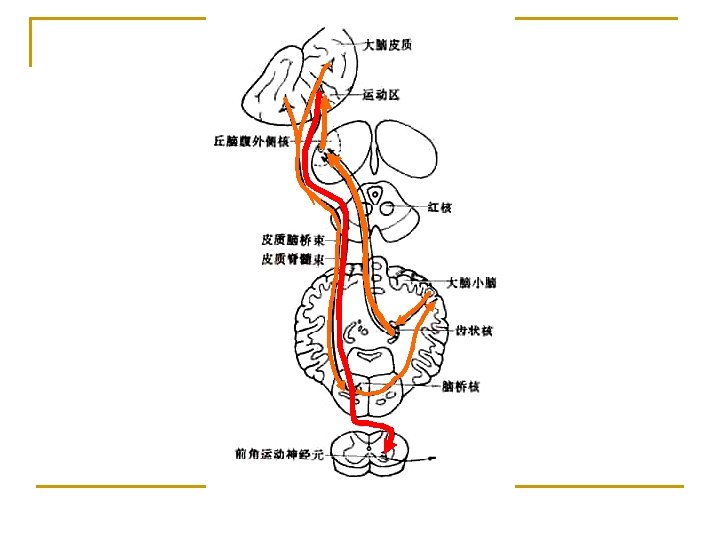
Connections and Function of Cerebellum n Neocerebellum (Cerebrocerebellum) n Connection q Afferents: receives input from the cerebral cortex via a relay in pontine nuclei q Efferents: projects to dentate nucleus → dorsal thalamus and red nucleus→ primary motor cortex → corticospinal tract → motor neurons of anterior horn n Function: coordinator of precise movements
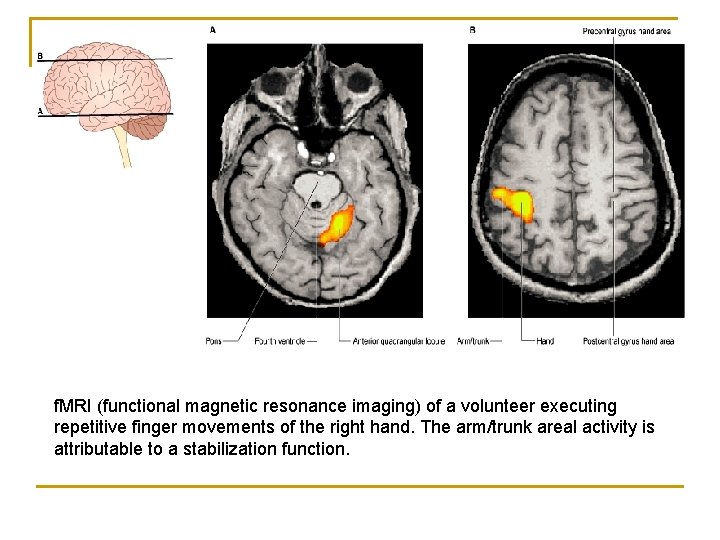
f. MRI (functional magnetic resonance imaging) of a volunteer executing repetitive finger movements of the right hand. The arm/trunk areal activity is attributable to a stabilization function.
- Slides: 18