
The Central Nervous System Meninges 1 Definition Protective
- Slides: 31
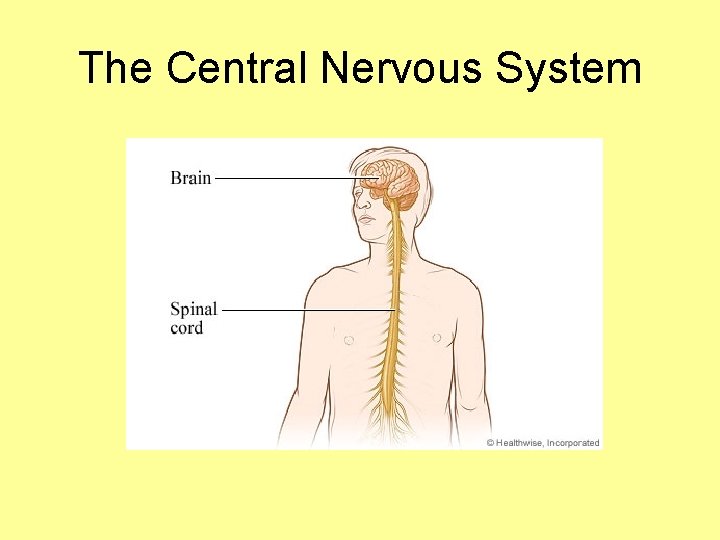
The Central Nervous System
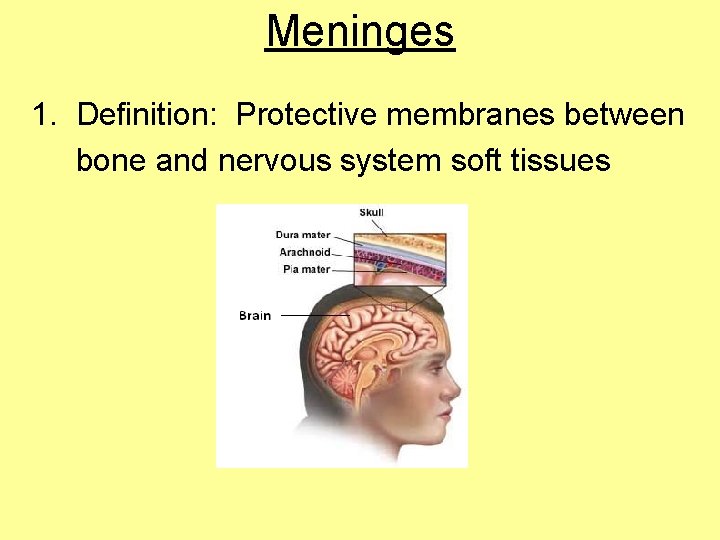
Meninges 1. Definition: Protective membranes between bone and nervous system soft tissues
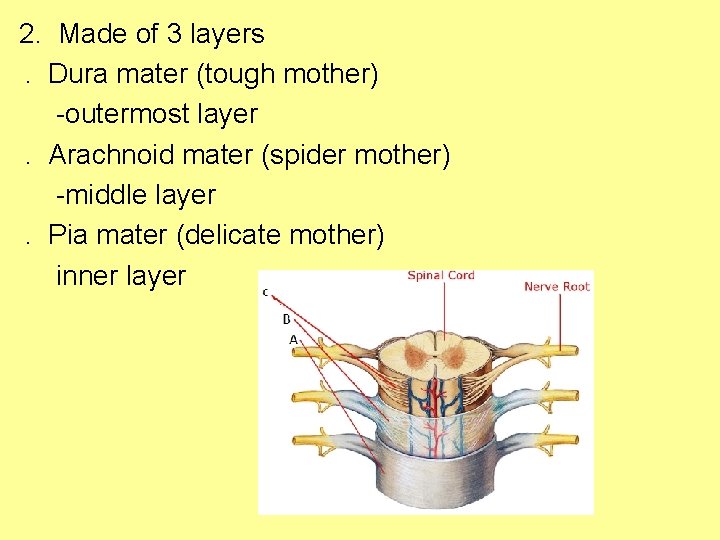
2. Made of 3 layers . Dura mater (tough mother) -outermost layer . Arachnoid mater (spider mother) -middle layer . Pia mater (delicate mother) inner layer
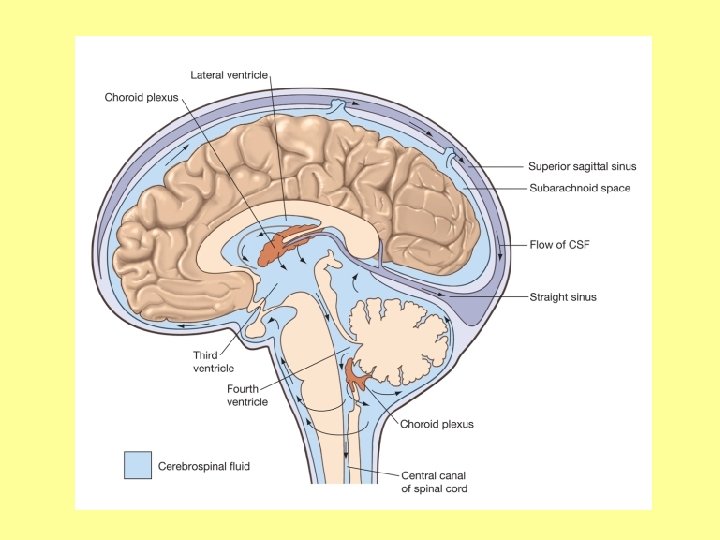
Cerebrospinal fluid (CSF) 1. Definition: a clear watery liquid produced in the ventricles of the brain.
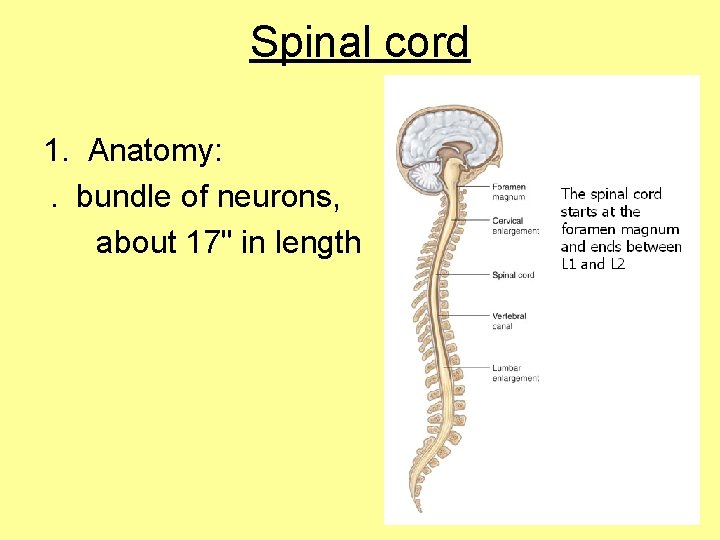
Spinal cord 1. Anatomy: . bundle of neurons, about 17" in length
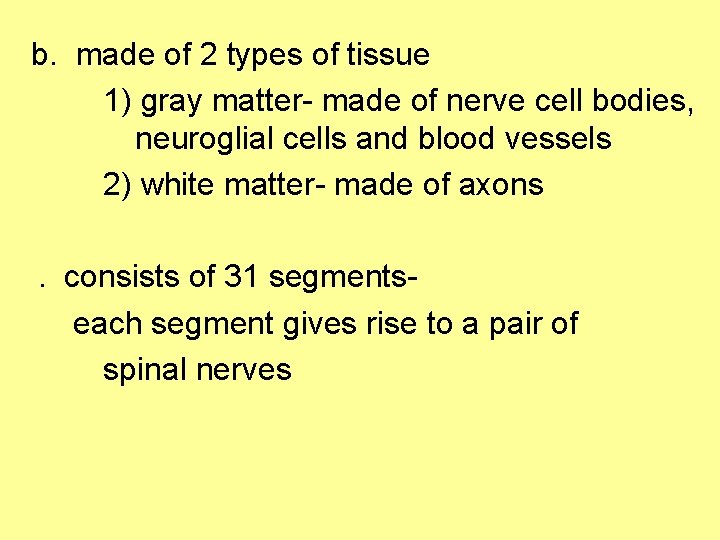
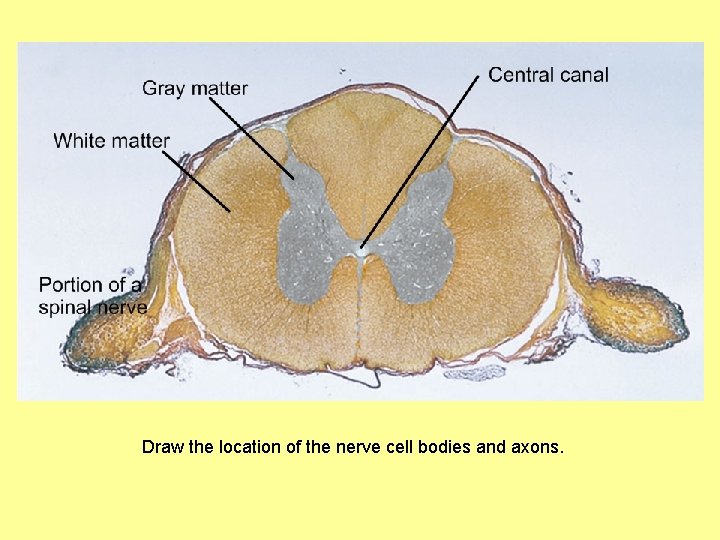
b. made of 2 types of tissue 1) gray matter- made of nerve cell bodies, neuroglial cells and blood vessels 2) white matter- made of axons . consists of 31 segments each segment gives rise to a pair of spinal nerves
Draw the location of the nerve cell bodies and axons.
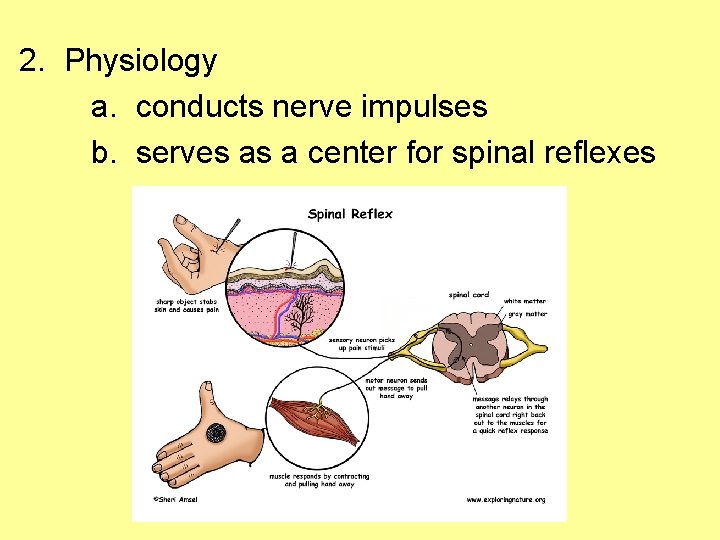
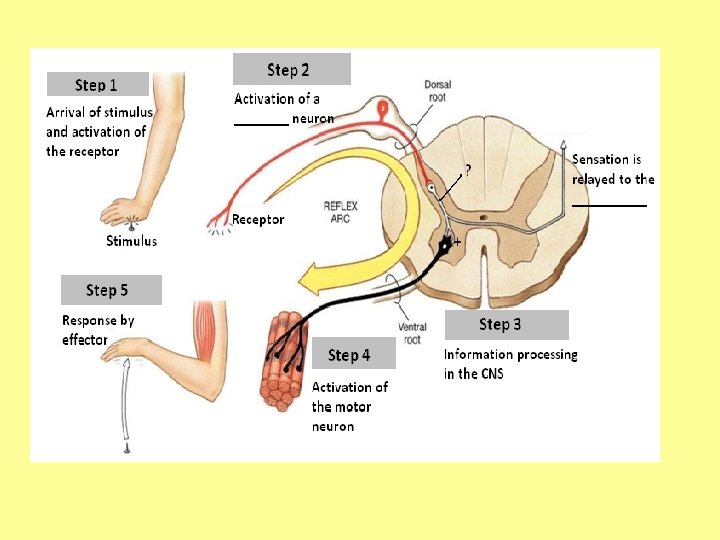
2. Physiology a. conducts nerve impulses b. serves as a center for spinal reflexes
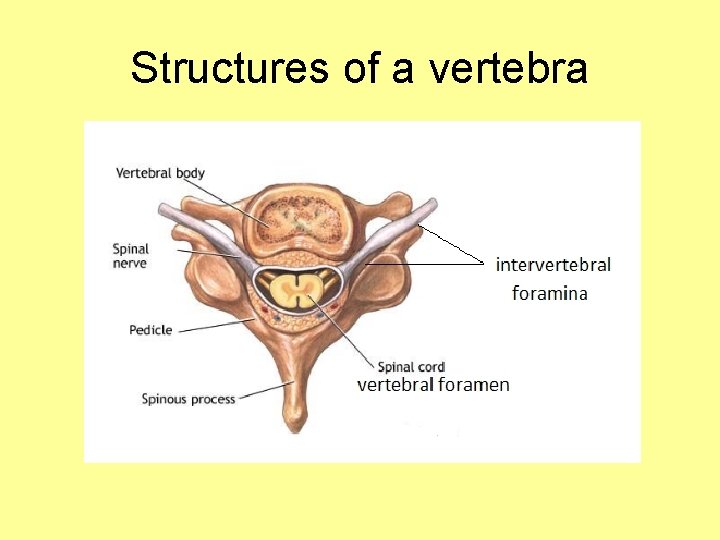
Structures of a vertebra
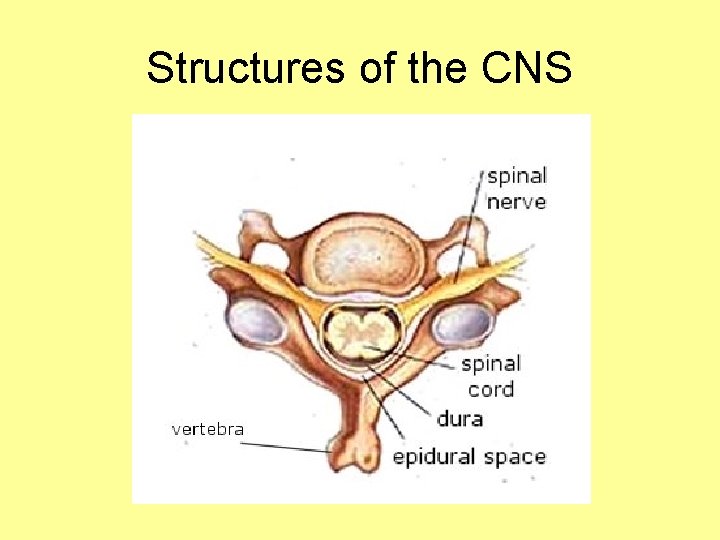
Structures of the CNS
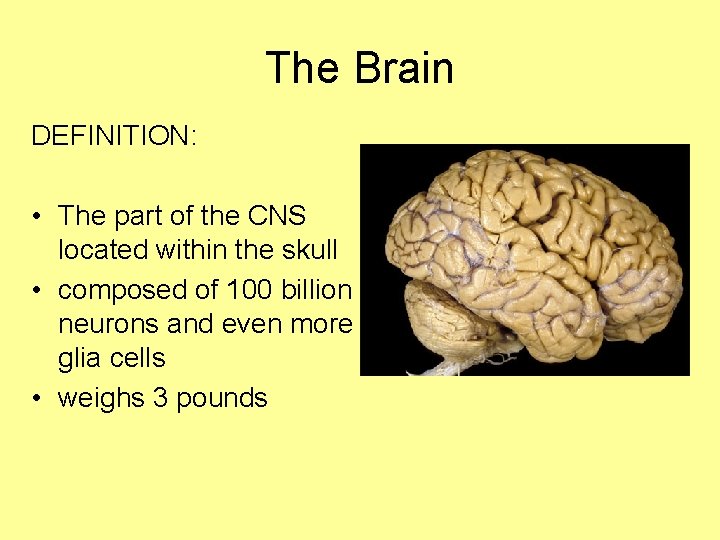
The Brain DEFINITION: • The part of the CNS located within the skull • composed of 100 billion neurons and even more glia cells • weighs 3 pounds
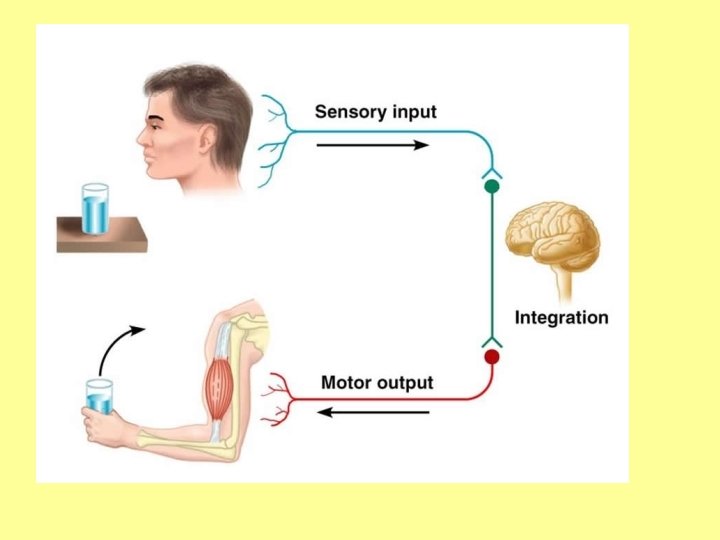
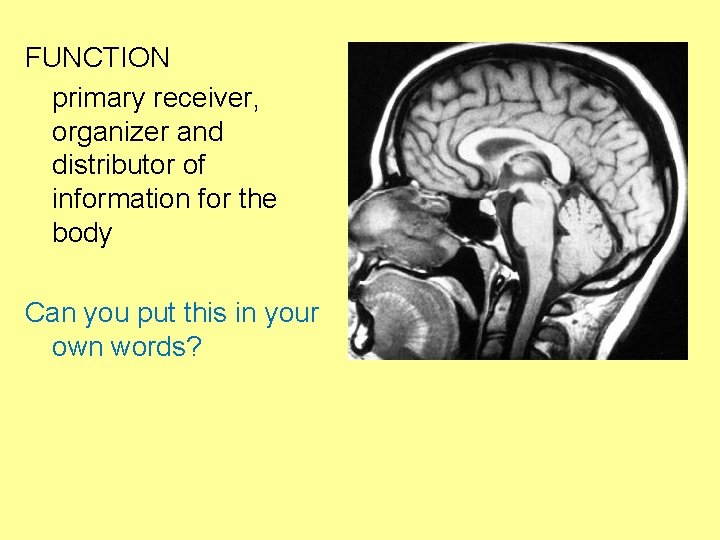
FUNCTION primary receiver, organizer and distributor of information for the body Can you put this in your own words?
Spinal cord
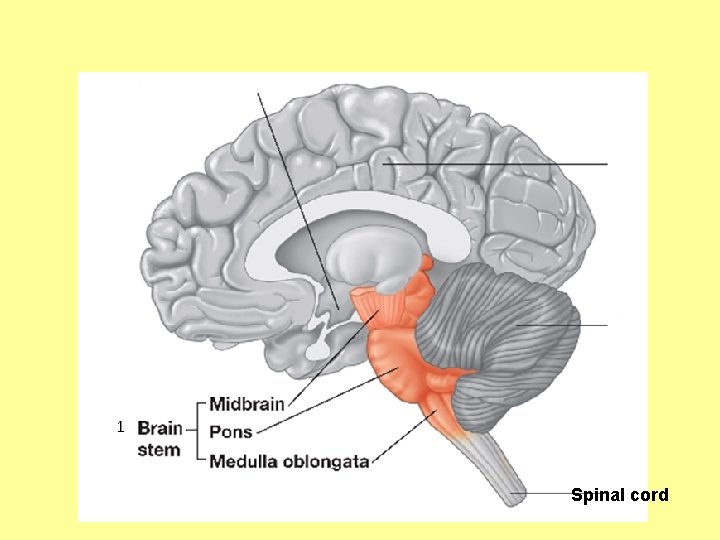
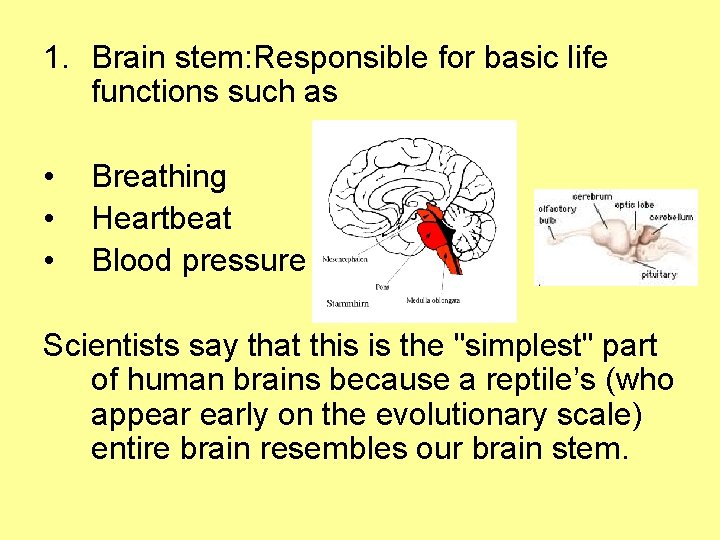
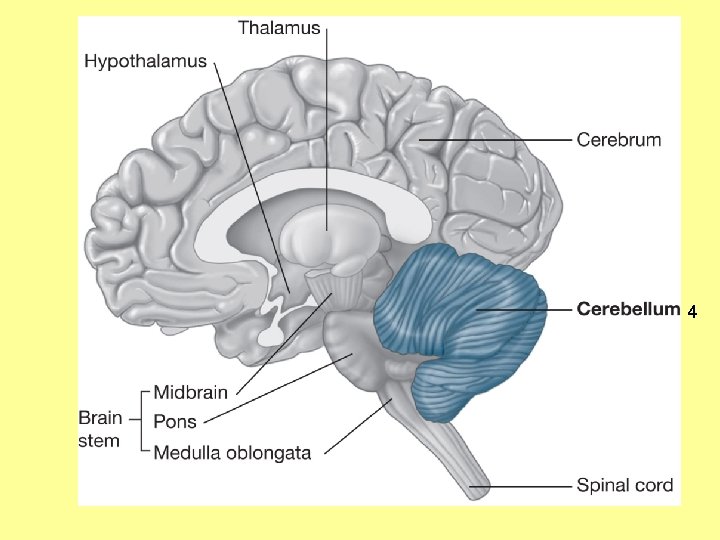
1. Brain stem: Responsible for basic life functions such as • • • Breathing Heartbeat Blood pressure Scientists say that this is the "simplest" part of human brains because a reptile’s (who appear early on the evolutionary scale) entire brain resembles our brain stem.
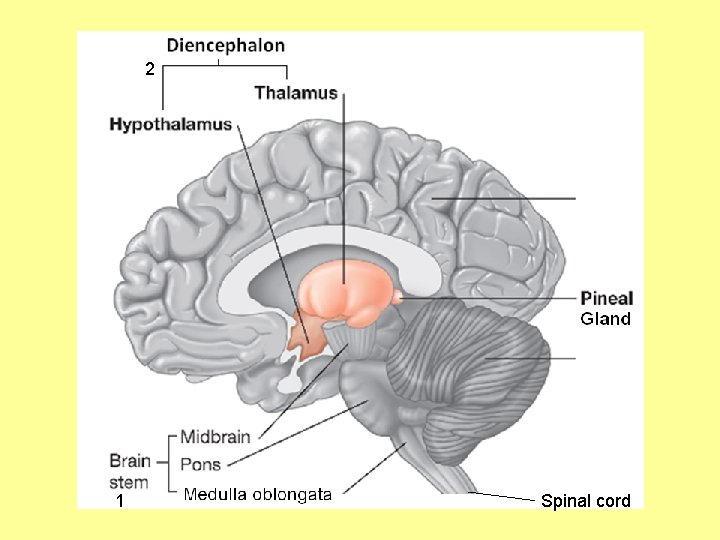
2 1 Spinal cord
Thalamus -interprets all senses except smell -synapses for voluntary movement Hypothalamus -controls the autonomic nervous system -coordinates the nervous and endocrine systems
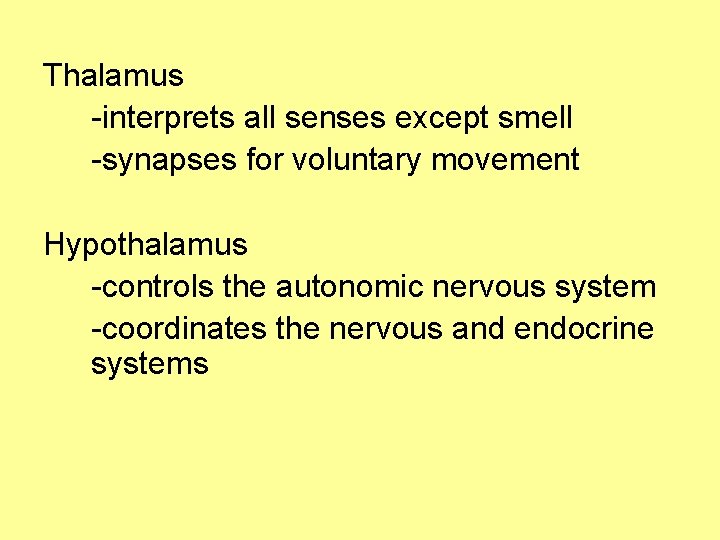
3
Cerebrum (7/8 of human brain) Associated with higher brain functions such as thought and action.
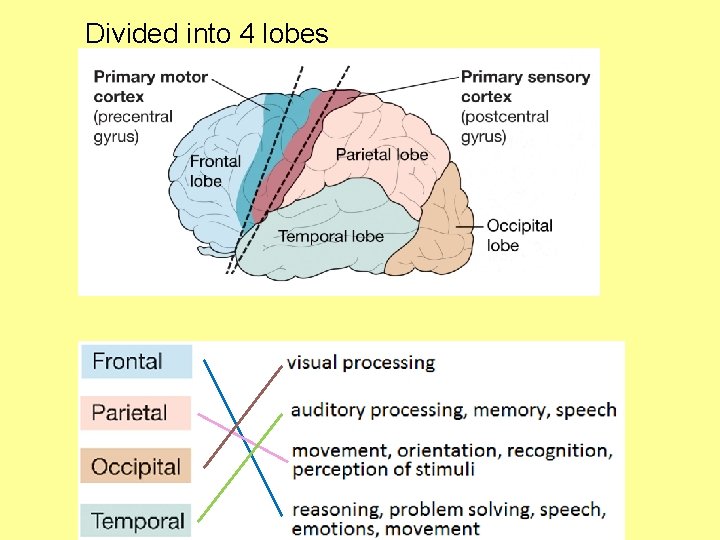
Divided into 4 lobes
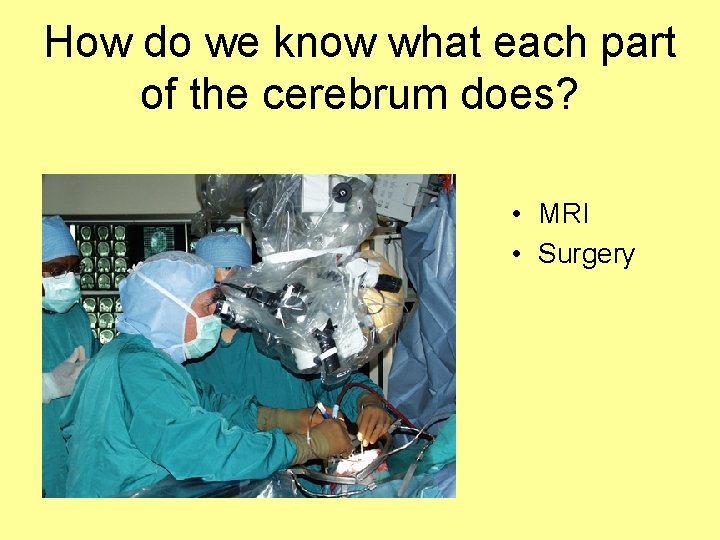
How do we know what each part of the cerebrum does? • MRI • Surgery
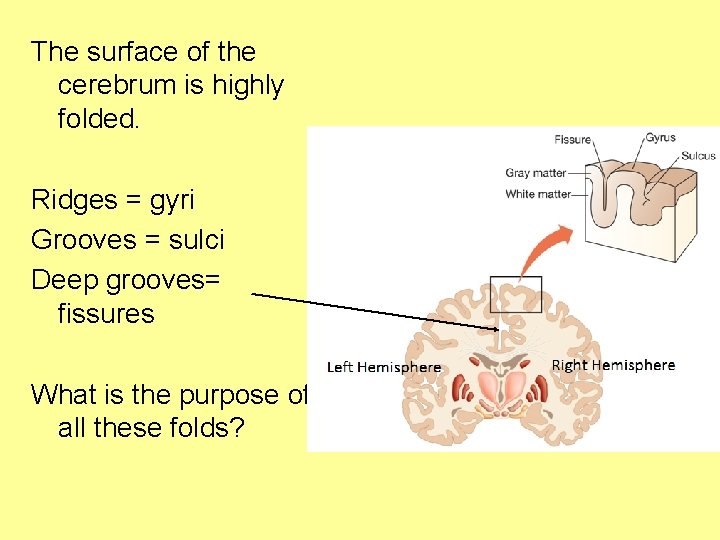
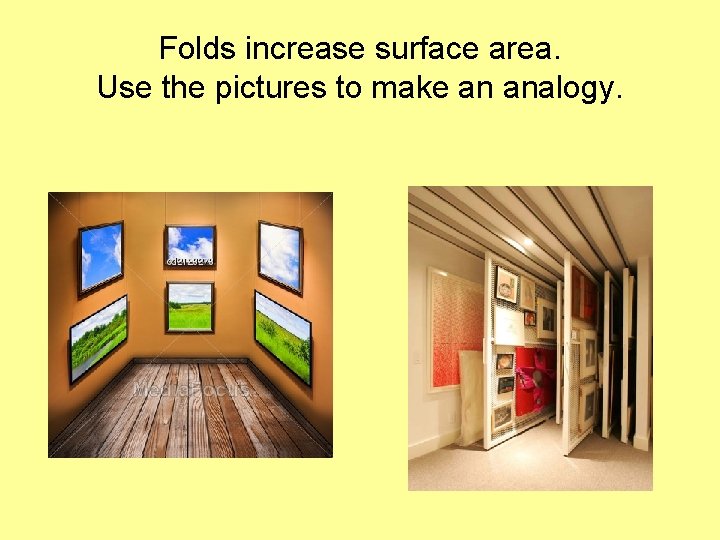
The surface of the cerebrum is highly folded. Ridges = gyri Grooves = sulci Deep grooves= fissures What is the purpose of all these folds?
Folds increase surface area. Use the pictures to make an analogy.
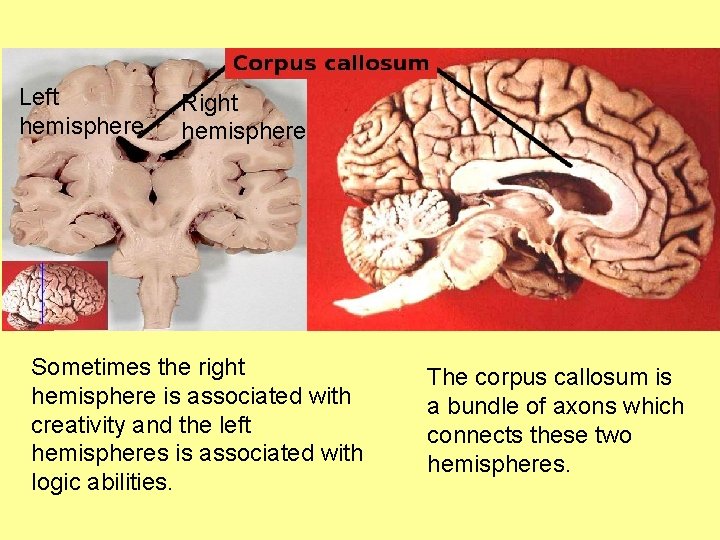
Left hemisphere Right hemisphere Sometimes the right hemisphere is associated with creativity and the left hemispheres is associated with logic abilities. The corpus callosum is a bundle of axons which connects these two hemispheres.
4
Cerebellum (Little brain) -associated with regulation and coordination of movement, posture, and balance
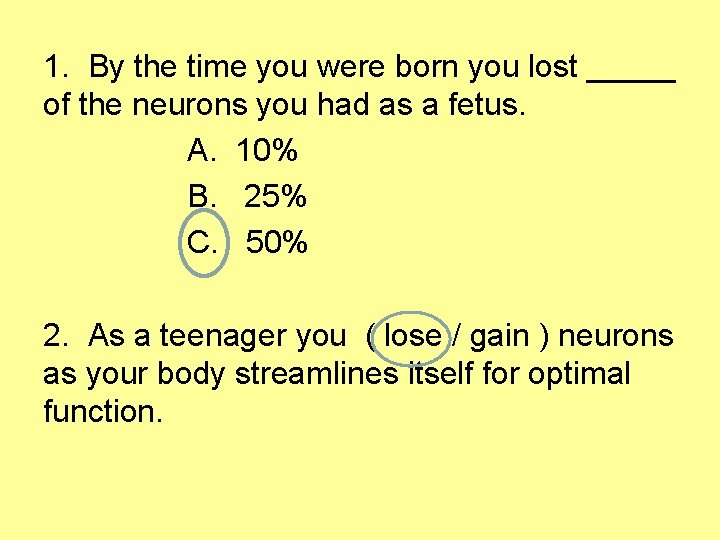
1. By the time you were born you lost _____ of the neurons you had as a fetus. A. 10% B. 25% C. 50% 2. As a teenager you ( lose / gain ) neurons as your body streamlines itself for optimal function.
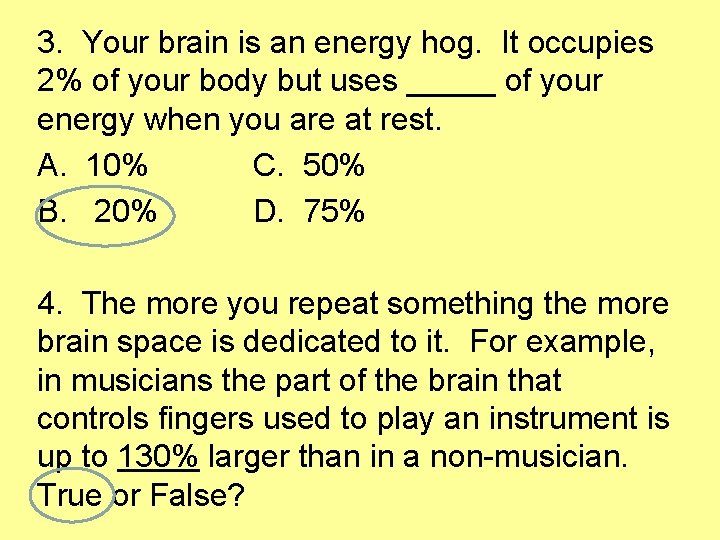
3. Your brain is an energy hog. It occupies 2% of your body but uses _____ of your energy when you are at rest. A. 10% C. 50% B. 20% D. 75% 4. The more you repeat something the more brain space is dedicated to it. For example, in musicians the part of the brain that controls fingers used to play an instrument is up to 130% larger than in a non-musician. True or False?
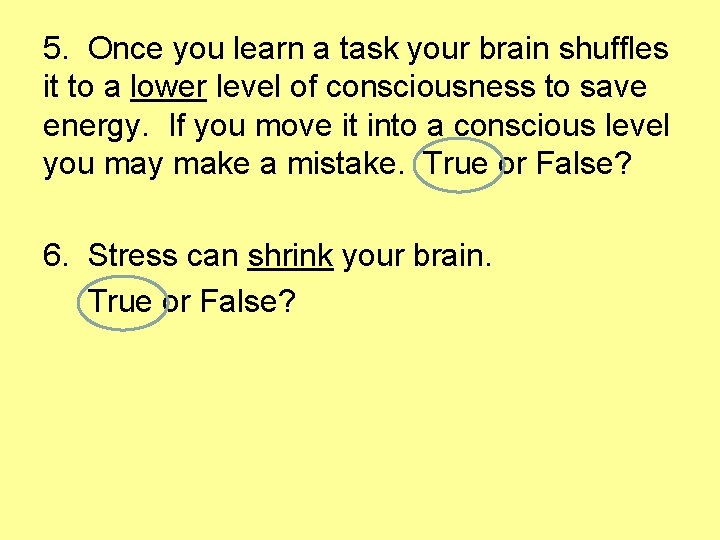
5. Once you learn a task your brain shuffles it to a lower level of consciousness to save energy. If you move it into a conscious level you may make a mistake. True or False? 6. Stress can shrink your brain. True or False?