
THE CENTRAL DOGMA Information Transfer DNA Blueprint for
THE CENTRAL DOGMA Information Transfer

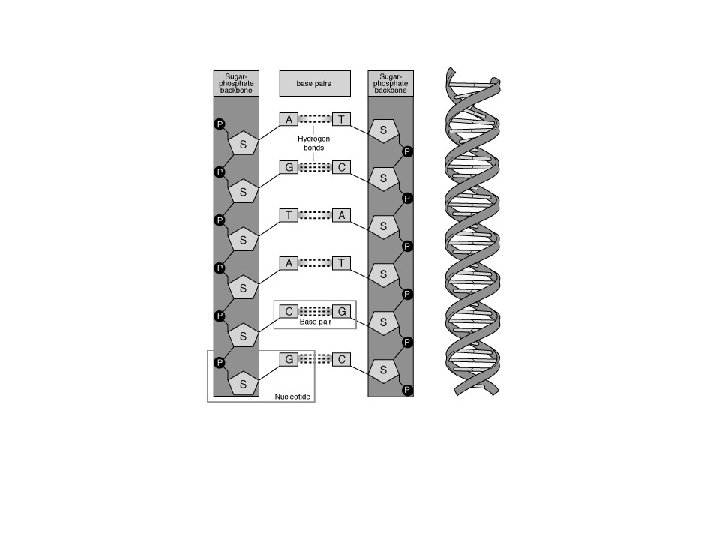
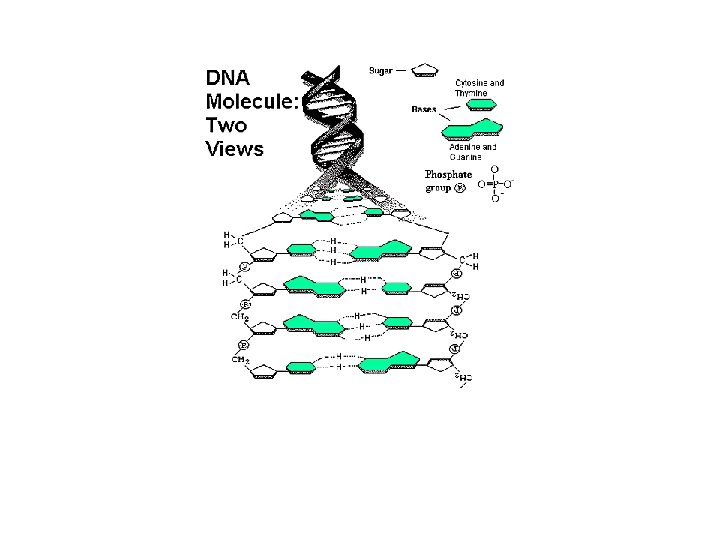
DNA • Blueprint for protein synthesis • Polymer of nucleotides • Nucleotide = a 5 carbon sugar (deoxyribose), a phosphate group and a nitrogenous base (adenine, thymine, cytosine and guanine) • A + G = purines = 2 rings; T and C = pyrimidines = 1 ring • Base pairing rules = C + G and A + T
DNA Double Helix • 2 nucleotide chains wrapped in a double spiral (twisted ladder) • Structure discovered by Watson, Crick and Wilkins – Nobel Prize; Rosalind Franklin • Alternating sugar - phosphate – sugar – phosphate …. . Covalently bonded – make up sides of ladder (AKA backbone) • Bases covalently bonded to sugar; rungs of ladder are A, T, G and C hydrogen bonded
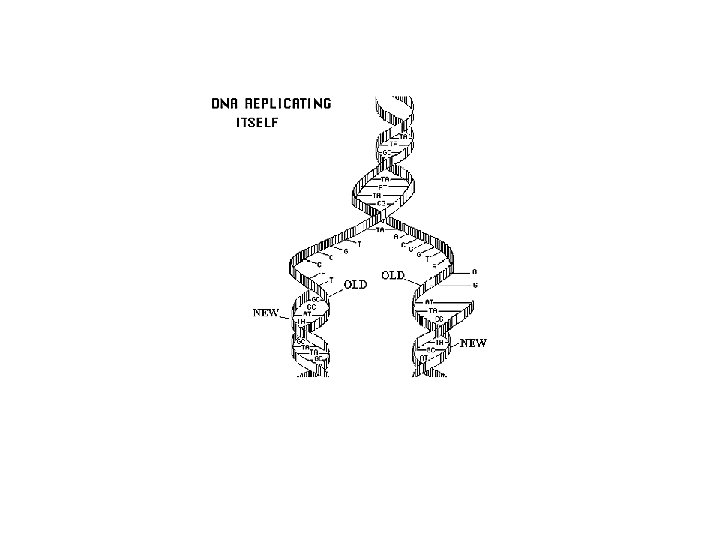
DNA Replication • Process by which DNA is copied – S Phase of Interphase • 2 nucleotide chains separate (helicase breaks H bonds) -> replication fork • Topoisomerase = allows swiveling by nicking strand • RNA Primase = sets down about 10 nucleotides first (complementary)
• DNA Polymerase binds and adds complementary nucleotides to parent strand – can only add 5’ -> 3’ • Discontinuous replication on lagging strand – Okazaki fragments – eventually linked together by ligase • Other strand is leading strand; replication is continuous • When replication is completed, 2 new exact copies of original DNA molecule are produced -> cell can now divide • Replication = accurate; repair enzymes fix mutations (changes in nucleotide sequence)

Sites to Visit • http: //highered. mcgrawhill. com/sites/0072437316/student_view 0/ch apter 14/animations. html# • http: //bcs. whfreeman. com/thelifewire/conte nt/chp 11/1102003. html
- Slides: 10