
The Central Dogma Chapter 8 DNA to Proteins


- Slides: 26
The Central Dogma Chapter 8 DNA to Proteins
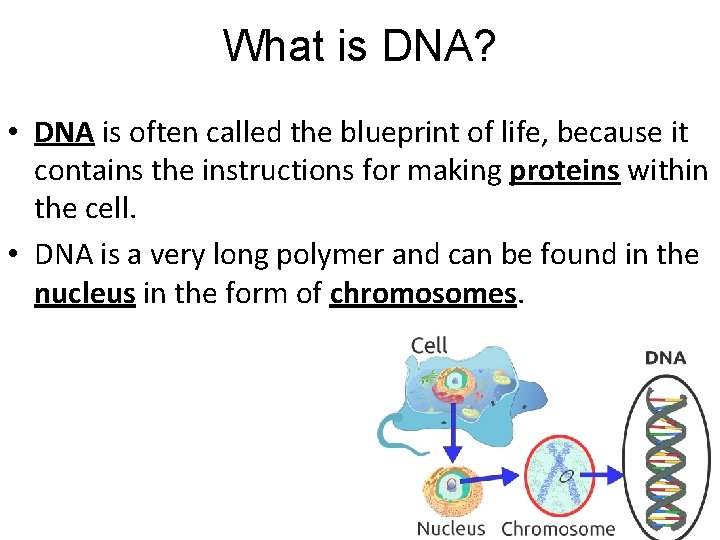
What is DNA? • DNA is often called the blueprint of life, because it contains the instructions for making proteins within the cell. • DNA is a very long polymer and can be found in the nucleus in the form of chromosomes.
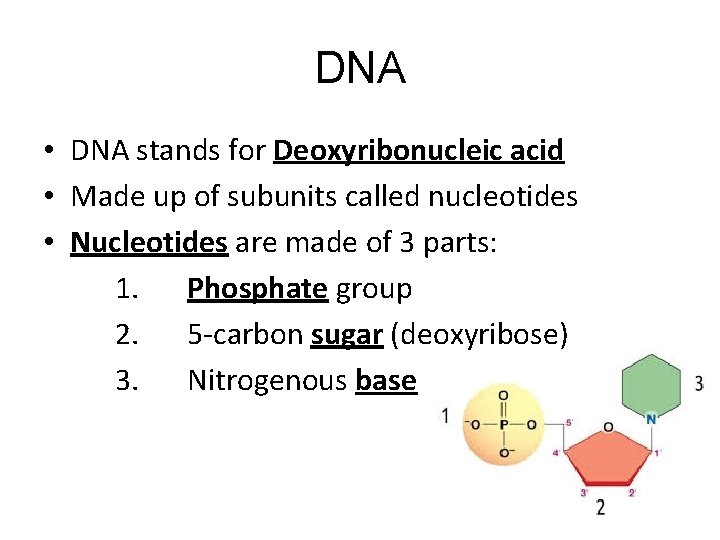
DNA • DNA stands for Deoxyribonucleic acid • Made up of subunits called nucleotides • Nucleotides are made of 3 parts: 1. Phosphate group 2. 5 -carbon sugar (deoxyribose) 3. Nitrogenous base
The Shape of the Molecule • While the composition of DNA had been known since the 1920’s, the shape of the molecule was a mystery. • Thanks to the work of Rosalind Franklin, Francis Crick, and James Watson the true shape was released in 1953. • Using x-ray photographs and the chemical structure, the double helix was revealed.
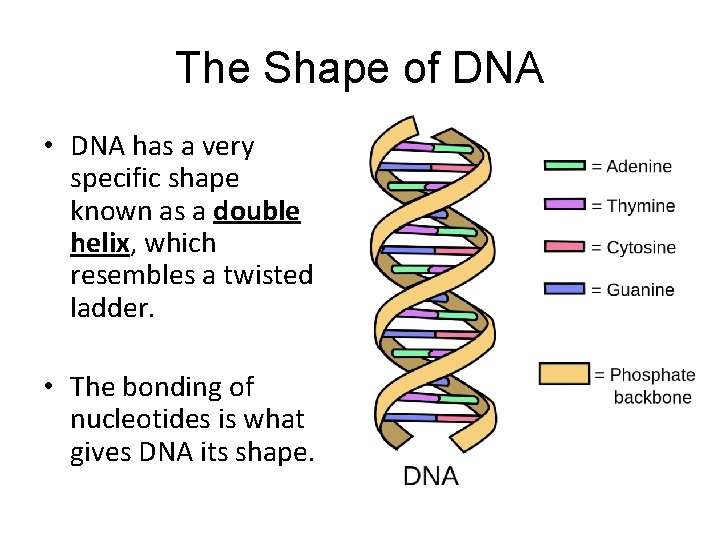
The Shape of DNA • DNA has a very specific shape known as a double helix, which resembles a twisted ladder. • The bonding of nucleotides is what gives DNA its shape.
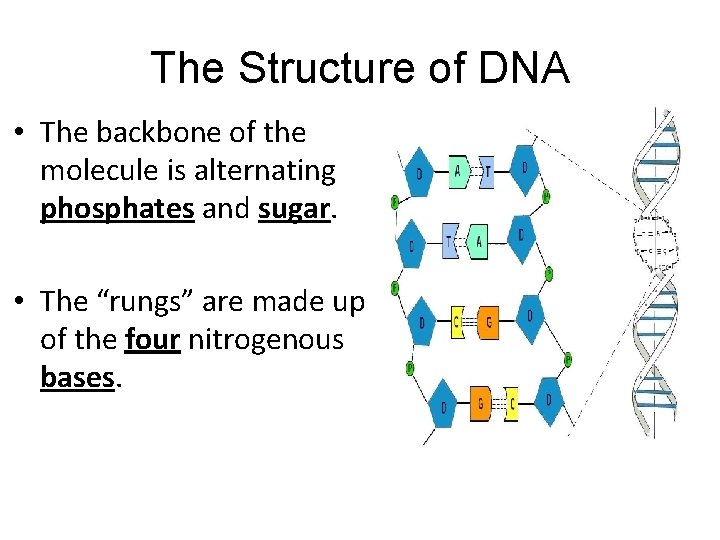
The Structure of DNA • The backbone of the molecule is alternating phosphates and sugar. • The “rungs” are made up of the four nitrogenous bases.
Chargaff’s Rule • Erwin Chargaff discovered that the proportion of the bases in DNA can differ, but the bases do occur in patterns. • Adenine and Thymine always join together A T • Cytosine and Guanine always join together C G • Example: If there is 30% Adenine, how much Cytosine is present?
There’s more? !? ! • Now that the shape and proportions could be identified, we can better understand how DNA replicates. • Replication is a key step in cellular division. (synthesis or S phase) • Replication assures that every cell has a complete set of identical genetic information.
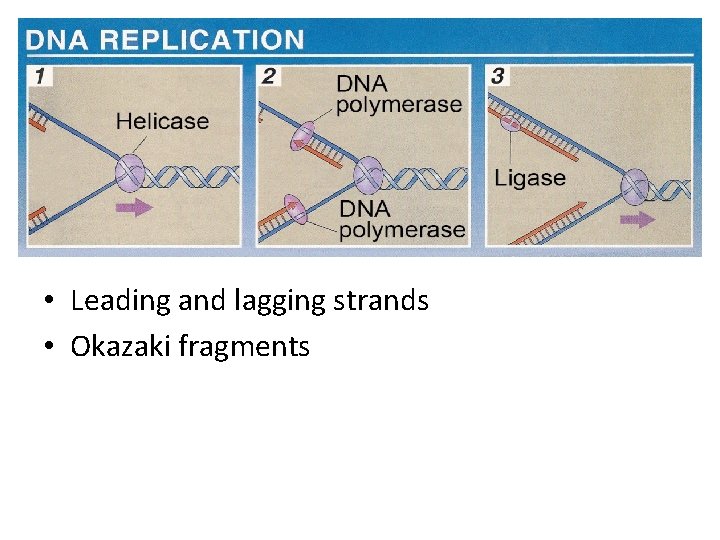
DNA Replication • In order for DNA to be replicated, enzymes and other proteins must perform some important tasks. • Enzymes needed for replication: – Helicase-unzips the original strand of DNA – DNA polymerase-binds to nucleotides to the original strands – Ligase-reconnect the DNA fragments
Step 1 of Replication • Helicases unzips the double helix by breaking the hydrogen bonds between base. • This is done at different locations on the chromosome called origins of replication. • Two strands open forming Replication Forks (Yshaped region)
Step 2 of Replication • New strands grow at the forks when DNA polymerase binds free floating nucleotides to the original strands. • These new strands are complementary to the original strands. • Enzymes proofread and correct any mistakes before continuing.
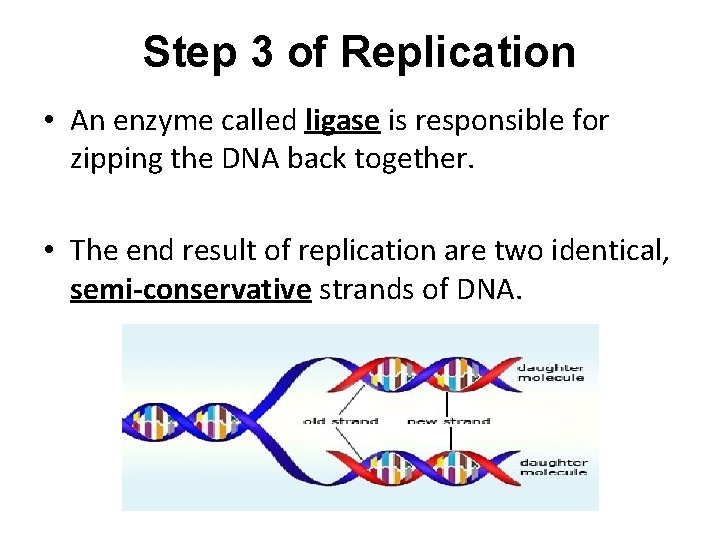
Step 3 of Replication • An enzyme called ligase is responsible for zipping the DNA back together. • The end result of replication are two identical, semi-conservative strands of DNA.
• Leading and lagging strands • Okazaki fragments
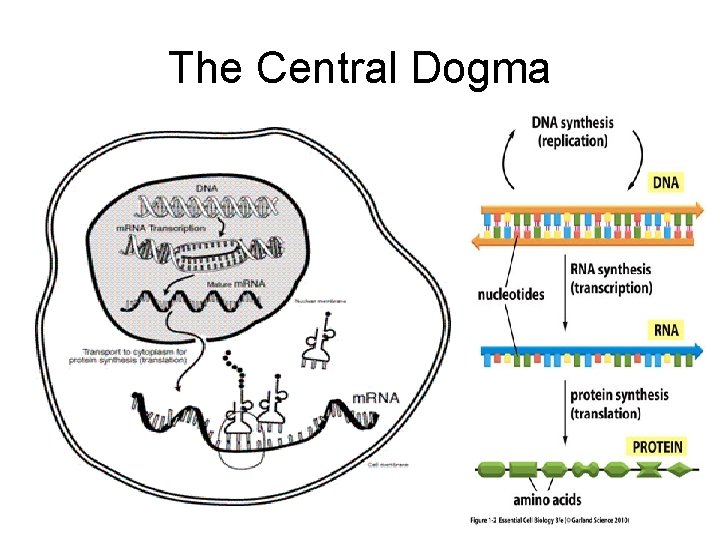
Flow of Information • Once DNA has been replicated, the information must be converted into an intermediate message. • This process is known as Transcription. • The genetic code is re-written from DNA to RNA.
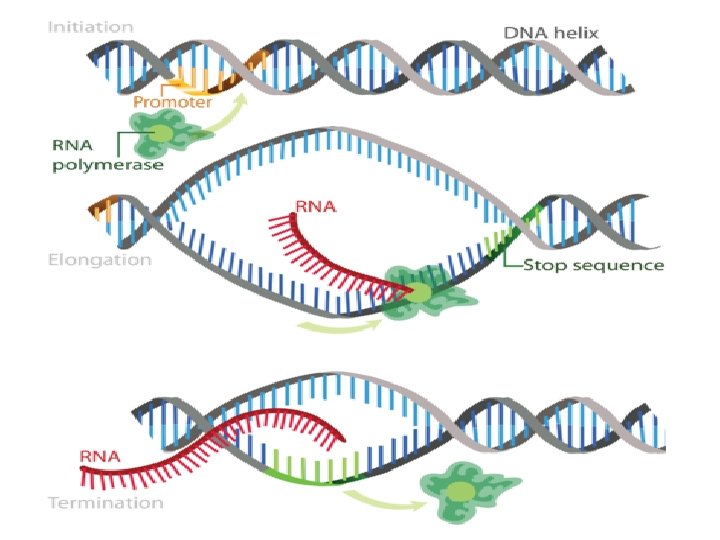
Step 1 of Transcription • Transcription is the process of copying a DNA sequence to produce a complementary strand of RNA. • RNA polymerase, with the help of other proteins, recognizes a start site (promoter) and begins unwinding a short segment of DNA. • This step is known as initiation.
Step 2 of Transcription • Using only one strand of the DNA as a template a strand of RNA is made. • RNA uses the same base-pairing rules as DNA with one exception, the base thymine is replaced with uracil. • This step is known as elongation.
Step 3 of Transcription • Once the entire gene has been transcribed, the new RNA strand will detach and eventually leave the nucleus. • This step is known as termination. • More than one type of RNA can be made from this process: – Messenger RNA (m. RNA)-intermediate message – Ribosomal RNA (r. RNA)-forms ribosomes – Transfer RNA (t. RNA)-transfers amino acids
Protein Production • Once the strand of m. RNA has been made through transcription, it will leave the nucleus and deliver it’s message to a ribosome. • The process of Translation uses that message as instructions for building the proteins required in your body.
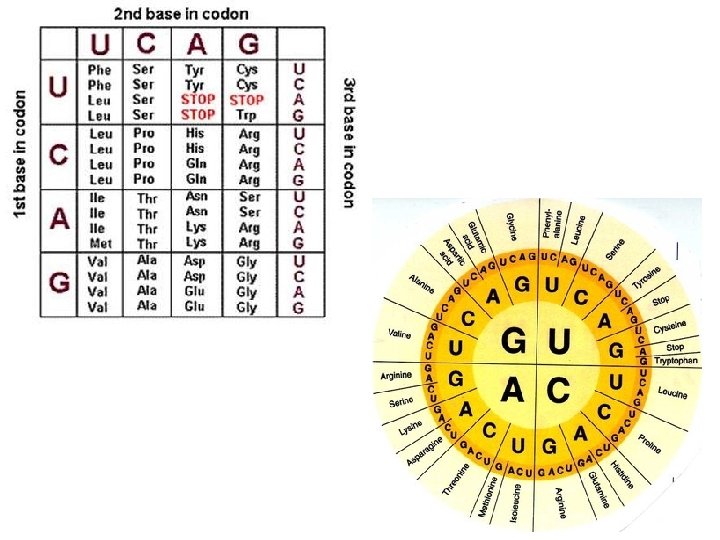
Translation • The language of proteins are different from DNA and RNA, so we have to translate the code. • Bases are read in groups of threes, called codons. Each codon codes for one of the twenty amino acids used to build proteins. • This is called the triplet code, there are 64 different codons including stop and start.
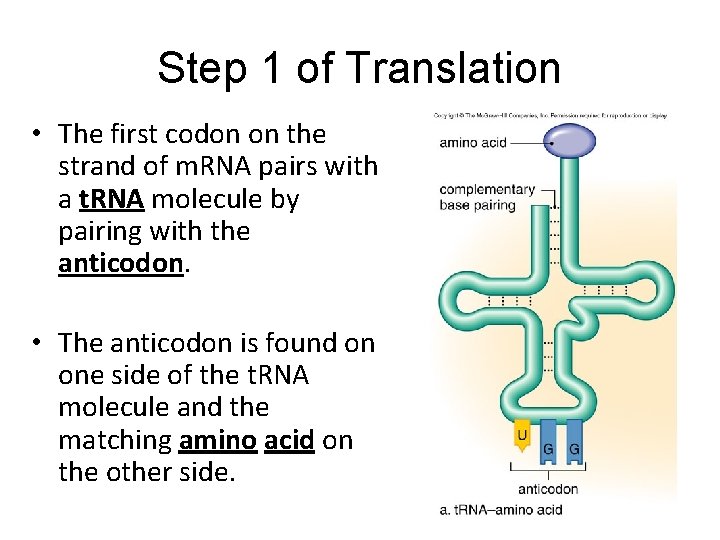
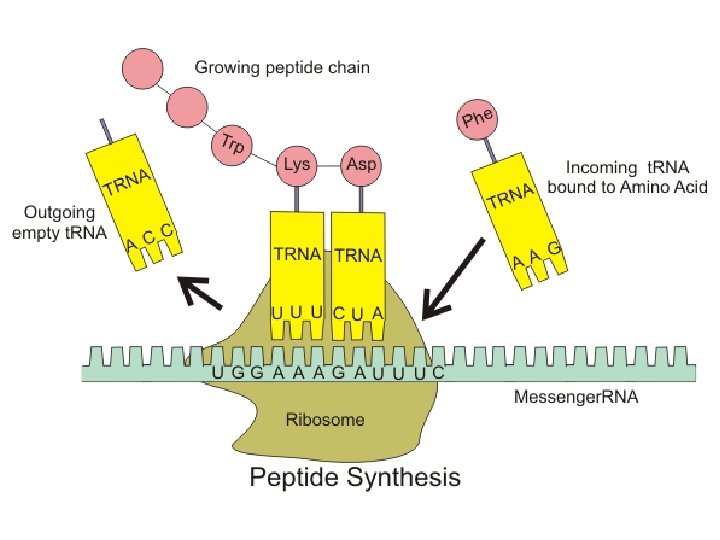
Step 1 of Translation • The first codon on the strand of m. RNA pairs with a t. RNA molecule by pairing with the anticodon. • The anticodon is found on one side of the t. RNA molecule and the matching amino acid on the other side.
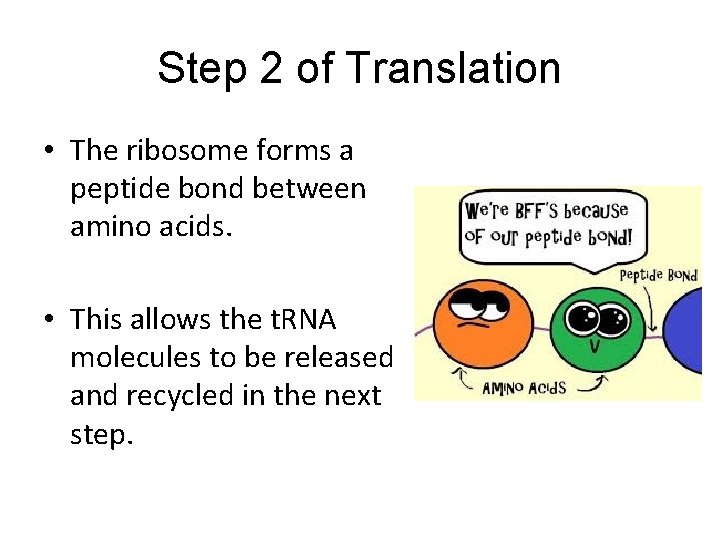
Step 2 of Translation • The ribosome forms a peptide bond between amino acids. • This allows the t. RNA molecules to be released and recycled in the next step.
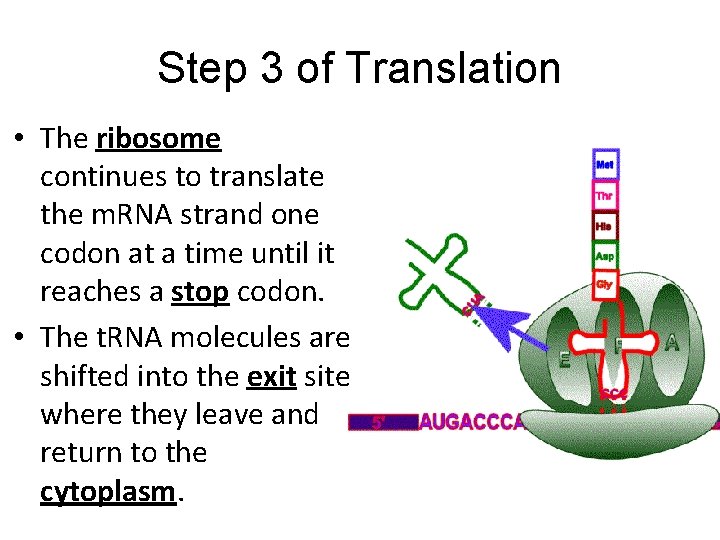
Step 3 of Translation • The ribosome continues to translate the m. RNA strand one codon at a time until it reaches a stop codon. • The t. RNA molecules are shifted into the exit site where they leave and return to the cytoplasm.
The Central Dogma