
THE CENTRAL AND PERIPHERAL NERVOUS SYSTEMS Recall brain
THE CENTRAL AND PERIPHERAL NERVOUS SYSTEMS
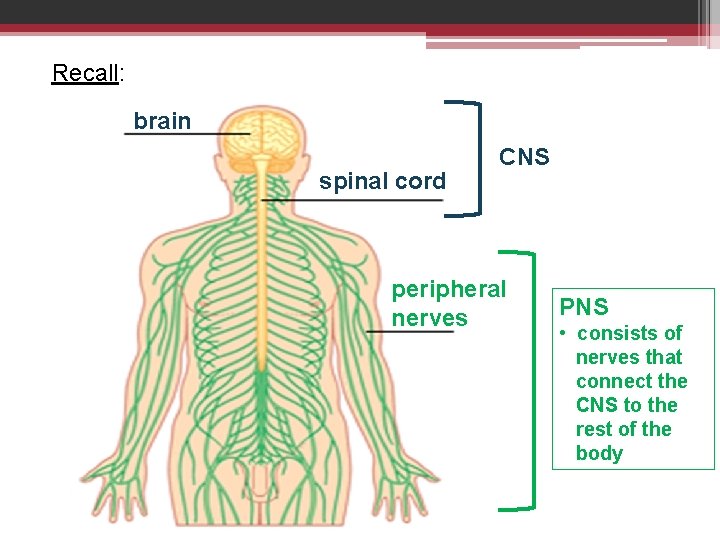
Recall: brain spinal cord CNS peripheral nerves PNS • consists of nerves that connect the CNS to the rest of the body
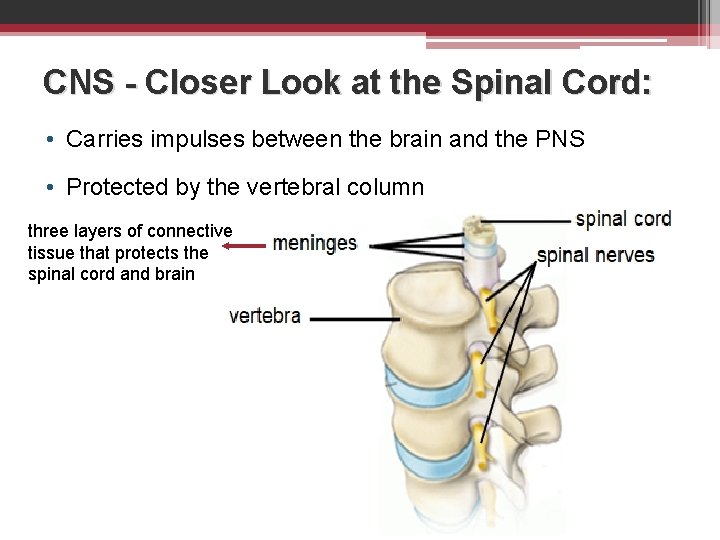
CNS - Closer Look at the Spinal Cord: • Carries impulses between the brain and the PNS • Protected by the vertebral column three layers of connective tissue that protects the spinal cord and brain
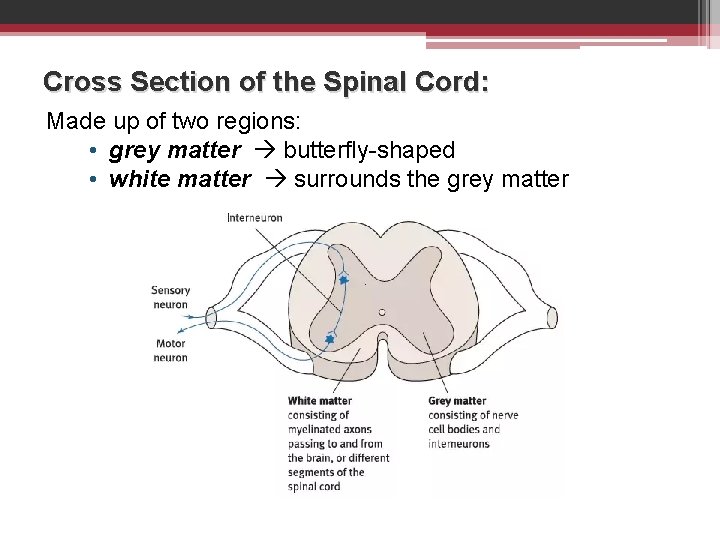
Cross Section of the Spinal Cord: Made up of two regions: • grey matter butterfly-shaped • white matter surrounds the grey matter
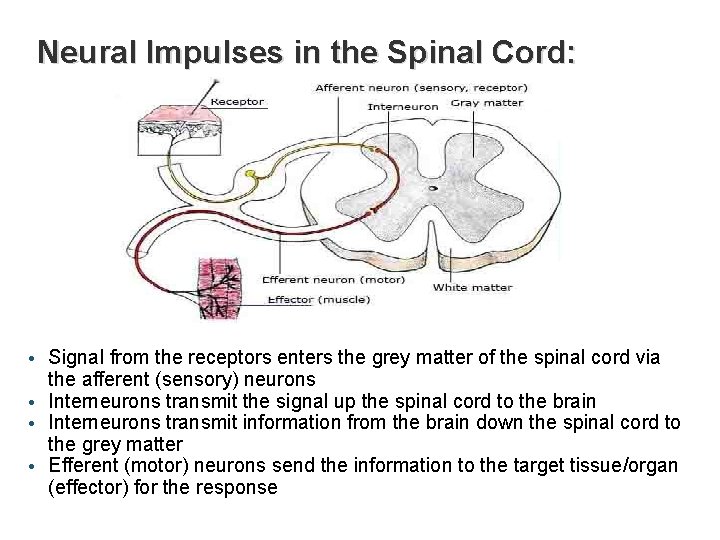
Neural Impulses in the Spinal Cord: • Signal from the receptors enters the grey matter of the spinal cord via the afferent (sensory) neurons • Interneurons transmit the signal up the spinal cord to the brain • Interneurons transmit information from the brain down the spinal cord to the grey matter • Efferent (motor) neurons send the information to the target tissue/organ (effector) for the response
CNS - Closer Look at the Brain: • Receives, integrates, stores, and retrieves information • Interneurons generate responses that provide basis for our • • • voluntary movements consciousness behaviour emotions learning reasoning language memory other complex activities
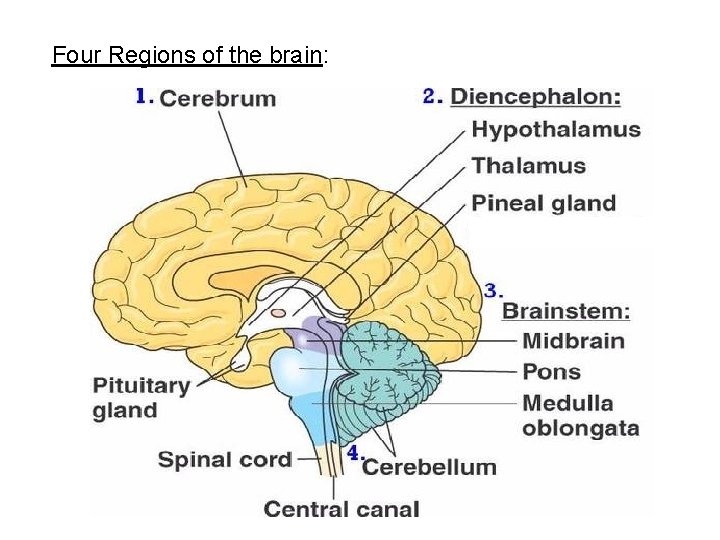
Four Regions of the brain:
1. Cerebrum • largest and most developed part of the brain • controls most sensory and motor activities 2. Diencephalon • associated with the endocrine system and homeostasis 3. Brainstem • medulla oblongata – regulates involuntary behaviours, such as breathing, digestion, heart rate, and blood pressure • pons – responsible for reflex actions such as chewing, tasting, and saliva production 4. Cerebellum • controls muscle coordination, balance, posture, and muscle tone
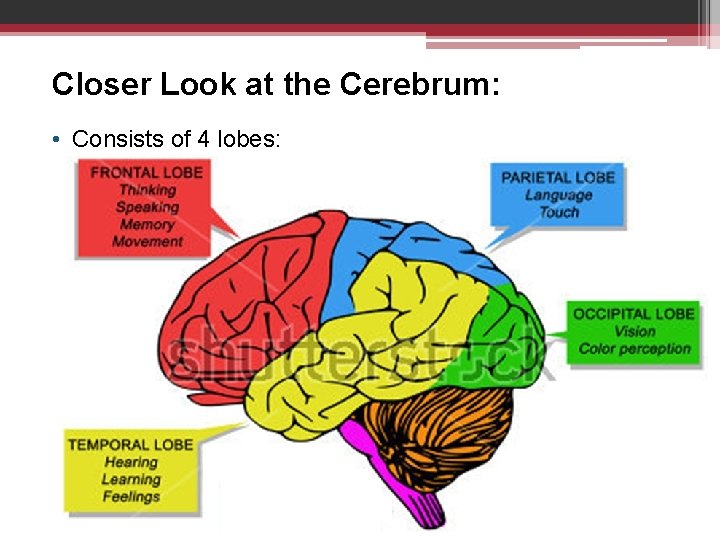
Closer Look at the Cerebrum: • Consists of 4 lobes:
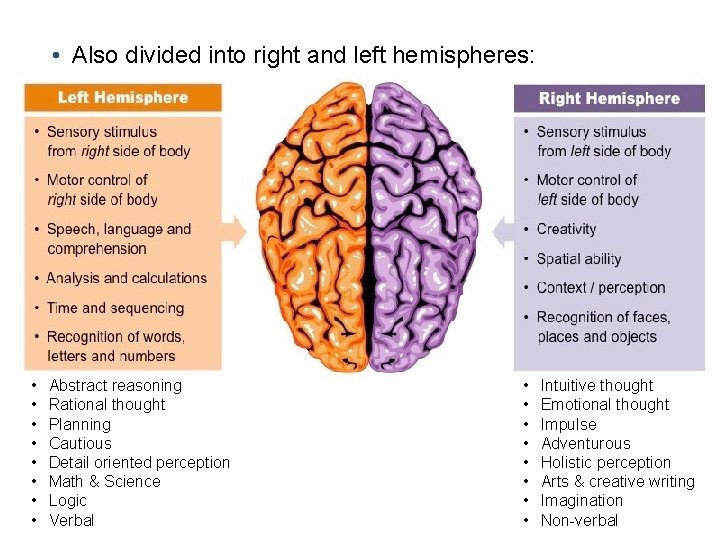
• Also divided into right and left hemispheres: • • Abstract reasoning Rational thought Planning Cautious Detail oriented perception Math & Science Logic Verbal • • Intuitive thought Emotional thought Impulse Adventurous Holistic perception Arts & creative writing Imagination Non-verbal
PNS – A Closer Look Recall: • The PNS refers to parts of the nervous system outside the brain and spinal cord. • PNS consists of nerves that connect the CNS to the rest of the body. Main function of PNS: • serves as a communication relay between the CNS and muscles/organs/glands throughout the body • regulates movement and the body’s internal environment
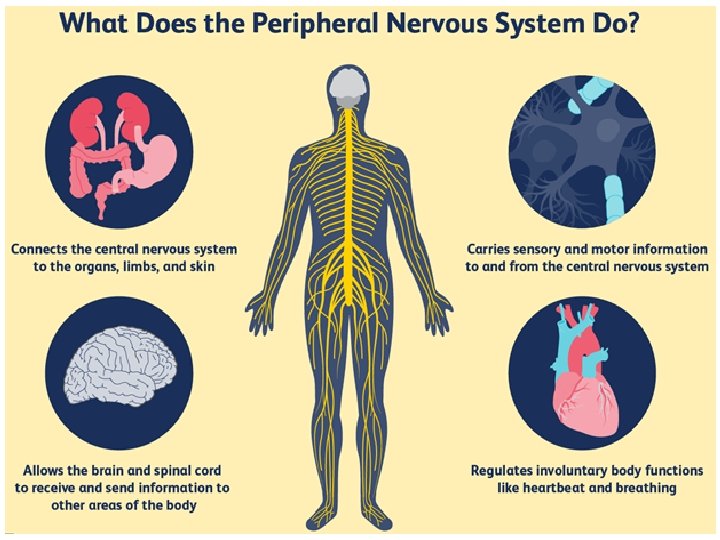
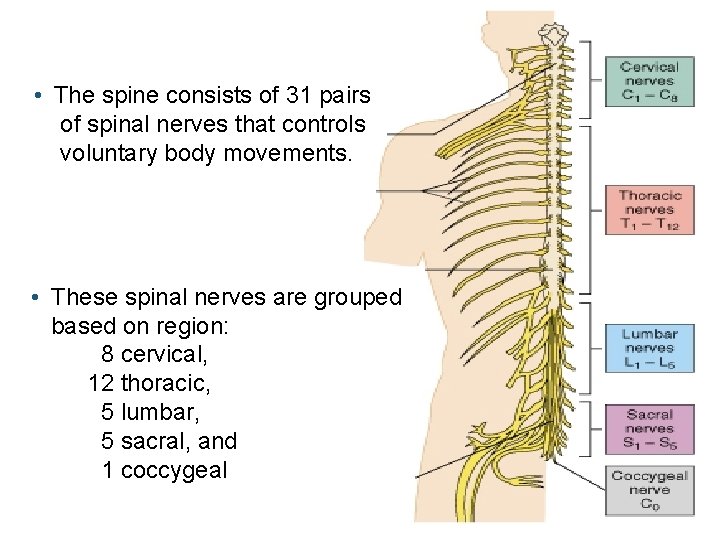
• The spine consists of 31 pairs of spinal nerves that controls voluntary body movements. • These spinal nerves are grouped based on region: 8 cervical, 12 thoracic, 5 lumbar, 5 sacral, and 1 coccygeal
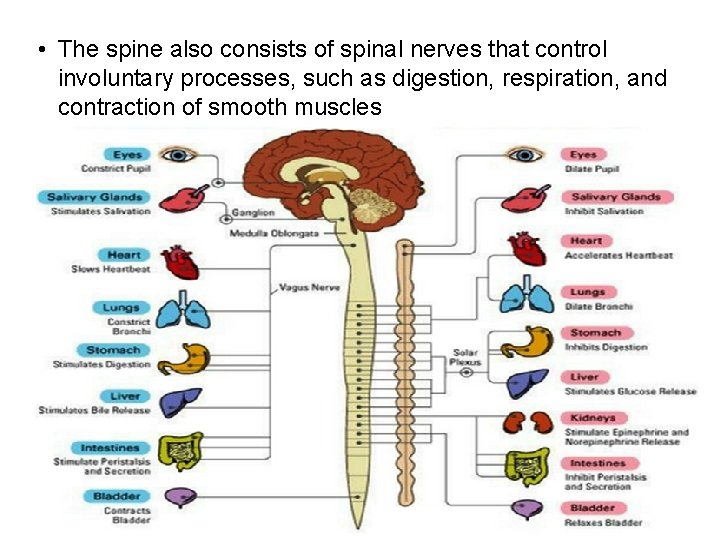
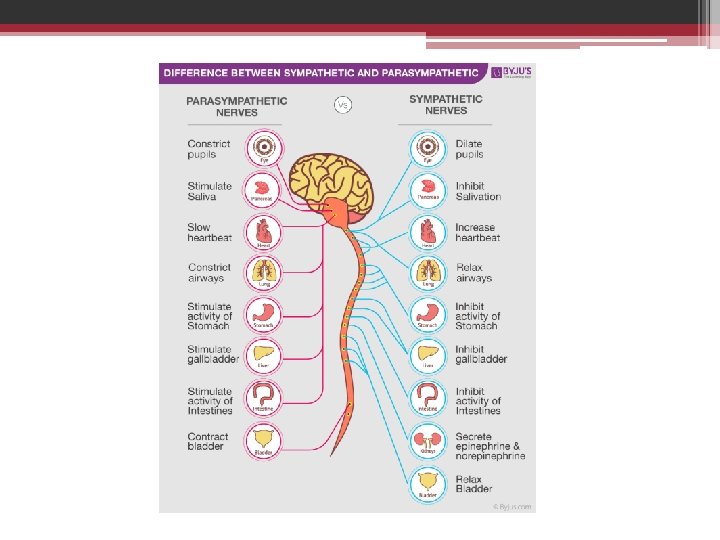
• The spine also consists of spinal nerves that control involuntary processes, such as digestion, respiration, and contraction of smooth muscles
Class Work/Homework • Read Section 11. 3 (p. 530 – 536) and add to your notes. • Text p. 536 - #2, 3, 4, 5 • Read Section 11. 4 (p. 537 – 541) and add to your notes. • Text p. 541 - #7 • READ OVER YOUR NOTES!
- Slides: 16