
The Cellular Level of Organization General Cell Structures
- Slides: 47
The Cellular Level of Organization
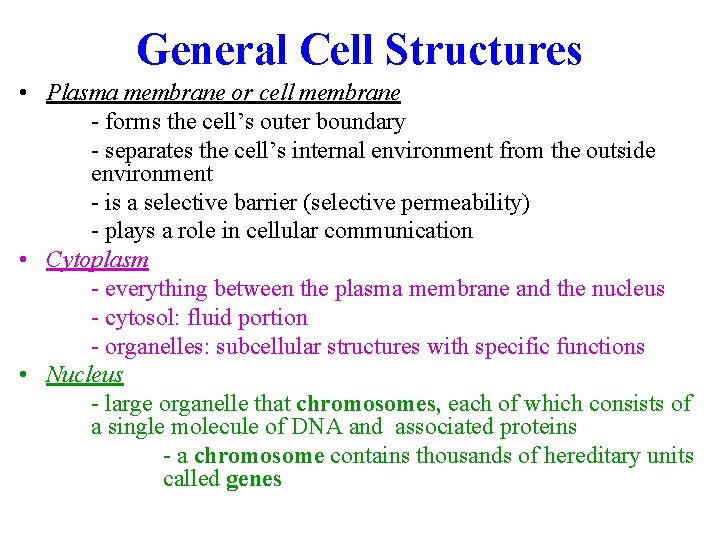
General Cell Structures • Plasma membrane or cell membrane - forms the cell’s outer boundary - separates the cell’s internal environment from the outside environment - is a selective barrier (selective permeability) - plays a role in cellular communication • Cytoplasm - everything between the plasma membrane and the nucleus - cytosol: fluid portion - organelles: subcellular structures with specific functions • Nucleus - large organelle that chromosomes, each of which consists of a single molecule of DNA and associated proteins - a chromosome contains thousands of hereditary units called genes
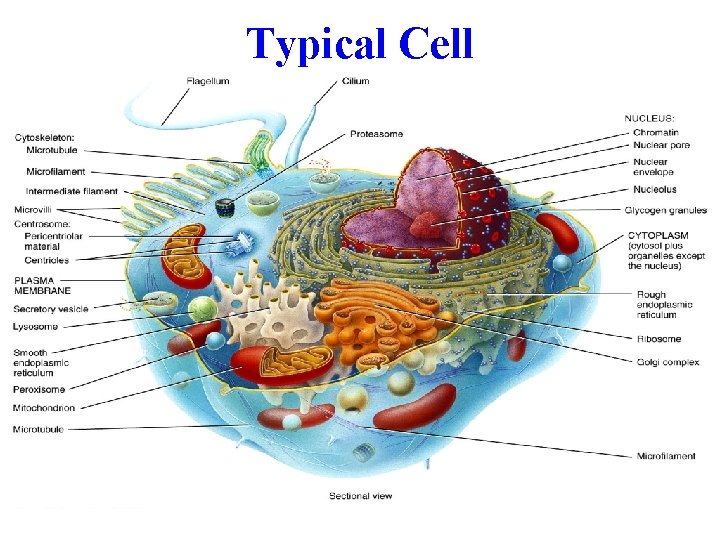
Typical Cell
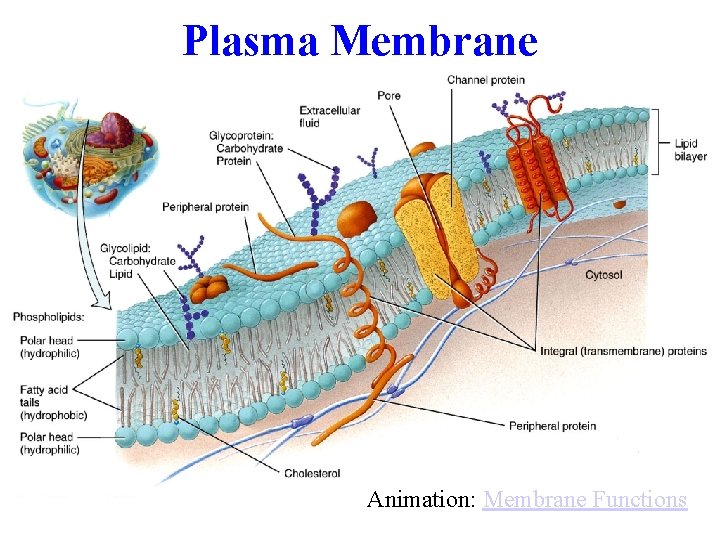
Plasma Membrane Animation: Membrane Functions
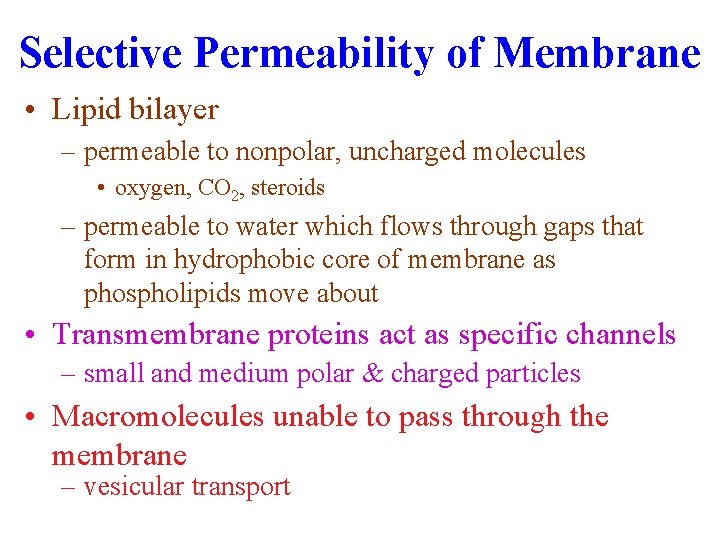
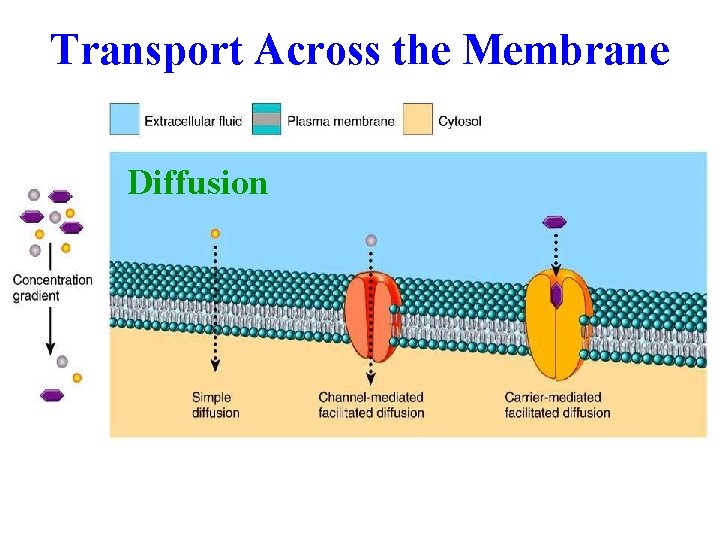
Selective Permeability of Membrane • Lipid bilayer – permeable to nonpolar, uncharged molecules • oxygen, CO 2, steroids – permeable to water which flows through gaps that form in hydrophobic core of membrane as phospholipids move about • Transmembrane proteins act as specific channels – small and medium polar & charged particles • Macromolecules unable to pass through the membrane – vesicular transport
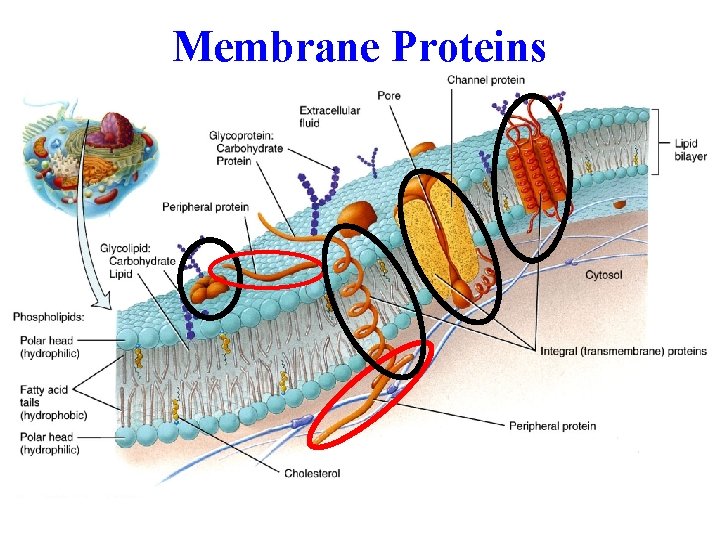
Membrane Proteins
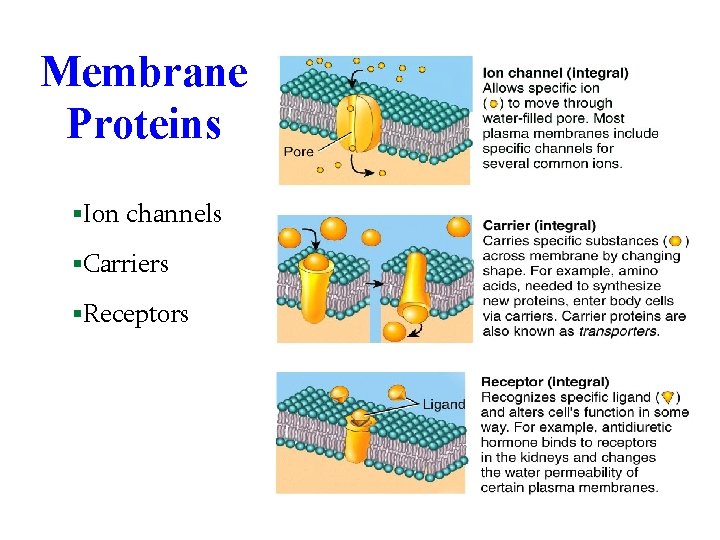
Membrane Proteins §Ion channels §Carriers §Receptors
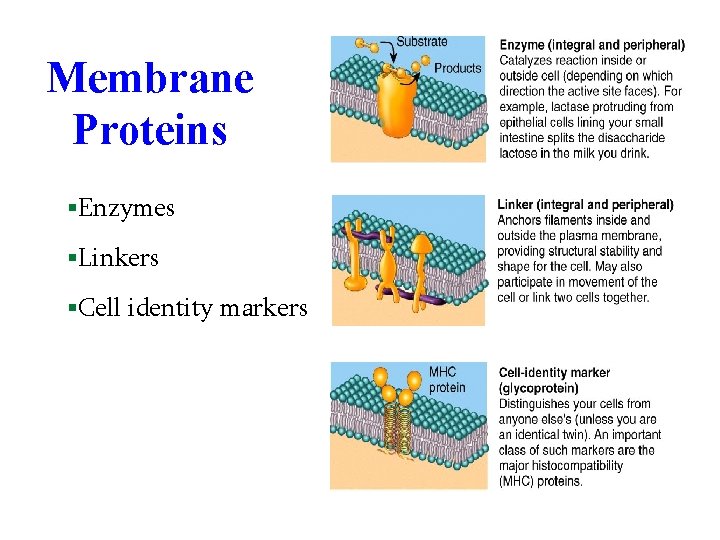
Membrane Proteins §Enzymes §Linkers §Cell identity markers
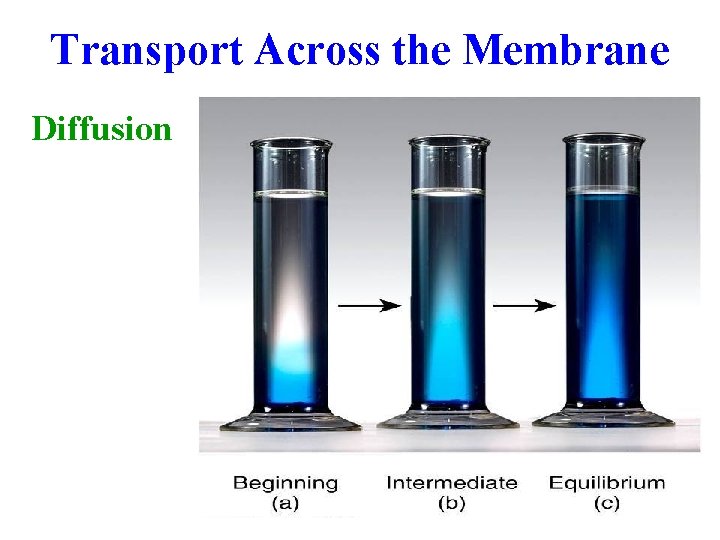
Transport Across the Membrane Diffusion
Transport Across the Membrane Diffusion
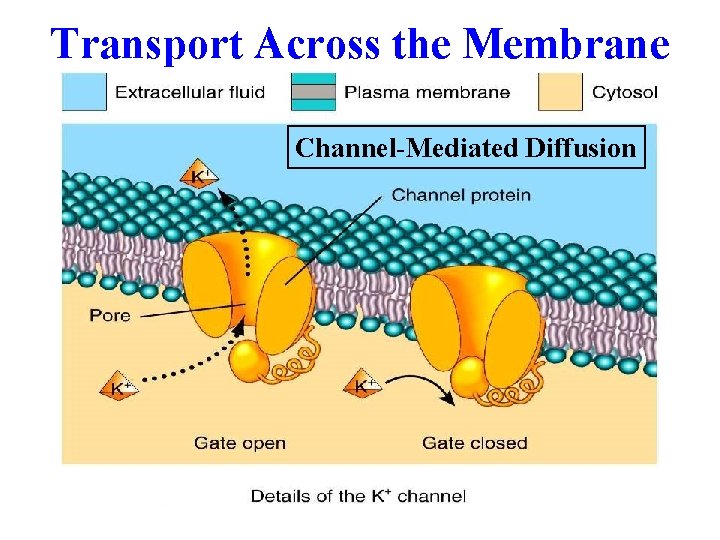
Transport Across the Membrane Channel-Mediated Diffusion Facilitated Diffusion
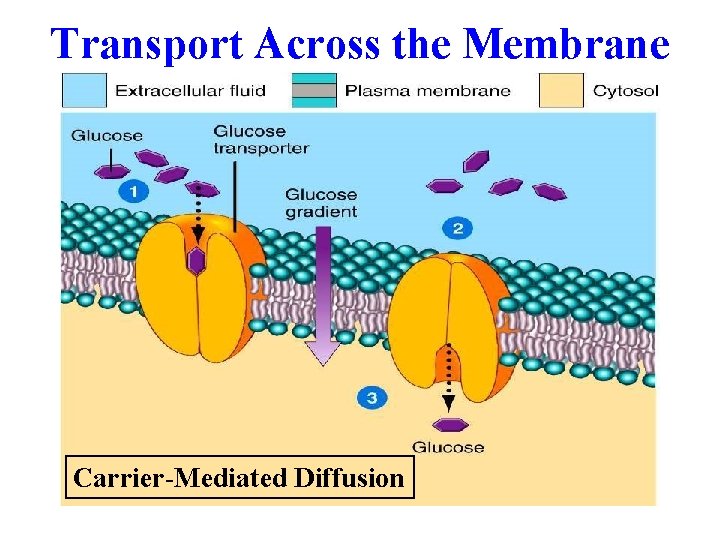
Transport Across the Membrane Carrier-Mediated Diffusion
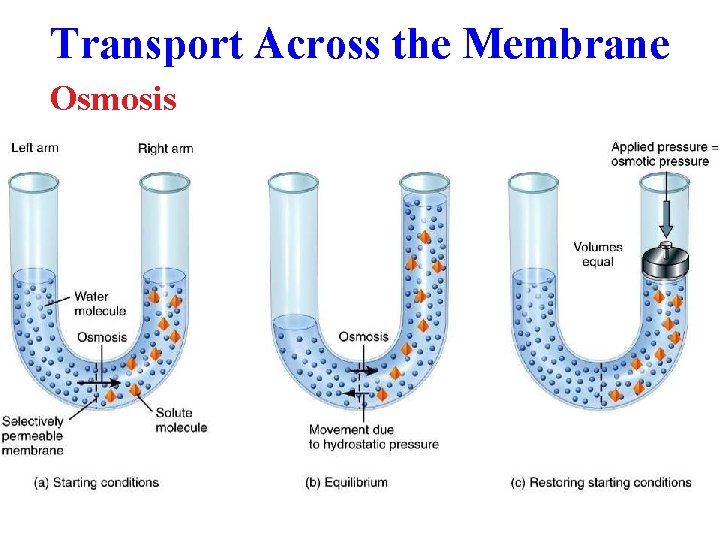
Transport Across the Membrane Osmosis
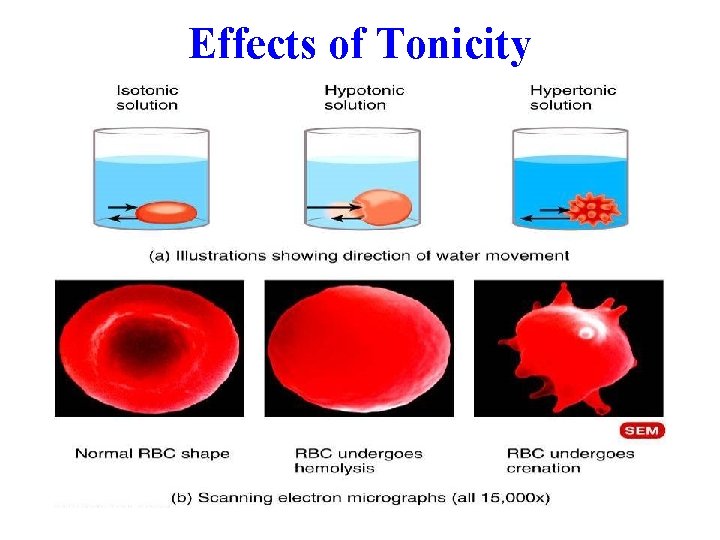
Effects of Tonicity
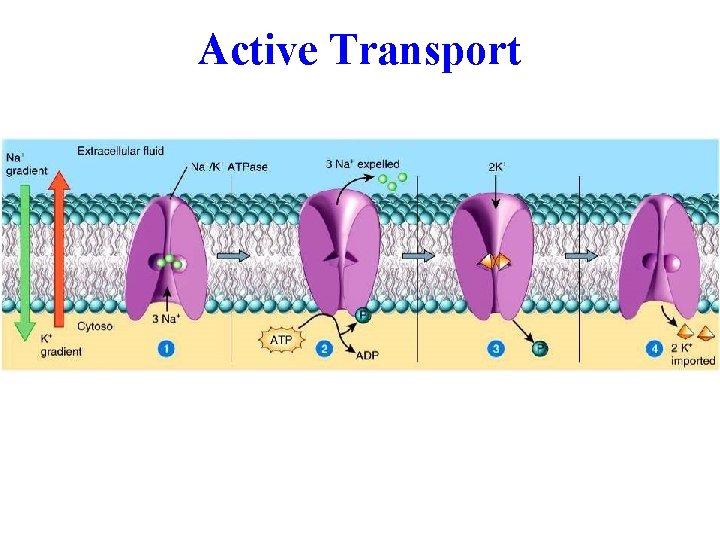
Active Transport
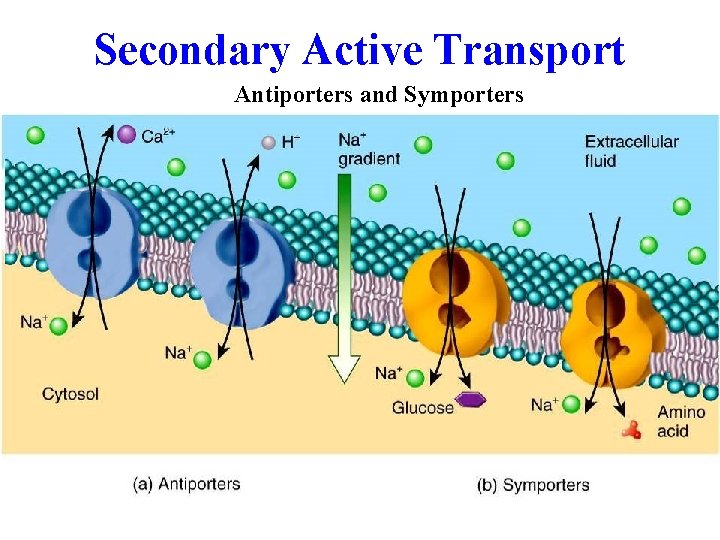
Secondary Active Transport Antiporters and Symporters
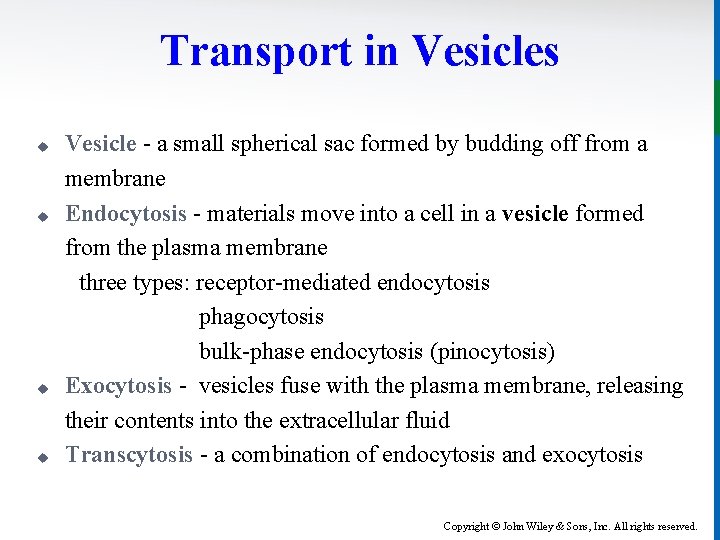
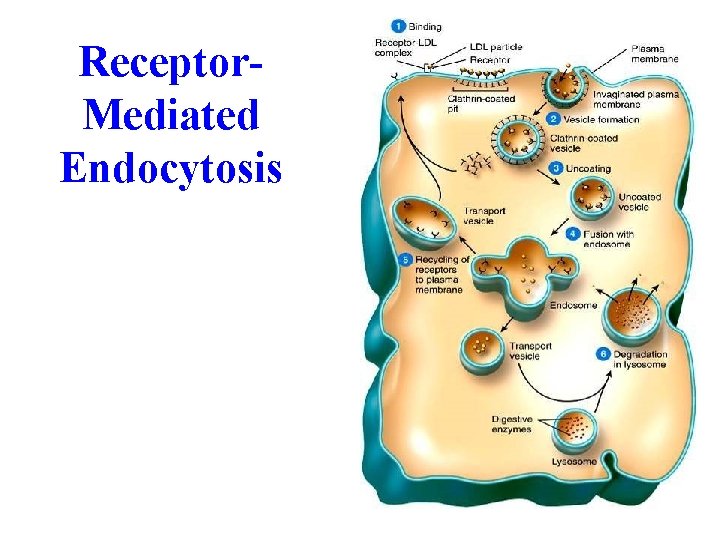
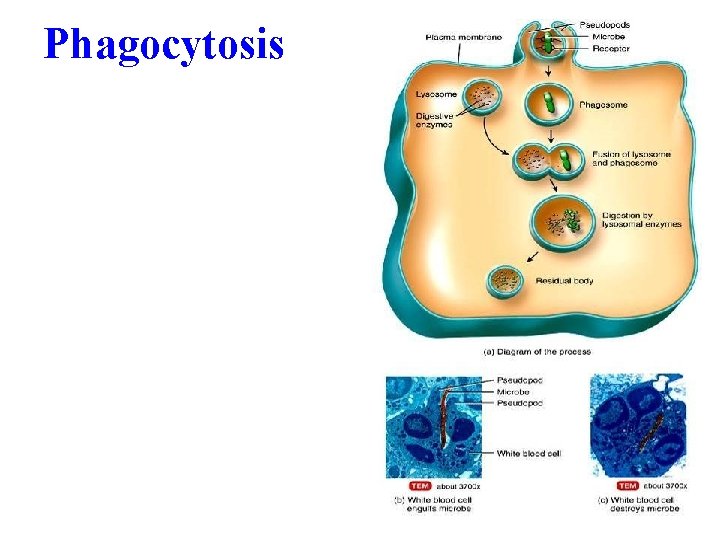
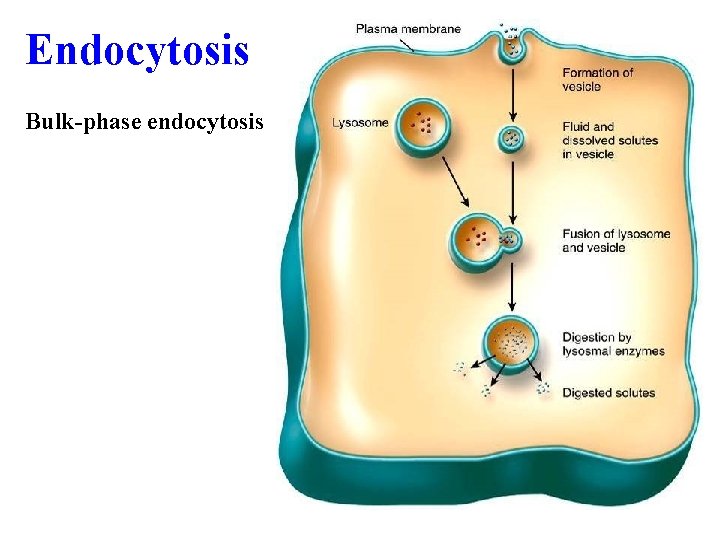
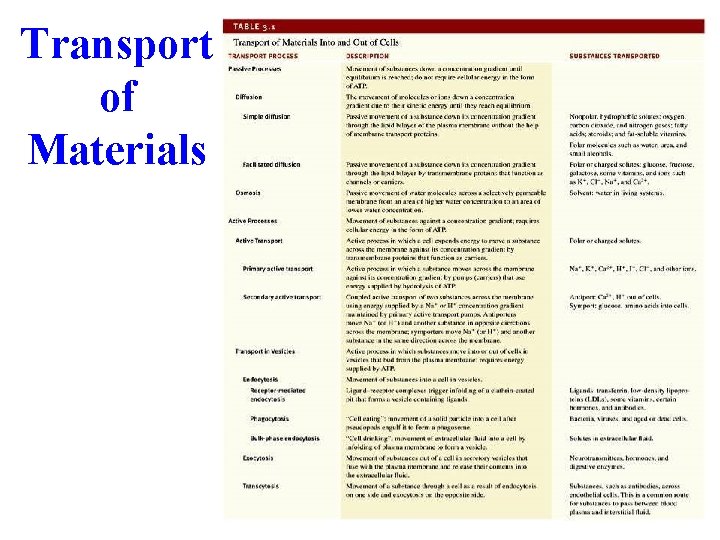
Transport in Vesicles u u Vesicle - a small spherical sac formed by budding off from a membrane Endocytosis - materials move into a cell in a vesicle formed from the plasma membrane three types: receptor-mediated endocytosis phagocytosis bulk-phase endocytosis (pinocytosis) Exocytosis - vesicles fuse with the plasma membrane, releasing their contents into the extracellular fluid Transcytosis - a combination of endocytosis and exocytosis Copyright © John Wiley & Sons, Inc. All rights reserved.
Receptor. Mediated Endocytosis
Phagocytosis
Endocytosis Bulk-phase endocytosis
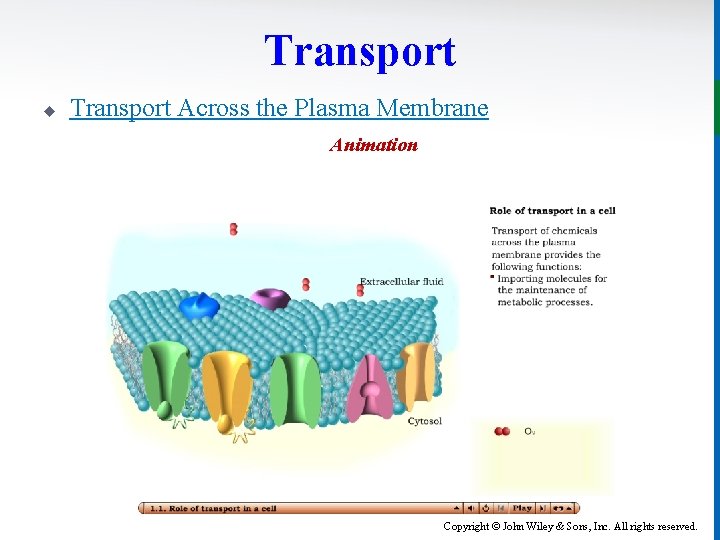
Transport u Transport Across the Plasma Membrane Animation Copyright © John Wiley & Sons, Inc. All rights reserved.
Transport of Materials
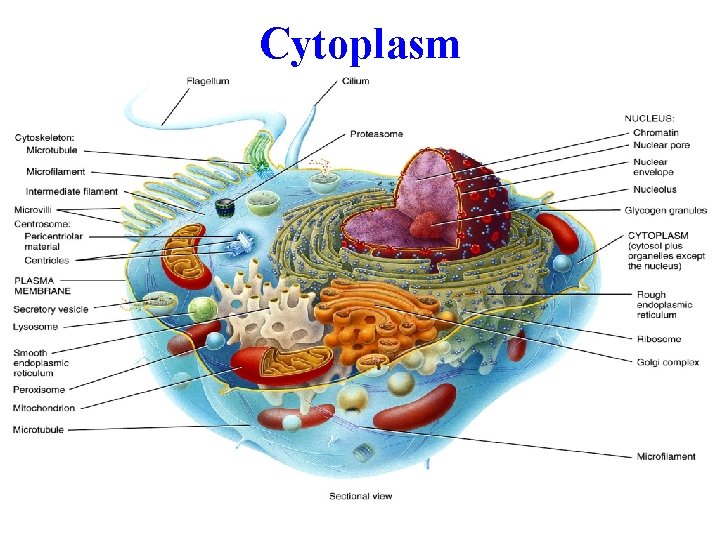
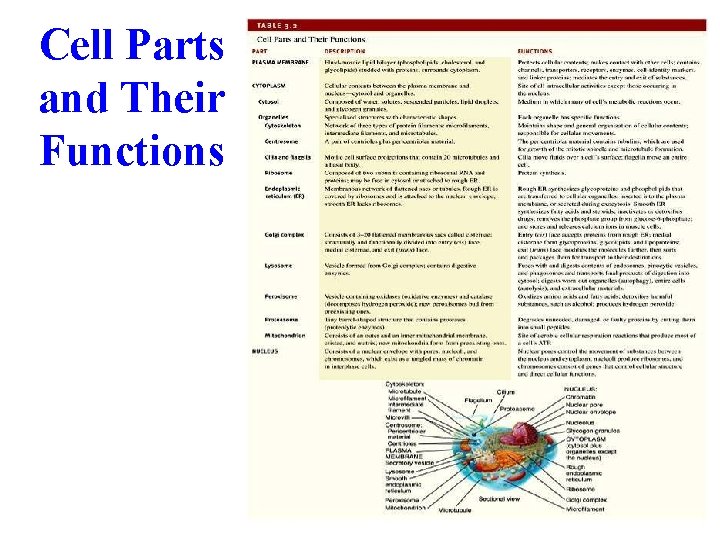
Cytoplasm
Cytoplasm - 2 Components 1. Cytosol - intracellular fluid, surrounding the organelles - The site of many chemical reactions - Energy is usually released by these reactions. - Reactions provide the building blocks for cell maintenance, structure, function and growth. 2. Organelles - Specialized structures within the cell Copyright © John Wiley & Sons, Inc. All rights reserved.
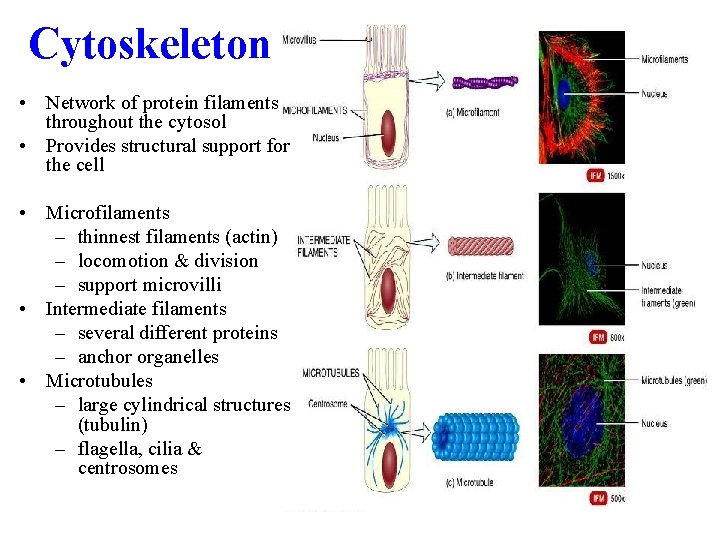
Cytoskeleton • Network of protein filaments throughout the cytosol • Provides structural support for the cell • Microfilaments – thinnest filaments (actin) – locomotion & division – support microvilli • Intermediate filaments – several different proteins – anchor organelles • Microtubules – large cylindrical structures (tubulin) – flagella, cilia & centrosomes
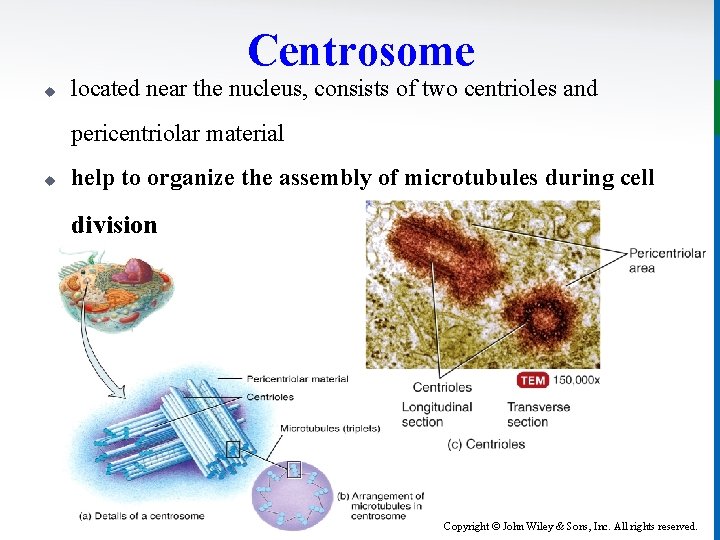
Centrosome u located near the nucleus, consists of two centrioles and pericentriolar material u help to organize the assembly of microtubules during cell division Copyright © John Wiley & Sons, Inc. All rights reserved.
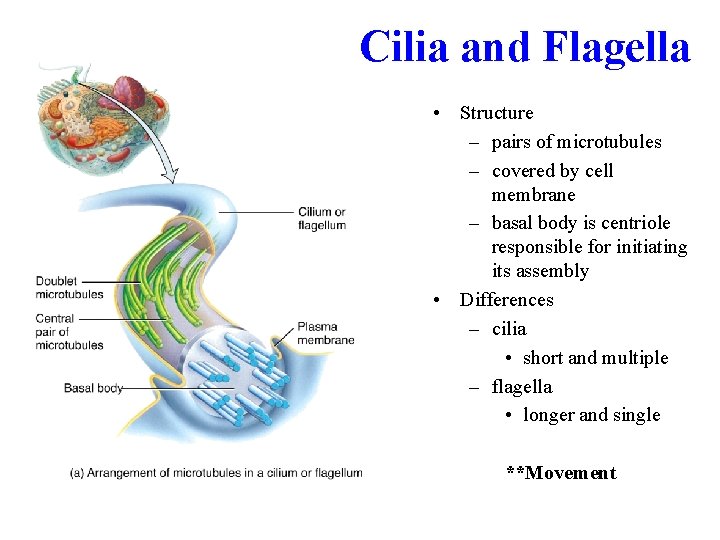
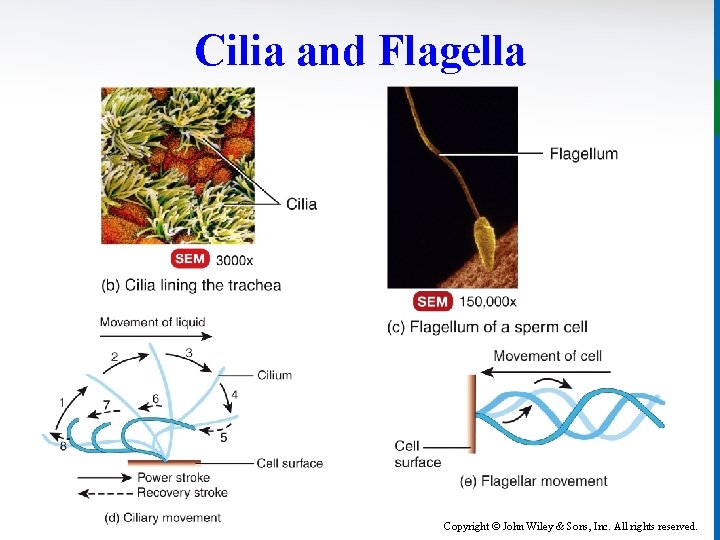
Cilia and Flagella • Structure – pairs of microtubules – covered by cell membrane – basal body is centriole responsible for initiating its assembly • Differences – cilia • short and multiple – flagella • longer and single **Movement
Cilia and Flagella Copyright © John Wiley & Sons, Inc. All rights reserved.
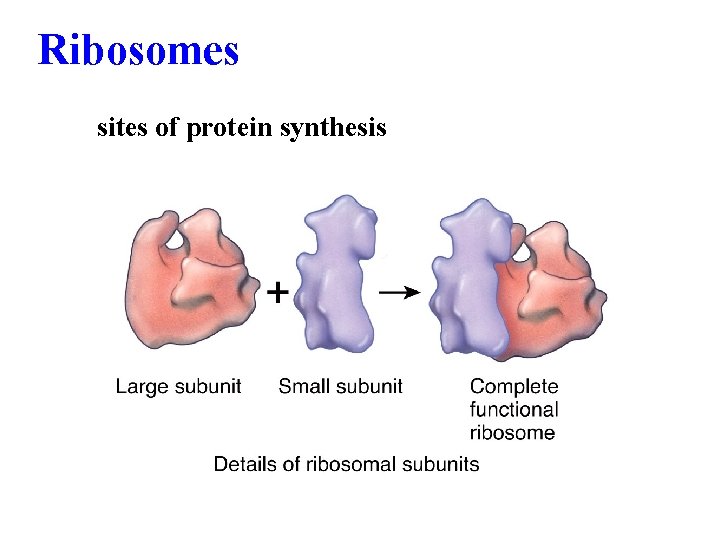
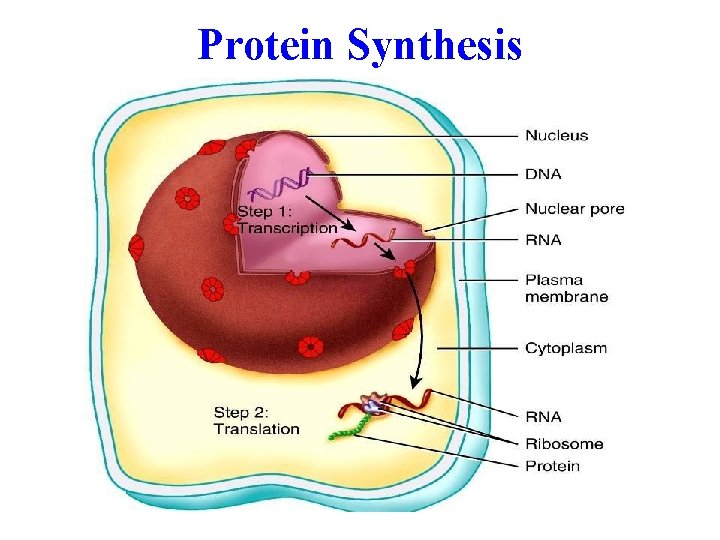
Ribosomes sites of protein synthesis
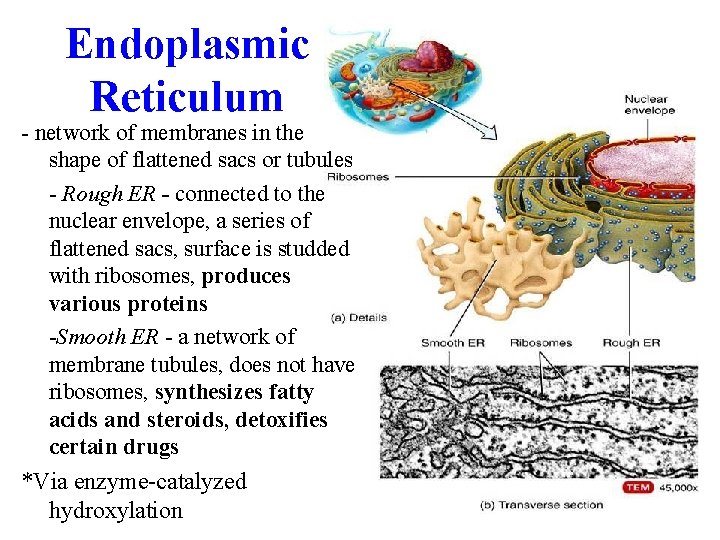
Endoplasmic Reticulum - network of membranes in the shape of flattened sacs or tubules - Rough ER - connected to the nuclear envelope, a series of flattened sacs, surface is studded with ribosomes, produces various proteins -Smooth ER - a network of membrane tubules, does not have ribosomes, synthesizes fatty acids and steroids, detoxifies certain drugs *Via enzyme-catalyzed hydroxylation
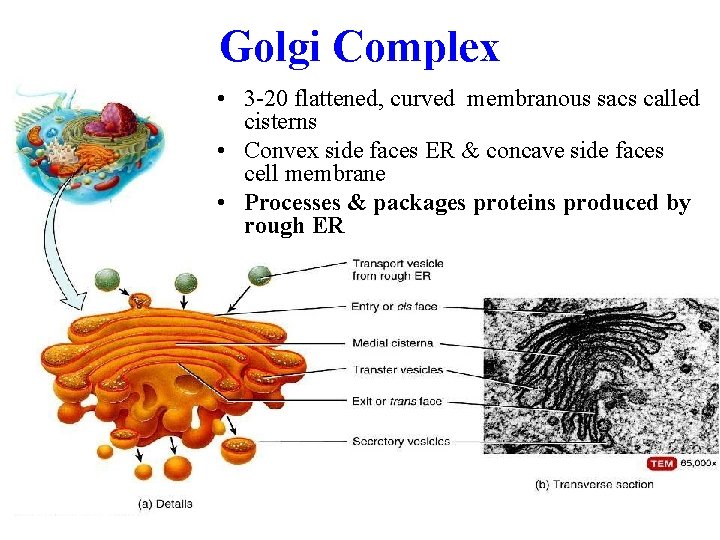
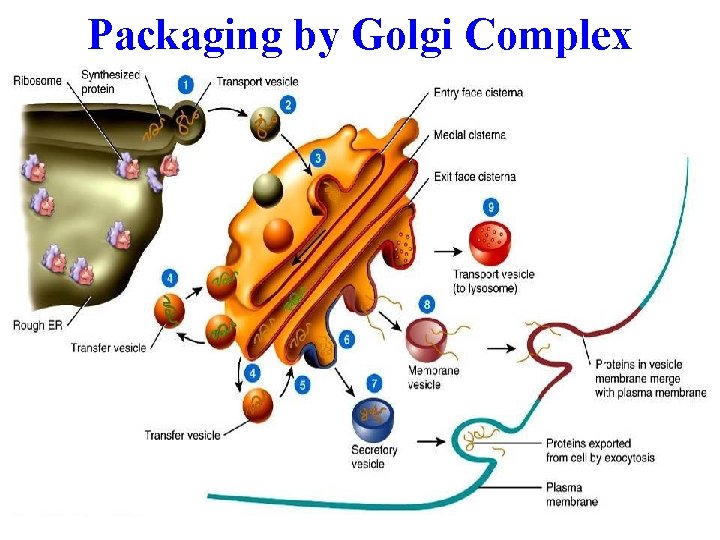
Golgi Complex • 3 -20 flattened, curved membranous sacs called cisterns • Convex side faces ER & concave side faces cell membrane • Processes & packages proteins produced by rough ER
Packaging by Golgi Complex
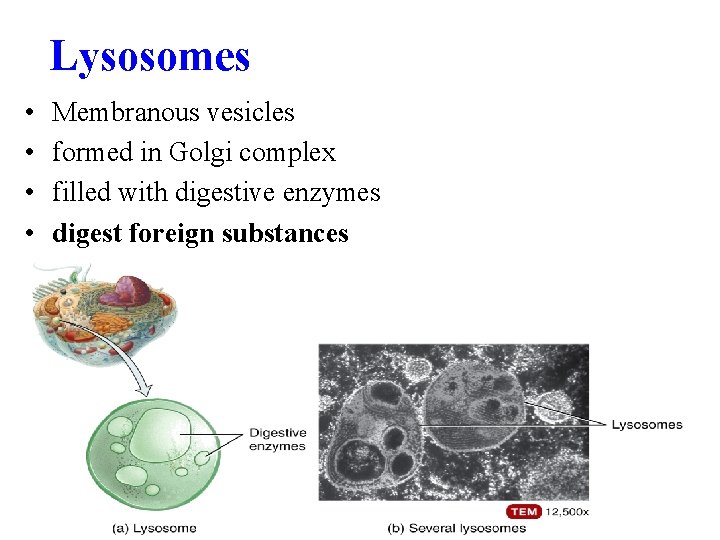
Lysosomes • • Membranous vesicles formed in Golgi complex filled with digestive enzymes digest foreign substances
Peroxisomes – – smaller than lysosomes form by division of preexisting peroxisomes contain enzymes that oxidize organic material part of normal metabolic breakdown of amino acids and fatty acids (Hydrogen peroxide to WATER) – oxidizes toxic substances such as alcohol and formaldehyde – contains catalase which decomposes H 2 O 2 Proteasomes –continuously destroy unneeded, damaged, or faulty proteins, found in the cytosol and the nucleus
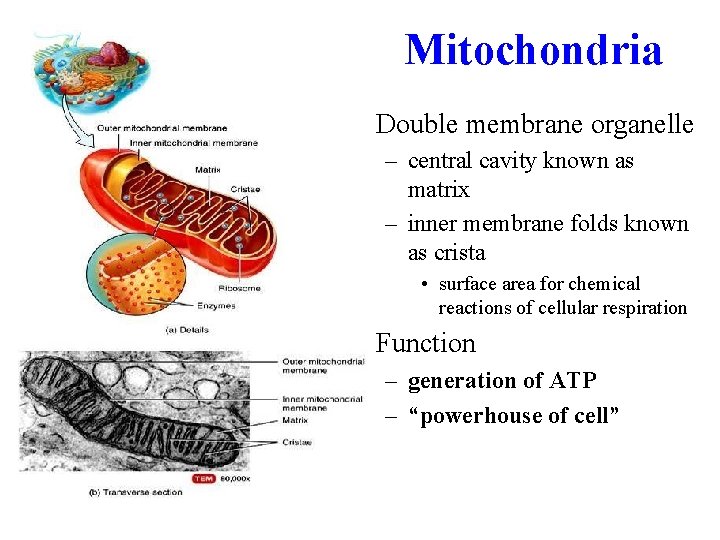
Mitochondria • Double membrane organelle – central cavity known as matrix – inner membrane folds known as crista • surface area for chemical reactions of cellular respiration • Function – generation of ATP – “powerhouse of cell”
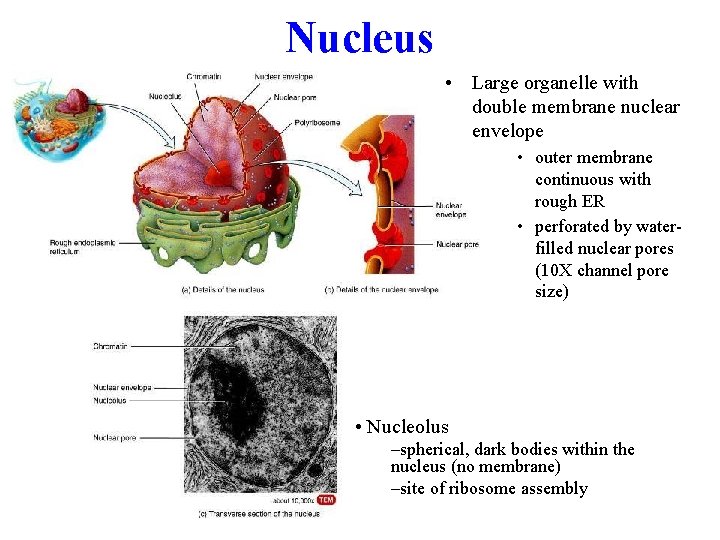
Nucleus • Large organelle with double membrane nuclear envelope • outer membrane continuous with rough ER • perforated by waterfilled nuclear pores (10 X channel pore size) • Nucleolus –spherical, dark bodies within the nucleus (no membrane) –site of ribosome assembly
Cell Parts and Their Functions
Protein Synthesis
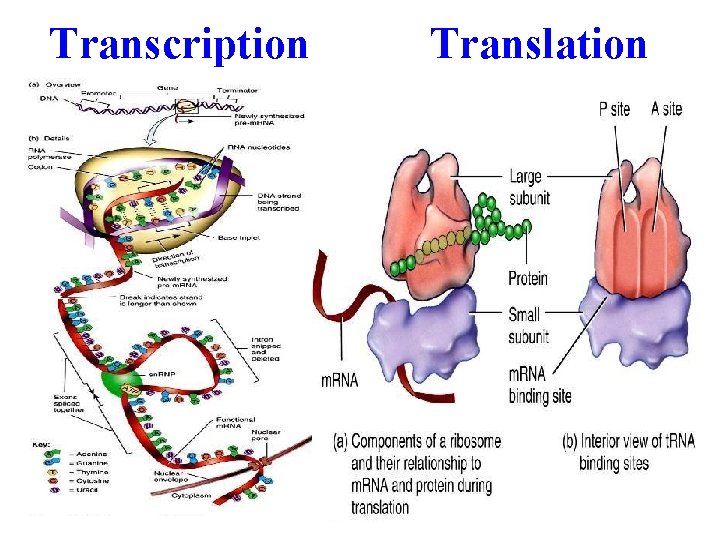
Transcription Translation
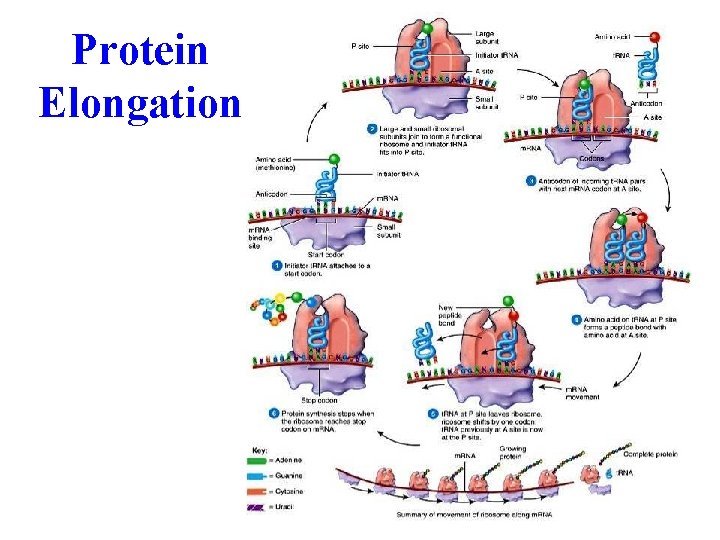
Protein Elongation
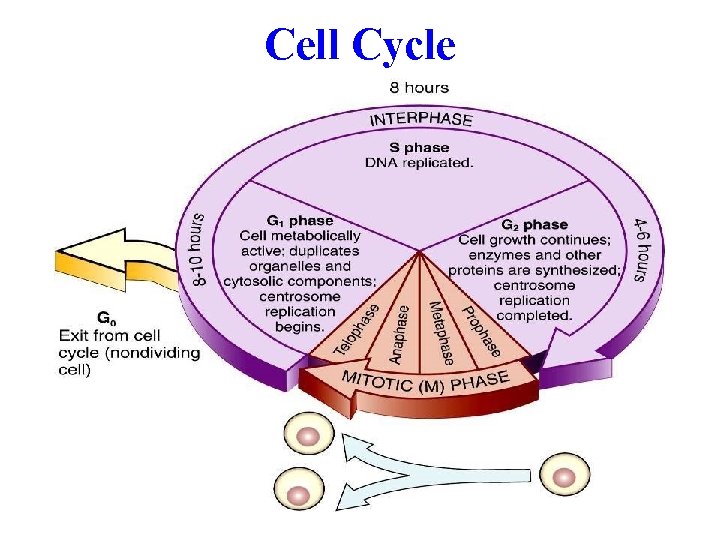
Cell Cycle
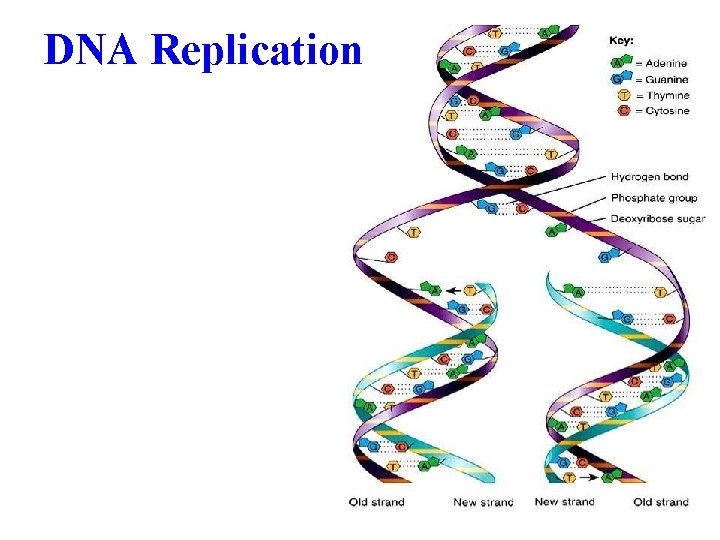
DNA Replication
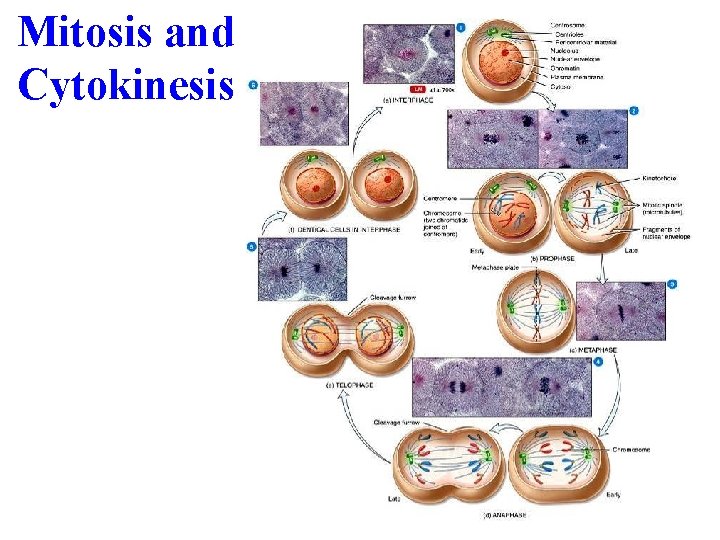
Mitosis and Cytokinesis
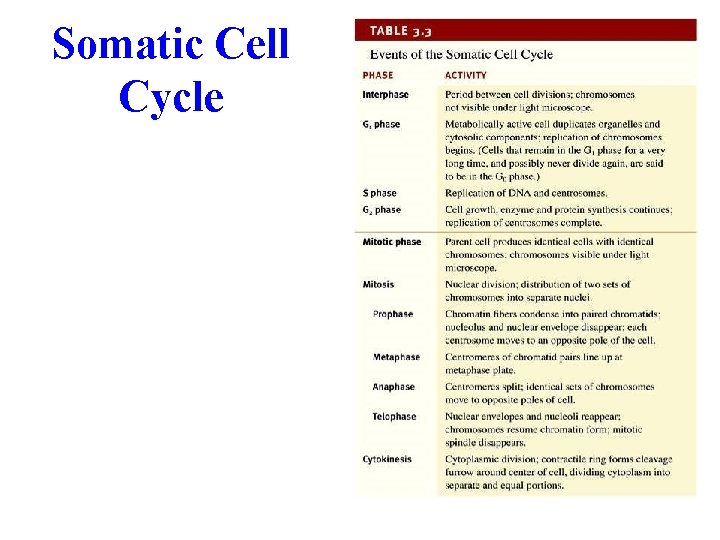
Somatic Cell Cycle
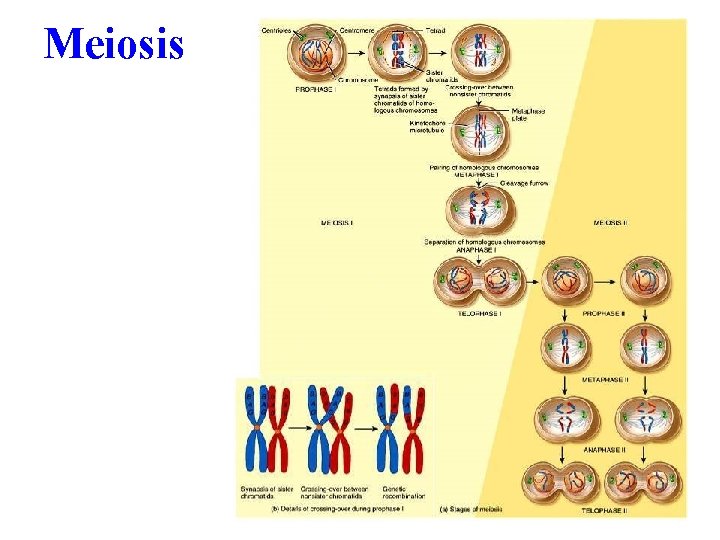
Meiosis
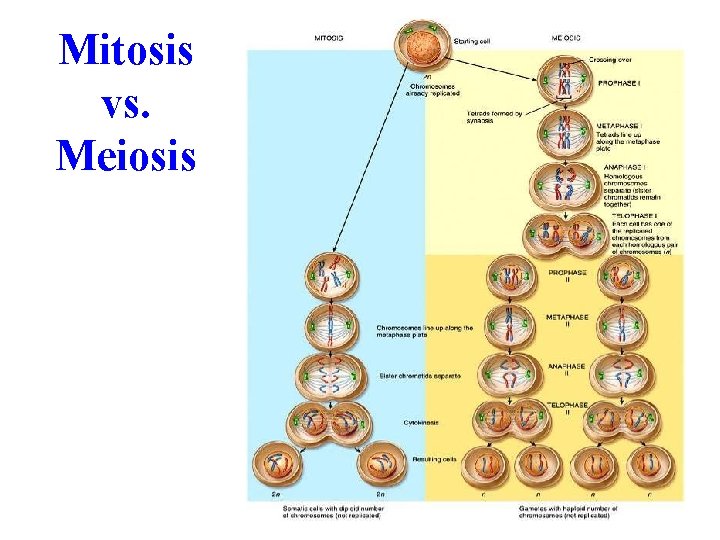
Mitosis vs. Meiosis
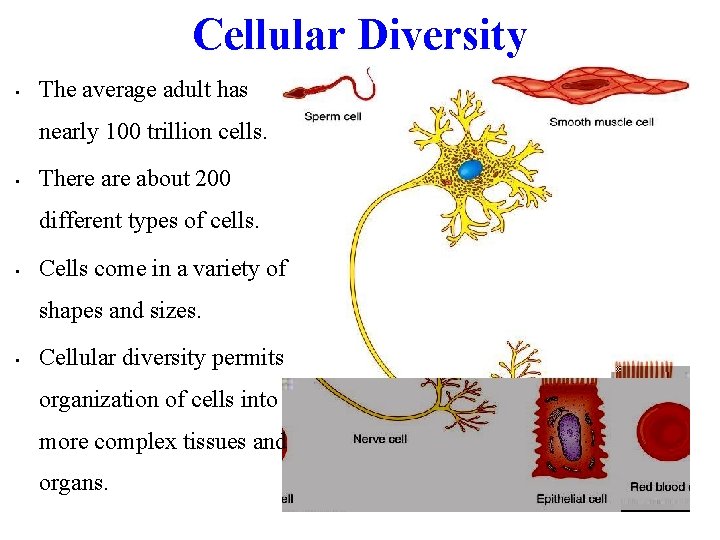
Cellular Diversity • The average adult has nearly 100 trillion cells. • There about 200 different types of cells. • Cells come in a variety of shapes and sizes. • Cellular diversity permits organization of cells into more complex tissues and organs.