
THE CELLS CHAPTER 3 VOCABULARY Cells Organelles Cell
THE CELLS CHAPTER 3
VOCABULARY • Cells • Organelles • Cell Membrane • Cytoplasm • Nucleus • Nucleolus • Ribosomes • Centrosomes • Mitochondria • Endoplasmic Reticulum • Golgi Apparatus • Cellular Reproduction/division • Eukaryotic Cell • Prokaryotic Cell • Mitosis • Meiosis
OBJECTIVE • Define the term cell • Describe the functions of the cell • Identify the parts of a cell
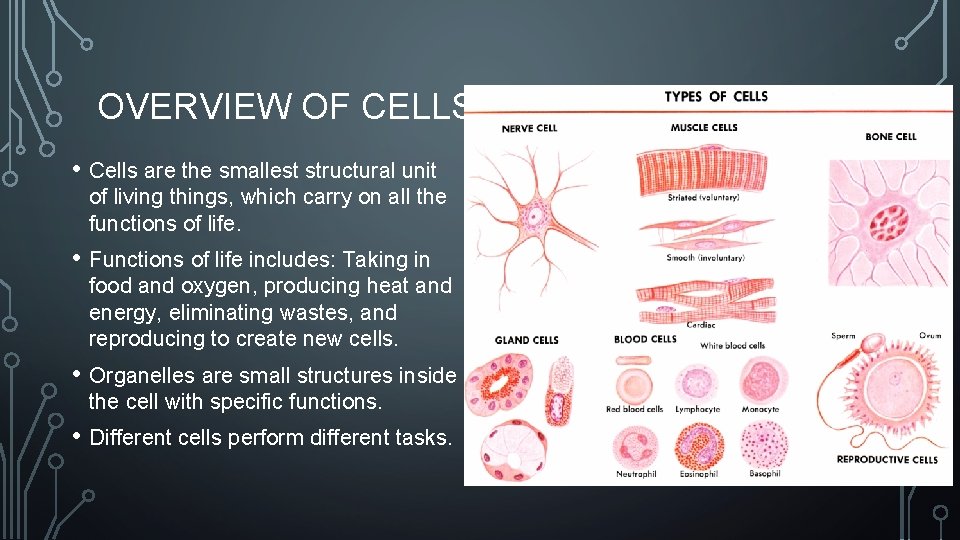
OVERVIEW OF CELLS • Cells are the smallest structural unit of living things, which carry on all the functions of life. • Functions of life includes: Taking in food and oxygen, producing heat and energy, eliminating wastes, and reproducing to create new cells. • Organelles are small structures inside the cell with specific functions. • Different cells perform different tasks.
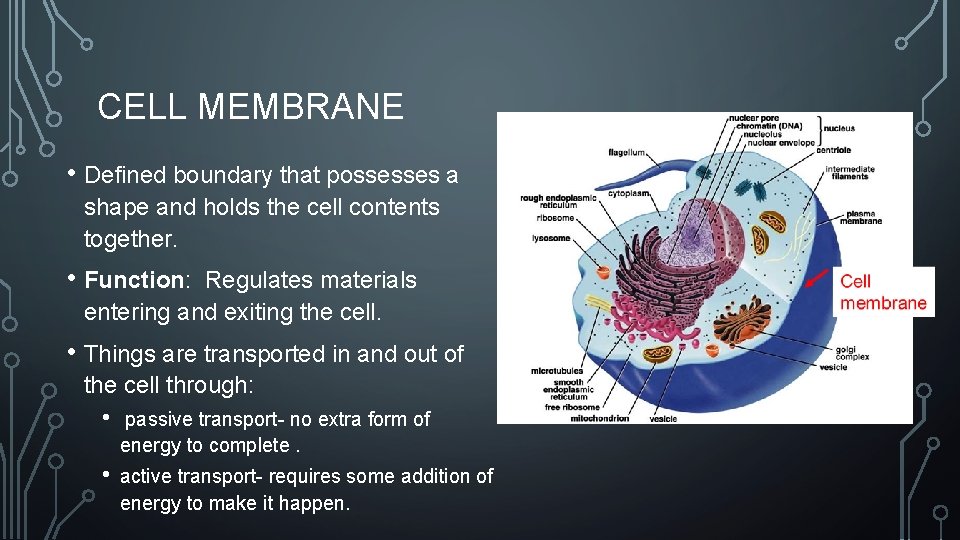
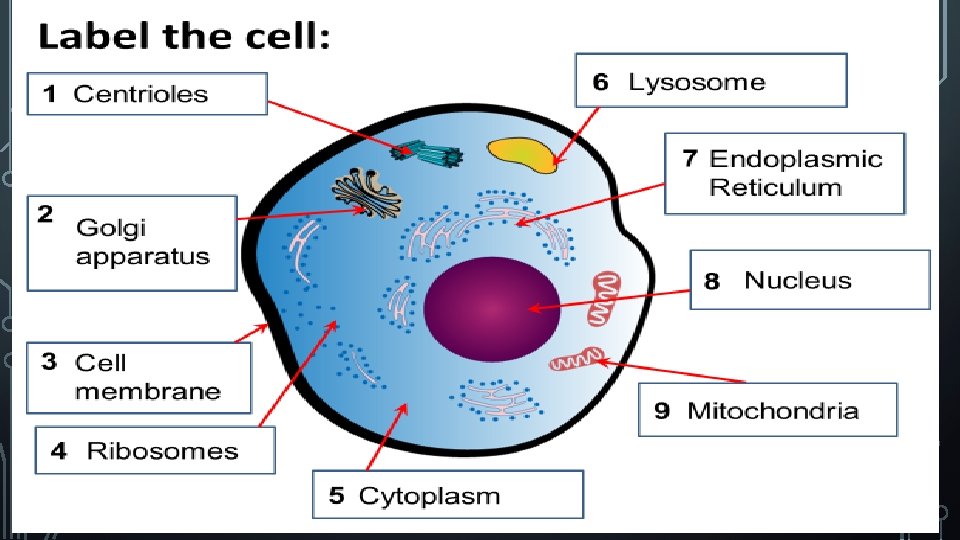
CELL MEMBRANE • Defined boundary that possesses a shape and holds the cell contents together. • Function: Regulates materials entering and exiting the cell. • Things are transported in and out of the cell through: • passive transport- no extra form of energy to complete. • active transport- requires some addition of energy to make it happen.

CYTOPLASM • Gel-like semifluid material that transports substances within the cell. • Made up of mostly water and salt. • Main function is to support/protect cell organelles
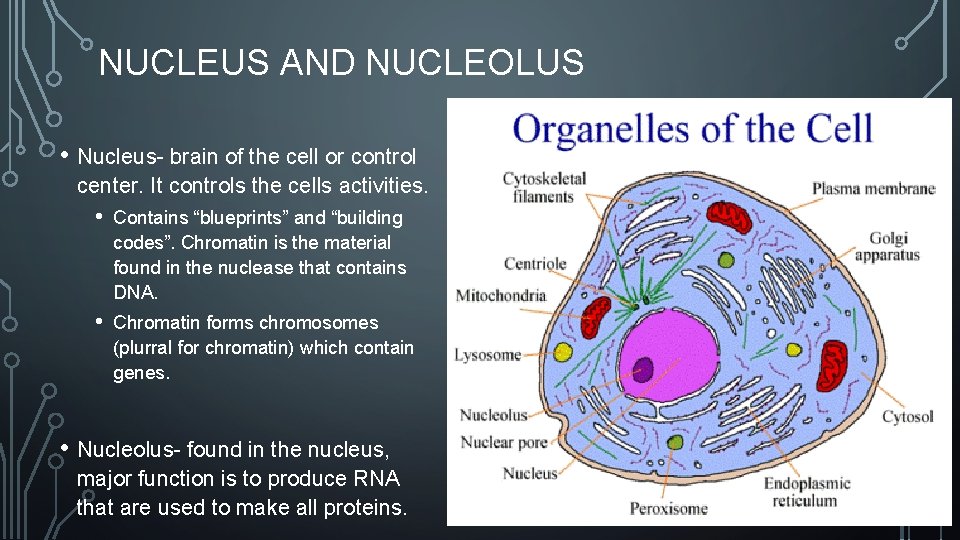
NUCLEUS AND NUCLEOLUS • Nucleus- brain of the cell or control center. It controls the cells activities. • Contains “blueprints” and “building codes”. Chromatin is the material found in the nuclease that contains DNA. • Chromatin forms chromosomes (plurral for chromatin) which contain genes. • Nucleolus- found in the nucleus, major function is to produce RNA that are used to make all proteins.
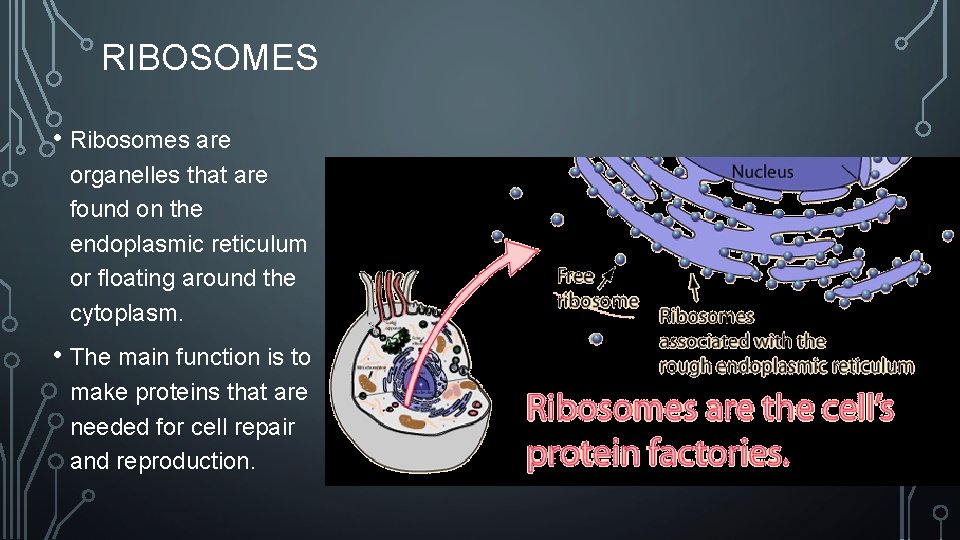
RIBOSOMES • Ribosomes are organelles that are found on the endoplasmic reticulum or floating around the cytoplasm. • The main function is to make proteins that are needed for cell repair and reproduction.

CENTROSOMES • The main purpose of centrosome is to organize and provide structure for the cell as work to be apart of cell division.
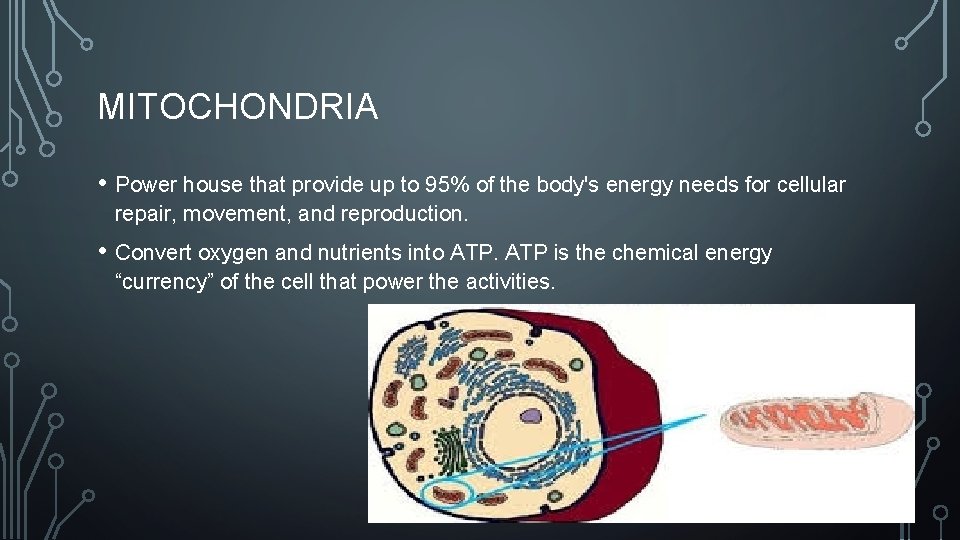
MITOCHONDRIA • Power house that provide up to 95% of the body's energy needs for cellular repair, movement, and reproduction. • Convert oxygen and nutrients into ATP is the chemical energy “currency” of the cell that power the activities.
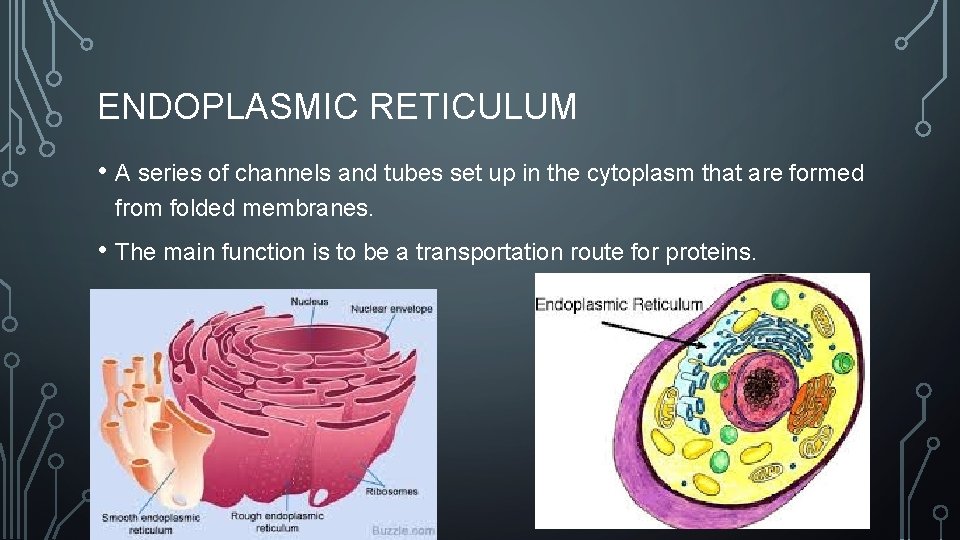
ENDOPLASMIC RETICULUM • A series of channels and tubes set up in the cytoplasm that are formed from folded membranes. • The main function is to be a transportation route for proteins.
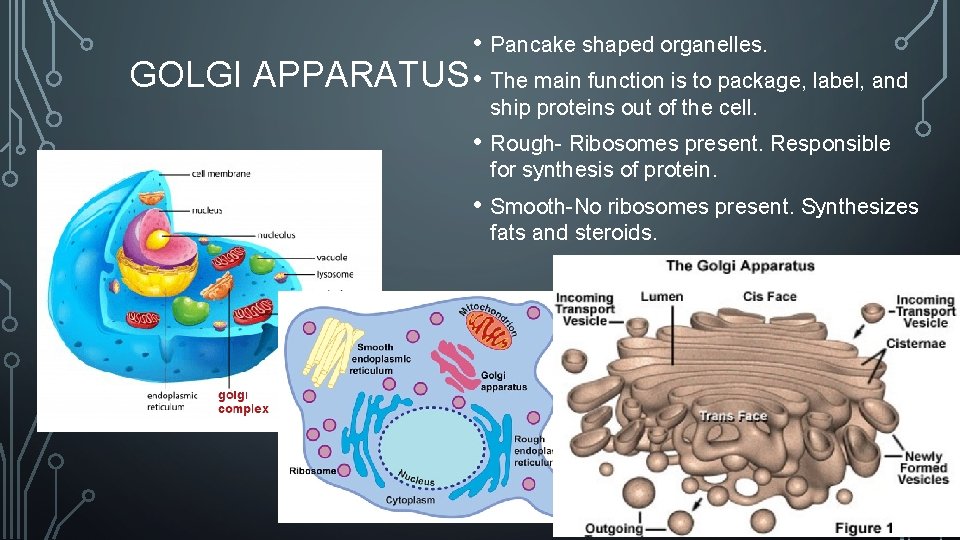
GOLGI • Pancake shaped organelles. APPARATUS • The main function is to package, label, and ship proteins out of the cell. • Rough- Ribosomes present. Responsible for synthesis of protein. • Smooth-No ribosomes present. Synthesizes fats and steroids.
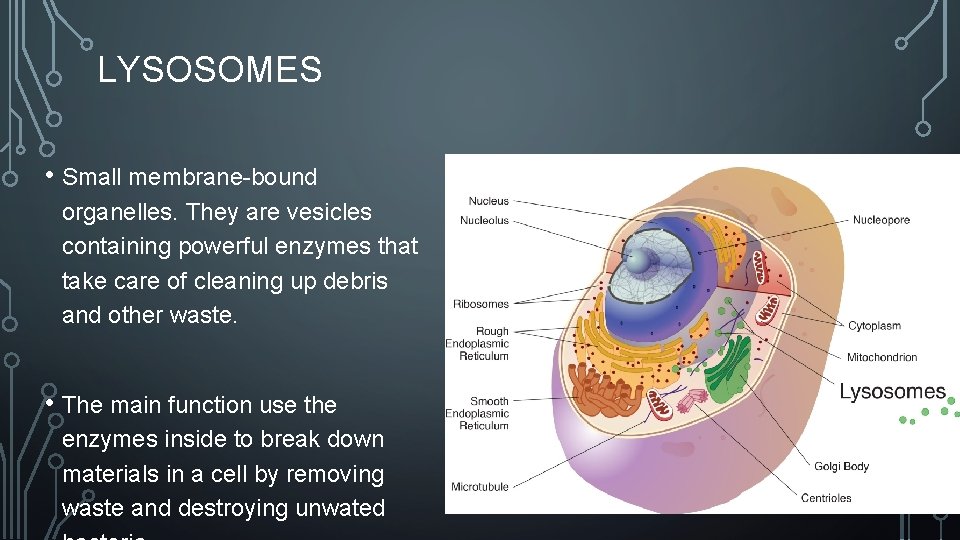
LYSOSOMES • Small membrane-bound organelles. They are vesicles containing powerful enzymes that take care of cleaning up debris and other waste. • The main function use the enzymes inside to break down materials in a cell by removing waste and destroying unwated
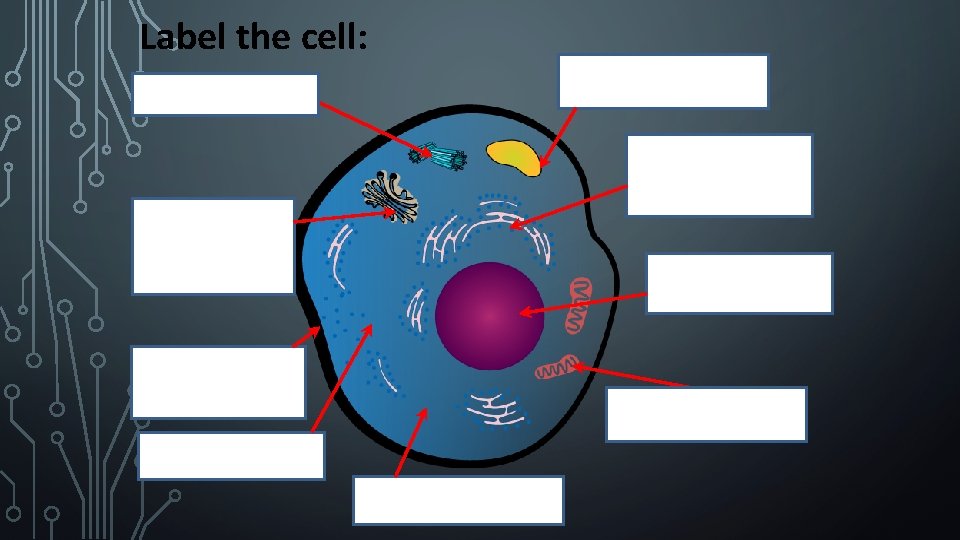
Label the cell: 6 Lysosome 1 Centrioles 7 Endoplasmic Reticulum 2 Golgi apparatus 8 Nucleus 3 Cell membrane 9 Mitochondria 4 Ribosomes 5 Cytoplasm
CELL REPRODUCTION • The process of making a new cell. It is also known as cell division because one cell divides into two cells when it reproduces. Cells can only come from other cells. • Reasons Cells Reproduce: • Growth, repaid, and maintenance • Eukaryotic Cell- Make up the human body. These cells have a nucleus, cellular organelles, and usually several chromosomes in the nucleus. • Reproduce through mitosis or meiosis. • Prokaryotic Cell- Cells that do not have a nucleus or organelles. Make up bacterial cells. • Reproduce through a process called binary fission.
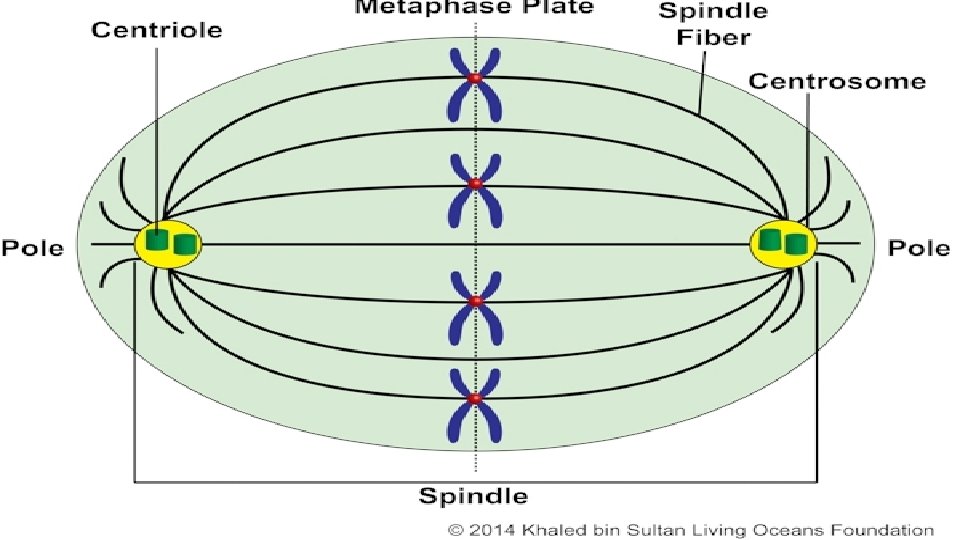
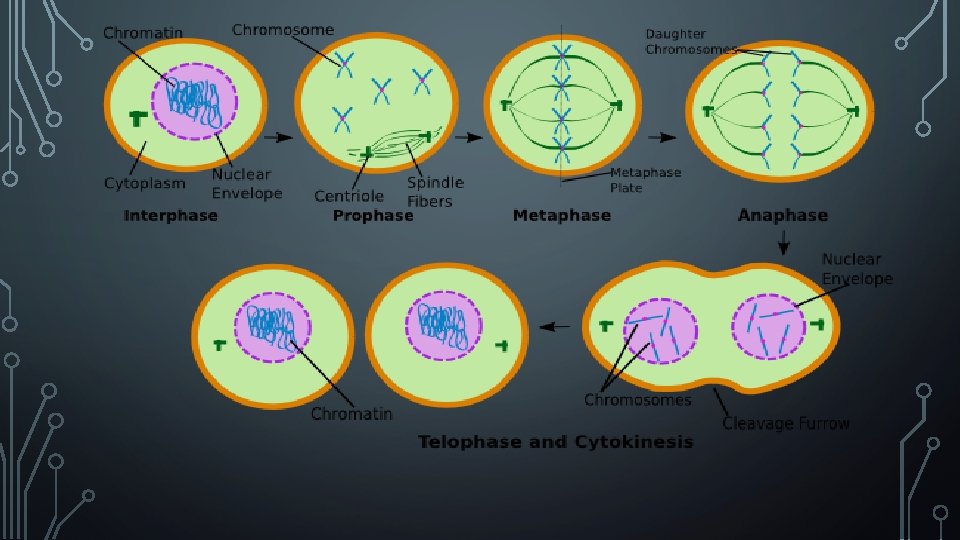
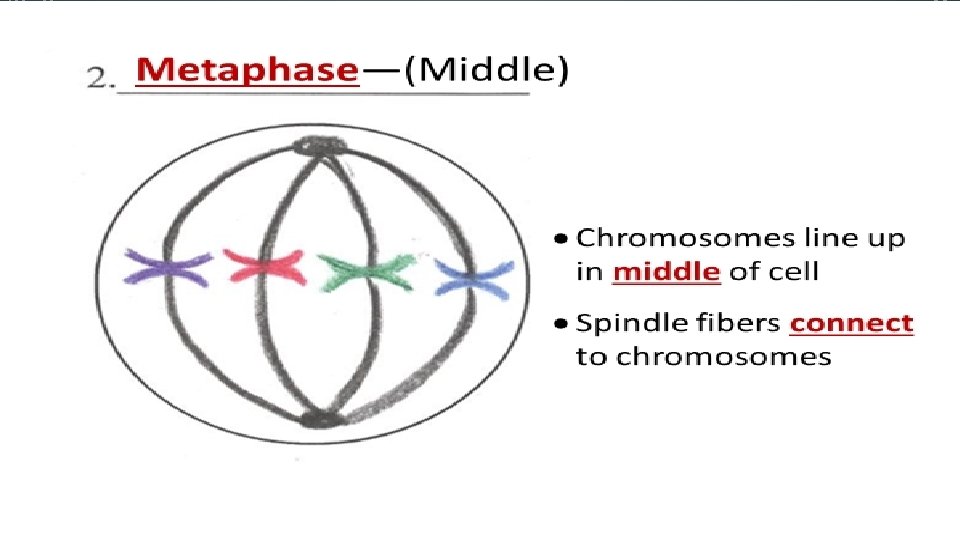
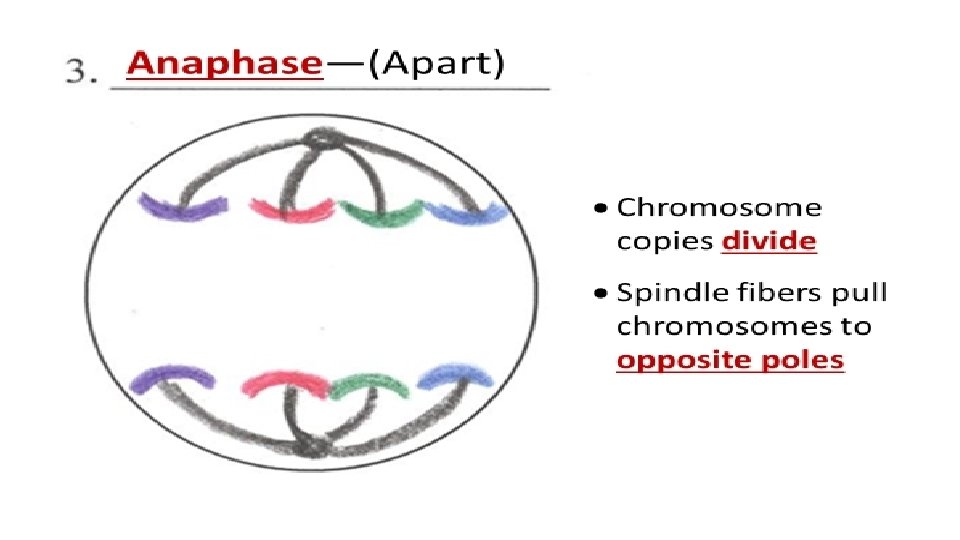
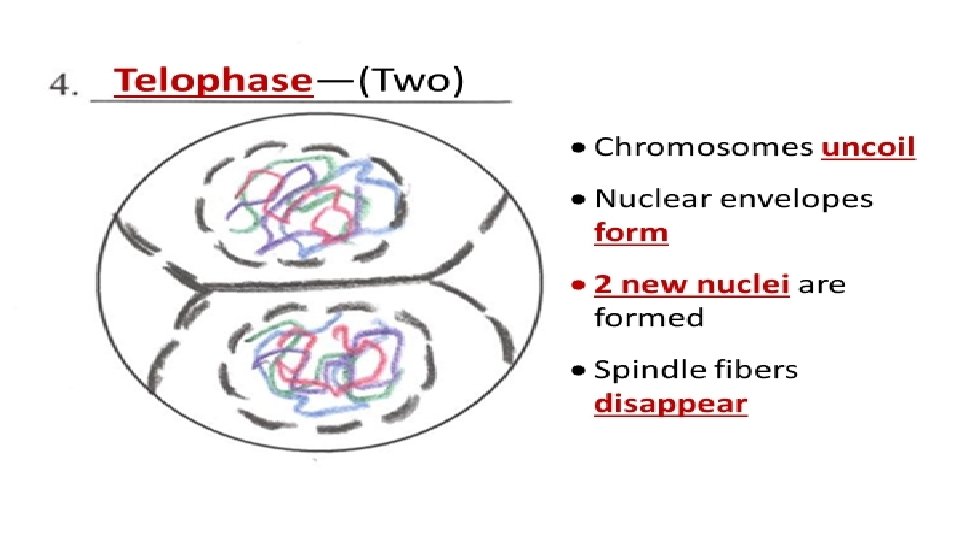
THE CELL CYCLE • Mitosis: is asexual cellular reproduction. It occurs when one cell reproduces without the involvement of another cell by dividing into 2 identical cells. • Interphase: when the cell is performing normal functions, along with preparing for division by copying DNA, and making new organelles. • Mitosis is the most complicated part of cell division and is divided into 4 phases: • Prophase- nucleus disappears, chromosomes become visible, and centrioles move toward the side of the cell. • • Metaphase- chromosomes line up in the center of the cell. Anaphase- chromosomes split and the spindles pull them apart.
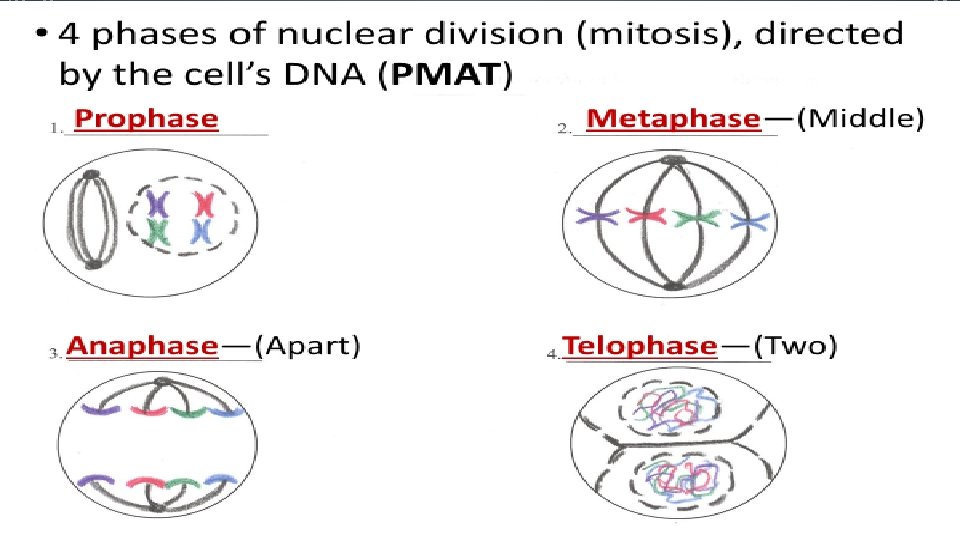
Prophase Anaphase—(Apart) Anaphase- (Apart) Metaphase- (Middle)le) Telophase- (Two)o) • 4 phases of nuclear division (mitosis), directed by the cell’s DNA (PMAT)
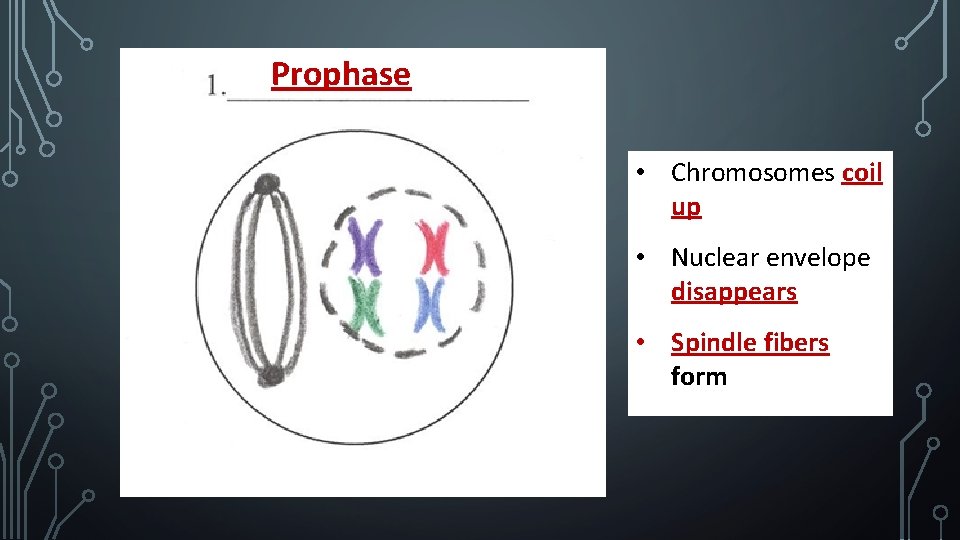
Prophase • Chromosomes coil up • Nuclear envelope disappears • Spindle fibers form
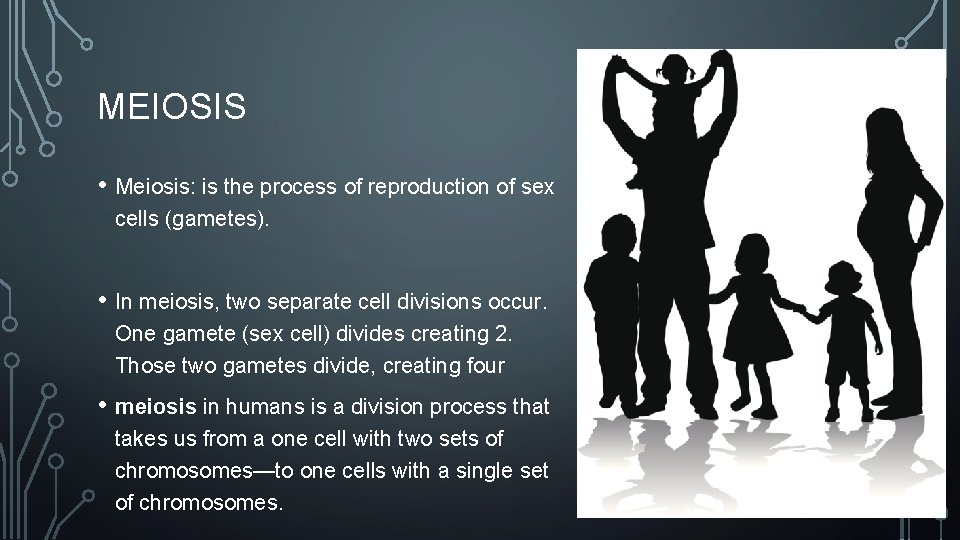
MEIOSIS • Meiosis: is the process of reproduction of sex cells (gametes). • In meiosis, two separate cell divisions occur. One gamete (sex cell) divides creating 2. Those two gametes divide, creating four • meiosis in humans is a division process that takes us from a one cell with two sets of chromosomes—to one cells with a single set of chromosomes.
MICROORGANISMS
- Slides: 26