
The Cell Types of Cells Parts of Cells
- Slides: 17
The Cell Types of Cells Parts of Cells
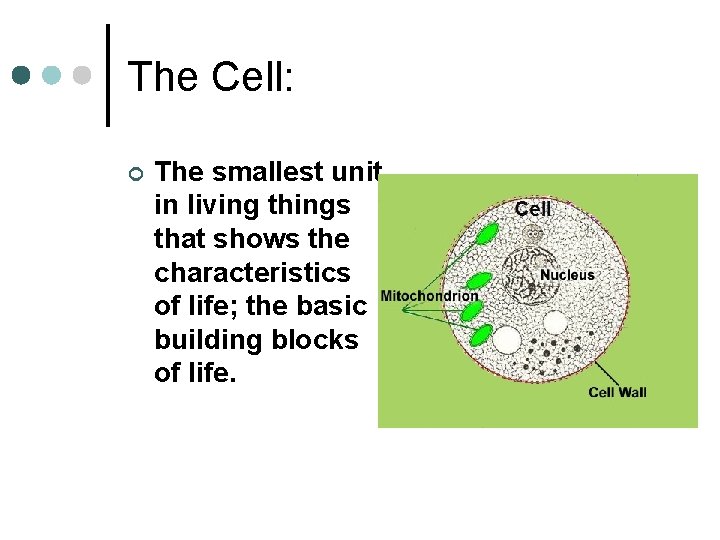
The Cell: ¢ The smallest unit in living things that shows the characteristics of life; the basic building blocks of life.
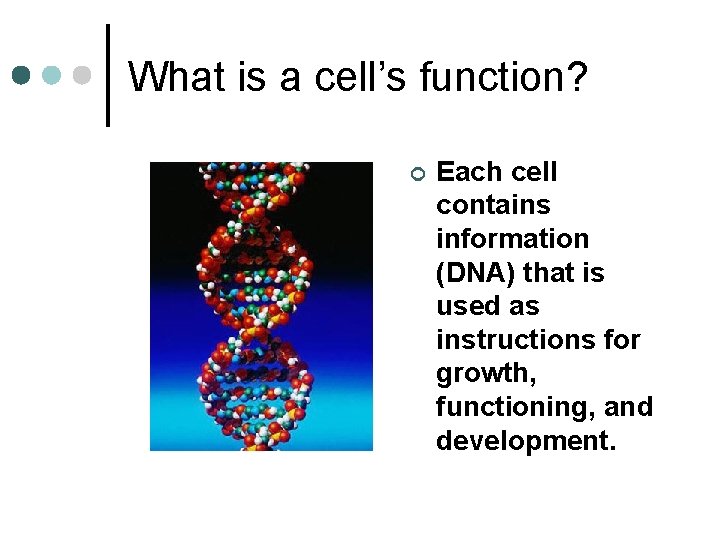
What is a cell’s function? ¢ Each cell contains information (DNA) that is used as instructions for growth, functioning, and development.
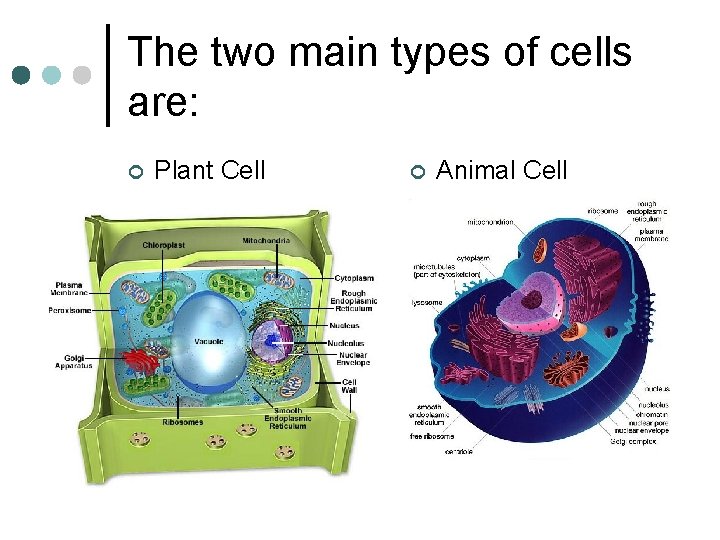
The two main types of cells are: ¢ Plant Cell ¢ Animal Cell
What are cells made of? ¢ Made up of tiny membranebound structures called ORGANELLES. Each organelle is a specialized structure that carries out a specific role in the cell.
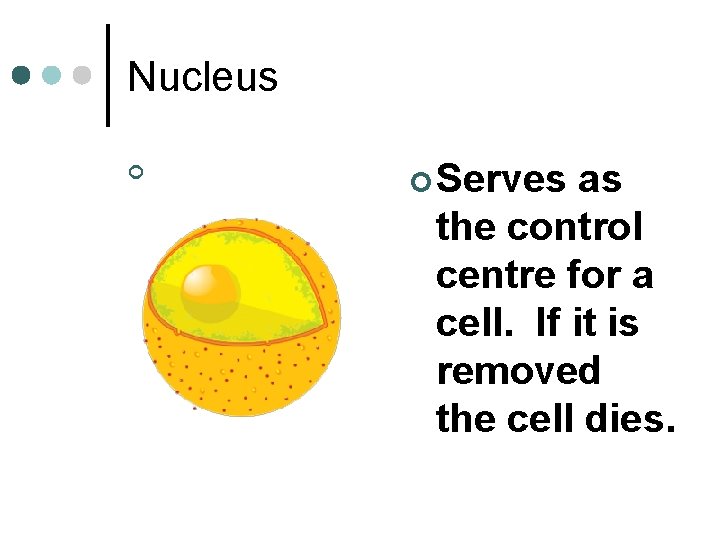
Nucleus ¢ ¢ Serves as the control centre for a cell. If it is removed the cell dies.
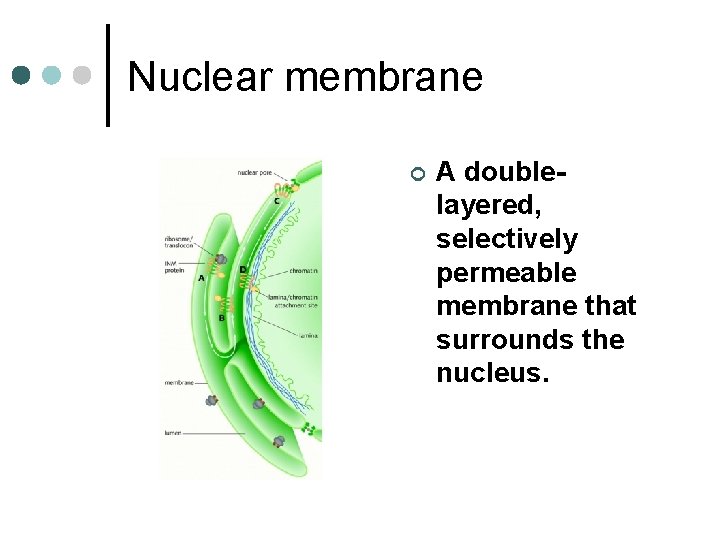
Nuclear membrane ¢ A doublelayered, selectively permeable membrane that surrounds the nucleus.
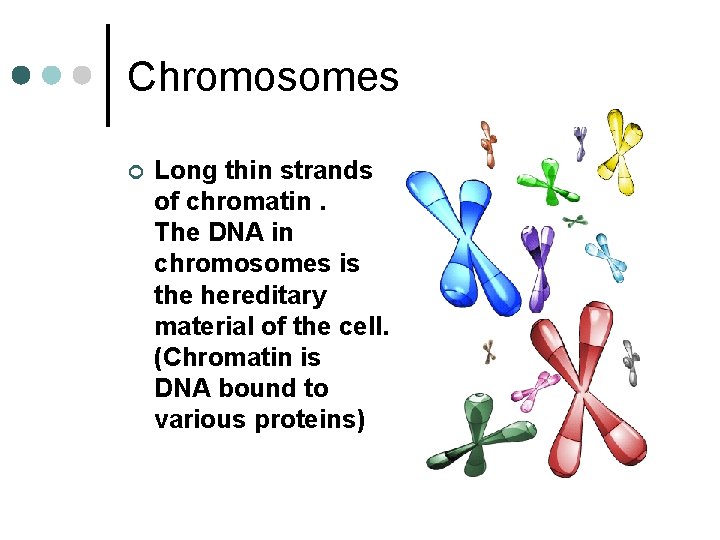
Chromosomes ¢ Long thin strands of chromatin. The DNA in chromosomes is the hereditary material of the cell. (Chromatin is DNA bound to various proteins)
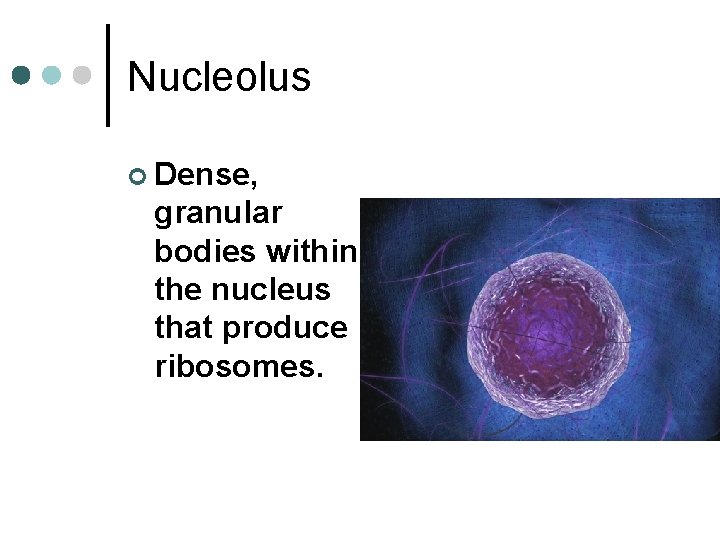
Nucleolus ¢ Dense, granular bodies within the nucleus that produce ribosomes.
¢ ¢ Cytoplasm: The watery material lying within the cell between the cell membrane and the nucleus. ¢ ¢ Lysosome Small, sac like structures that digest and breakdown materials in the cell.
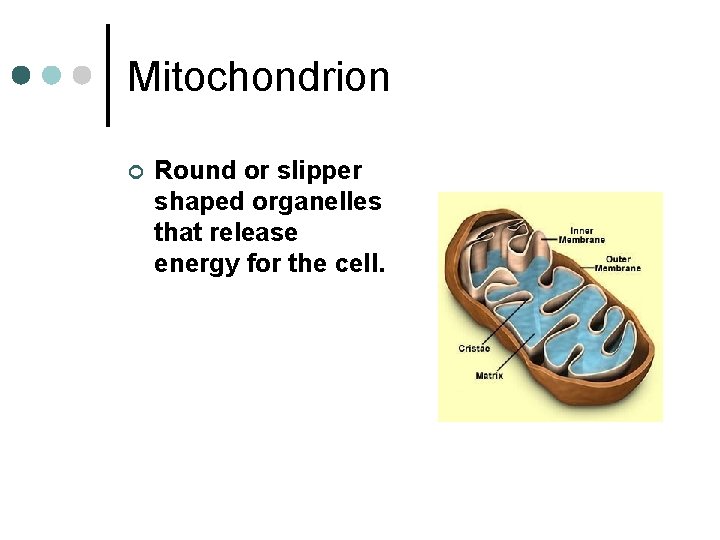
Mitochondrion ¢ Round or slipper shaped organelles that release energy for the cell.
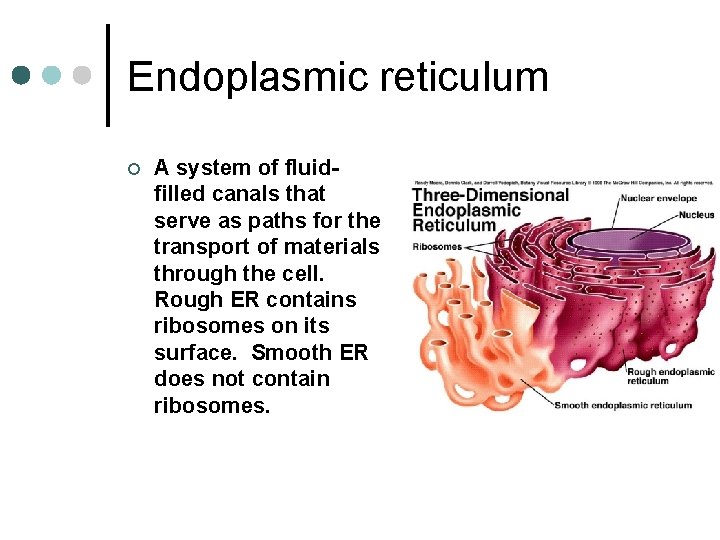
Endoplasmic reticulum ¢ A system of fluidfilled canals that serve as paths for the transport of materials through the cell. Rough ER contains ribosomes on its surface. Smooth ER does not contain ribosomes.
¢ ¢ Ribosome Small particles in the cell where protein is made. ¢ ¢ golgi body Stacks of flattened membrane sacs that serve as processing, packaging and storage centres for the products released from the cell.
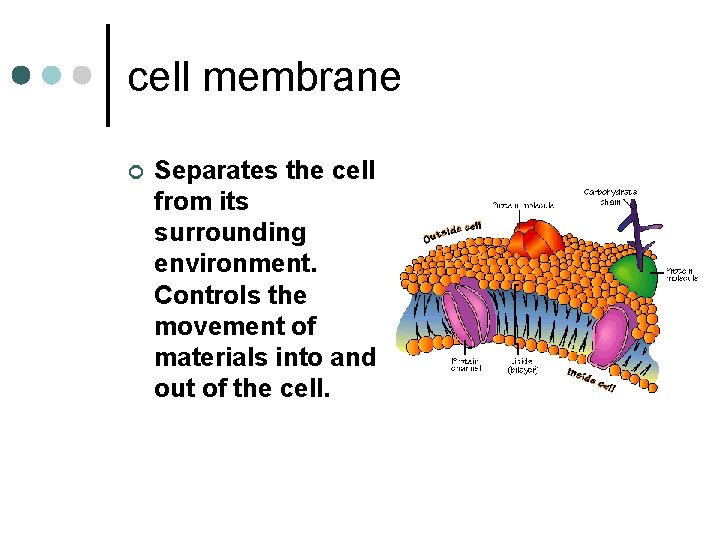
cell membrane ¢ Separates the cell from its surrounding environment. Controls the movement of materials into and out of the cell.
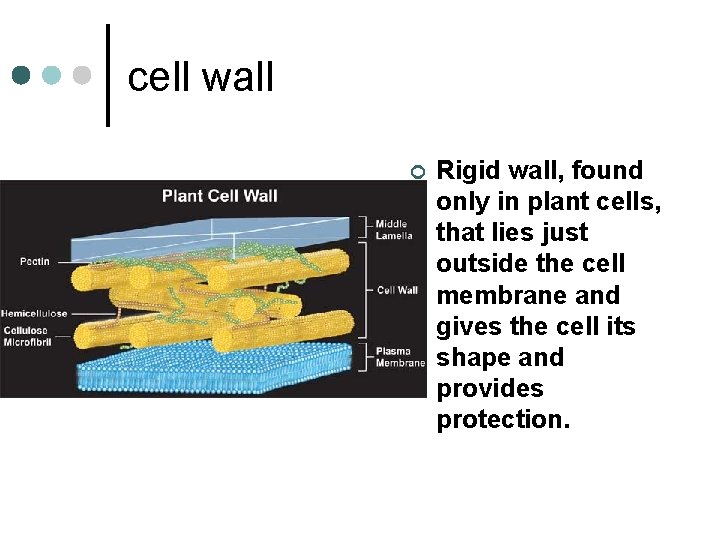
cell wall ¢ Rigid wall, found only in plant cells, that lies just outside the cell membrane and gives the cell its shape and provides protection.
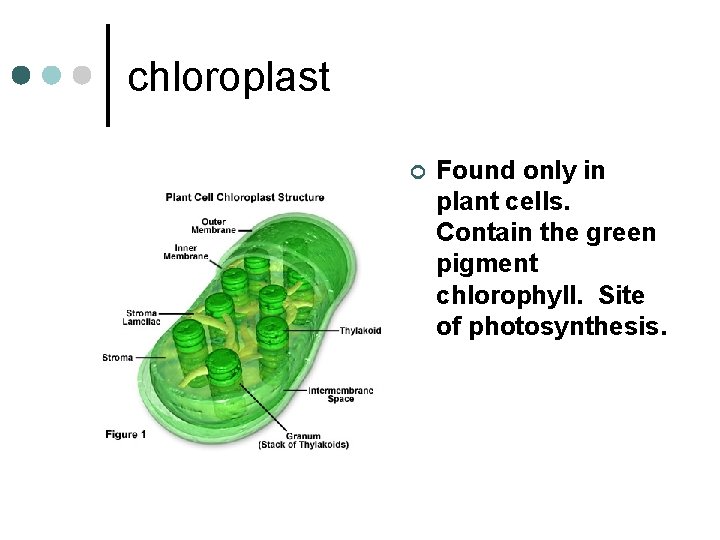
chloroplast ¢ Found only in plant cells. Contain the green pigment chlorophyll. Site of photosynthesis.
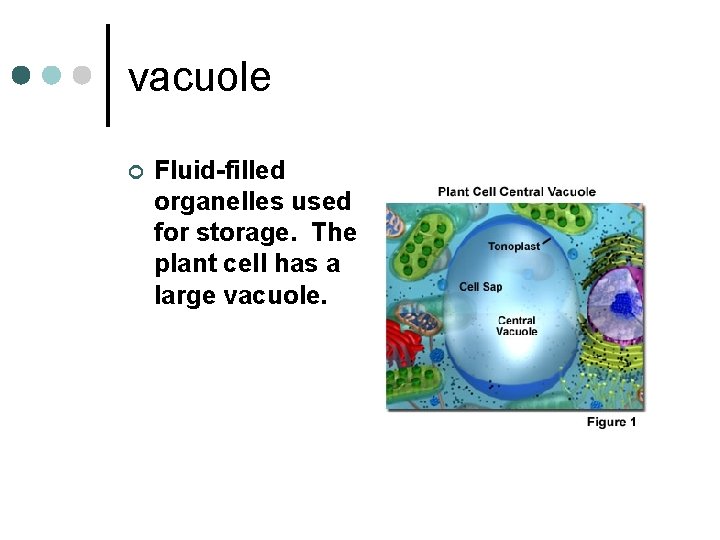
vacuole ¢ Fluid-filled organelles used for storage. The plant cell has a large vacuole.