
The Cell Theory Organization of Matter Atoms smallest
- Slides: 23
The Cell Theory
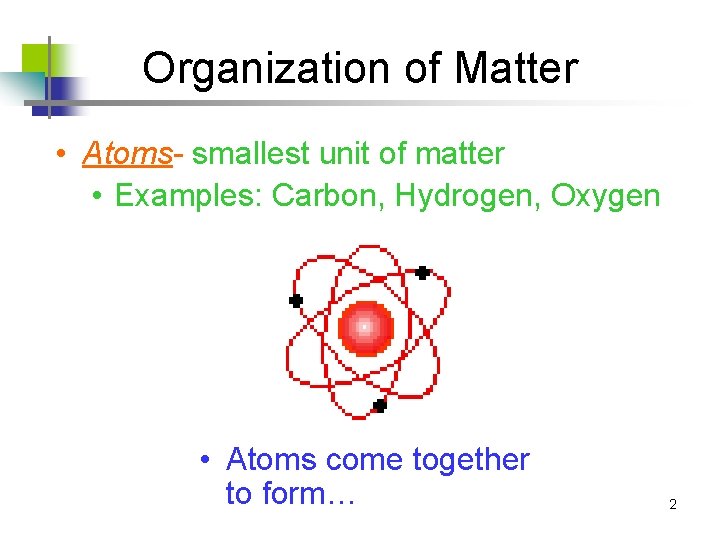
Organization of Matter • Atoms- smallest unit of matter • Examples: Carbon, Hydrogen, Oxygen • Atoms come together to form… 2
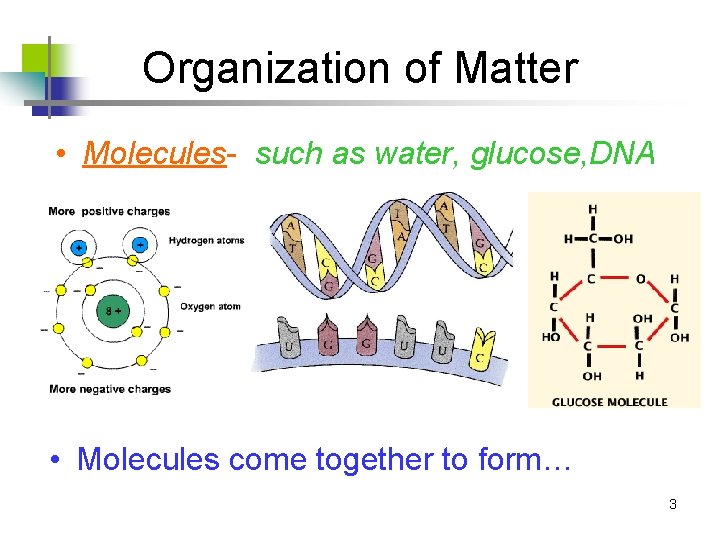
Organization of Matter • Molecules- such as water, glucose, DNA • Molecules come together to form… 3
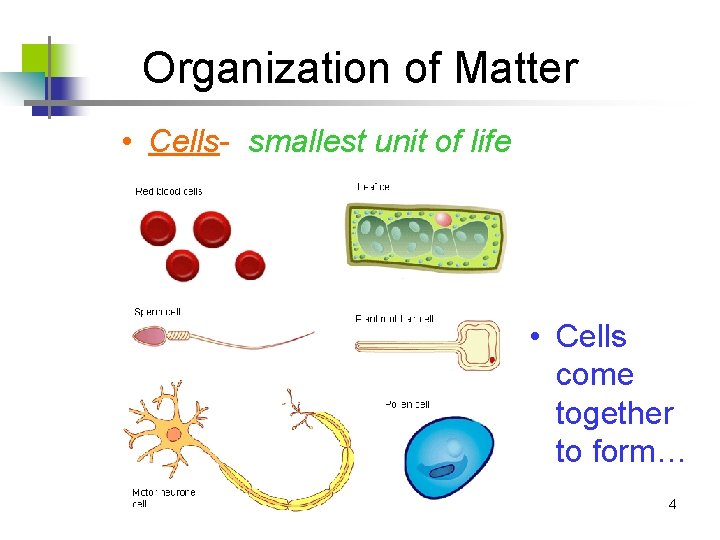
Organization of Matter • Cells- smallest unit of life • Cells come together to form… 4
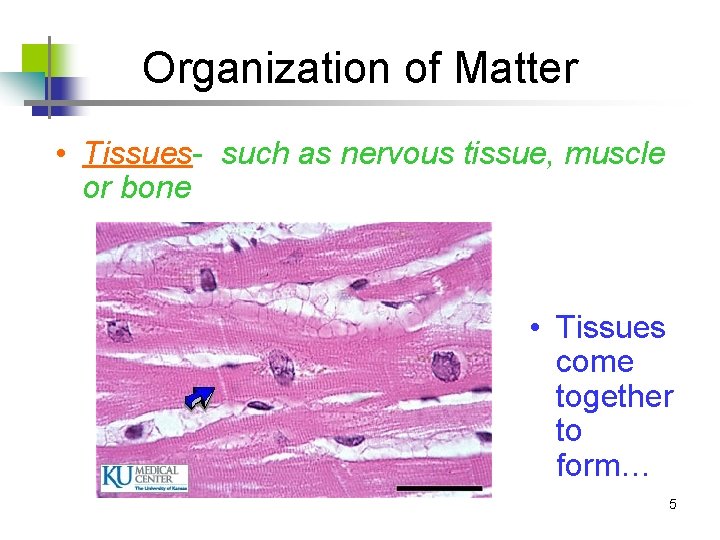
Organization of Matter • Tissues- such as nervous tissue, muscle or bone • Tissues come together to form… 5
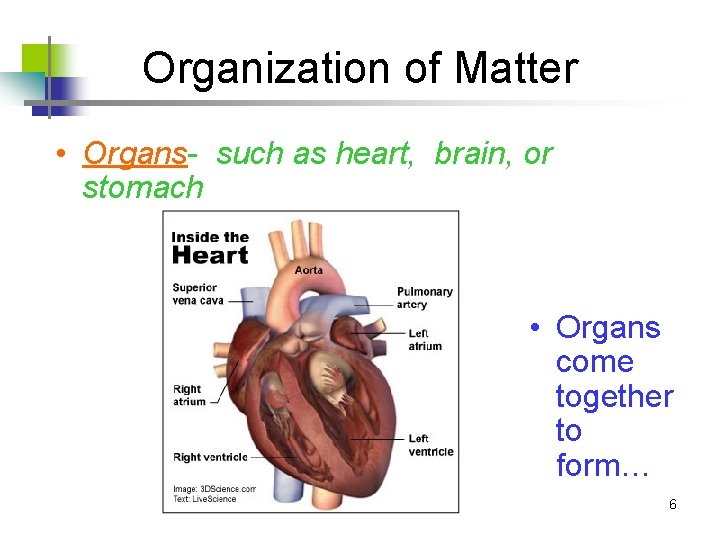
Organization of Matter • Organs- such as heart, brain, or stomach • Organs come together to form… 6
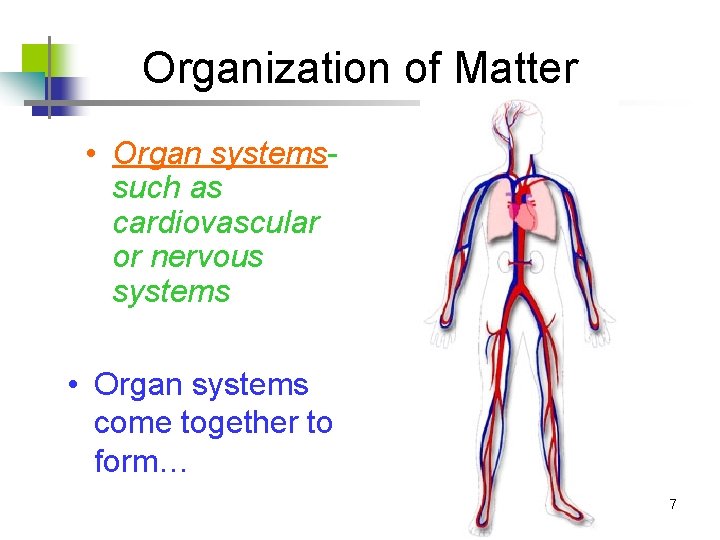
Organization of Matter • Organ systemssuch as cardiovascular or nervous systems • Organ systems come together to form… 7
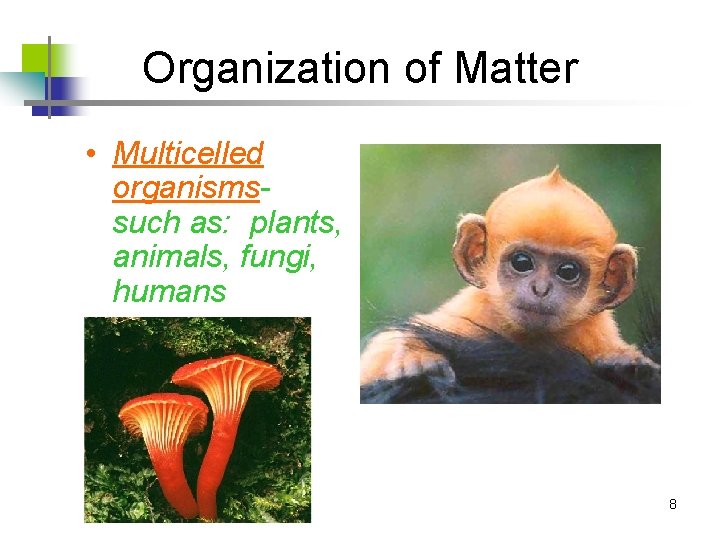
Organization of Matter • Multicelled organismssuch as: plants, animals, fungi, humans 8
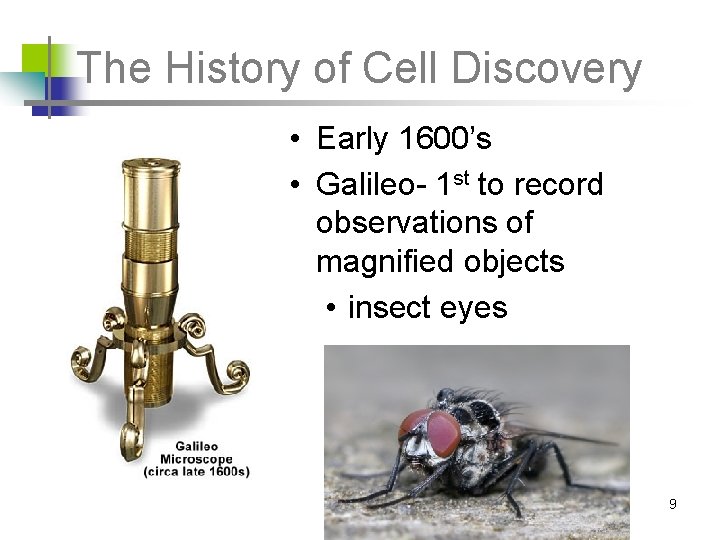
The History of Cell Discovery • Early 1600’s • Galileo- 1 st to record observations of magnified objects • insect eyes 9
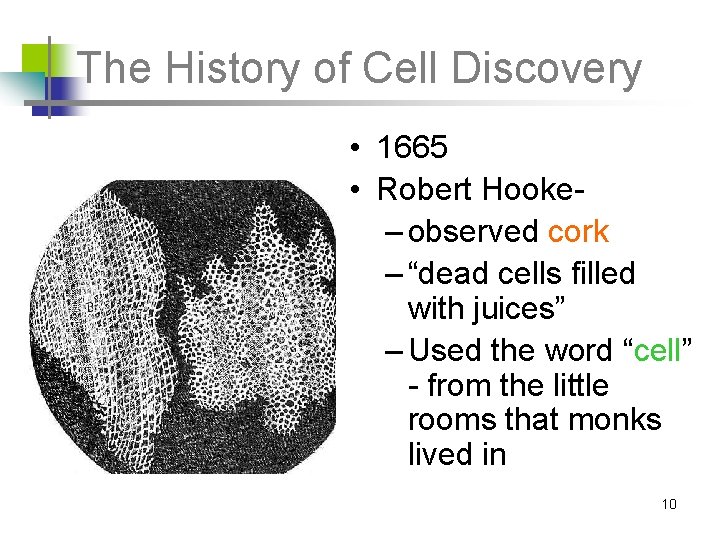
The History of Cell Discovery • 1665 • Robert Hooke– observed cork – “dead cells filled with juices” – Used the word “cell” - from the little rooms that monks lived in 10
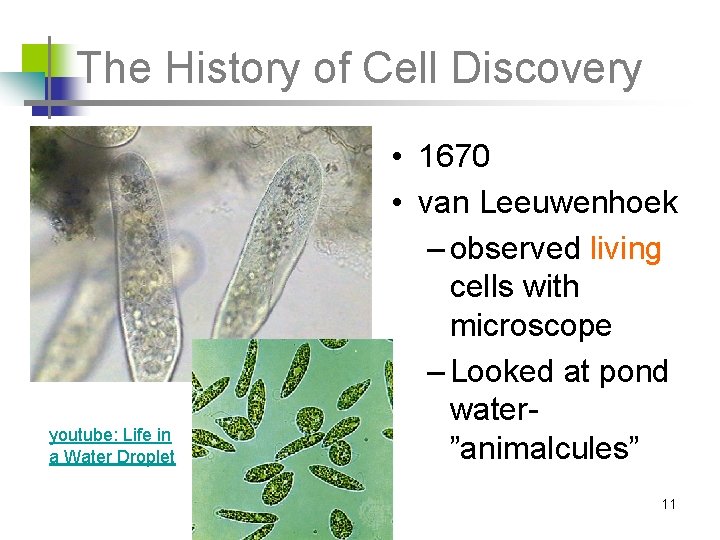
The History of Cell Discovery youtube: Life in a Water Droplet • 1670 • van Leeuwenhoek – observed living cells with microscope – Looked at pond water”animalcules” 11
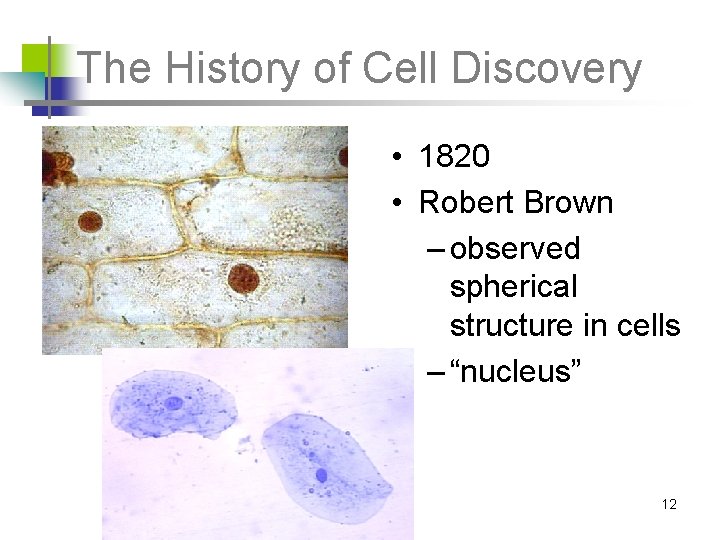
The History of Cell Discovery • 1820 • Robert Brown – observed spherical structure in cells – “nucleus” 12
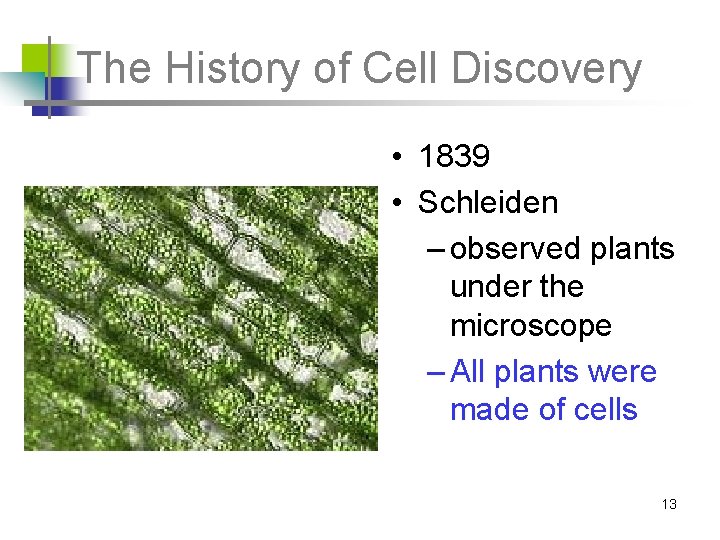
The History of Cell Discovery • 1839 • Schleiden – observed plants under the microscope – All plants were made of cells 13
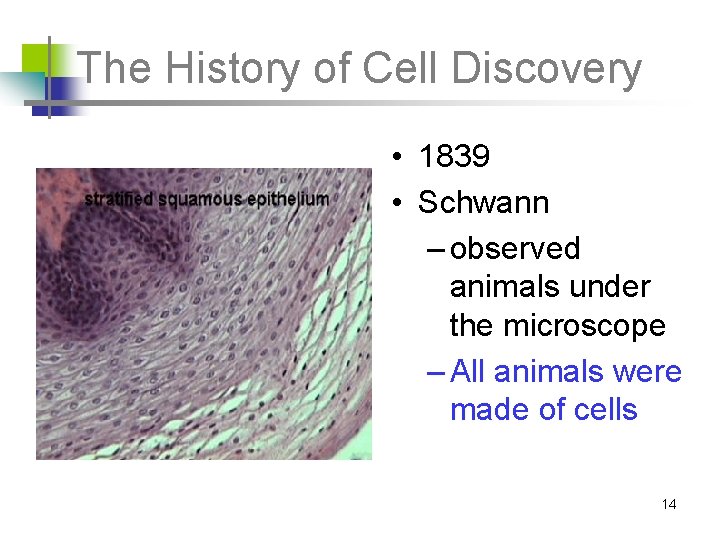
The History of Cell Discovery • 1839 • Schwann – observed animals under the microscope – All animals were made of cells 14
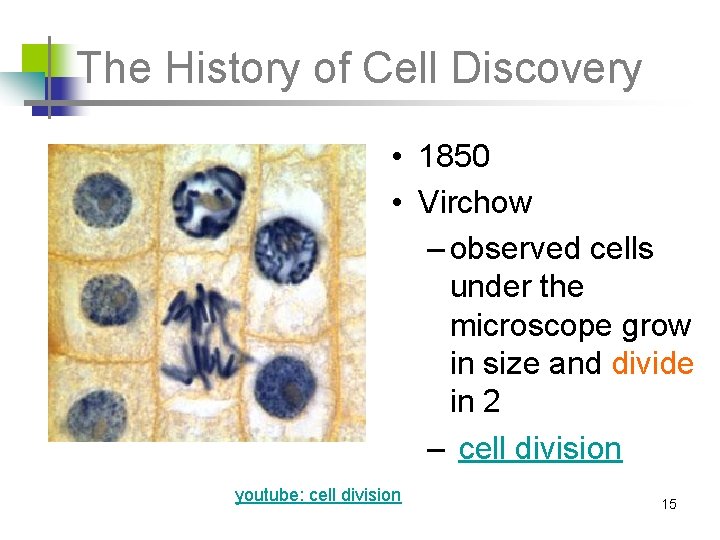
The History of Cell Discovery • 1850 • Virchow – observed cells under the microscope grow in size and divide in 2 – cell division youtube: cell division 15
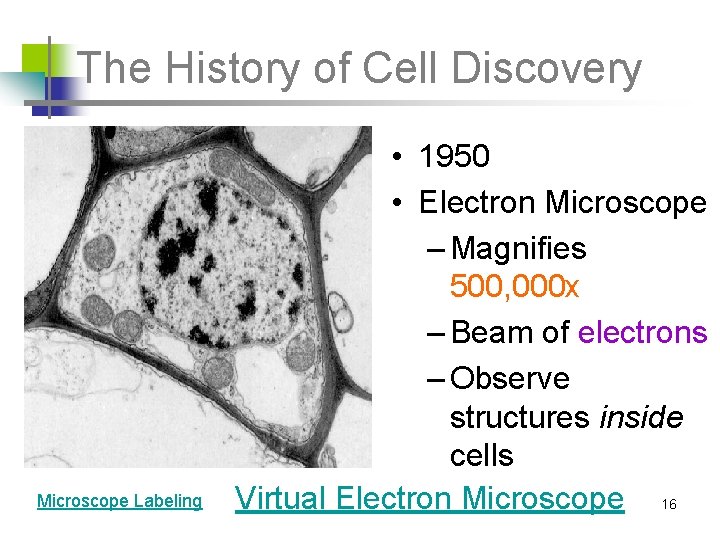
The History of Cell Discovery Microscope Labeling • 1950 • Electron Microscope – Magnifies 500, 000 x – Beam of electrons – Observe structures inside cells Virtual Electron Microscope 16
The Cell Theory • The observations and conclusions of these and other scientists led to the development of The Cell Theory: 1. All organisms are made of one or more cells. 2. The cell is the basic unit of life. 3. All cells come from pre-existing cells 17
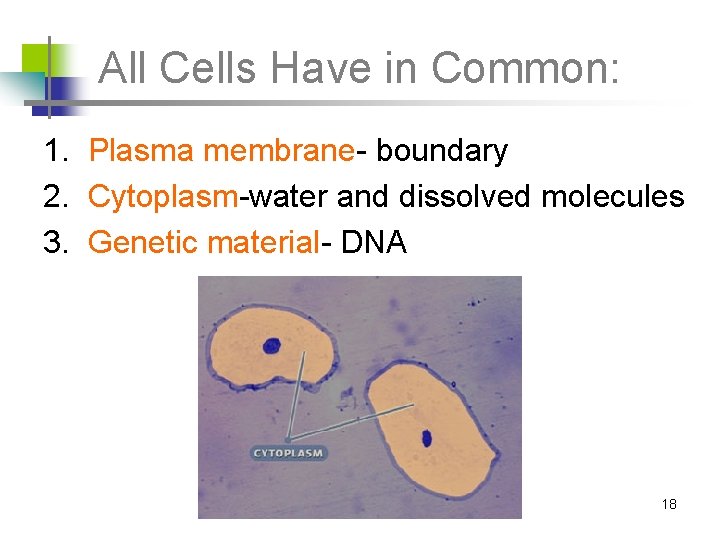
All Cells Have in Common: 1. Plasma membrane- boundary 2. Cytoplasm-water and dissolved molecules 3. Genetic material- DNA 18
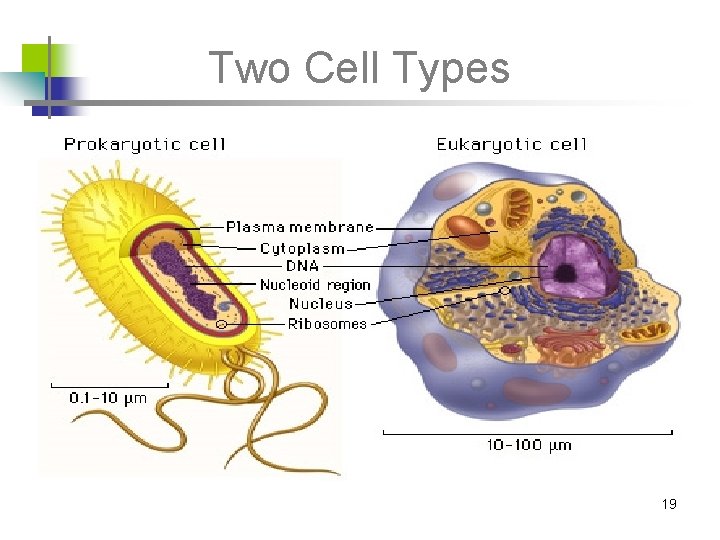
Two Cell Types 19
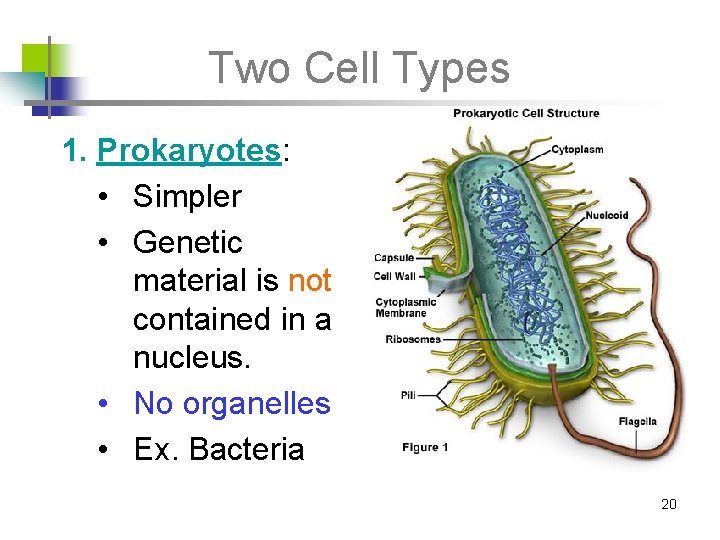
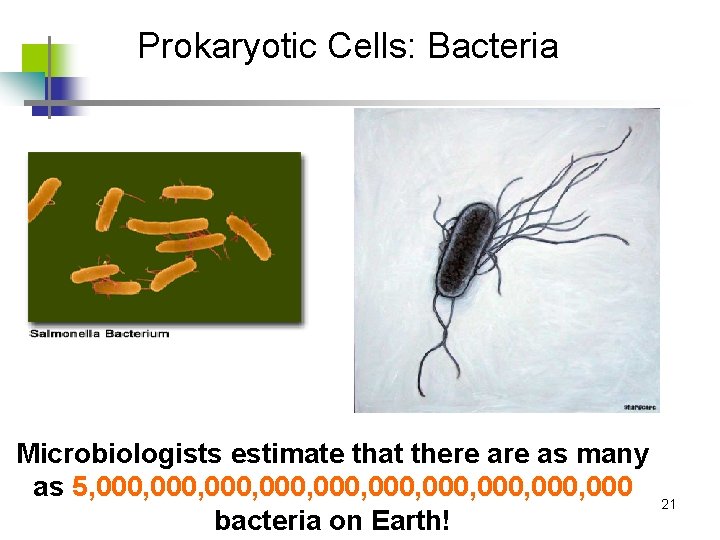
Two Cell Types 1. Prokaryotes: • Simpler • Genetic material is not contained in a nucleus. • No organelles • Ex. Bacteria 20
Prokaryotic Cells: Bacteria Microbiologists estimate that there as many as 5, 000, 000, 000 bacteria on Earth! 21
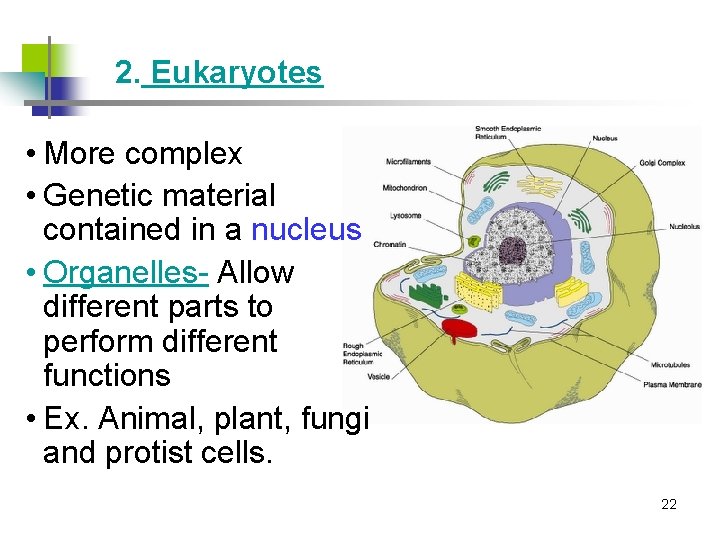
2. Eukaryotes • More complex • Genetic material contained in a nucleus • Organelles- Allow different parts to perform different functions • Ex. Animal, plant, fungi and protist cells. 22
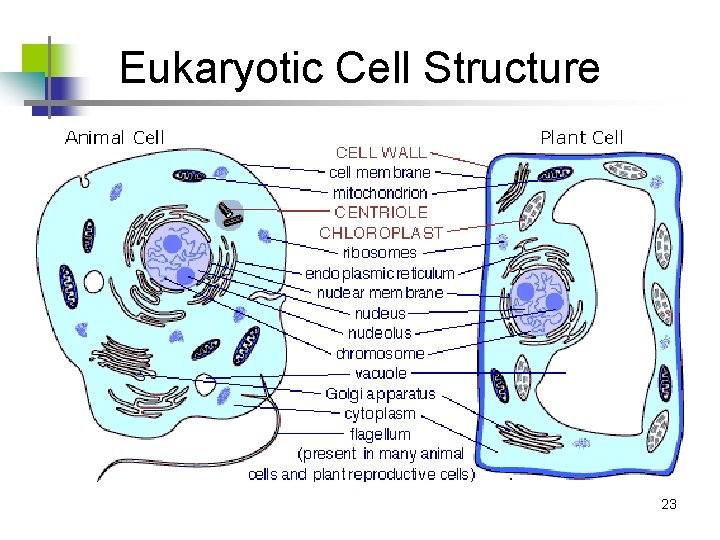
Eukaryotic Cell Structure 23