
The Cell Theory Modern Cell Theory o All

- Slides: 13
The Cell Theory
Modern Cell Theory o All living things are composed of one or more cells. o The cell is the functional unit of life o All cells come from preexisting cells
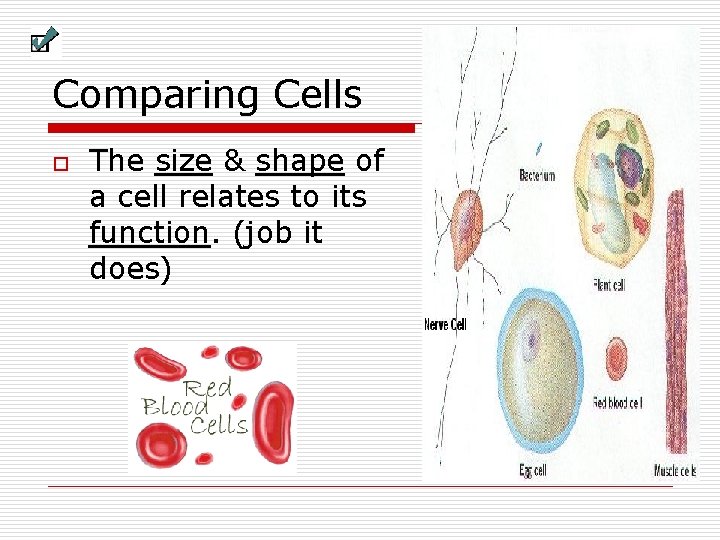
Comparing Cells o The size & shape of a cell relates to its function. (job it does)
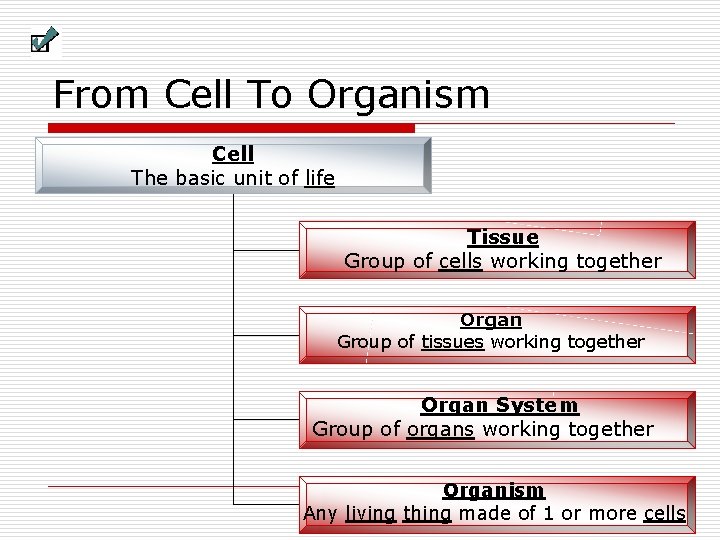
From Cell To Organism Cell The basic unit of life Tissue Group of cells working together Organ Group of tissues working together Organ System Group of organs working together Organism Any living thing made of 1 or more cells
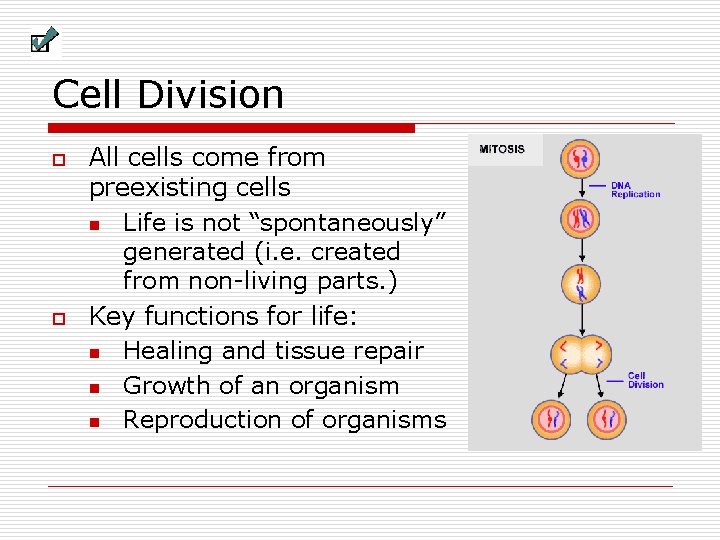
Cell Division o o All cells come from preexisting cells n Life is not “spontaneously” generated (i. e. created from non-living parts. ) Key functions for life: n Healing and tissue repair n Growth of an organism n Reproduction of organisms
Two Kinds Of Cells o Prokaryotic Cells (proh KAYR ee yah tihk) n n o o cells without membrane-bound structures EX: bacteria, pond scum Eukaryotic Cells (yew KAYR ee yah tihk) n cells with membrane-bound structures n EX: animals, plants, fungi and protists Our focus will be Eukaryotic Cells
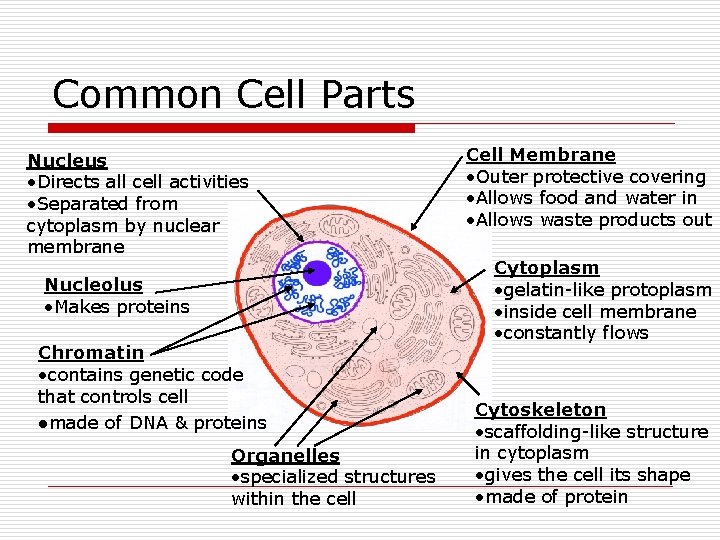
Common Cell Parts Nucleus • Directs all cell activities • Separated from cytoplasm by nuclear membrane Nucleolus • Makes proteins Chromatin • contains genetic code that controls cell lmade of DNA & proteins Organelles • specialized structures within the cell Cell Membrane • Outer protective covering • Allows food and water in • Allows waste products out Cytoplasm • gelatin-like protoplasm • inside cell membrane • constantly flows Cytoskeleton • scaffolding-like structure in cytoplasm • gives the cell its shape • made of protein
Lesson #2
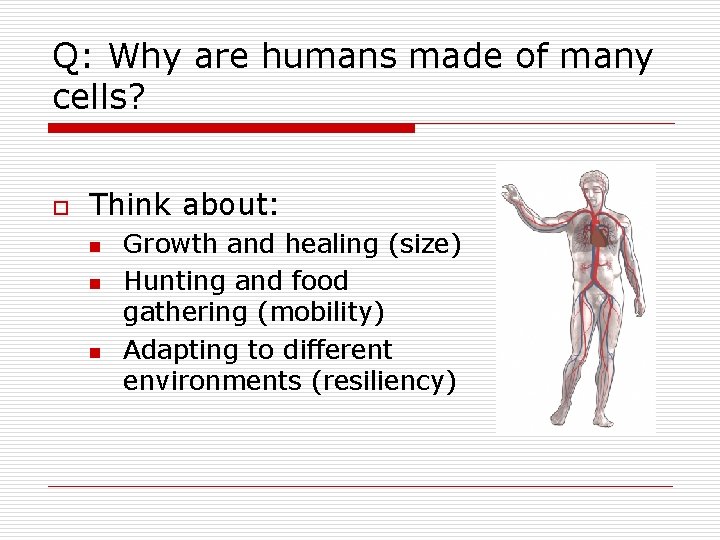
Q: Why are humans made of many cells? o Think about: n n n Growth and healing (size) Hunting and food gathering (mobility) Adapting to different environments (resiliency)
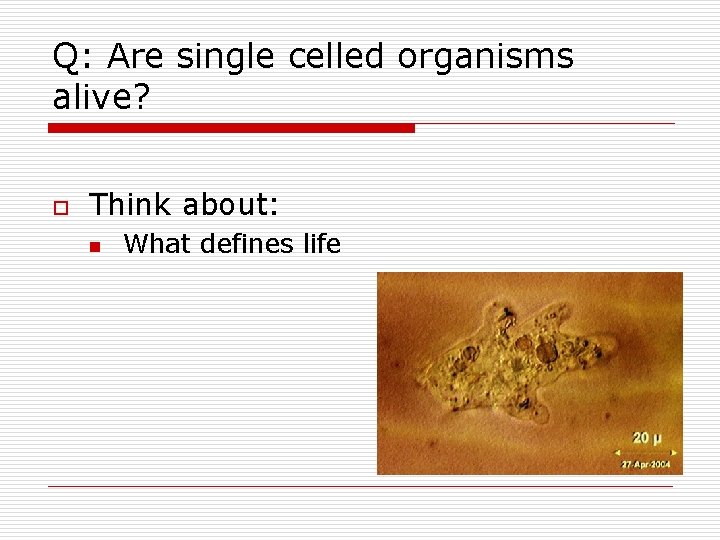
Q: Are single celled organisms alive? o Think about: n What defines life
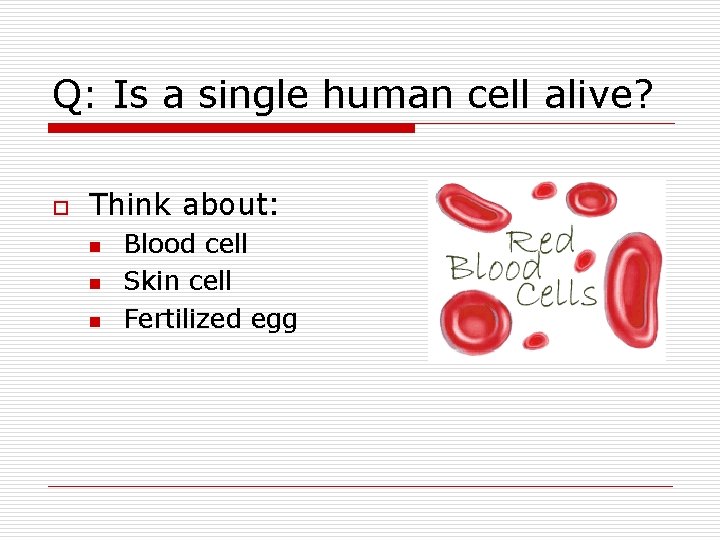
Q: Is a single human cell alive? o Think about: n n n Blood cell Skin cell Fertilized egg
Common Misconceptions o o o Misconception: All animal cells are circular and all plant cells are rectangular. n Cells differ widely in terms of shape. Misconception: All animal and/or plant cells are identical in terms of structure. For example, all cells contain a nucleus. n Red blood cells are enucleated. Misconception: Cells contain only the genetic material that they use. For instance, a skin cell has DNA only for the functioning of that skin cell. n All cells contain the DNA of the whole genome yet express only the genes that are crucial to their functioning.
Plant & Animal Cell Differences o Cell Wall n n o Chloroplasts n o Only plants have chloroplasts for photosynthesis Mitrocondria n o Only plants have a cell wall Provides the “woody” regular structure Animals have more mitrocondria for energy conversion Vacuoles n Plants have bigger vacoules