
The Cell Theory Chapter 3 Dr Altstiel Naples
- Slides: 11
The Cell Theory Chapter 3 Dr. Altstiel Naples High School
Scientist’s and Their Discoveries that Aided in the Development of the Cell Theory
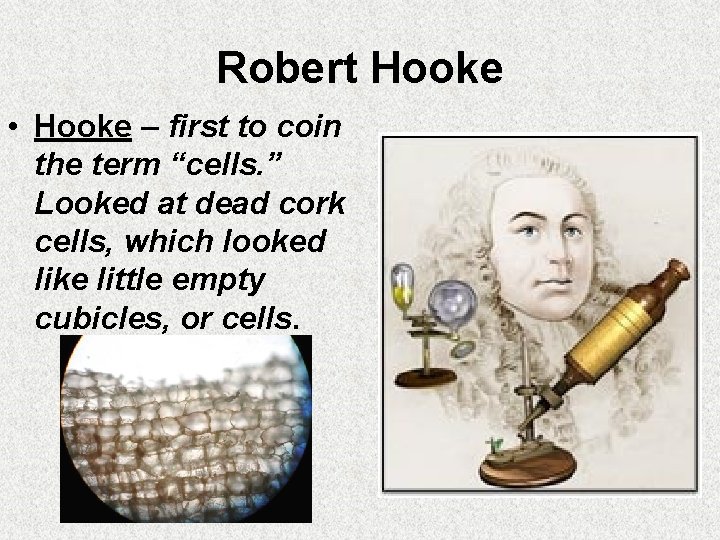
Robert Hooke • Hooke – first to coin the term “cells. ” Looked at dead cork cells, which looked like little empty cubicles, or cells.
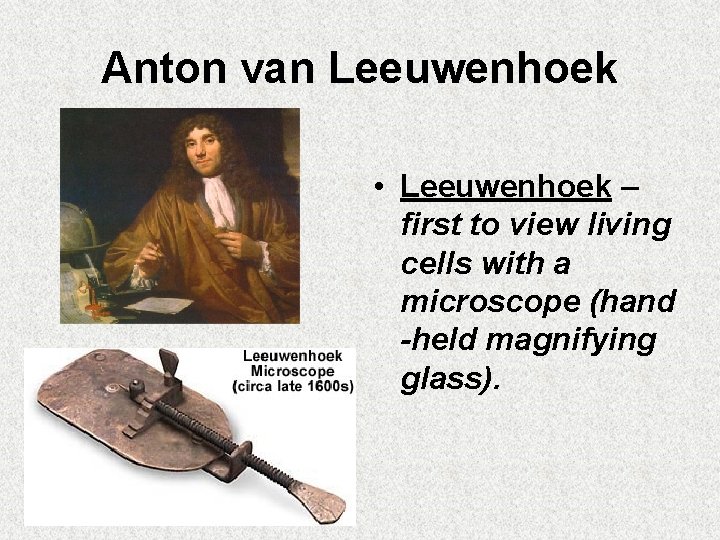
Anton van Leeuwenhoek • Leeuwenhoek – first to view living cells with a microscope (hand -held magnifying glass).
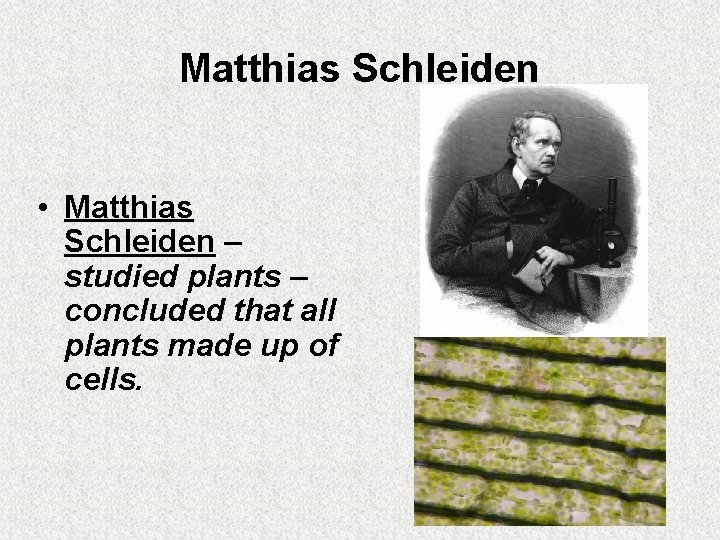
Matthias Schleiden • Matthias Schleiden – studied plants – concluded that all plants made up of cells.
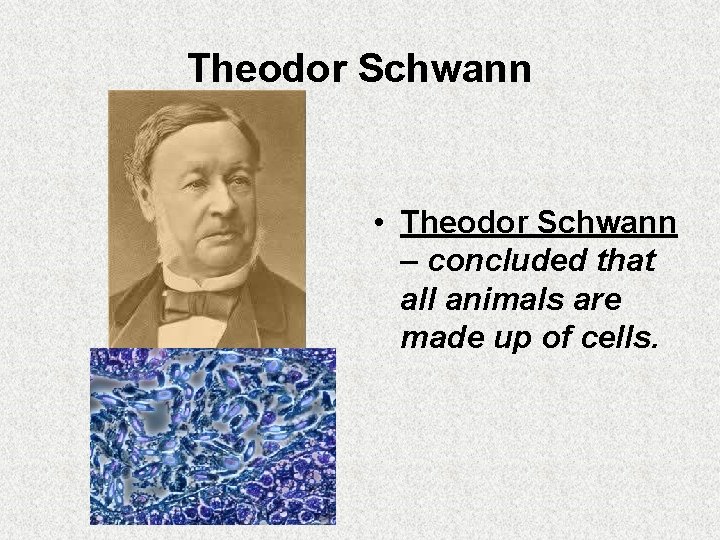
Theodor Schwann • Theodor Schwann – concluded that all animals are made up of cells.
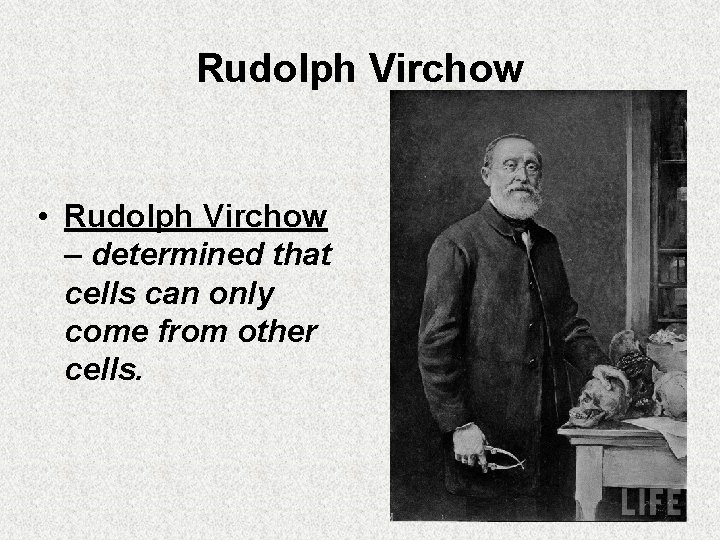
Rudolph Virchow • Rudolph Virchow – determined that cells can only come from other cells.
The Cell Theory 1. All living things are made up of one or more cells. 2. Cells are the basic units of structure and function in organisms. 3. All cells arise from existing cells, or cells can only come from pre-existing cells.
Cell Size • Small cells function more efficiently than large cells. • 100 trillion cells in human body. 5 micrometers to 20 micrometers. • Mycoplasma (smallest cell) =. 2 micrometers • Amoeba = 1000 micrometers • Bird – egg yoke (largest)
Advantage of Multicellularity • Things entering and leaving cell must cross the membrane; therefore a high surface area –to-volume ratio of many small cells is more efficient than a large cell that has a low surface area –tovolume ratio.
Homework • Calculating Surface Area and Volume (Math Lab) 1 -3, Pg 56.