
The Cell Theory Cell Cycle Mitosis The Cell
- Slides: 25
The Cell Theory, Cell Cycle & Mitosis
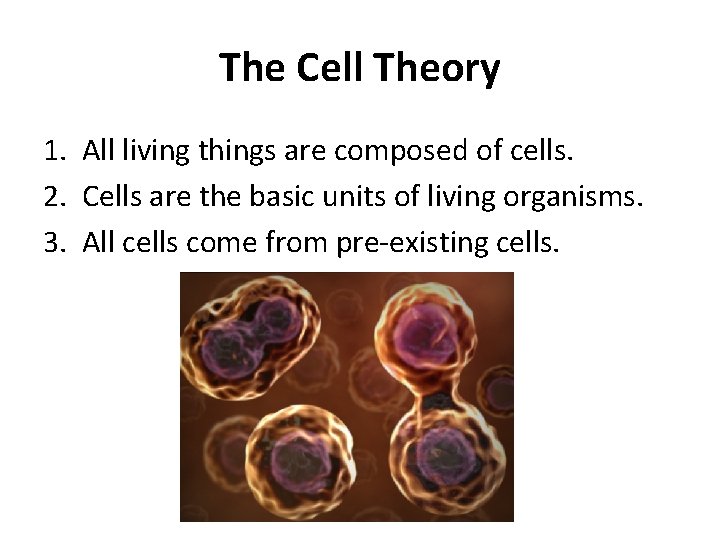
The Cell Theory 1. All living things are composed of cells. 2. Cells are the basic units of living organisms. 3. All cells come from pre-existing cells.
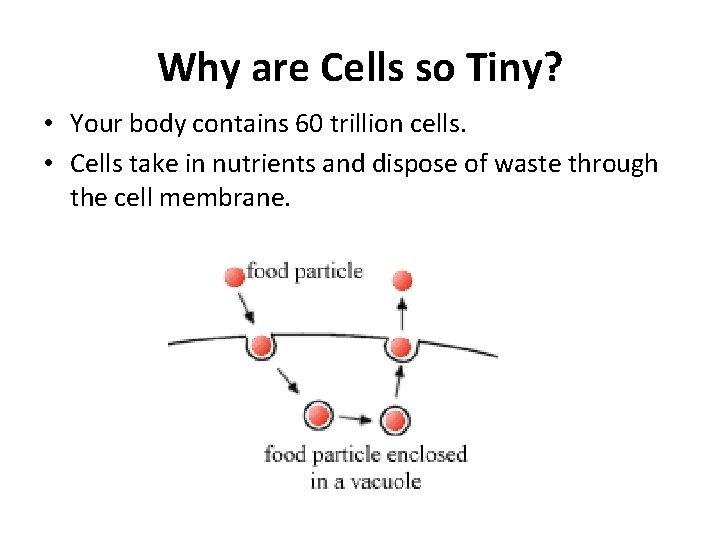
Why are Cells so Tiny? • Your body contains 60 trillion cells. • Cells take in nutrients and dispose of waste through the cell membrane.
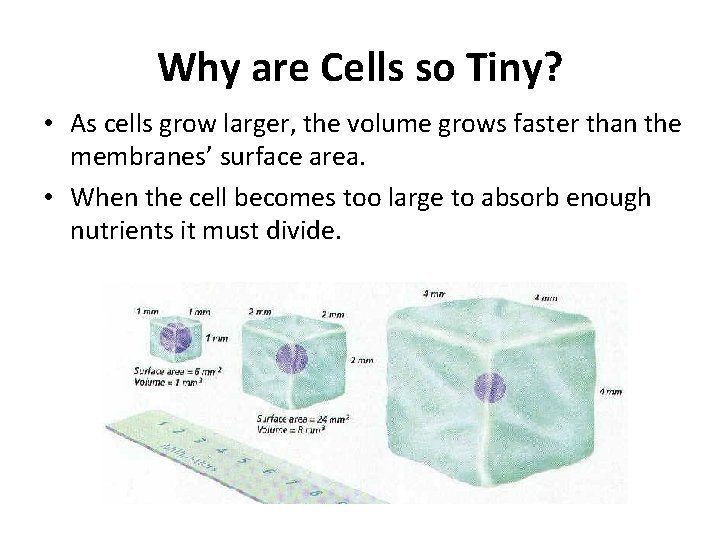
Why are Cells so Tiny? • As cells grow larger, the volume grows faster than the membranes’ surface area. • When the cell becomes too large to absorb enough nutrients it must divide.
Why do Cells Divide? • Growth: To increase the number of cells in the body. • Repair: To replace dead, damaged or old cells. • Reproduction: Can make exact copies (clones).
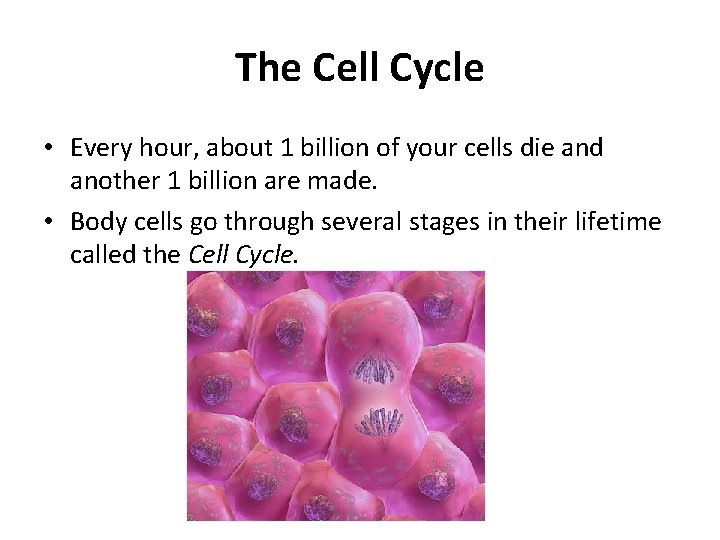
The Cell Cycle • Every hour, about 1 billion of your cells die and another 1 billion are made. • Body cells go through several stages in their lifetime called the Cell Cycle.
The Cell Cycle • The Cell Cycle has 2 parts: 1. Interphase: Cell repairs any damages, re-energizes, grows and prepares for division. 2. Mitosis & Cytokinesis: Division of the cell into 2 identical “daughter” cells.
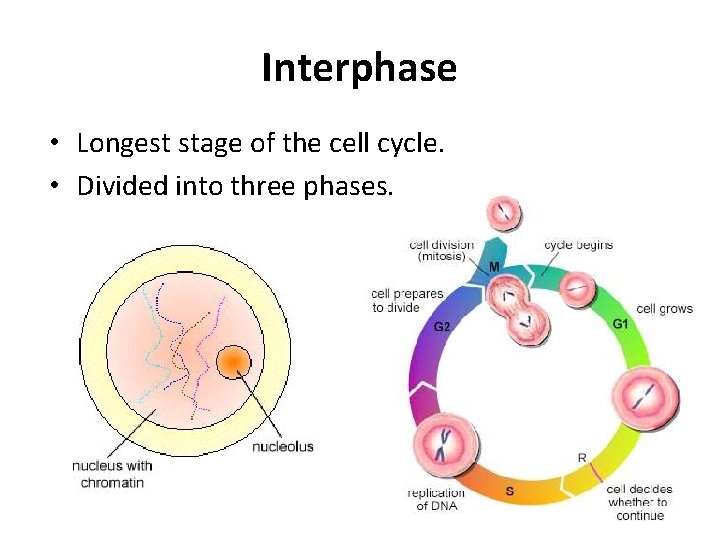
Interphase • Longest stage of the cell cycle. • Divided into three phases.
Interphase • First Gap Phase (G 1): Cells grow in size. New proteins and organelles are made. • Synthesis Phase (S): DNA is replicated (known as chromatin). • Second Gap Phase (G 2): Cells prepare for division.
Cell Division 1. Mitosis (division of the nucleus) - Prophase Metaphase Anaphase Telophase 2. Cytokinesis (division of the cytoplasm)
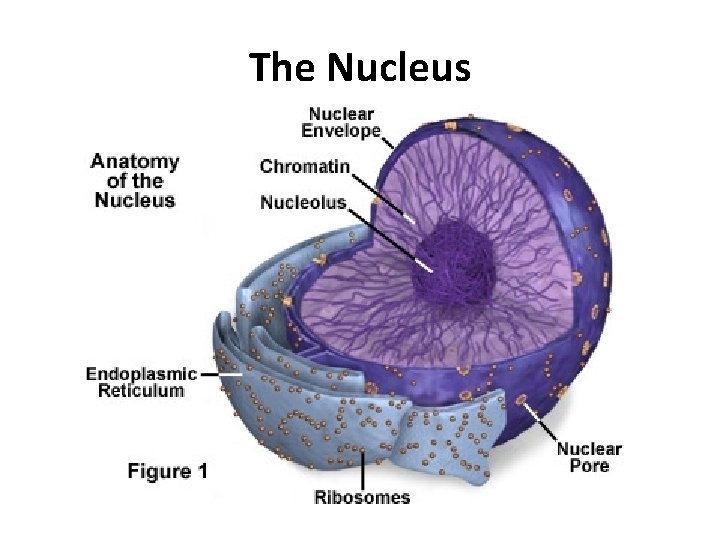
The Nucleus
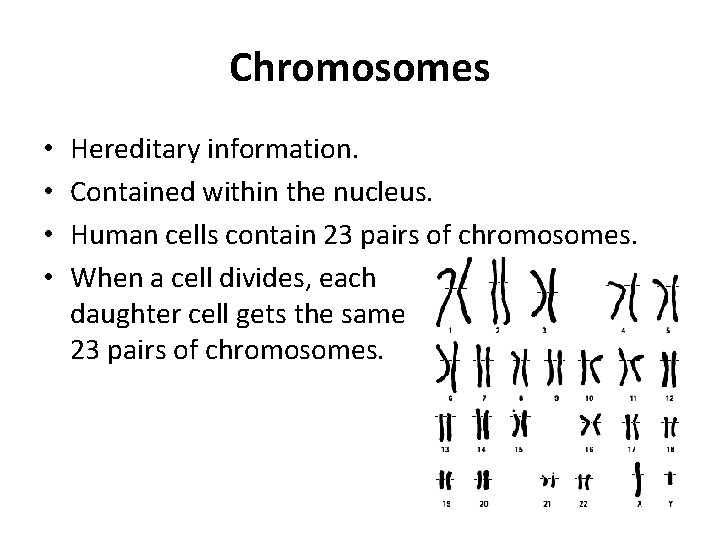
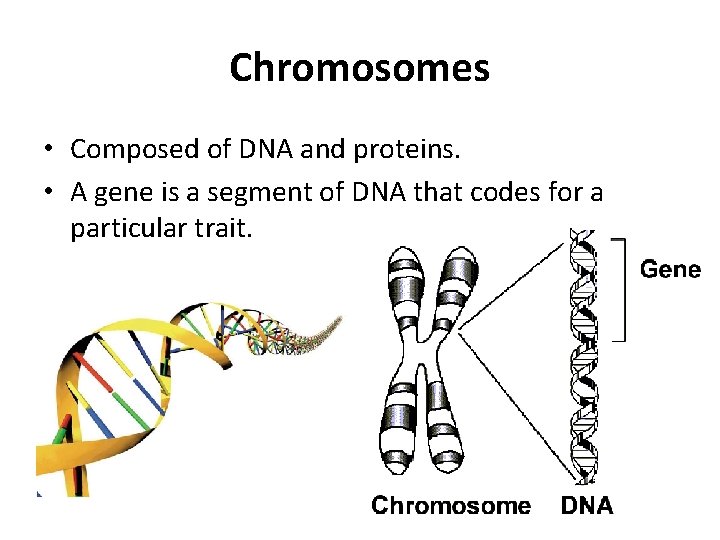
Chromosomes • • Hereditary information. Contained within the nucleus. Human cells contain 23 pairs of chromosomes. When a cell divides, each daughter cell gets the same 23 pairs of chromosomes.
Chromosomes • Composed of DNA and proteins. • A gene is a segment of DNA that codes for a particular trait.
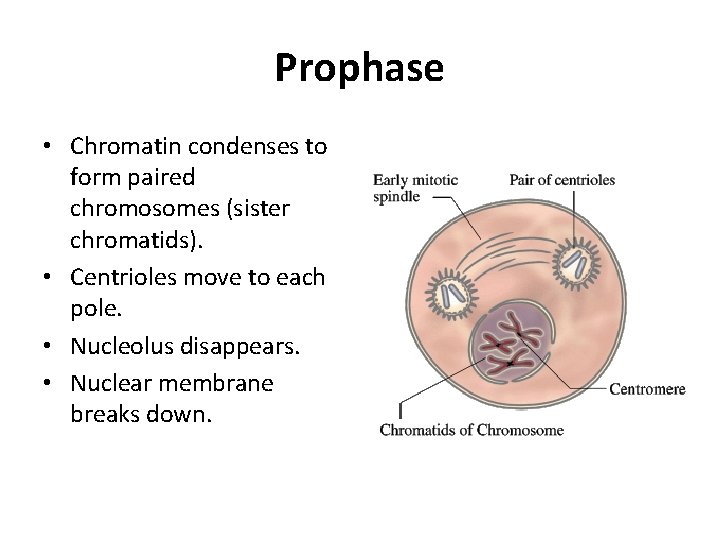
Prophase • Chromatin condenses to form paired chromosomes (sister chromatids). • Centrioles move to each pole. • Nucleolus disappears. • Nuclear membrane breaks down.
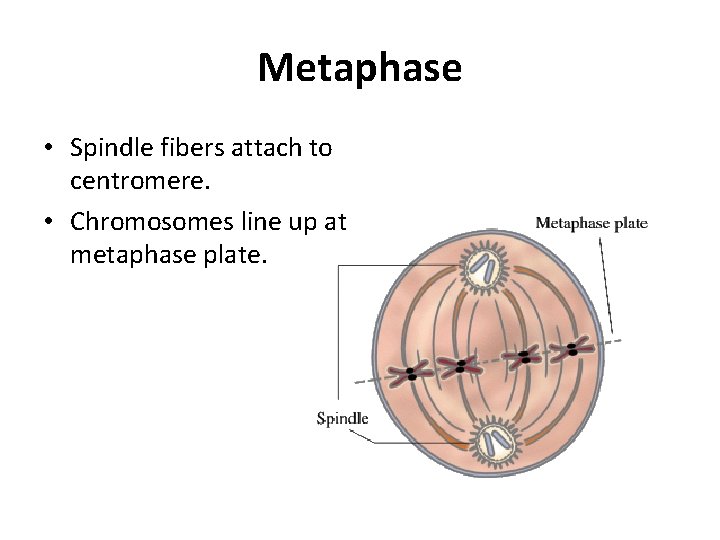
Metaphase • Spindle fibers attach to centromere. • Chromosomes line up at metaphase plate.
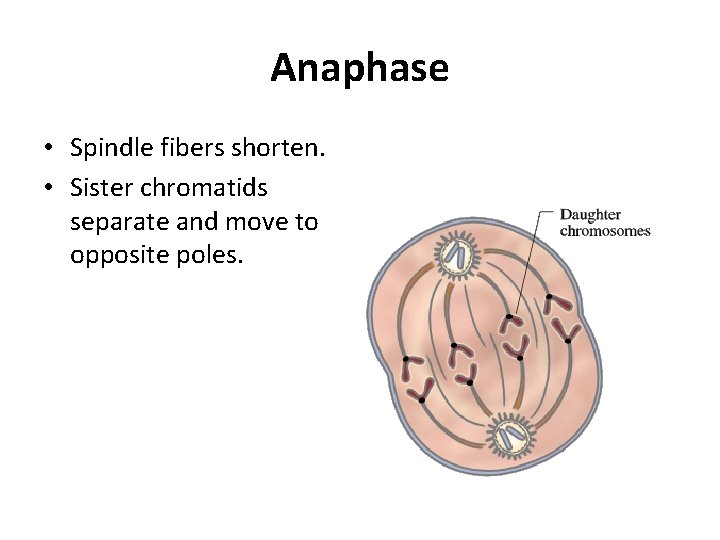
Anaphase • Spindle fibers shorten. • Sister chromatids separate and move to opposite poles.
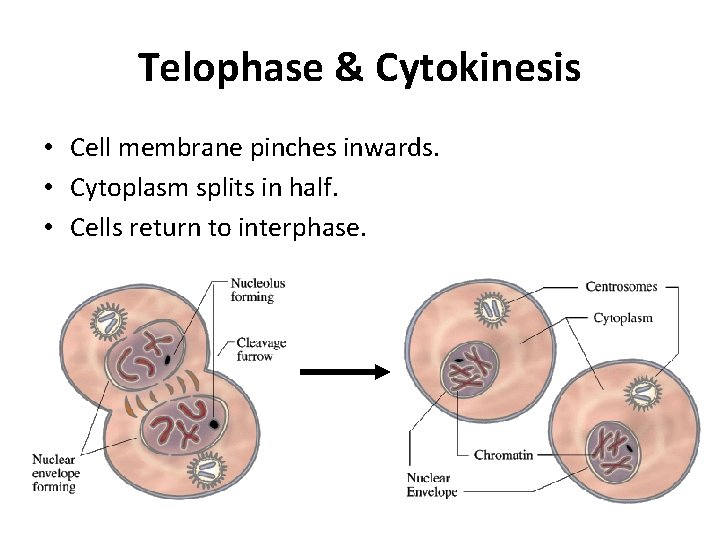
Telophase & Cytokinesis • Cell membrane pinches inwards. • Cytoplasm splits in half. • Cells return to interphase.
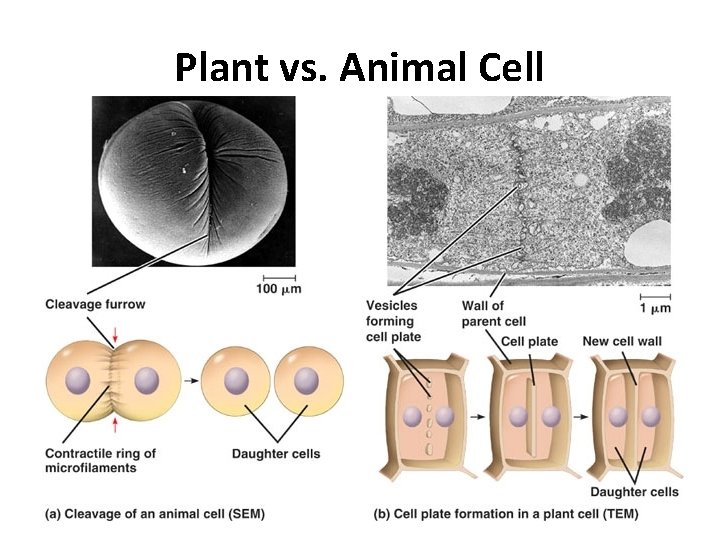
Plant vs. Animal Cell
Visualizing the Cell Cycle • The stages of the cell cycle are used to understand the process. • In reality it is a continuous process. • These animations and video depict this: - http: //www. johnkyrk. com/mitosis. html - http: //www. cellsalive. com/mitosis. htm - http: //www. youtube. com/watch? v=Vl. N 7 K 1 -9 QB 0
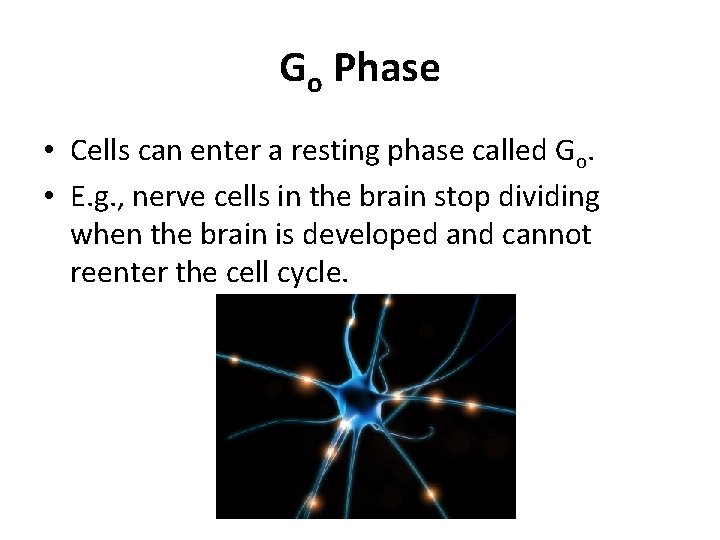
Go Phase • Cells can enter a resting phase called Go. • E. g. , nerve cells in the brain stop dividing when the brain is developed and cannot reenter the cell cycle.
Cell Death • Necrosis: – Cells may die due to external factors. – E. g. , Toxins, infections, trauma. • Apoptosis: – The controlled death of old cells. – E. g. , White blood cells divide to fight viral infections. When they are no longer required, they undergo apoptosis.
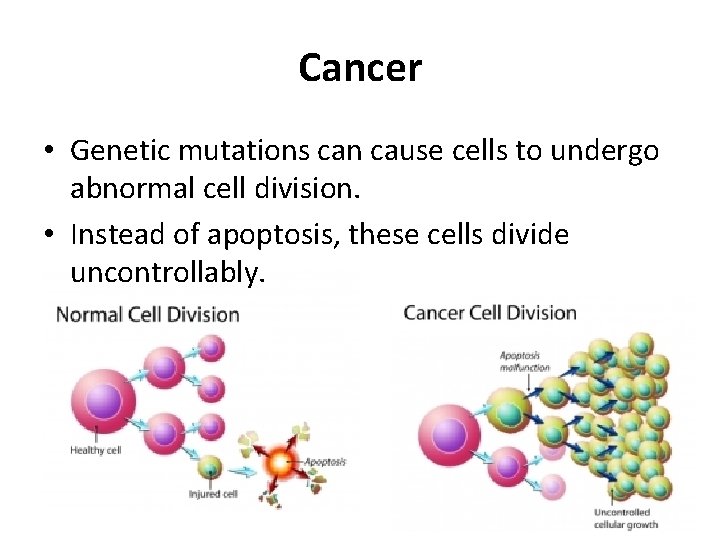
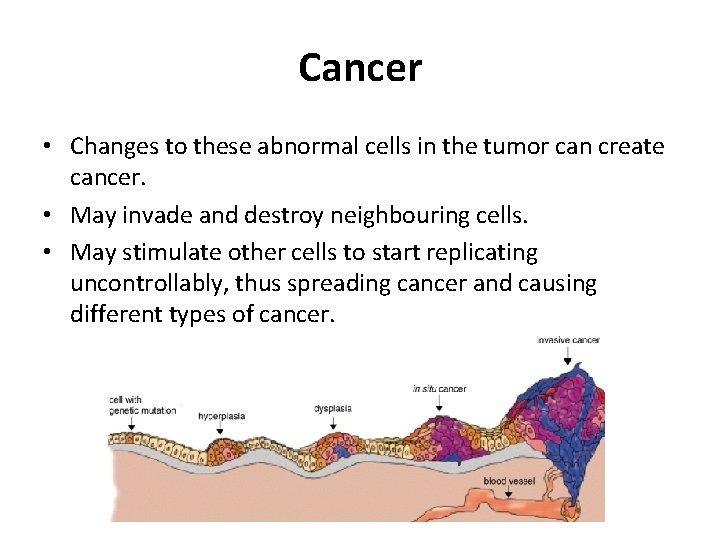
Cancer • Genetic mutations can cause cells to undergo abnormal cell division. • Instead of apoptosis, these cells divide uncontrollably.
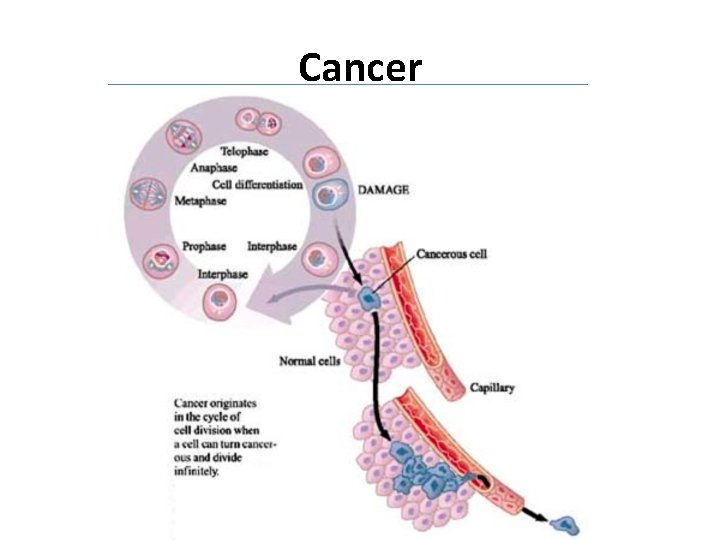
Cancer
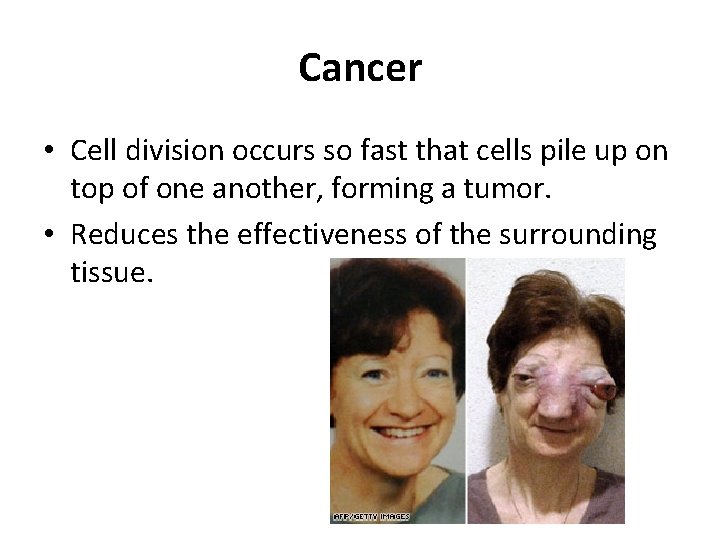
Cancer • Cell division occurs so fast that cells pile up on top of one another, forming a tumor. • Reduces the effectiveness of the surrounding tissue.
Cancer • Changes to these abnormal cells in the tumor can create cancer. • May invade and destroy neighbouring cells. • May stimulate other cells to start replicating uncontrollably, thus spreading cancer and causing different types of cancer.