
The Cell Theory and Membrane Biology Chapter 4
The Cell Theory and Membrane Biology Chapter 4 Section 1
Objectives Describe the discovery of the cell Know the important discoveries that led to the cell theory Relate the properties of the cell membrane (plasma membrane) to its structure

Cell Theory First recorded view by Robert Hooke in 1665 Cork structures look like monks' cells
Cell Theory Antonie 1674 van Leeuwenhoek viewed living cells in Named moving objects in pond water animalcules (little animals) Henri Dutrochet— 1837 “The cell is the fundamental element of organization. ” Matthias Schleiden— 1837 All plants are composed of cells that come from other plant cells
Cell Theory Theodor Schwann— 1838 Animals have cells and those come from other animal cells Schleiden and Schwann: All living things have at least one cell (VIDEO) Rudolf Virchow— 1858 Cells come from pre-existing cells (refutes spontaneous generation)
Cell Theory All living things have at least one cell The cell is the basic unit of structure and function in organisms All cells are produced from other cells Video
All Cells Cell membrane Cytoplasm Usually live in fluid environment
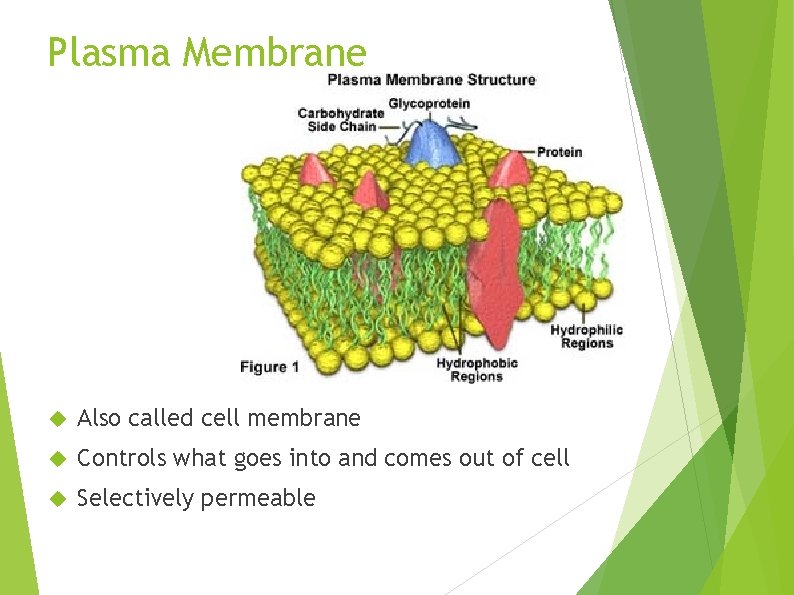
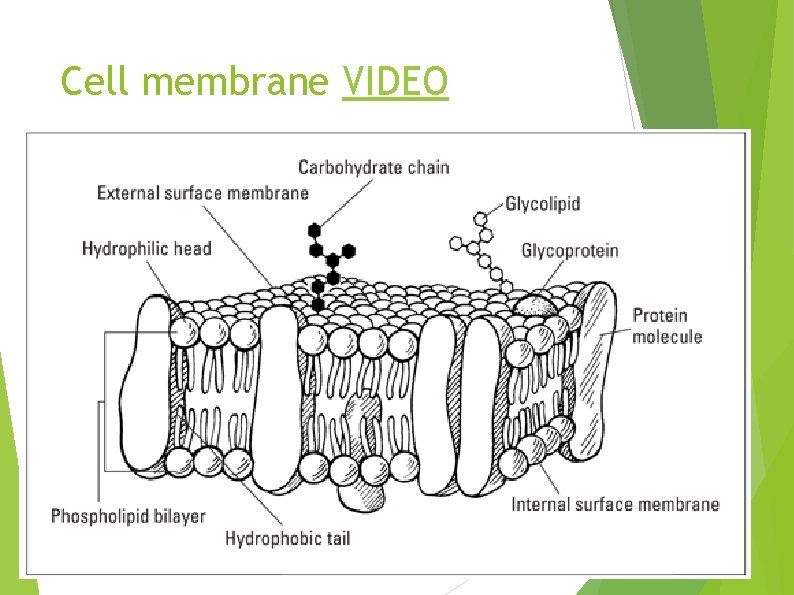
Plasma Membrane Also called cell membrane Controls what goes into and comes out of cell Selectively permeable
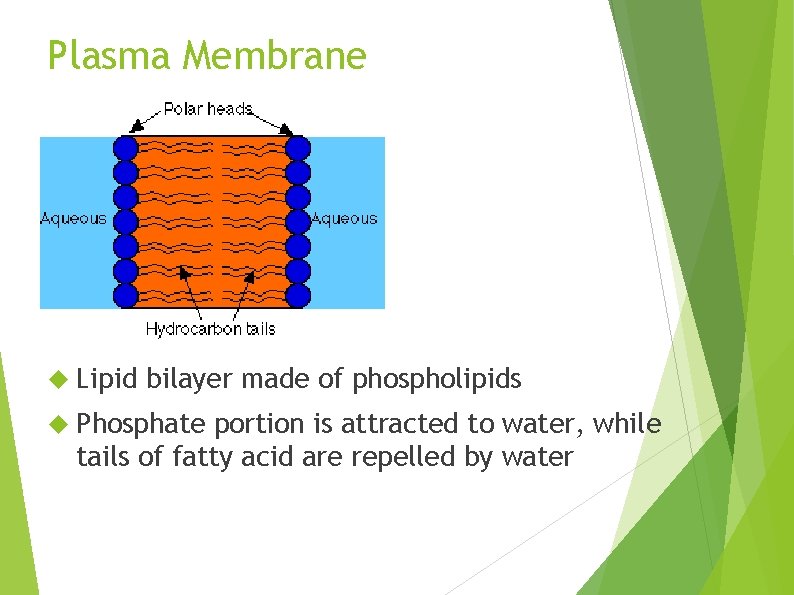
Plasma Membrane Lipid bilayer made of phospholipids Phosphate portion is attracted to water, while tails of fatty acid are repelled by water
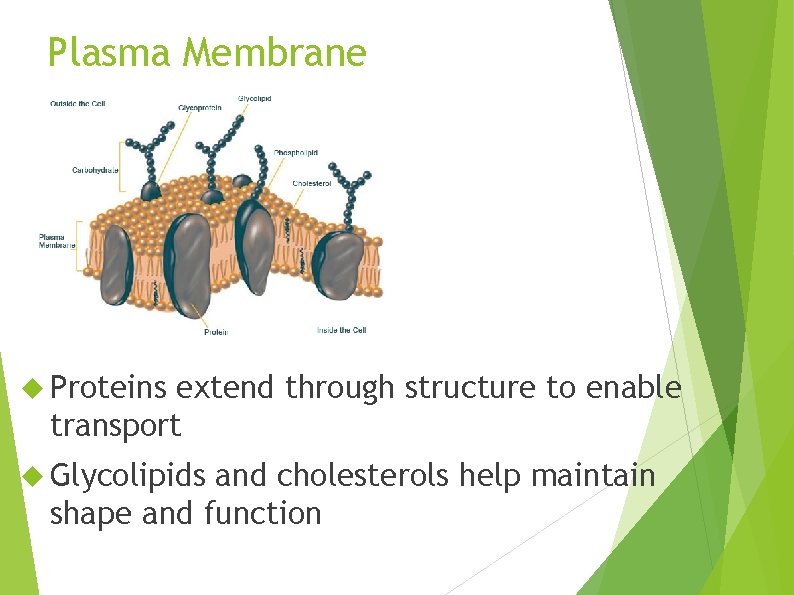
Plasma Membrane Proteins extend through structure to enable transport Glycolipids and cholesterols help maintain shape and function
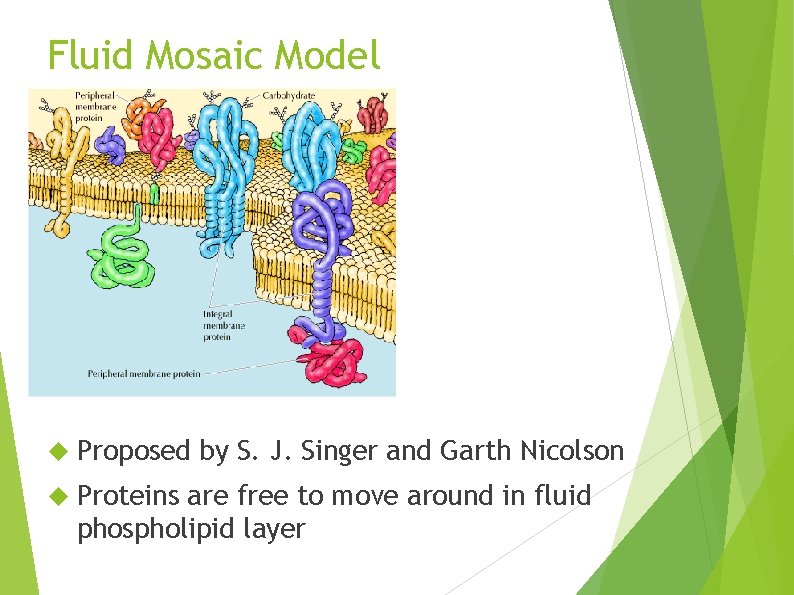
Fluid Mosaic Model Proposed by S. J. Singer and Garth Nicolson Proteins are free to move around in fluid phospholipid layer
Cell Theory All living things have at least one cell The cell is the basic unit of structure and function in organisms All cells are produced from other cells Video
Other Membranes Internal cell structures (organelles) Membrane composition and structure differs slightly for organelles Function depends on structure
Cell membrane VIDEO
- Slides: 14