
The Cell Theory and Cell Structures The Cell
- Slides: 16
The Cell Theory and Cell Structures
The Cell Theory • The Cell Theory is a widely accepted explanation of the relationship between cells and living things. – It refers to the idea that cells are the basic unit of structure in every living thing. • The observations of five scientists led to the development of the cell theory Introductory Video click to play
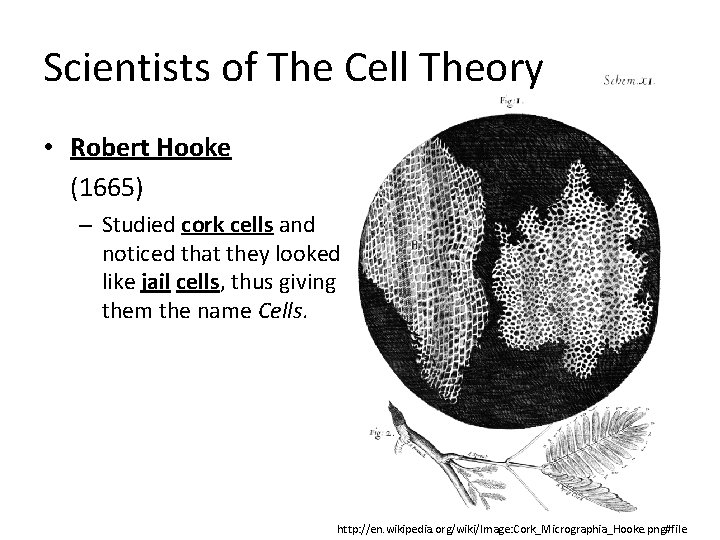
Scientists of The Cell Theory • Robert Hooke (1665) – Studied cork cells and noticed that they looked like jail cells, thus giving them the name Cells. http: //en. wikipedia. org/wiki/Image: Cork_Micrographia_Hooke. png#file
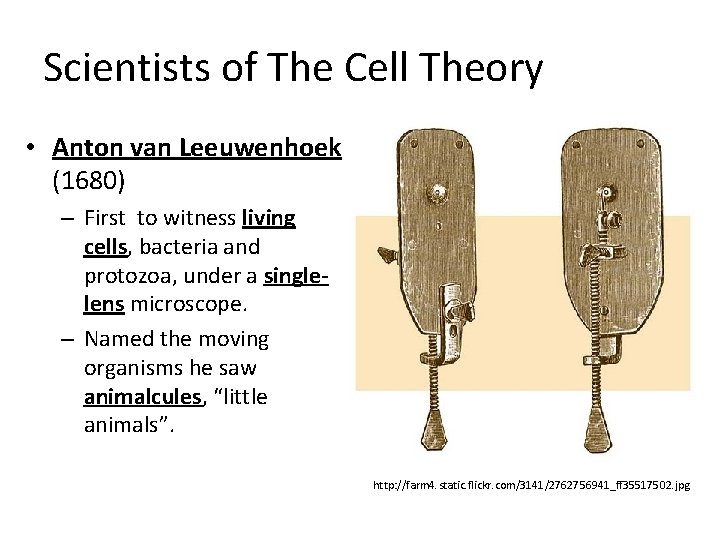
Scientists of The Cell Theory • Anton van Leeuwenhoek (1680) – First to witness living cells, bacteria and protozoa, under a singlelens microscope. – Named the moving organisms he saw animalcules, “little animals”. http: //farm 4. static. flickr. com/3141/2762756941_ff 35517502. jpg
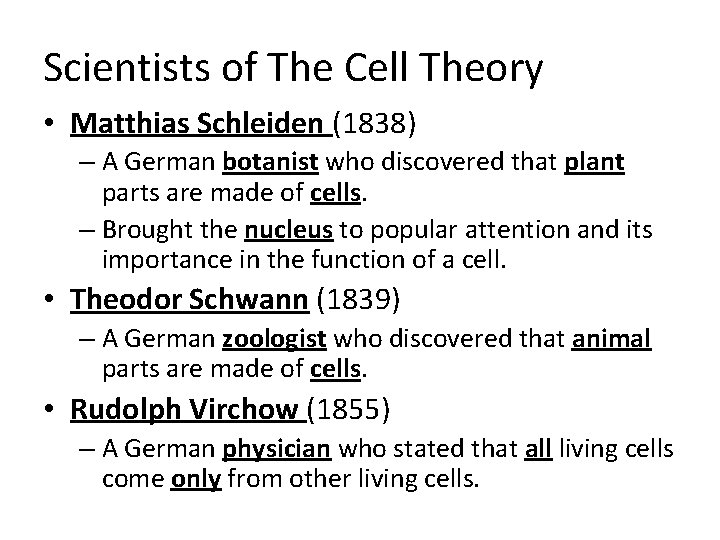
Scientists of The Cell Theory • Matthias Schleiden (1838) – A German botanist who discovered that plant parts are made of cells. – Brought the nucleus to popular attention and its importance in the function of a cell. • Theodor Schwann (1839) – A German zoologist who discovered that animal parts are made of cells. • Rudolph Virchow (1855) – A German physician who stated that all living cells come only from other living cells.
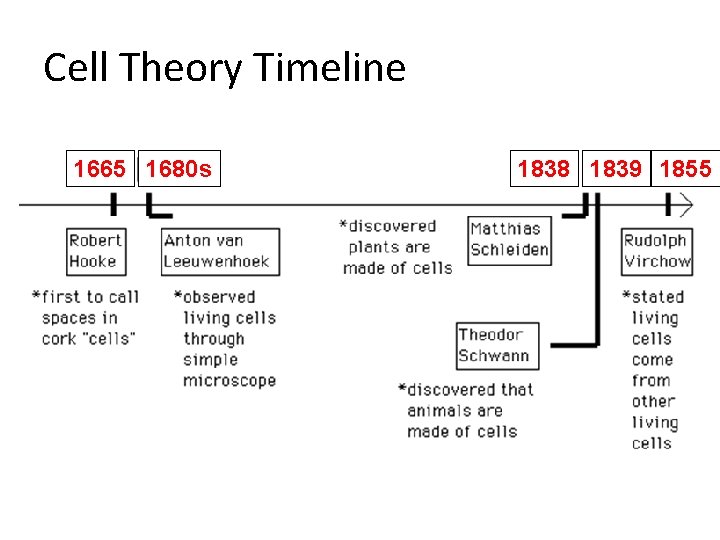
Cell Theory Timeline 1665 1680 s 1838 1839 1855
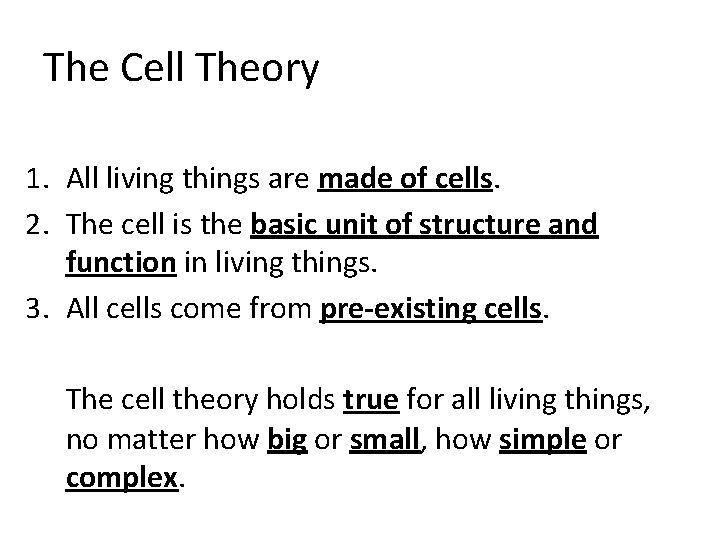
The Cell Theory 1. All living things are made of cells. 2. The cell is the basic unit of structure and function in living things. 3. All cells come from pre-existing cells. The cell theory holds true for all living things, no matter how big or small, how simple or complex.
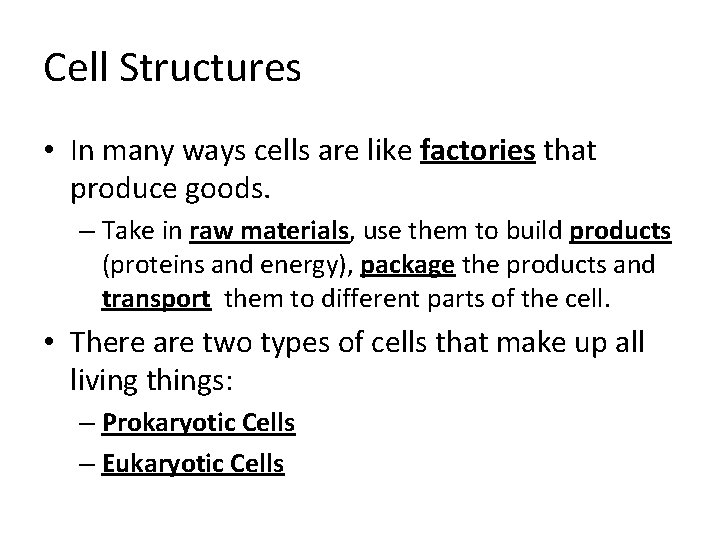
Cell Structures • In many ways cells are like factories that produce goods. – Take in raw materials, use them to build products (proteins and energy), package the products and transport them to different parts of the cell. • There are two types of cells that make up all living things: – Prokaryotic Cells – Eukaryotic Cells
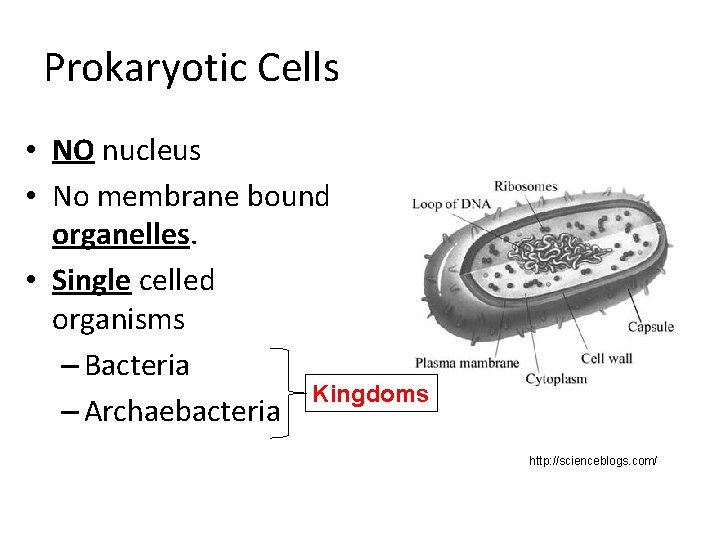
Prokaryotic Cells • NO nucleus • No membrane bound organelles. • Single celled organisms – Bacteria Kingdoms – Archaebacteria http: //scienceblogs. com/
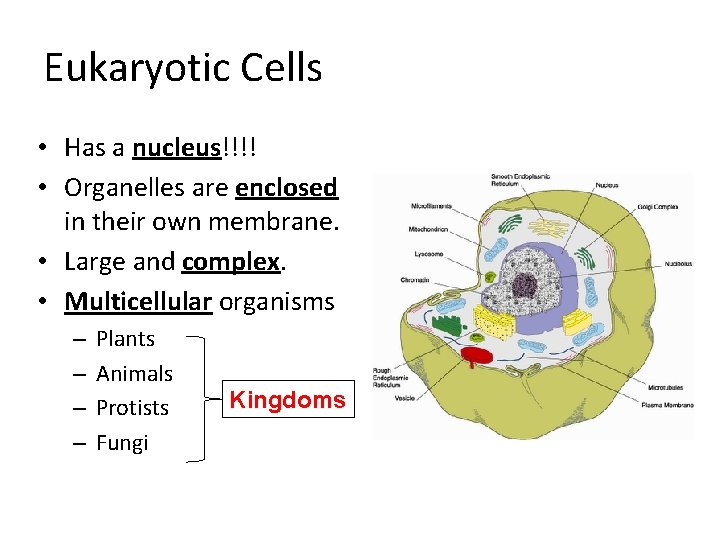
Eukaryotic Cells • Has a nucleus!!!! • Organelles are enclosed in their own membrane. • Large and complex. • Multicellular organisms – – Plants Animals Protists Fungi Kingdoms
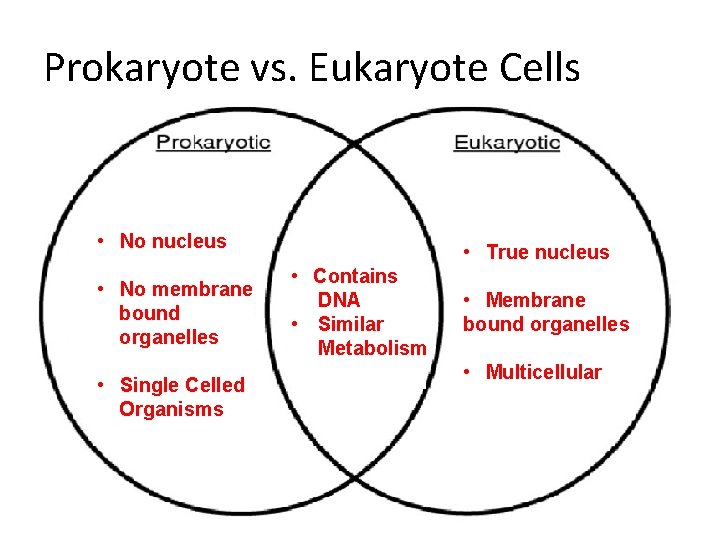
Prokaryote vs. Eukaryote Cells • No nucleus • No membrane bound organelles • Single Celled Organisms • True nucleus • Contains DNA • Similar Metabolism • Membrane bound organelles • Multicellular
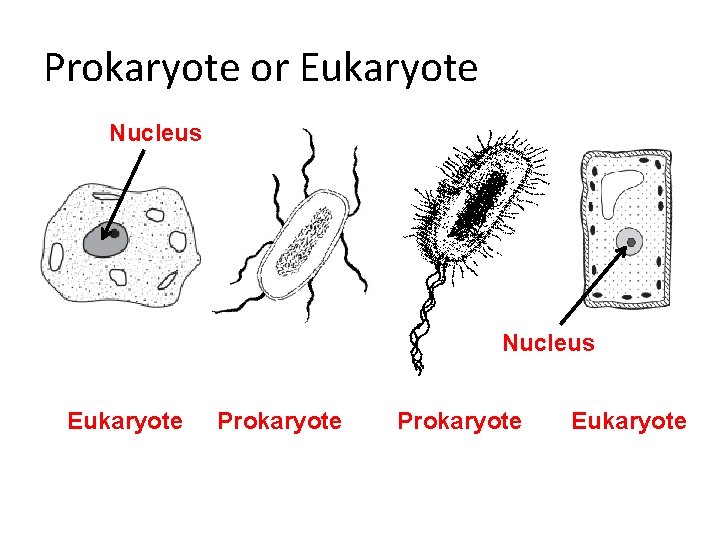
Prokaryote or Eukaryote Nucleus Eukaryote Prokaryote Eukaryote
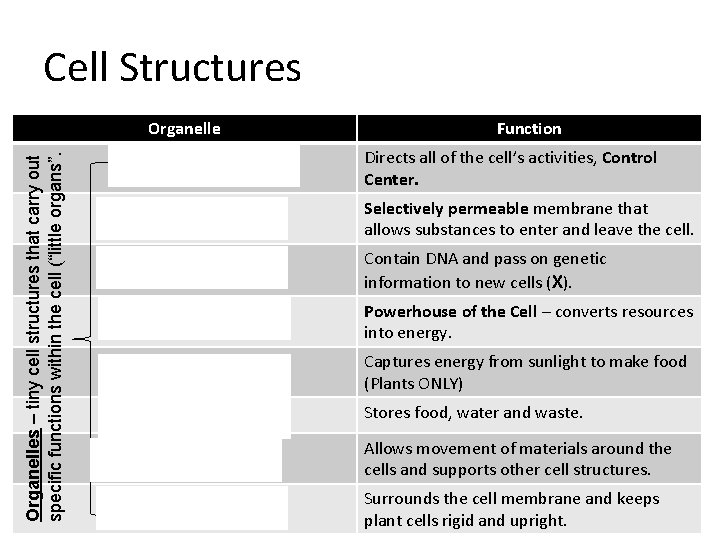
Cell Structures Organelles – tiny cell structures that carry out specific functions within the cell (“little organs”. Organelle Nucleus Function Directs all of the cell’s activities, Control Center. Cell Membrane Selectively permeable membrane that allows substances to enter and leave the cell. Chromosomes Contain DNA and pass on genetic information to new cells (X). Mitochondria Powerhouse of the Cell – converts resources into energy. Chloroplasts Captures energy from sunlight to make food (Plants ONLY) Vacuole Cytoplasm Cell Wall Stores food, water and waste. Allows movement of materials around the cells and supports other cell structures. Surrounds the cell membrane and keeps plant cells rigid and upright.
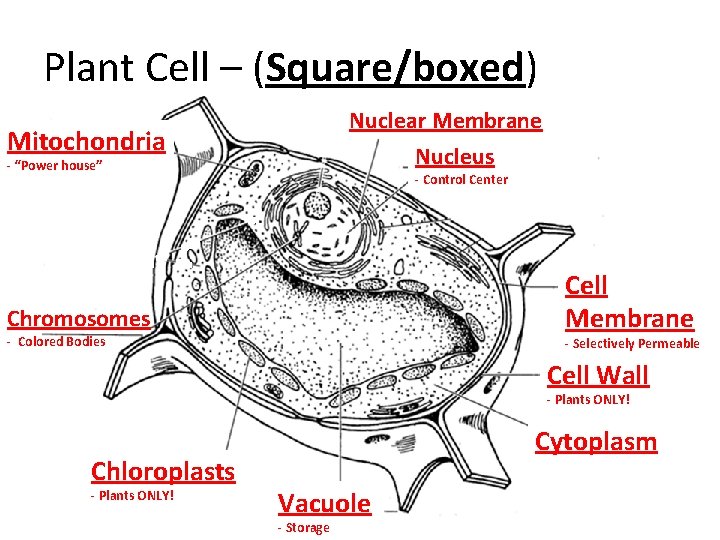
Plant Cell – (Square/boxed) Nuclear Membrane Mitochondria Nucleus - “Power house” - Control Center Cell Membrane Chromosomes - Colored Bodies - Selectively Permeable Cell Wall - Plants ONLY! Chloroplasts - Plants ONLY! Cytoplasm Vacuole - Storage
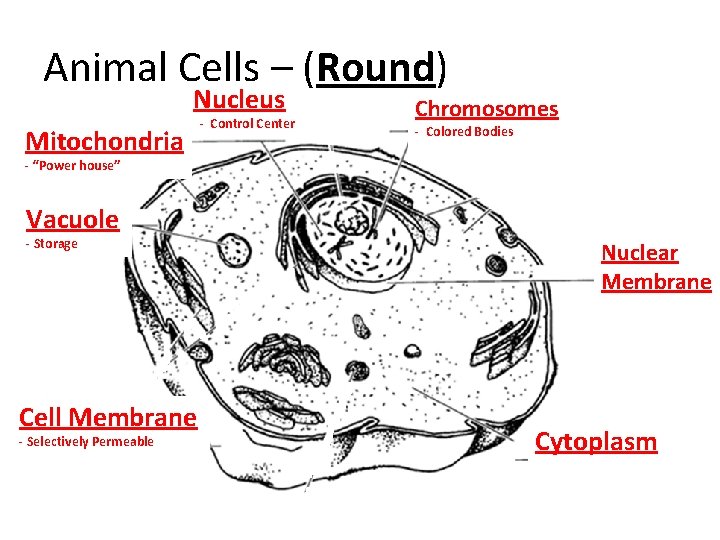
Animal Cells – (Round) Nucleus Mitochondria - Control Center Chromosomes - Colored Bodies - “Power house” Vacuole - Storage Cell Membrane - Selectively Permeable Nuclear Membrane Cytoplasm
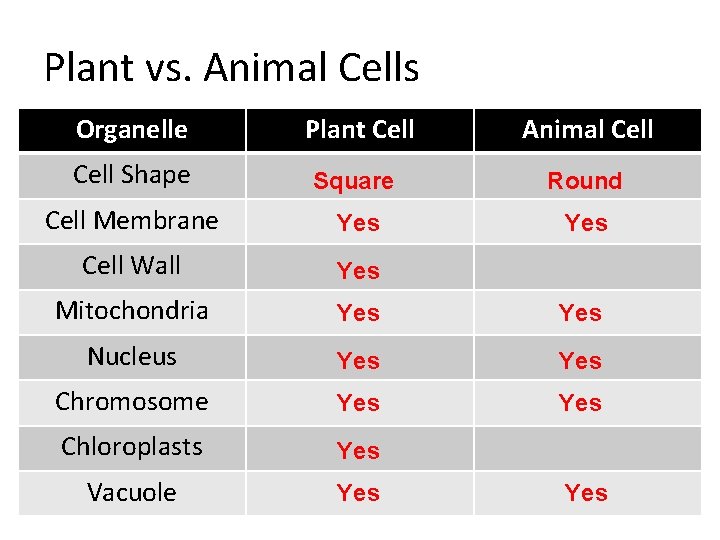
Plant vs. Animal Cells Organelle Plant Cell Animal Cell Shape Square Round Cell Membrane Yes Cell Wall Yes Mitochondria Yes Nucleus Yes Chromosome Yes Chloroplasts Yes Vacuole Yes