
The Cell Theory A Timeline With permission bujols
The Cell Theory A Timeline With permission: bujols via Slide Share
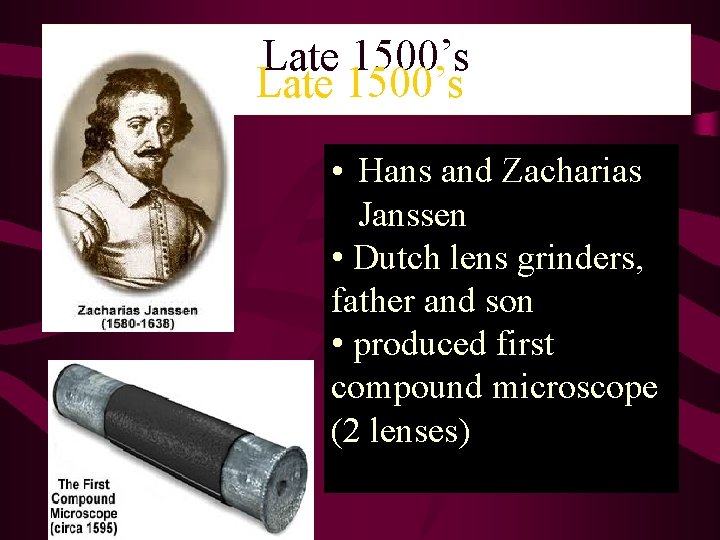
Late 1500’s • Hans and Zacharias Janssen • Dutch lens grinders, father and son • produced first compound microscope (2 lenses)
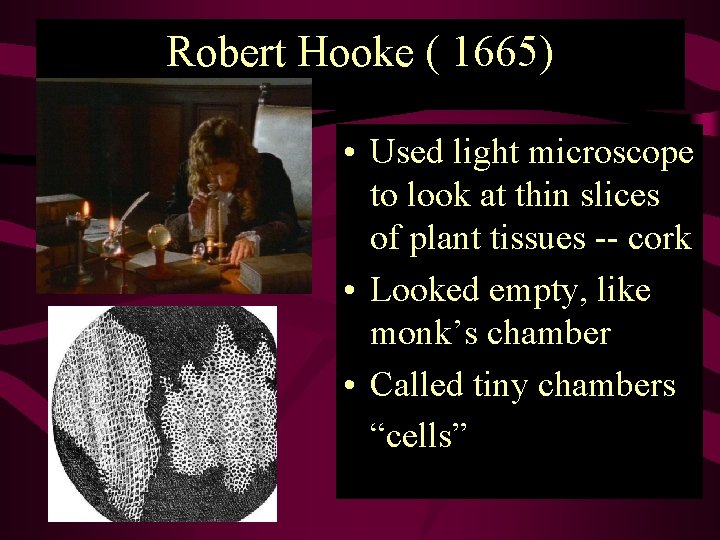
Robert Hooke ( 1665) • Used light microscope to look at thin slices of plant tissues -- cork • Looked empty, like monk’s chamber • Called tiny chambers “cells”
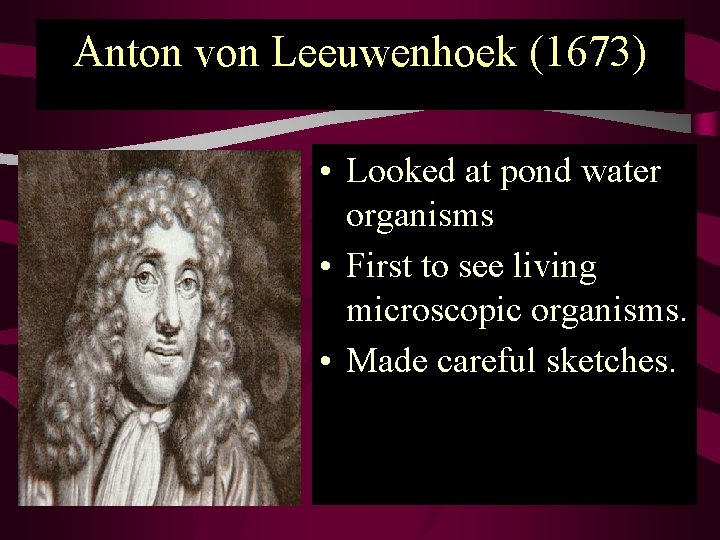
Anton von Leeuwenhoek (1673) • Looked at pond water organisms • First to see living microscopic organisms. • Made careful sketches.
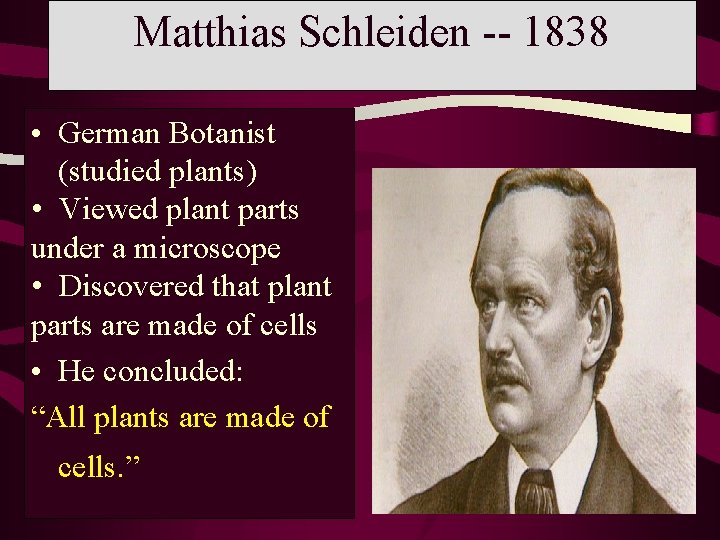
Matthias Schleiden -- 1838 • German Botanist (studied plants) • Viewed plant parts under a microscope • Discovered that plant parts are made of cells • He concluded: “All plants are made of cells. ”
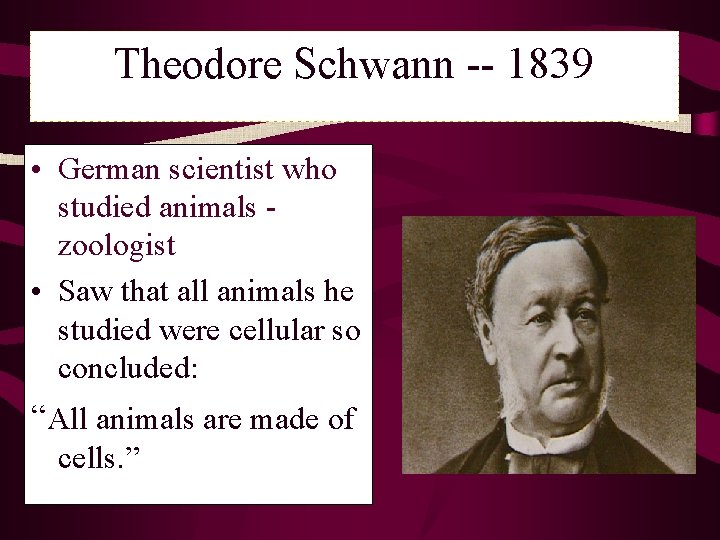
Theodore Schwann -- 1839 • German scientist who studied animals zoologist • Saw that all animals he studied were cellular so concluded: “All animals are made of cells. ”
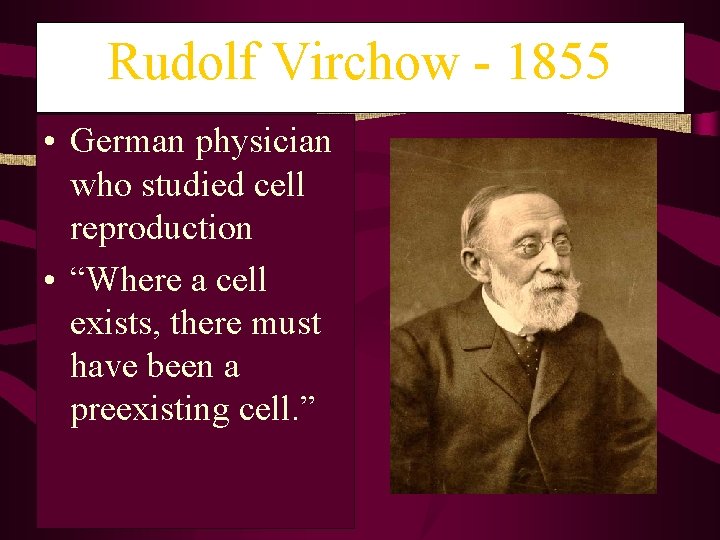
Rudolf Virchow - 1855 • German physician who studied cell reproduction • “Where a cell exists, there must have been a preexisting cell. ”
Cells • A cell is the smallest unit that can perform all the functions necessary for life. • All living things are made up of cells. • Some living things are made up of only one cell (single cellular). • Other living things are made up of many cells (multicellular).
The Cell Theory • All living things are composed of one or more cells. • The cell is the basic unit of life in all living things. • New cells are produced from existing cells.
Cell Similarities • Cells come in many shapes and sizes with different duties but … • All are surrounded with a cell membrane • All cells have hereditary material (DNA) • All have cytoplasm and organelles. Cytoplasm is the fluid within a cell which provides a safe environment for the organelles. Organelles are the structures within the cell that have specific duties to make the cell a functioning unit.
Two Types of Cells • Eukaryotic • Are complex and of different types. • Have a nucleus and many organelles. • Contain more DNA due to different jobs within the cell. DNA is linear (in a line). • Possess a cell membrane or a cell wall. • All living things other than bacteria.
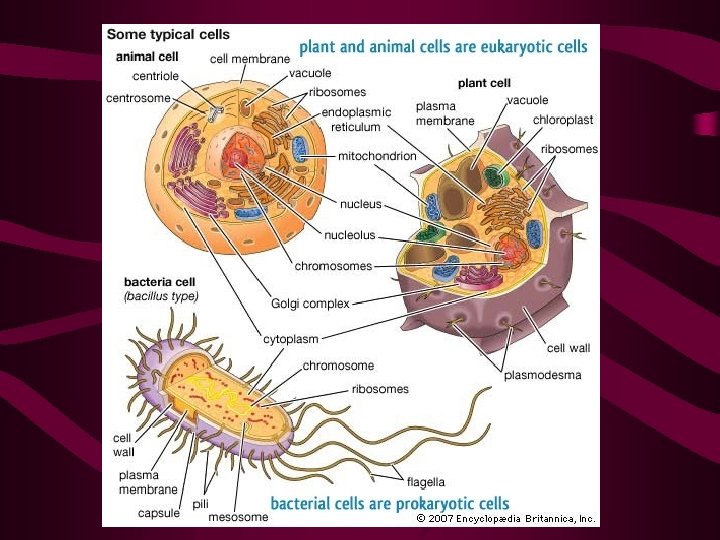
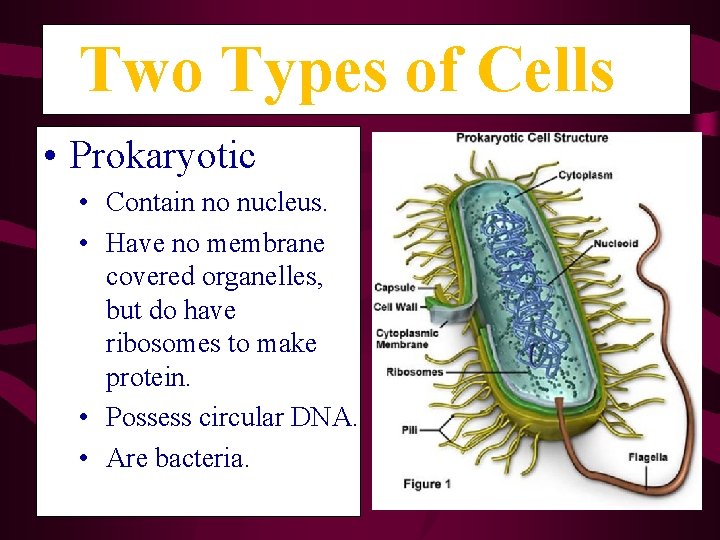
Two Types of Cells • Prokaryotic • Contain no nucleus. • Have no membrane covered organelles, but do have ribosomes to make protein. • Possess circular DNA. • Are bacteria.
- Slides: 13