
The Cell Theory a timeline Late 1500s first

- Slides: 32
The Cell Theory – a timeline • Late 1500’s: -first lenses used in Europe -used to determine cloth quality (weave and precision) -combos of lenses gave better view
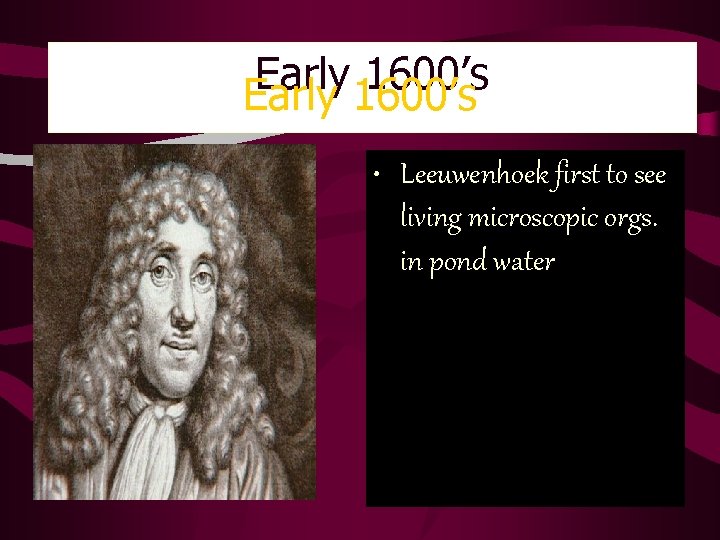
Early 1600’s • Leeuwenhoek first to see living microscopic orgs. in pond water
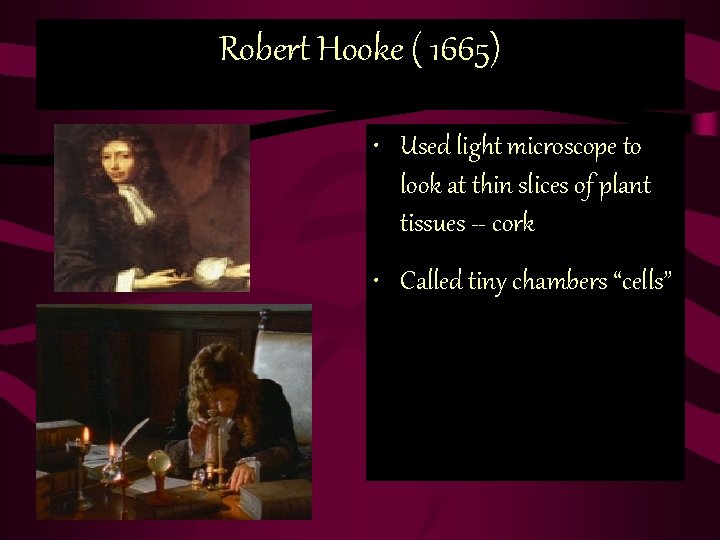
Robert Hooke ( 1665) • Used light microscope to look at thin slices of plant tissues -- cork • Called tiny chambers “cells”
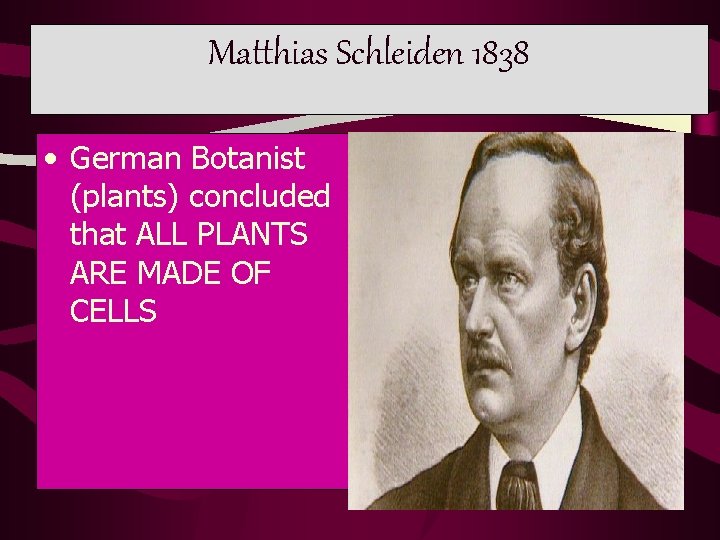
Matthias Schleiden 1838 • German Botanist (plants) concluded that ALL PLANTS ARE MADE OF CELLS
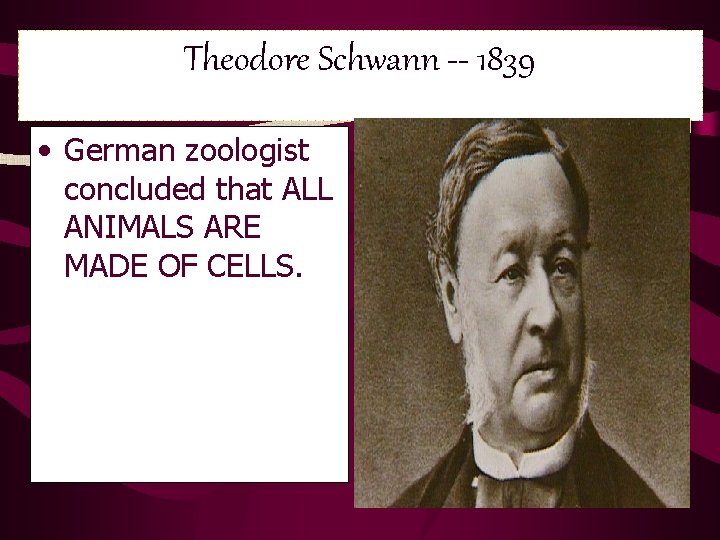
Theodore Schwann -- 1839 • German zoologist concluded that ALL ANIMALS ARE MADE OF CELLS.
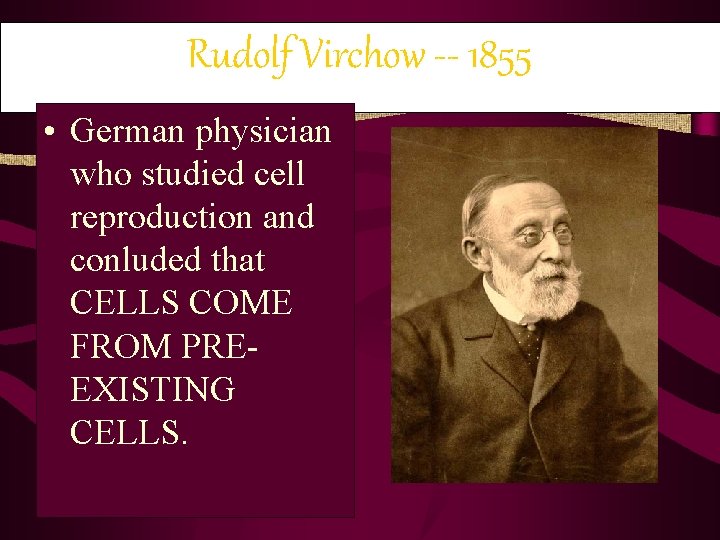
Rudolf Virchow -- 1855 • German physician who studied cell reproduction and conluded that CELLS COME FROM PREEXISTING CELLS.
The Cell Theory • All living things are made of cells • Cells are the basic unit of structure and function in living things. • New cells are produced from existing cells
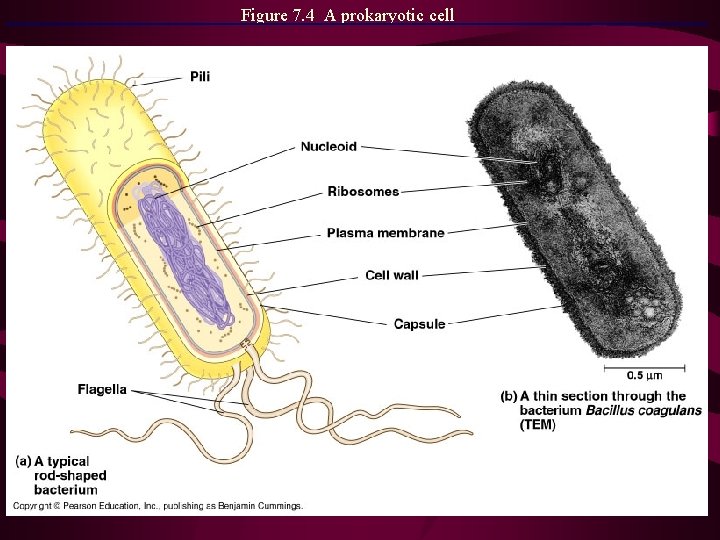
Prokaryotes vs. Eukaryotes • Prokaryotes: *NO NUCLEUS OR MEMBRANE BOUND ORGANELLES *Have cell membranes, cytoplasm and DNA Ex. Bacteria (unicellular) • Eukaryotes: *Contain NUCLEUS and ORGANELLES that perform specialized functions. *Can be unicellular or multicellular Ex: plants, fungi, animals, protists
Figure 7. 4 A prokaryotic cell
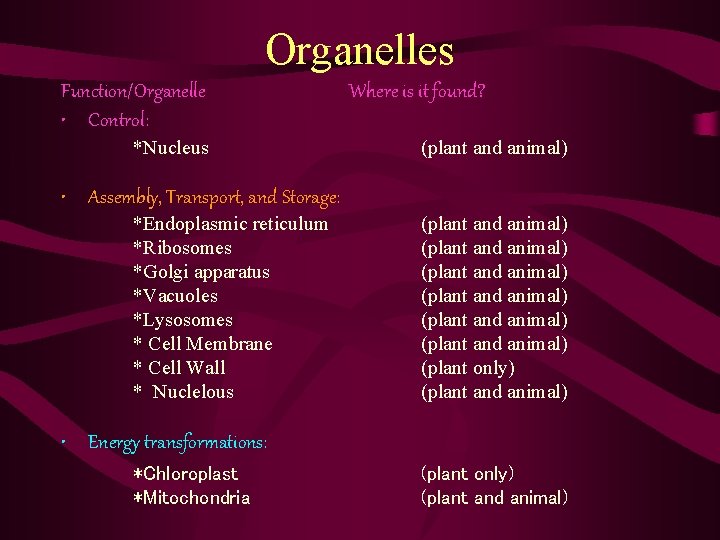
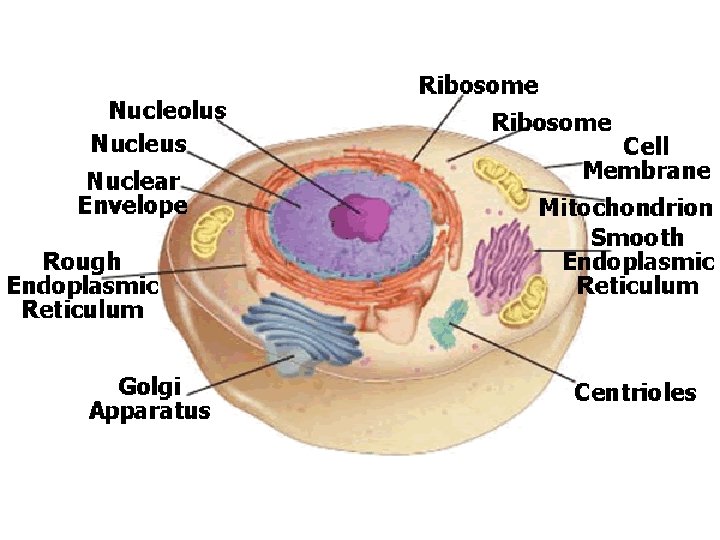
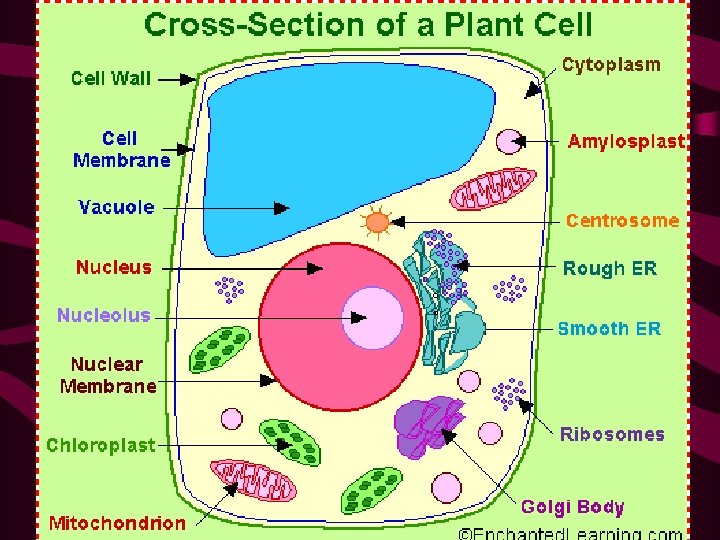
Organelles Function/Organelle • Control: *Nucleus Where is it found? (plant and animal) • Assembly, Transport, and Storage: *Endoplasmic reticulum *Ribosomes *Golgi apparatus *Vacuoles *Lysosomes * Cell Membrane * Cell Wall * Nuclelous (plant and animal) (plant and animal) (plant only) (plant and animal) • Energy transformations: *Chloroplast *Mitochondria (plant only) (plant and animal)
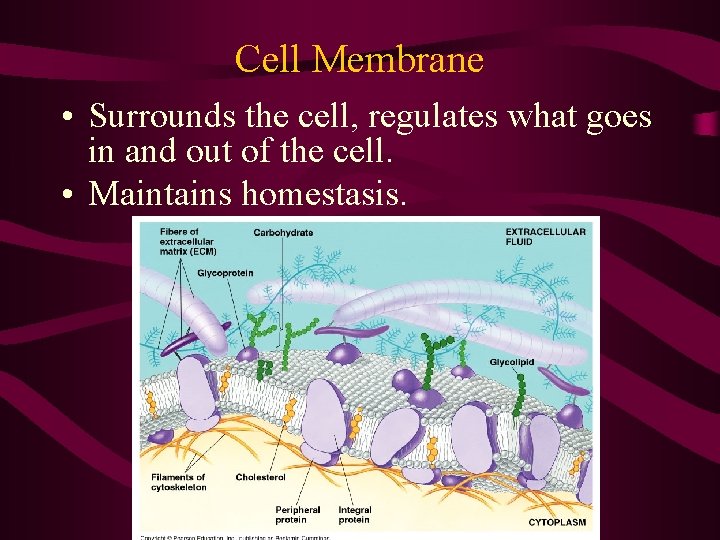
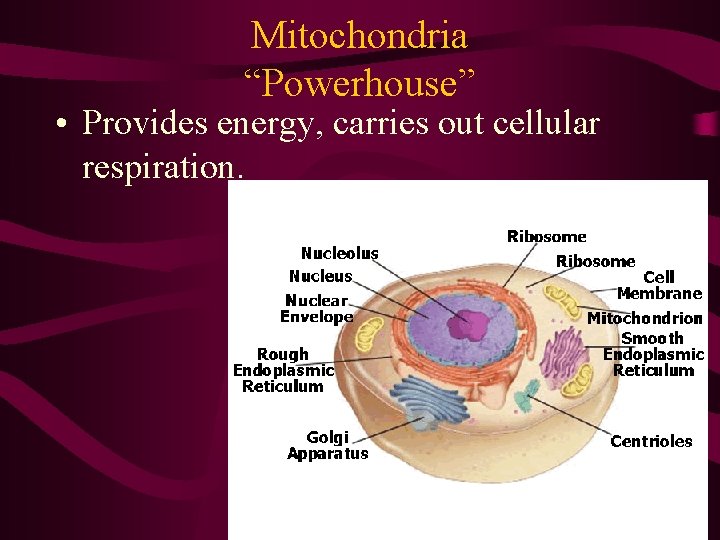
Cell Membrane • Surrounds the cell, regulates what goes in and out of the cell. • Maintains homestasis.
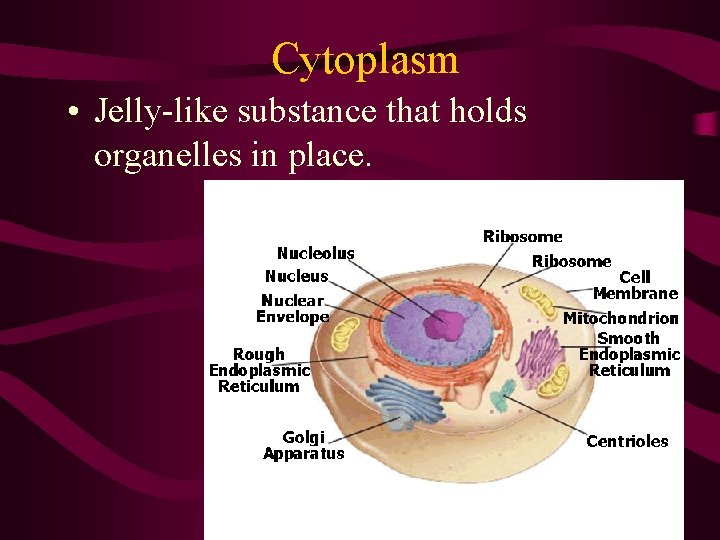
Cytoplasm • Jelly-like substance that holds organelles in place.
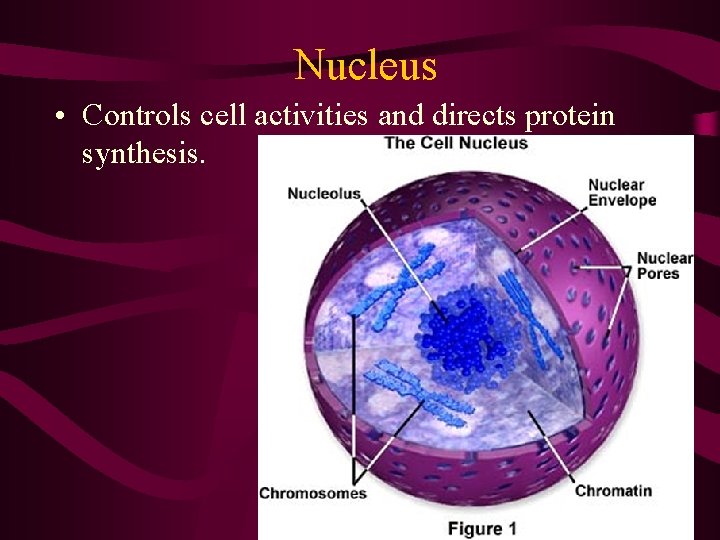
Nucleus • Controls cell activities and directs protein synthesis.
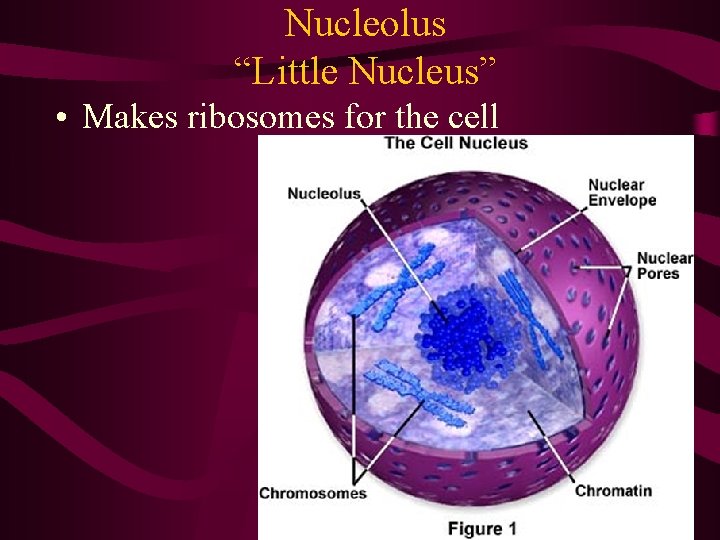
Nucleolus “Little Nucleus” • Makes ribosomes for the cell
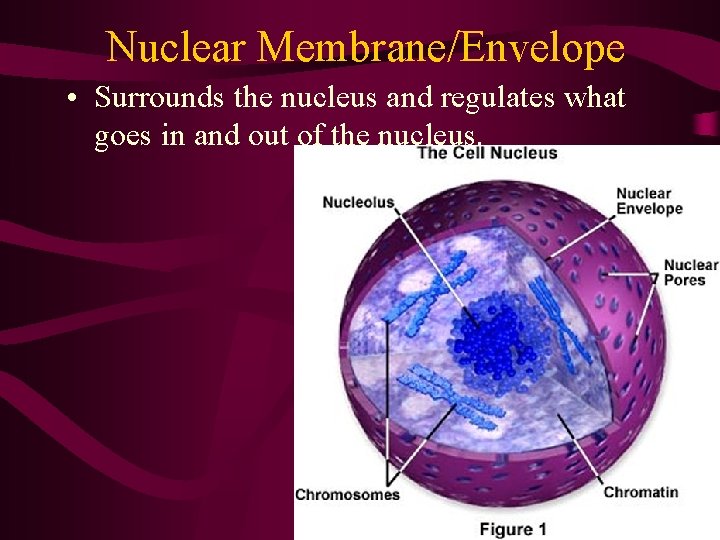
Nuclear Membrane/Envelope • Surrounds the nucleus and regulates what goes in and out of the nucleus.
Cell Wall • Made of cellulose, protects the plant cell and gives support.
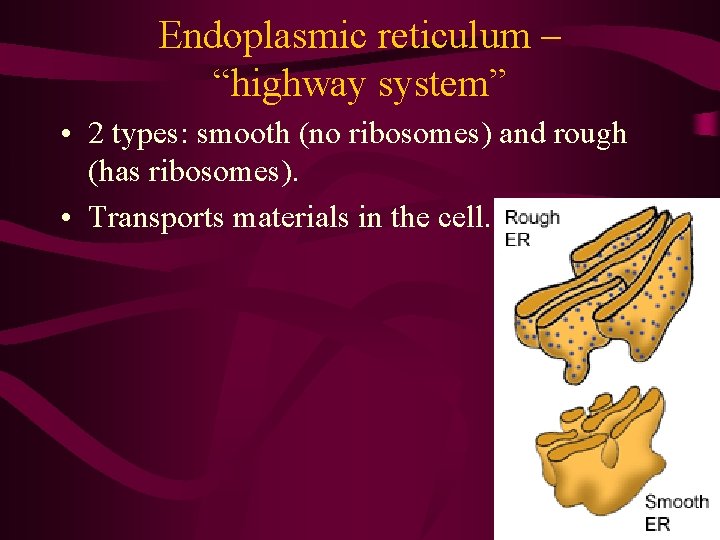
Endoplasmic reticulum – “highway system” • 2 types: smooth (no ribosomes) and rough (has ribosomes). • Transports materials in the cell.
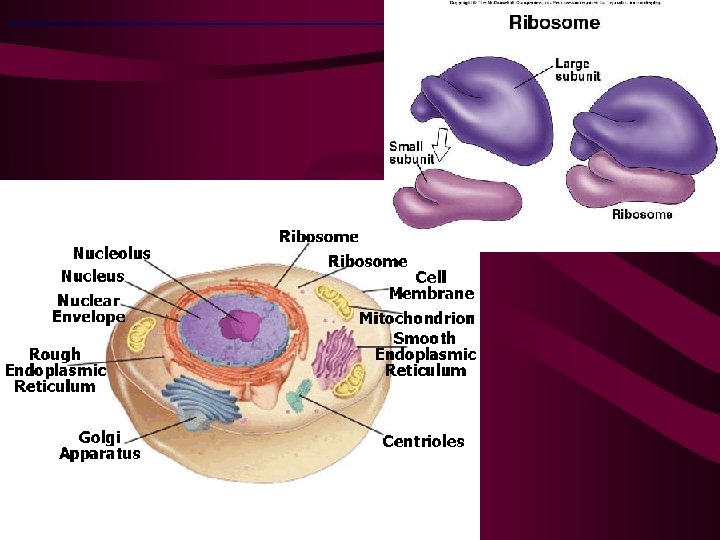
Ribosomes “protein factories” • Makes proteins • The “free” ribosomes in cytoplasm make proteins for the cell that they are INSIDE of. • Ribosomes that are attached to ER make proteins for OUTSIDE OF CELL.
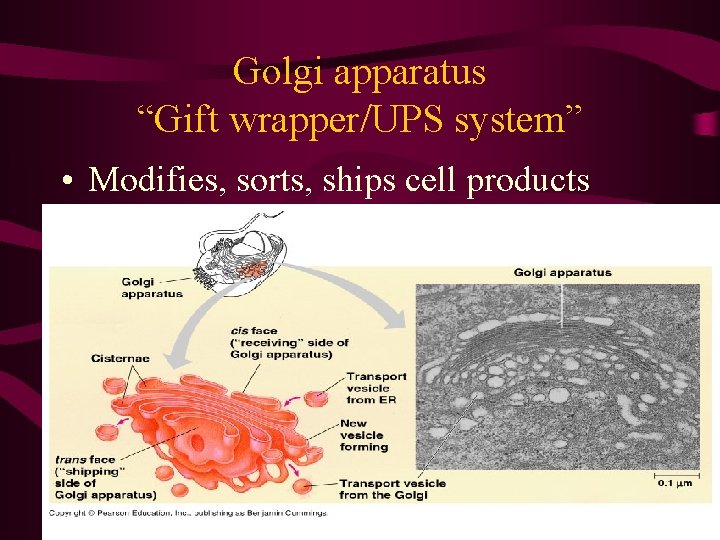
Golgi apparatus “Gift wrapper/UPS system” • Modifies, sorts, ships cell products
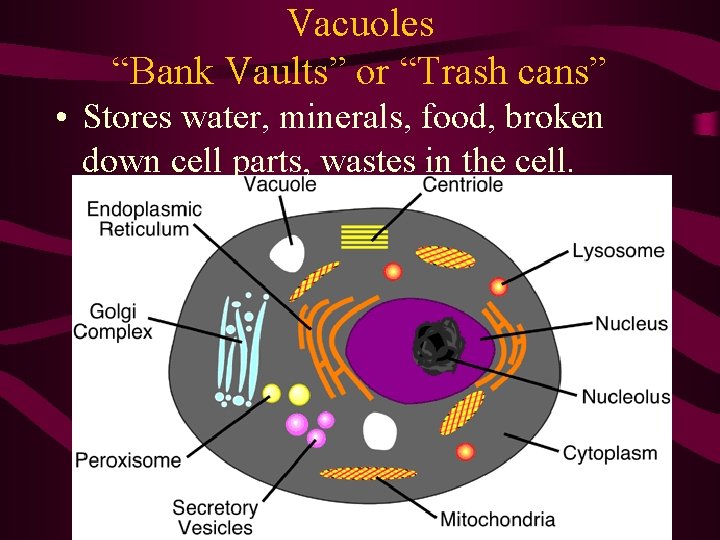
Vacuoles “Bank Vaults” or “Trash cans” • Stores water, minerals, food, broken down cell parts, wastes in the cell.
Lysosomes “Suicide bags” • Breaks down proteins, carbs, fats, nucleic acids and old organelles.
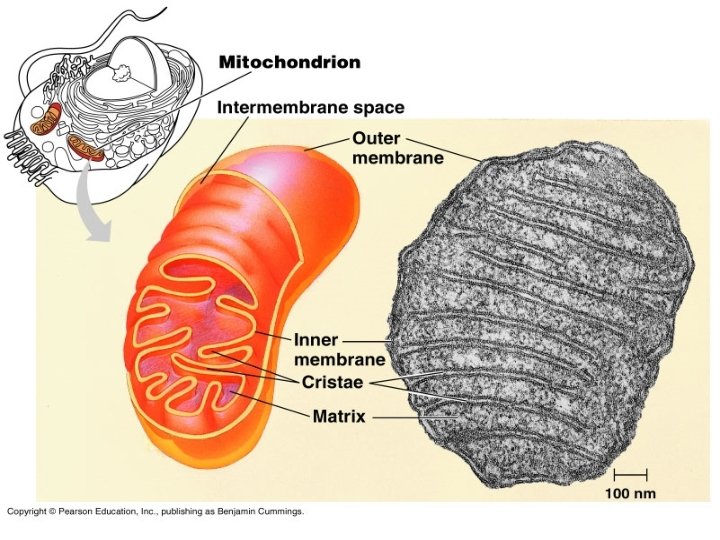
Mitochondria “Powerhouse” • Provides energy, carries out cellular respiration.
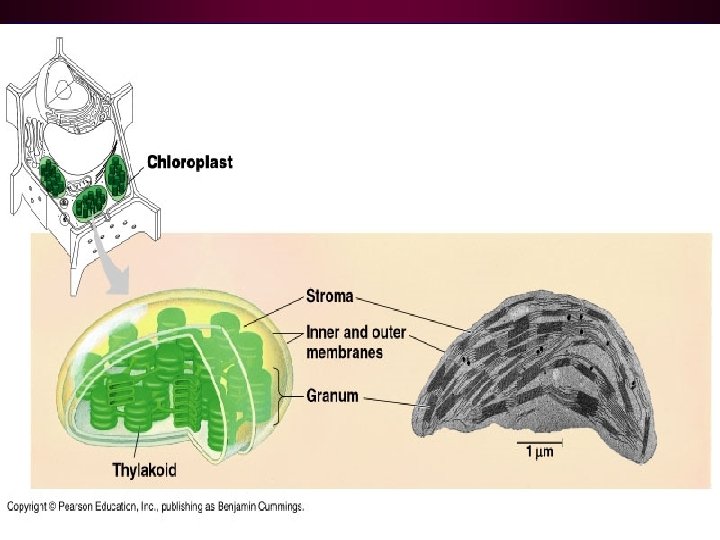
Chloroplast “Powerhouse for Plant” • Carries out photosynthesis for plant cells
Cytoskeleton • Network of fibers in cytoplasm. • Provides support.
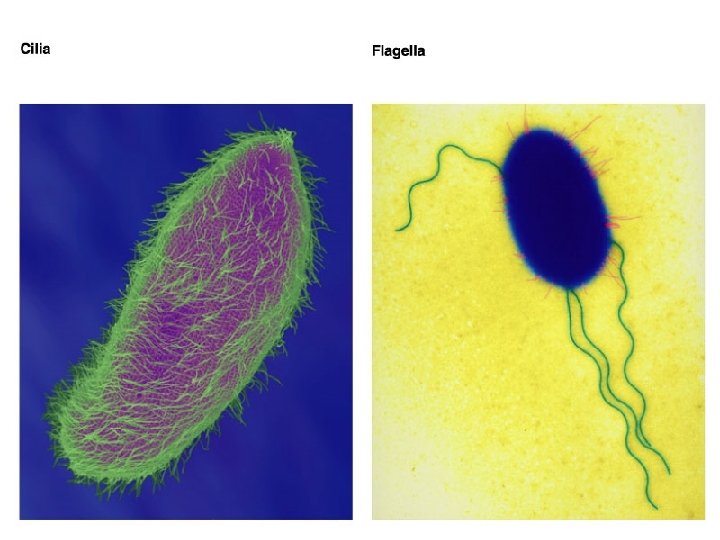
Cilia • Short hair-like projections used for movement.
Flagella • Long whip-like tail used for movement.