
The Cell The Cell Theory All living things
- Slides: 31
The Cell
The Cell Theory • All living things are made of one or more _____. • The cell is the basic unit of _____ and _____ of living things. • Cells come only from ______.
The Cell Theory • All living things are made of cells. • The cell is the basic unit of structure and function of living things. • Cells come only from other living cells.
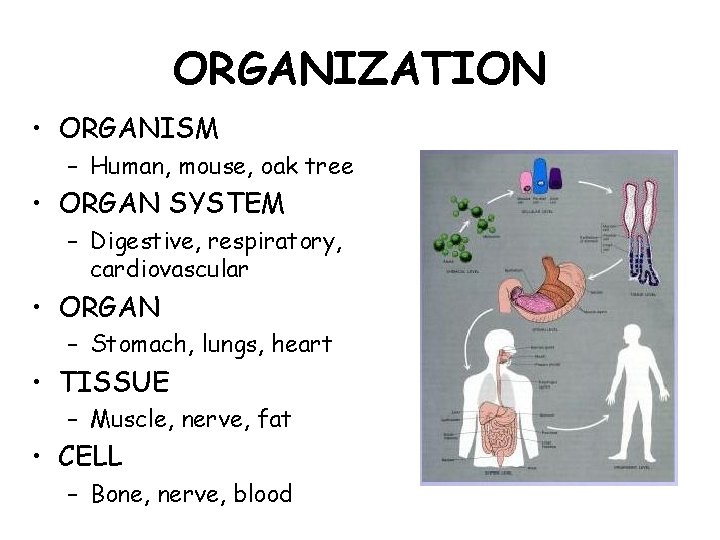
ORGANIZATION • ORGANISM – Human, mouse, oak tree • ORGAN SYSTEM – Digestive, respiratory, cardiovascular • ORGAN – Stomach, lungs, heart • TISSUE – Muscle, nerve, fat • CELL – Bone, nerve, blood
Every cell has 3 basic parts:
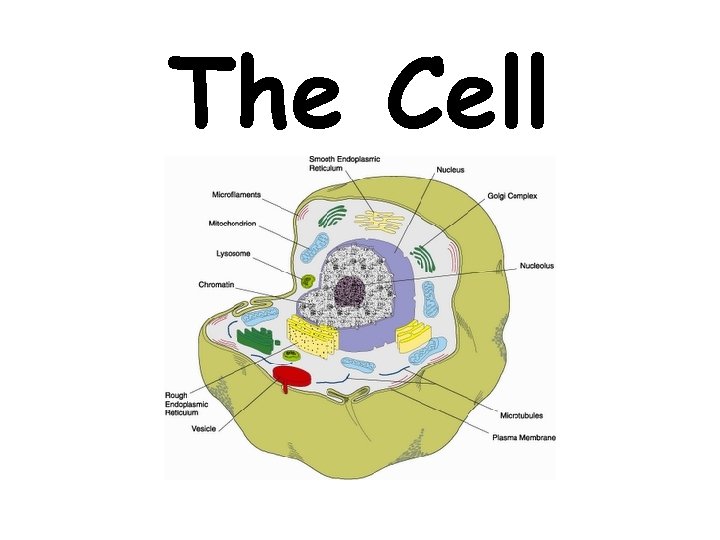
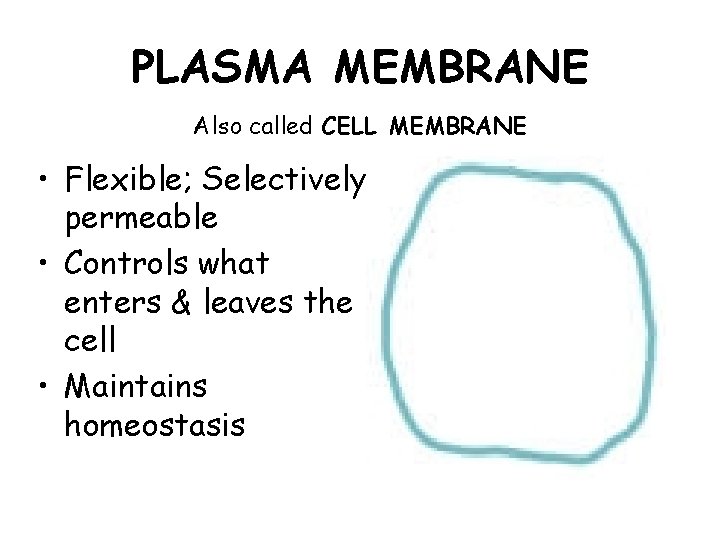
PLASMA MEMBRANE Also called CELL MEMBRANE • Flexible; Selectively permeable • Controls what enters & leaves the cell • Maintains homeostasis
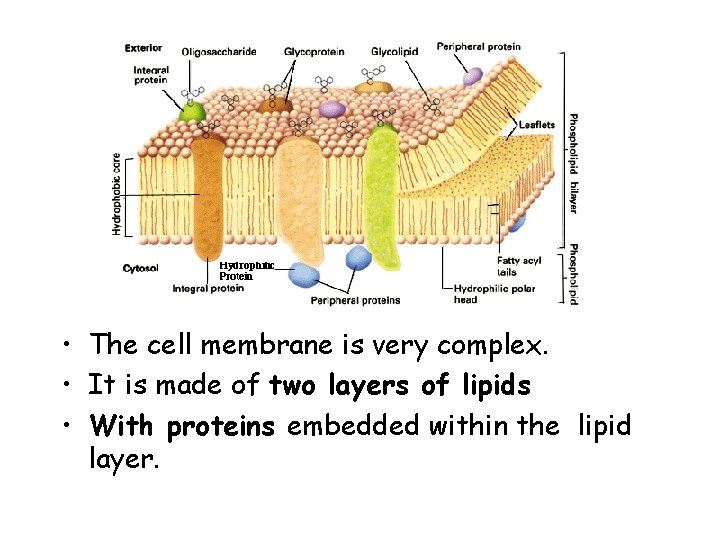
• The cell membrane is very complex. • It is made of two layers of lipids • With proteins embedded within the lipid layer.
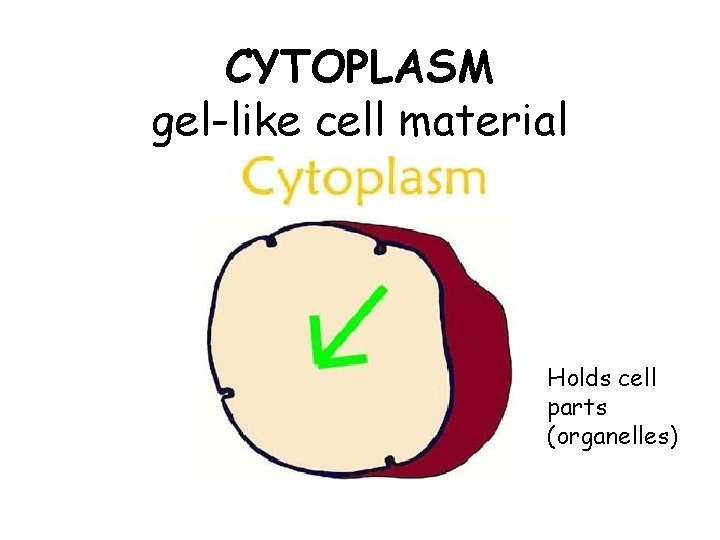
CYTOPLASM gel-like cell material Holds cell parts (organelles)
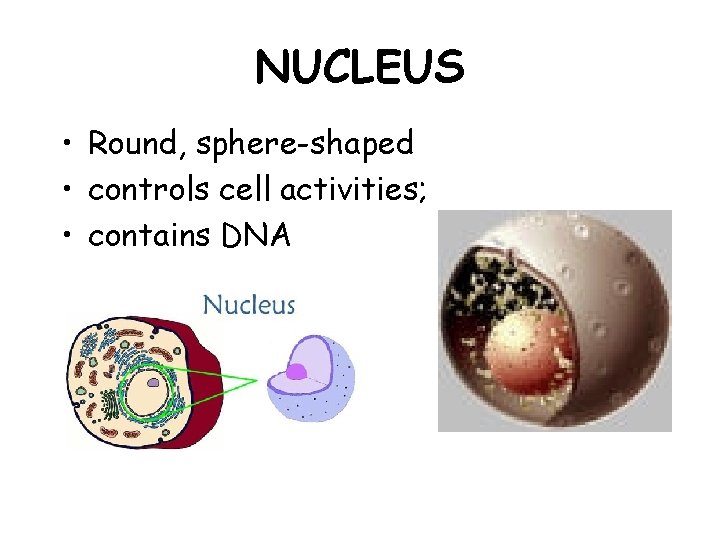
NUCLEUS • Round, sphere-shaped • controls cell activities; • contains DNA
In addition, cells have the following organelles:
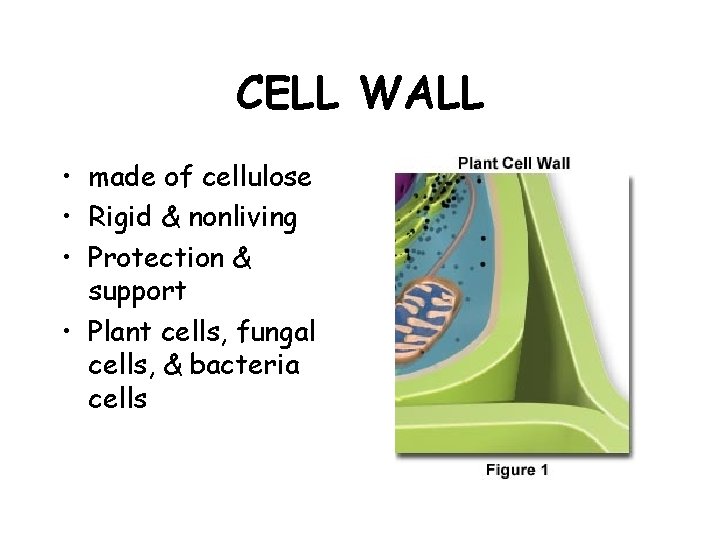
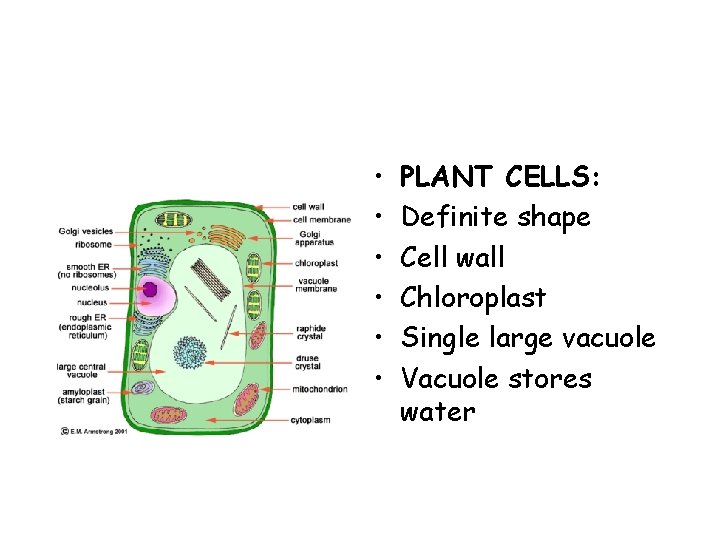
CELL WALL • made of cellulose • Rigid & nonliving • Protection & support • Plant cells, fungal cells, & bacteria cells
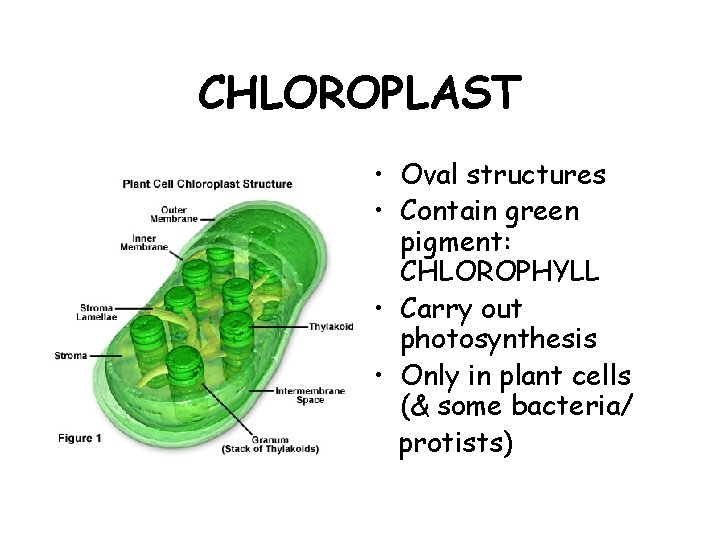
CHLOROPLAST • Oval structures • Contain green pigment: CHLOROPHYLL • Carry out photosynthesis • Only in plant cells (& some bacteria/ protists)
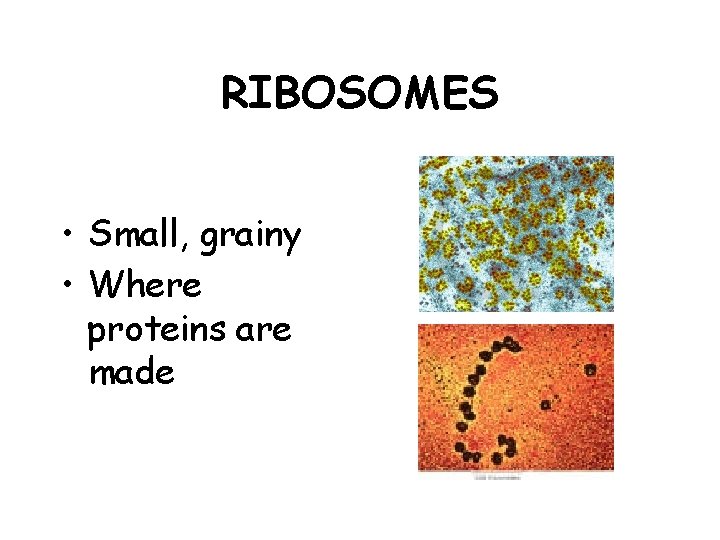
RIBOSOMES • Small, grainy • Where proteins are made
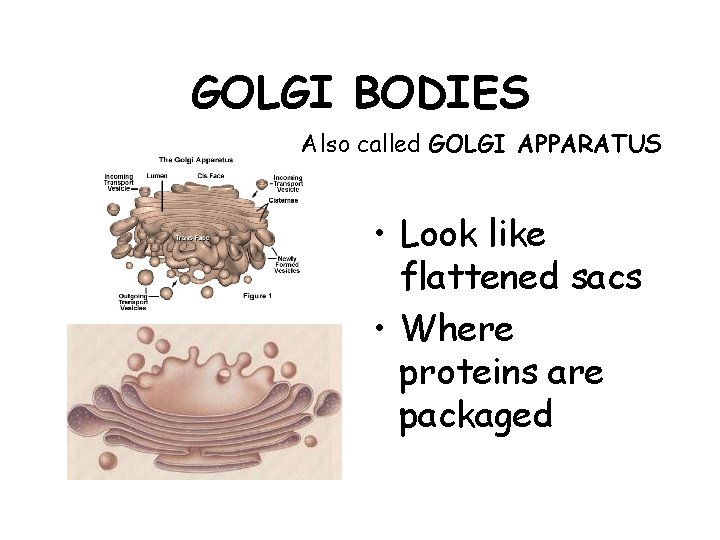
GOLGI BODIES Also called GOLGI APPARATUS • Look like flattened sacs • Where proteins are packaged
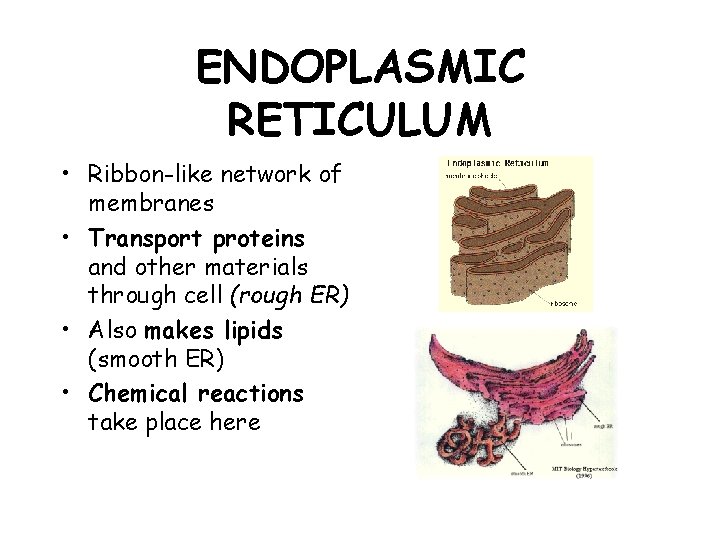
ENDOPLASMIC RETICULUM • Ribbon-like network of membranes • Transport proteins and other materials through cell (rough ER) • Also makes lipids (smooth ER) • Chemical reactions take place here
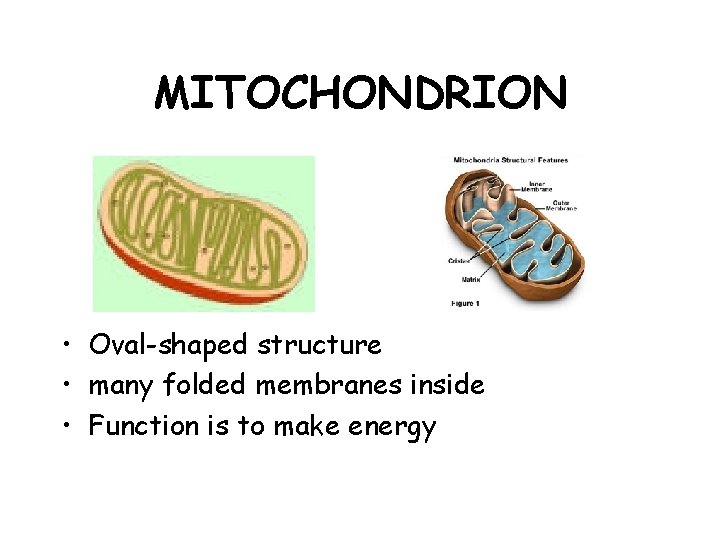
MITOCHONDRION • Oval-shaped structure • many folded membranes inside • Function is to make energy
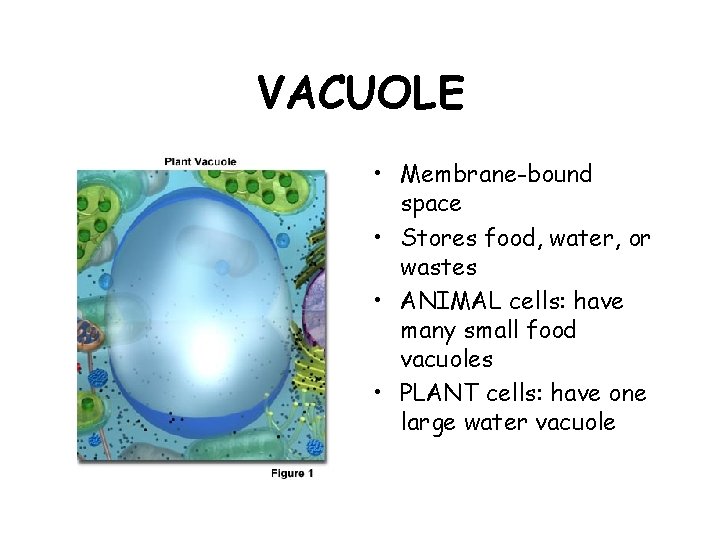
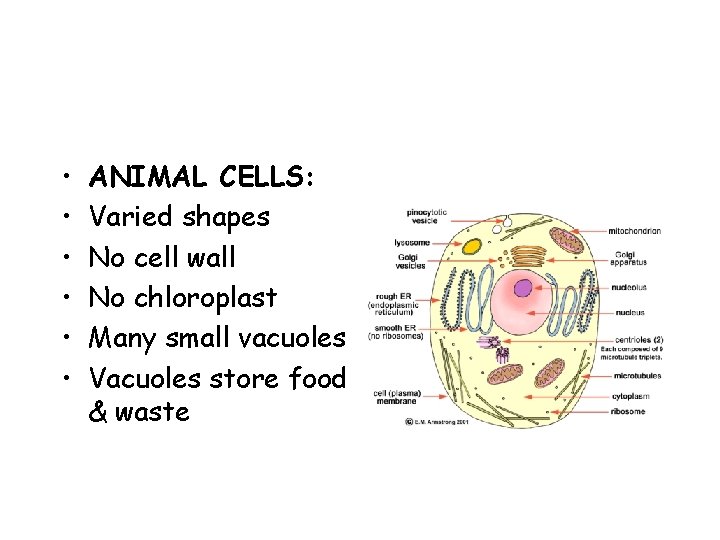
VACUOLE • Membrane-bound space • Stores food, water, or wastes • ANIMAL cells: have many small food vacuoles • PLANT cells: have one large water vacuole
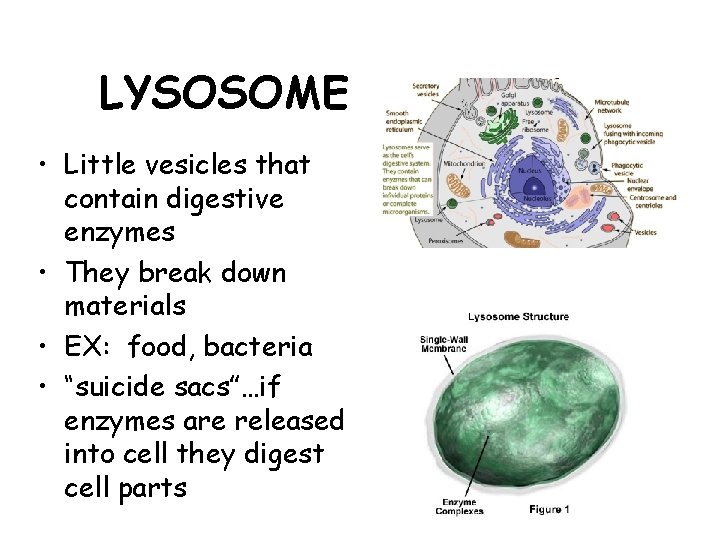
LYSOSOME • Little vesicles that contain digestive enzymes • They break down materials • EX: food, bacteria • “suicide sacs”…if enzymes are released into cell they digest cell parts
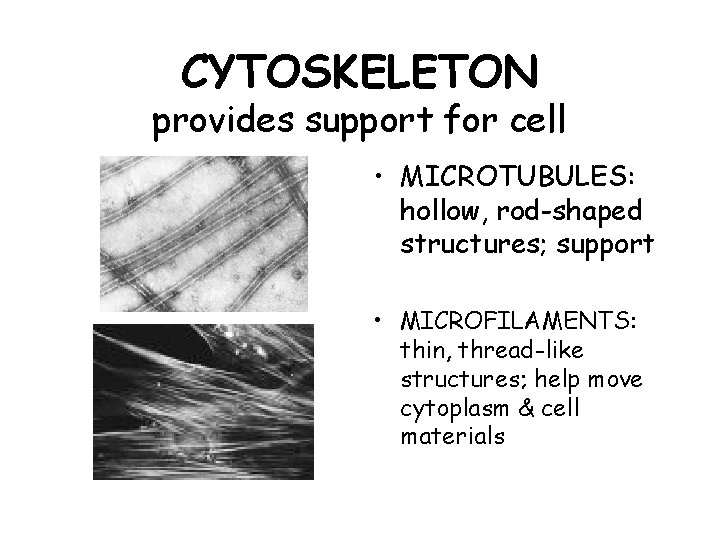
CYTOSKELETON provides support for cell • MICROTUBULES: hollow, rod-shaped structures; support • MICROFILAMENTS: thin, thread-like structures; help move cytoplasm & cell materials
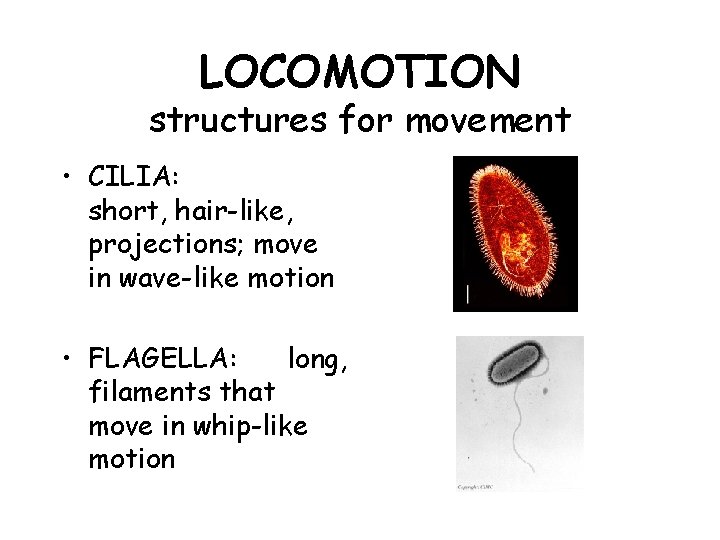
LOCOMOTION structures for movement • CILIA: short, hair-like, projections; move in wave-like motion • FLAGELLA: long, filaments that move in whip-like motion
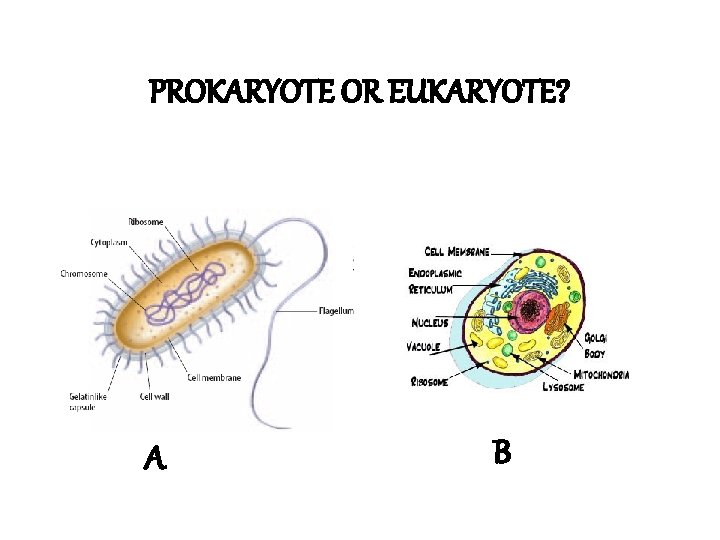
PROKARYOTE OR EUKARYOTE? A B
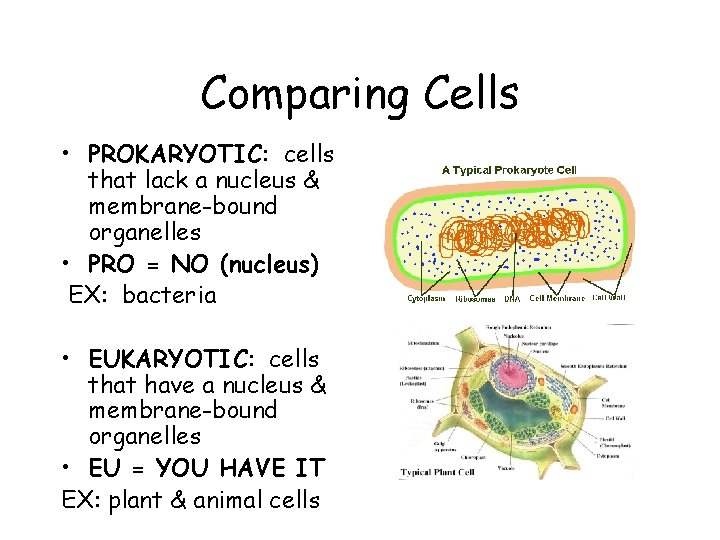
Comparing Cells • PROKARYOTIC: cells that lack a nucleus & membrane-bound organelles • PRO = NO (nucleus) EX: bacteria • EUKARYOTIC: cells that have a nucleus & membrane-bound organelles • EU = YOU HAVE IT EX: plant & animal cells
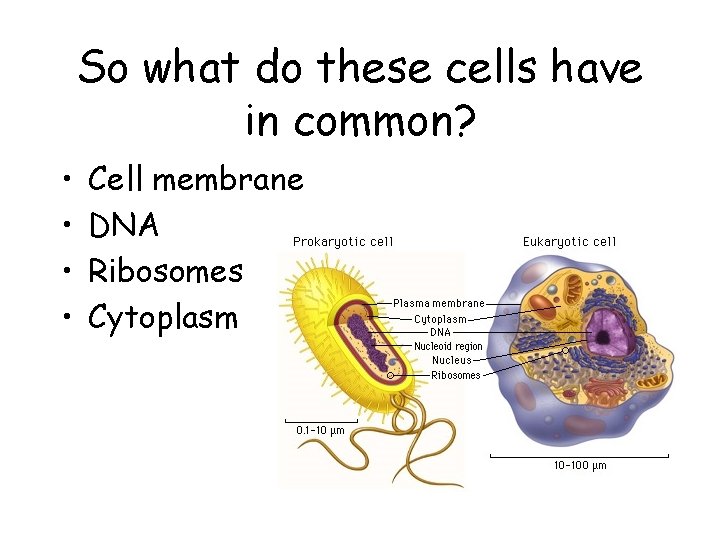
So what do these cells have in common? • • Cell membrane DNA Ribosomes Cytoplasm
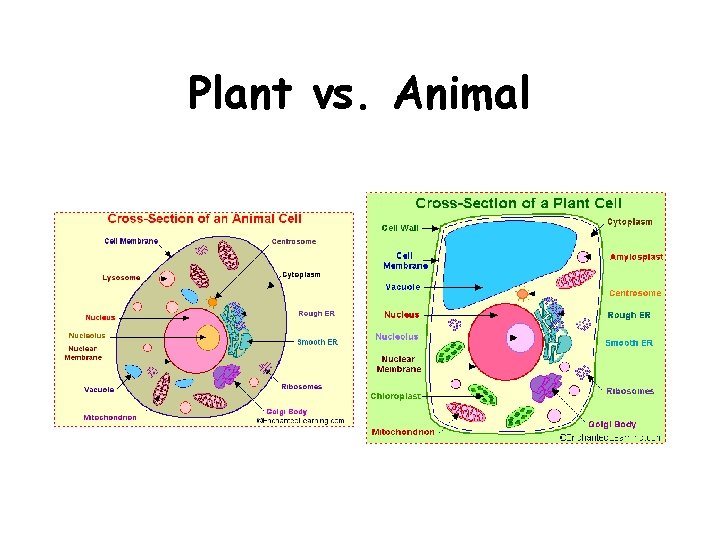
Plant vs. Animal
• • • PLANT CELLS: Definite shape Cell wall Chloroplast Single large vacuole Vacuole stores water
• • • ANIMAL CELLS: Varied shapes No cell wall No chloroplast Many small vacuoles Vacuoles store food & waste
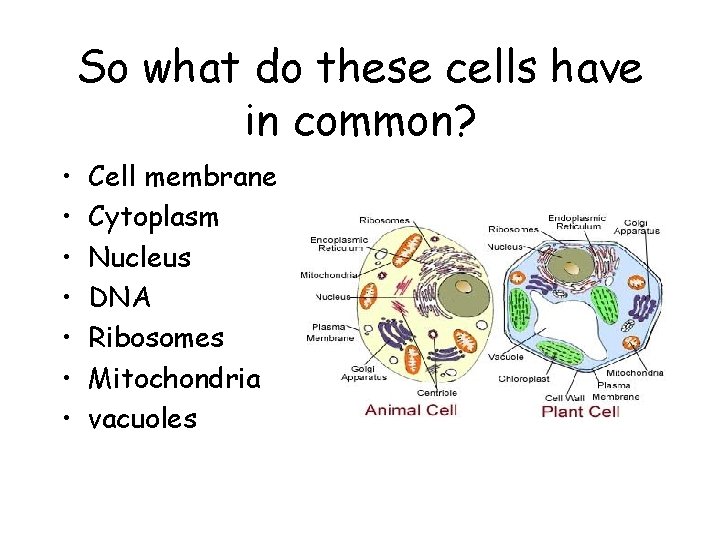
So what do these cells have in common? • • Cell membrane Cytoplasm Nucleus DNA Ribosomes Mitochondria vacuoles
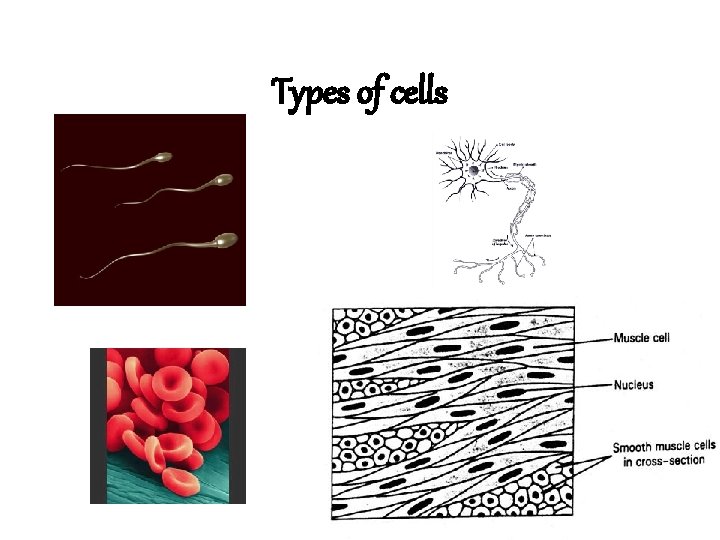
Types of cells
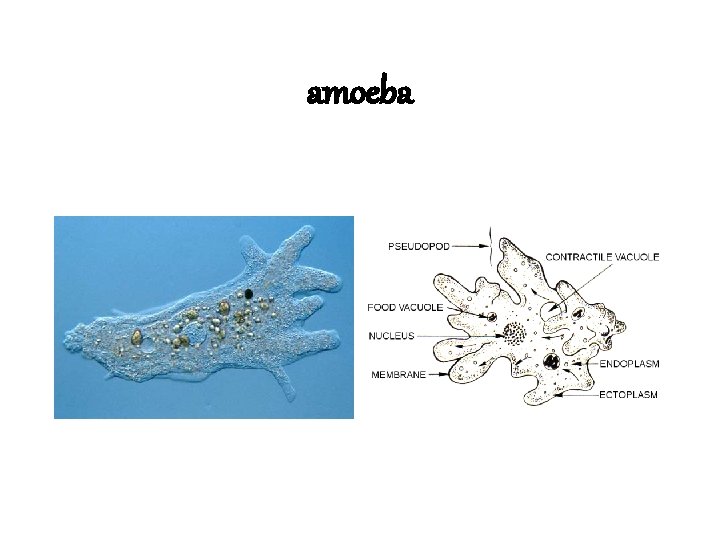
amoeba
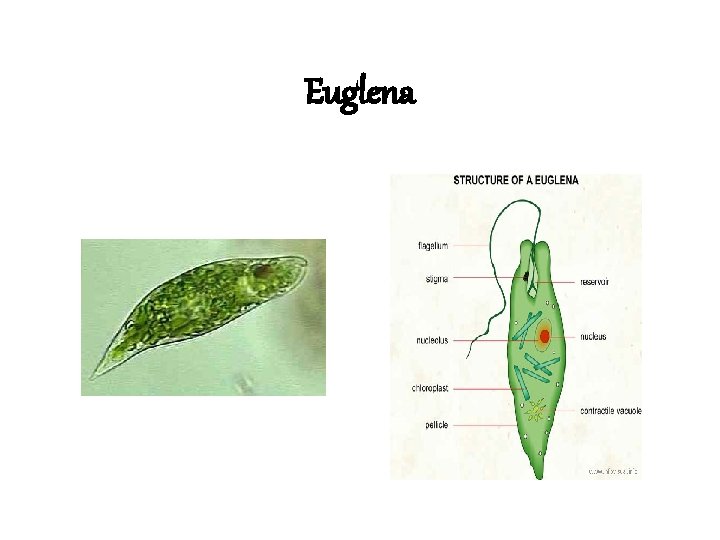
Euglena
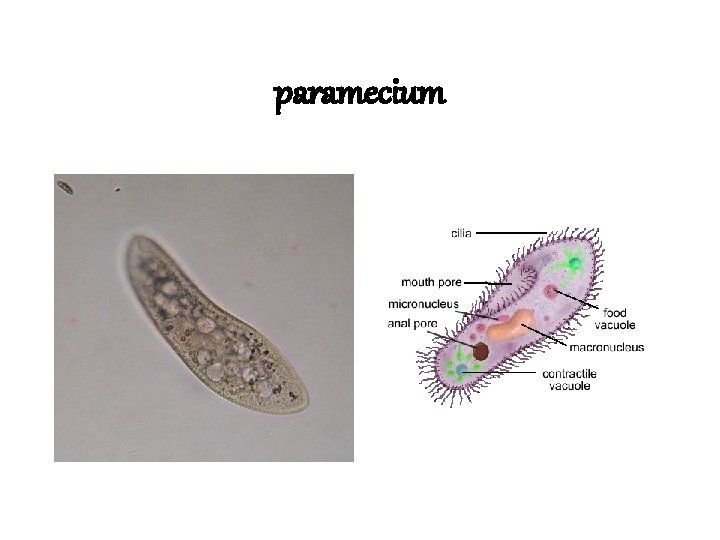
paramecium