
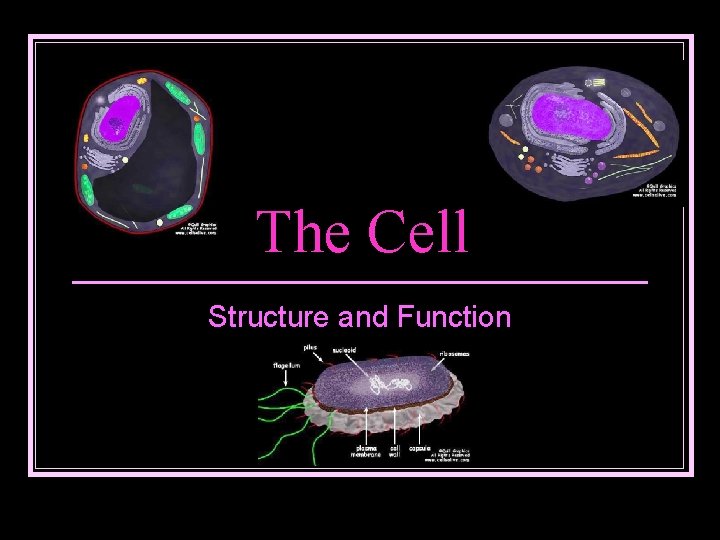
The Cell Structure and Function Recall the Cell
- Slides: 19
The Cell Structure and Function
Recall the Cell Theory n 1. The cell is the basic unit of life n 2. All living things are composed of one or more cells n 3. All cells come from other cells
Types of Cells n Prokaryotes n n n Have no nucleus or membrane bound organelles Ex: Bacteria Eukaryotes n n Have membrane-bound nucleus and organelles Ex: Cheek Cell (Human), Plant cell
Types of Living Things n Unicellular n n Composed of only one cell Multicellular n Composed of many cells
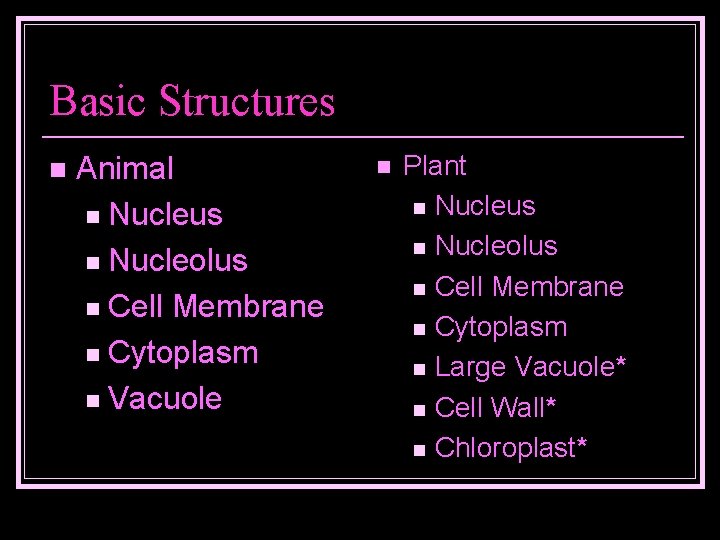
Basic Structures n Animal n Nucleus n Nucleolus n Cell Membrane n Cytoplasm n Vacuole n Plant n Nucleus n Nucleolus n Cell Membrane n Cytoplasm n Large Vacuole* n Cell Wall* n Chloroplast*
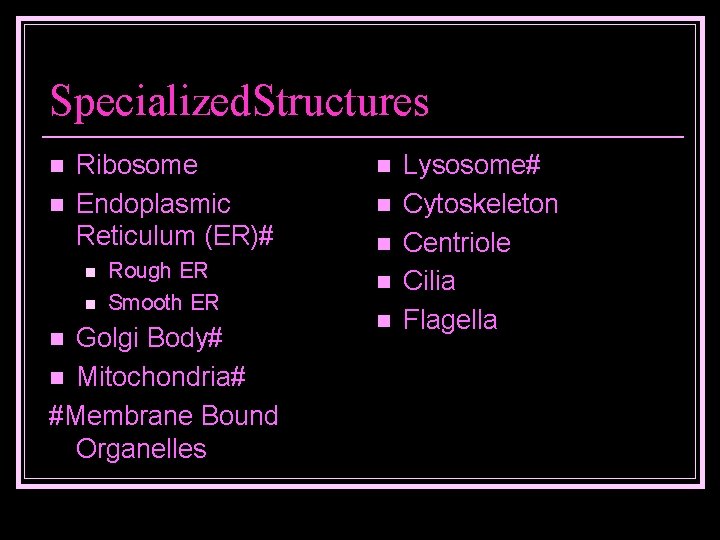
Specialized. Structures n n Ribosome Endoplasmic Reticulum (ER)# n n Rough ER Smooth ER Golgi Body# n Mitochondria# #Membrane Bound Organelles n n n Lysosome# Cytoskeleton Centriole Cilia Flagella
Ribosome n Function: Build protein using m. RNA and amino acids (on t. RNA) n Some ribosomes float freely in the cytoplasm n Some ribosomes are attached to the Endoplasmic Reticulum (ER)
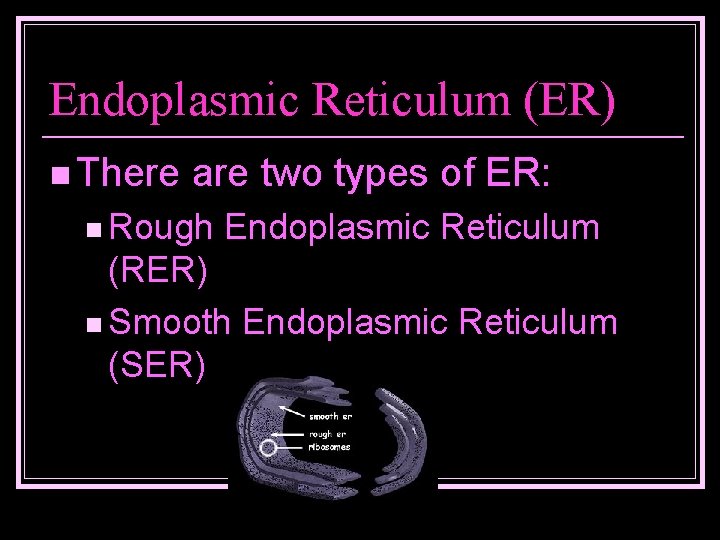
Endoplasmic Reticulum (ER) n There are two types of ER: n Rough Endoplasmic Reticulum (RER) n Smooth Endoplasmic Reticulum (SER)
RER n Ribosomes are attached to it, giving it a rough appearance n Transports proteins made by the ribosomes on surface to other places (especially Golgi body) n Helps produce cell membranes
SER n Smooth appearance because there are no ribosomes attached to it n Has enzymes that break down toxins (like alcohol) n Helps produce lipids
Golgi Body (or Golgi Apparatus) n Vesicles from the RER bring proteins here n Processes, sorts and sends proteins to their proper destinations in & outside of the cell (Fed. Ex of the cell)
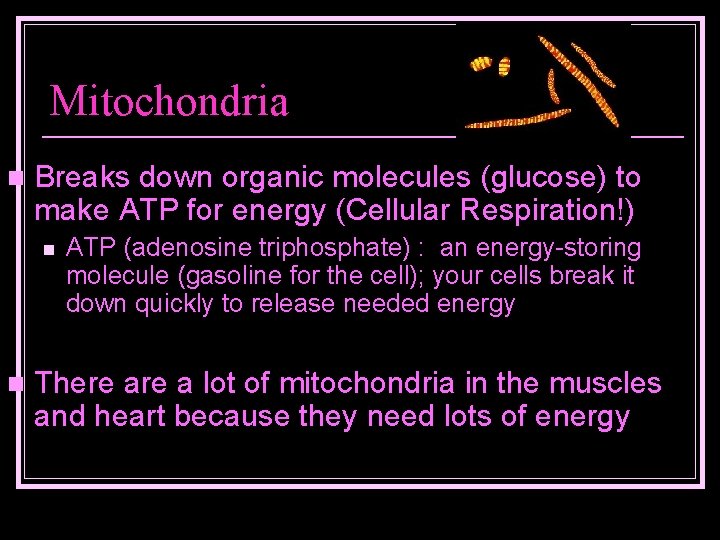
Mitochondria n Breaks down organic molecules (glucose) to make ATP for energy (Cellular Respiration!) n n ATP (adenosine triphosphate) : an energy-storing molecule (gasoline for the cell); your cells break it down quickly to release needed energy There a lot of mitochondria in the muscles and heart because they need lots of energy
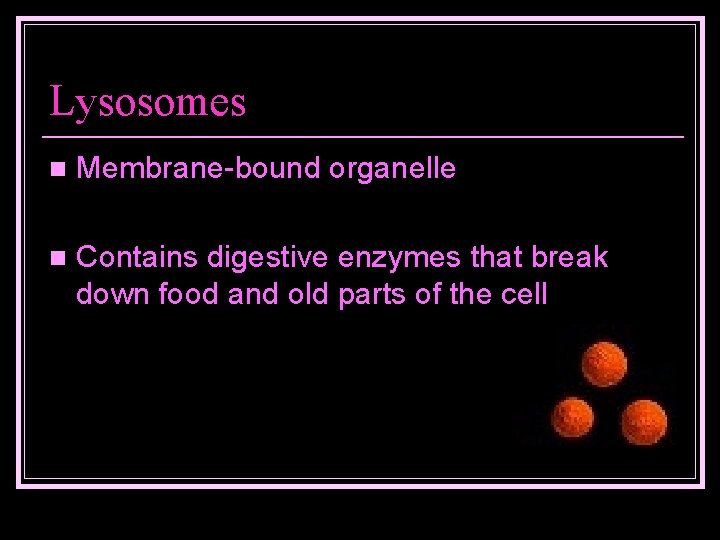
Lysosomes n Membrane-bound organelle n Contains digestive enzymes that break down food and old parts of the cell
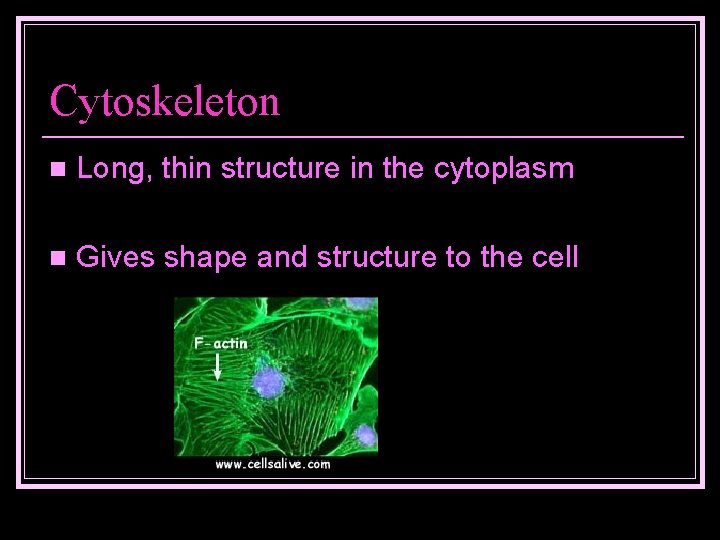
Cytoskeleton n Long, thin structure in the cytoplasm n Gives shape and structure to the cell
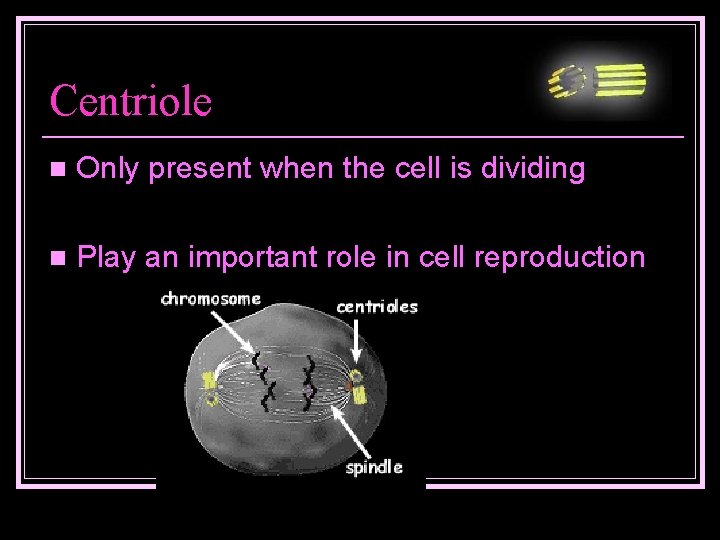
Centriole n Only present when the cell is dividing n Play an important role in cell reproduction
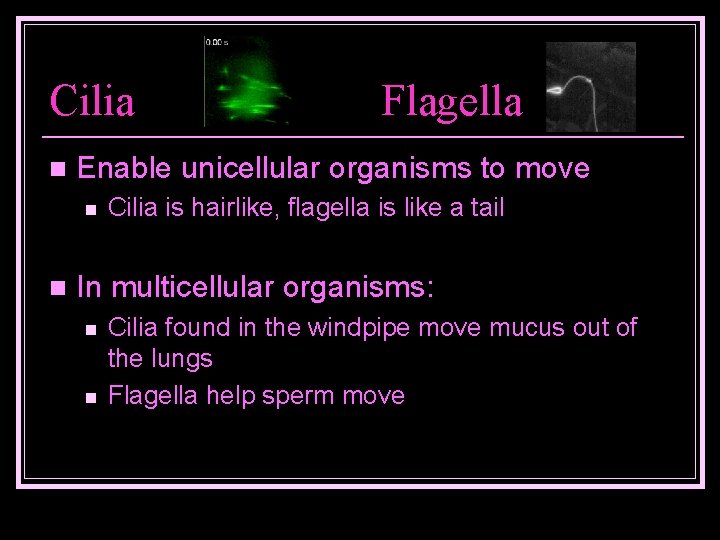
Cilia n Enable unicellular organisms to move n n Flagella Cilia is hairlike, flagella is like a tail In multicellular organisms: n n Cilia found in the windpipe move mucus out of the lungs Flagella help sperm move
Make sure you know function of the following structures: Nucleus n Nucleolus n Cytoplasm n Cell Membrane n Cell Wall n Chloroplast n Large Central Vacuole n
n n n n n Cell Membrane Cytoplasm Cytoskeleton Nucleus Chromosomes Nucleolus Mitochondria Ribosomes Rough Endoplasmic reticulum (RER) n n n n Smooth Endoplasmic Reticulum (SER) Golgi apparatus Lysosomes Cilia Flagella Cell Wall Chloroplasts Vacuole
Study Resources: n www. cellsalive. com n n n Interactive organelle review! Take a quiz and get your score! http: //www. umanitoba. ca/faculties/science/ biological_sciences/lab 3/biolab 3_2. html n View pictures of cells under a microscope!