
The Cell Robert Hooke 1665observed cork under a
The Cell
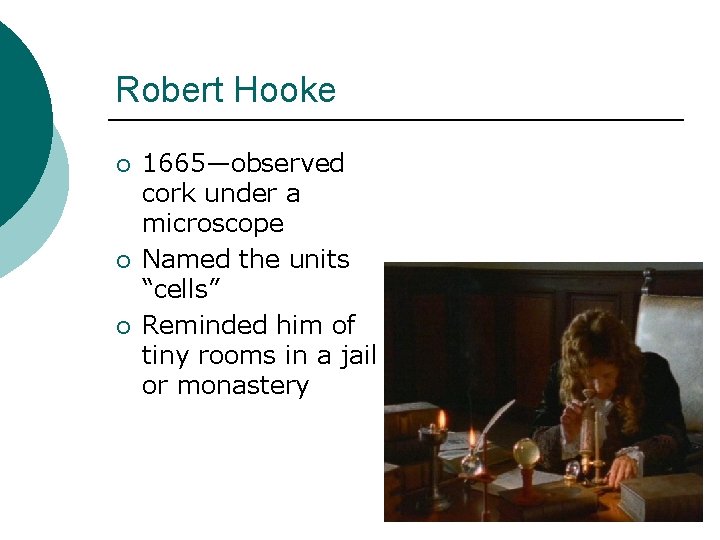
Robert Hooke ¡ ¡ ¡ 1665—observed cork under a microscope Named the units “cells” Reminded him of tiny rooms in a jail or monastery
More Contributions ¡ Henry Dutrochet— 1824 all living things were comprised of cells ¡ Robert Brown— 1831 named “nucleus” ¡ Felix Dujardin—observed the jelly-like fluid in cells and called it protoplasm— now is called protoplasm, cytoplasm, or cytosol
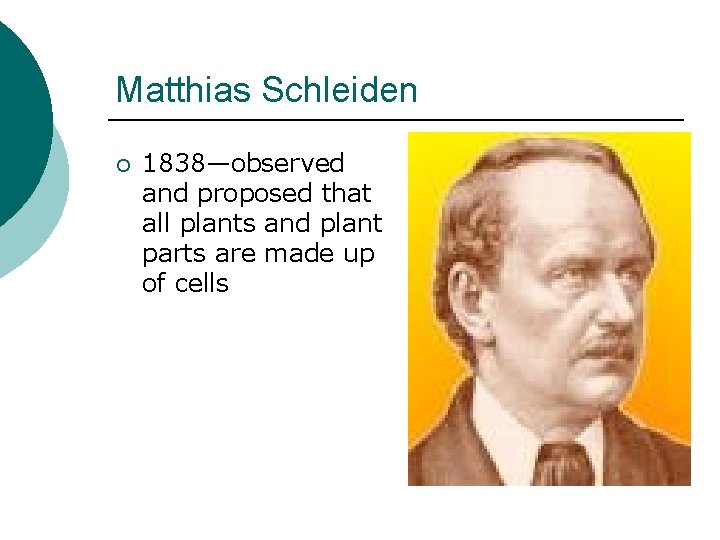
Matthias Schleiden ¡ 1838—observed and proposed that all plants and plant parts are made up of cells
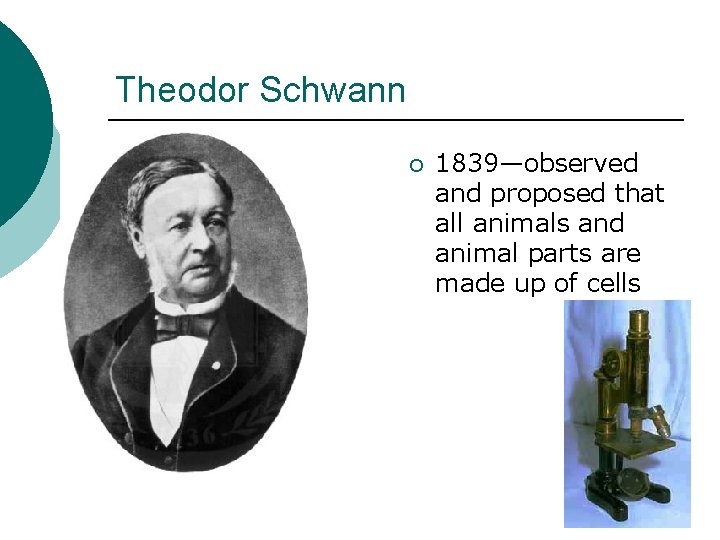
Theodor Schwann ¡ 1839—observed and proposed that all animals and animal parts are made up of cells
Rudolf Virchow 1858—stated that all cells come from the division of preexisting cells ¡ Summary is known as The Cell Theory ¡
The Cell Theory 1. 2. 3. All living things ( organisms ) are made of one or more cells. The cell is the basic unit of life ( it is the basic structure and carries out the basic functions of all organisms). All new cells come from preexisting cells.

Two Basic Cell Types: 1. Prokaryotes: • • Smaller and simpler Have cell membranes and cytoplasm No nuclei or other membrane bound organelles Bacteria
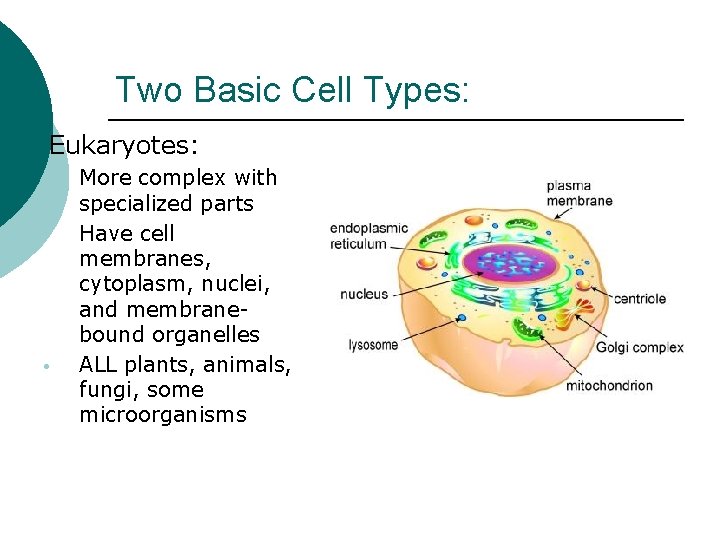
Two Basic Cell Types: 2. Eukaryotes: • • • More complex with specialized parts Have cell membranes, cytoplasm, nuclei, and membranebound organelles ALL plants, animals, fungi, some microorganisms
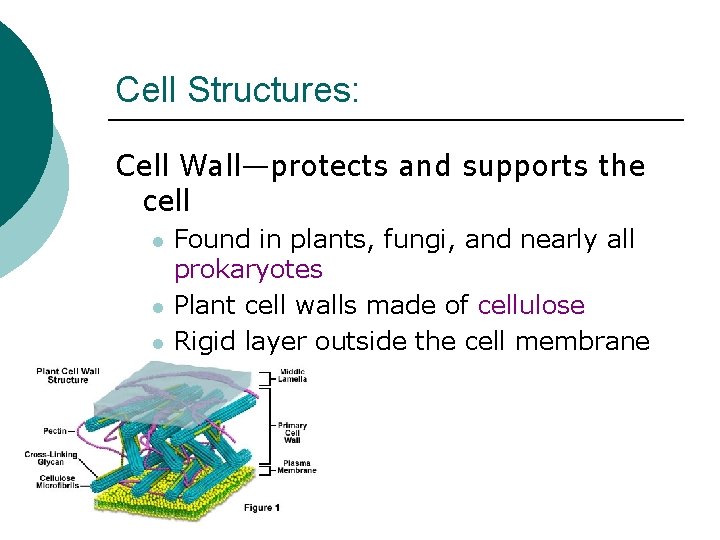
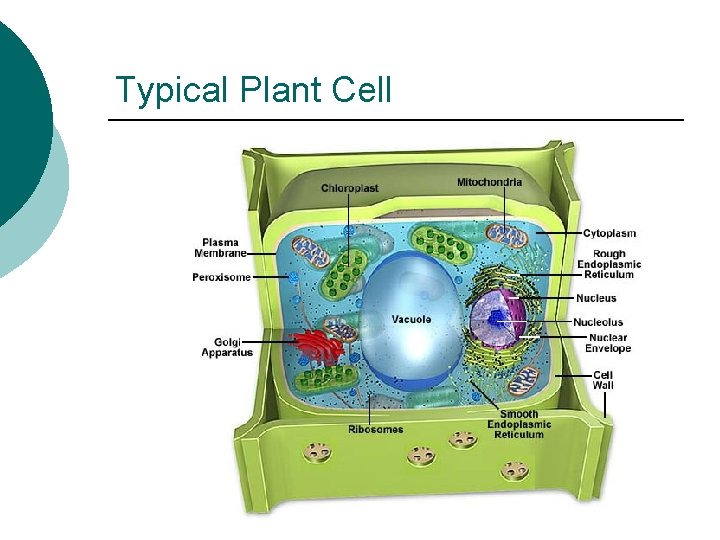
Cell Structures: Cell Wall—protects and supports the cell l Found in plants, fungi, and nearly all prokaryotes Plant cell walls made of cellulose Rigid layer outside the cell membrane
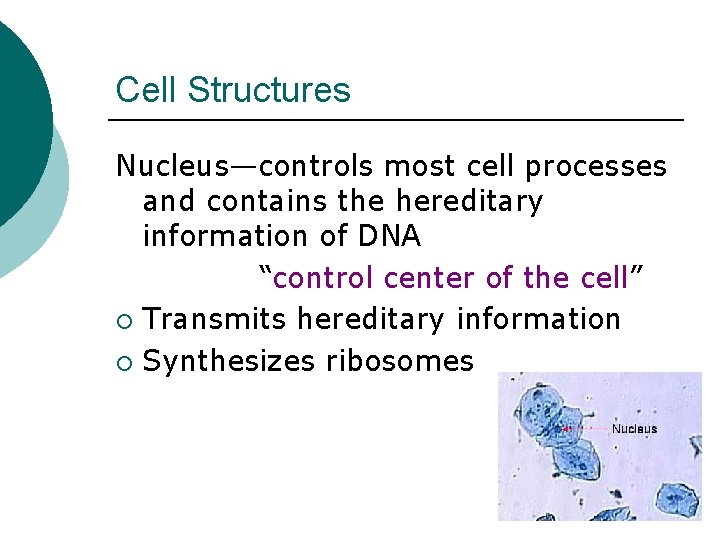
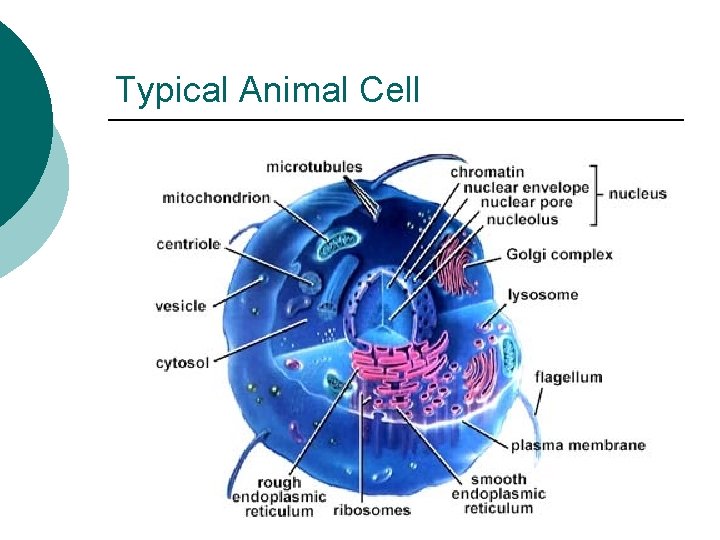
Cell Structures Nucleus—controls most cell processes and contains the hereditary information of DNA “control center of the cell” ¡ Transmits hereditary information ¡ Synthesizes ribosomes
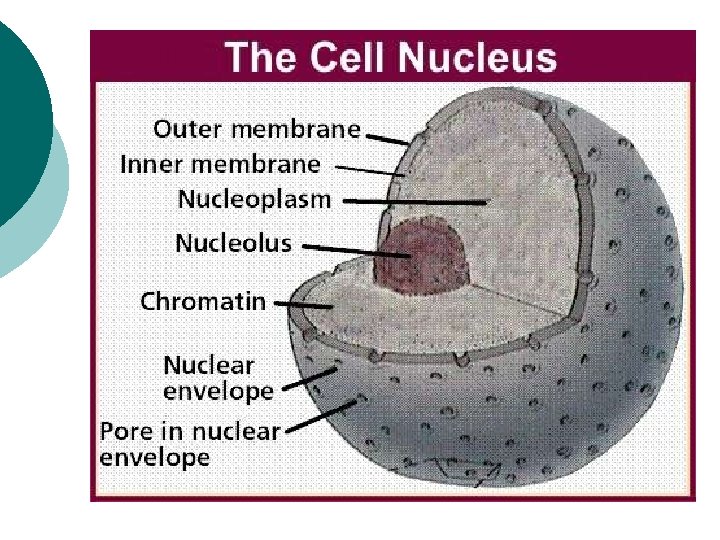
Nuclear Structure 1. 2. 3. 4. Chromatin—granular material within the nucleus consisting of DNA bound to proteins Chromosomes—condensed chromatin that forms during cell division—carries genetic information Nucleolus—small, dense regions where the assembly of ribosomes begin Nuclear envelope—double-membrane layer that surrounds the nucleus
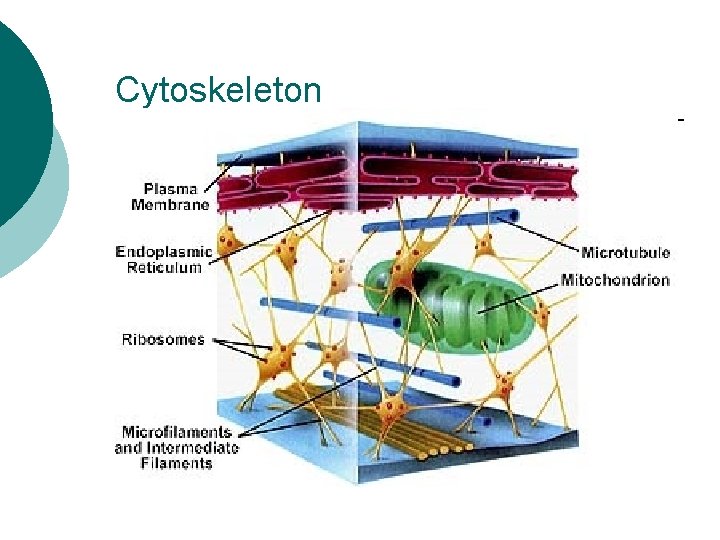
Cell Structures Cytoskeleton—network of protein filaments that helps the cell maintain its shape; also involved in many forms of cell movement ¡ Made of: l l Microtubules Microfilaments
Cytoskeleton ¡ ¡ ¡ Microtubules Tubes of protein that maintain cell shape and can serve as “tracks” along which organelles are moved Form cilia and flagella in some cells Form bundles called spindle fibers during cell division ¡ ¡ ¡ Microfilaments Long, thin filaments that function in movement and support of the cell Threads made of the protein actin Can play a role in the contraction of muscle cells
Cytoskeleton
Cell Structures ¡ ¡ ¡ ALL cells have a cell membrane and cytoplasm Cell membrane—regulates what enters and leaves the cell, holds cell together, made of lipids and proteins Cytoplasm—fluidlike material between the nucleus and cell membrane. The site of chemical reactions and location of organelles
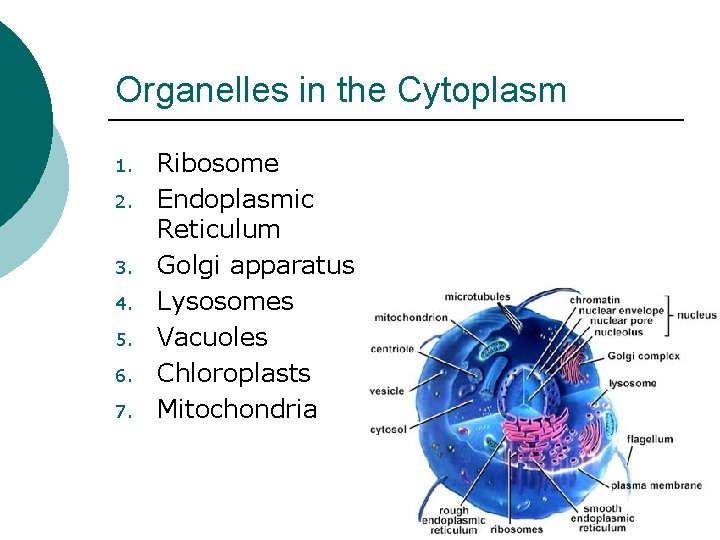
Organelles in the Cytoplasm 1. 2. 3. 4. 5. 6. 7. Ribosome Endoplasmic Reticulum Golgi apparatus Lysosomes Vacuoles Chloroplasts Mitochondria
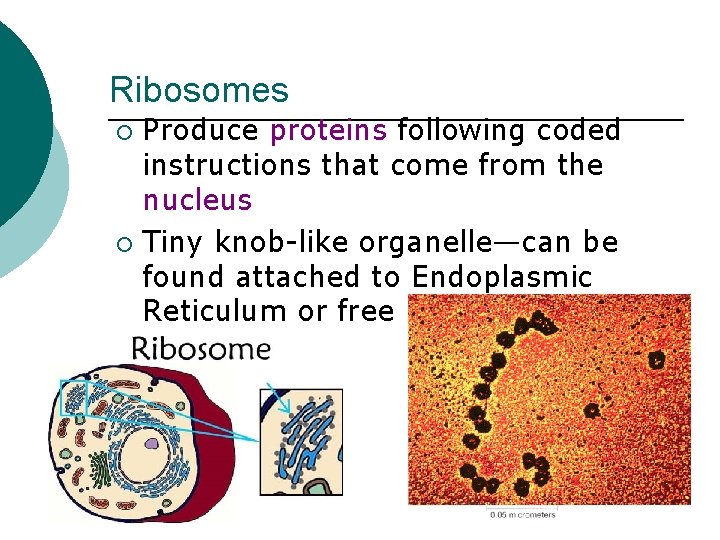
Ribosomes Produce proteins following coded instructions that come from the nucleus ¡ Tiny knob-like organelle—can be found attached to Endoplasmic Reticulum or free ¡
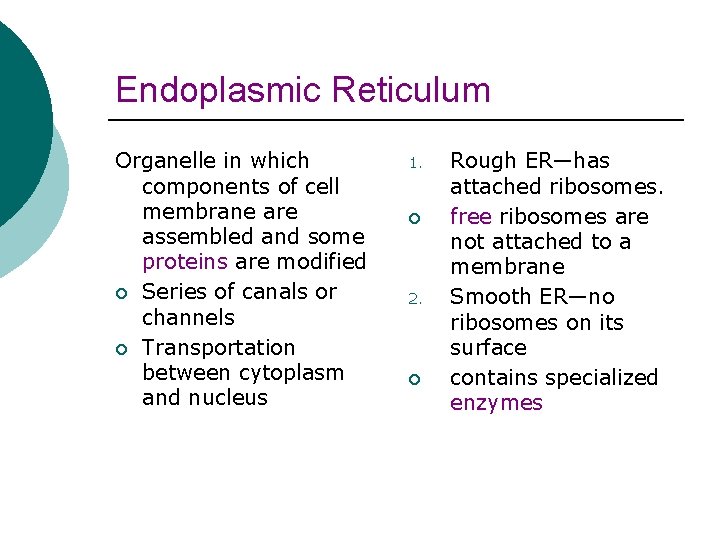
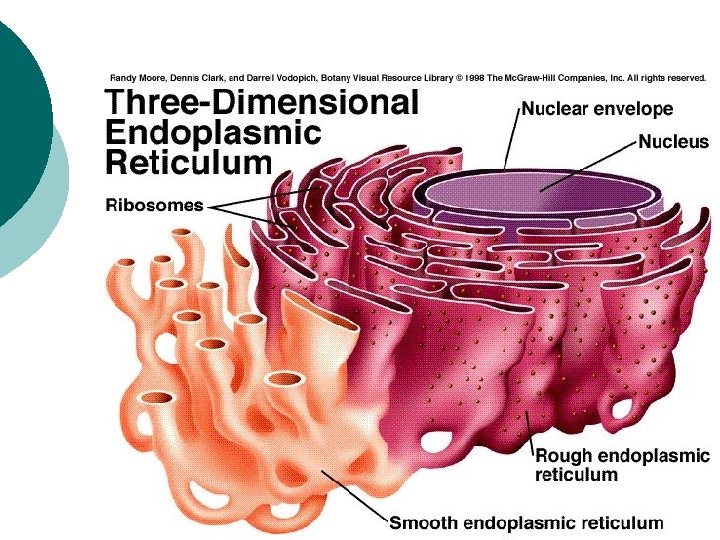
Endoplasmic Reticulum Organelle in which components of cell membrane are assembled and some proteins are modified ¡ Series of canals or channels ¡ Transportation between cytoplasm and nucleus 1. ¡ 2. ¡ Rough ER—has attached ribosomes. free ribosomes are not attached to a membrane Smooth ER—no ribosomes on its surface contains specialized enzymes
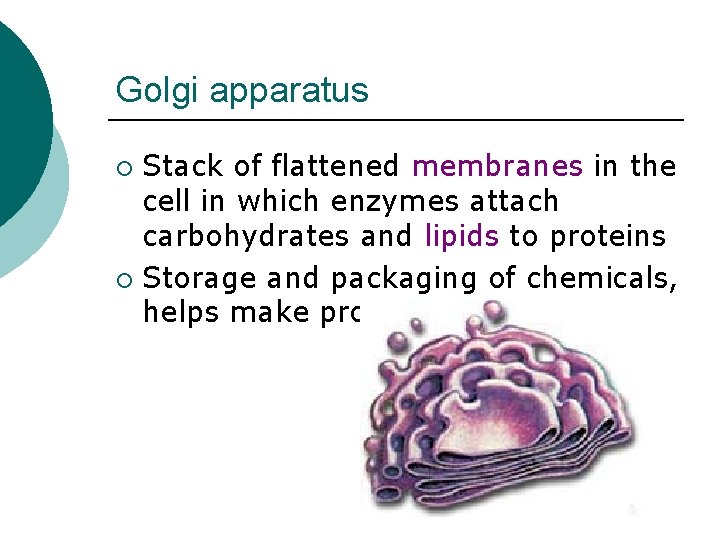
Golgi apparatus Stack of flattened membranes in the cell in which enzymes attach carbohydrates and lipids to proteins ¡ Storage and packaging of chemicals, helps make proteins ¡
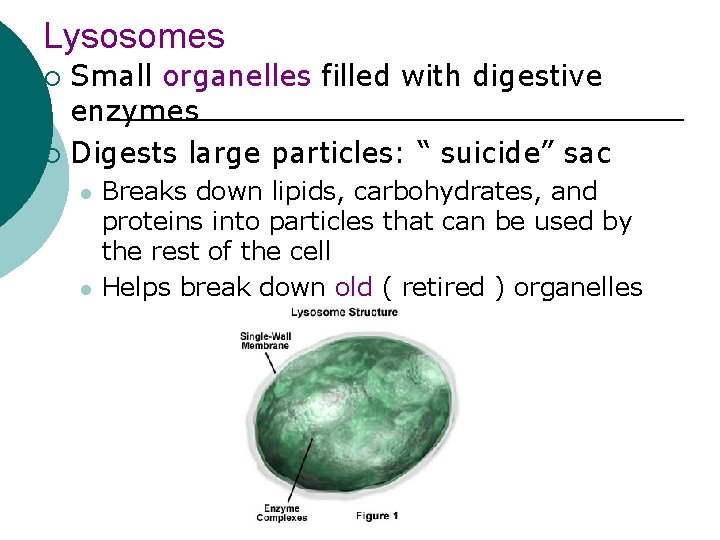
Lysosomes Small organelles filled with digestive enzymes ¡ Digests large particles: “ suicide” sac ¡ l l Breaks down lipids, carbohydrates, and proteins into particles that can be used by the rest of the cell Helps break down old ( retired ) organelles
Vacuole Saclike structure in which cells store materials such as water, salts, proteins, and carbohydrates ¡ Fluid-filled membrane bound organelle ¡ l l In plant cells, single, larger and fluidfilled In animal cells, may be called vesicles
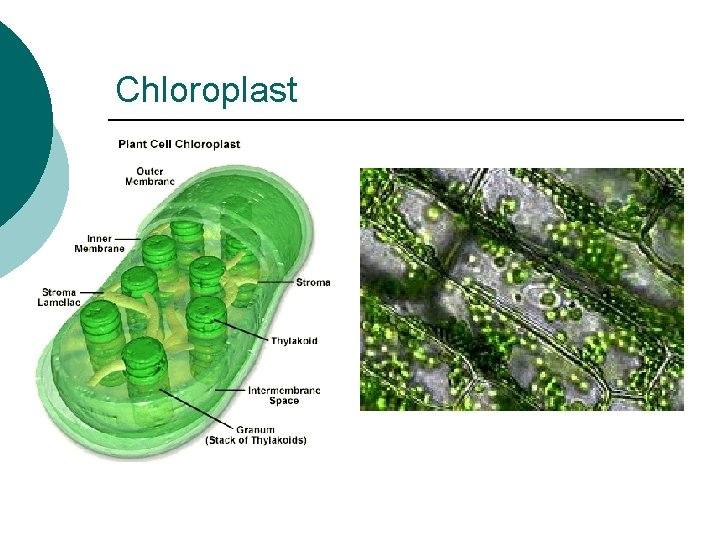
Chloroplasts Use the energy from sunlight to make energy-rich molecules during photosynthesis ¡ Has flattened sacs called thylakoids which are put into stacks called grana. The fluid around the thylakoids is the stroma. ¡ In plants, algae, and some bacteria ¡
Chloroplast
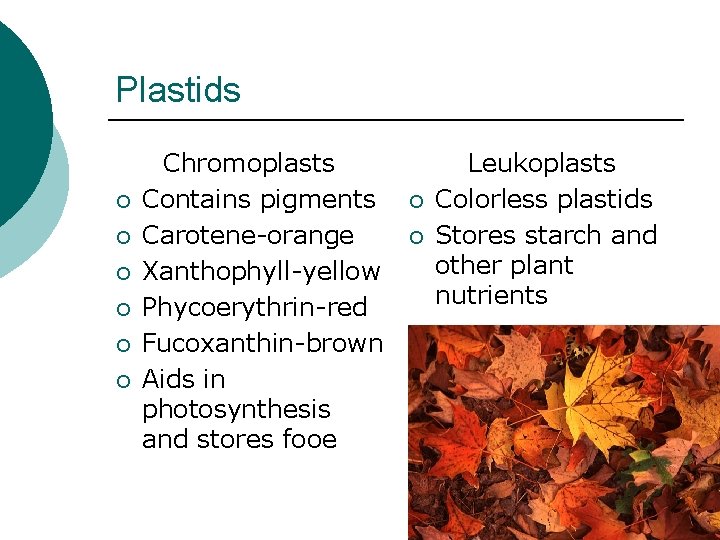
Plastids ¡ ¡ ¡ Chromoplasts Contains pigments Carotene-orange Xanthophyll-yellow Phycoerythrin-red Fucoxanthin-brown Aids in photosynthesis and stores fooe ¡ ¡ Leukoplasts Colorless plastids Stores starch and other plant nutrients
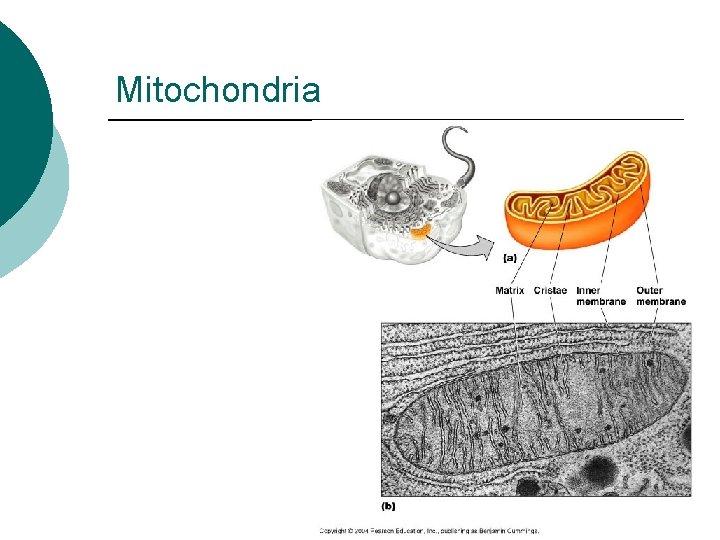
Mitochondria Organelles that release energy from food molecules to make high-energy compounds the cell can use to power growth, development, and movement “ the powerhouse of the cell” ¡ Smooth outer layer, folded inner layer ¡
Mitochondria
Typical Animal Cell
Typical Plant Cell
The Cell Membrane Regulates—controls—what enters and leaves the cell ¡ Selectively permeable ¡ “the gatekeeper of the cell” ¡ How the cell gets water & food, gets rid of waste ¡ Only certain substances are allowed to pass through the membrane ¡
Lipid Bilayer 2 layers that makes up most cell membranes ¡ Gives cell membrane a tough and flexible barrier between the cell and its environment ¡
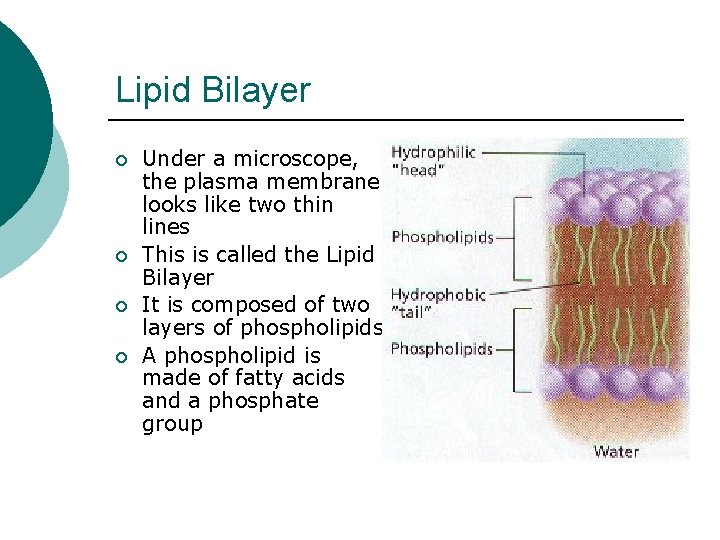
Lipid Bilayer ¡ ¡ Under a microscope, the plasma membrane looks like two thin lines This is called the Lipid Bilayer It is composed of two layers of phospholipids A phospholipid is made of fatty acids and a phosphate group
Lipid Bilayer ¡ Made of phospholipid molecules l l l Polar head, phosphate, and fatty acids Polar heads are on the outside of the bilayer Fatty acids are on the inside
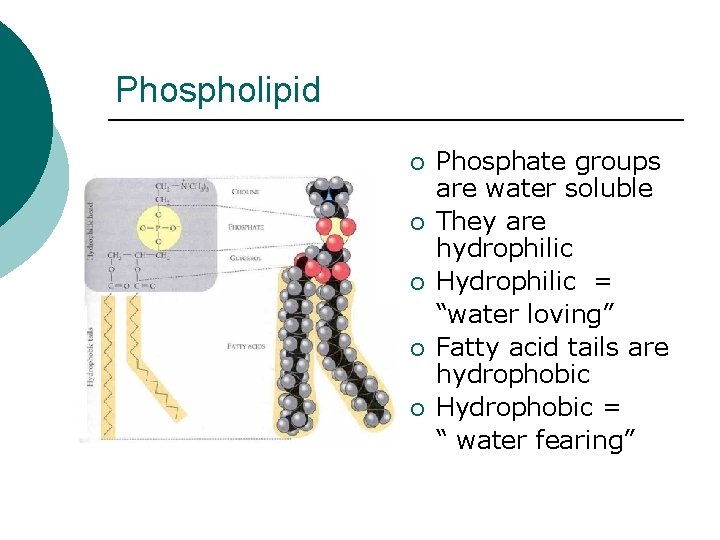
Phospholipid ¡ ¡ ¡ Phosphate groups are water soluble They are hydrophilic Hydrophilic = “water loving” Fatty acid tails are hydrophobic Hydrophobic = “ water fearing”
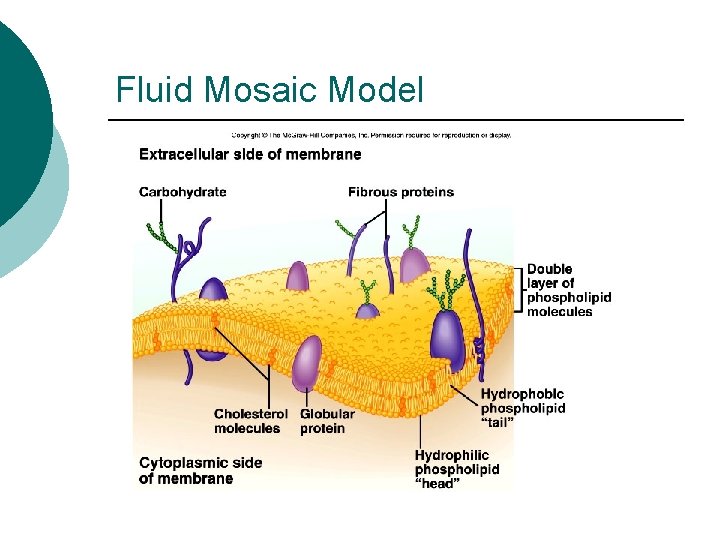
Phospholipids Are motile and move along the membrane ¡ Many cells have rigid molecules of cholesterol embedded in the bilayer. ¡ Cholesterol restricts movement of phospholipid molecules and adds strength and flexibility. ¡
Proteins Are scattered throughout the lipid bilayer ¡ Integral proteins are embedded. ¡ Peripheral proteins are on the surface. ¡ Position is determined from polar and nonpolar regions. ¡ are capable of motility ¡
Overview of Lipid Bilayer Made of two layers. ¡ Made of phospholipid molecules. ¡ Two parts to a phospholipid molecule: fatty acid tails polar head ¡ Cholesterol and protein can be embedded or scattered in the lipid bilayer ¡
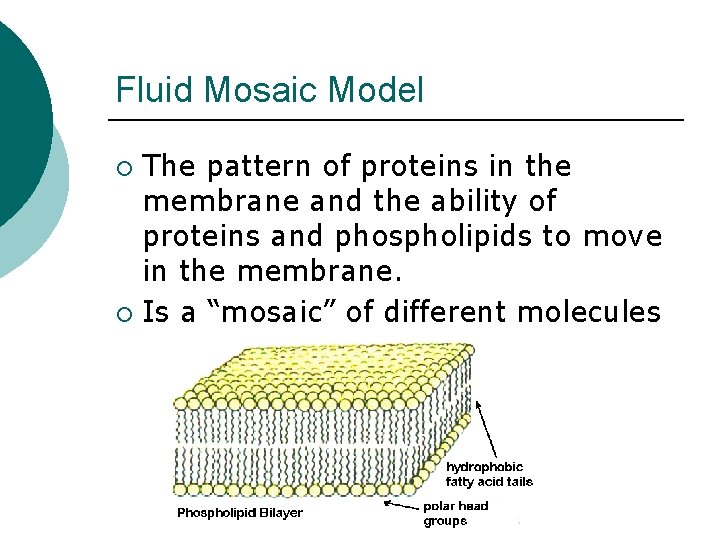
Fluid Mosaic Model The pattern of proteins in the membrane and the ability of proteins and phospholipids to move in the membrane. ¡ Is a “mosaic” of different molecules ¡
Fluid Mosaic Model
- Slides: 41