
The Cell Robert Hooke 1665 English Viewed cork
The Cell
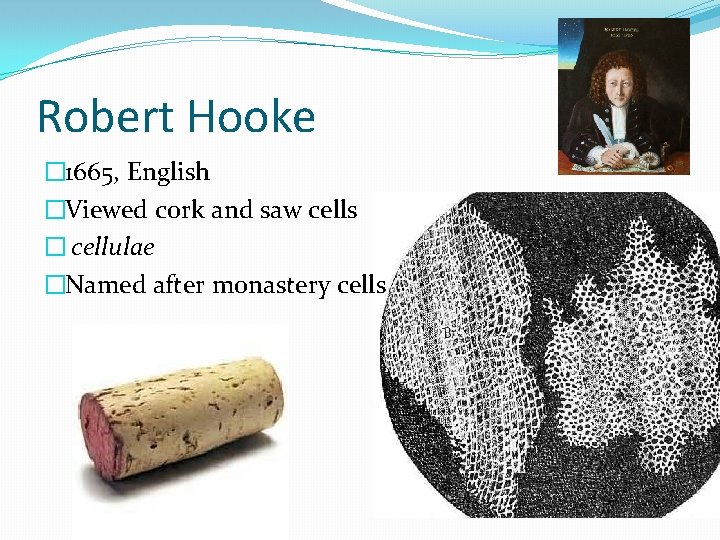
Robert Hooke � 1665, English �Viewed cork and saw cells � cellulae �Named after monastery cells
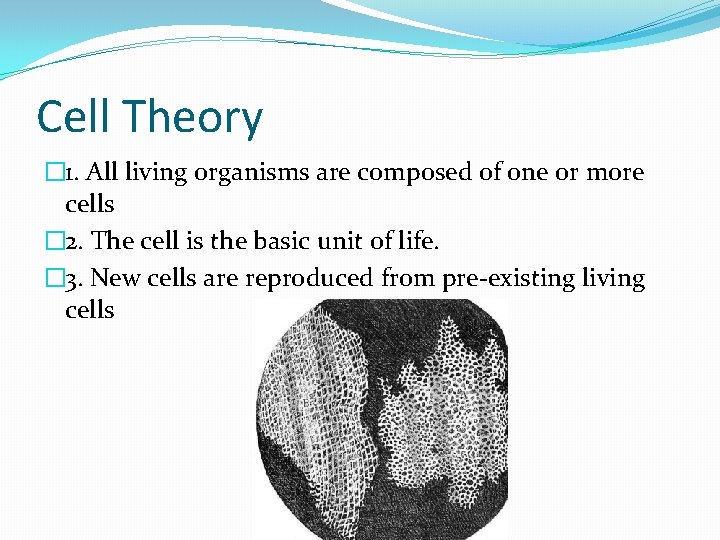
Cell Theory � 1. All living organisms are composed of one or more cells � 2. The cell is the basic unit of life. � 3. New cells are reproduced from pre-existing living cells
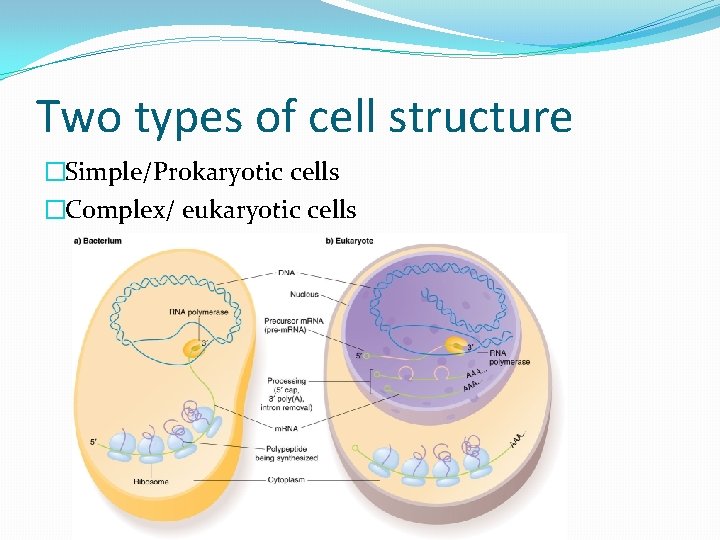
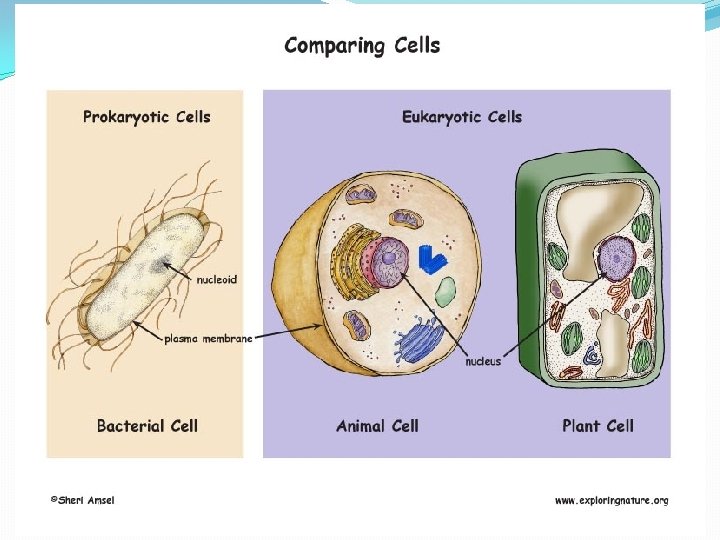
Two types of cell structure �Simple/Prokaryotic cells �Complex/ eukaryotic cells

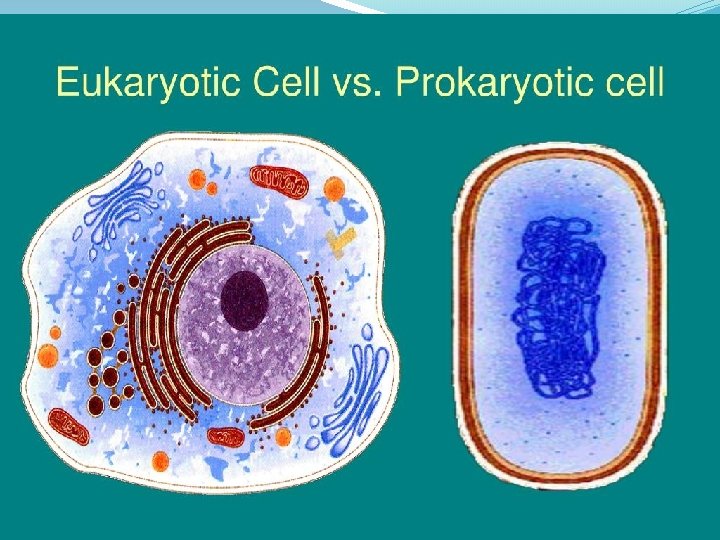
Prokaryotic Cells �“pro” : before �“karyon” : nut �No nucleus �Cell walls �No organelles �DNA is in the center �Prokaryotic cells are single-celled organisms (Domain Archae and Domain Bacteria)
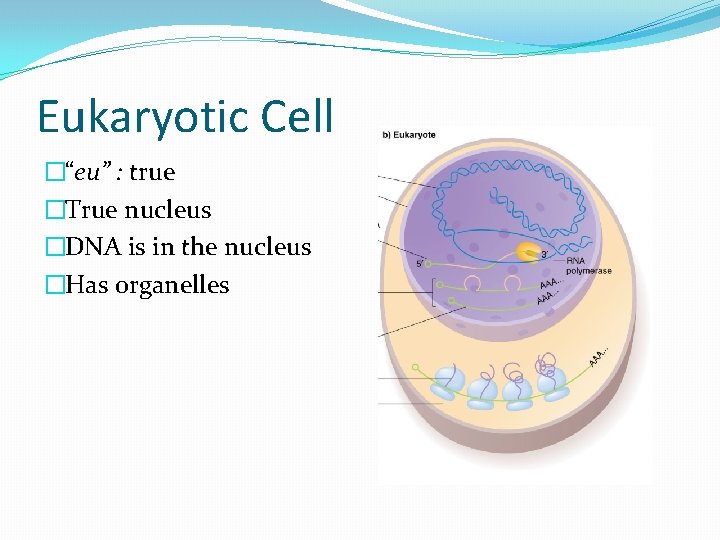
Eukaryotic Cell �“eu” : true �True nucleus �DNA is in the nucleus �Has organelles
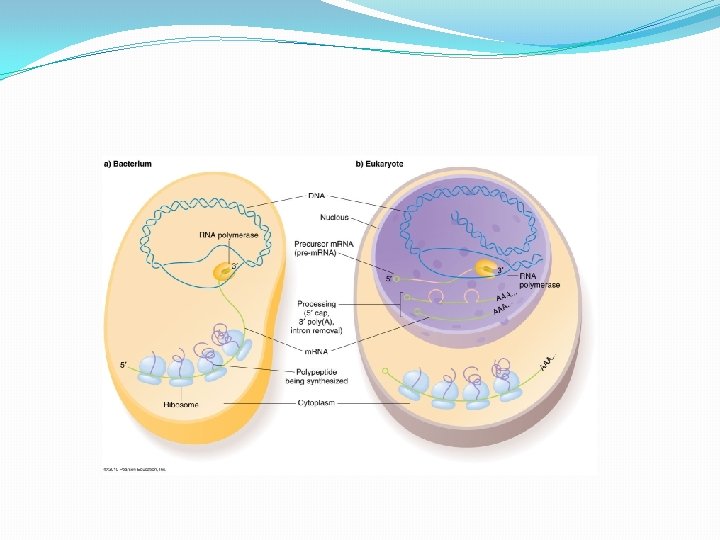
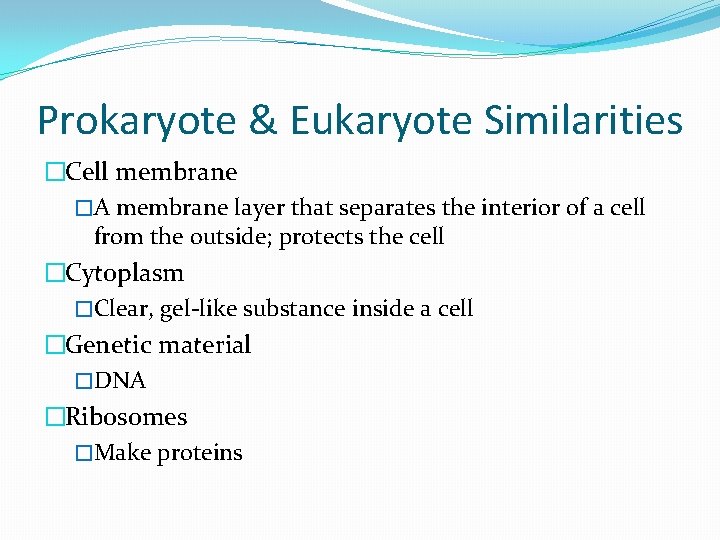
Prokaryote & Eukaryote Similarities �Cell membrane �A membrane layer that separates the interior of a cell from the outside; protects the cell �Cytoplasm �Clear, gel-like substance inside a cell �Genetic material �DNA �Ribosomes �Make proteins
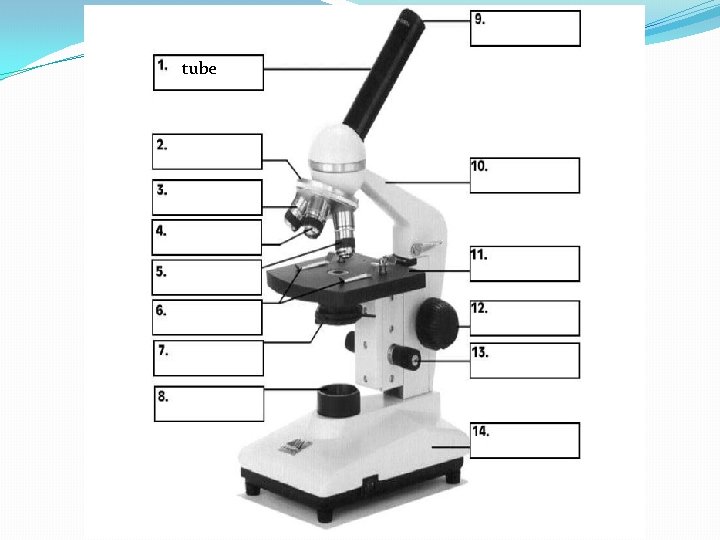
tube
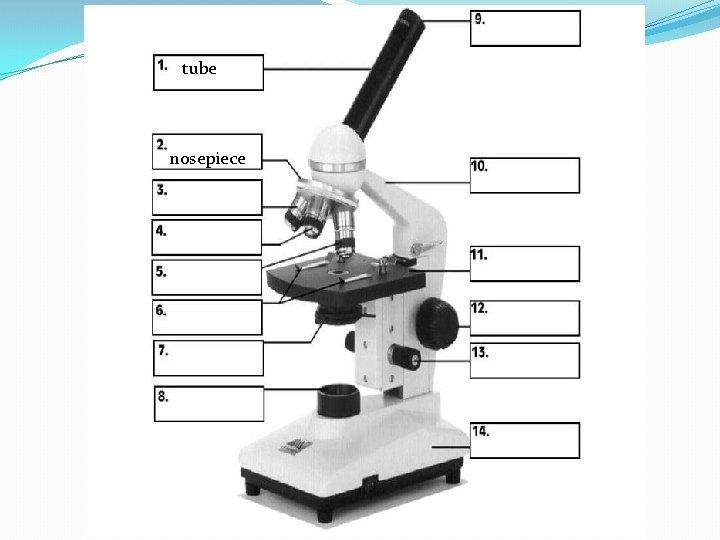
tube nosepiece
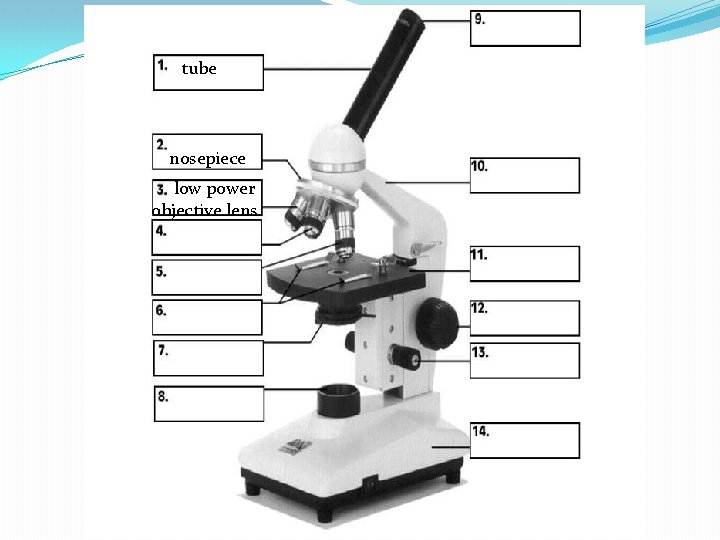
tube nosepiece low power objective lens
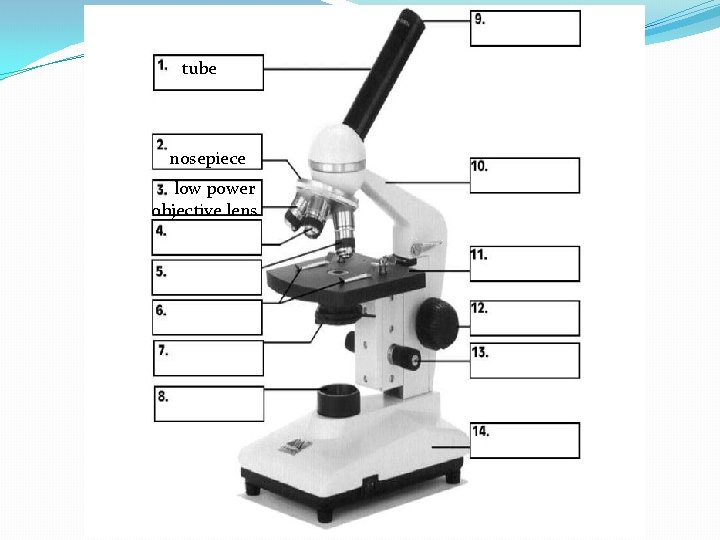
tube nosepiece low power objective lens
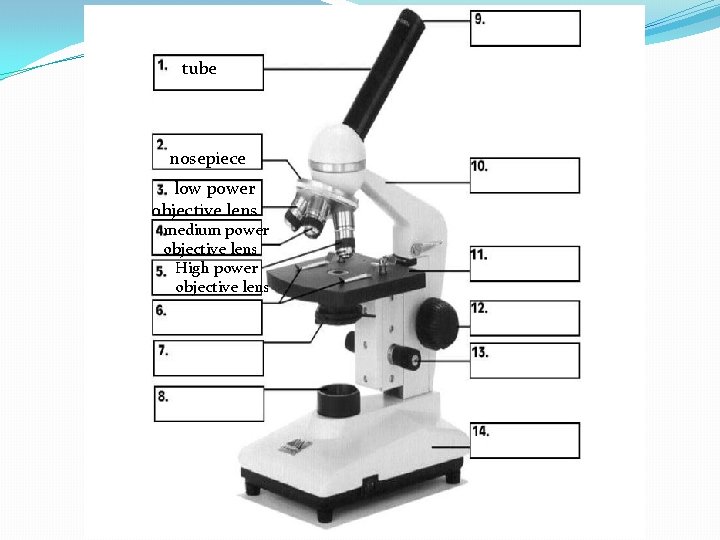
tube nosepiece low power objective lens medium power objective lens High power objective lens
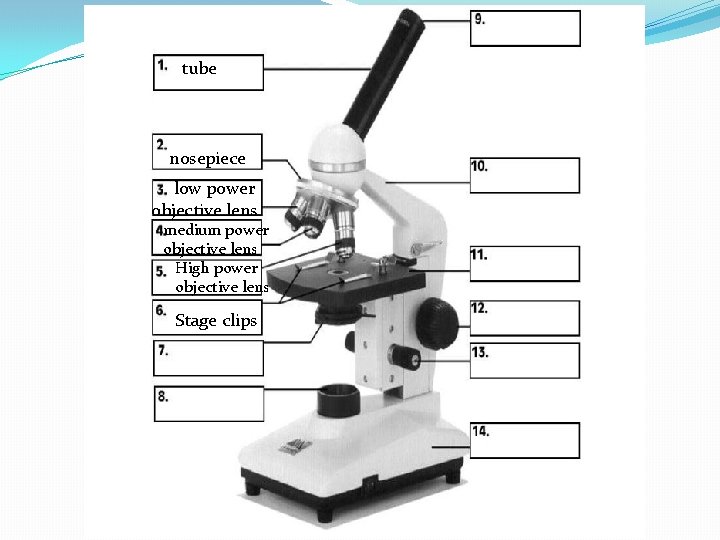
tube nosepiece low power objective lens medium power objective lens High power objective lens Stage clips
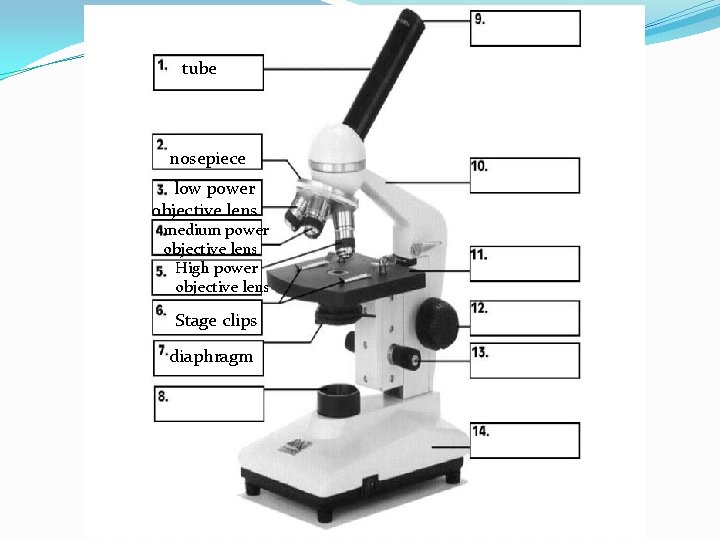
tube nosepiece low power objective lens medium power objective lens High power objective lens Stage clips diaphragm
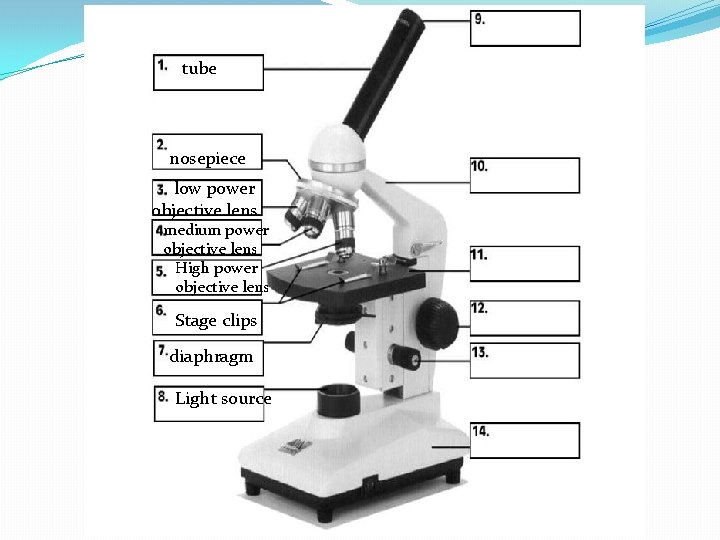
tube nosepiece low power objective lens medium power objective lens High power objective lens Stage clips diaphragm Light source
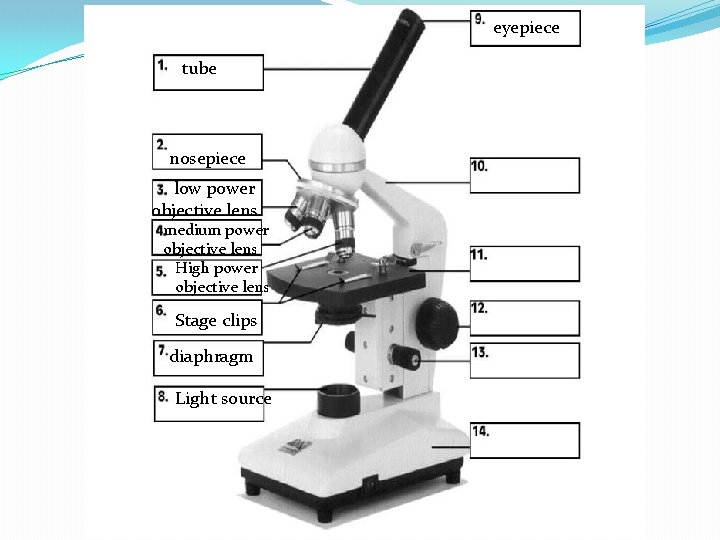
eyepiece tube nosepiece low power objective lens medium power objective lens High power objective lens Stage clips diaphragm Light source
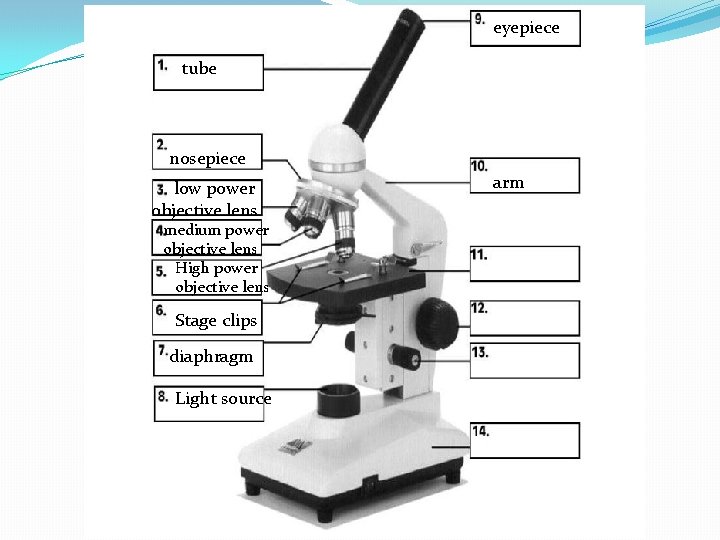
eyepiece tube nosepiece low power objective lens medium power objective lens High power objective lens Stage clips diaphragm Light source arm
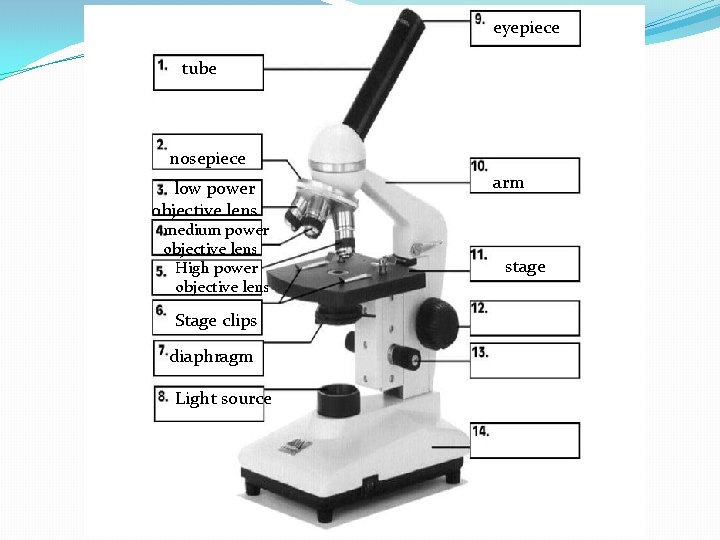
eyepiece tube nosepiece low power objective lens medium power objective lens High power objective lens Stage clips diaphragm Light source arm stage
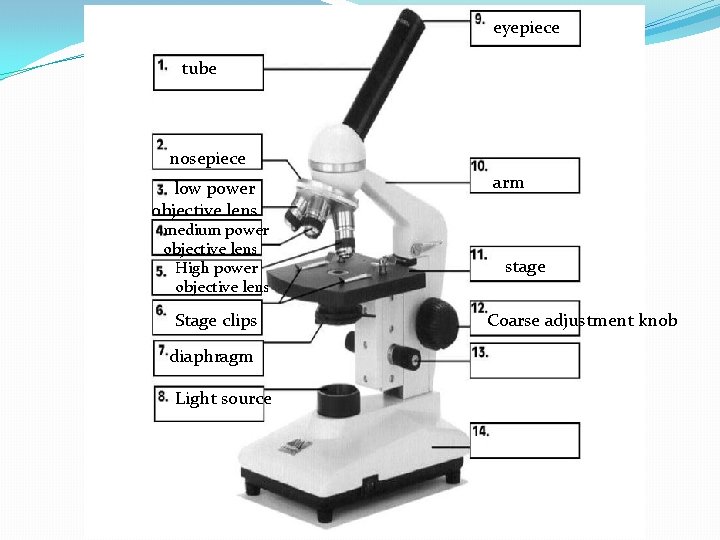
eyepiece tube nosepiece low power objective lens medium power objective lens High power objective lens Stage clips diaphragm Light source arm stage Coarse adjustment knob
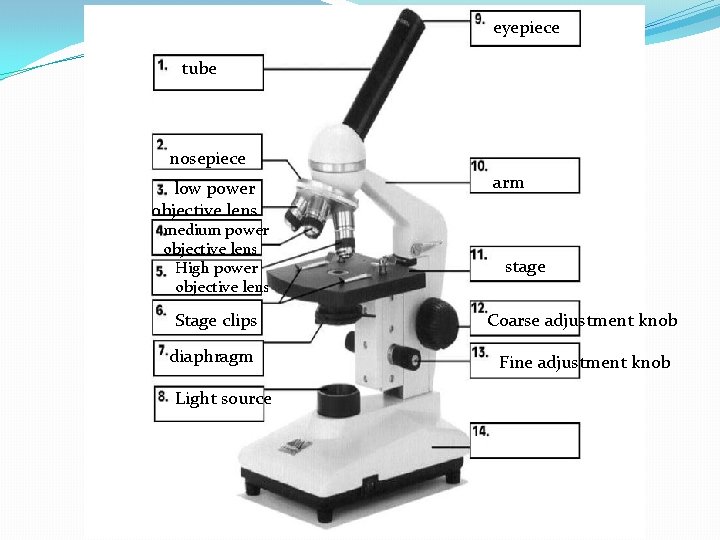
eyepiece tube nosepiece low power objective lens medium power objective lens High power objective lens arm stage Stage clips Coarse adjustment knob diaphragm Fine adjustment knob Light source
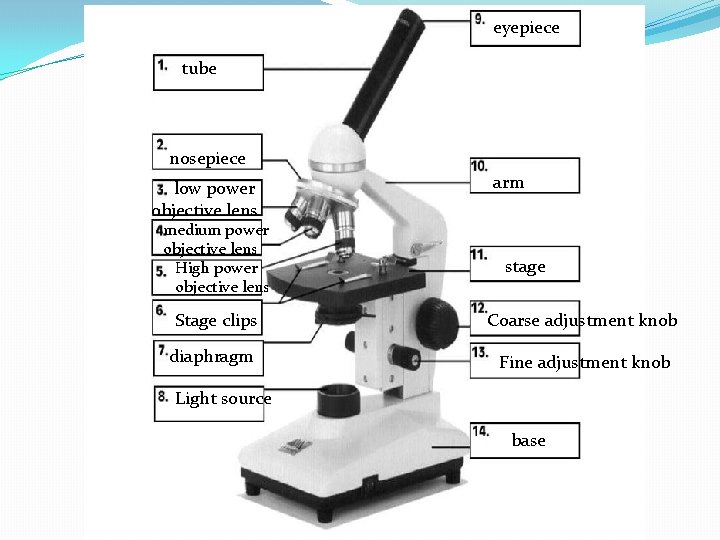
eyepiece tube nosepiece low power objective lens medium power objective lens High power objective lens arm stage Stage clips Coarse adjustment knob diaphragm Fine adjustment knob Light source base
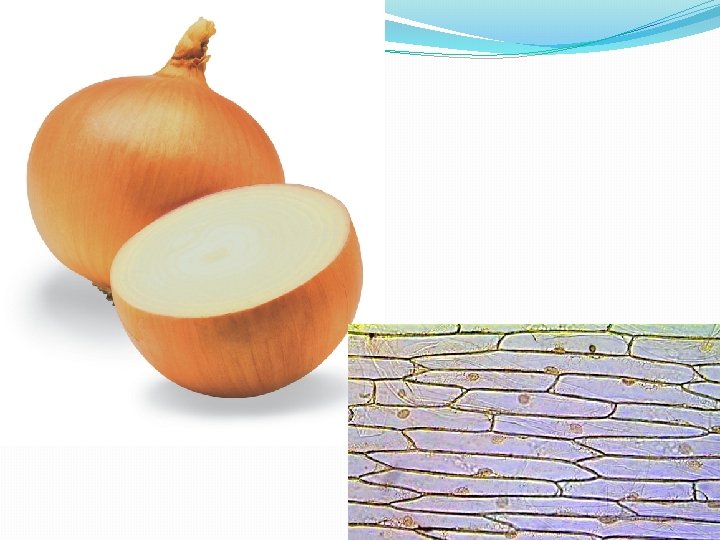
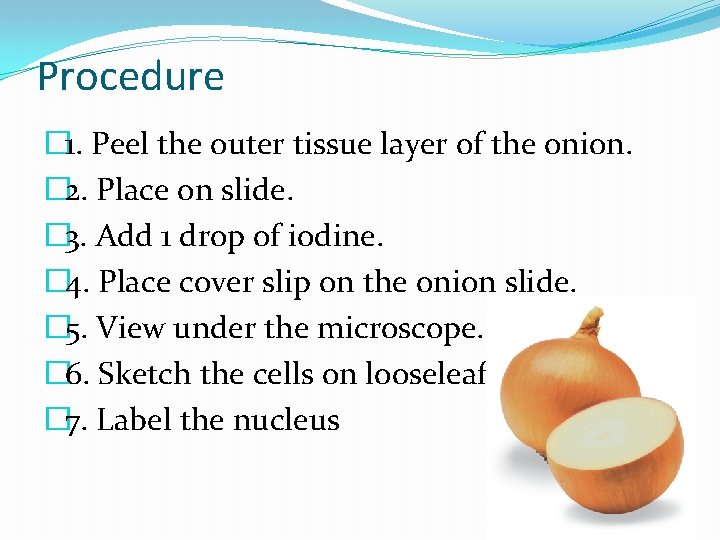
Procedure � 1. Peel the outer tissue layer of the onion. � 2. Place on slide. � 3. Add 1 drop of iodine. � 4. Place cover slip on the onion slide. � 5. View under the microscope. � 6. Sketch the cells on looseleaf. � 7. Label the nucleus
Passive Transport Review �https: //www. bing. com/videos/search? q=video+of+os mosis+and+diffusion&&view=detail&mid=47 C 60 CE 4 DC 9346 A 95 AB 447 C 60 CE 4 DC 9346 A 95 AB 4&&FORM= VDRVRV �plasma membrane video
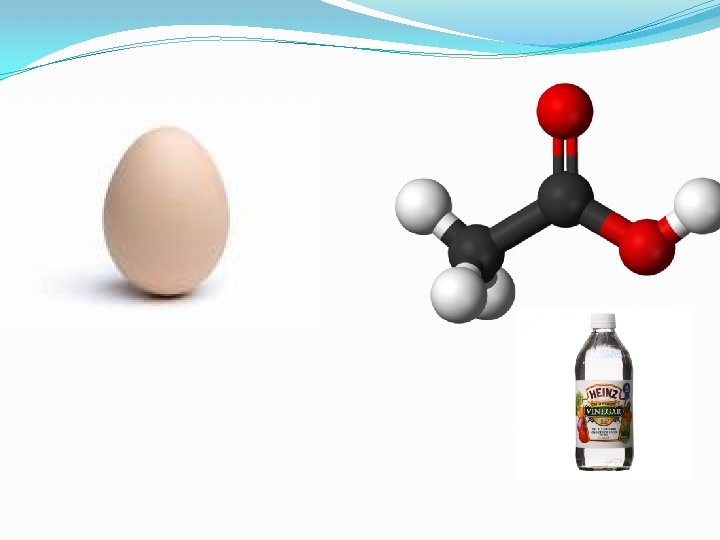
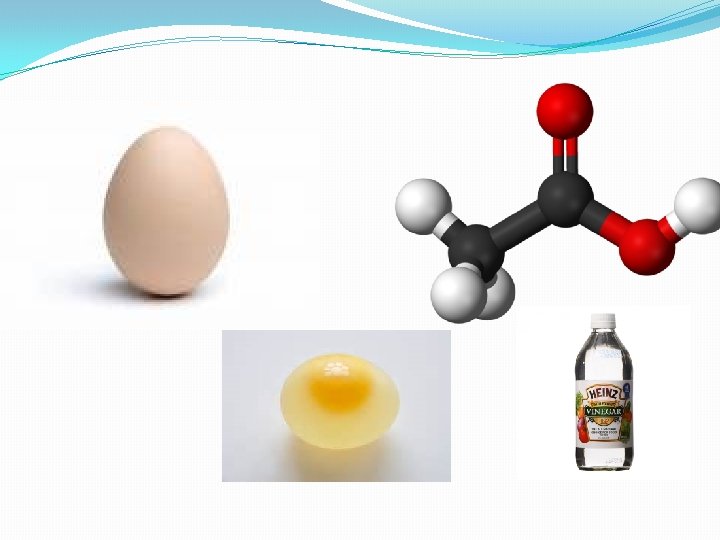
Endocytosis & Exocytosis �Active Transport video

�Organelle video �video
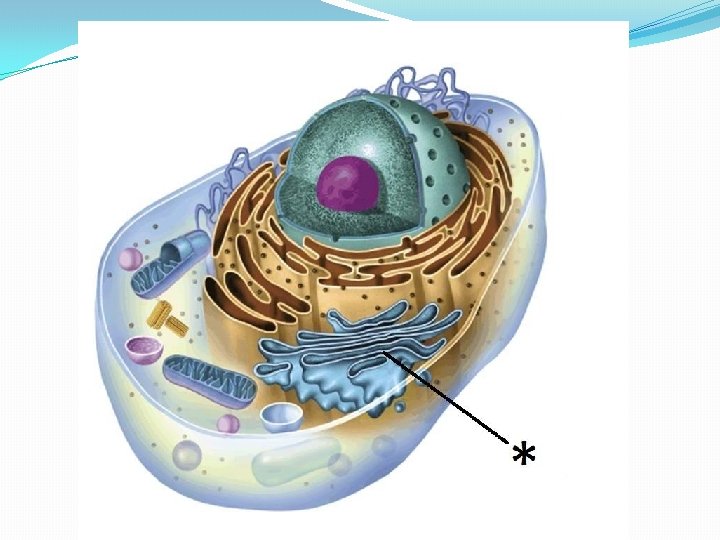
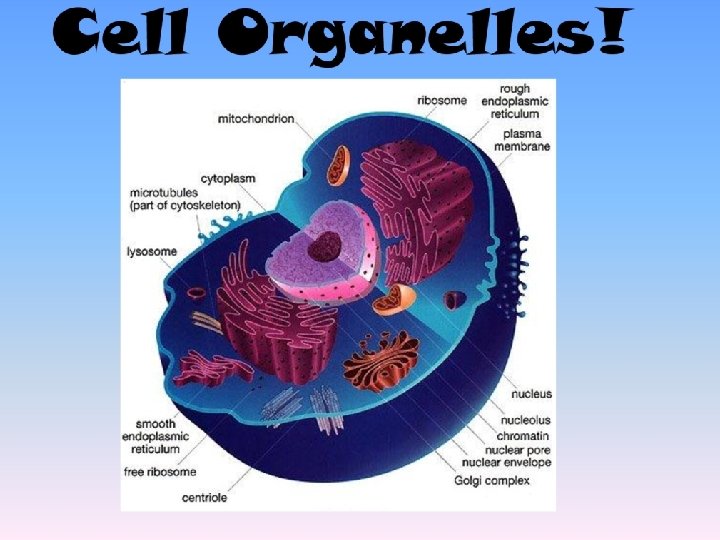
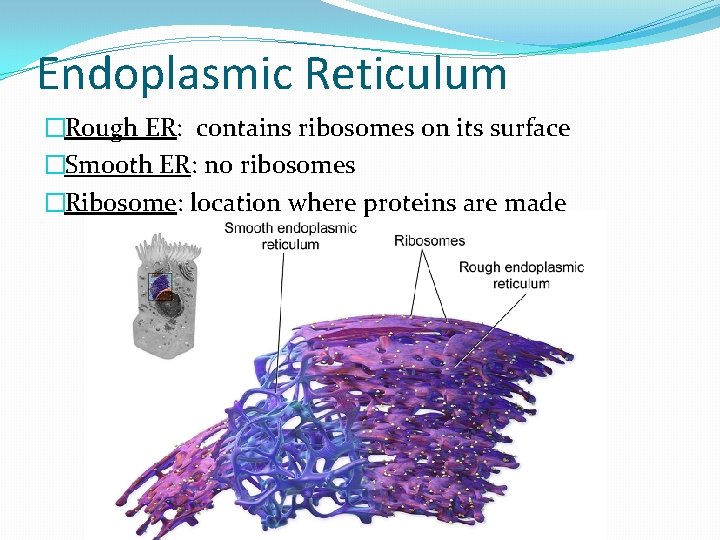
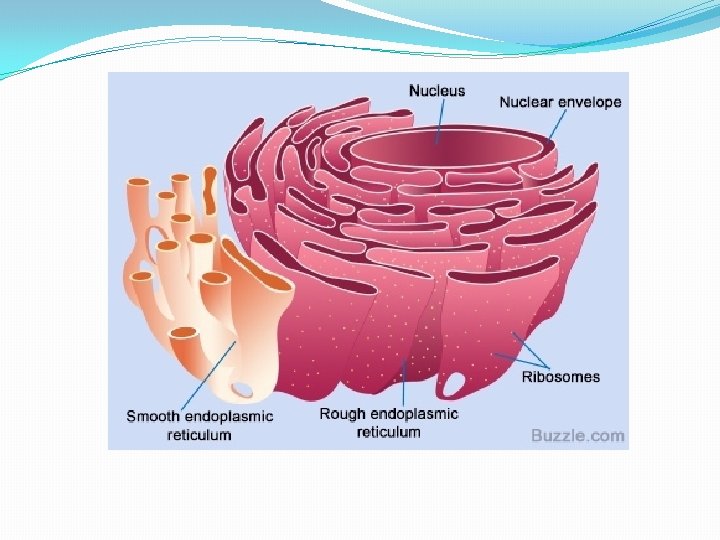
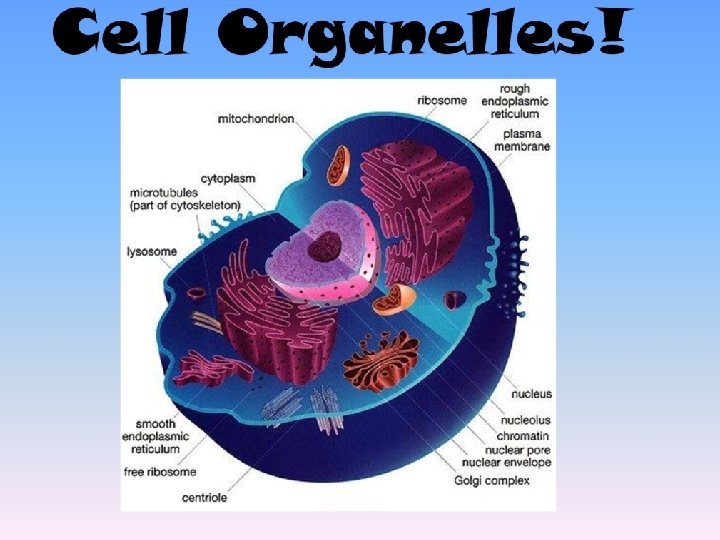
Endoplasmic Reticulum �Rough ER: contains ribosomes on its surface �Smooth ER: no ribosomes �Ribosome: location where proteins are made
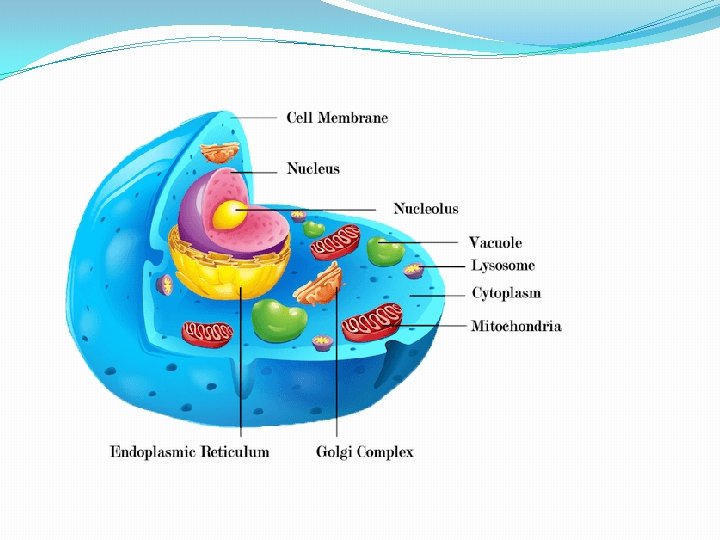
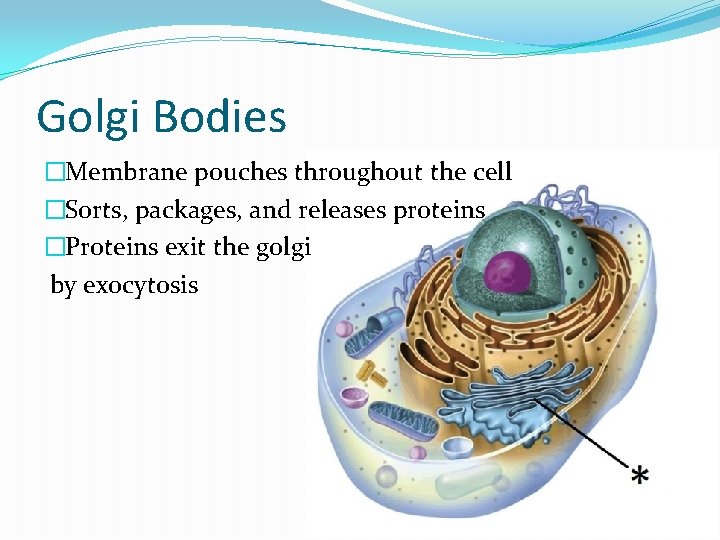
Golgi Bodies �Membrane pouches throughout the cell �Sorts, packages, and releases proteins �Proteins exit the golgi by exocytosis
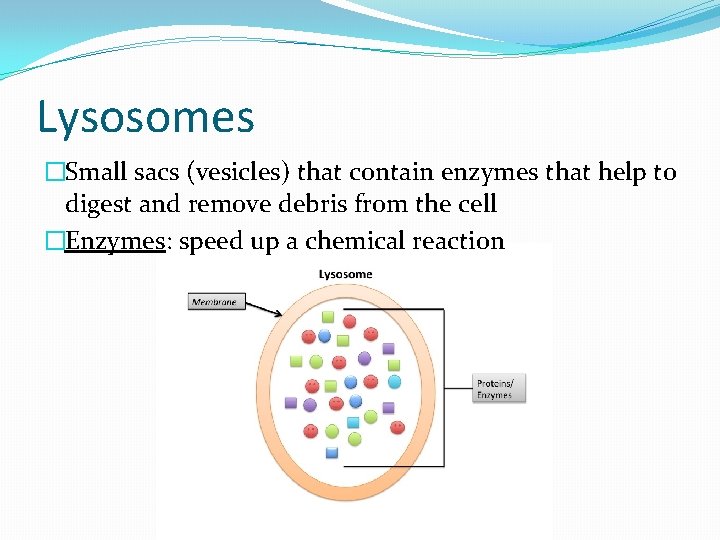
Lysosomes �Small sacs (vesicles) that contain enzymes that help to digest and remove debris from the cell �Enzymes: speed up a chemical reaction
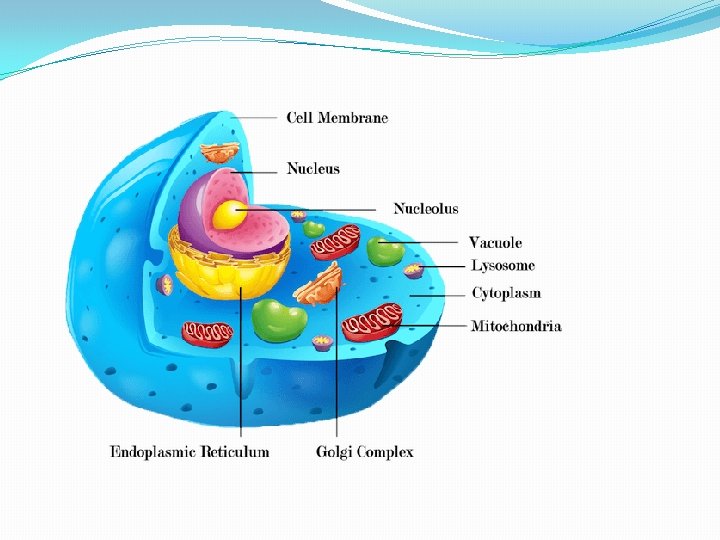
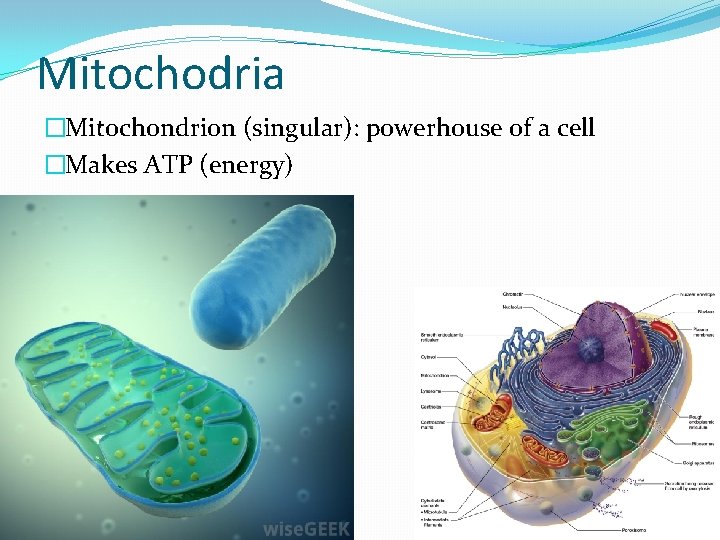
Mitochodria �Mitochondrion (singular): powerhouse of a cell �Makes ATP (energy)
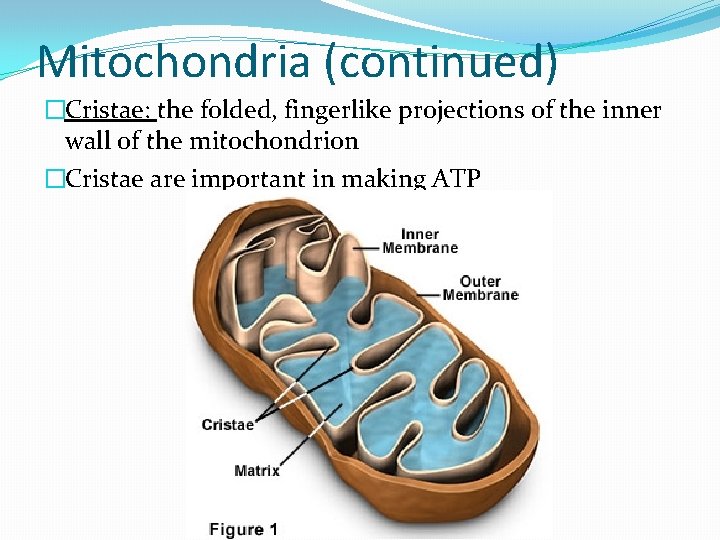
Mitochondria (continued) �Cristae: the folded, fingerlike projections of the inner wall of the mitochondrion �Cristae are important in making ATP
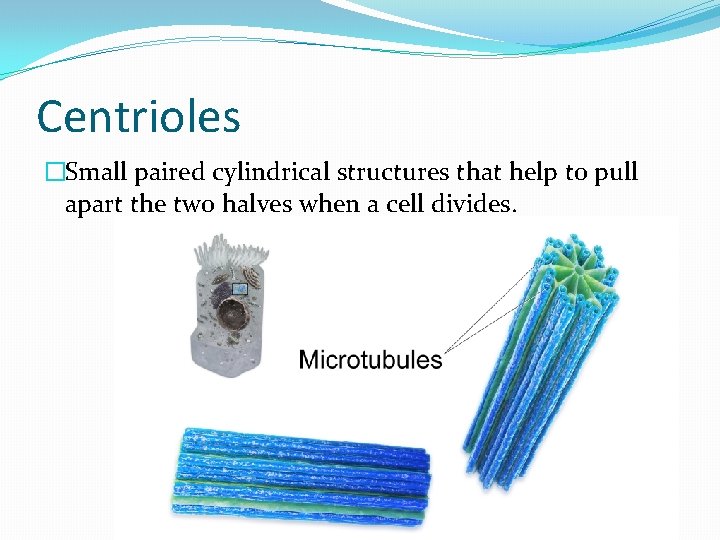
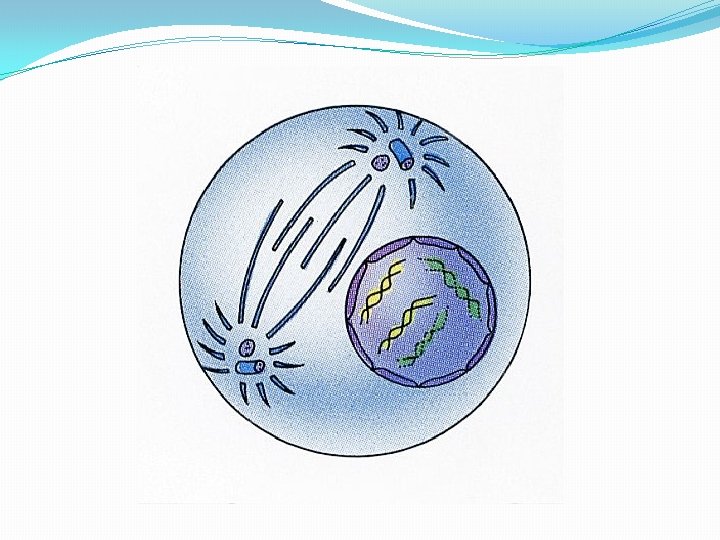
Centrioles �Small paired cylindrical structures that help to pull apart the two halves when a cell divides.
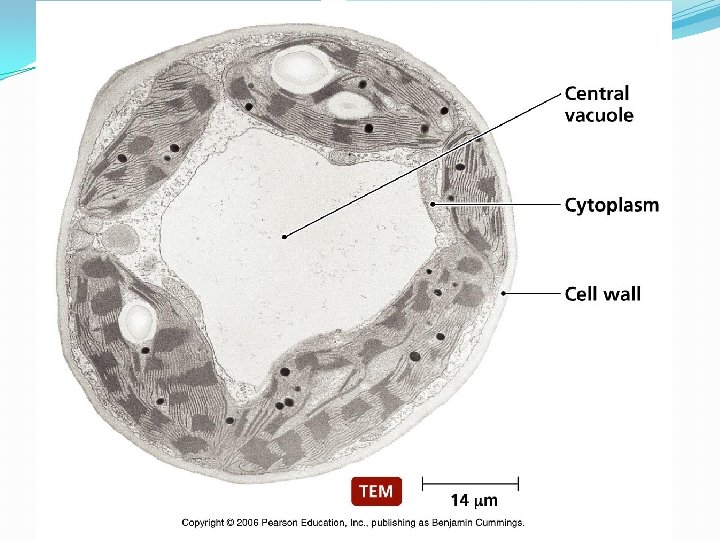
Vacuole �Storage organelle
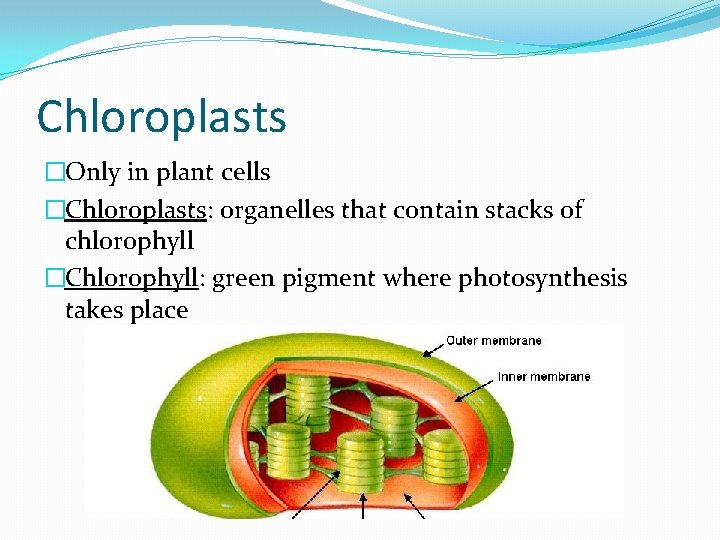
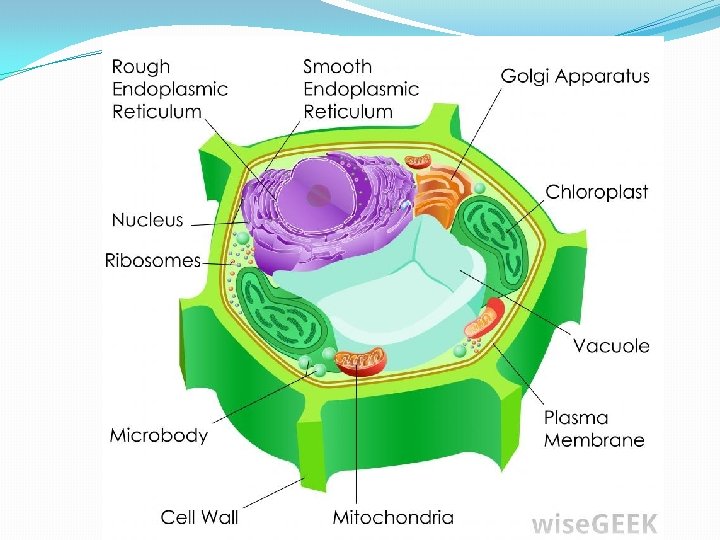
Chloroplasts �Only in plant cells �Chloroplasts: organelles that contain stacks of chlorophyll �Chlorophyll: green pigment where photosynthesis takes place
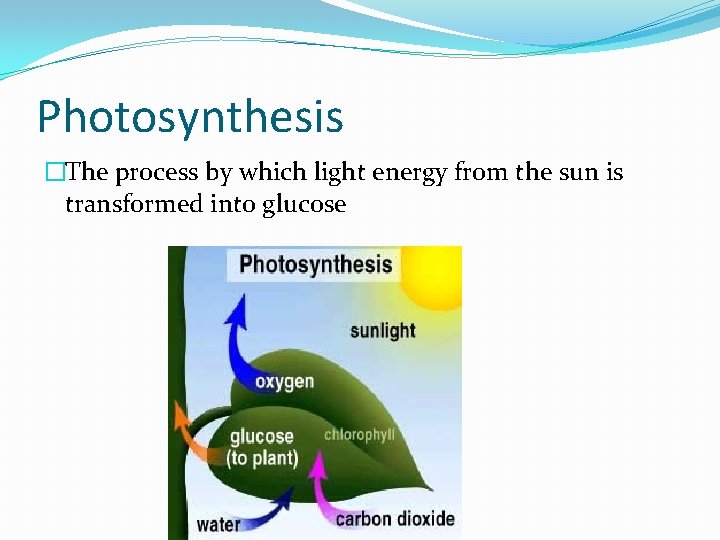
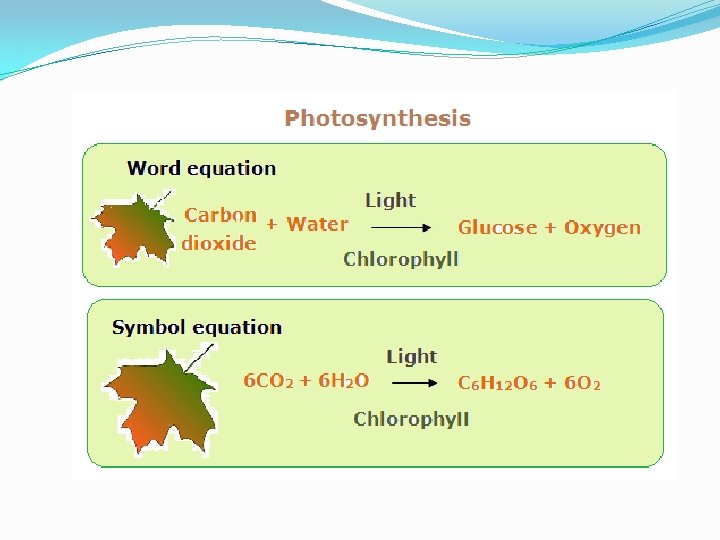
Photosynthesis �The process by which light energy from the sun is transformed into glucose
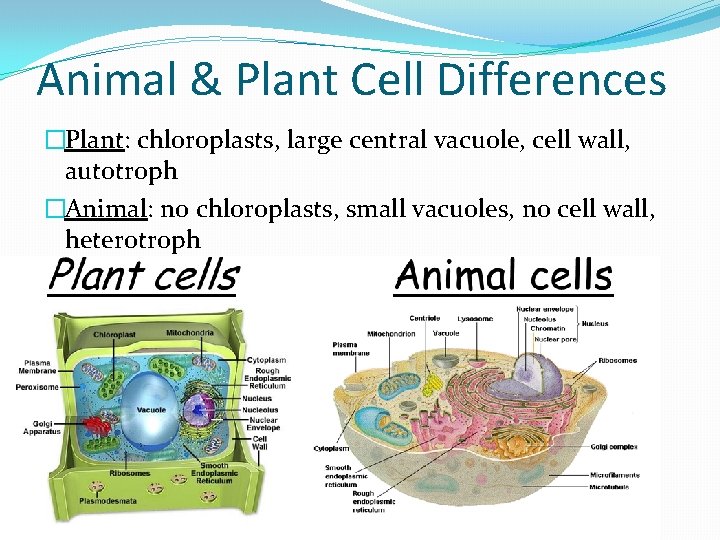
Animal & Plant Cell Differences �Plant: chloroplasts, large central vacuole, cell wall, autotroph �Animal: no chloroplasts, small vacuoles, no cell wall, heterotroph
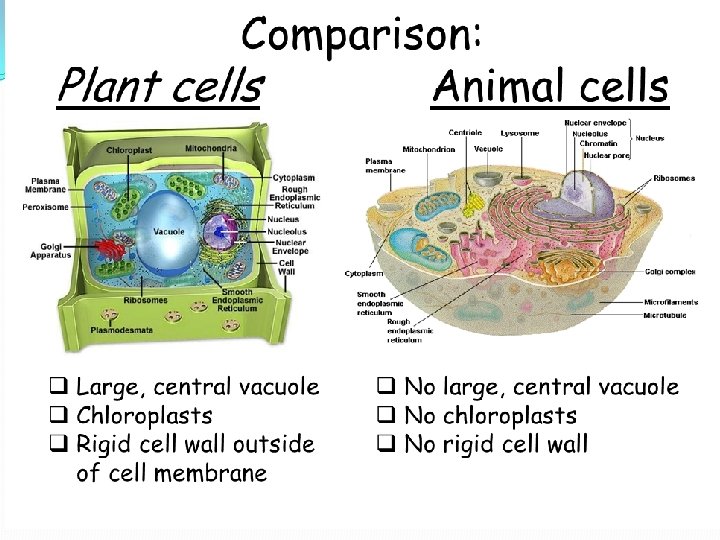
�Autotroph: organisms that make their own food supply �Heterotroph: organisms that cannot make their own food supply
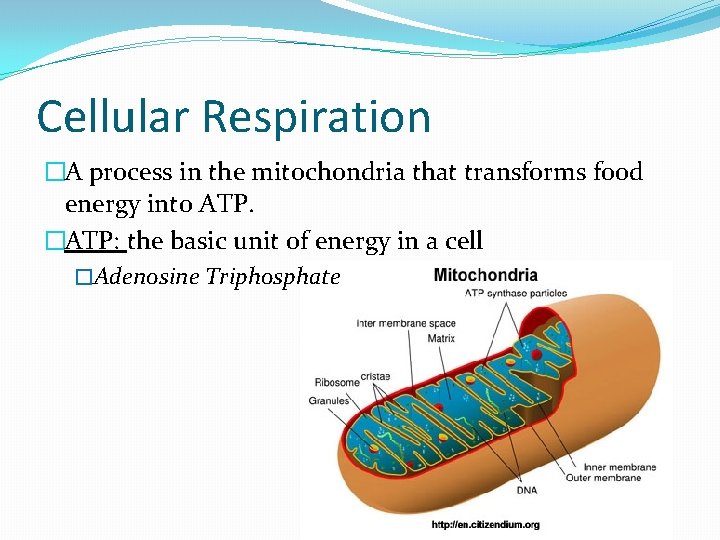
Cellular Respiration �A process in the mitochondria that transforms food energy into ATP. �ATP: the basic unit of energy in a cell �Adenosine Triphosphate
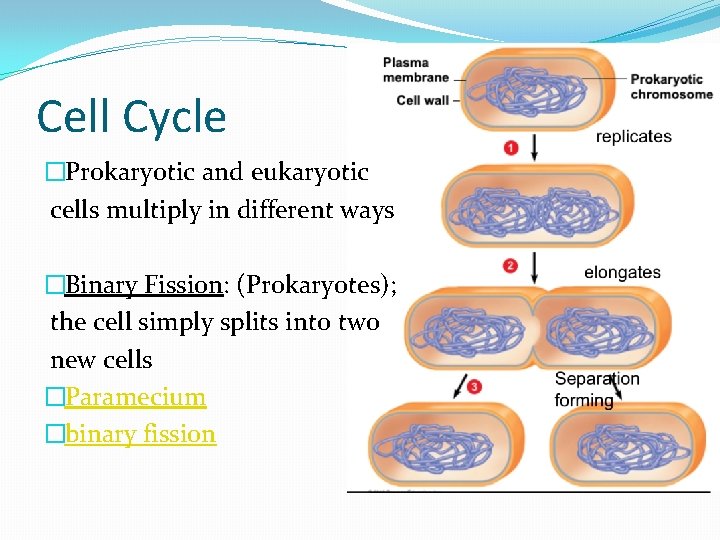
Cell Cycle �Prokaryotic and eukaryotic cells multiply in different ways �Binary Fission: (Prokaryotes); the cell simply splits into two new cells �Paramecium �binary fission
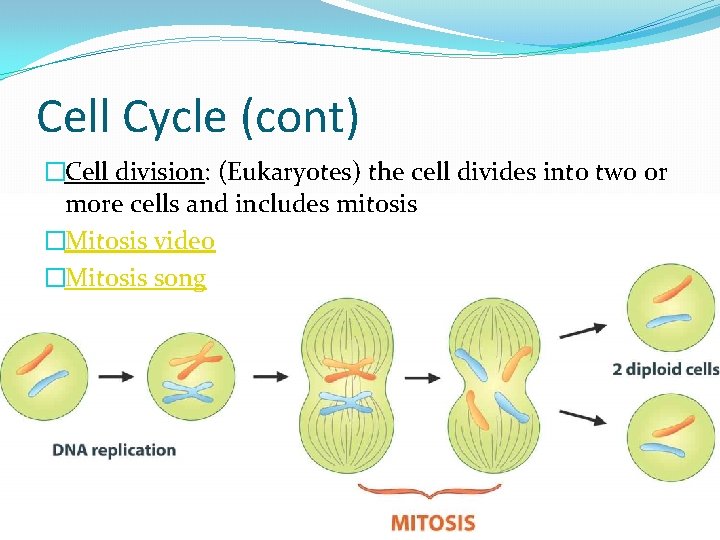
Cell Cycle (cont) �Cell division: (Eukaryotes) the cell divides into two or more cells and includes mitosis �Mitosis video �Mitosis song
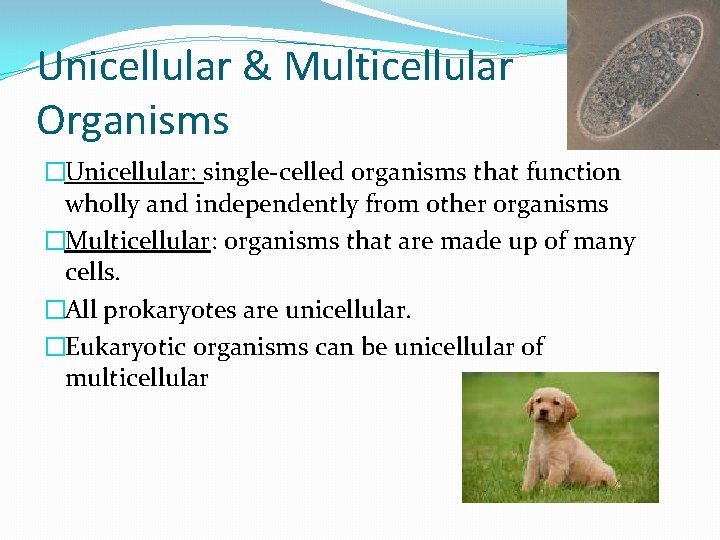
Unicellular & Multicellular Organisms �Unicellular: single-celled organisms that function wholly and independently from other organisms �Multicellular: organisms that are made up of many cells. �All prokaryotes are unicellular. �Eukaryotic organisms can be unicellular of multicellular
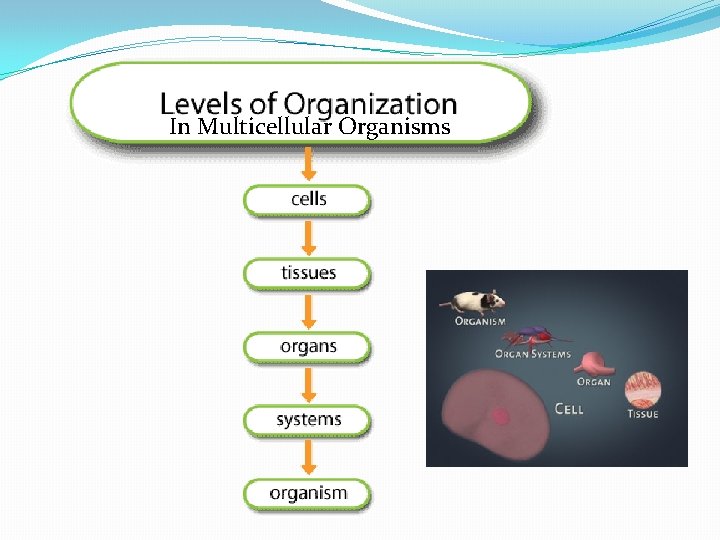
In Multicellular Organisms
�Strawberry DNA extraction
- Slides: 59