
The Cell Plasma Membrane Biology 11 ALL Cells
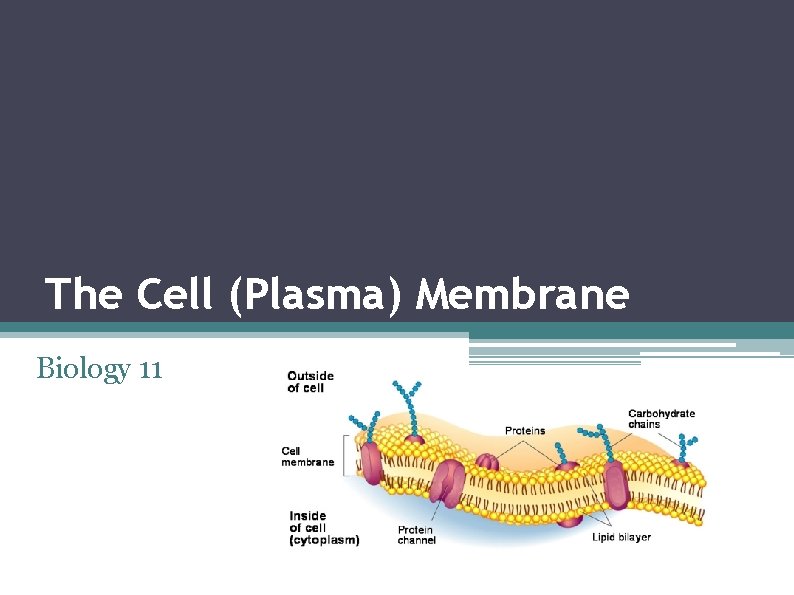
The Cell (Plasma) Membrane Biology 11
• ALL Cells of ALL Organisms have a:

• The cell membrane separates cells from the external environment. • Analogy: a fence around a yard protects and acts as a boundary for whatever is inside. Are fences designed to completely restrict access?
Function: • The cell (plasma) membrane acts as a protective barrier that regulates which particles can enter and exit the cell. • Because of this regulation it’s said to be SELECTIVELY PERMEABLE (or semi-permeable) • Not all cells have the same permeability
Function cont. • The membrane separates all cells from the external environment which allows cells to be chemically different from their environment. • The cell membrane also works to keep the internal functions of the cell constant and to maintain cell “balance”. • This balance is called HOMEOSTASIS
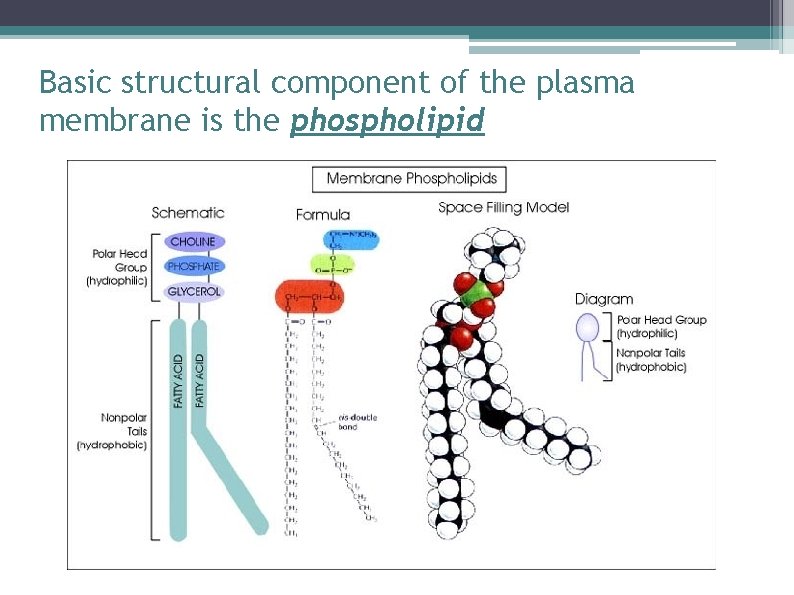
Basic structural component of the plasma membrane is the phospholipid
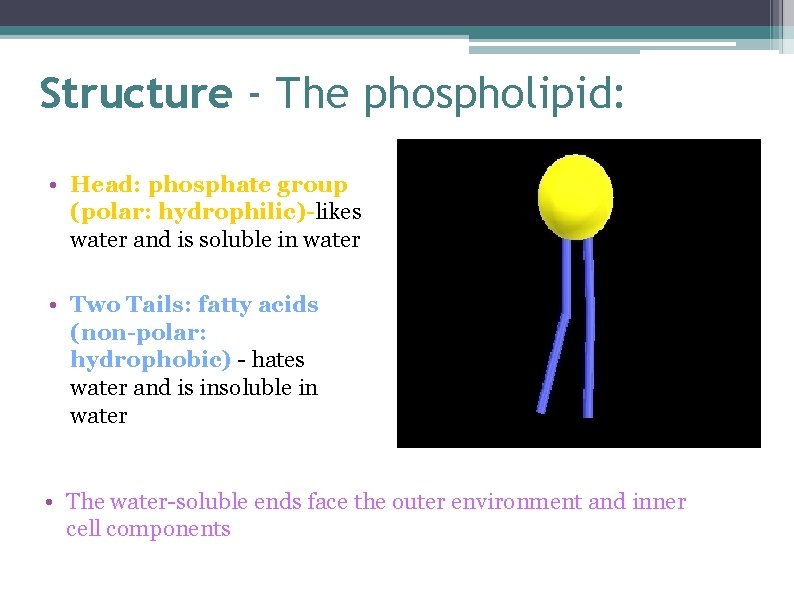
Structure - The phospholipid: • Head: phosphate group (polar: hydrophilic)-likes water and is soluble in water • Two Tails: fatty acids (non-polar: hydrophobic) - hates water and is insoluble in water • The water-soluble ends face the outer environment and inner cell components

Cell Membrane Structure: • It is composed of two layers of lipid material with protein molecules interspersed • This is called the phospholipid bilayer
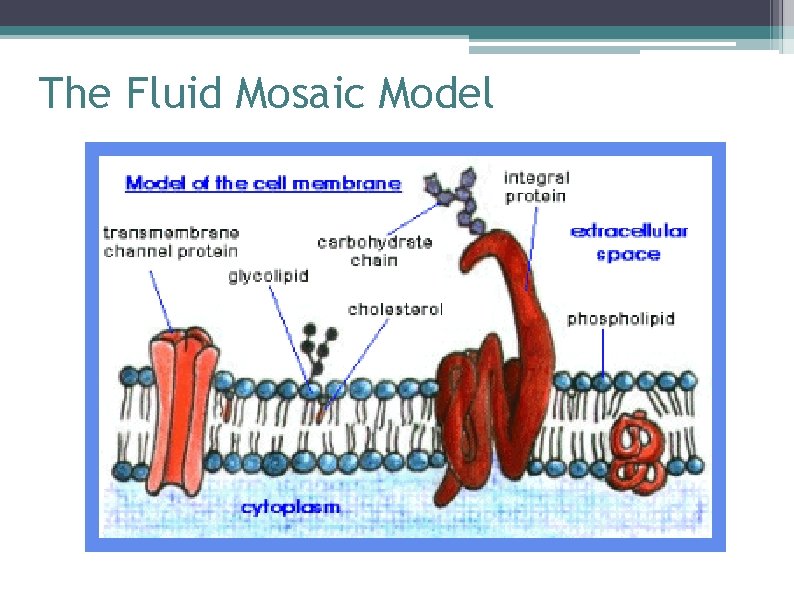
The Fluid Mosaic Model
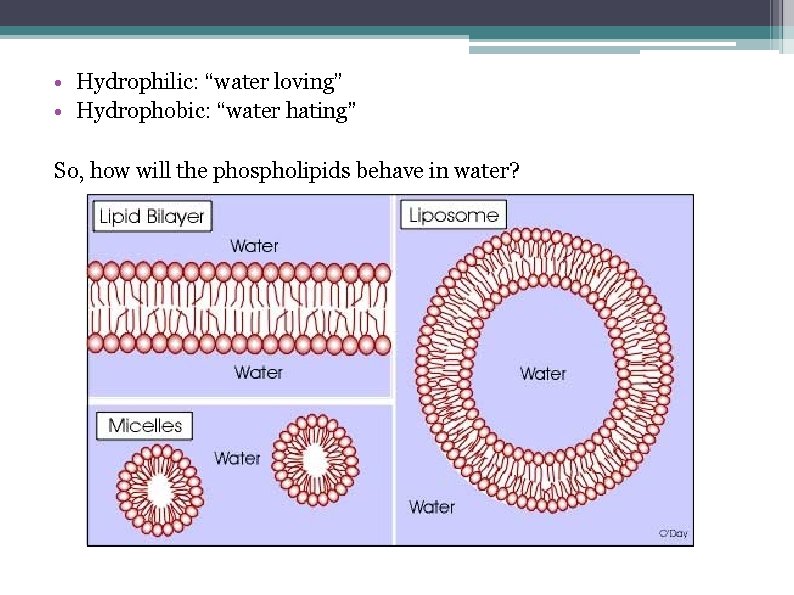
• Hydrophilic: “water loving” • Hydrophobic: “water hating” So, how will the phospholipids behave in water?
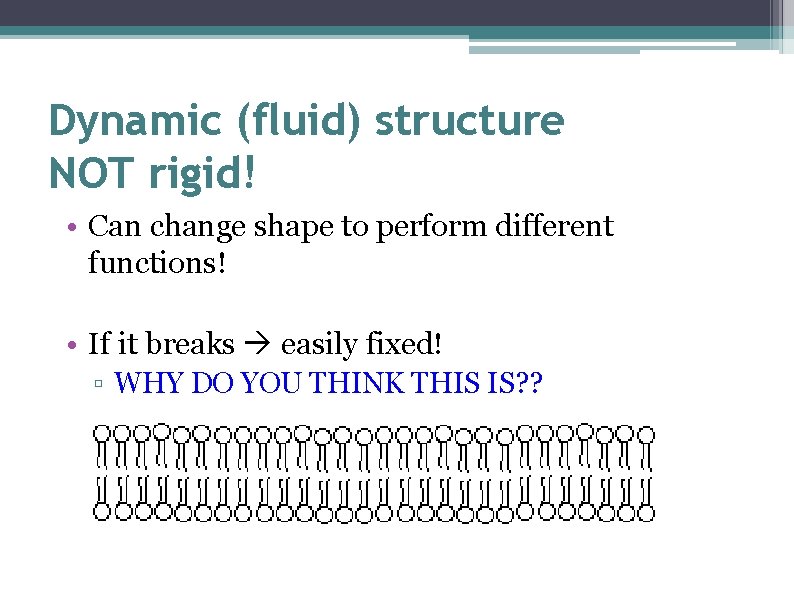
Dynamic (fluid) structure NOT rigid! • Can change shape to perform different functions! • If it breaks easily fixed! ▫ WHY DO YOU THINK THIS IS? ?
The membrane cannot exists by phospholipids alone!! • There are several other components to the membrane that play vital parts in its function. 1. Cholesterol – (keep membrane fluid) 2. Glycoproteins - specialized sugars attached to a protein (used for cell recognition) 3. Proteins 4. Glycolipid- specialized sugar on some lipids

1. Cholesterol: Stabilizes the Membrane *Steroid lipid *Flat shape: Inserted between phospholipids *Present in animal cell membranes *Absent in bacteria; most plants--Cell walls provide stability
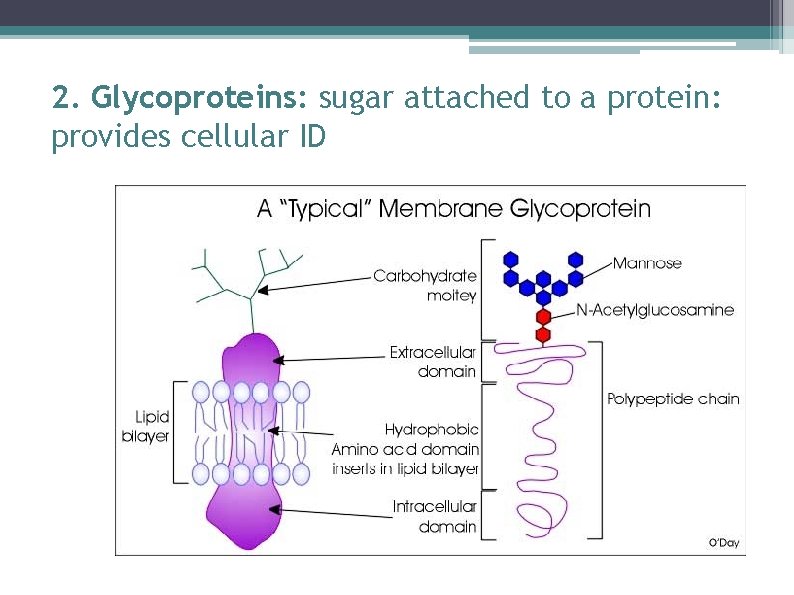
2. Glycoproteins: sugar attached to a protein: provides cellular ID
2. Glycoproteins Example: • Immune system recognizes invaders by the unique structure (the glycoprotein) on the cell membrane ▫ Ex. Transplanted organs are often rejected by recipients because of the sugars on the proteins. ▫ Ex. Type A red blood cell is different from a type B because of the sugar in the protein

Glycoproteins and blood type:
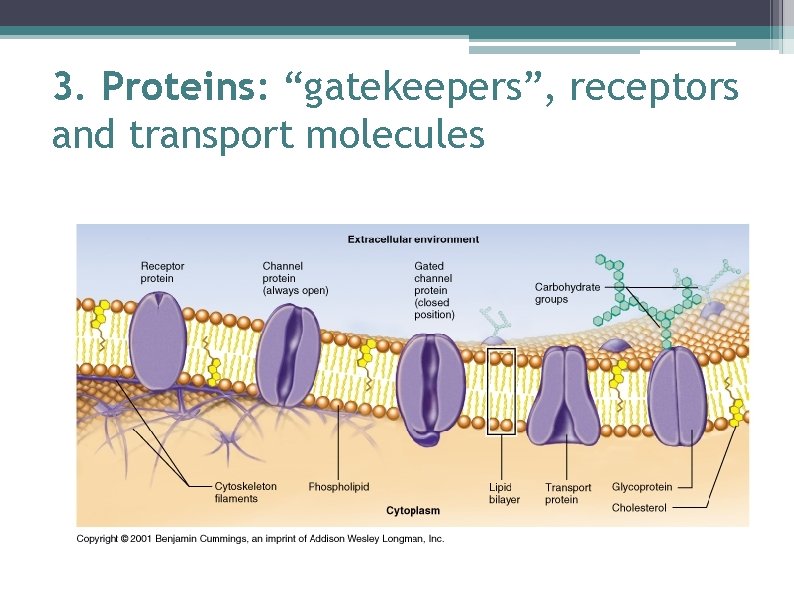
3. Proteins: “gatekeepers”, receptors and transport molecules
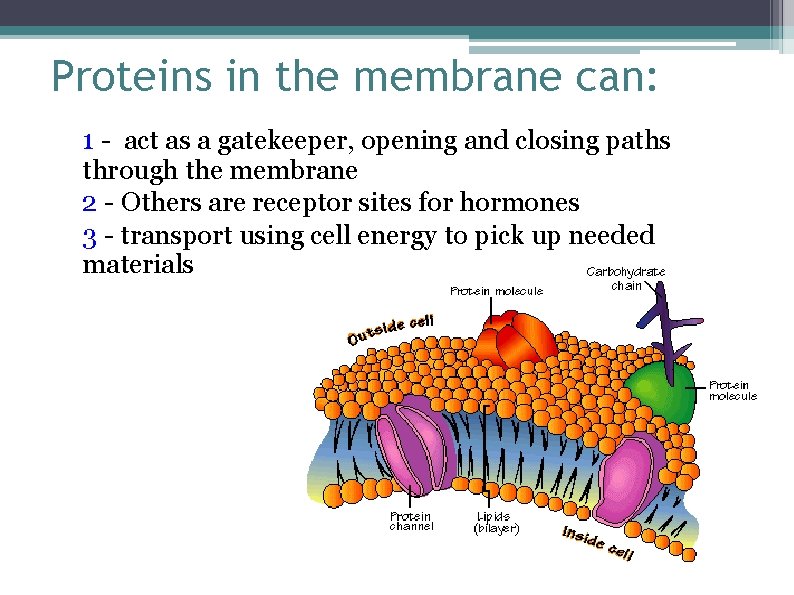
Proteins in the membrane can: 1 - act as a gatekeeper, opening and closing paths through the membrane 2 - Others are receptor sites for hormones 3 - transport using cell energy to pick up needed materials
- Slides: 19