
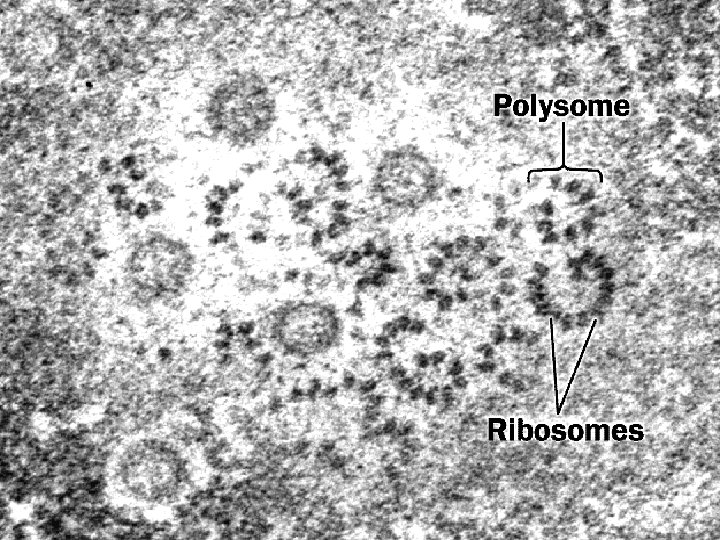
The Cell Part 2 Cisterna Ribosomes Polyribosome mRNA
The Cell Part 2
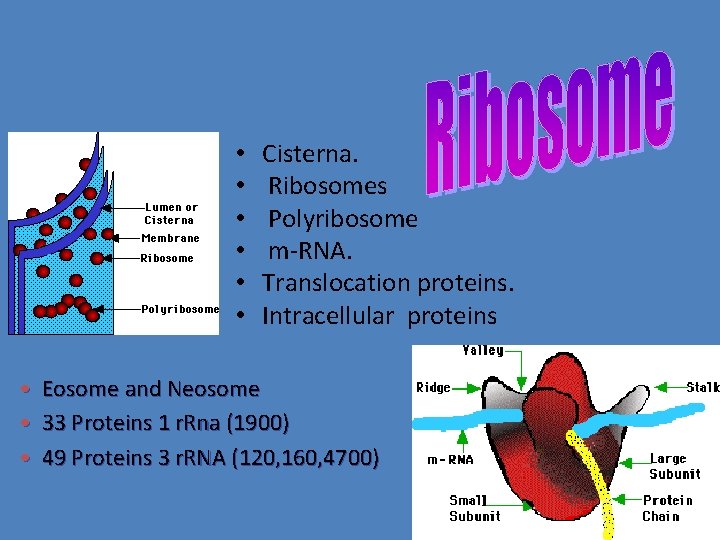
• • • Cisterna. Ribosomes Polyribosome m-RNA. Translocation proteins. Intracellular proteins Eosome and Neosome 33 Proteins 1 r. Rna (1900) 49 Proteins 3 r. RNA (120, 160, 4700)
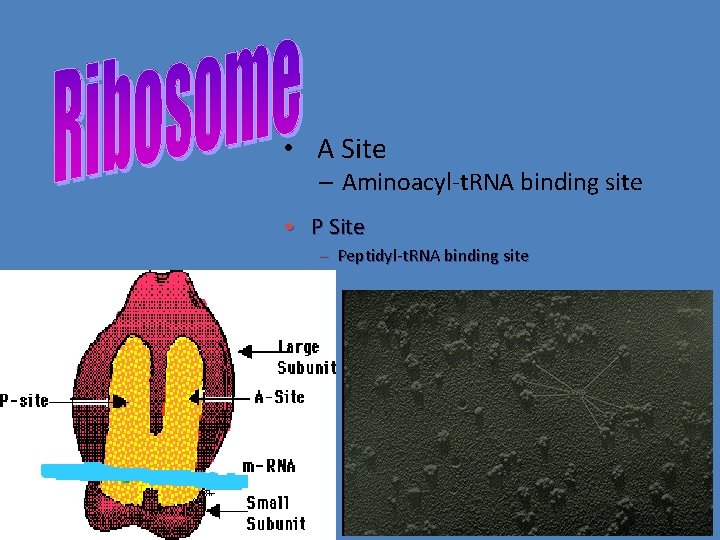
• A Site – Aminoacyl-t. RNA binding site • P Site – Peptidyl-t. RNA binding site

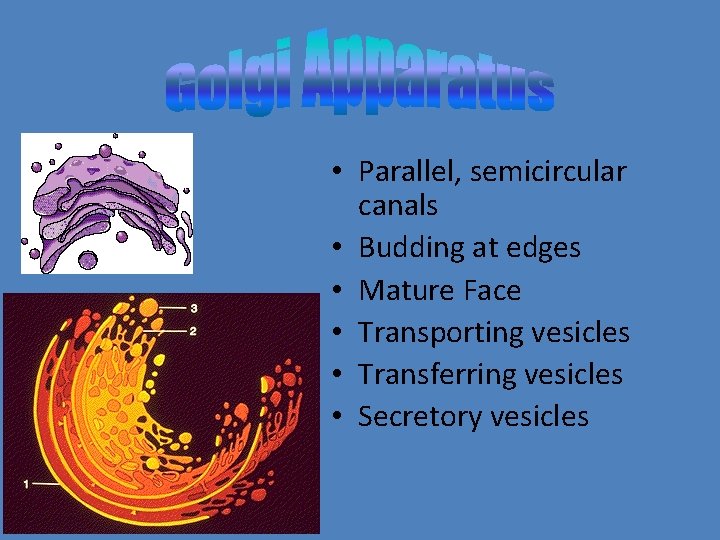
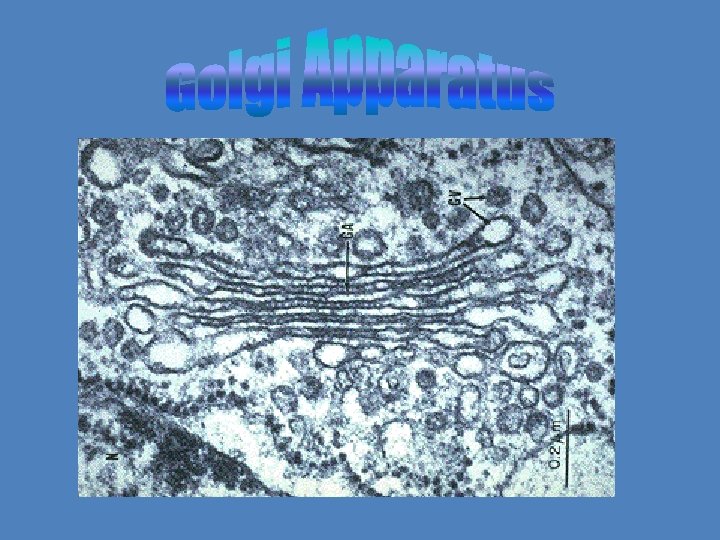
• Parallel, semicircular canals • Budding at edges • Mature Face • Transporting vesicles • Transferring vesicles • Secretory vesicles

Each cisternal level has a unique function and transfer from level to level is by forming transferring vesicles. Constuitive Secretory Pathway



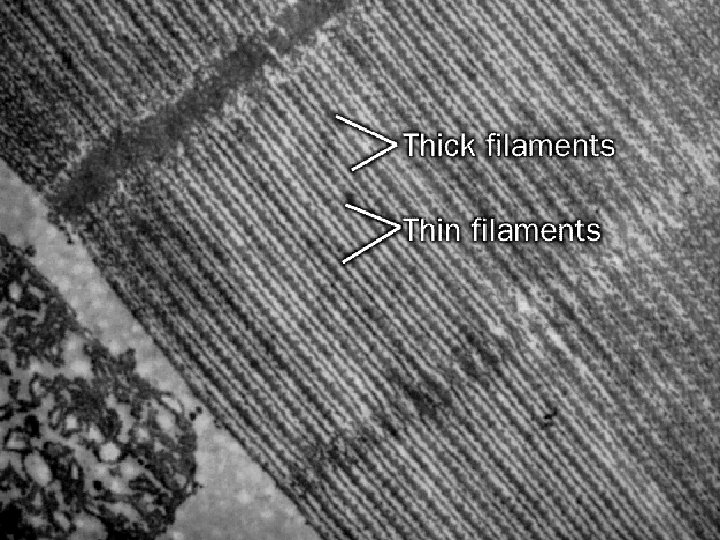
• Microtubles • Tubulin a & b • functions – cell movements – intracellular transport – Structural framework – Cell shape • Microfilaments

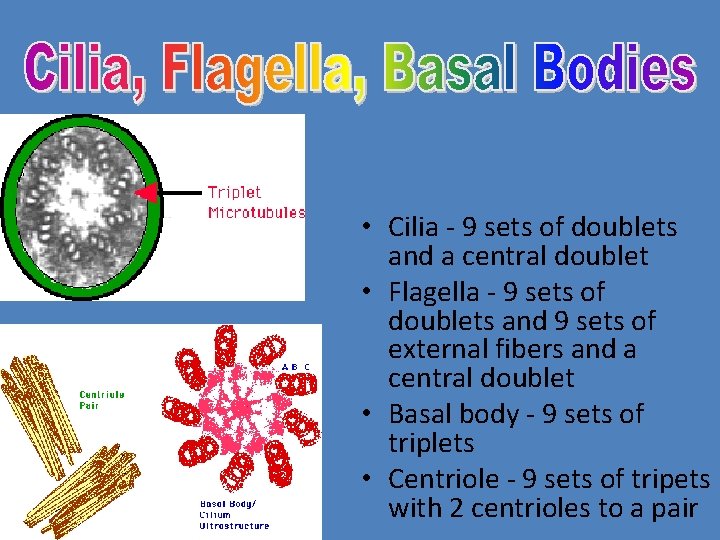
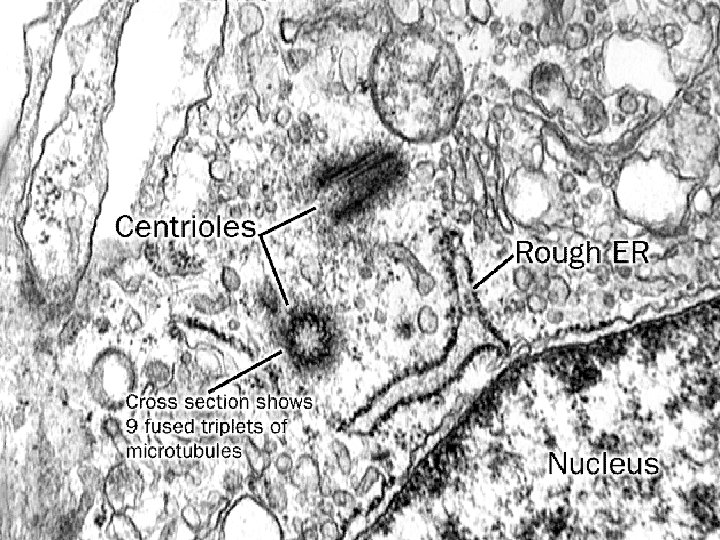
• Cilia - 9 sets of doublets and a central doublet • Flagella - 9 sets of doublets and 9 sets of external fibers and a central doublet • Basal body - 9 sets of triplets • Centriole - 9 sets of tripets with 2 centrioles to a pair
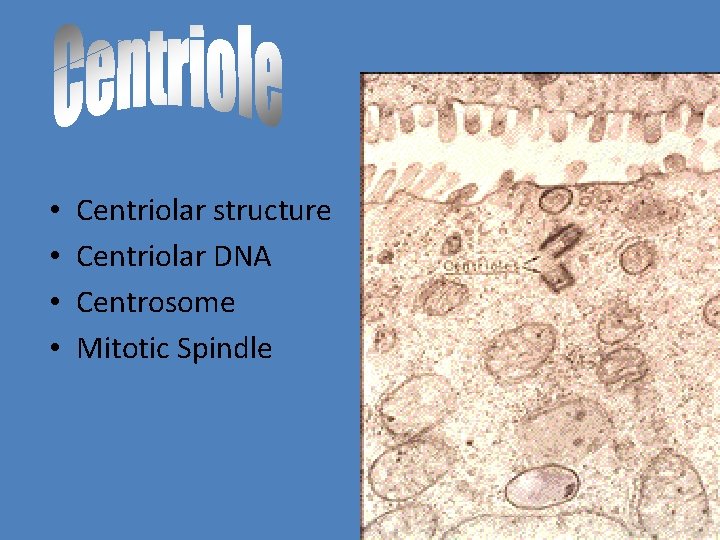
• • Centriolar structure Centriolar DNA Centrosome Mitotic Spindle

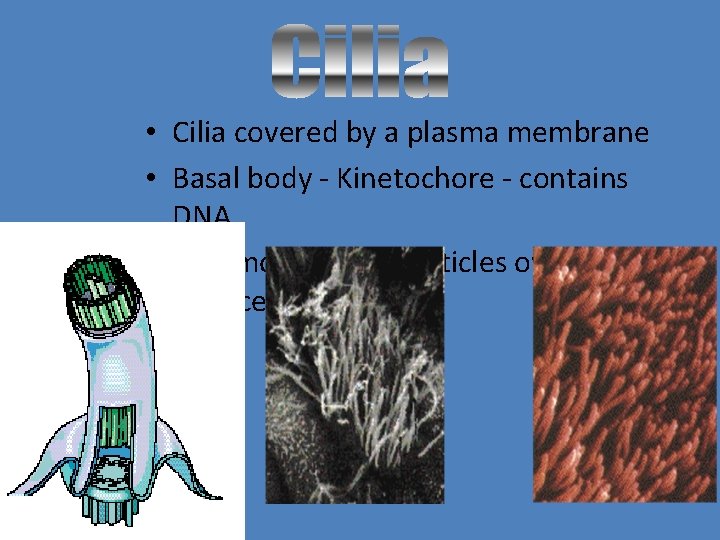
• Cilia covered by a plasma membrane • Basal body - Kinetochore - contains DNA • Cilia move fluids/particles over cell surface
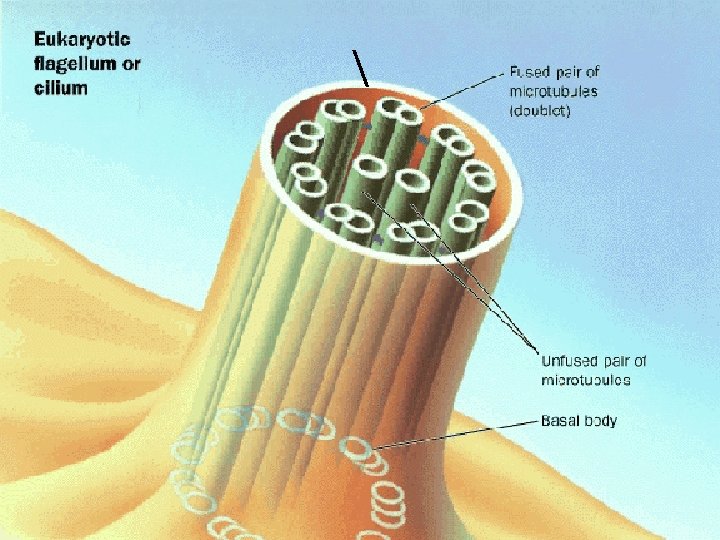

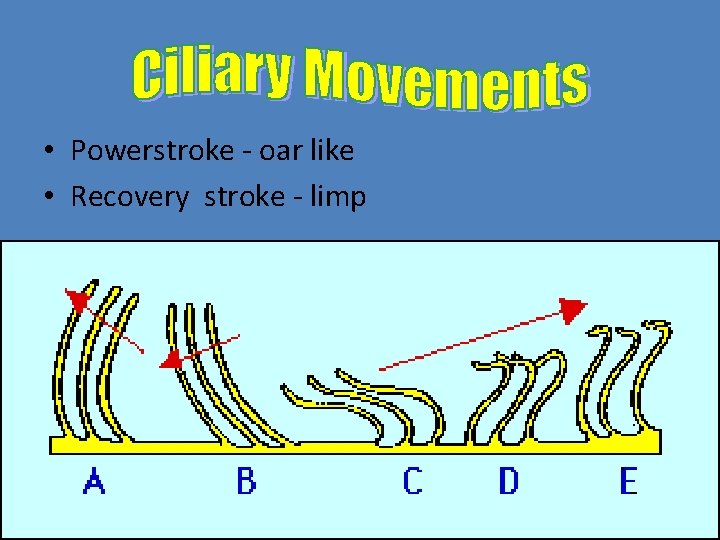
• Powerstroke - oar like • Recovery stroke - limp

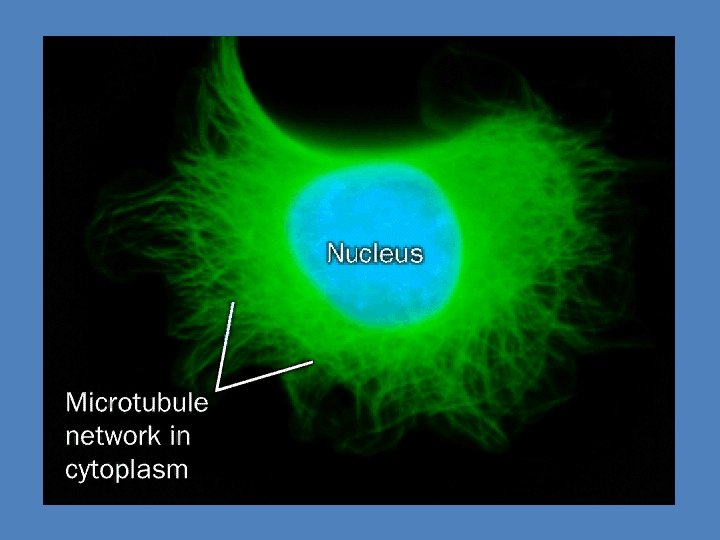
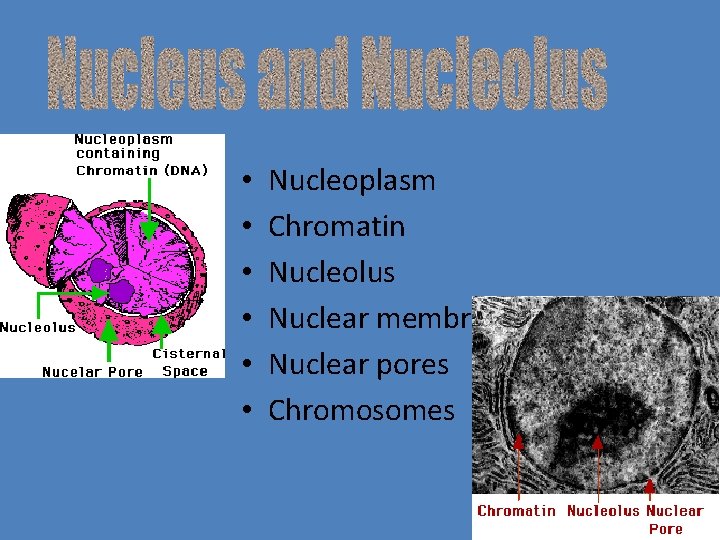
• • • Nucleoplasm Chromatin Nucleolus Nuclear membrane Nuclear pores Chromosomes
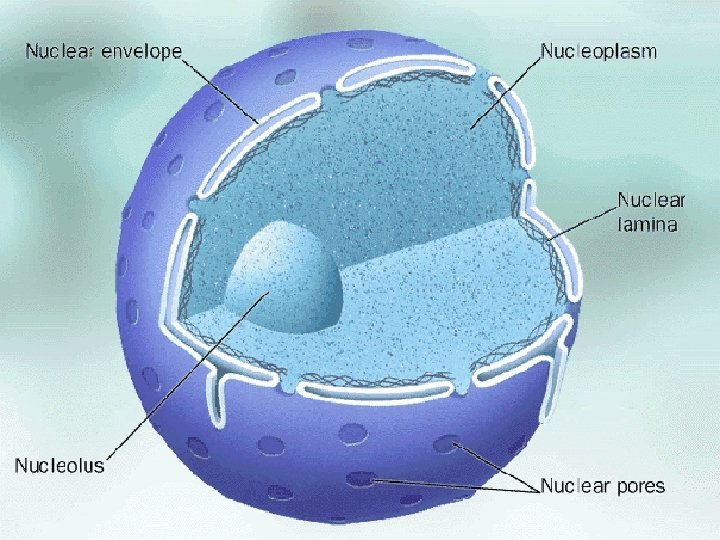
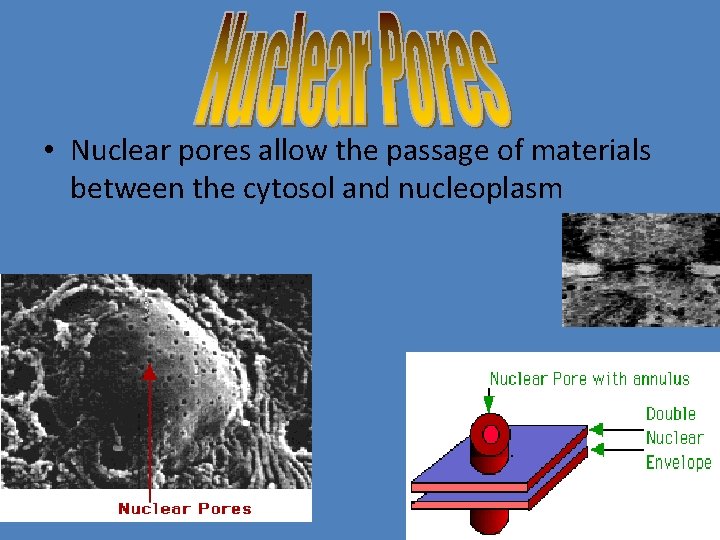
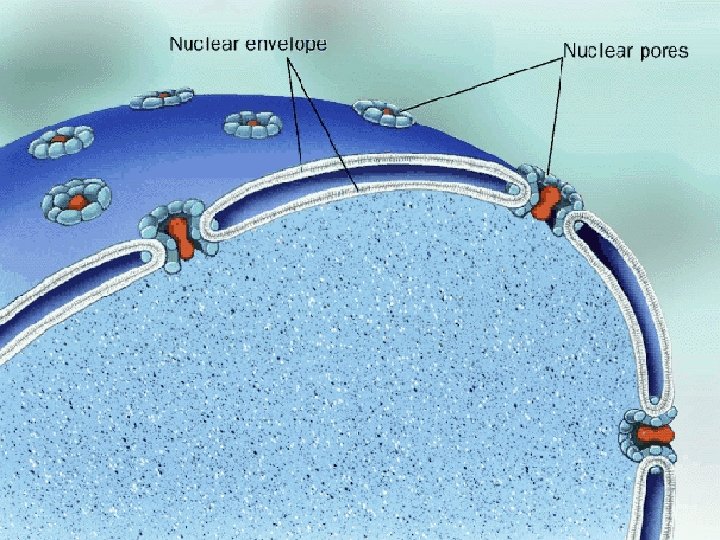
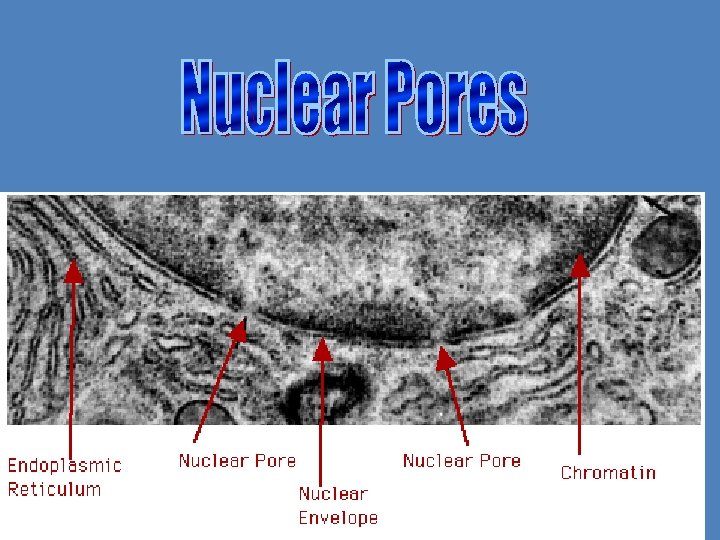
• Nuclear pores allow the passage of materials between the cytosol and nucleoplasm

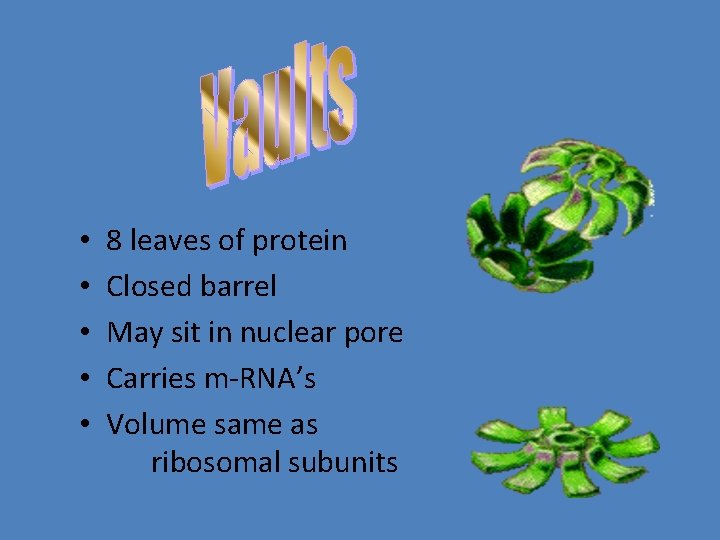
• • • 8 leaves of protein Closed barrel May sit in nuclear pore Carries m-RNA’s Volume same as ribosomal subunits
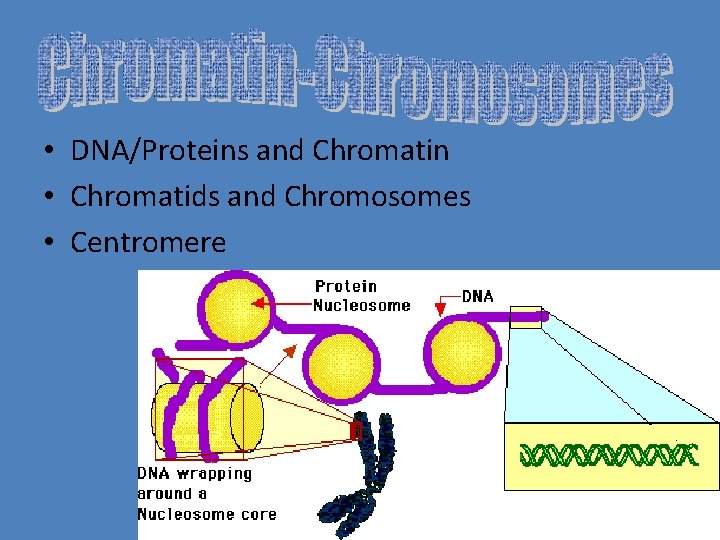
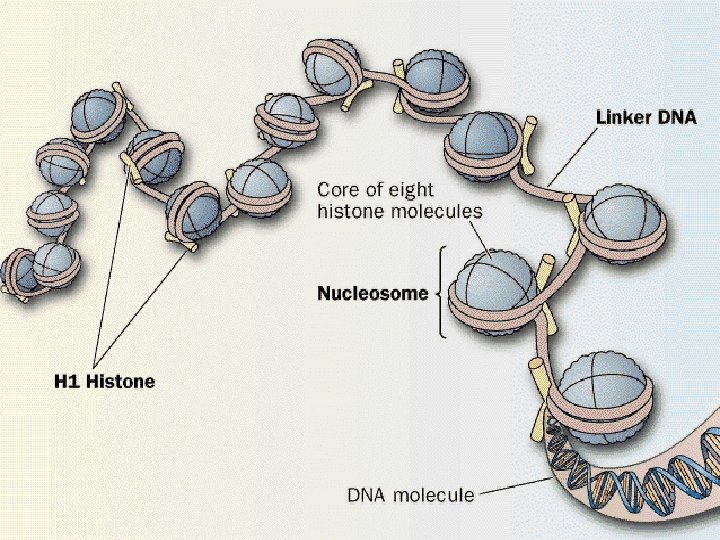
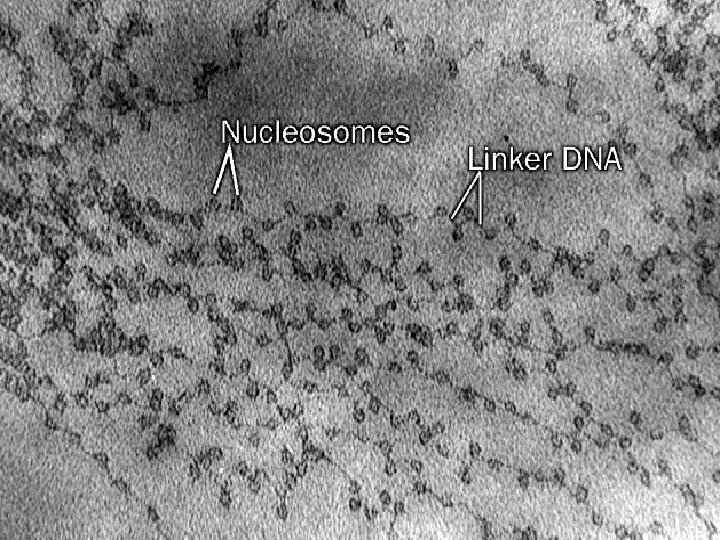
• DNA/Proteins and Chromatin • Chromatids and Chromosomes • Centromere

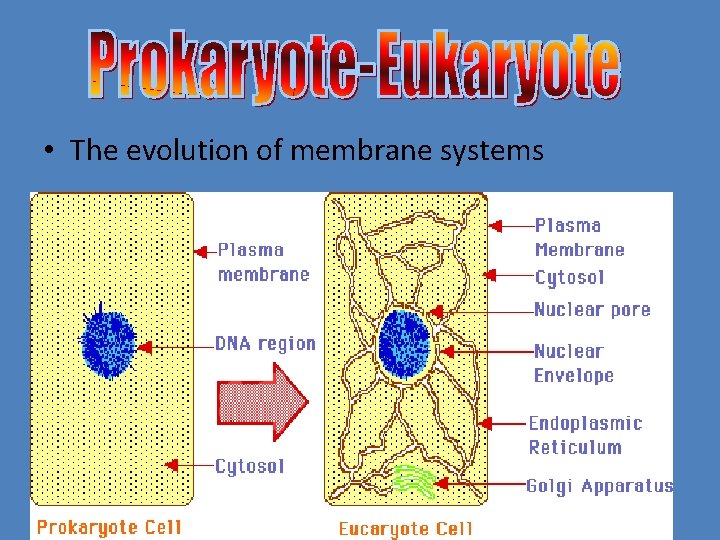
• The evolution of membrane systems
- Slides: 36