
The Cell Membrane The Gatekeeper Overview Cell membrane
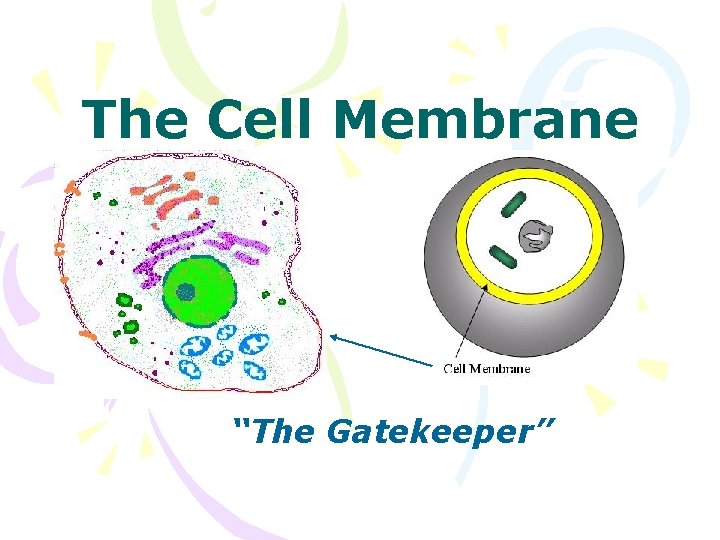
The Cell Membrane “The Gatekeeper”
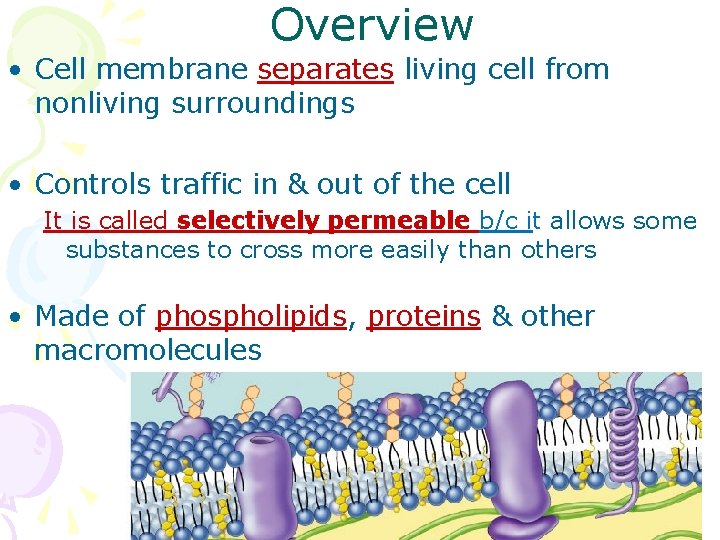
Overview • Cell membrane separates living cell from nonliving surroundings • Controls traffic in & out of the cell It is called selectively permeable b/c it allows some substances to cross more easily than others • Made of phospholipids, proteins & other macromolecules
Intro video
What’s so important about the cell membrane? • The cell membrane regulates what enters and leaves your cells. • You eat food, your stomach breaks it into little pieces. • The little pieces are brought to your cells • Your cell membrane lets those little pieces into the cell. • Without letting the bad stuff in.
• Your body can use these little pieces of food for energy and to make things the body needs. • Example: release energy in bonds of small sugars like glucose
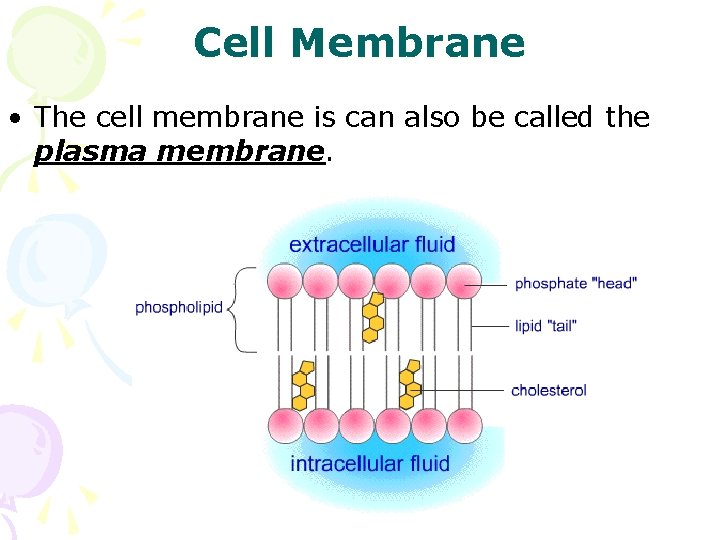
Cell Membrane • The cell membrane is can also be called the plasma membrane.
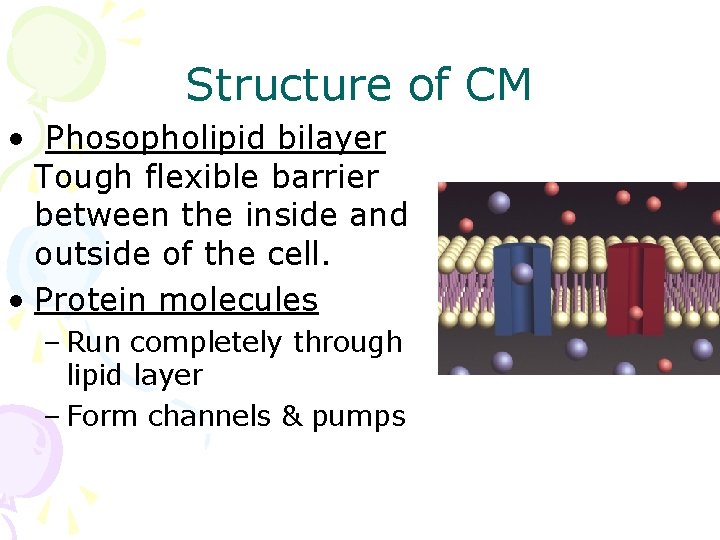
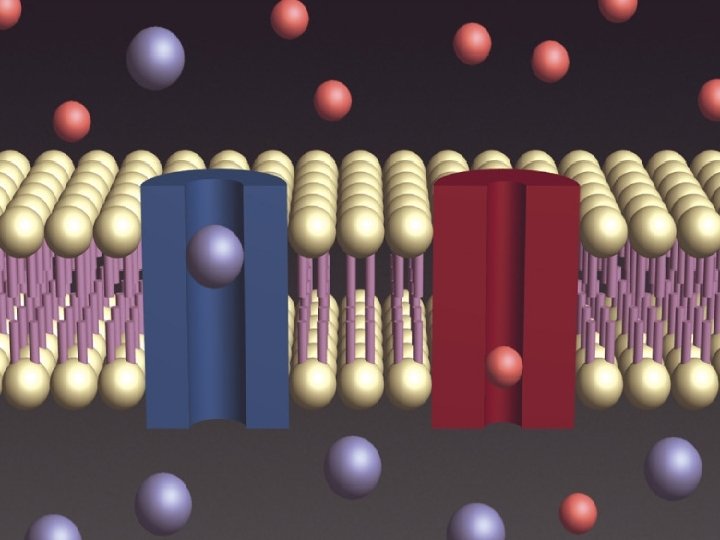
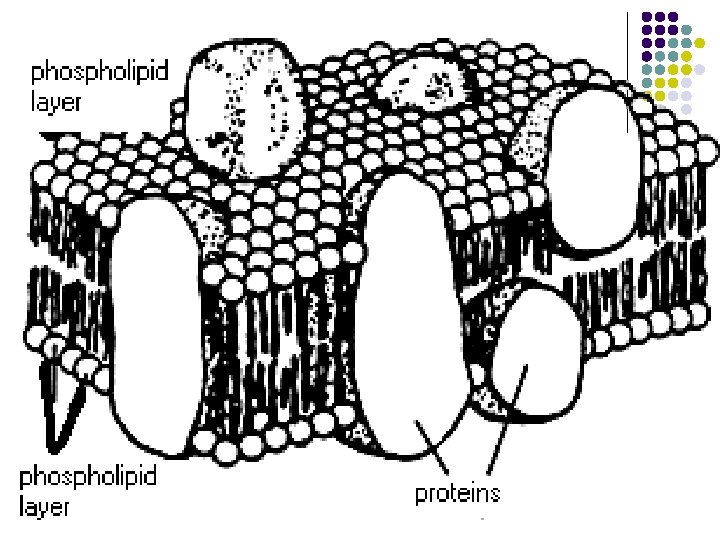
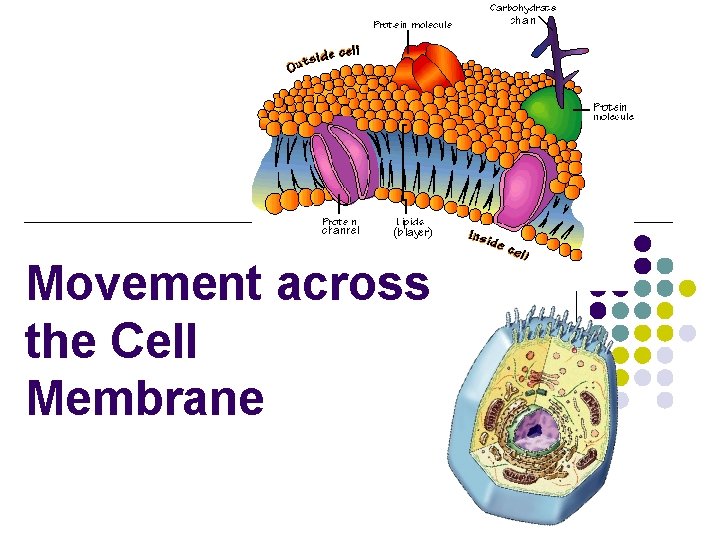
Structure of CM • Phosopholipid bilayer Tough flexible barrier between the inside and outside of the cell. • Protein molecules – Run completely through lipid layer – Form channels & pumps
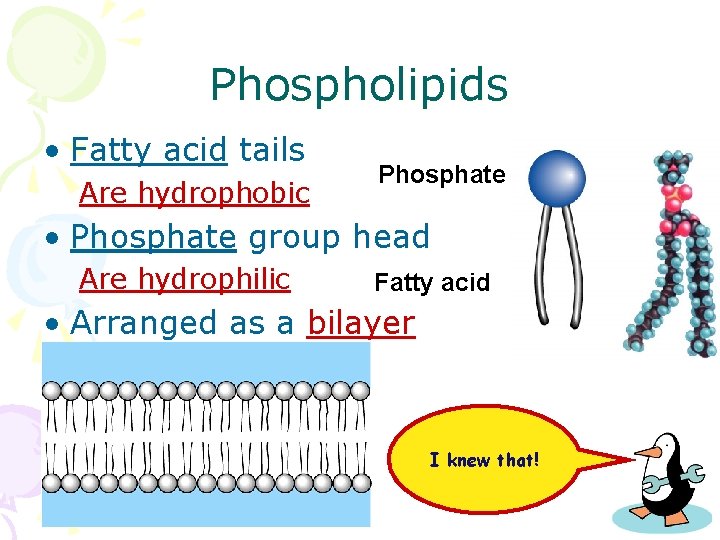
Phospholipids • Fatty acid tails Are hydrophobic Phosphate • Phosphate group head Are hydrophilic Fatty acid • Arranged as a bilayer I knew that!
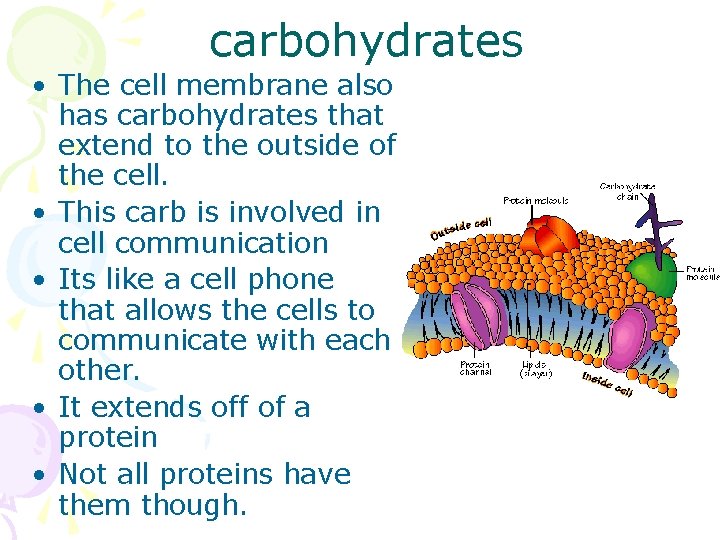
carbohydrates • The cell membrane also has carbohydrates that extend to the outside of the cell. • This carb is involved in cell communication • Its like a cell phone that allows the cells to communicate with each other. • It extends off of a protein • Not all proteins have them though.
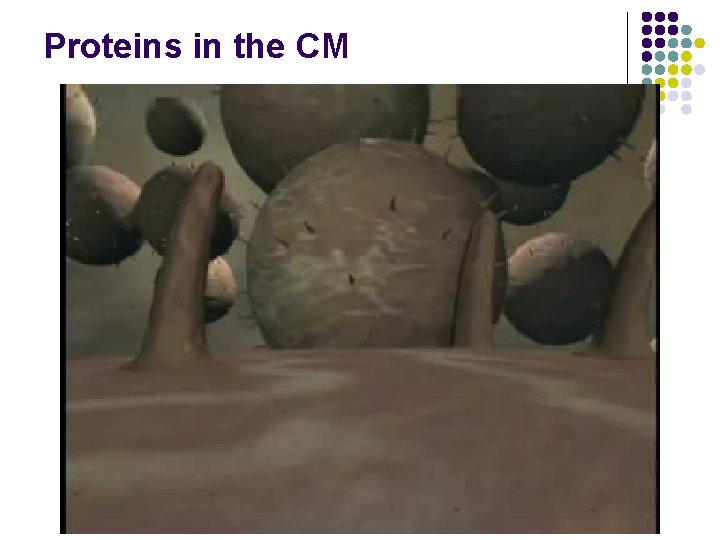
Proteins in the CM
Movement across the Cell Membrane
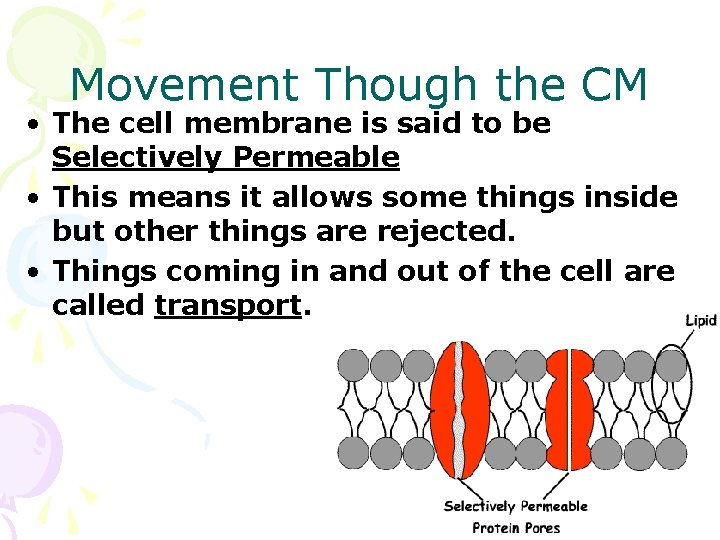
Movement Though the CM • The cell membrane is said to be Selectively Permeable • This means it allows some things inside but other things are rejected. • Things coming in and out of the cell are called transport.
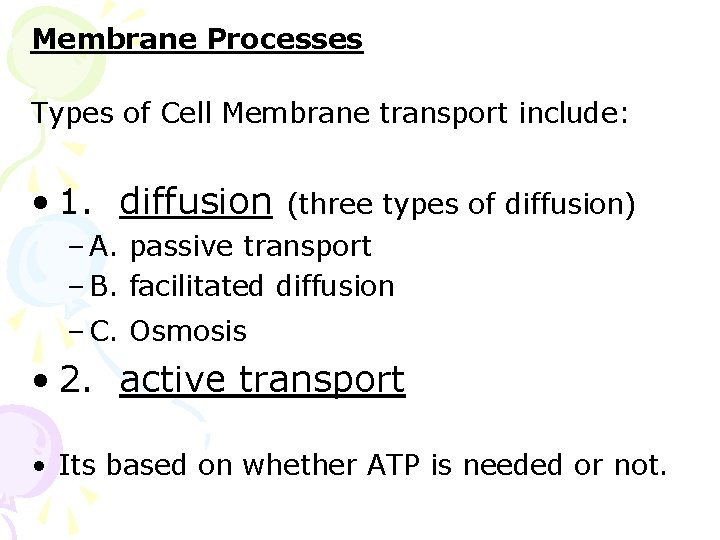
Membrane Processes Types of Cell Membrane transport include: • 1. diffusion (three types of diffusion) – A. passive transport – B. facilitated diffusion – C. Osmosis • 2. active transport • Its based on whether ATP is needed or not.
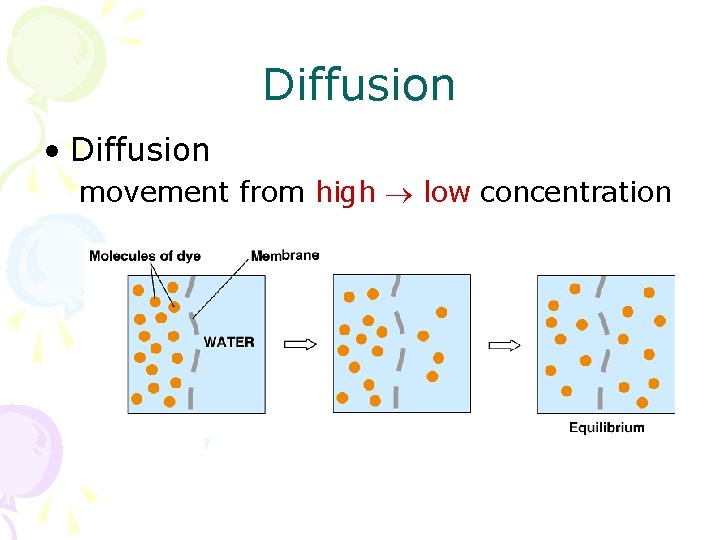
Diffusion • Diffusion movement from high low concentration
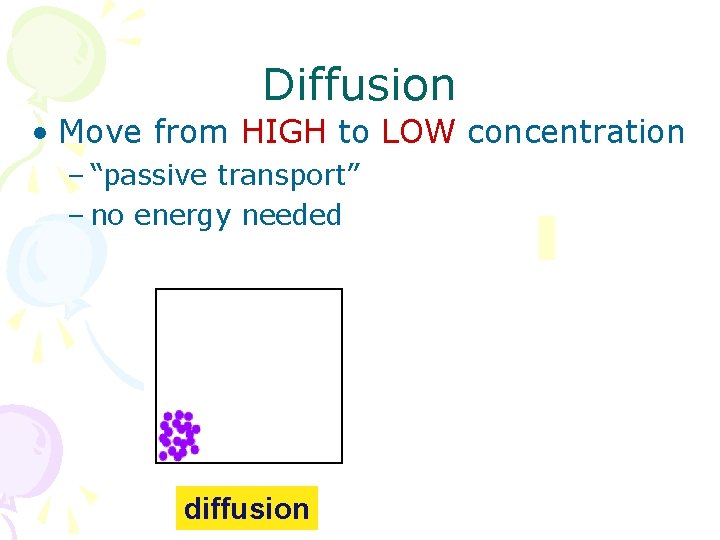
Diffusion • Move from HIGH to LOW concentration – “passive transport” – no energy needed diffusion
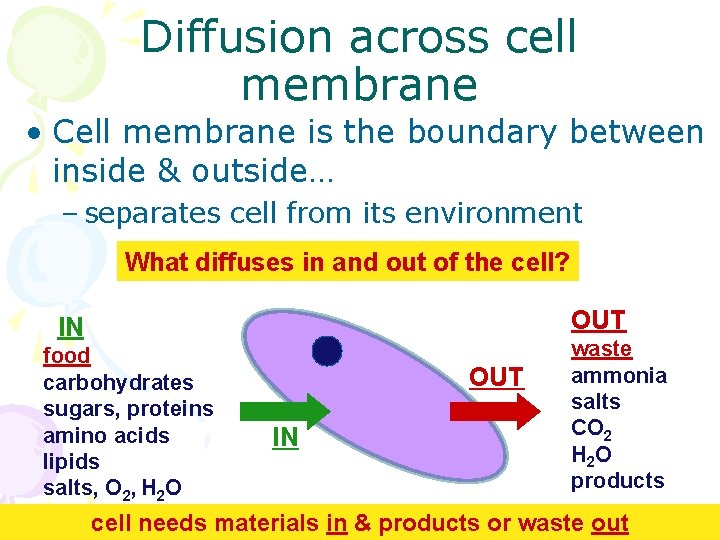
Diffusion across cell membrane • Cell membrane is the boundary between inside & outside… – separates cell from its environment What diffuses in and out of the cell? OUT IN food carbohydrates sugars, proteins amino acids lipids salts, O 2, H 2 O OUT IN waste ammonia salts CO 2 H 2 O products cell needs materials in & products or waste out
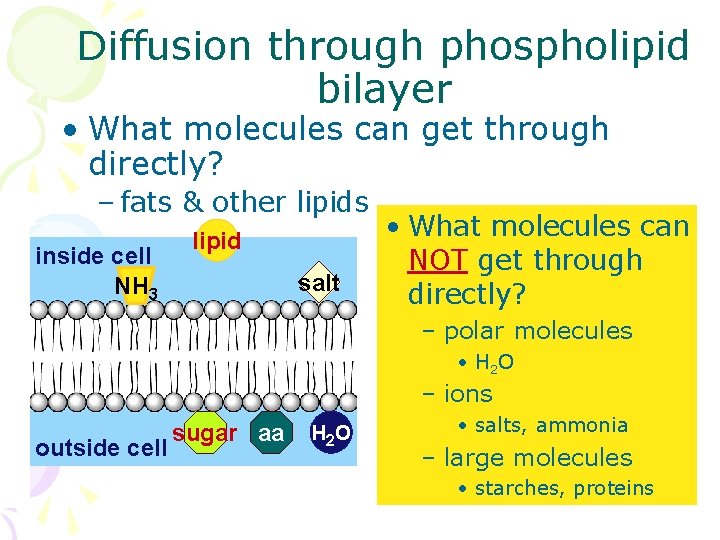
Diffusion through phospholipid bilayer • What molecules can get through directly? – fats & other lipids inside cell NH 3 lipid salt • What molecules can NOT get through directly? – polar molecules • H 2 O – ions outside cell sugar aa H 2 O • salts, ammonia – large molecules • starches, proteins
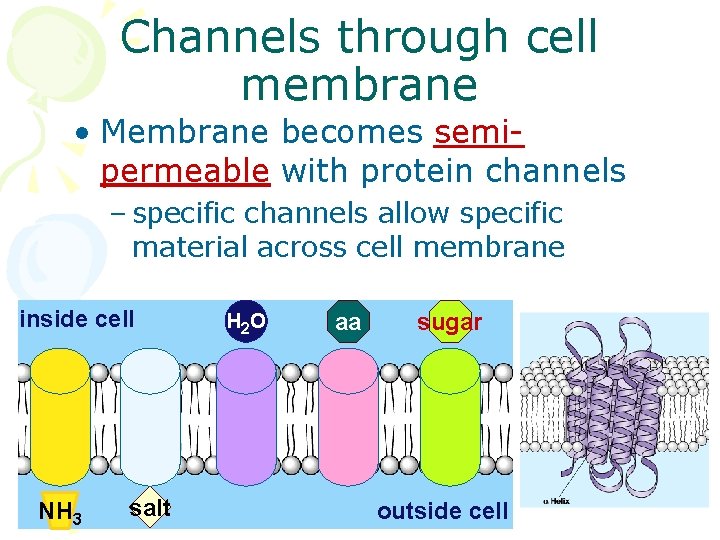
Channels through cell membrane • Membrane becomes semipermeable with protein channels – specific channels allow specific material across cell membrane inside cell NH 3 salt H 2 O aa sugar outside cell
A. Passive Transport • Passive transport: The movement of material across the cell membrane from areas of high concentration to areas of low concentration. • cell does not need energy or ATP Passive transport is a type of diffusion that requires a cell membrane. • Regular diffusion does not. • http: //videos. howstuffworks. com/hsw/23424 -cell-diffusion-acrossthe-cell-membrane-video. htm
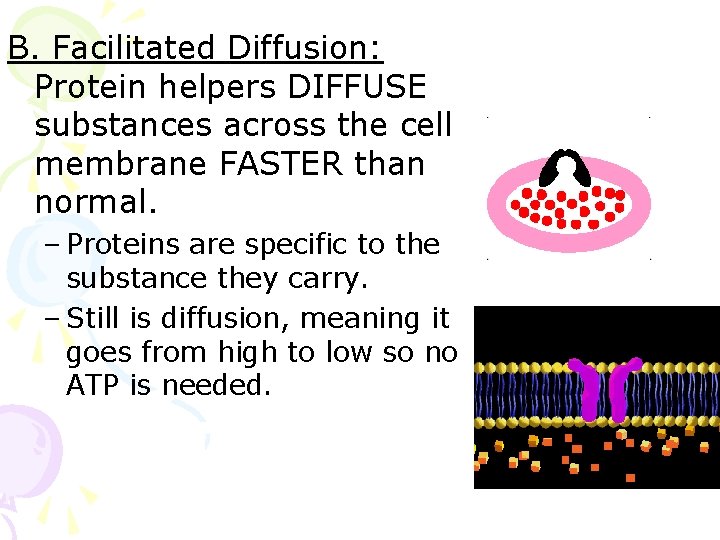
B. Facilitated Diffusion: Protein helpers DIFFUSE substances across the cell membrane FASTER than normal. – Proteins are specific to the substance they carry. – Still is diffusion, meaning it goes from high to low so no ATP is needed.
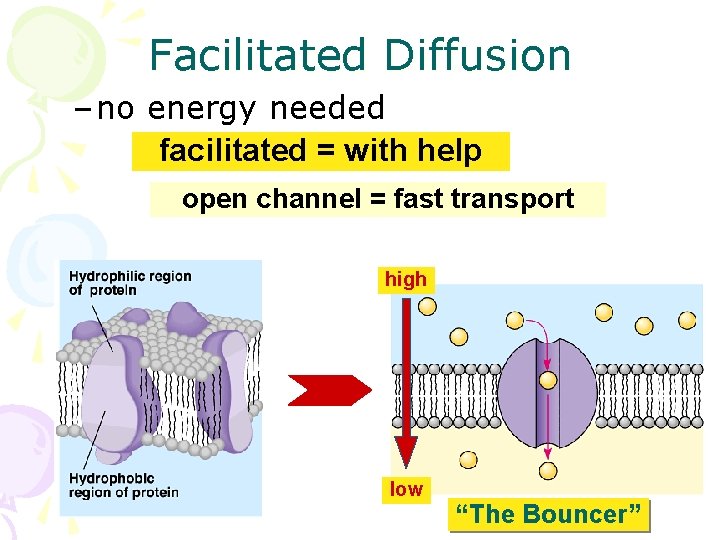
Facilitated Diffusion – no energy needed facilitated = with help open channel = fast transport high low “The Bouncer”
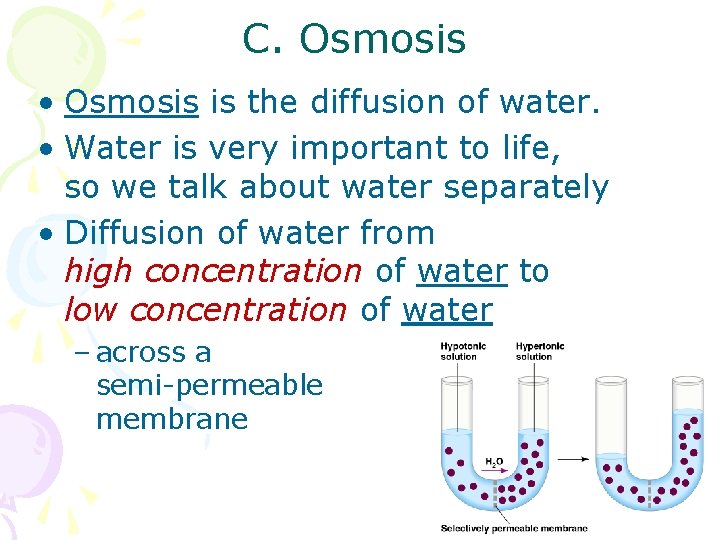
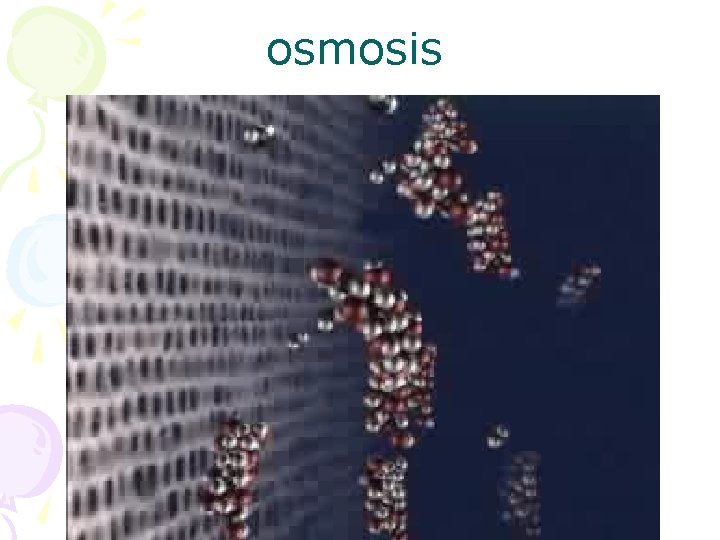
C. Osmosis • Osmosis is the diffusion of water. • Water is very important to life, so we talk about water separately • Diffusion of water from high concentration of water to low concentration of water – across a semi-permeable membrane
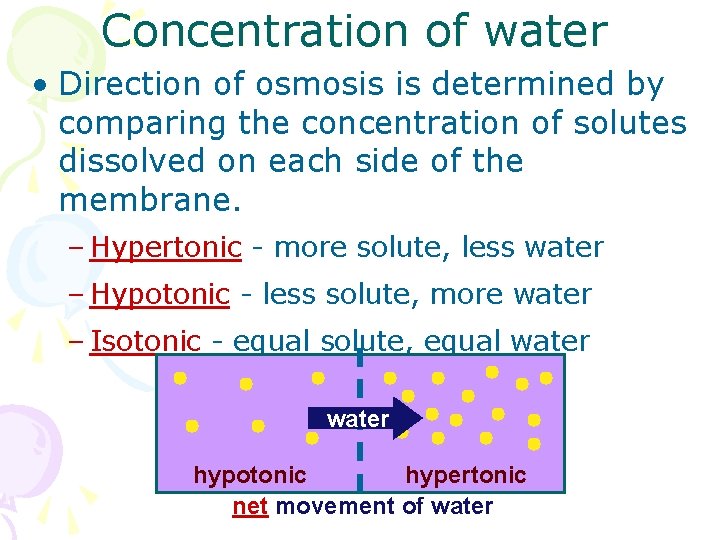
Concentration of water • Direction of osmosis is determined by comparing the concentration of solutes dissolved on each side of the membrane. – Hypertonic - more solute, less water – Hypotonic - less solute, more water – Isotonic - equal solute, equal water hypotonic hypertonic net movement of water
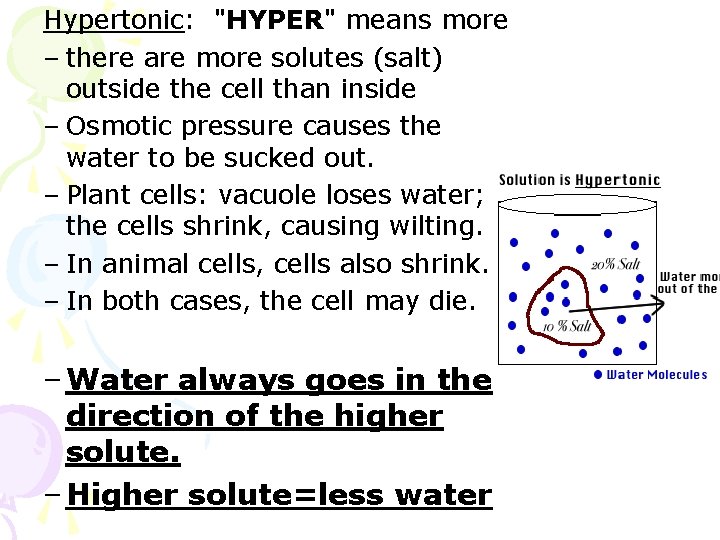
Hypertonic: "HYPER" means more – there are more solutes (salt) outside the cell than inside – Osmotic pressure causes the water to be sucked out. – Plant cells: vacuole loses water; the cells shrink, causing wilting. – In animal cells, cells also shrink. – In both cases, the cell may die. – Water always goes in the direction of the higher solute. – Higher solute=less water
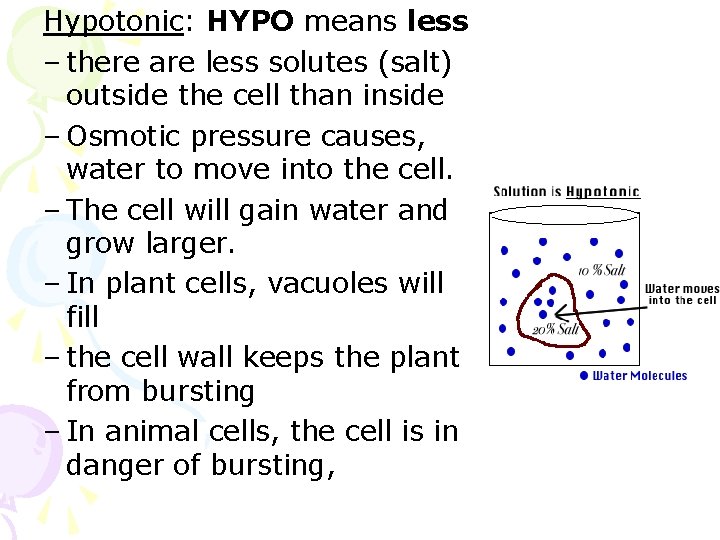
Hypotonic: HYPO means less – there are less solutes (salt) outside the cell than inside – Osmotic pressure causes, water to move into the cell. – The cell will gain water and grow larger. – In plant cells, vacuoles will fill – the cell wall keeps the plant from bursting – In animal cells, the cell is in danger of bursting,
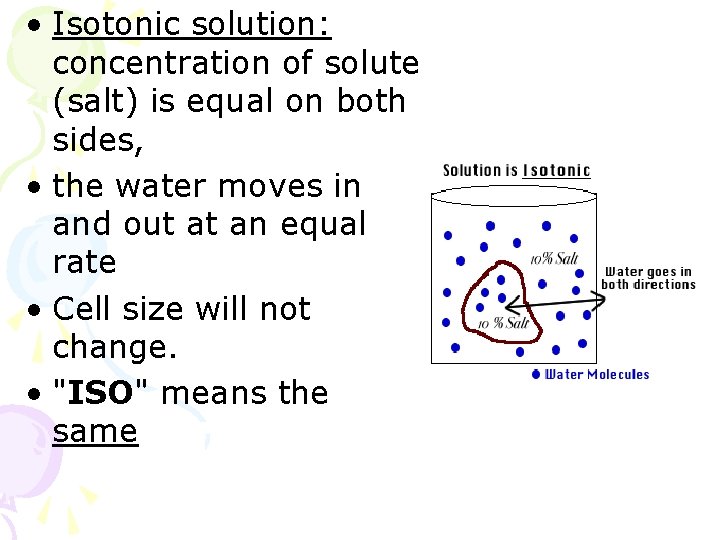
• Isotonic solution: concentration of solute (salt) is equal on both sides, • the water moves in and out at an equal rate • Cell size will not change. • "ISO" means the same
Remember • During osmosis, the cell is permeable to the water (water can pass) but not the solutes (dissolved substances) such as salt and sugar. • Water moves across the membrane until an equilibrium is reached • Water concentration is equal on both sides of cell membrane. • The salts and sugars do not diffuse
osmosis
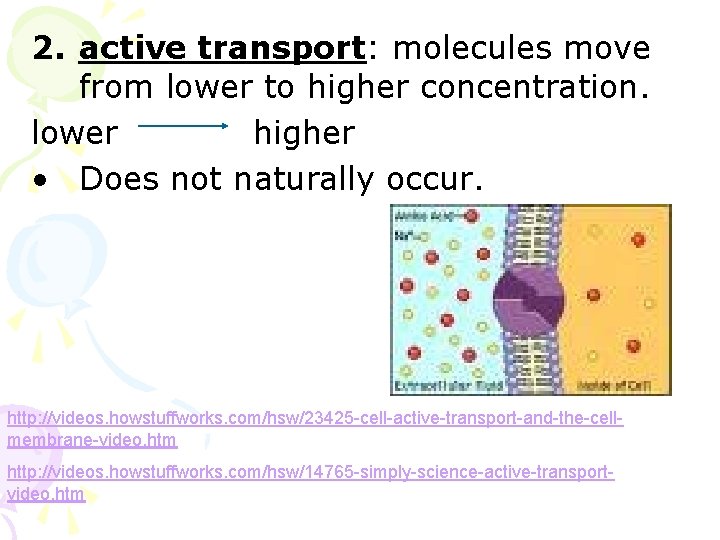
2. active transport: molecules move from lower to higher concentration. lower higher • Does not naturally occur. http: //videos. howstuffworks. com/hsw/23425 -cell-active-transport-and-the-cellmembrane-video. htm http: //videos. howstuffworks. com/hsw/14765 -simply-science-active-transportvideo. htm
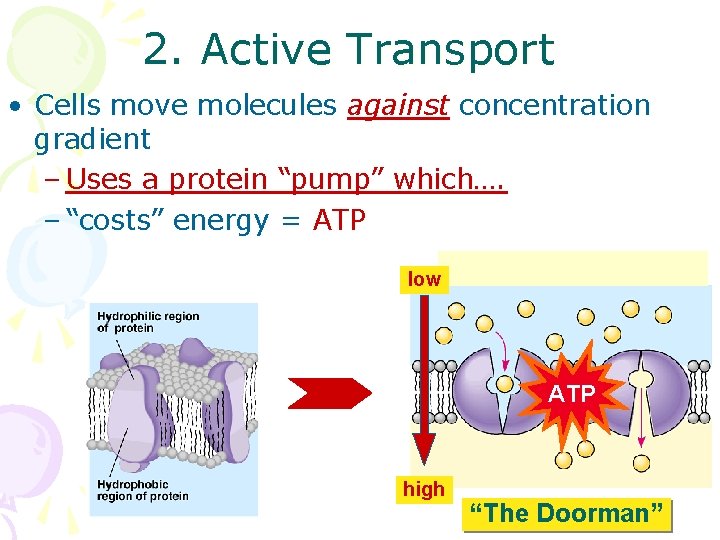
2. Active Transport • Cells move molecules against concentration gradient – Uses a protein “pump” which…. – “costs” energy = ATP low ATP high “The Doorman”
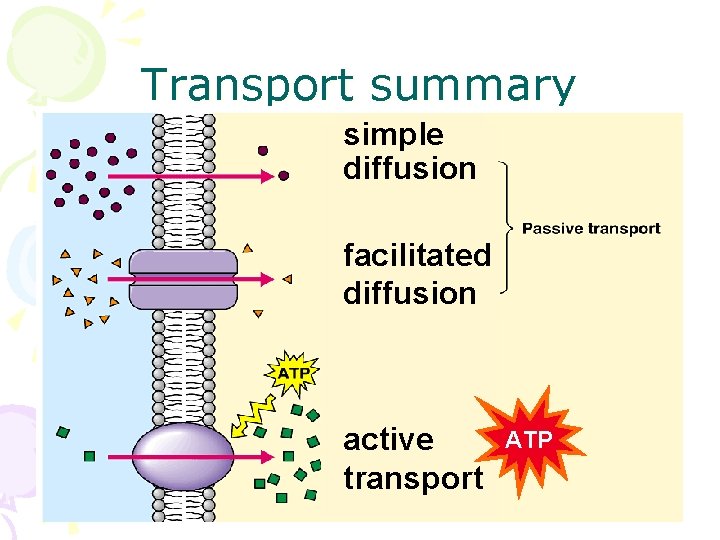
Transport summary simple diffusion facilitated diffusion active transport ATP
Cell membrane and homeostasis • http: //videos. howstuffworks. com/hs w/23423 -cell-homeostasis-and-thecell-membrane-video. htm
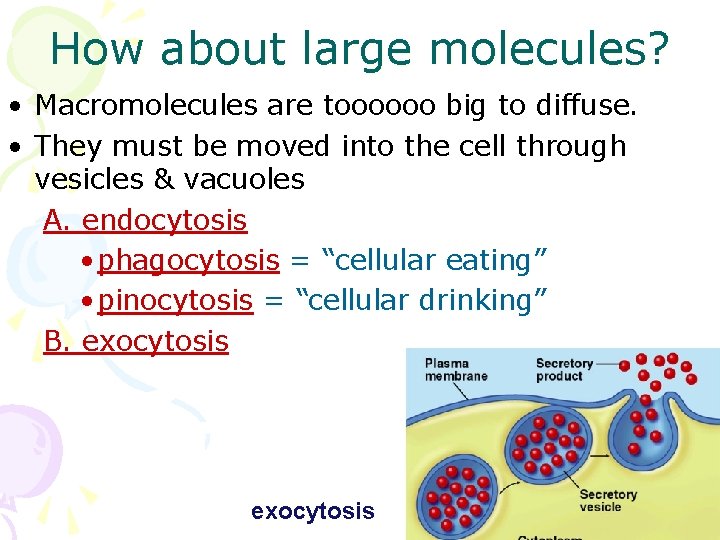
How about large molecules? • Macromolecules are toooooo big to diffuse. • They must be moved into the cell through vesicles & vacuoles A. endocytosis • phagocytosis = “cellular eating” • pinocytosis = “cellular drinking” B. exocytosis
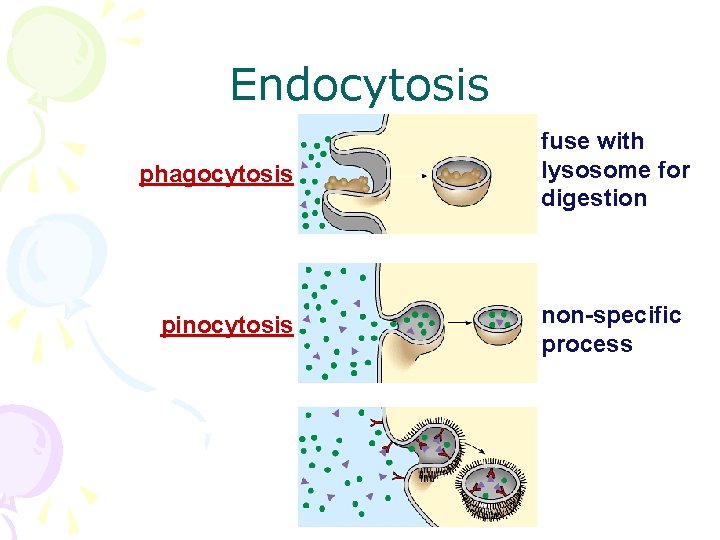
Endocytosis phagocytosis pinocytosis fuse with lysosome for digestion non-specific process
review
Fluid mosaic model • This model of the cell membrane is called the fluid mosaic model. • Do you know what a mosaic is? • Think about art.
Mosaic • A piece of artwork made up of little pieces of tile lying close together but not connected. • It gives the illusion that it is all one piece but it is not. • Why is the cell membrane considered a mosaic model?


• Because the pieces of the cell membrane are not actually attached, though the appear to be.
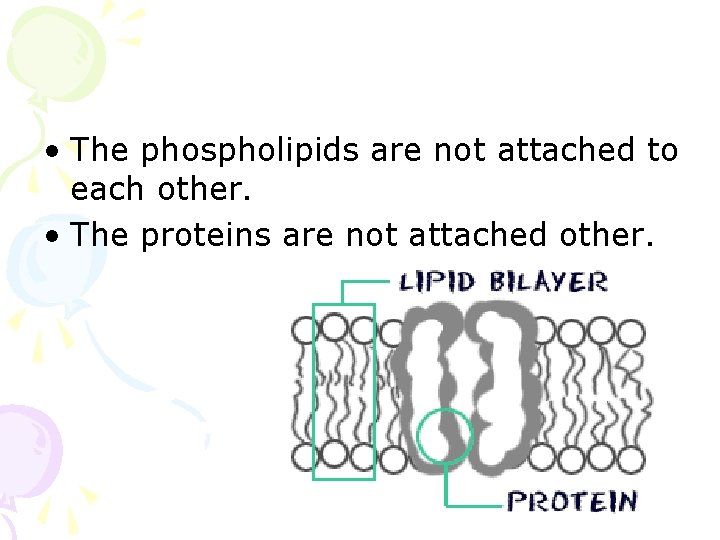
• The phospholipids are not attached to each other. • The proteins are not attached other.
Cell communication • Cell-to-Cell communication is important for multicellular organisms. • The billions of cells of a human or an oak tree must communicate in order to develop from a fertilized egg • and then survive and reproduce in turn. • .
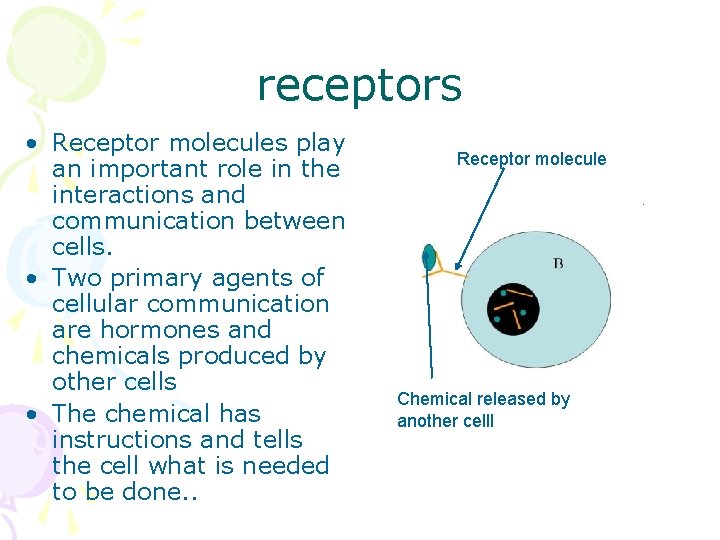
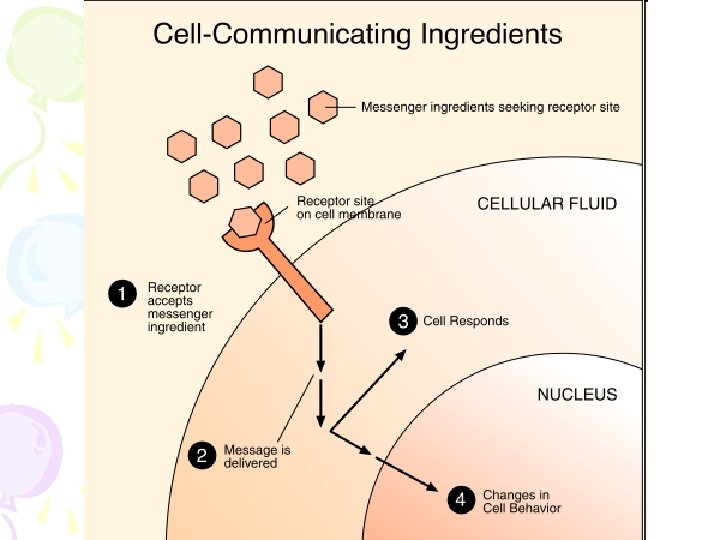
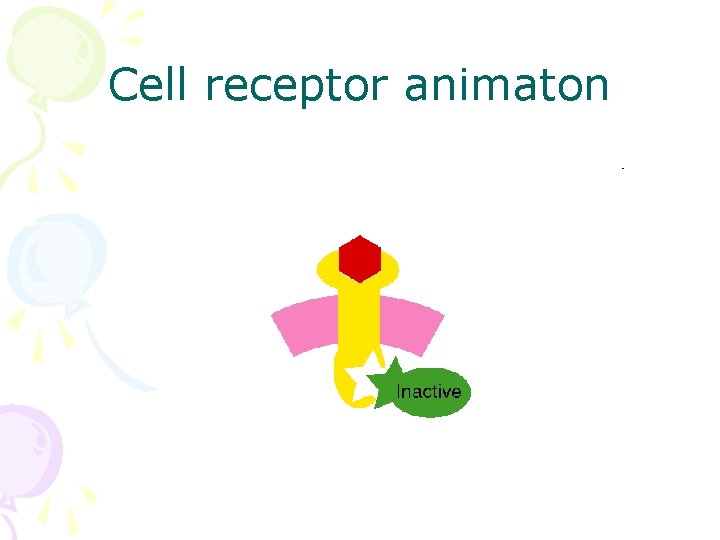
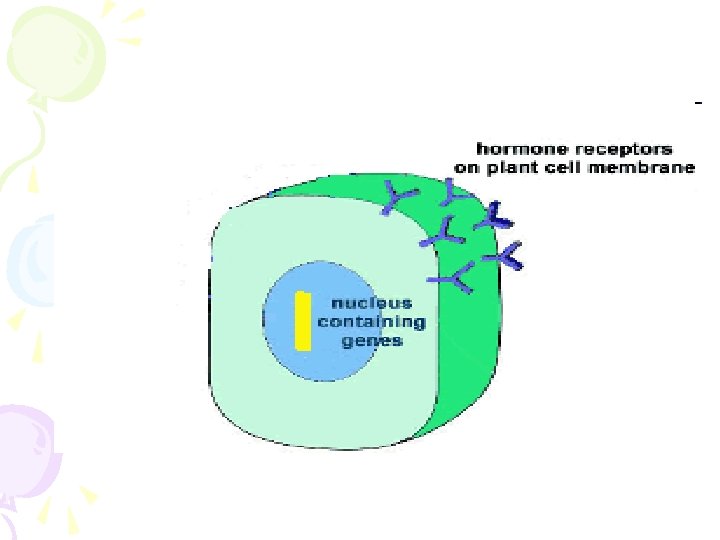
receptors • Receptor molecules play an important role in the interactions and communication between cells. • Two primary agents of cellular communication are hormones and chemicals produced by other cells • The chemical has instructions and tells the cell what is needed to be done. . Receptor molecule Chemical released by another celll
Blocked signal • If those hormone signals are blocked, cellular communication is stopped and the organism’s homeostasis or health is affected. • Its like when you are out of range and your cell phone cannot get a signal. • You have no idea the other person is even trying to call you
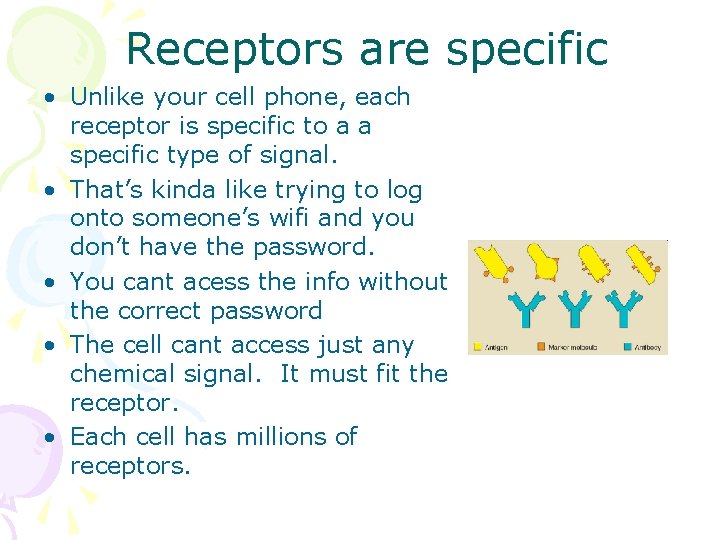
Receptors are specific • Unlike your cell phone, each receptor is specific to a a specific type of signal. • That’s kinda like trying to log onto someone’s wifi and you don’t have the password. • You cant acess the info without the correct password • The cell cant access just any chemical signal. It must fit the receptor. • Each cell has millions of receptors.
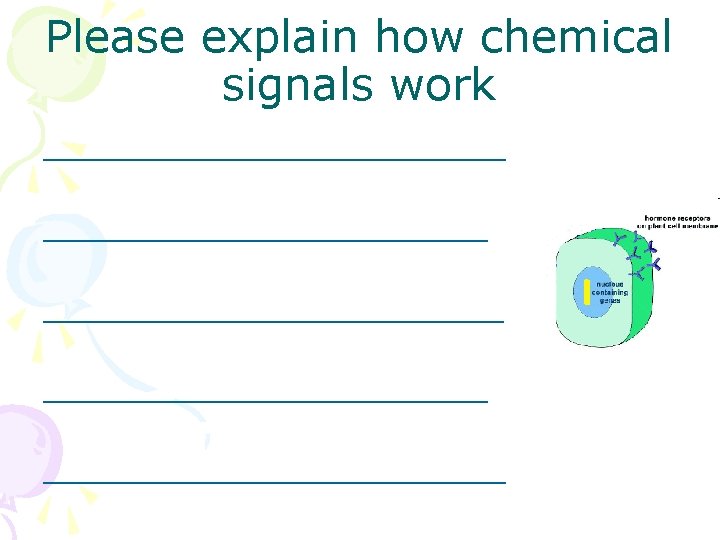
Please explain how chemical signals work __________________________ _____________
Cell receptor animaton
- Slides: 52