
The Cell Membrane The Cell Membrane Aka Plasma
The Cell Membrane
The Cell Membrane Aka. Plasma Membrane It is responsible for controlling what enters and exits the cell. o Ex. Materials like glucose must enter the cell, and waste materials must exit the cell.
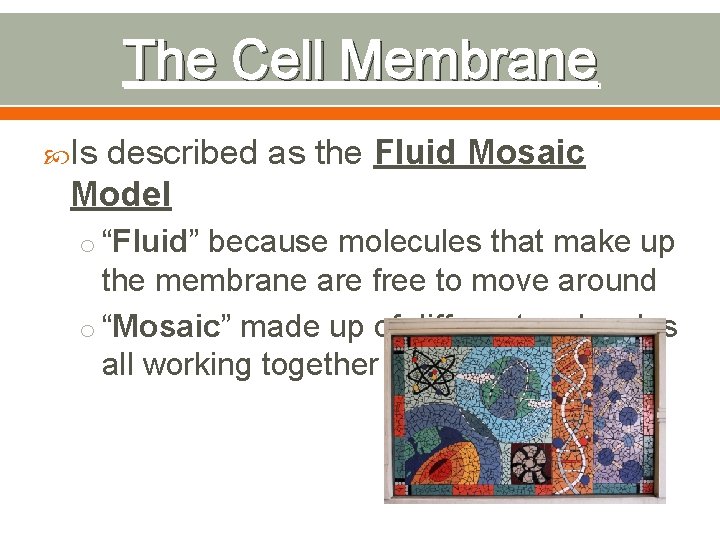
The Cell Membrane Is described as the Fluid Mosaic Model o “Fluid” because molecules that make up the membrane are free to move around o “Mosaic” made up of different molecules all working together
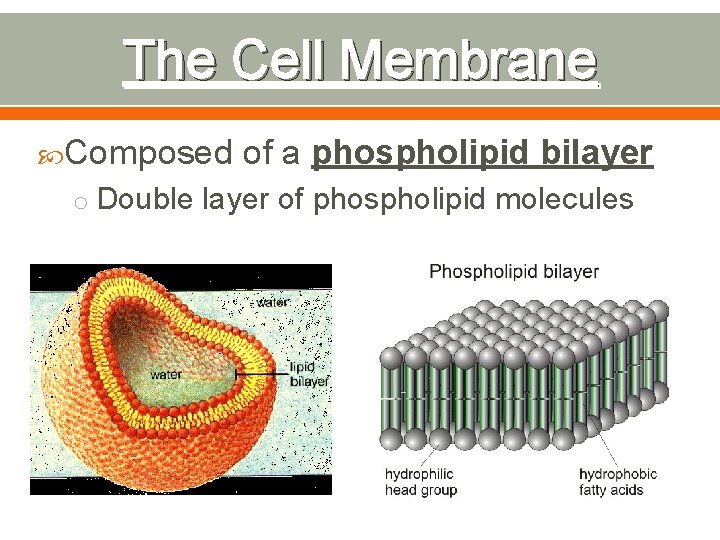
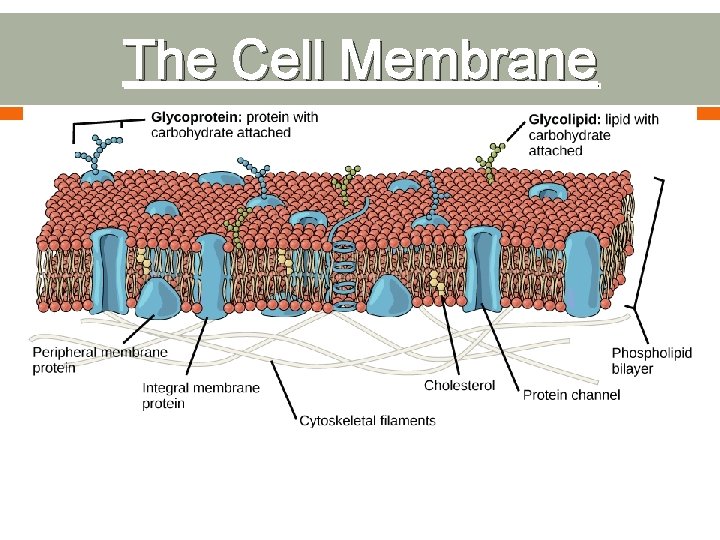
The Cell Membrane Composed of a phospholipid bilayer o Double layer of phospholipid molecules
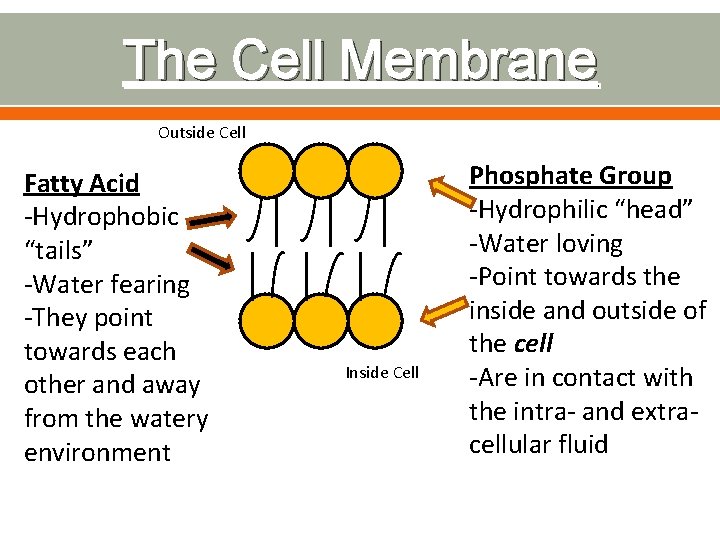
The Cell Membrane Outside Cell Fatty Acid -Hydrophobic “tails” -Water fearing -They point towards each other and away from the watery environment Inside Cell Phosphate Group -Hydrophilic “head” -Water loving -Point towards the inside and outside of the cell -Are in contact with the intra- and extracellular fluid
The Cell Membrane • Cell membrane is semi-permeable/selectively permeable – Only certain materials are allowed to pass through • Other molecules associated with cell membrane: – Steroids (i. e. cholesterol) – Proteins
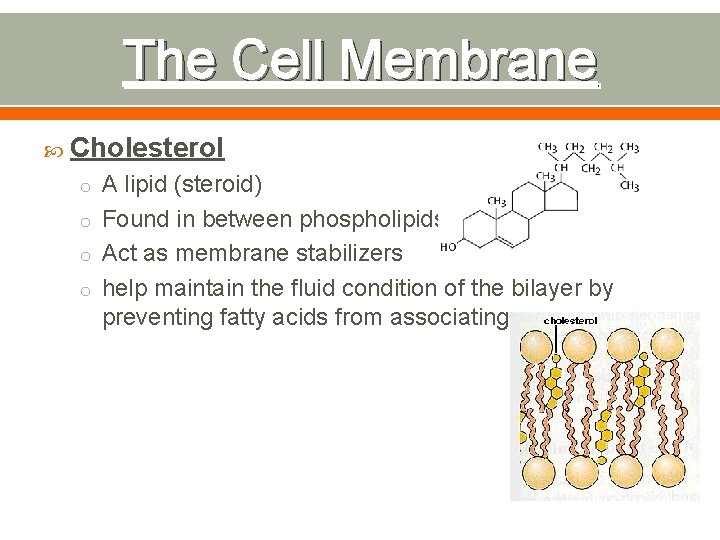
The Cell Membrane Cholesterol o A lipid (steroid) o Found in between phospholipids o Act as membrane stabilizers o help maintain the fluid condition of the bilayer by preventing fatty acids from associating
The Cell Membrane Proteins o Can be divided into four major categories according to the function of the protein: • 1) Transport Proteins - protein “channels” that help substances pass through the membrane • 2) Enzymes – some enzymes can be associated with the membrane (ex. enzymes of photosynthesis and cellular respiration)
The Cell Membrane • 3) Signalling Proteins – bind specific chemicals (ex. hormones) and this binding triggers changes on the inner surface of the membrane triggering a cascade of reactions in the cell • 4) Attachment and Recognition Proteins – act as attachment points for cytoskeleton elements (structural support) / can function in cell-cell recognition (ex. immune cell recognizing invader)
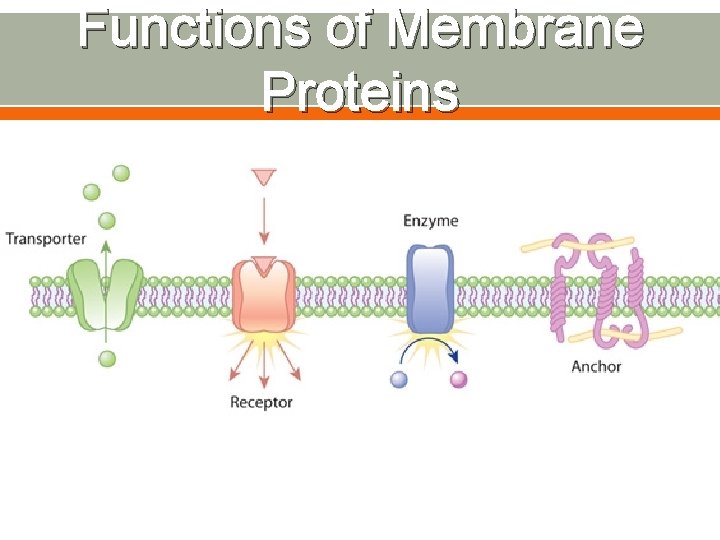
Functions of Membrane Proteins
The Cell Membrane Proteins o Can also be divided based on location within membrane: • 1) Integral Proteins • - embedded in the lipid bilayer • Most integral proteins are transmembrane proteins (meaning they span the entire membrane) • 2) Peripheral Protein • Found on the surface off the membrane • Can be attached to integral proteins
The Cell Membrane
- Slides: 12