
The Cell Membrane structure and functions Dr M
The Cell Membrane structure and functions Dr. M. Raja, M. Sc. , M. Phil. , Ph. D. , MB. A (HR), F. E. S. I. , Assistant Professor, Loyola College, Chennai
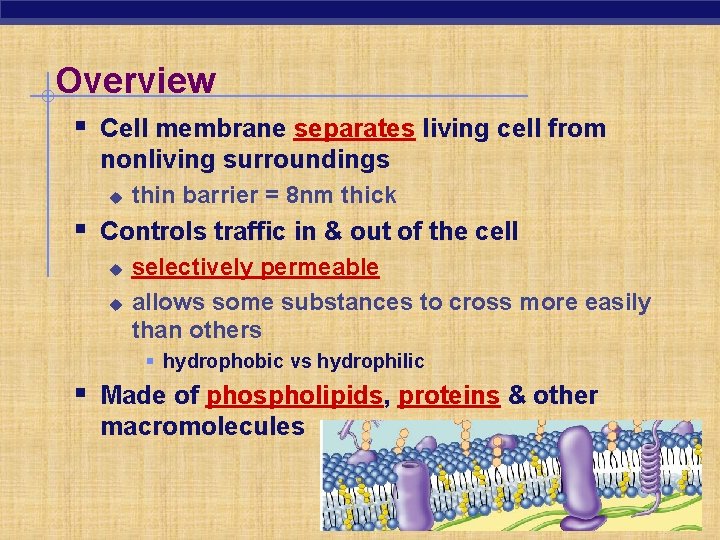
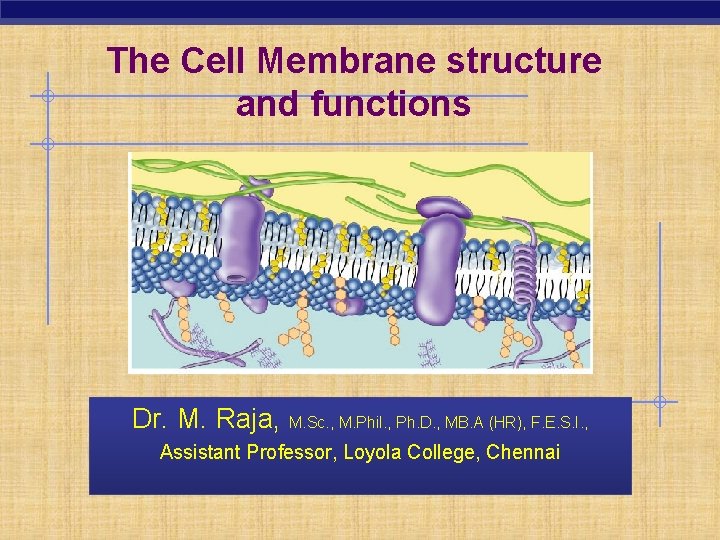
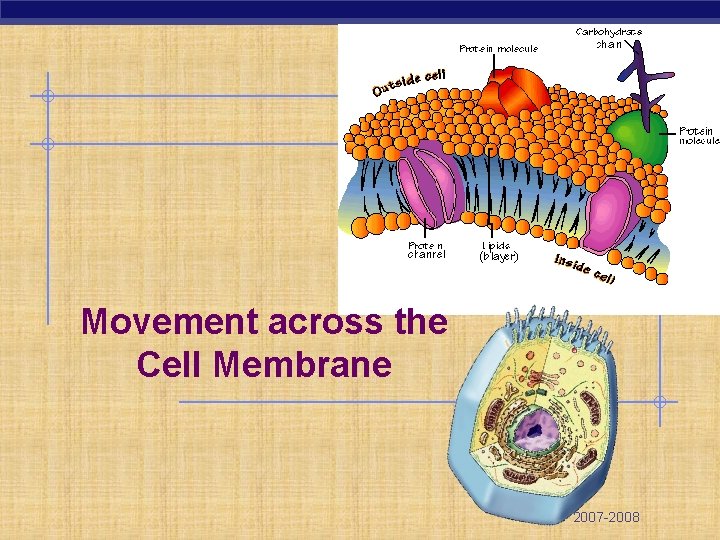
Overview § Cell membrane separates living cell from nonliving surroundings u thin barrier = 8 nm thick § Controls traffic in & out of the cell u u selectively permeable allows some substances to cross more easily than others § hydrophobic vs hydrophilic § Made of phospholipids, proteins & other macromolecules
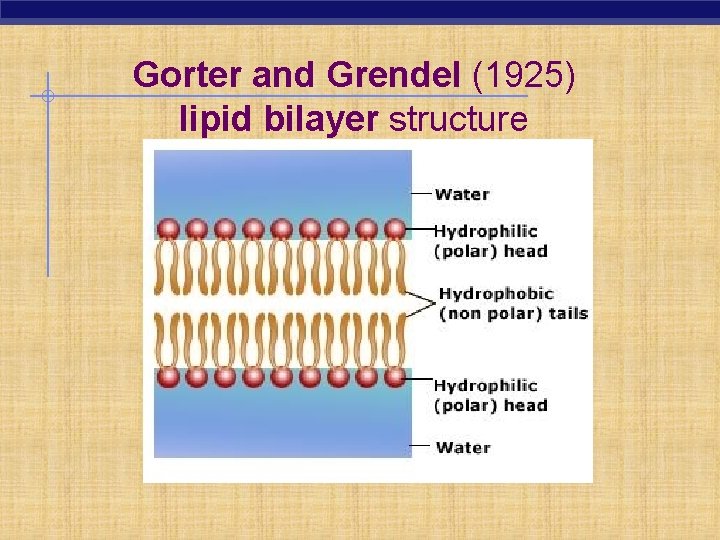
Gorter and Grendel (1925) lipid bilayer structure
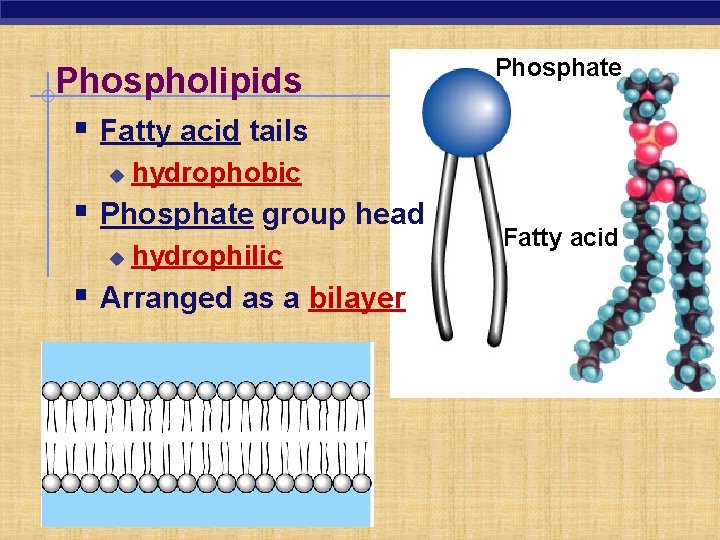
Phospholipids § Fatty acid tails u hydrophobic § Phosphate group head u Phosphate hydrophilic § Arranged as a bilayer Fatty acid
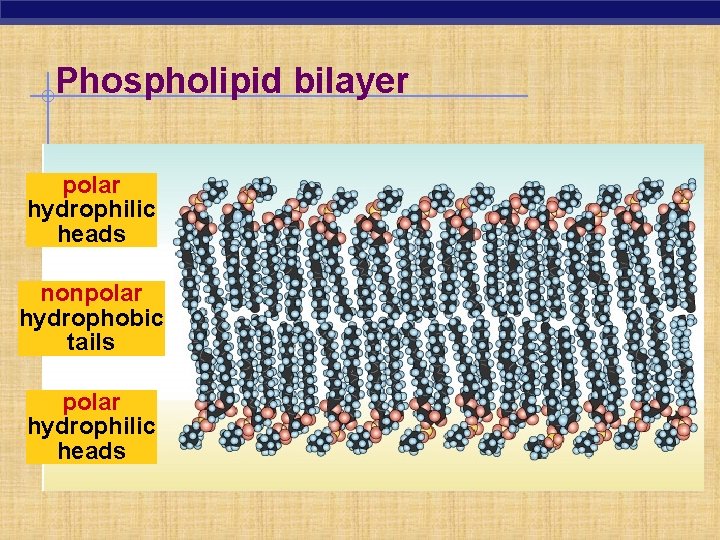
Phospholipid bilayer polar hydrophilic heads nonpolar hydrophobic tails polar hydrophilic heads
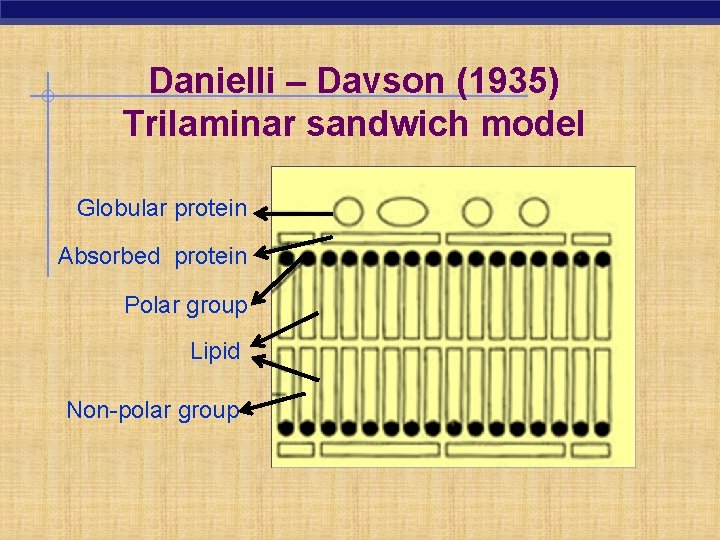
Danielli – Davson (1935) Trilaminar sandwich model Globular protein Absorbed protein Polar group Lipid Non-polar group
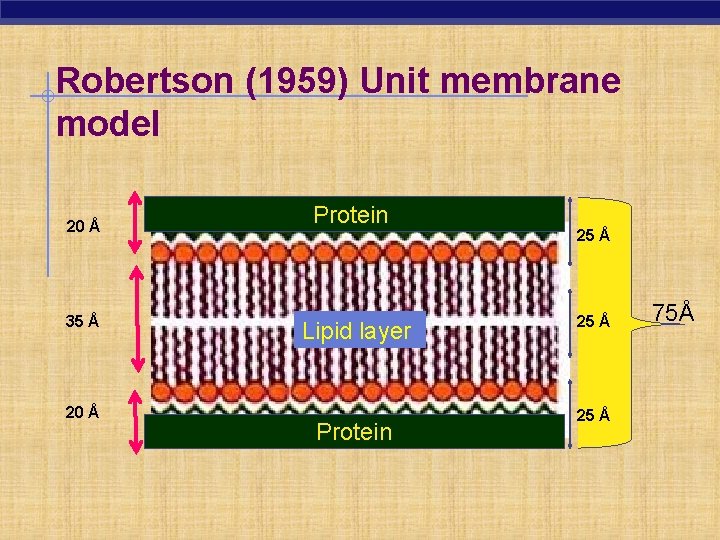
Robertson (1959) Unit membrane model 20 Å 35 Å 20 Å Protein Lipid layer Protein 25 Å 75Å
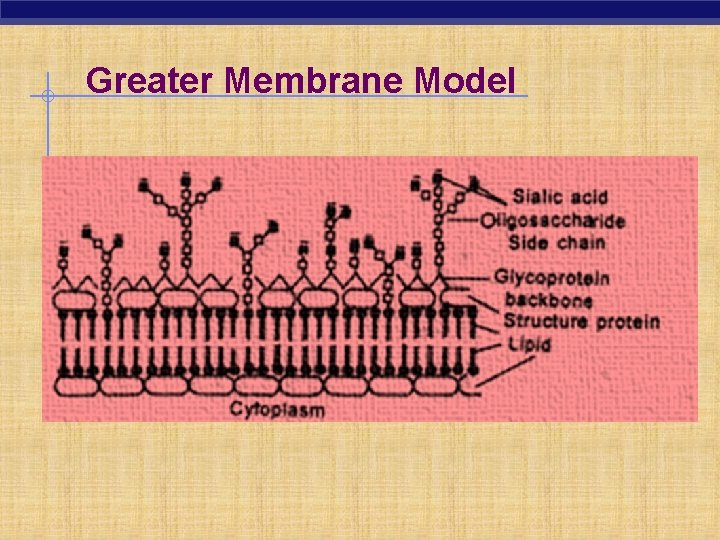
Greater Membrane Model
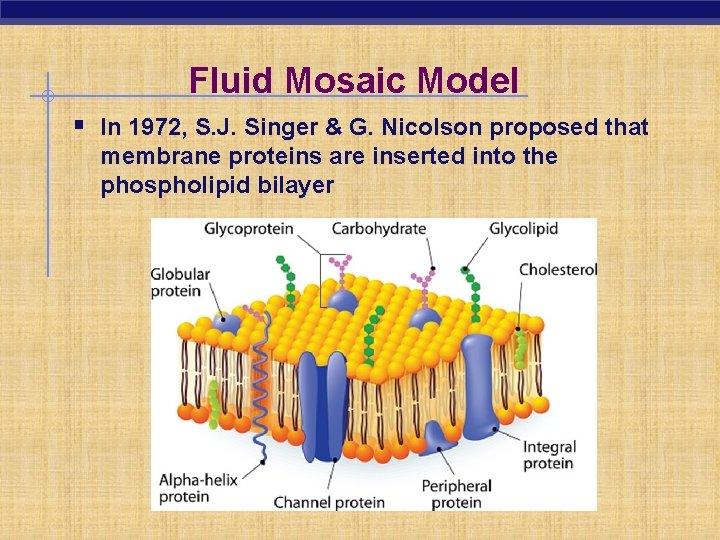
Fluid Mosaic Model § In 1972, S. J. Singer & G. Nicolson proposed that membrane proteins are inserted into the phospholipid bilayer
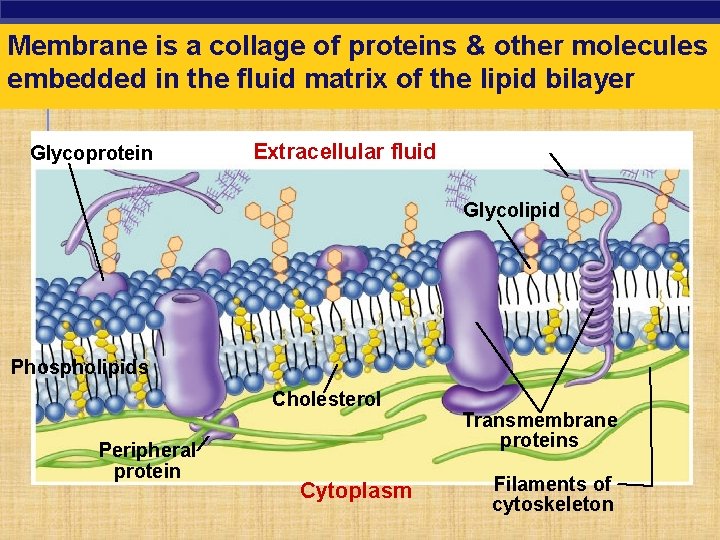
Membrane is a collage of proteins & other molecules embedded in the fluid matrix of the lipid bilayer Glycoprotein Extracellular fluid Glycolipid Phospholipids Cholesterol Peripheral protein Cytoplasm Transmembrane proteins Filaments of cytoskeleton
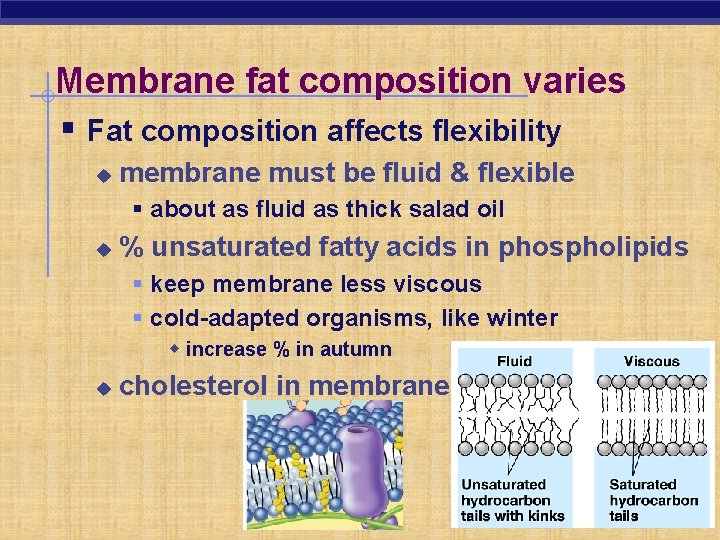
Membrane fat composition varies § Fat composition affects flexibility u membrane must be fluid & flexible § about as fluid as thick salad oil u % unsaturated fatty acids in phospholipids § keep membrane less viscous § cold-adapted organisms, like winter w increase % in autumn u cholesterol in membrane
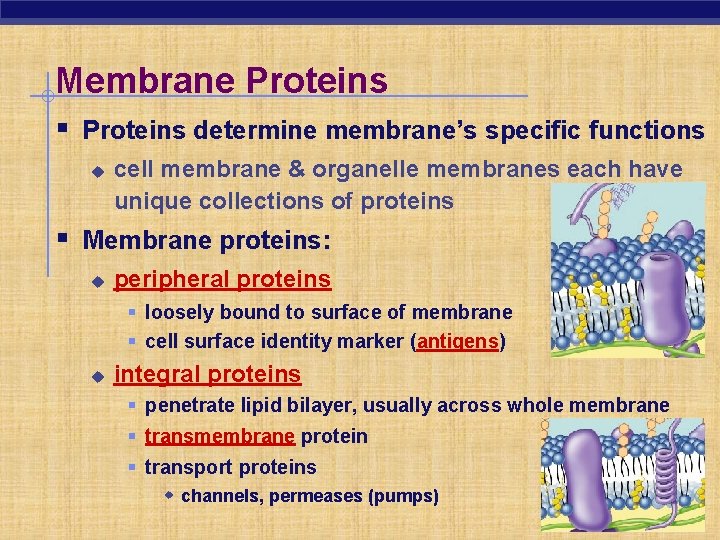
Membrane Proteins § Proteins determine membrane’s specific functions u cell membrane & organelle membranes each have unique collections of proteins § Membrane proteins: u peripheral proteins § loosely bound to surface of membrane § cell surface identity marker (antigens) u integral proteins § penetrate lipid bilayer, usually across whole membrane § transmembrane protein § transport proteins w channels, permeases (pumps)
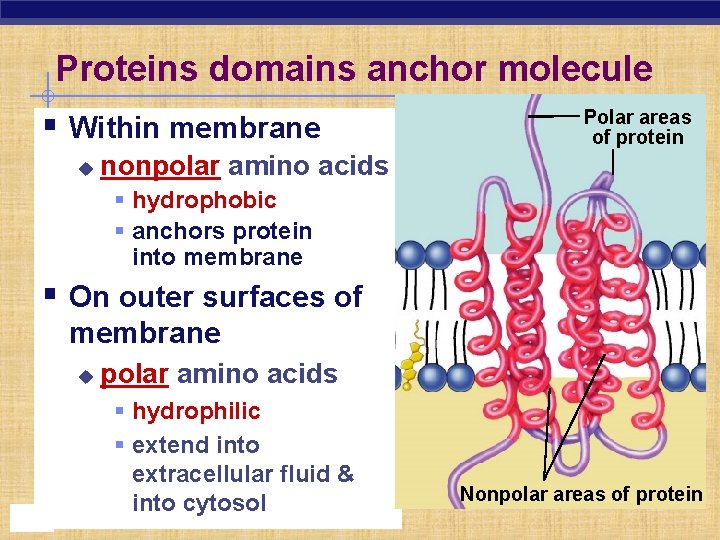
Proteins domains anchor molecule § Within membrane u Polar areas of protein nonpolar amino acids § hydrophobic § anchors protein into membrane § On outer surfaces of membrane u polar amino acids § hydrophilic § extend into extracellular fluid & into cytosol Nonpolar areas of protein
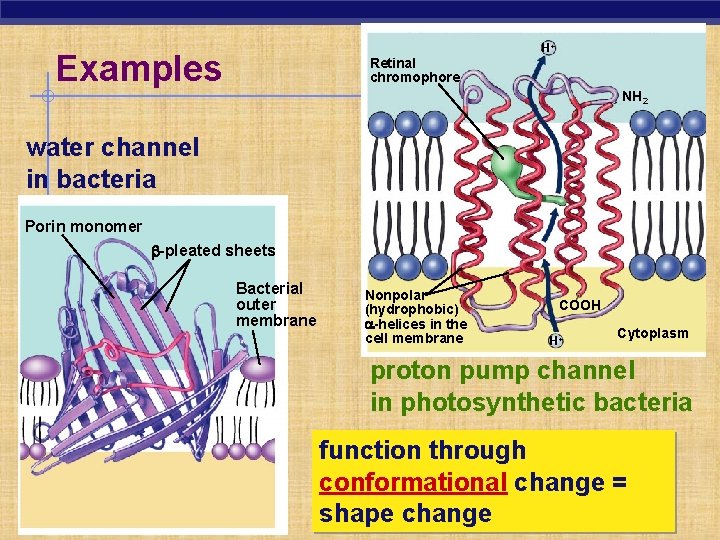
H+ Examples Retinal chromophore NH 2 water channel in bacteria Porin monomer b-pleated sheets Bacterial outer membrane Nonpolar (hydrophobic) a-helices in the cell membrane COOH H+ Cytoplasm proton pump channel in photosynthetic bacteria function through conformational change = shape change
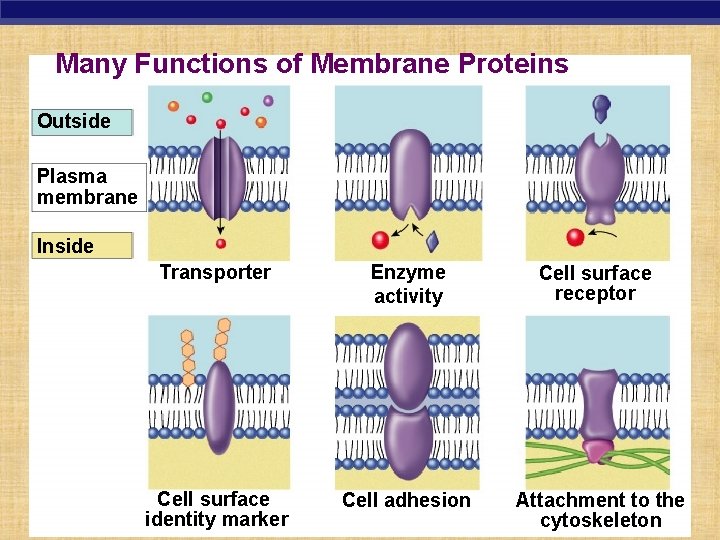
Many Functions of Membrane Proteins Outside Plasma membrane Inside Transporter Enzyme activity Cell surface receptor Cell surface identity marker Cell adhesion Attachment to the cytoskeleton
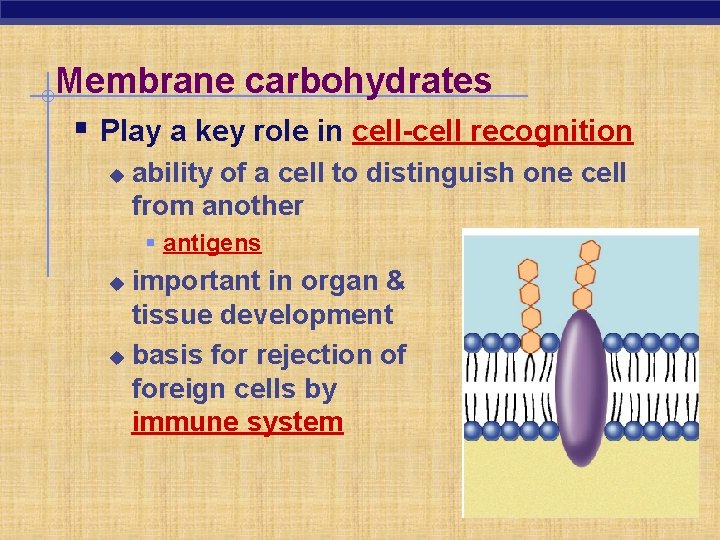
Membrane carbohydrates § Play a key role in cell-cell recognition u ability of a cell to distinguish one cell from another § antigens important in organ & tissue development u basis for rejection of foreign cells by immune system u
Any Questions? ?
Movement across the Cell Membrane 2007 -2008
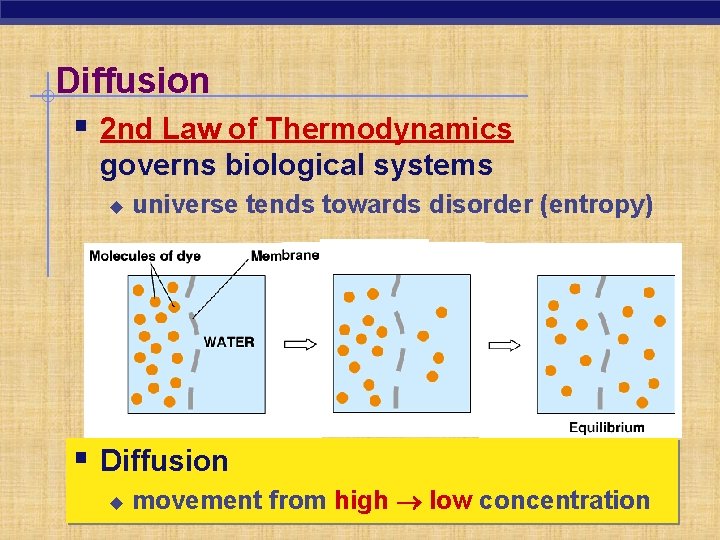
Diffusion § 2 nd Law of Thermodynamics governs biological systems u universe tends towards disorder (entropy) § Diffusion u movement from high low concentration
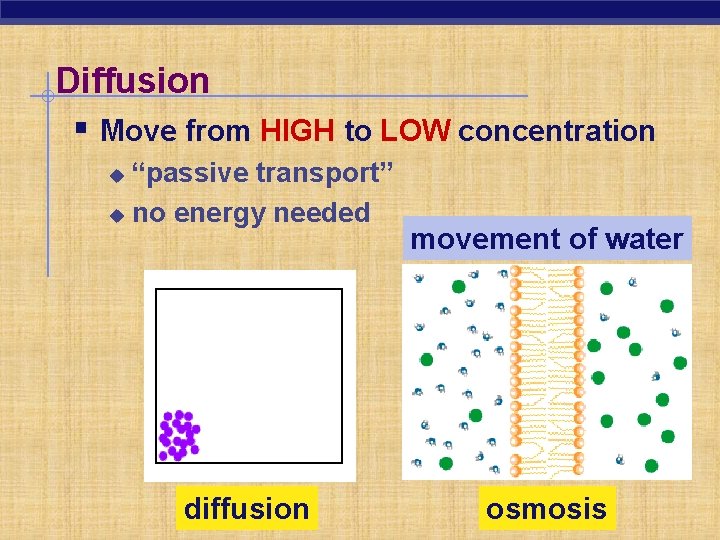
Diffusion § Move from HIGH to LOW concentration “passive transport” u no energy needed u diffusion movement of water osmosis
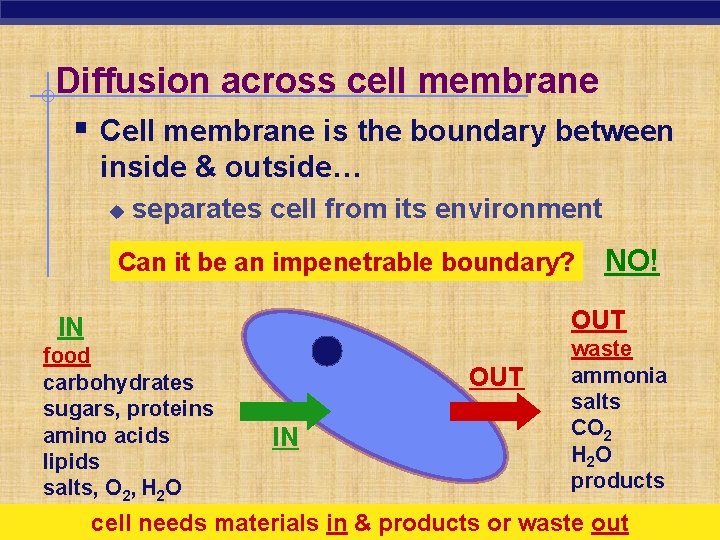
Diffusion across cell membrane § Cell membrane is the boundary between inside & outside… u separates cell from its environment Can it be an impenetrable boundary? NO! OUT IN food carbohydrates sugars, proteins amino acids lipids salts, O 2, H 2 O OUT IN waste ammonia salts CO 2 H 2 O products cell needs materials in & products or waste out
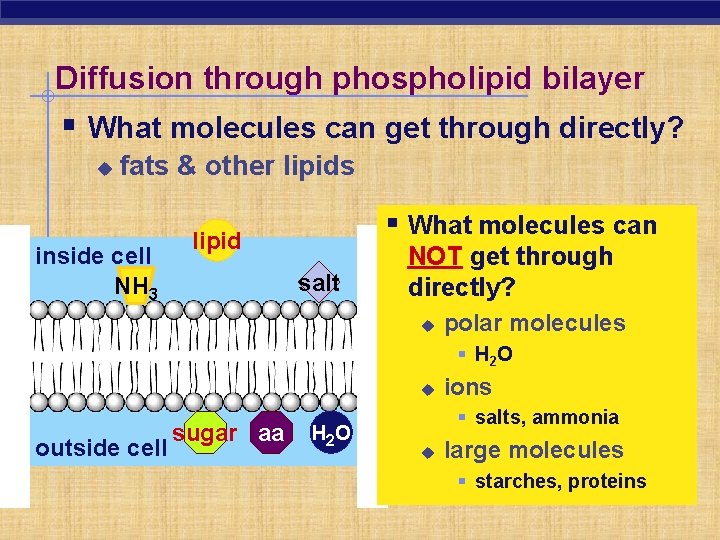
Diffusion through phospholipid bilayer § What molecules can get through directly? u fats & other lipids inside cell NH 3 § What molecules can lipid salt NOT get through directly? u polar molecules § H 2 O u outside cell sugar aa H 2 O ions § salts, ammonia u large molecules § starches, proteins
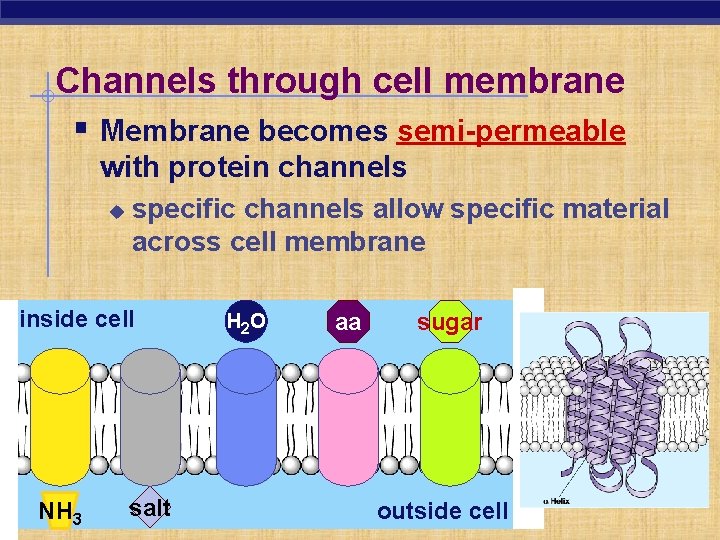
Channels through cell membrane § Membrane becomes semi-permeable with protein channels u specific channels allow specific material across cell membrane inside cell NH 3 salt H 2 O aa sugar outside cell
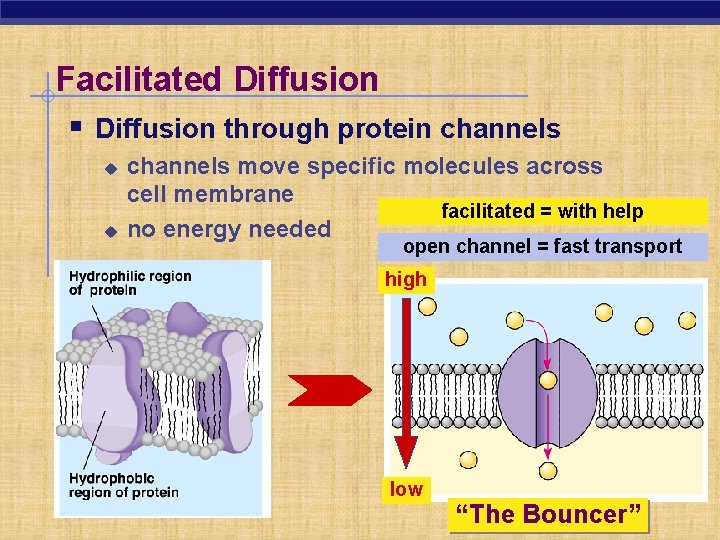
Facilitated Diffusion § Diffusion through protein channels u u channels move specific molecules across cell membrane facilitated = with help no energy needed open channel = fast transport high low “The Bouncer”
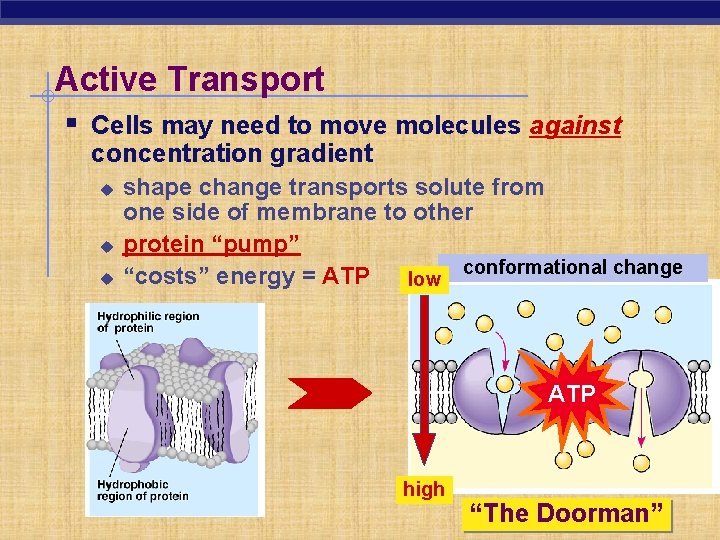
Active Transport § Cells may need to move molecules against concentration gradient u u u shape change transports solute from one side of membrane to other protein “pump” conformational change “costs” energy = ATP low ATP high “The Doorman”
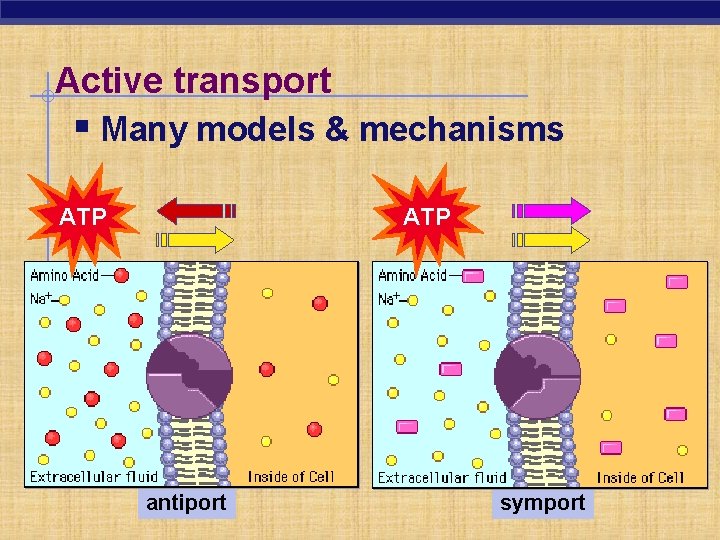
Active transport § Many models & mechanisms ATP antiport symport
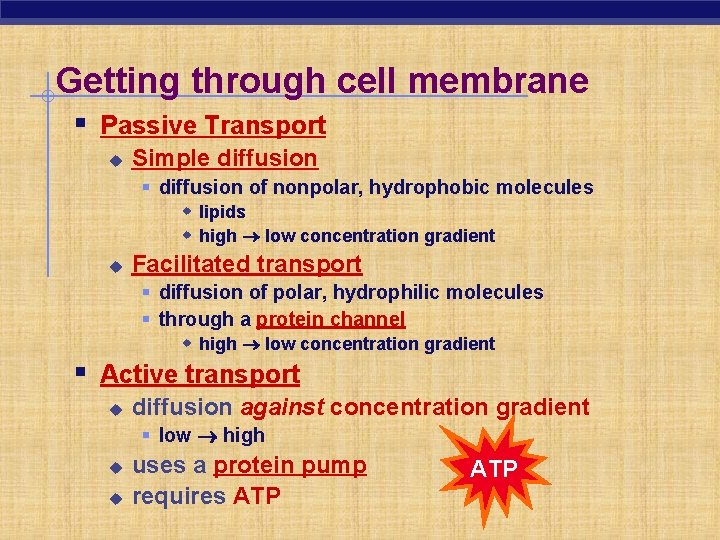
Getting through cell membrane § Passive Transport u Simple diffusion § diffusion of nonpolar, hydrophobic molecules w lipids w high low concentration gradient u Facilitated transport § diffusion of polar, hydrophilic molecules § through a protein channel w high low concentration gradient § Active transport u diffusion against concentration gradient § low high u u uses a protein pump requires ATP

Transport summary simple diffusion facilitated diffusion active transport ATP
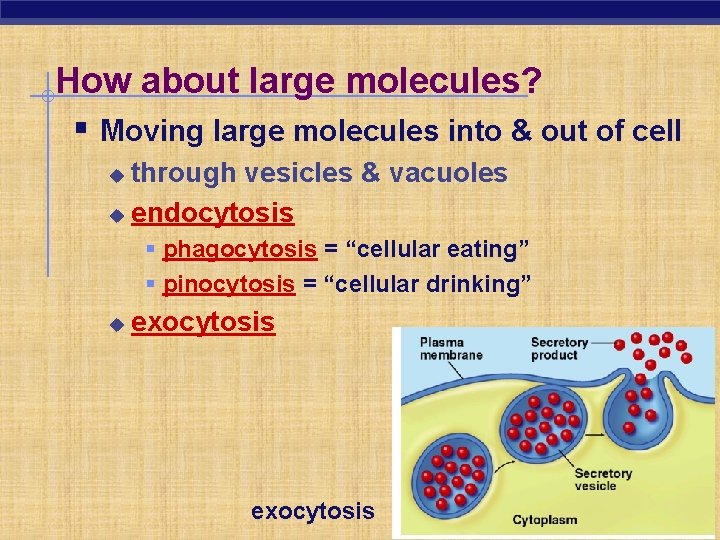
How about large molecules? § Moving large molecules into & out of cell through vesicles & vacuoles u endocytosis u § phagocytosis = “cellular eating” § pinocytosis = “cellular drinking” u exocytosis
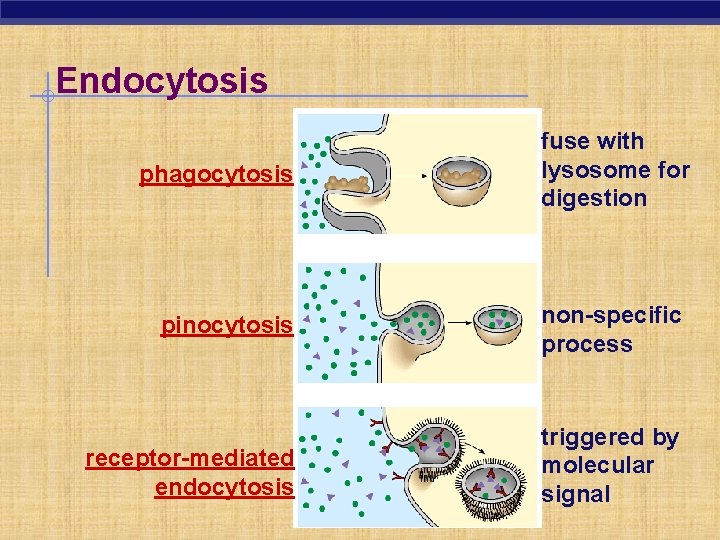
Endocytosis phagocytosis fuse with lysosome for digestion pinocytosis non-specific process receptor-mediated endocytosis triggered by molecular signal
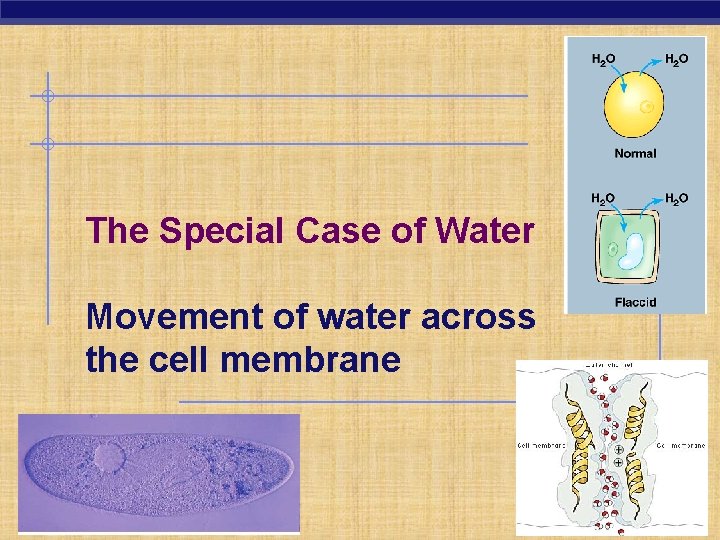
The Special Case of Water Movement of water across the cell membrane 2007 -2008
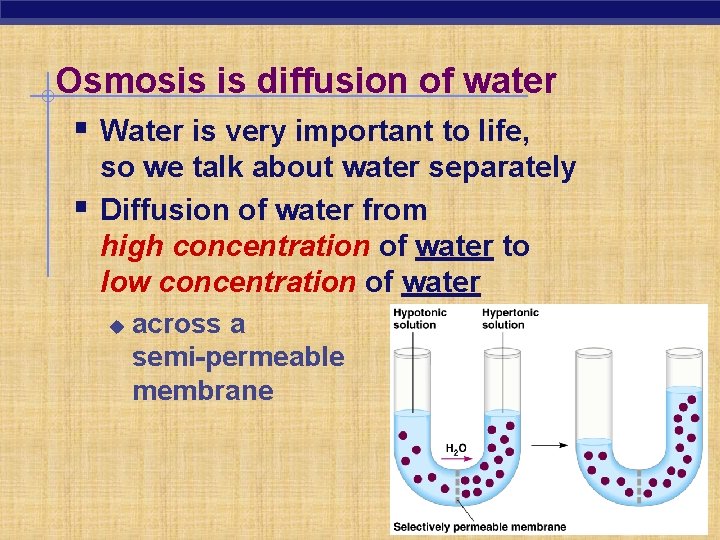
Osmosis is diffusion of water § Water is very important to life, § so we talk about water separately Diffusion of water from high concentration of water to low concentration of water u across a semi-permeable membrane
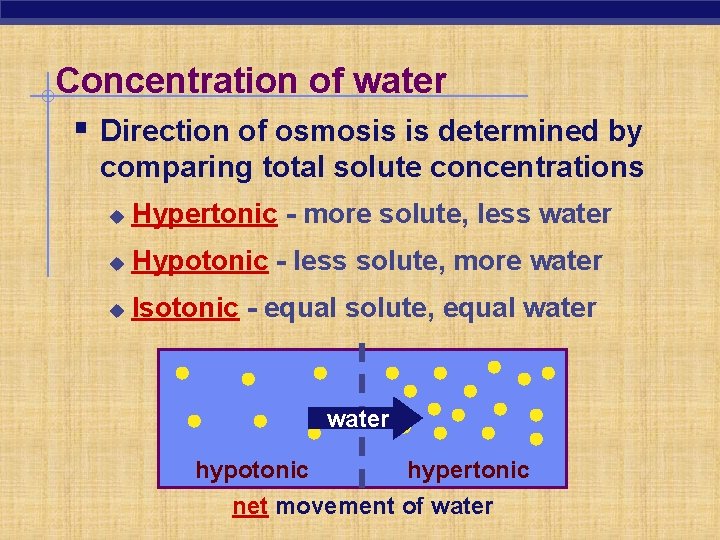
Concentration of water § Direction of osmosis is determined by comparing total solute concentrations u Hypertonic - more solute, less water u Hypotonic - less solute, more water u Isotonic - equal solute, equal water hypotonic hypertonic net movement of water
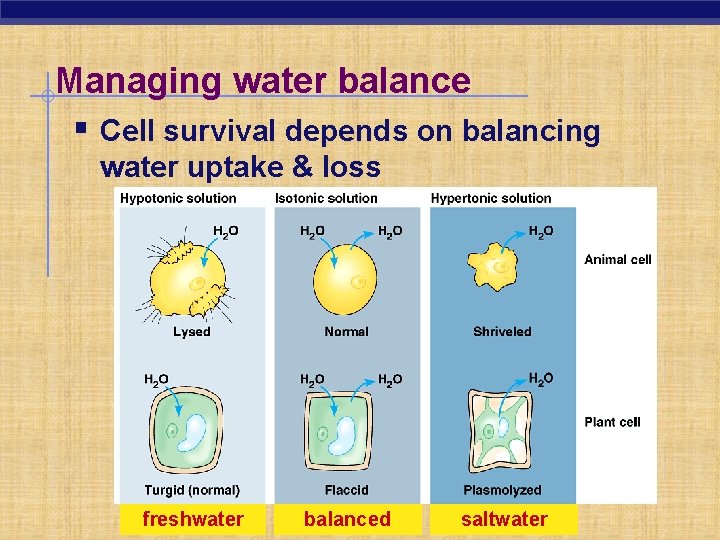
Managing water balance § Cell survival depends on balancing water uptake & loss freshwater balanced saltwater
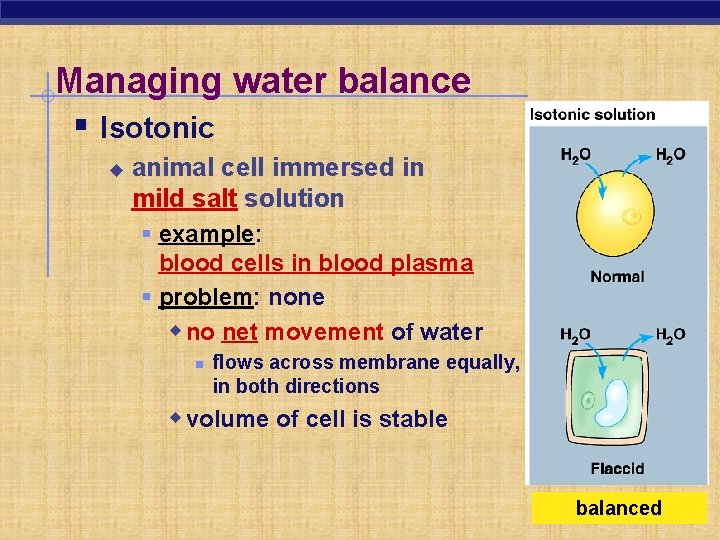
Managing water balance § Isotonic u animal cell immersed in mild salt solution § example: blood cells in blood plasma § problem: none w no net movement of water n flows across membrane equally, in both directions w volume of cell is stable balanced
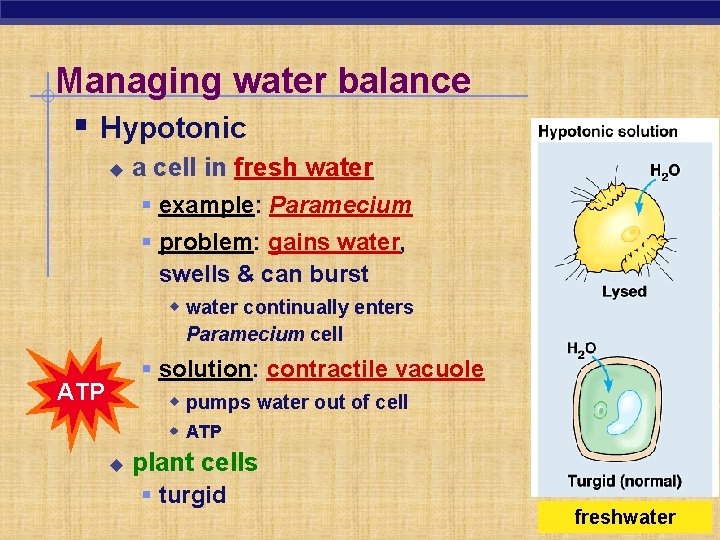
Managing water balance § Hypotonic u a cell in fresh water § example: Paramecium § problem: gains water, swells & can burst w water continually enters Paramecium cell § solution: contractile vacuole w pumps water out of cell ATP w ATP u plant cells § turgid freshwater
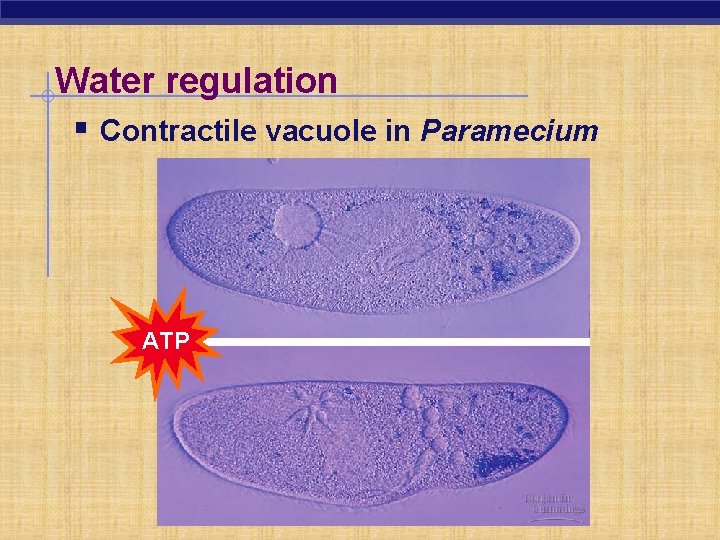
Water regulation § Contractile vacuole in Paramecium ATP
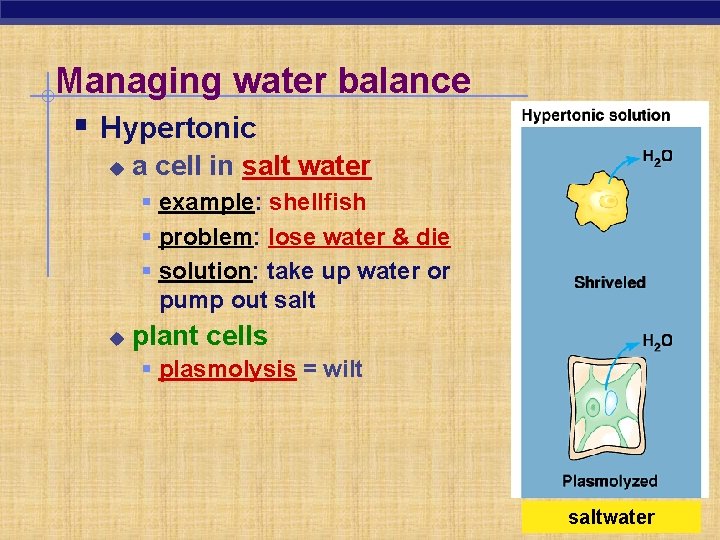
Managing water balance § Hypertonic u a cell in salt water § example: shellfish § problem: lose water & die § solution: take up water or pump out salt u plant cells § plasmolysis = wilt saltwater
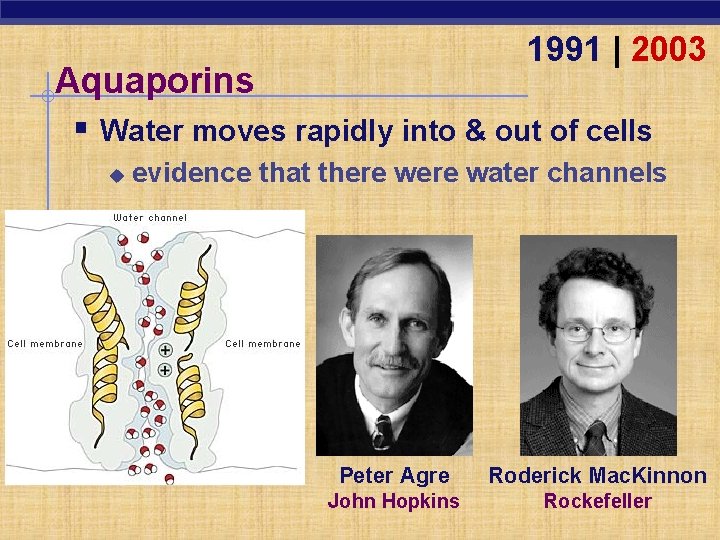
1991 | 2003 Aquaporins § Water moves rapidly into & out of cells u evidence that there water channels Peter Agre Roderick Mac. Kinnon John Hopkins Rockefeller
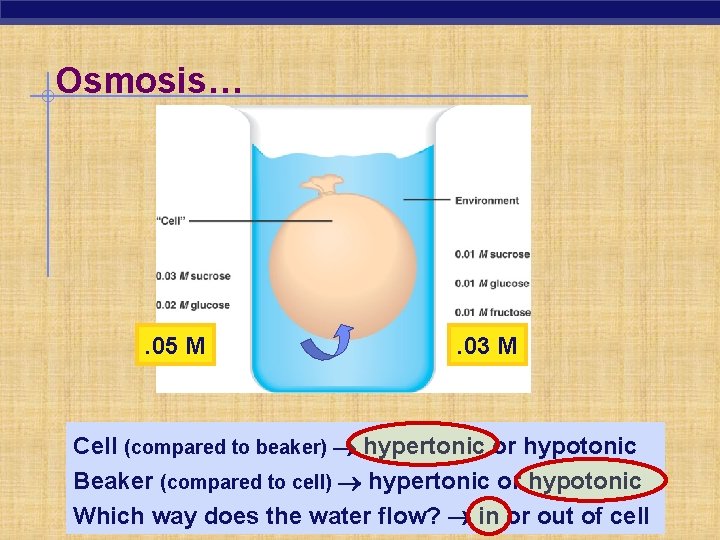
Osmosis… . 05 M . 03 M Cell (compared to beaker) hypertonic or hypotonic Beaker (compared to cell) hypertonic or hypotonic Which way does the water flow? in or out of cell
Any Questions? ?
- Slides: 41