
The Cell Membrane Mader Biology Chapter 5 Membrane
The Cell Membrane Mader Biology, Chapter 5
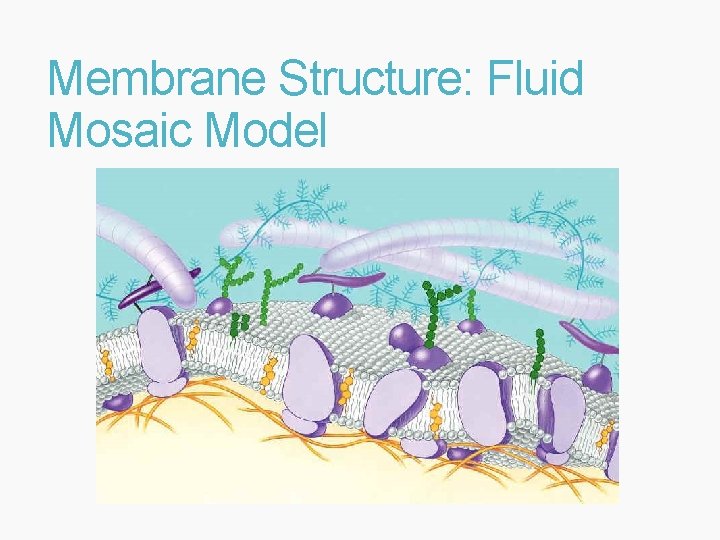
Membrane Structure: Fluid Mosaic Model
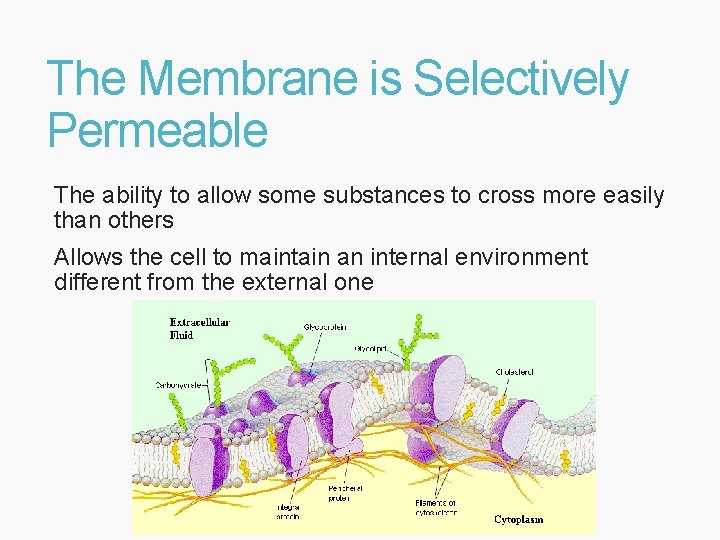
The Membrane is Selectively Permeable The ability to allow some substances to cross more easily than others Allows the cell to maintain an internal environment different from the external one
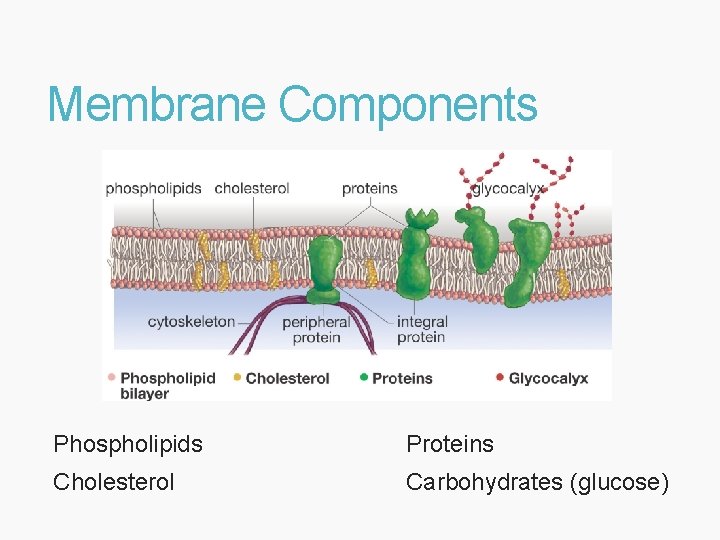
Membrane Components Phospholipids Proteins Cholesterol Carbohydrates (glucose)
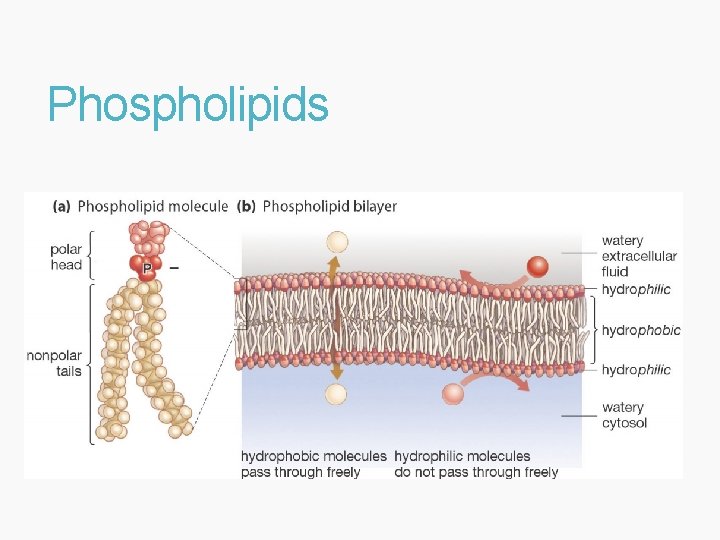
Phospholipids
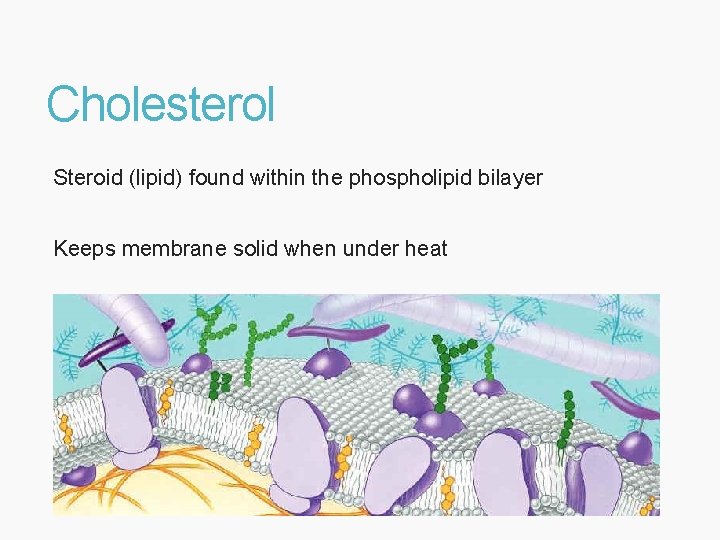
Cholesterol Steroid (lipid) found within the phospholipid bilayer Keeps membrane solid when under heat
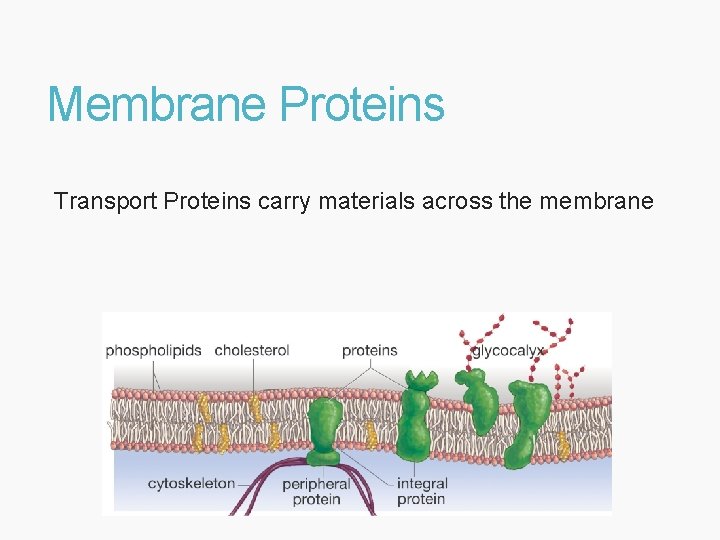
Membrane Proteins Transport Proteins carry materials across the membrane
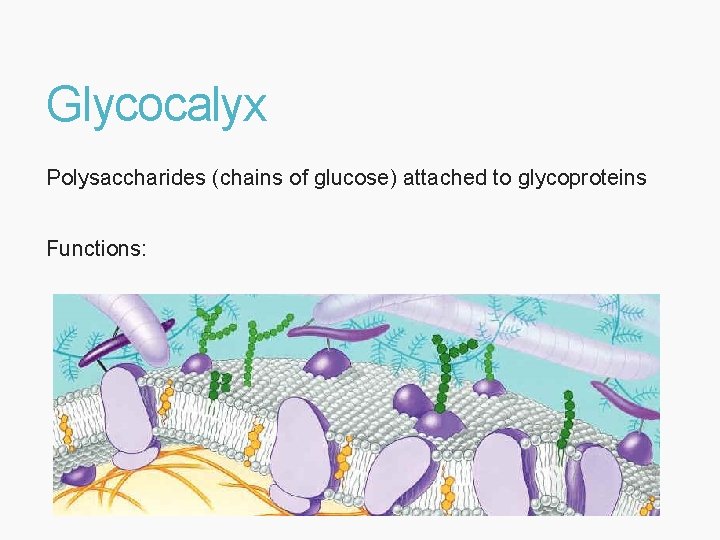
Glycocalyx Polysaccharides (chains of glucose) attached to glycoproteins Functions:
Membrane Transport
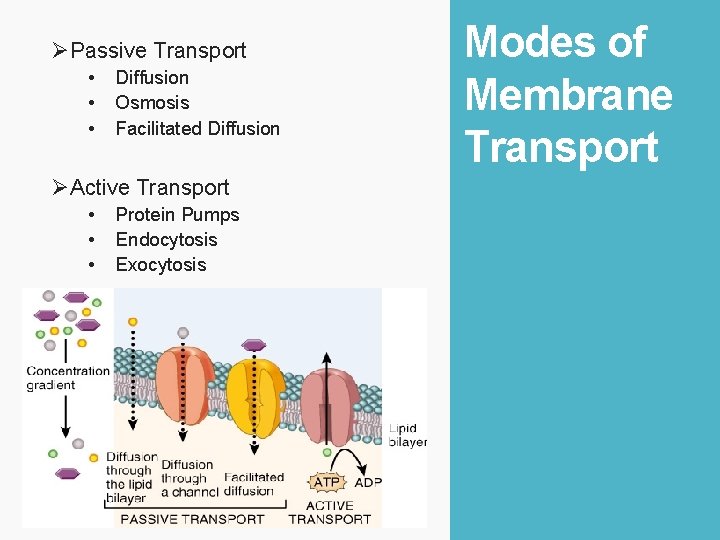
ØPassive Transport • • • Diffusion Osmosis Facilitated Diffusion ØActive Transport • • • Protein Pumps Endocytosis Exocytosis Modes of Membrane Transport
Passive Transport Goes “with” the concentration gradient; no ATP energy required
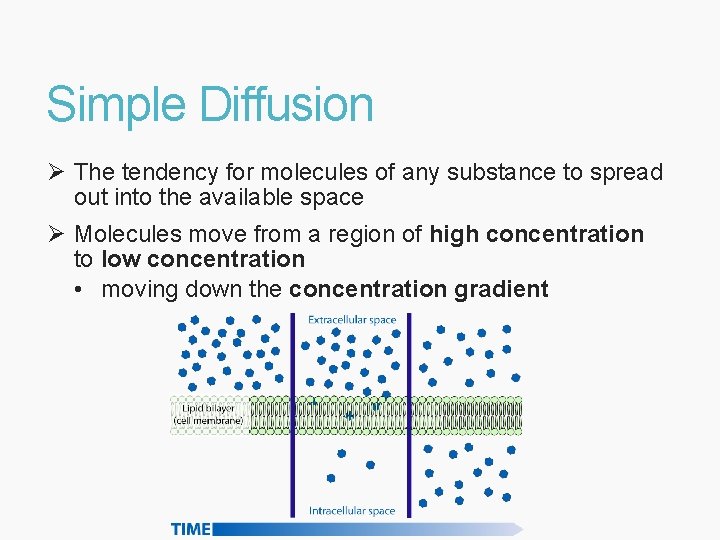
Simple Diffusion Ø The tendency for molecules of any substance to spread out into the available space Ø Molecules move from a region of high concentration to low concentration • moving down the concentration gradient
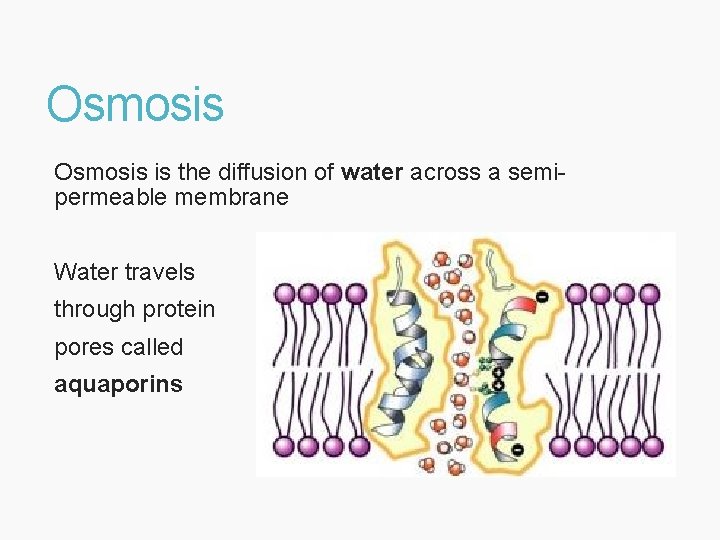
Osmosis is the diffusion of water across a semipermeable membrane Water travels through protein pores called aquaporins
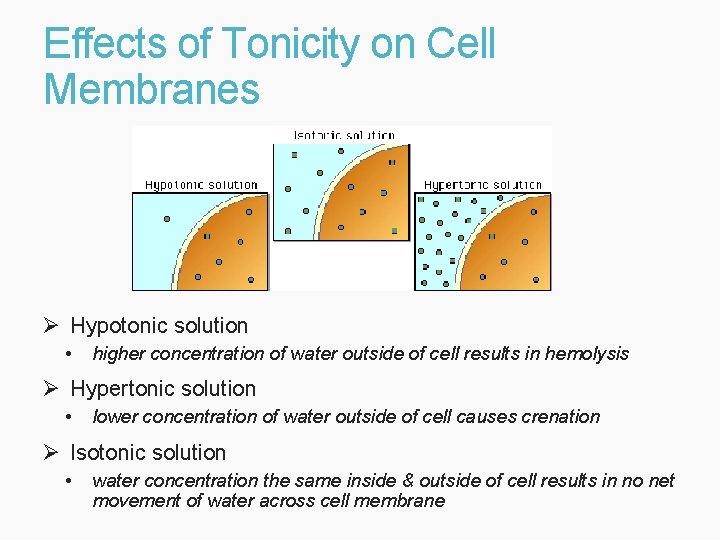
Effects of Tonicity on Cell Membranes Ø Hypotonic solution • higher concentration of water outside of cell results in hemolysis Ø Hypertonic solution • lower concentration of water outside of cell causes crenation Ø Isotonic solution • water concentration the same inside & outside of cell results in no net movement of water across cell membrane
Osmosis Water always moves from a hypotonic solution to a hypertonic solution What happens to cells when placed in: • Hypotonic solutions? • Hypertonic solutions? • Isotonic solutions?
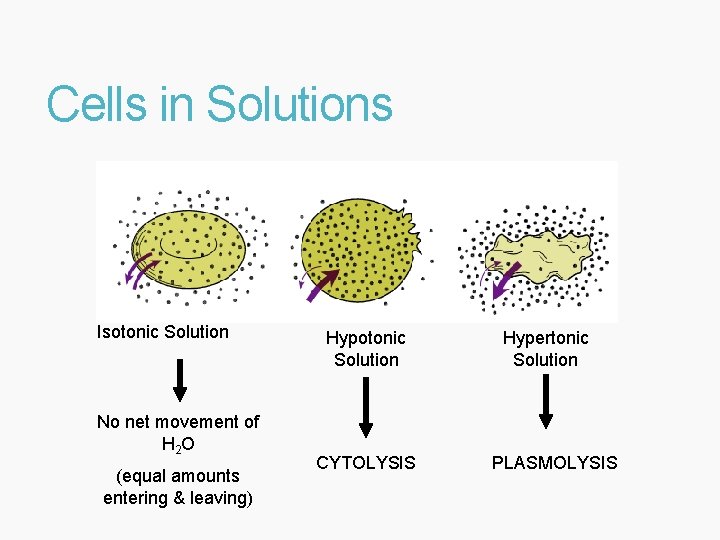
Cells in Solutions Isotonic Solution No net movement of H 2 O (equal amounts entering & leaving) Hypotonic Solution CYTOLYSIS Hypertonic Solution PLASMOLYSIS
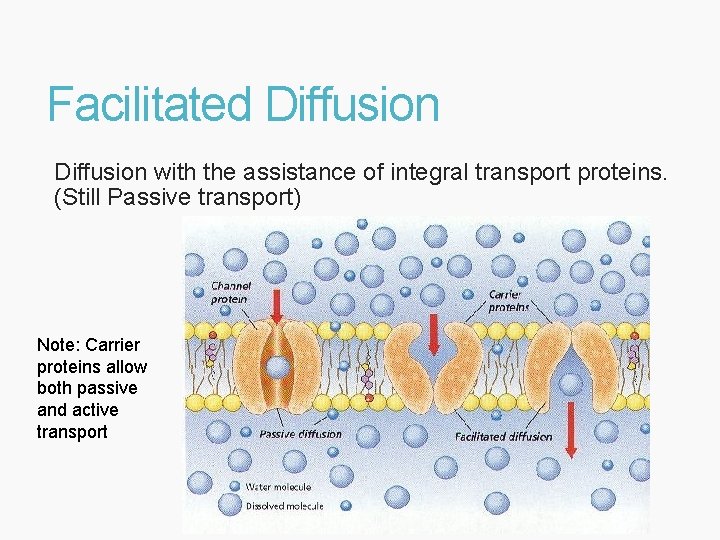
Facilitated Diffusion with the assistance of integral transport proteins. (Still Passive transport) Note: Carrier proteins allow both passive and active transport

Facilitated Diffusion Ø Transport proteins • Provide corridors allowing a specific molecule or ion to cross membrane • Undergo a shape change that translocates the molecule across the membrane Ø Still Passive Transport • Process requires no energy • Particles are moving from an area of high concentration to low concentration
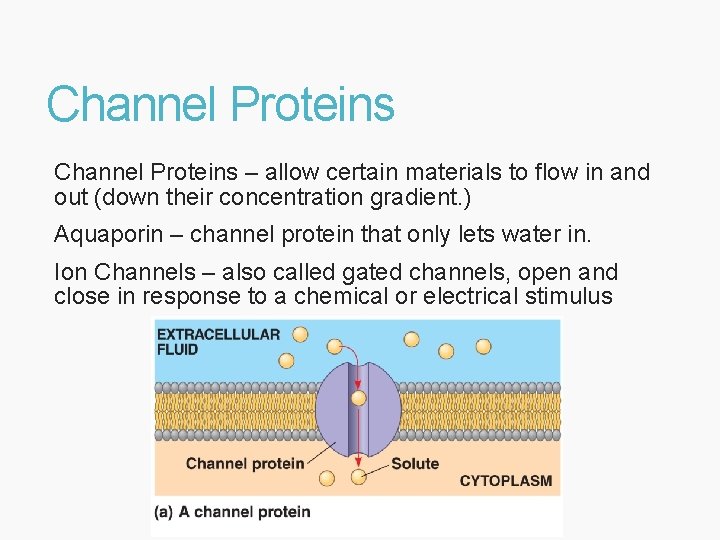
Channel Proteins – allow certain materials to flow in and out (down their concentration gradient. ) Aquaporin – channel protein that only lets water in. Ion Channels – also called gated channels, open and close in response to a chemical or electrical stimulus
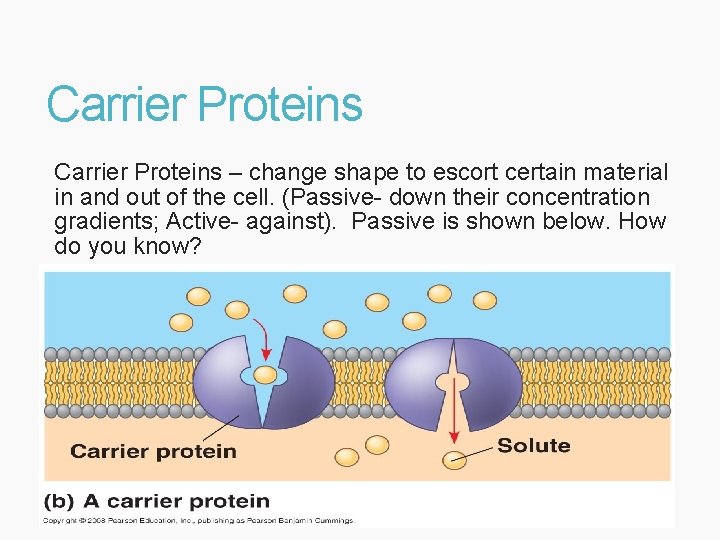
Carrier Proteins – change shape to escort certain material in and out of the cell. (Passive- down their concentration gradients; Active- against). Passive is shown below. How do you know?
Active Transport Goes “against” the concentration gradient (“low to high”); requires ATP energy
Active Transport Movement of solutes AGAINST the concentration gradient. Goes from low to high concentration. Requires energy input by the cell ATP supplies this energy
Active Transport Carrier proteins are needed to transport molecules across the membrane against the concentration gradient and require an expenditure of energy Often referred to as “pumps”. Ex: Na+ and K+ for nerve (neuron) impulses
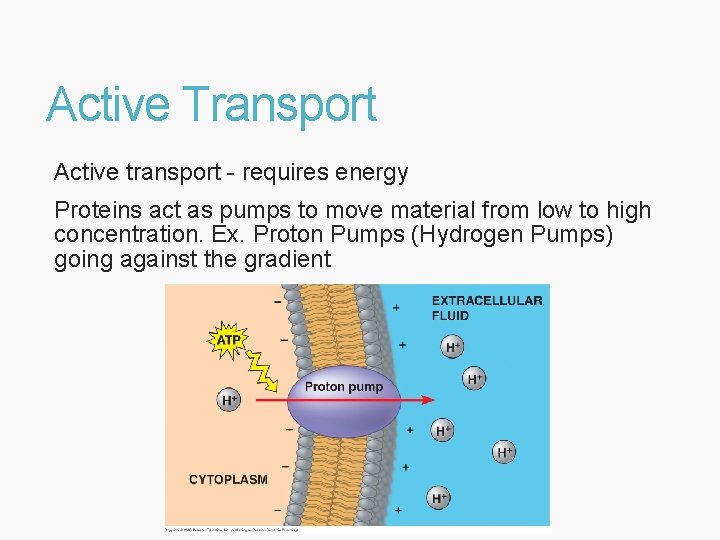
Active Transport Active transport - requires energy Proteins act as pumps to move material from low to high concentration. Ex. Proton Pumps (Hydrogen Pumps) going against the gradient
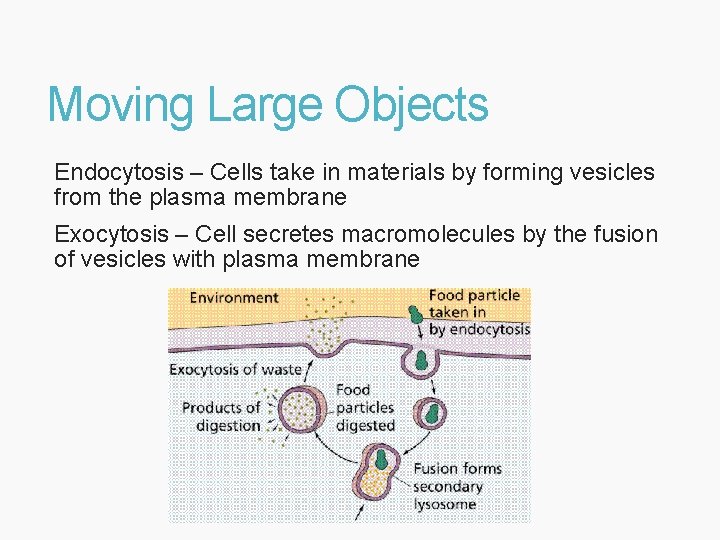
Moving Large Objects Endocytosis – Cells take in materials by forming vesicles from the plasma membrane Exocytosis – Cell secretes macromolecules by the fusion of vesicles with plasma membrane
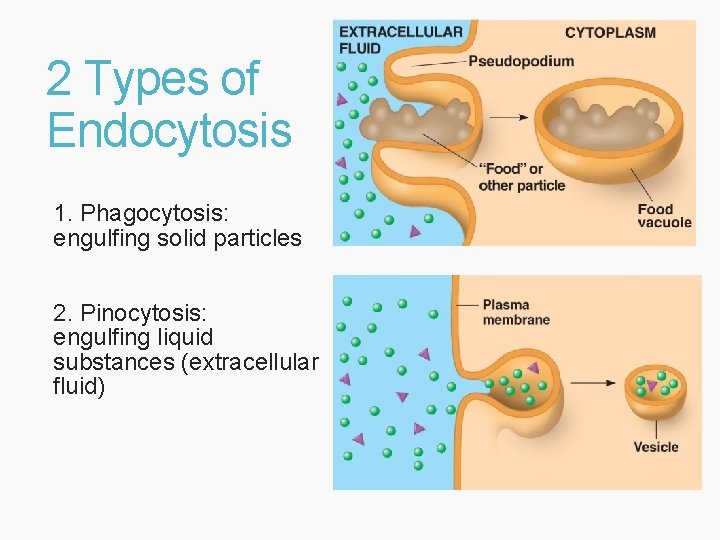
2 Types of Endocytosis 1. Phagocytosis: engulfing solid particles 2. Pinocytosis: engulfing liquid substances (extracellular fluid)
- Slides: 26