
The Cell Membrane Aside from phospholipids the cell
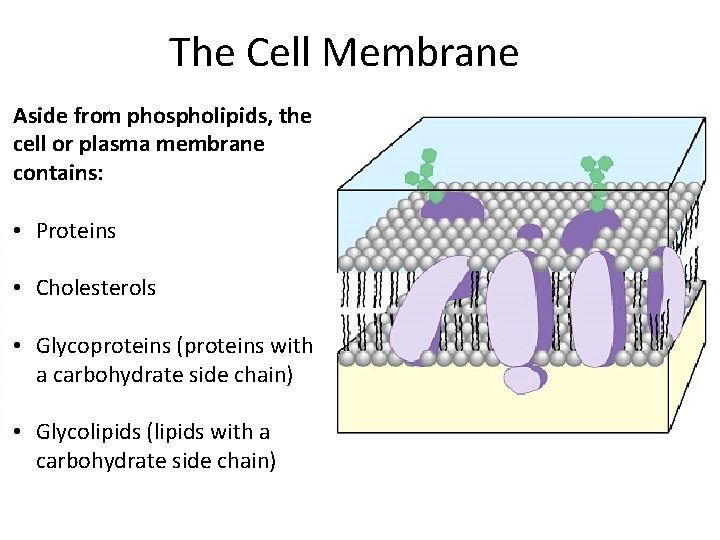
The Cell Membrane Aside from phospholipids, the cell or plasma membrane contains: • Proteins • Cholesterols • Glycoproteins (proteins with a carbohydrate side chain) • Glycolipids (lipids with a carbohydrate side chain)
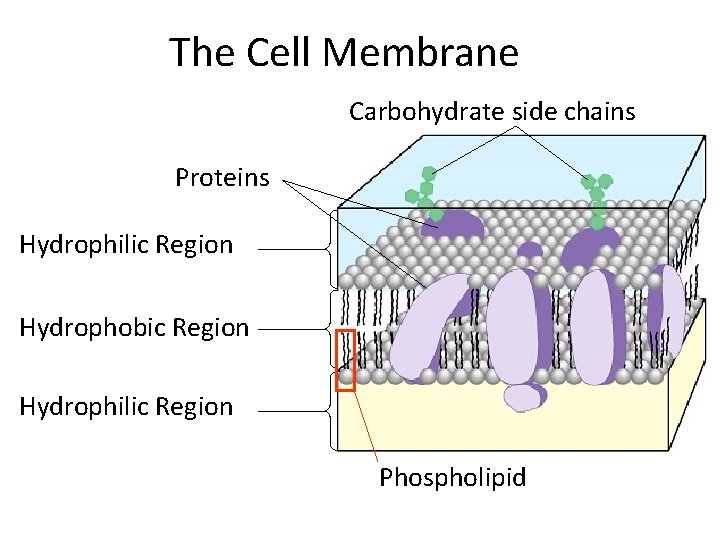
The Cell Membrane Carbohydrate side chains Proteins Hydrophilic Region Hydrophobic Region Hydrophilic Region TEM of a red blood cell Phospholipid
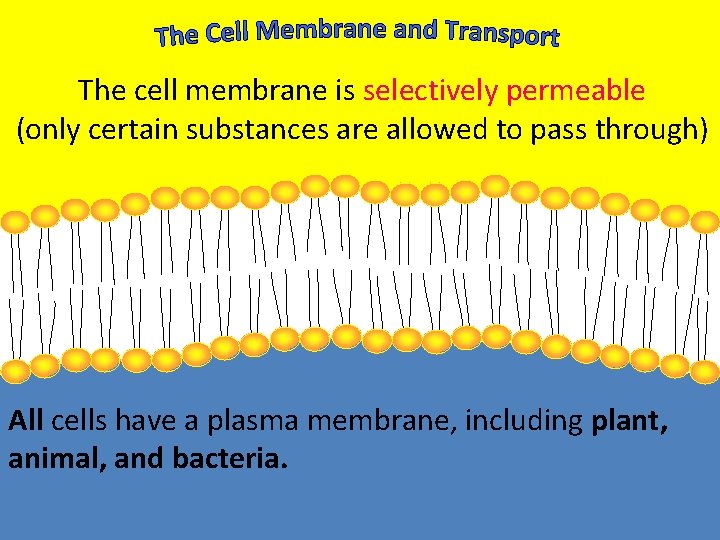
The cell membrane is selectively permeable (only certain substances are allowed to pass through) All cells have a plasma membrane, including plant, animal, and bacteria.
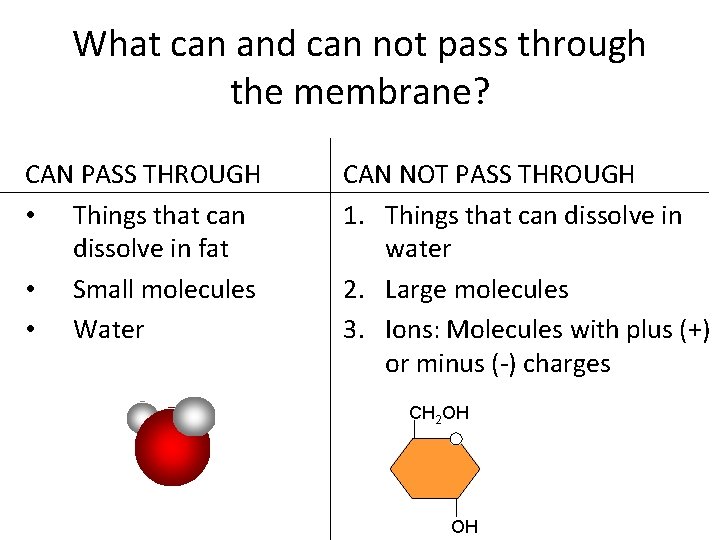
What can and can not pass through the membrane? CAN PASS THROUGH • Things that can dissolve in fat • Small molecules • Water CAN NOT PASS THROUGH 1. Things that can dissolve in water 2. Large molecules 3. Ions: Molecules with plus (+) or minus (-) charges CH 2 OH OH
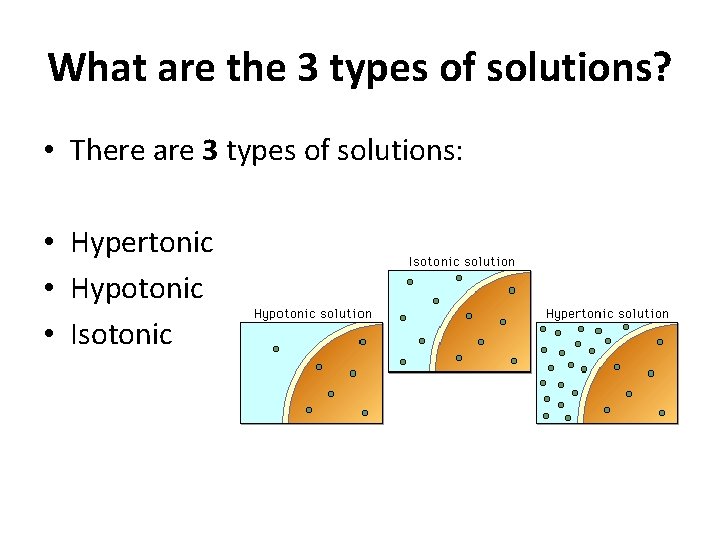
What are the 3 types of solutions? • There are 3 types of solutions: • Hypertonic • Hypotonic • Isotonic
![What is an Isotonic Solution? • [Water] inside cell = [Water] outside cell •](http://slidetodoc.com/presentation_image_h2/be60186eeb0b352c0233a6b2632dead7/image-6.jpg "What is an Isotonic Solution? • [Water] inside cell = [Water] outside cell •")
What is an Isotonic Solution? • [Water] inside cell = [Water] outside cell • Cell is at equilibrium – Molecules are equally distributed in end • The amount of water entering the cell = the amount of water leaving the cell 95% water
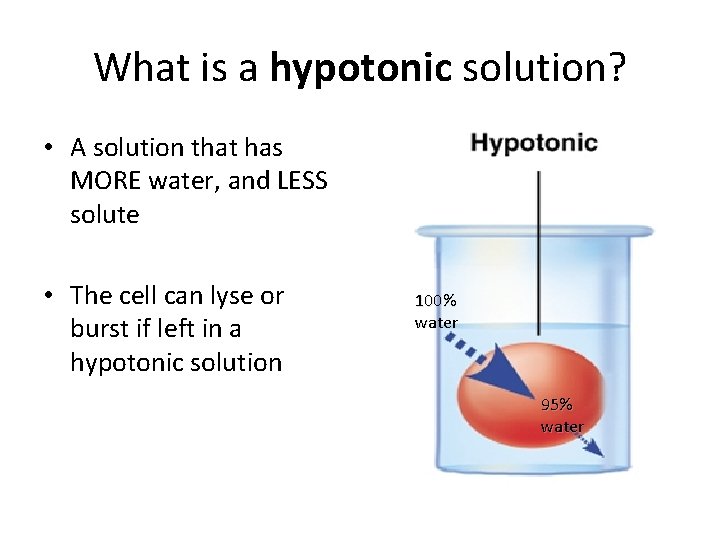
What is a hypotonic solution? • A solution that has MORE water, and LESS solute • The cell can lyse or burst if left in a hypotonic solution 100% water 95% water
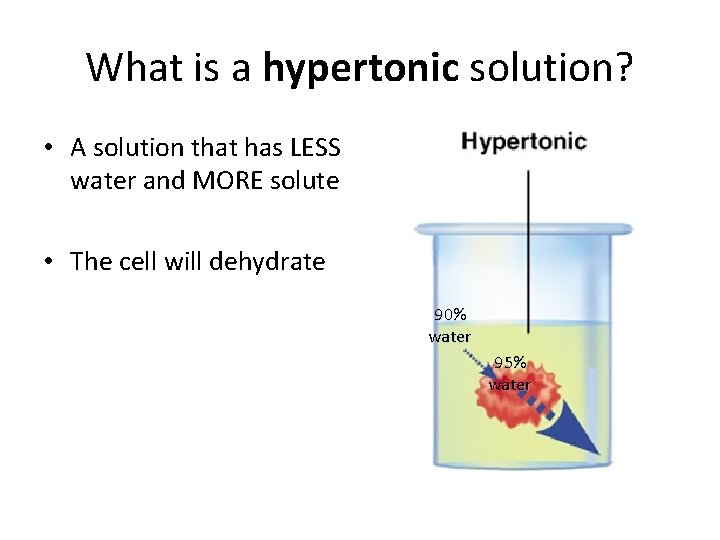
What is a hypertonic solution? • A solution that has LESS water and MORE solute • The cell will dehydrate 90% water 95% water
Which direction does water flow? a) Water doesn’t flow at all. b) Water flows from an area of low concentration to an area of high concentration. c) Water flows from an area of high concentration to an area of low concentration.
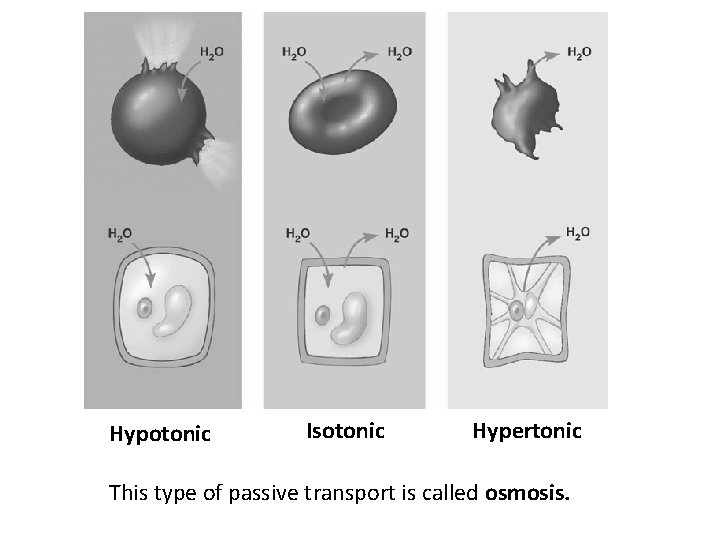
Hypotonic Isotonic Hypertonic This type of passive transport is called osmosis.
- Slides: 10