
The Cell Membrane and Regulation Function of a
The Cell Membrane and Regulation
Function of a Cell Membrane n Regulation of what moves into and out of a cell n Maintains Homeostasis
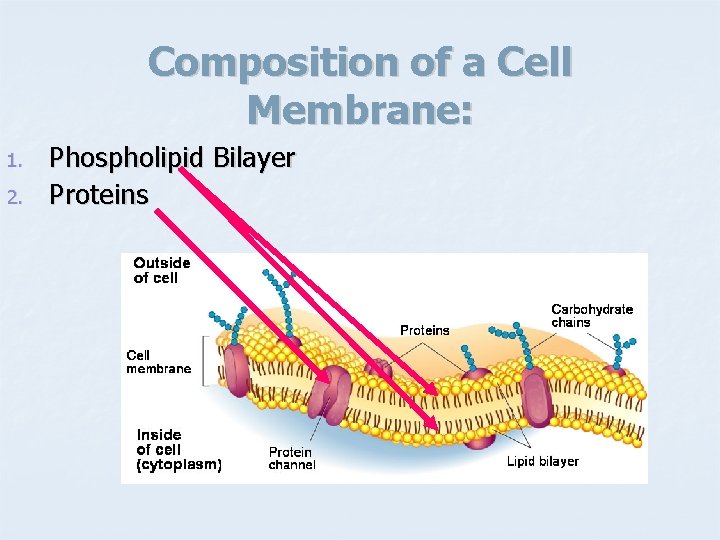
Composition of a Cell Membrane: 1. 2. Phospholipid Bilayer Proteins
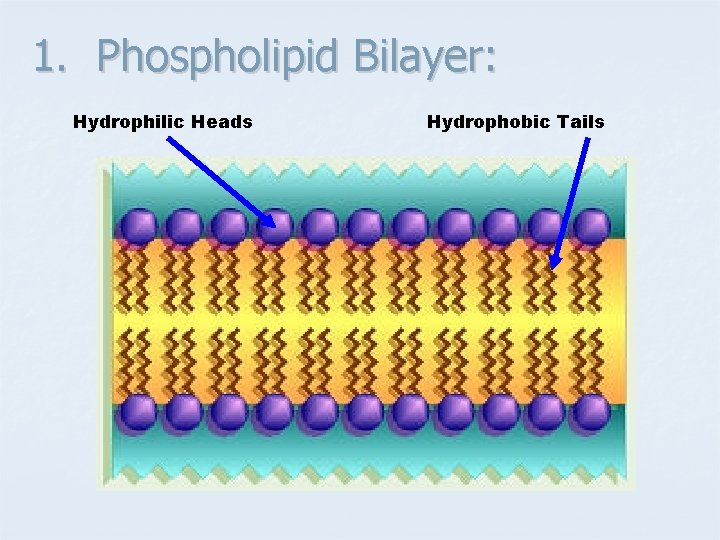
1. Phospholipid Bilayer: Hydrophilic Heads Hydrophobic Tails
Two Important Terms: 1. 2. Hydrophilic Hydrophobic
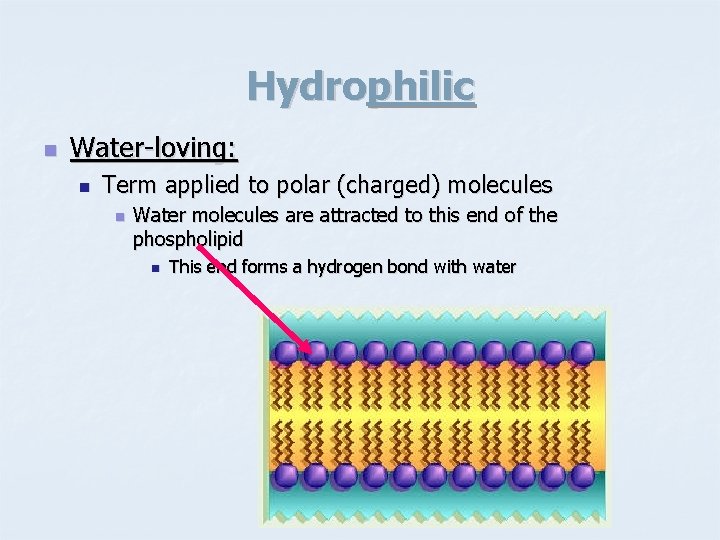
Hydrophilic n Water-loving: n Term applied to polar (charged) molecules n Water molecules are attracted to this end of the phospholipid n This end forms a hydrogen bond with water
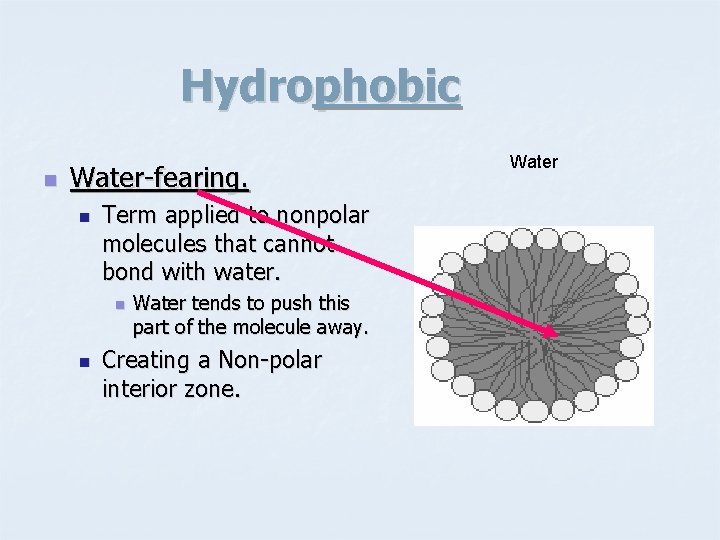
Hydrophobic n Water-fearing. n Term applied to nonpolar molecules that cannot bond with water. n n Water tends to push this part of the molecule away. Creating a Non-polar interior zone. Water
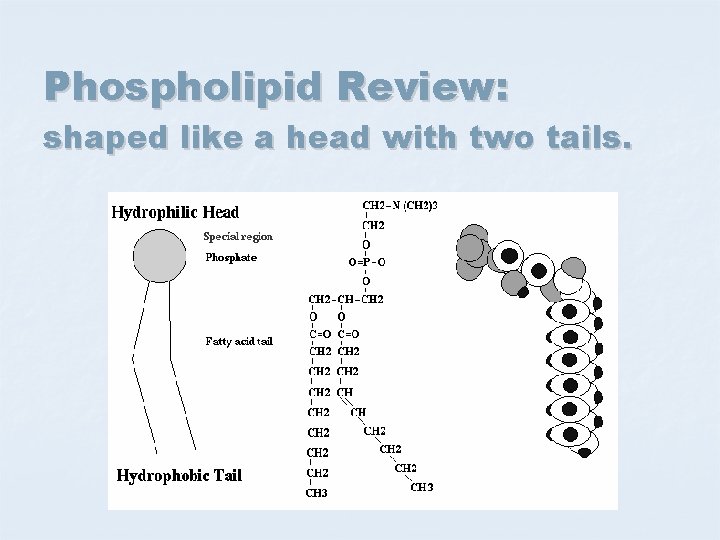
Phospholipid Review: shaped like a head with two tails.
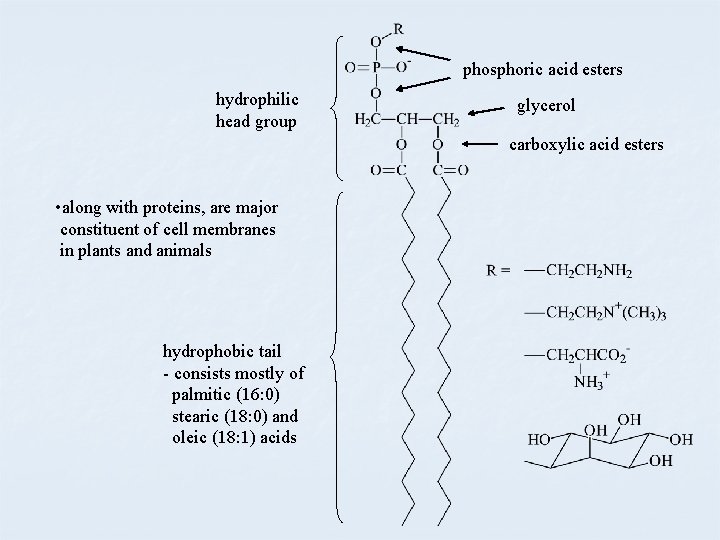
phosphoric acid esters hydrophilic head group glycerol carboxylic acid esters • along with proteins, are major constituent of cell membranes in plants and animals hydrophobic tail - consists mostly of palmitic (16: 0) stearic (18: 0) and oleic (18: 1) acids
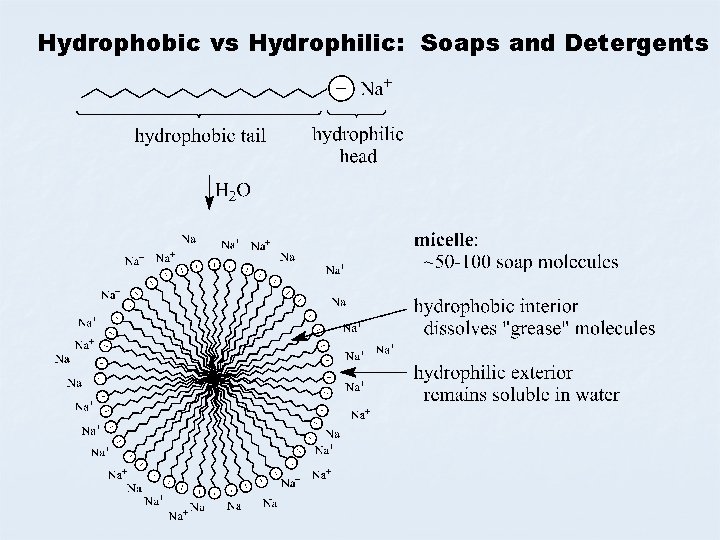
Hydrophobic vs Hydrophilic: Soaps and Detergents
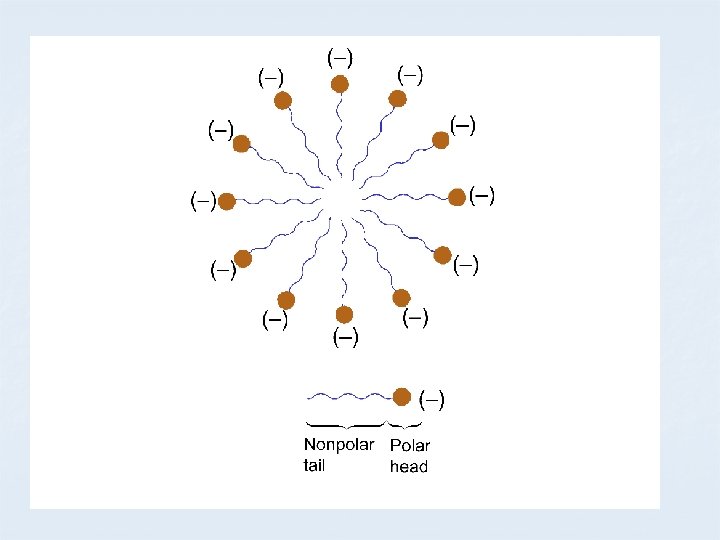
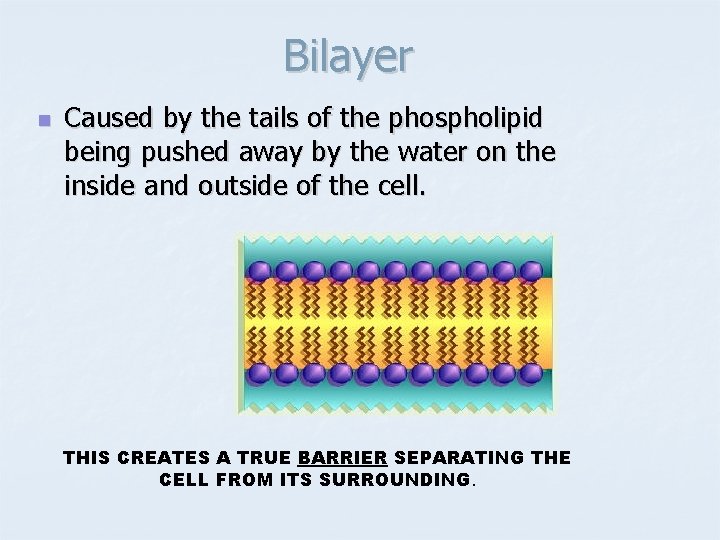
Bilayer n Caused by the tails of the phospholipid being pushed away by the water on the inside and outside of the cell. THIS CREATES A TRUE BARRIER SEPARATING THE CELL FROM ITS SURROUNDING.
“Fluid Mosaic Model” n Fluid: The phospholipid bilayer is fluid like a soap bubble. n Lipids move around in their side of the bilayer n Lipid molecules do NOT move from layer to the other. n n They can move side to side but not up and down.
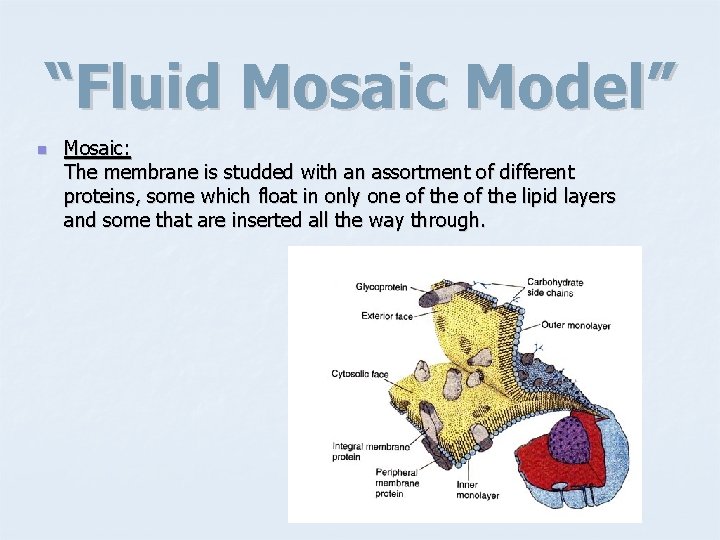
“Fluid Mosaic Model” n Mosaic: The membrane is studded with an assortment of different proteins, some which float in only one of the lipid layers and some that are inserted all the way through.
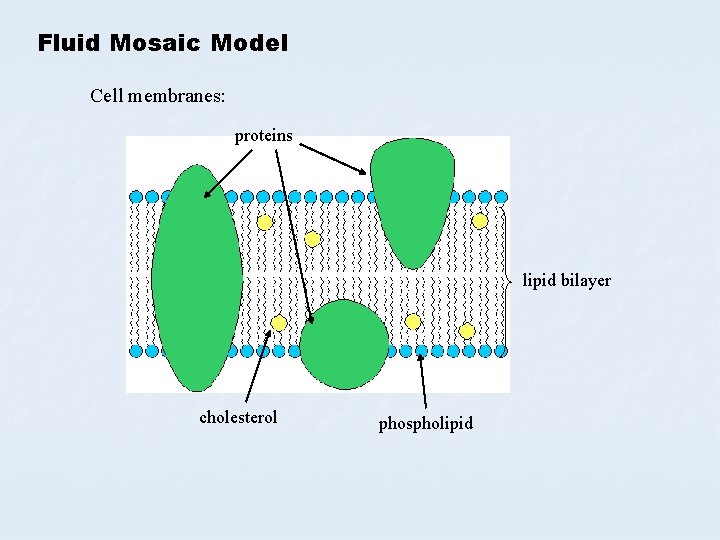
Fluid Mosaic Model Cell membranes: proteins lipid bilayer cholesterol phospholipid
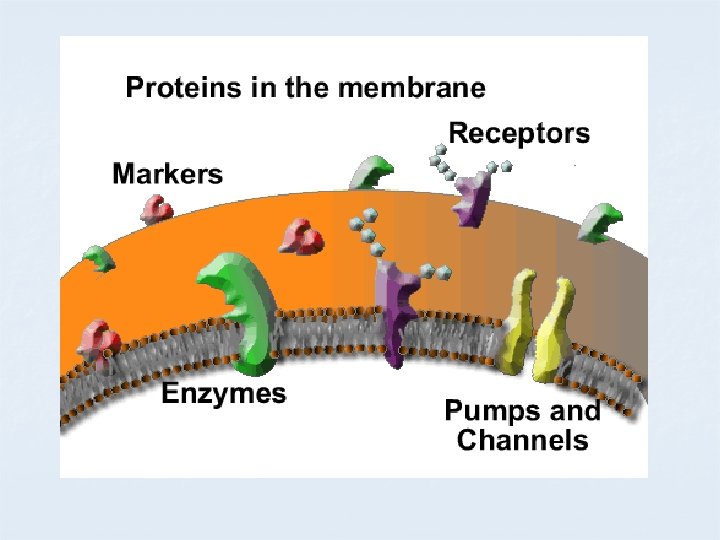
2. Role of proteins on the surface of the membrane 1. 2. 3. Receptor Proteins Marker Proteins Channel Proteins
Receptor Protein: n n n Transmits info from the world outside to the interior of the cell. Specifically shaped proteins that fit all the way through the lipid bilayer. On the outside of the cell, a specifically shaped molecule fits into the protein (like a hand in a glove) n which in turn causes a change in the opposite side of the membrane. This causes a change in the cell. n Ex. Hormones
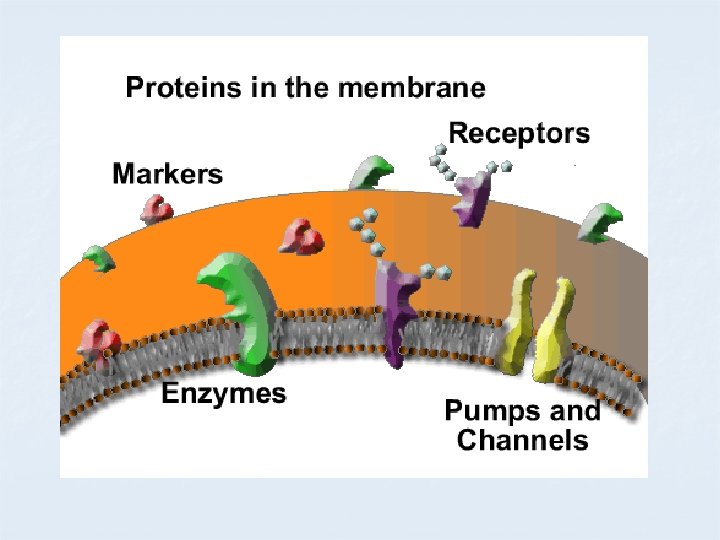
Marker Protein: n n n Proteins that allow the body to recognize self and non self. Found only in the outer layer of the bilayer Ex. Transplants n Your body relies on marker proteins to tell one cell from another.
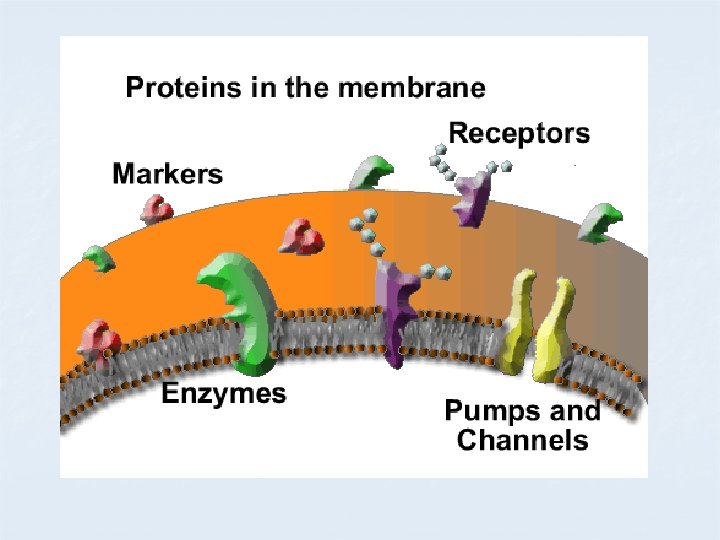
Channel Protein: n Specifically shaped proteins that fit all the way through the lipid bilayer. used to transport polar sugars, amino acids and ions (Na+). n Particular channels fit only certain particles n n molecule must fit a certain shape, similar to a lock and key
Types of Membranes n Permeable: n n Impermeable: n n nearly all molecules can pass through Nothing can pass through Semipermeable (Selectively Permeable): n many molecules can pass, many cannot
- Slides: 23