
The Cell Membrane and Movements of Molecules The
The Cell Membrane and Movements of Molecules
The Plasma Membrane n The Plasma Membrane (aka cell membrane) u Boundary between the cell and its environment u Controls what enters and leaves the cell--- performing homeostasis u Has selective permeability- the ability to allow some molecules through the membrane -but not others (aka semi-permeability)
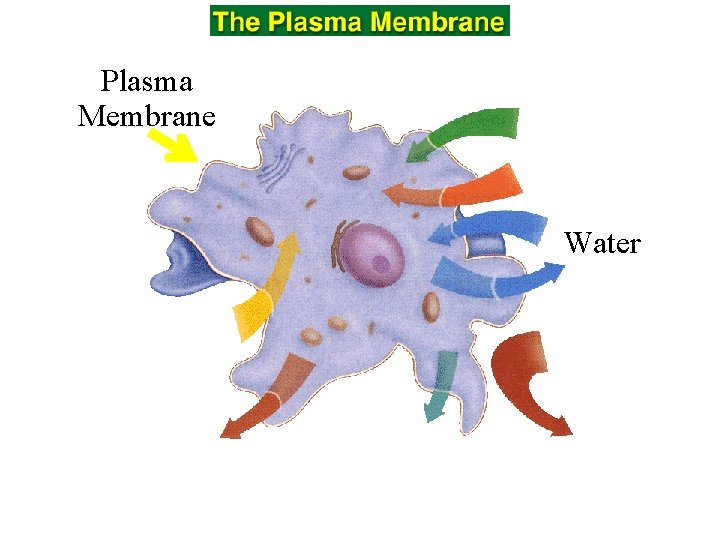
Plasma Membrane Water
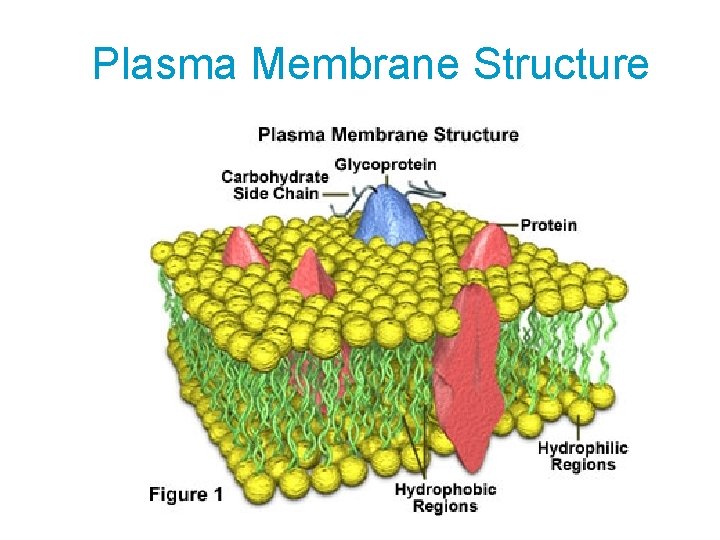
Plasma Membrane Structure
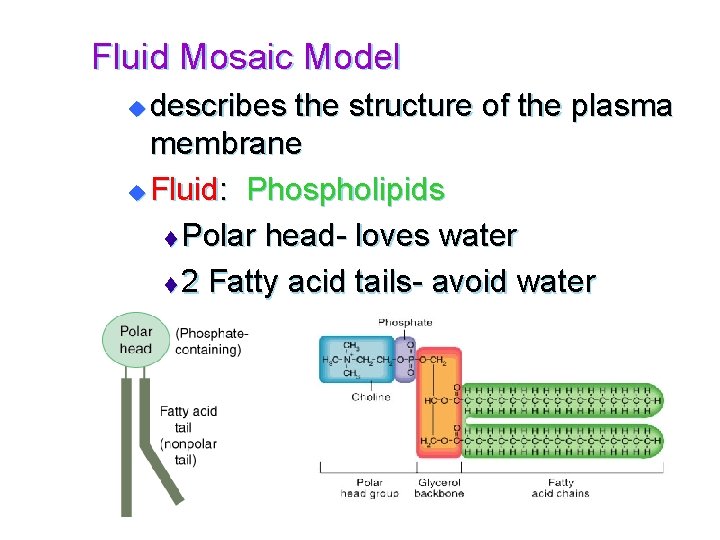
Fluid Mosaic Model describes the structure of the plasma membrane u Fluid: Phospholipids t Polar head- loves water t 2 Fatty acid tails- avoid water u
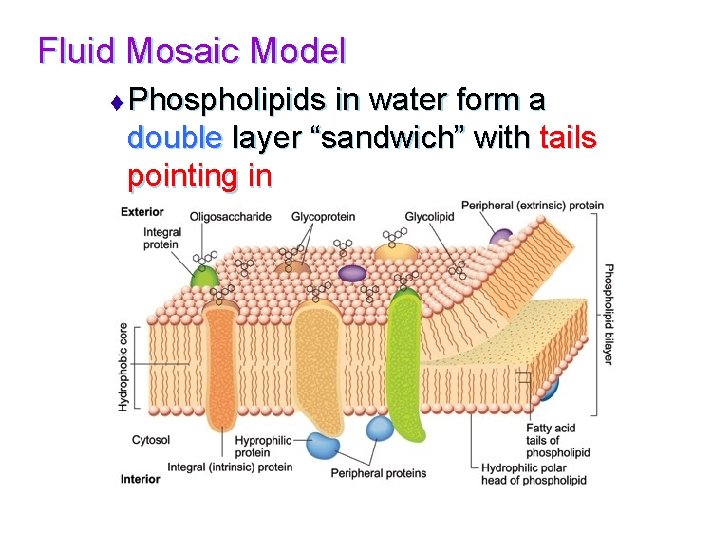
Fluid Mosaic Model t Phospholipids in water form a double layer “sandwich” with tails pointing in
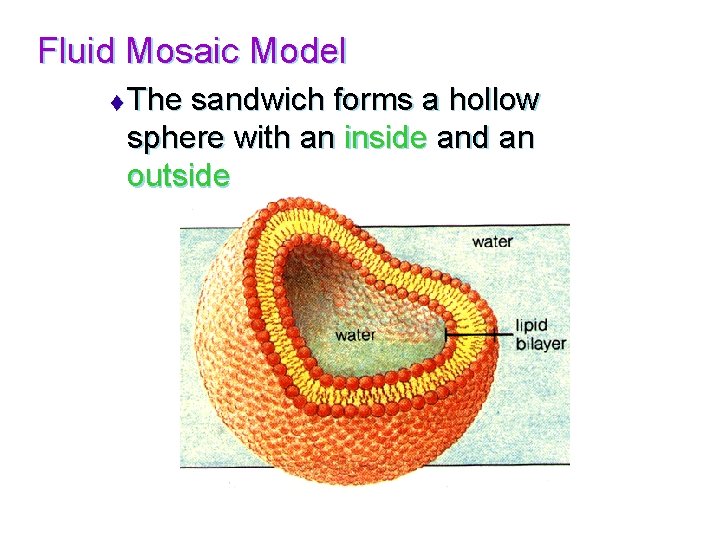
Fluid Mosaic Model t The sandwich forms a hollow sphere with an inside and an outside
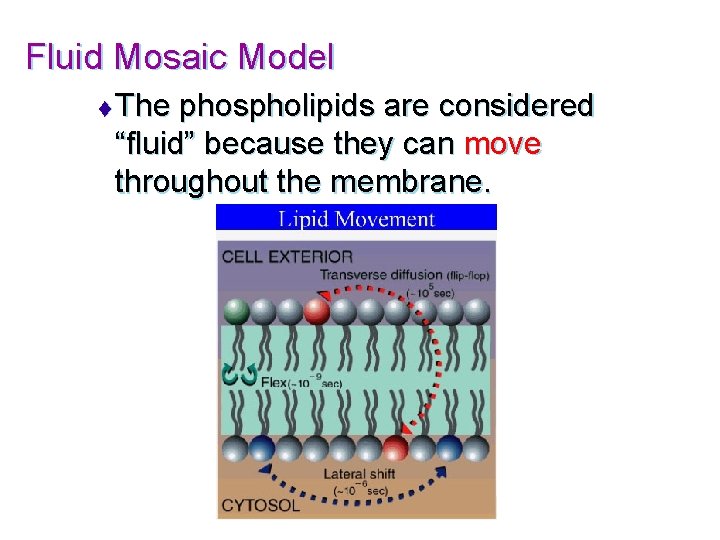
Fluid Mosaic Model t The phospholipids are considered “fluid” because they can move throughout the membrane.
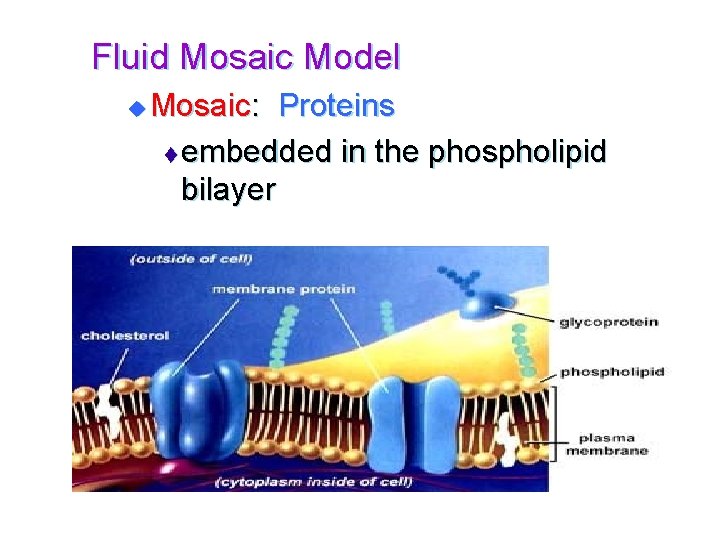
Fluid Mosaic Model u Mosaic: Proteins t embedded in the phospholipid bilayer
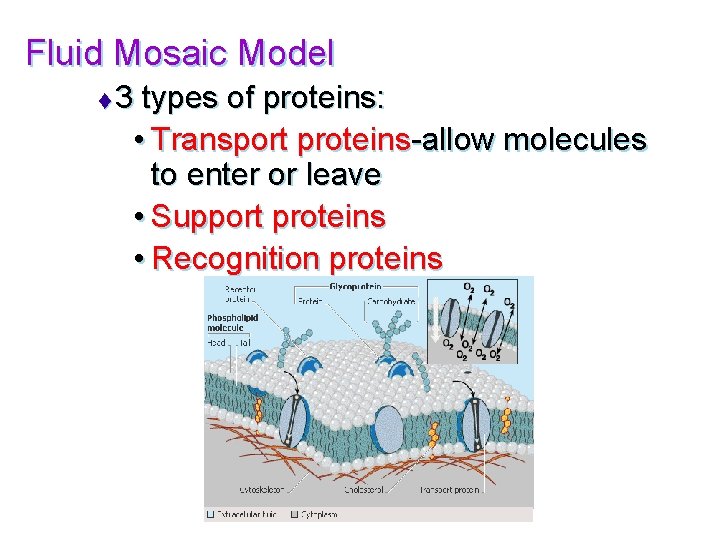
Fluid Mosaic Model t 3 types of proteins: • Transport proteins-allow molecules to enter or leave • Support proteins • Recognition proteins
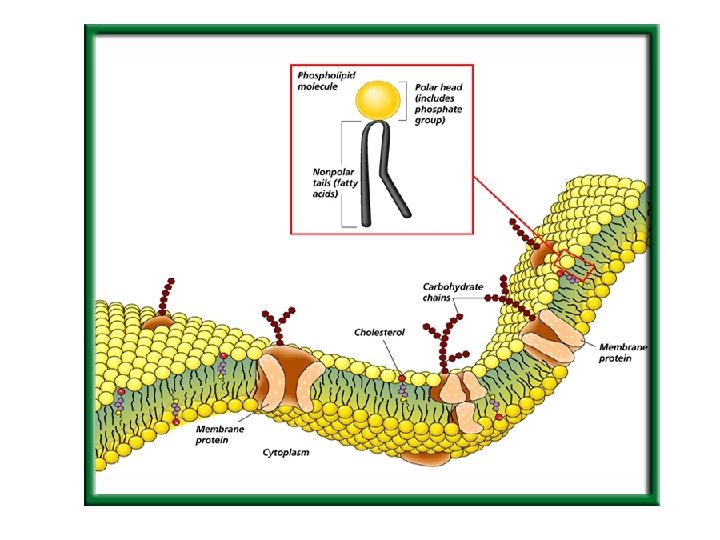
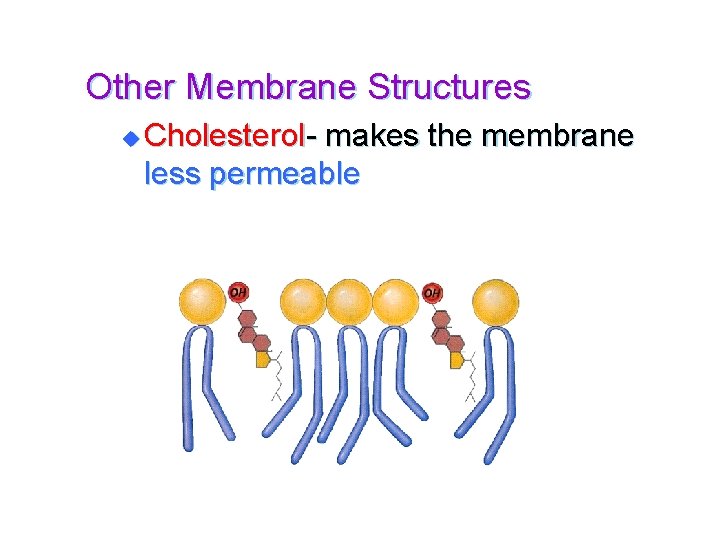
Other Membrane Structures u Cholesterol- makes the membrane less permeable
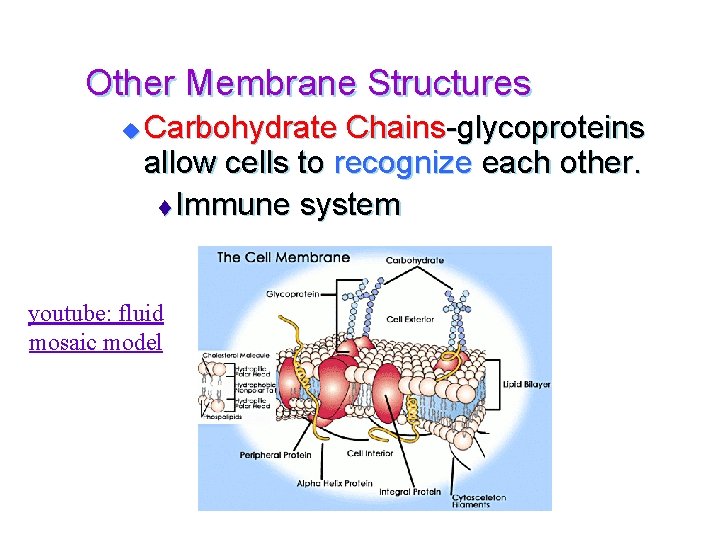
Other Membrane Structures u Carbohydrate Chains-glycoproteins allow cells to recognize each other. t Immune system youtube: fluid mosaic model
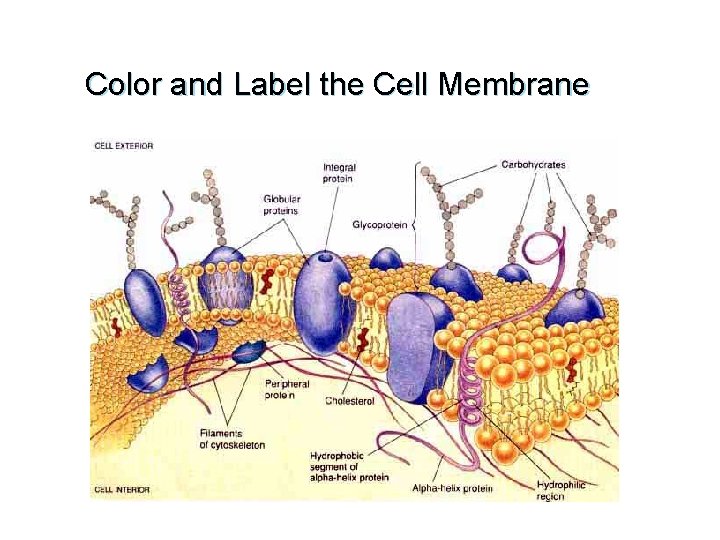
Color and Label the Cell Membrane
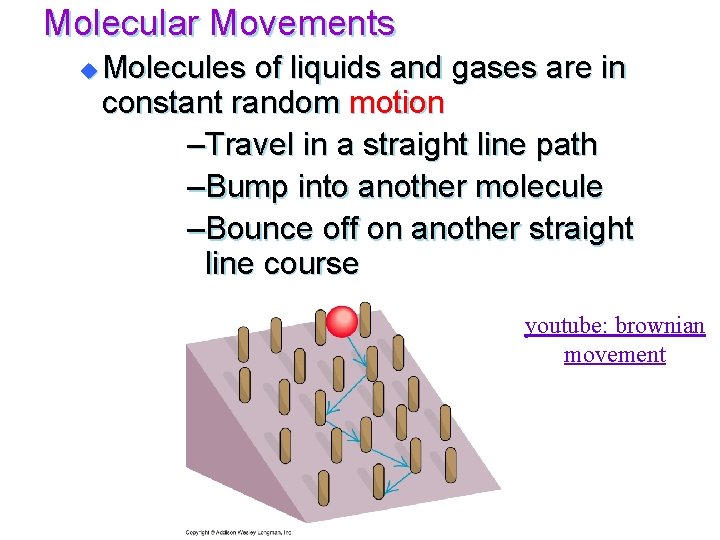
Molecular Movements u Molecules of liquids and gases are in constant random motion –Travel in a straight line path –Bump into another molecule –Bounce off on another straight line course youtube: brownian movement
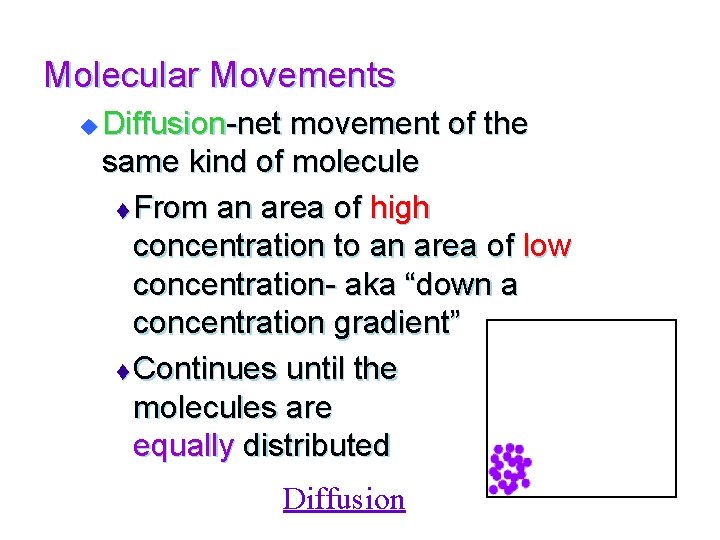
Molecular Movements u Diffusion-net movement of the same kind of molecule t From an area of high concentration to an area of low concentration- aka “down a concentration gradient” t Continues until the molecules are equally distributed Diffusion
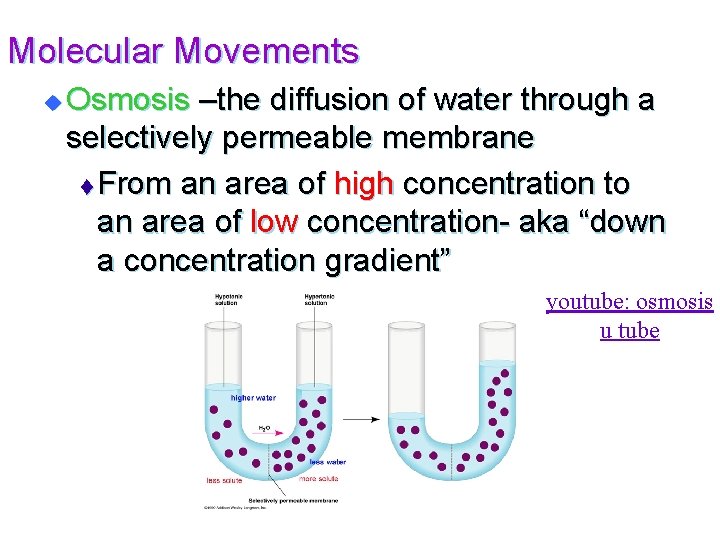
Molecular Movements u Osmosis –the diffusion of water through a selectively permeable membrane t From an area of high concentration to an area of low concentration- aka “down a concentration gradient” youtube: osmosis u tube
Osmosis t The concentration of water in solution increases as the concentration of solutes decreases • 5% salt solution means ? % water • 5% salt solution means 95% water • 10% salt solution means ? % water • 10% salt solution means 90% water
Types of Solutions n Isotonic Solution: Concentration of solutes is the same inside and outside the cell. u Some water moves in, some water moves out. u No net movement of water. u Cell remains the same.
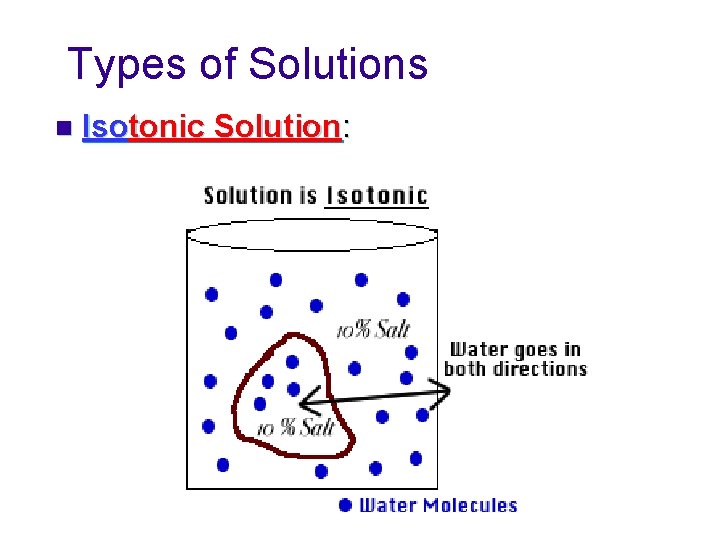
Types of Solutions n Isotonic Solution:
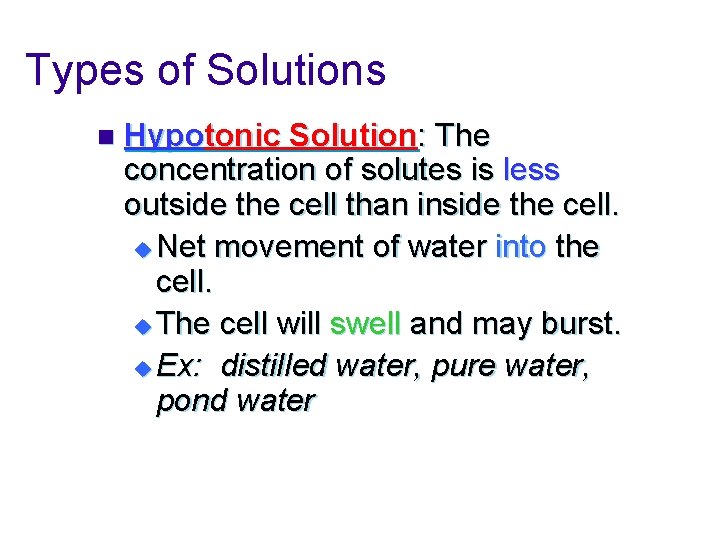
Types of Solutions n Hypotonic Solution: The concentration of solutes is less outside the cell than inside the cell. u Net movement of water into the cell. u The cell will swell and may burst. u Ex: distilled water, pure water, pond water
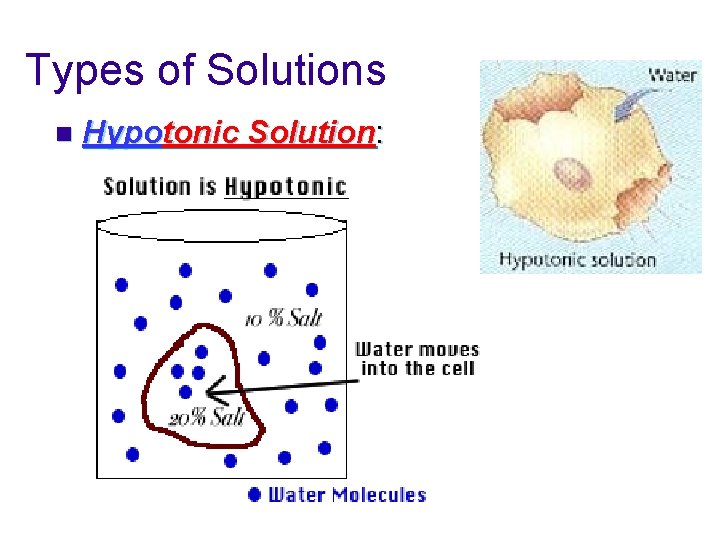
Types of Solutions n Hypotonic Solution:
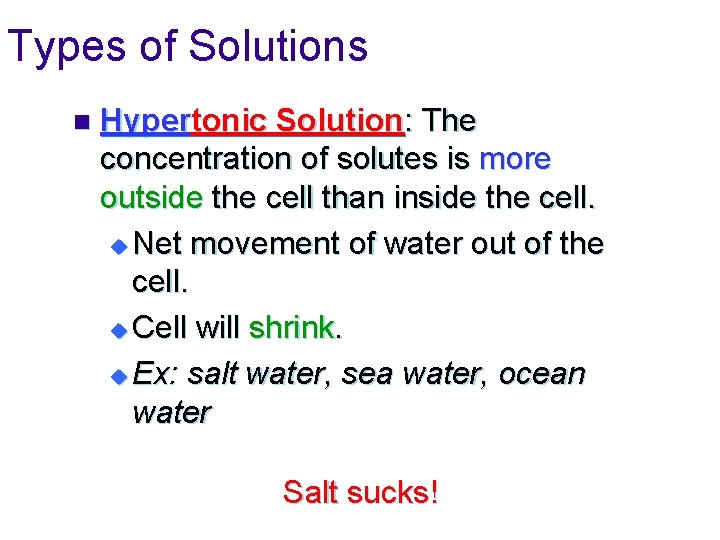
Types of Solutions n Hypertonic Solution: The concentration of solutes is more outside the cell than inside the cell. u Net movement of water out of the cell. u Cell will shrink. u Ex: salt water, sea water, ocean water Salt sucks!
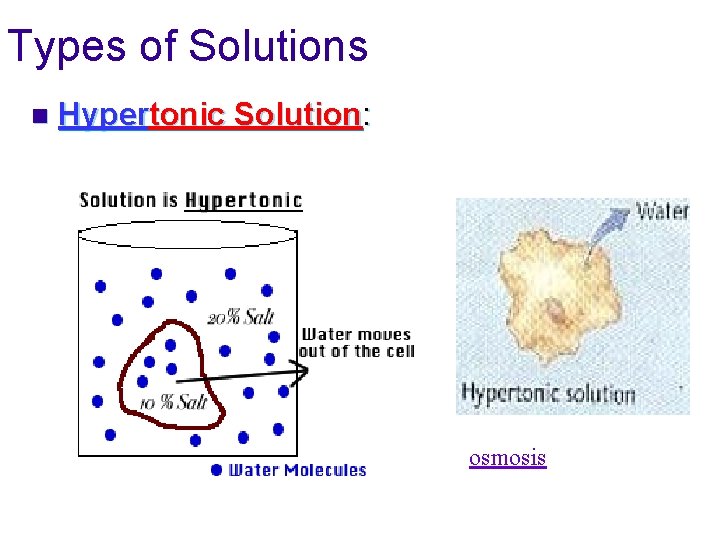
Types of Solutions n Hypertonic Solution: osmosis
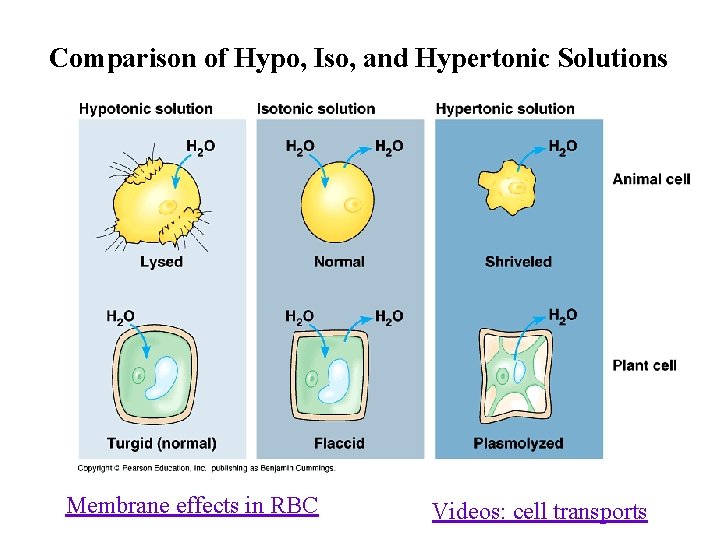
Comparison of Hypo, Iso, and Hypertonic Solutions Membrane effects in RBC Videos: cell transports
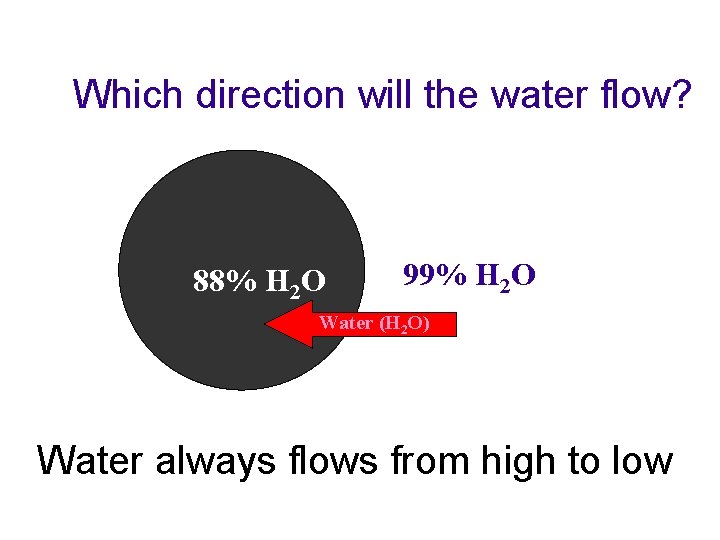
Which direction will the water flow? 88% H 2 O 99% H 2 O Water (H 2 O) Water always flows from high to low
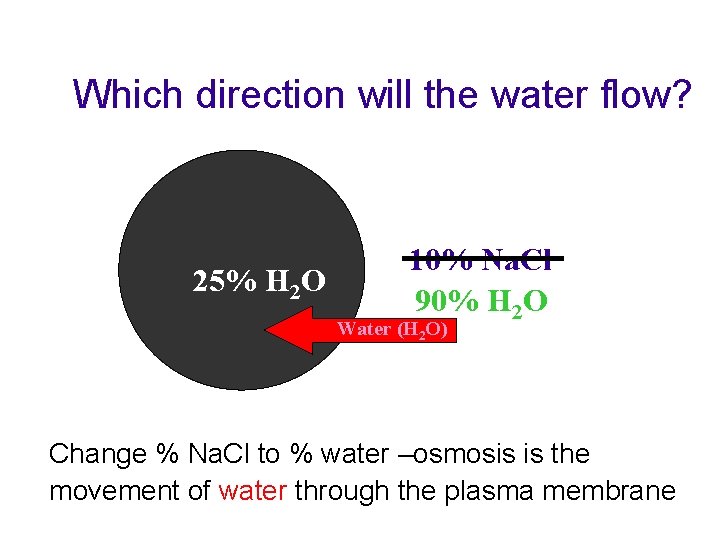
Which direction will the water flow? 25% H 2 O 10% Na. Cl 90% H 2 O Water (H 2 O) Change % Na. Cl to % water –osmosis is the movement of water through the plasma membrane
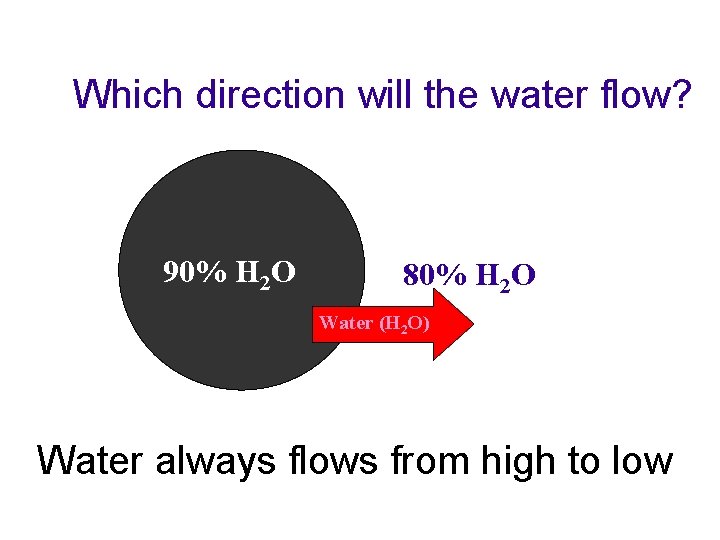
Which direction will the water flow? 90% H 2 O 80% H 2 O Water (H 2 O) Water always flows from high to low
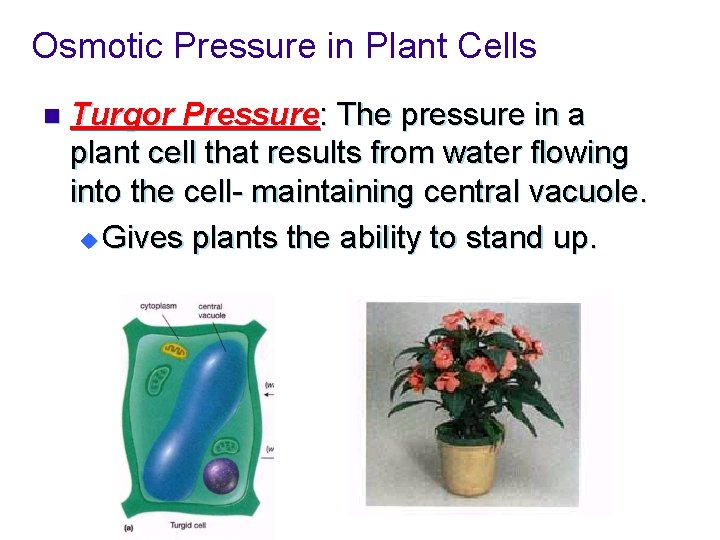
Osmotic Pressure in Plant Cells n Turgor Pressure: The pressure in a plant cell that results from water flowing into the cell- maintaining central vacuole. u Gives plants the ability to stand up.
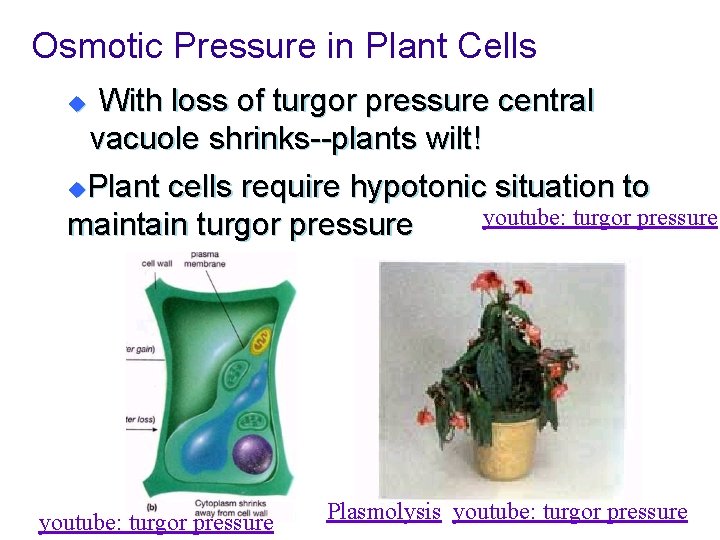
Osmotic Pressure in Plant Cells With loss of turgor pressure central vacuole shrinks--plants wilt! u. Plant cells require hypotonic situation to youtube: turgor pressure maintain turgor pressure u youtube: turgor pressure Plasmolysis youtube: turgor pressure
- Slides: 30