
The Cell Membrane All cells are surrounded by
The Cell Membrane • All cells are surrounded by a thin, flexible barrier known as the cell membrane, aka the plasma membrane • Helps regulate what enters and leaves the cell a) Selectively Permeable: only certain substances are allowed into and out of the cell § Ex: Oxygen is allowed into n animal cell but is not allowed to go out • Provides structure and protection
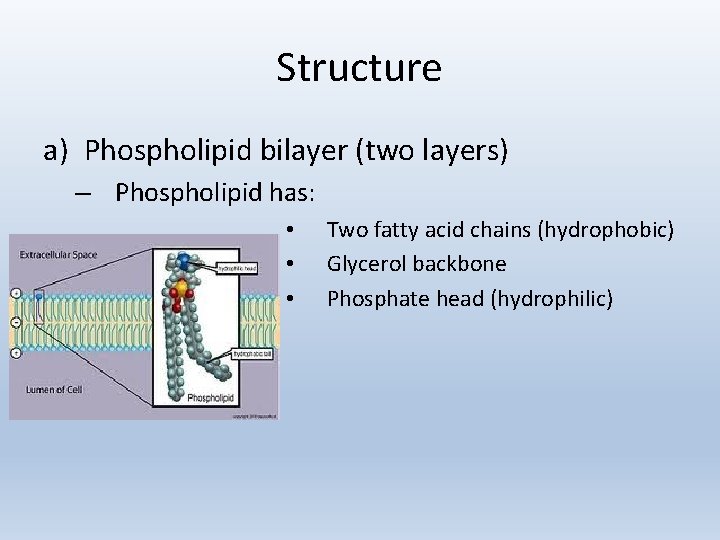
Structure a) Phospholipid bilayer (two layers) – Phospholipid has: • • • Two fatty acid chains (hydrophobic) Glycerol backbone Phosphate head (hydrophilic)
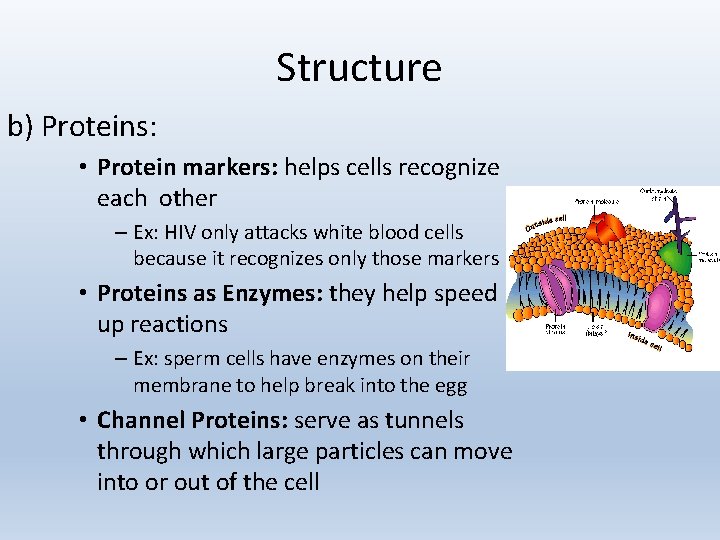
Structure b) Proteins: • Protein markers: helps cells recognize each other – Ex: HIV only attacks white blood cells because it recognizes only those markers • Proteins as Enzymes: they help speed up reactions – Ex: sperm cells have enzymes on their membrane to help break into the egg • Channel Proteins: serve as tunnels through which large particles can move into or out of the cell
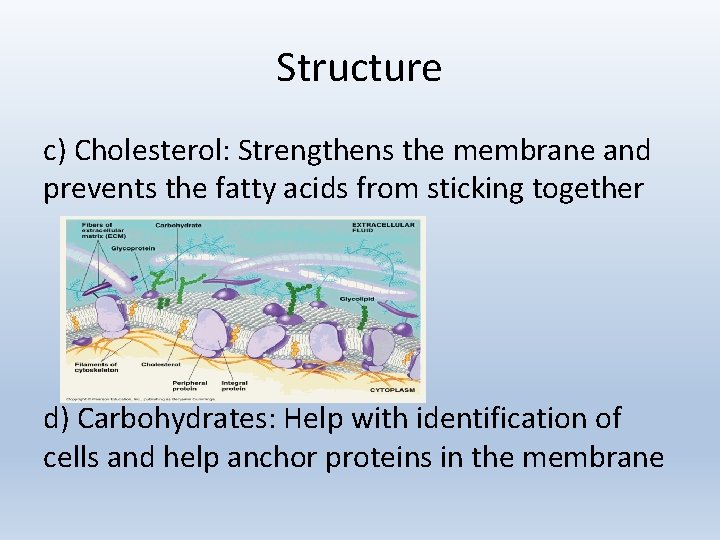
Structure c) Cholesterol: Strengthens the membrane and prevents the fatty acids from sticking together d) Carbohydrates: Help with identification of cells and help anchor proteins in the membrane

Fluid Mosaic Model • The membrane is very flexible due to the fatty acid chains • The membrane also holds all of the structures listed above • So we call it a: – Fluid (is flowing) Mosaic (lots of different things) Model • http: //www. youtube. com/watch? v=ULR 79 Ti Uj 80
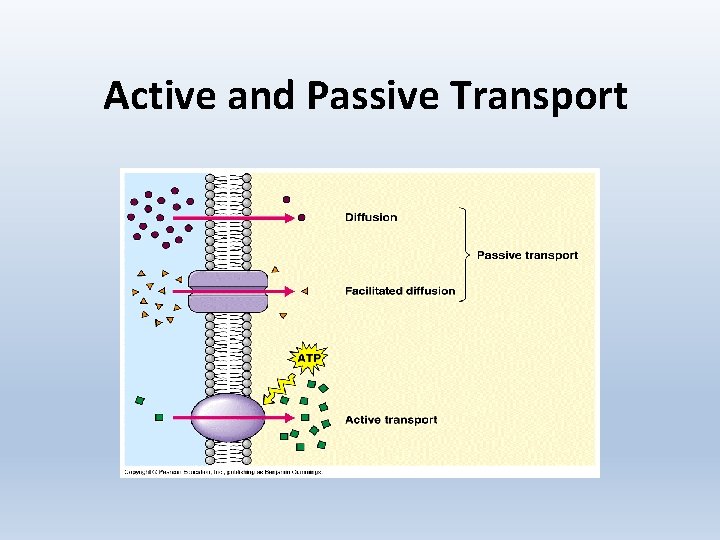
Active and Passive Transport
Compare and Contrast • Passive Transport – Movement of molecules through the cell membrane which does NOT require energy • Active Transport – Movement of molecules through cell membrane which DOES require energy.
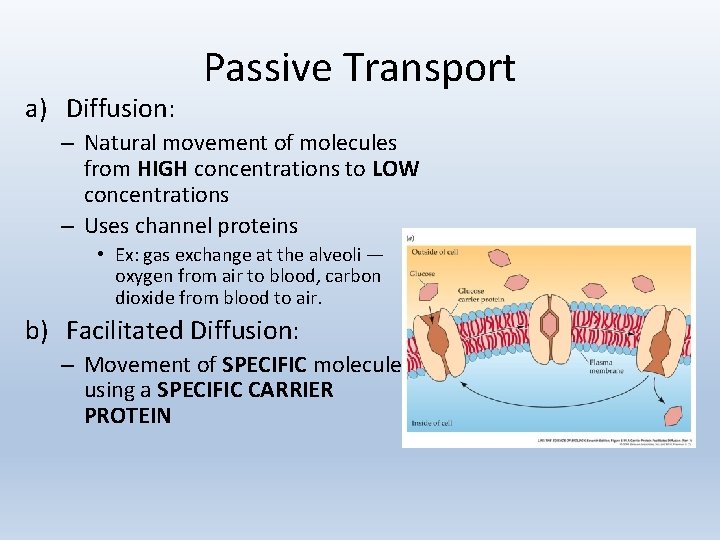
a) Diffusion: Passive Transport – Natural movement of molecules from HIGH concentrations to LOW concentrations – Uses channel proteins • Ex: gas exchange at the alveoli — oxygen from air to blood, carbon dioxide from blood to air. b) Facilitated Diffusion: – Movement of SPECIFIC molecules using a SPECIFIC CARRIER PROTEIN
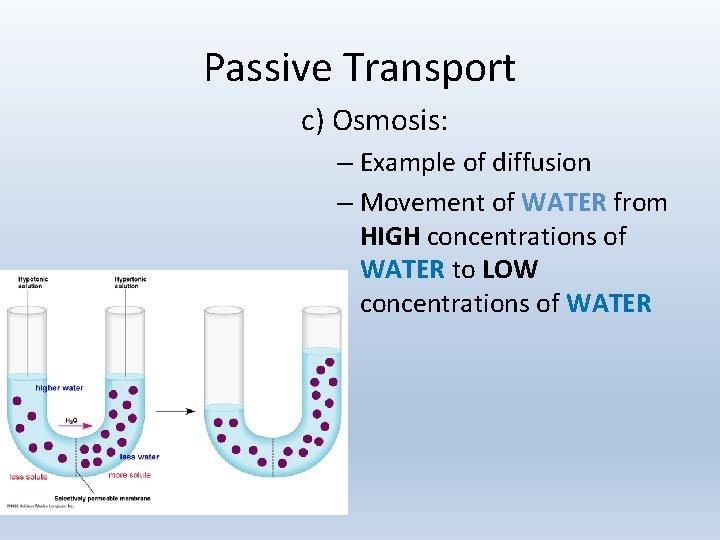
Passive Transport c) Osmosis: – Example of diffusion – Movement of WATER from HIGH concentrations of WATER to LOW concentrations of WATER
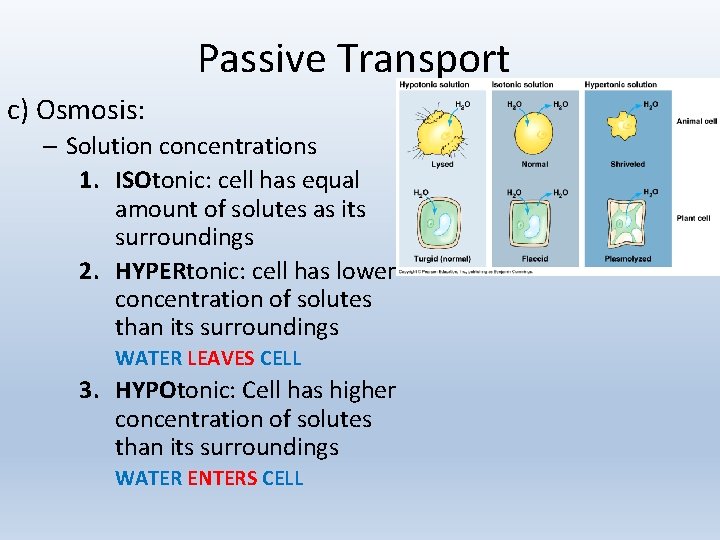
Passive Transport c) Osmosis: – Solution concentrations 1. ISOtonic: cell has equal amount of solutes as its surroundings 2. HYPERtonic: cell has lower concentration of solutes than its surroundings WATER LEAVES CELL 3. HYPOtonic: Cell has higher concentration of solutes than its surroundings WATER ENTERS CELL
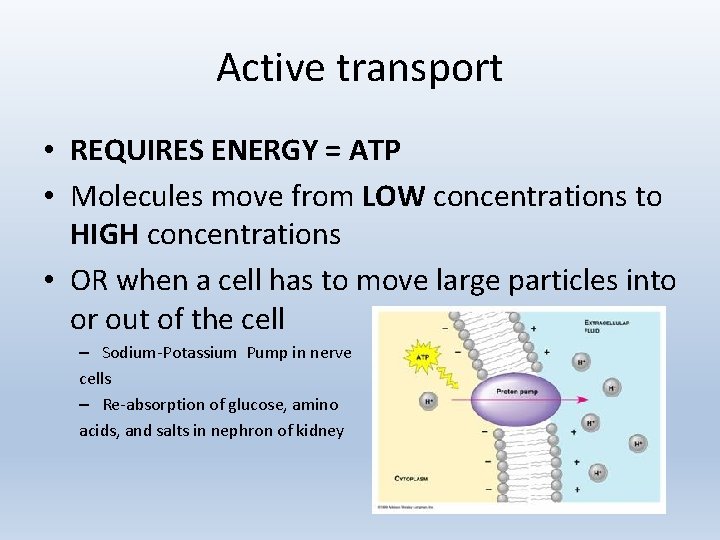
Active transport • REQUIRES ENERGY = ATP • Molecules move from LOW concentrations to HIGH concentrations • OR when a cell has to move large particles into or out of the cell – Sodium-Potassium Pump in nerve cells – Re-absorption of glucose, amino acids, and salts in nephron of kidney
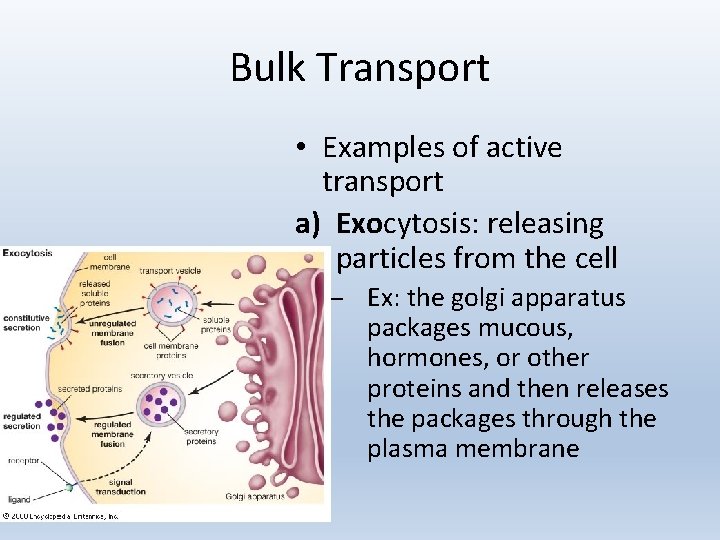
Bulk Transport • Examples of active transport a) Exocytosis: releasing particles from the cell – Ex: the golgi apparatus packages mucous, hormones, or other proteins and then releases the packages through the plasma membrane
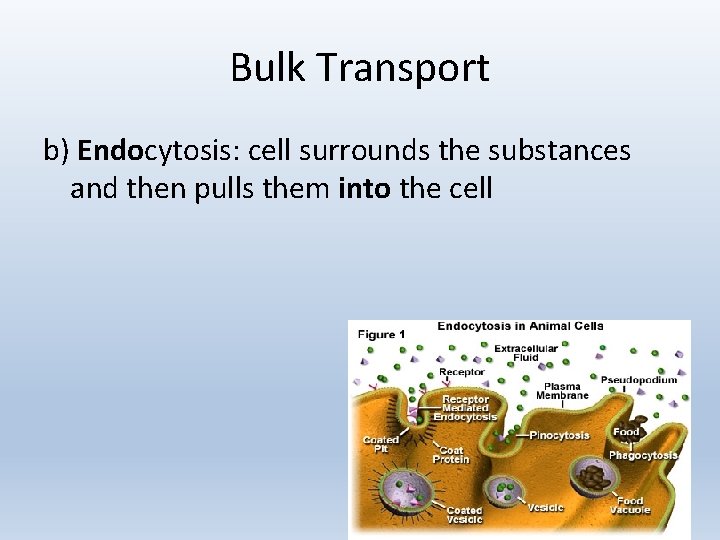
Bulk Transport b) Endocytosis: cell surrounds the substances and then pulls them into the cell
- Slides: 13