
The Cell Membrane A barrier that separates a
The Cell Membrane A barrier that separates a cell from its surroundings. Also called: The Lipid Bi-Layer, Fluid Mosaic Model, And The Plasma Membrane Cell membranes are “semi-permeable” because they allow some molecules to pass through, while others cannot.
Function • Controls exchange of material in and out of cell nutrients, wastes
Function • Controls exchange of material in and out of cell nutrients, wastes • Selectively permeable
Selective Permeability • Cell Membrane structure allows some substances to pass through easily while other things cannot • This property is mainly based on molecule size of the substance – Small things: water, glucose, oxygen – Large things: starch and proteins
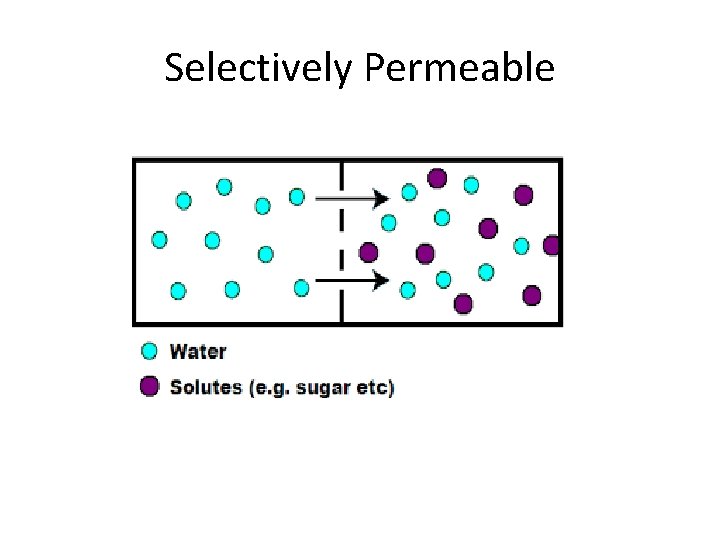
Selectively Permeable
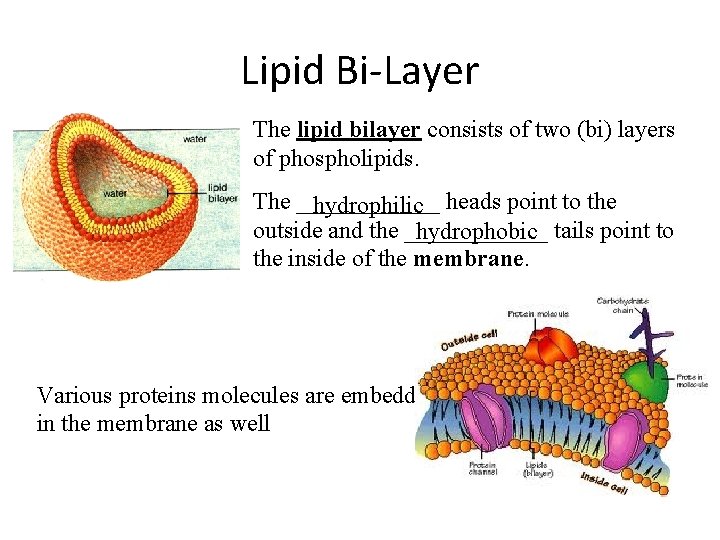
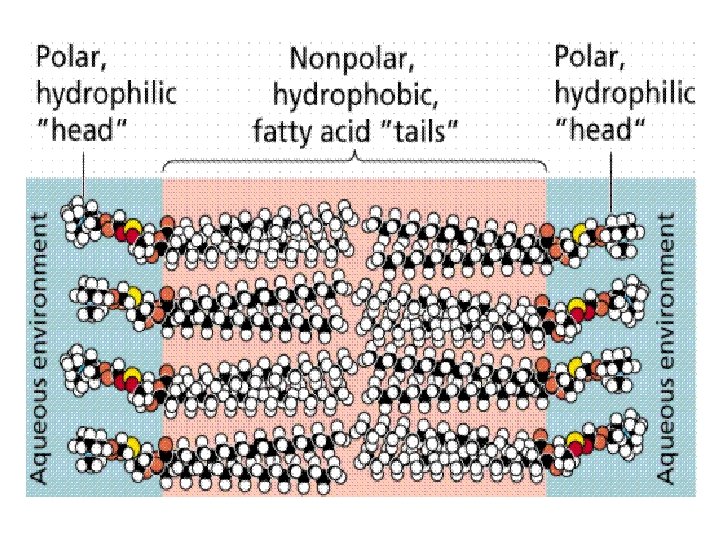
Lipid Bi-Layer The lipid bilayer consists of two (bi) layers of phospholipids. The ______ hydrophilic heads point to the outside and the ______ hydrophobic tails point to the inside of the membrane. Various proteins molecules are embedded in the membrane as well
Lipid Bilayer Lipid bilayer • contains lipids dissolved in water • tough flexible structure which forms a barrier • The PHOSPHOLIPID BILAYER is the basic • structure of membranes.
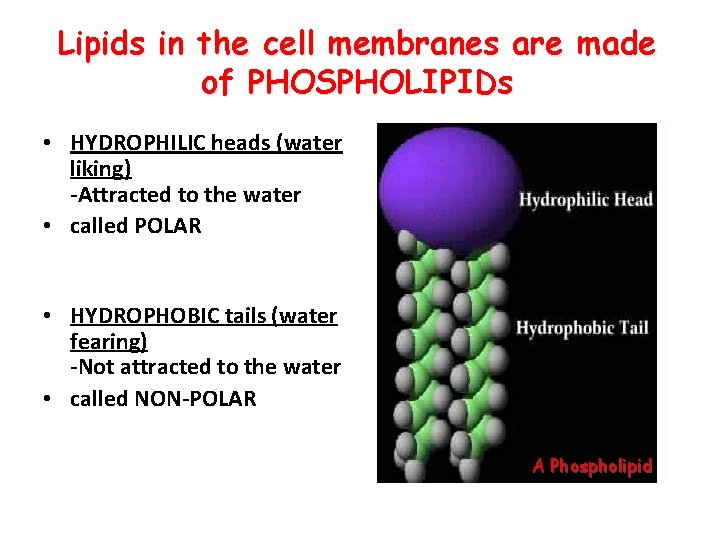
Lipids in the cell membranes are made of PHOSPHOLIPIDs • HYDROPHILIC heads (water liking) -Attracted to the water • called POLAR • HYDROPHOBIC tails (water fearing) -Not attracted to the water • called NON-POLAR A Phospholipid
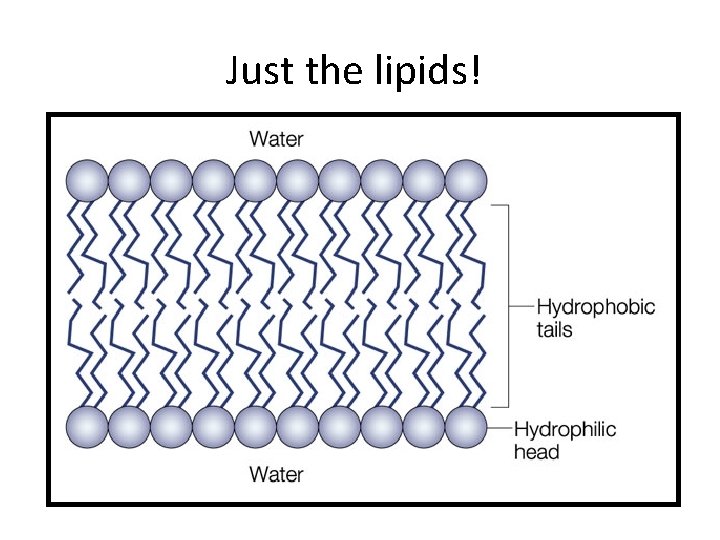
Just the lipids!
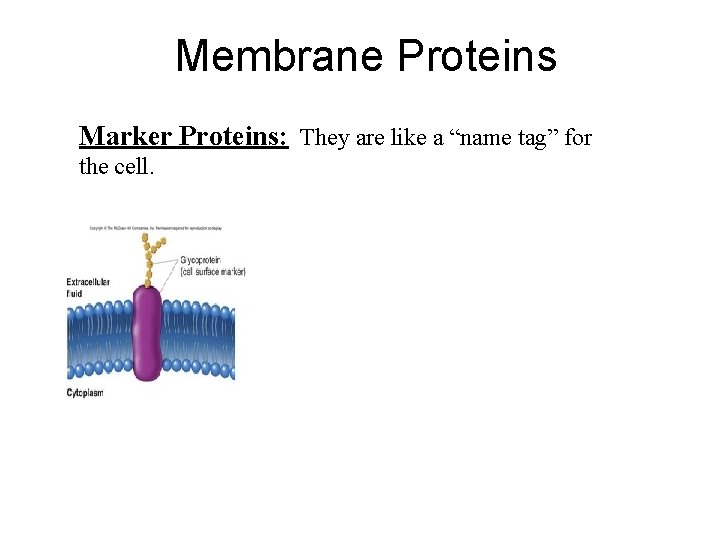
Membrane Proteins Marker Proteins: They are like a “name tag” for the cell.
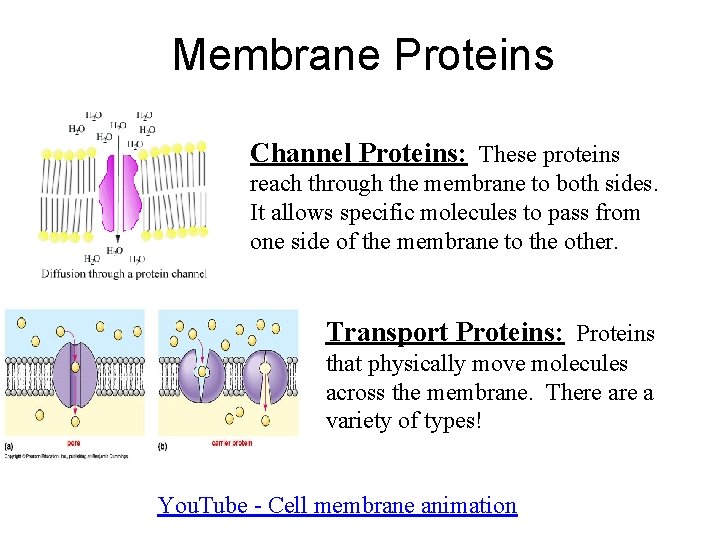
Membrane Proteins Channel Proteins: These proteins reach through the membrane to both sides. It allows specific molecules to pass from one side of the membrane to the other. Transport Proteins: Proteins that physically move molecules across the membrane. There a variety of types! You. Tube - Cell membrane animation
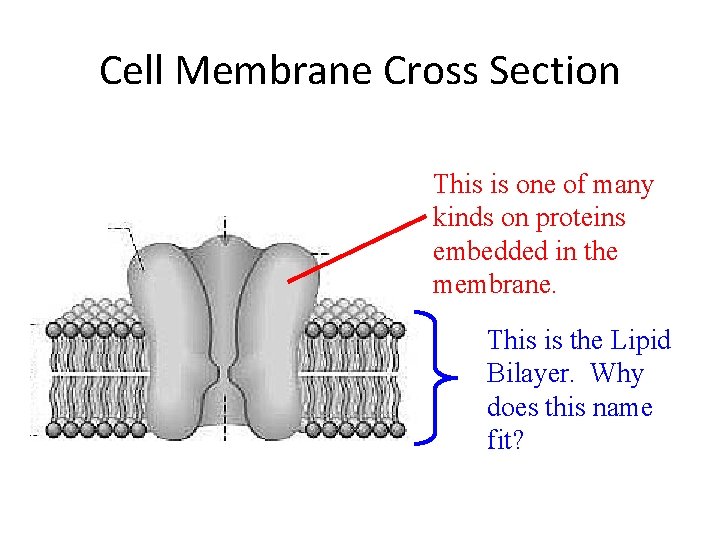
Cell Membrane Cross Section This is one of many kinds on proteins embedded in the membrane. This is the Lipid Bilayer. Why does this name fit?
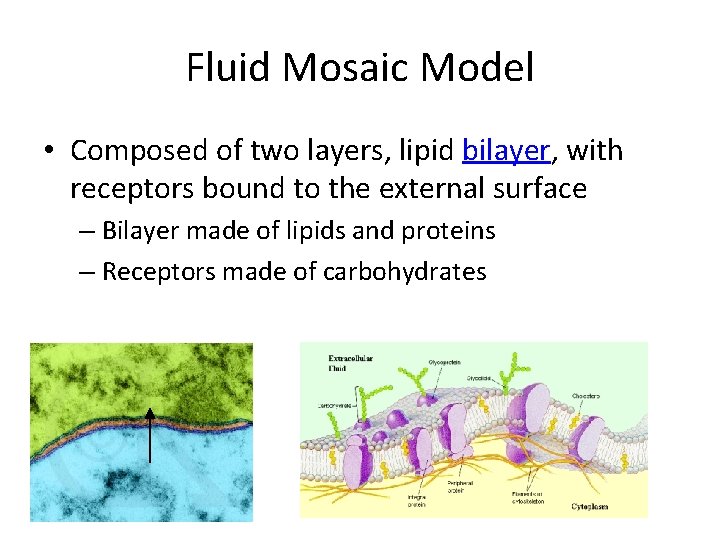
Fluid Mosaic Model • Composed of two layers, lipid bilayer, with receptors bound to the external surface – Bilayer made of lipids and proteins – Receptors made of carbohydrates
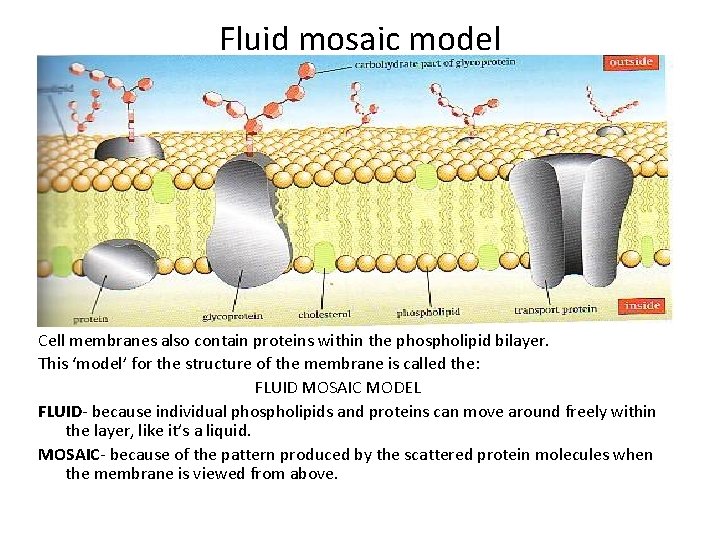
Fluid mosaic model Cell membranes also contain proteins within the phospholipid bilayer. This ‘model’ for the structure of the membrane is called the: FLUID MOSAIC MODEL FLUID- because individual phospholipids and proteins can move around freely within the layer, like it’s a liquid. MOSAIC- because of the pattern produced by the scattered protein molecules when the membrane is viewed from above.
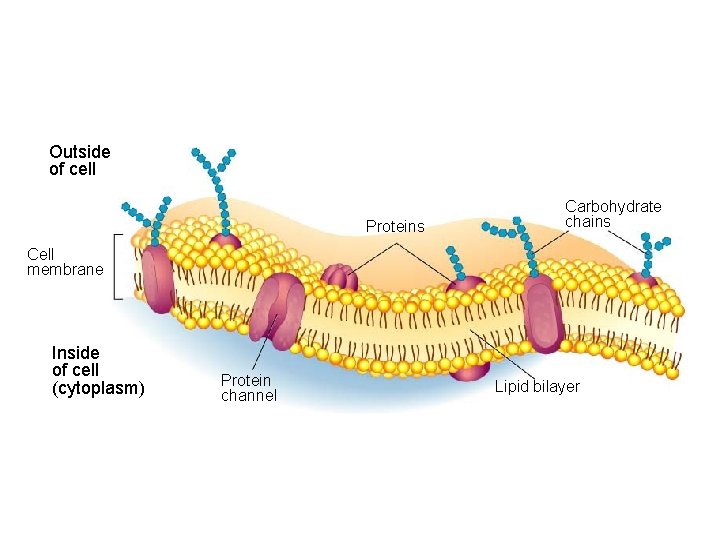
Section 7 -3 Figure 7 -15 The Structure of the Cell Membrane Outside of cell Proteins Carbohydrate chains Cell membrane Inside of cell (cytoplasm) Go to Section: Protein channel Lipid bilayer
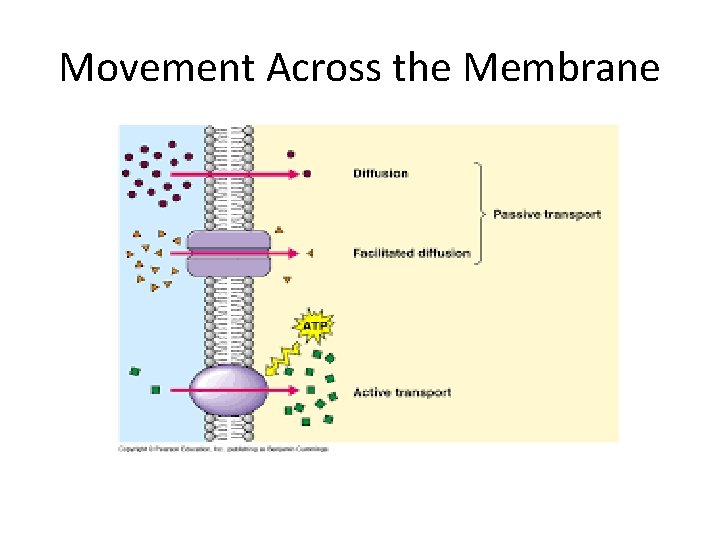
Movement Across the Membrane
Movement Across the Membrane The internal environment of a cell remains relatively constant at all times. This condition, known as homeostasis, means those factors such as p. H and the concentrations of all cell substances are held constant over the life of a cell. Cellular homeostasis occurs even though the external environment may be different from the conditions in the cell. If homeostasis is disrupted, a cell will die. The ability of cells to establish and maintain homeostasis is the result of the special properties of the cell membrane.
Movement Across the Membrane Passive Transport – NO ENERGY • Passive Transport does NOT require cellular energy • (ATP)Moves molecules from high to low concentration Active Transport - Energy
Movement Across the Membrane Passive Transport – NO ENERGY • Passive Transport does NOT require cellular energy • (ATP)Moves molecules from high to low concentration Examples: • Diffusion • Osmosis Active Transport - Energy
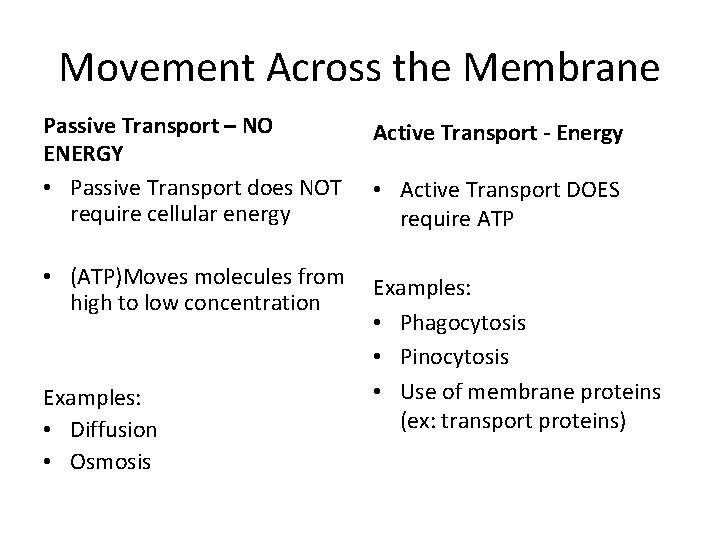
Movement Across the Membrane Passive Transport – NO ENERGY • Passive Transport does NOT require cellular energy Active Transport - Energy • (ATP)Moves molecules from high to low concentration Examples: • Phagocytosis • Pinocytosis • Use of membrane proteins (ex: transport proteins) Examples: • Diffusion • Osmosis • Active Transport DOES require ATP
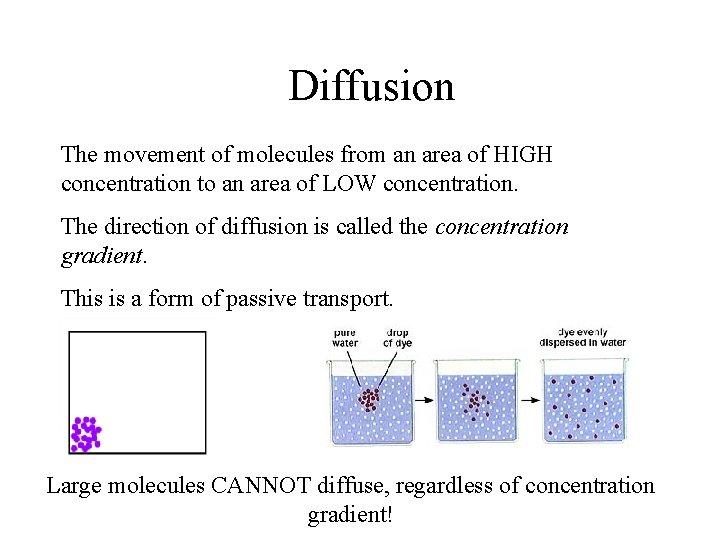
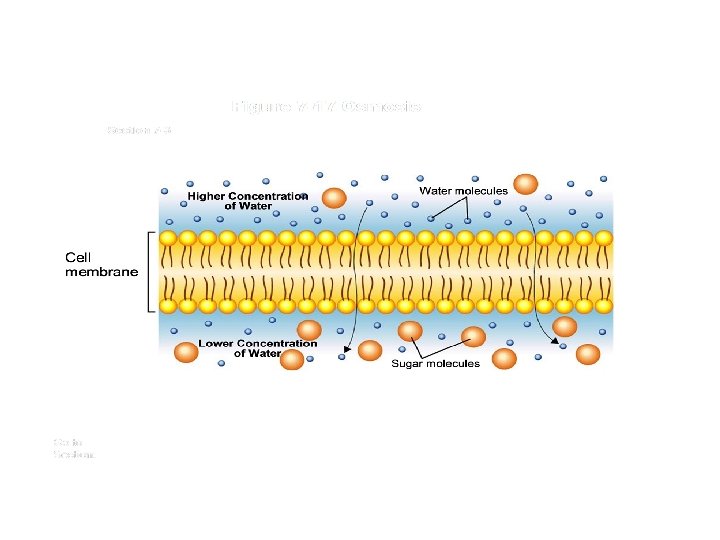
Diffusion The movement of molecules from an area of HIGH concentration to an area of LOW concentration. The direction of diffusion is called the concentration gradient. This is a form of passive transport. Large molecules CANNOT diffuse, regardless of concentration gradient!
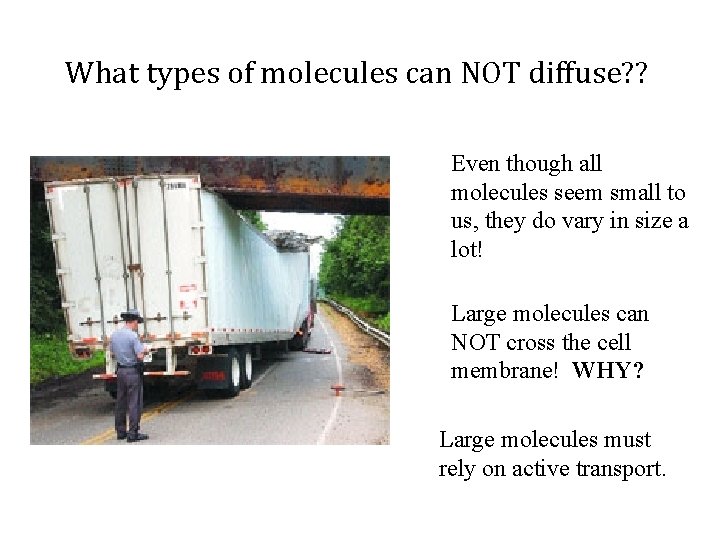
What types of molecules can NOT diffuse? ? Even though all molecules seem small to us, they do vary in size a lot! Large molecules can NOT cross the cell membrane! WHY? Large molecules must rely on active transport.
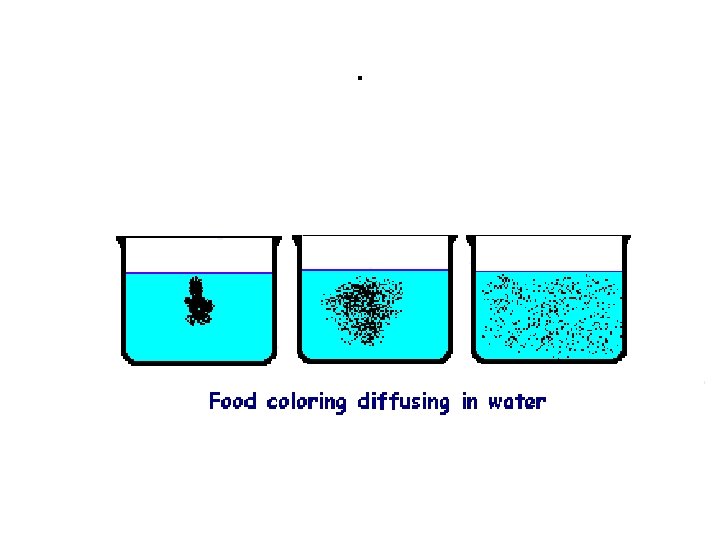
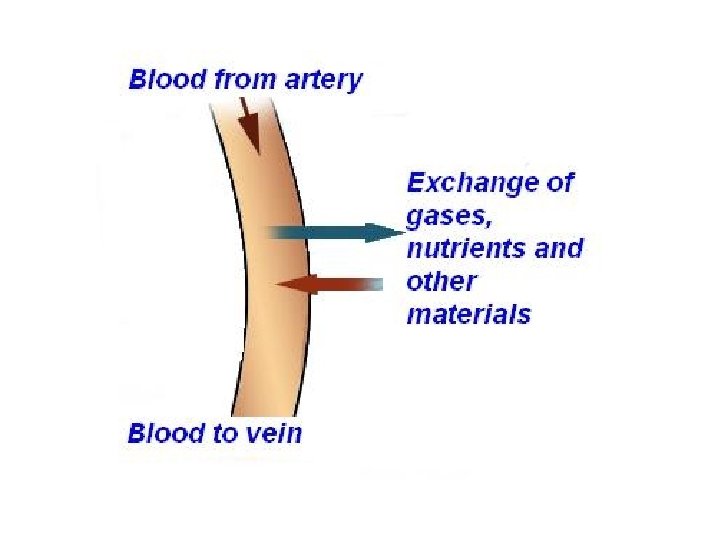
Other examples of diffusion – Perfume spreading throughout a room – Food coloring spreading out in a glass of water – Oxygen moving from capillary to muscle fiber
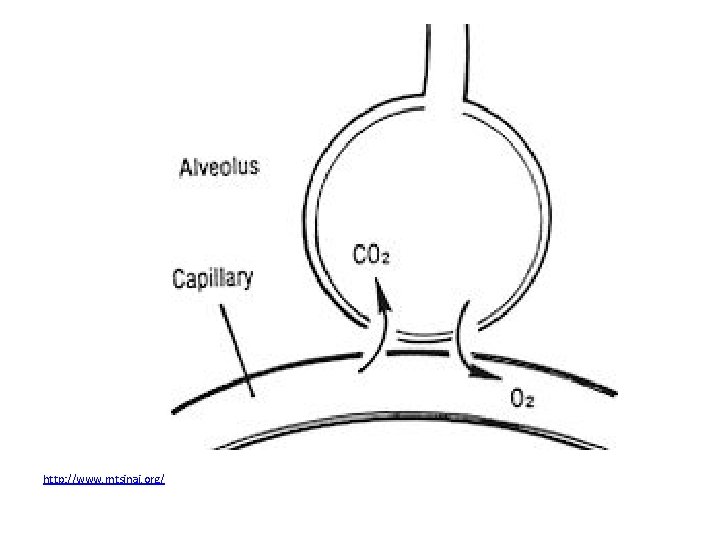
http: //www. mtsinai. org/
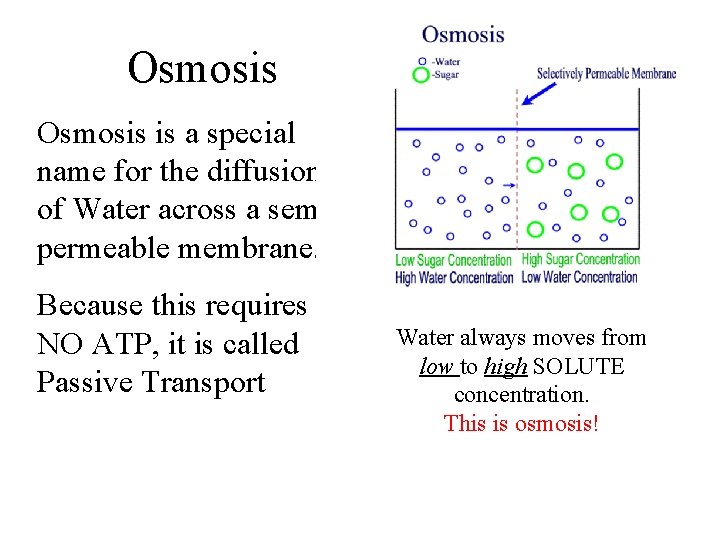
Osmosis is a special name for the diffusion of Water across a semipermeable membrane. Because this requires NO ATP, it is called Passive Transport Water always moves from low to high SOLUTE concentration. This is osmosis!
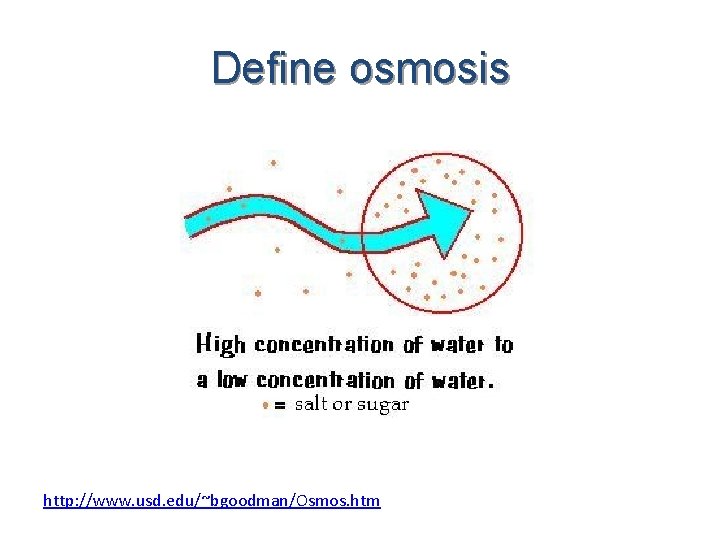
Define osmosis http: //www. usd. edu/~bgoodman/Osmos. htm
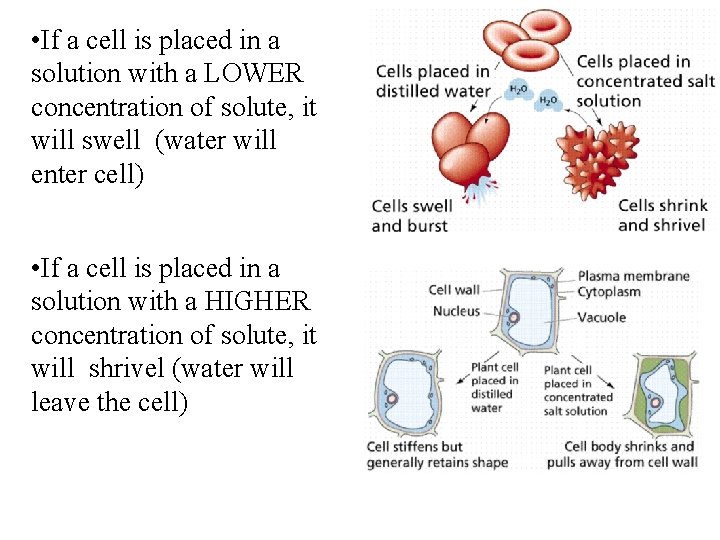
• If a cell is placed in a solution with a LOWER concentration of solute, it will swell (water will enter cell) • If a cell is placed in a solution with a HIGHER concentration of solute, it will shrivel (water will leave the cell)
Why are osmosis & diffusion important? • All living things have certain requirements they must satisfy in order to remain alive – maintain homeostasis • These include exchanging gases (usually CO 2 and O 2), taking in water, minerals, and food, and eliminating wastes.
Why are osmosis & diffusion important? • All living things have certain requirements they must satisfy in order to remain alive – maintain homeostasis • These include exchanging gases (usually CO 2 and O 2), taking in water, minerals, and food, and eliminating wastes. • These tasks happen at the cellular level. • Molecules move through the cell membrane by diffusion
Why are osmosis & diffusion important? This membrane is a complex structure that is responsible for separating the contents of the cell from its surroundings, for controlling the movement of materials into and out of the cell, and for interacting with the environment surrounding the cell.
Active Transport • Active Transport DOES require ATP Examples: • Phagocytosis • Pinocytosis • Use of membrane proteins (ex: transport proteins)
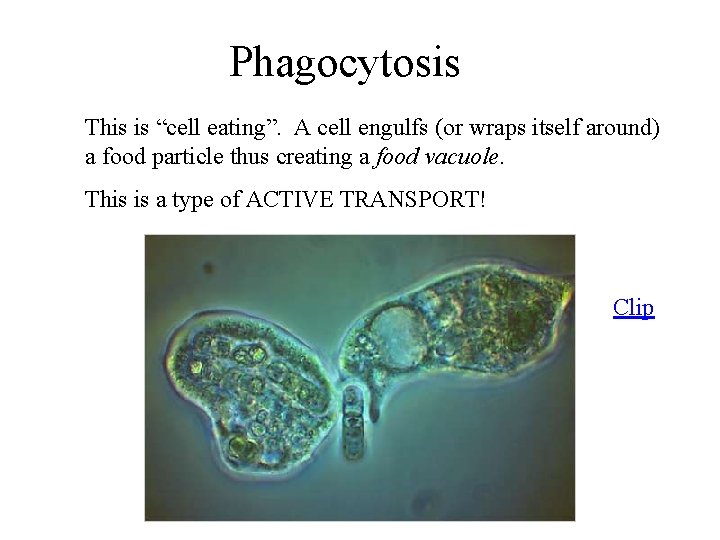
Phagocytosis This is “cell eating”. A cell engulfs (or wraps itself around) a food particle thus creating a food vacuole. This is a type of ACTIVE TRANSPORT! Clip
Cellular Transport • Passive Transport does NOT require cellular engery (ATP) • Moves molecules from high to low concentration Examples: • Diffusion • Osmosis • Active Transport DOES require ATP Examples: • Phagocytosis
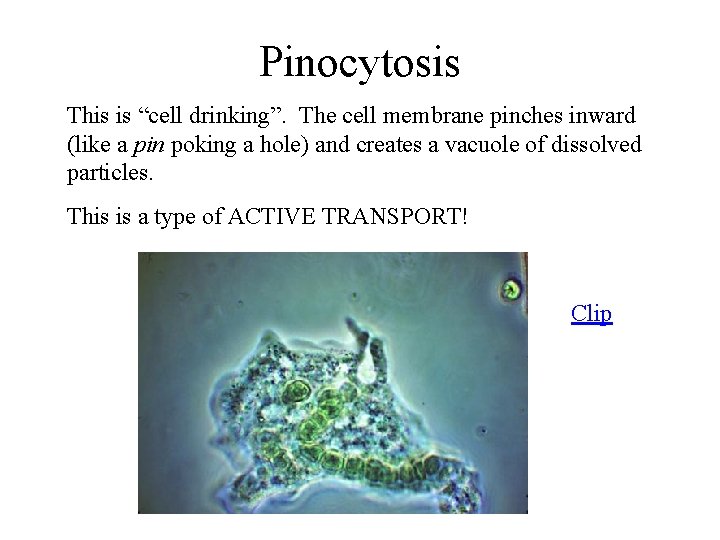
Pinocytosis This is “cell drinking”. The cell membrane pinches inward (like a pin poking a hole) and creates a vacuole of dissolved particles. This is a type of ACTIVE TRANSPORT! Clip
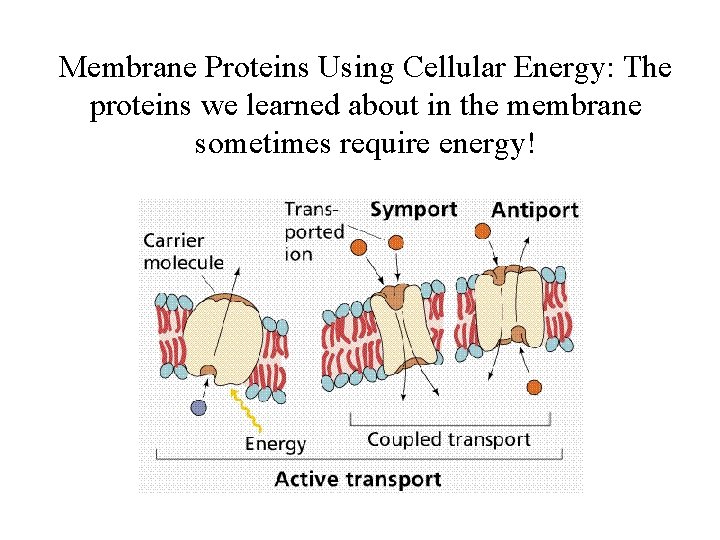
Membrane Proteins Using Cellular Energy: The proteins we learned about in the membrane sometimes require energy!
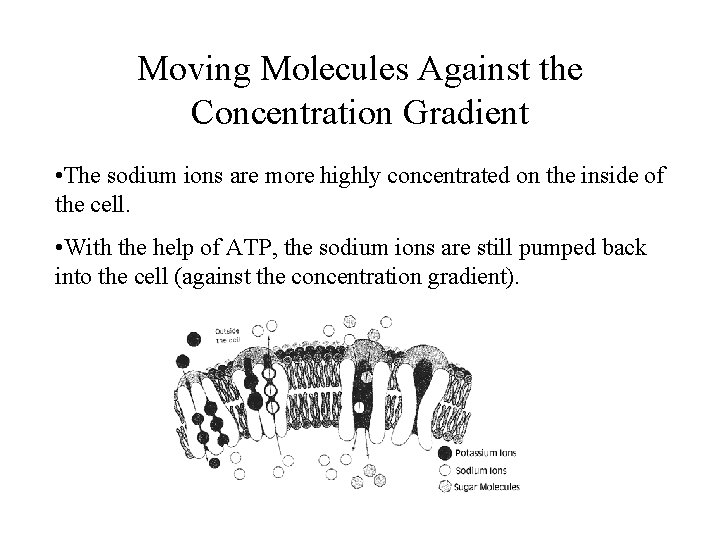
Moving Molecules Against the Concentration Gradient • The sodium ions are more highly concentrated on the inside of the cell. • With the help of ATP, the sodium ions are still pumped back into the cell (against the concentration gradient).
- Slides: 40